HIV & Global Health Rounds
The UC San Diego AntiViral Research Center sponsors weekly
presentations by infectious disease and global public health clinicians,
physicians, and researchers. The goal of these presentations is to
provide the most current research, clinical practices, and trends in HIV,
HBV, HCV, TB, and other infectious diseases of global significance.
The slides from the HIV & Global Health Rounds presentation that you
are about to view are intended for the educational purposes of our
audience. They may not be used for other purposes without the
presenter’s express permission.
COVID-19 in pregnancy
High Rounds
Jan 5, 2021
Jocelyn Keehner, MD
2nd year ID Fellow
disclosures
• I have nothing to disclose
Contents
• Physiology of pregnancy
• Immune suppression
• Covid in pregnancy
• Mortality rates
• Complications
• transmission
• Treatments
Physiology of pregnancy
Physiologic changes of pregnancy
• Increased plasma volume by 50% (thus drop in Hgb) and increase in Cardiac
Output (by 30-50%) (Wastnedge2021)
• Platelet count falls progressively over the course of pregnancy (usually
>100 though)
• Increased iron, folate and B12 requirements
• Pregnant women become hypercoagulable: increased VIII, IX and X, along
with Fibrinogen (up to 50%) and fibrinolytic activity is decreased.
• Concentrations of antithrombin and protein S decrease.
• Hypercoagulability is persistent up to 12 weeks after delivery
• Venous stasis in lower limbs because of compression of the left iliac vein by
the left iliac artery and the ovarian artery (can lead to development of DVT)
• Maternal hyperventilation occurs (increased oxygen demand because of
increased metabolic rate)
• Maternal insulin resistance
All from Soma-Pillay 2016
Hormonal impacts of pregnancy
• Activation of the renin-angiotensin-aldosterone system occurs due to
systemic vasodilation (aldosterone can be increased 3x, in the first
trimester and up to 10x increase in the third trimester)
• Rise in deoxycorticosterone, corticosteroid-binding globulin (CBG),
adrenocorticotropic hormone (ACTH), cortisol and free cortisol
• Total cortisol levels rise at the end of the first trimester and are 3x
higher than in non-pregnant patients by the end of pregnancy.
All from Soma-Pillay 2016
Immune system impacts of pregnancy
changes
• Goal is for the body to not recognize the fetus as foreign
• While at the same time avoiding significant infections
• In general there is a push towards immune tolerance in the adaptive
immune system (Cornish 2020)
Immune system in pregnancy and impact on
viral infection
• Shift to Th2 CD4 cells from Th1 (TH2 cells release the anti-inflammatory IL-
10, and tend to push the adaptive immune system towards producing
antibodies over cell mediated immunity) (Wastnedge 2021, Berger 2000)
• Decreased TH1 response may result in reduced clearance of infected cells (Wastnedge
2021)
• Drop in NK cells in circulation (Wastnedge2021)
• Decreased plasmacytoid dendritic cells (which play a role in interferon
production against viral infection) (Wastnedge2021)
• Increased progesterone which in animal models can lead to decreased
virus specific antibody levels to influenza (Wastnedge2021)
• Innate immune alterations including TLRs (Wastnedge2021)
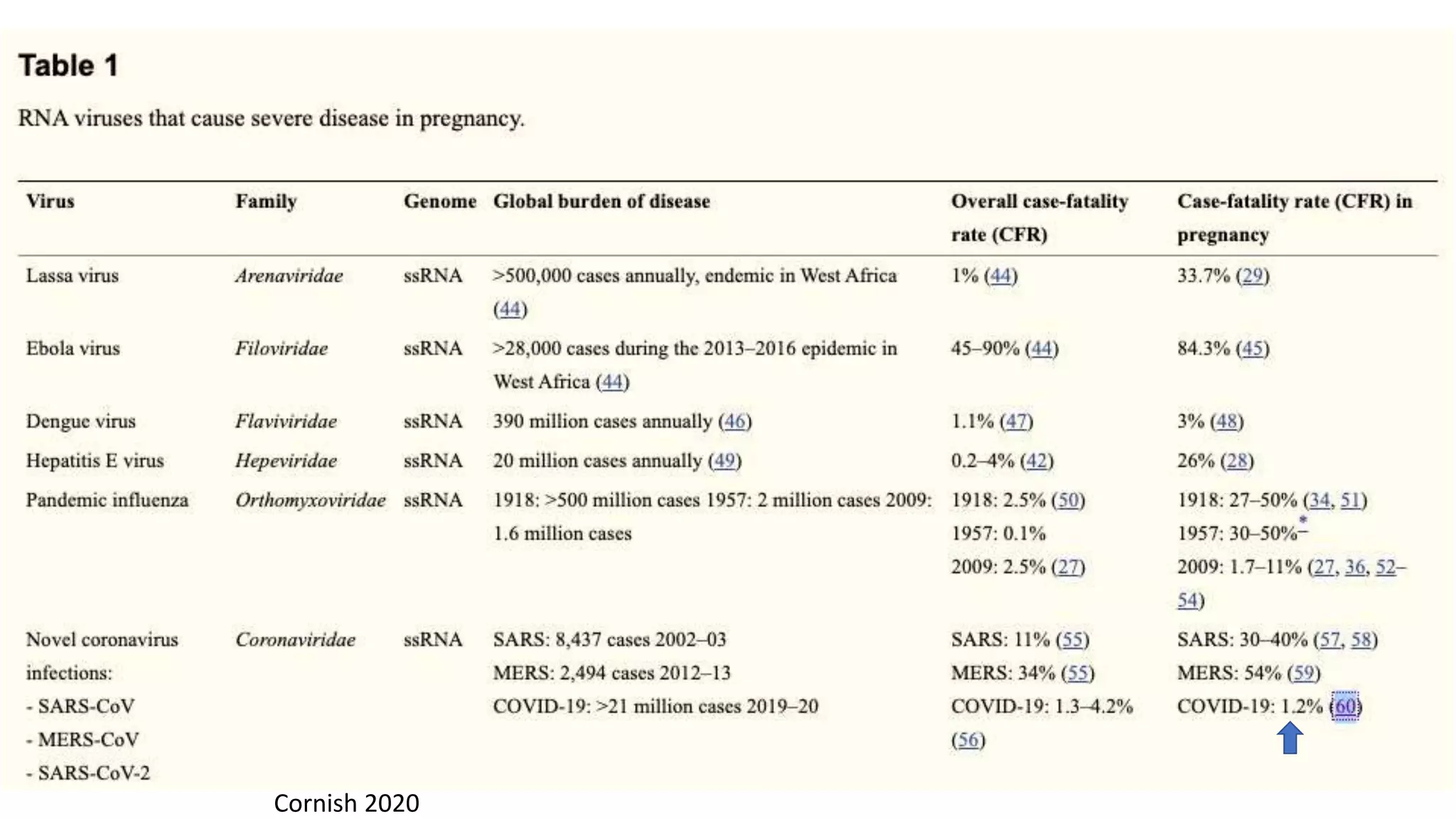
COVID outcomes and vertical
transmission
Cornish 2020
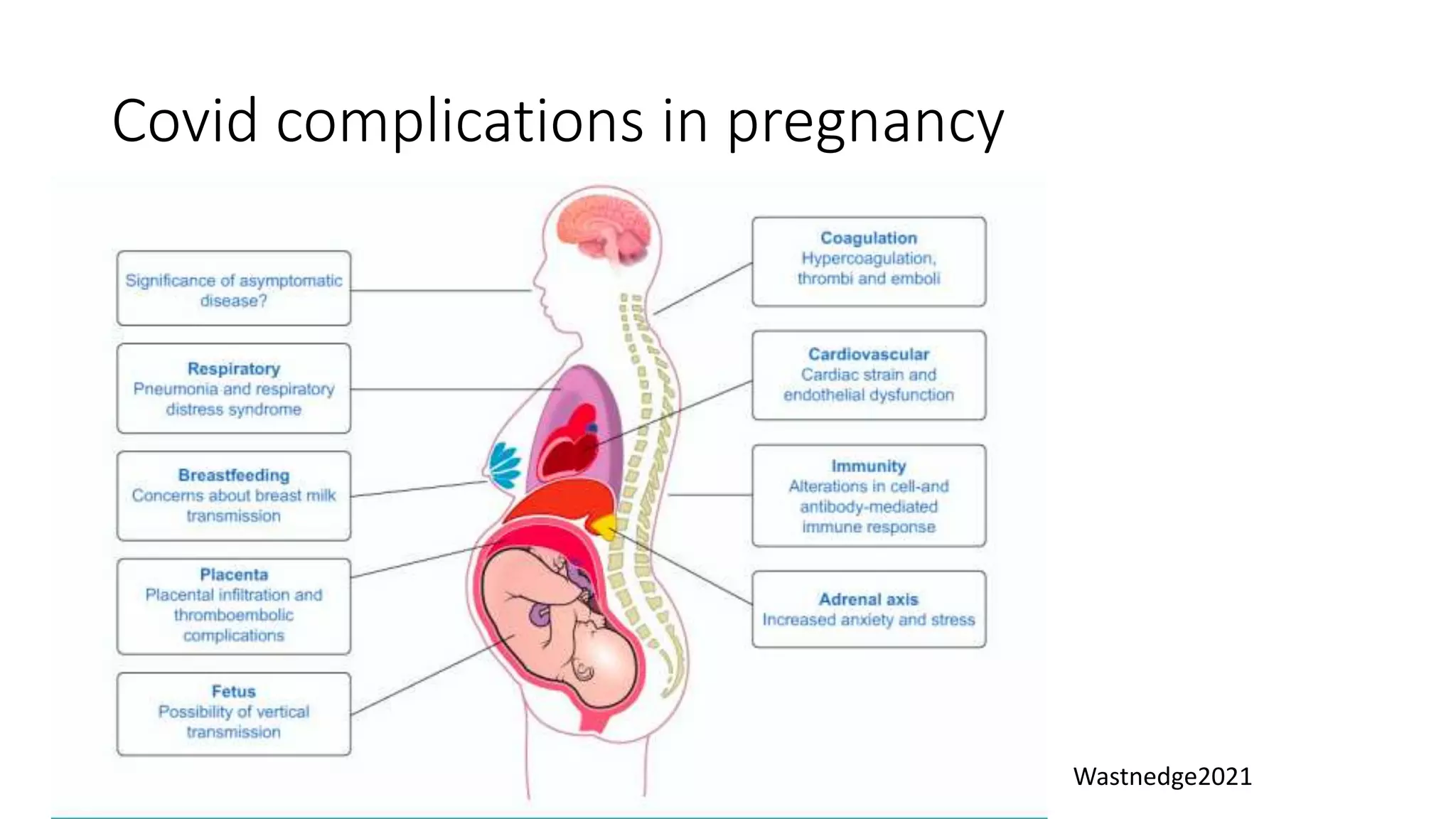
Covid complications in pregnancy
• Presence of gravid uterus
impacts lung capacity and can
lead to respiratory distress and
increase need for ventilation in
critically ill patients
• COVID-19 is associated with a
high rate of thrombotic events
and linked to development of
DIC (Wastnedge2021)
• Guidelines recommend
thromboprophylaxis in COVID +
pregnant patients while acutely
ill
https://library.med.utah.edu/kw/human_reprod/mml/hrmaternal_L03.html
Covid complications in pregnancy
Wastnedge2021
Juan 2020 review: Pregnancy and covid
• 24 studies with 324 pregnant women (9 case series and 15 case reports)
• Maternal age range 20-44, gestational age 5-41 weeks
• The most common symptoms at presentation were fever, cough, dyspnea,
fatigue and myalgia.
• The rate of severe pneumonia reported amongst the case series ranged
from 0% to 14 %
• Only four cases of spontaneous miscarriage or termination were reported.
• Apgar scores averaged 7 to 10, one third of newborns were transferred to
the NICU
• Only 3/155 neonates were positive for SARS-CoV-2 via throat swab
• In the eight consecutive case series, there were no instances of maternal
death.
• However in the non-consecutive case series of severe covid there were 7 maternal
deaths and 4 intrauterine fetal deaths.
• There were two maternal deaths and one newborn death in the case reports.
• 42 women with COVID‐19, 30 were term deliveries with spontaneous preterm birth occurring in five cases and elective caesarean
section in six cases.
• 24 delivered vaginally.
• An elective caesarean section was performed in 18/42
• in eight cases it was not felt to be related to covid.
• Pneumonia was diagnosed in 19/42 of the mothers
• 7/42 needed supplemental oxygen
• 4/42 were admitted to an intensive care unit
• 2 mothers initially breastfed without a mask because they were diagnosed post partum and their newborns tested positive for
SARS‐Cov‐2 infection.
• In total there were only 3 positives among the newborns (the other was positive after a vaginal operative delivery) indicating a low rate of vertical
transmission
Ferazzi 2020
Society MFM 2021 (1/28/2021) Metz 2021
• 1,219 pregnant patients were included: 47% asymptomatic, 27% mild, 14%
moderate, 8% severe and 4% critical.
• Severity of illness was associated with standard risk factors (age, BMI and
medical comorbidities etc)
• cough occurred in (34%), dyspnea in (19%), and myalgias in (19%).
• Four deaths (0.3%) were attributed to COVID-19.
• The more critical the illness the higher the bad perinatal outcomes: 6% VTE
rate with severe/critical disease
• severe/critical COVID-19 was associated with c-section, post partum
hemorrhage, hypertension, and pre-term birth compared with
asymptomatic patients.
• In this cohort ~1% of newborns tested positive for SARS-CoV-2
MMWR published June 2020 (Ellington 2020)
• January 22-June 7, as part of COVID-19 surveillance, CDC identified 8,207 pregnant
patients that they were able to obtain health information on
• Pregnant and non-pregnant cohorts reported similar frequencies of cough (>50%) and
shortness of breath (30%),
• Though pregnant women had fewer HA, myalgia's, fevers/chills and diarrhea
• (31.5%) of pregnant women with COVID-19 were hospitalized compared with 5.8% of
nonpregnant women.
• “After adjusting for age, presence of underlying medical conditions, and race/ethnicity,
pregnant women were significantly more likely to be admitted to the intensive care unit
(ICU) (aRR = 1.5, 95% confidence interval [CI] = 1.2-1.8) and receive mechanical
ventilation (aRR = 1.7, 95% CI = 1.2-2.4)."
• “Sixteen (0.2%) COVID-19-related deaths were reported among pregnant, and 208
(0.2%) such deaths were reported among nonpregnant women (aRR = 0.9, 95% CI = 0.5-
1.5)”.
• Mortality appears similar with pregnant vs non-pregnant women, however pregnant
women are more likely to require ICU stays and intubations
Adhikari 2020:cohort study of 3,374 pregnant
women, 252 positive for SARS-COV-2
• primary outcome: preterm birth,
preeclampsia with severe features,
and cesarean delivery for fetal
indication
• No significant difference in primary
outcome between covid positive and
negative groups
• 2520 Hispanic (75%), 619 Black (18%),
and 125 White (4%) women
• One interesting finding was that
neonatal covid occurred in 6/188 (3%)
of cases and most of the mothers
were asymptomatic or pauci
symptomatic
In Brazil however (Takemoto 2020)
• Mortality rate of pregnant
patients very high 12.7%
• There is no asymptomatic or
pauci-symptomatic testing so
only women with severe
disease end up tested
• Issues with ICU availability for
obstetric patients
Vertical transmission?
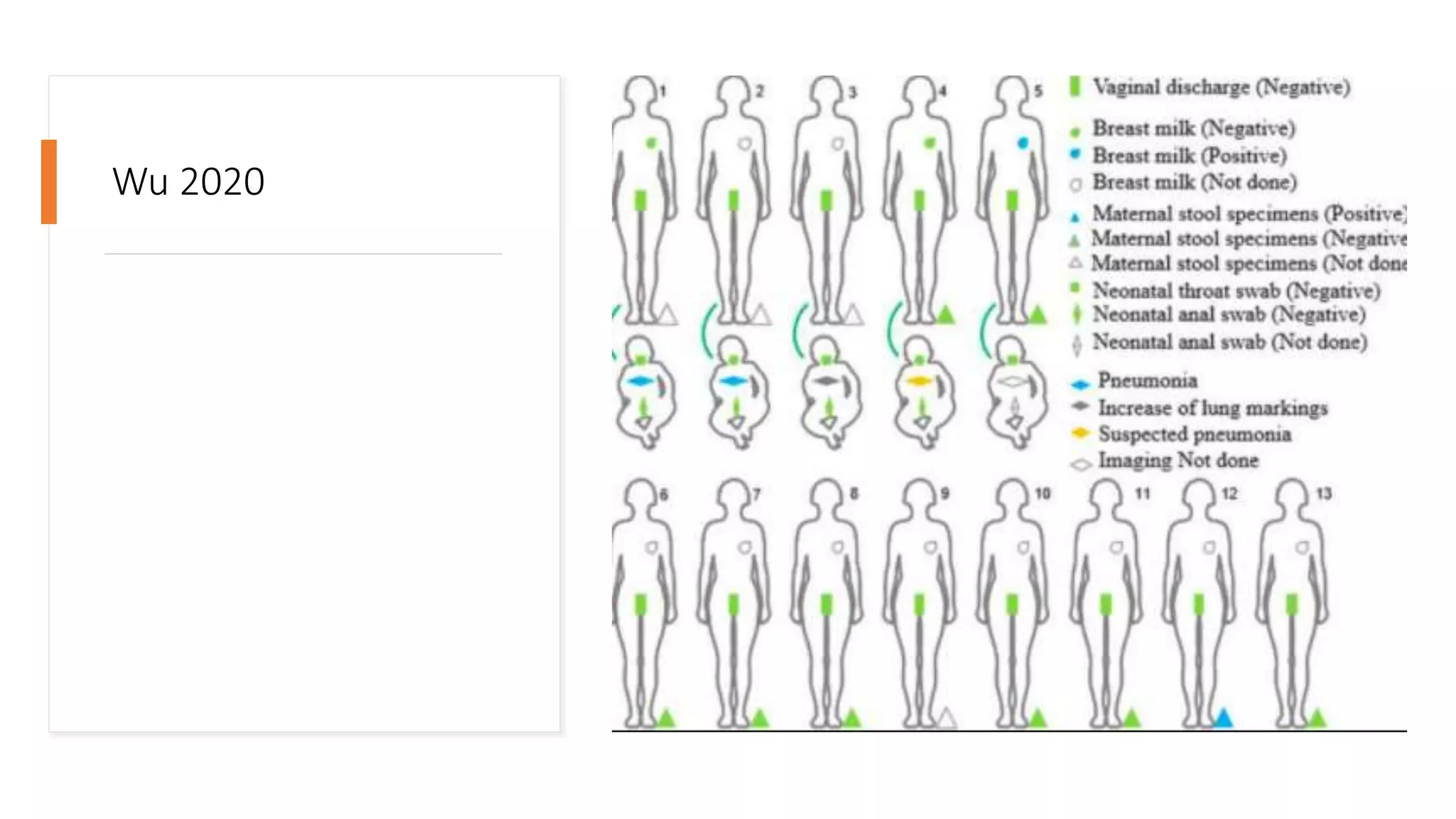
• 13 pregnant women throughout their pregnancy
• 5 gave birth during the study (2 were premature and 2 had neonatal PNA)
• 1/9 positive PCR stool sample from mom
• 13/13 vaginal samples from mom negative
• 5/5 throat swabs and 4/4 anal swabs were negative from the babies
• 1/3 breastmilk samples was positive by PCR
Wu 2020
Wu 2020
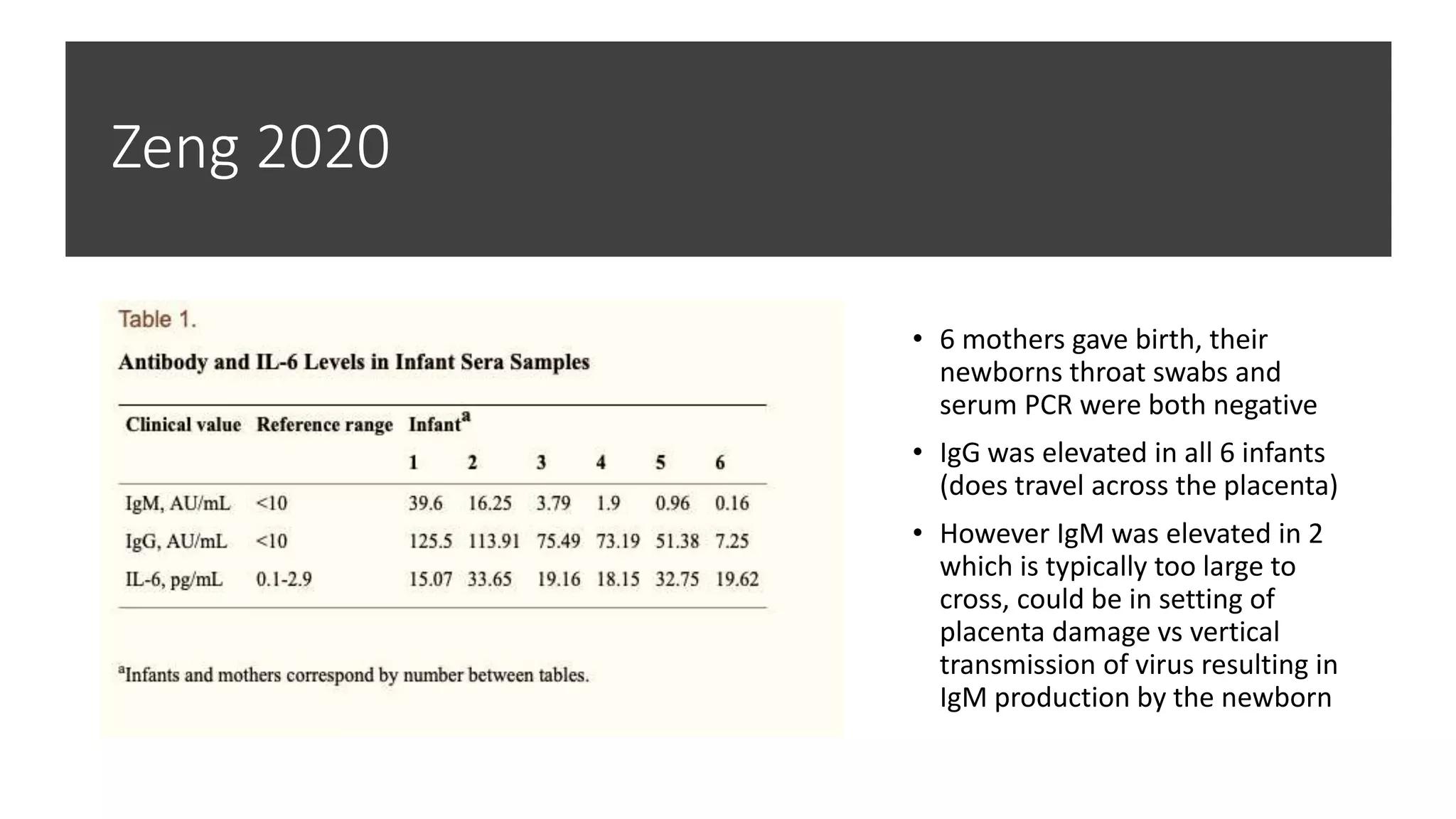
Zeng 2020
• 6 mothers gave birth, their
newborns throat swabs and
serum PCR were both negative
• IgG was elevated in all 6 infants
(does travel across the placenta)
• However IgM was elevated in 2
which is typically too large to
cross, could be in setting of
placenta damage vs vertical
transmission of virus resulting in
IgM production by the newborn
Placenta
• Some viruses can cross the placenta (HSV, zoster, CMV and zika) with
negative consequences largely for the fetus(Wastnedge2021)
• Case reports have detected SARS-COV-2 in the placenta and amniotic
fluid but less often in the fetal tissues (Wastnedge2021)
• thrombosis can cause issues with placenta perfusion (fetal vascular
malperfusion) in a case series they examined 15 placentas of COVID
positive mothers and compared them to controls (pregnant patients
with a HX melanoma) the COVID positive placentas were significantly
more likely to have evidence of Maternal Vascular Malperfusion
compared to matched controls (12/15) (Shanes 2020)
Shanes 2020
COVID-treatment
• “The COVID-19 Treatment Guidelines Panel (NIH) recommends that
potentially effective treatment for COVID-19 should not be withheld from
pregnant women because of theoretical concerns related to the safety of
therapeutic agents in pregnancy (AIII).”
• Remdesivir is regularly administered: was administered in patients with ebola (Favilli
2020) but the cases were not well described, primarily its mechanism is a viral RNA
polymerase inhibitor (competes with ATP)
• Alternate steroid therapy is preferred over dexamethasone (prednisolone or
hydrocortisone) (the corticosteroid arm of the RECOVERY trial) (Wastnedge2021)
• For any of the experimental treatments without clear contraindications
they recommend a shared decision making
• Its hard to know whether or not to include them since most trials don’t
include pregnant or lactating women
Case reports of toculizumab safety
• 35 year old woman at 22 weeks, was successfully treated with
tocilizumab + remdesivir (Naqvi 2020)
• In a database review they identified 288 people who were pregnant
and exposed to tocilizumab at some point, compared to the
population rates they did note an increased rate of pre-term birth
though risk of malformation didn’t appear to be substantially
elevated. (Hoeltzenbein 2016)
Outpatient MAB
• “Bamlanivimab should not be withheld from a pregnant individual
who has a condition that poses a high risk of progression to severe
COVID-19, and the clinician thinks that the potential benefit of the
drug outweighs potential risk (see the criteria for EUA use of
bamlanivimab below).”- NIH.gov
• “Casirivimab plus imdevimab should not be withheld from a pregnant
individual who has a condition that poses a high risk of progression to
severe COVID-19 if the clinician thinks that the potential benefit of
the drug combination outweighs potential risk (see the criteria for
EUA use of casirivimab plus imdevimab below).”- NIH.gov
In conclusion
• Vertical transmission during birth appears low
• Unmasked contact with infected mother appears to be a factor in
transmission
• Mixed reports of positivity in breastmilk, in general recommendations are to
continue (Wastnedge2021)
• Mortality rates are similar between pregnant and non pregnant
women of similar age and co-morbidity
• However pregnant women appear more likely to require an ICU stay and
ventilation
• In resource limited settings this could impact mortality rates
• How to treat is a big ? However consistently the recommendations
favor improving the mortality rate in the mother when the illness is
severe
references
• Soma-Pillay P, Nelson-Piercy C, Tolppanen H, Mebazaa A. Physiological changes in pregnancy. Cardiovasc J Afr. 2016;27(2):89-94. doi:10.5830/CVJA-2016-021
• Cornish EF, Filipovic I, Åsenius F, Williams DJ, McDonnell T. Innate Immune Responses to Acute Viral Infection During Pregnancy. Front Immunol. 2020;11:572567. Published 2020 Sep 30. doi:10.3389/fimmu.2020.572567
• Thornton JG. COVID-19 in pregnancy. BJOG. 2020 Aug;127(9):1122. doi: 10.1111/1471-0528.16308. Epub 2020 Jun 4. PMID: 32378774.
• Ferrazzi E, Frigerio L, Savasi V, Vergani P, Prefumo F, Barresi S, Bianchi S, Ciriello E, Facchinetti F, Gervasi MT, Iurlaro E, Kustermann A, Mangili G, Mosca F, Patanè L, Spazzini D, Spinillo A, Trojano G, Vignali M, Villa A, Zuccotti GV, Parazzini F, Cetin I. Vaginal delivery in SARS-CoV-2-
infected pregnant women in Northern Italy: a retrospective analysis. BJOG. 2020 Aug;127(9):1116-1121. doi: 10.1111/1471-0528.16278. Epub 2020 May 28. PMID: 32339382; PMCID: PMC7267664.
• Wu Y, Liu C, Dong L, Zhang C, Chen Y, Liu J, Zhang C, Duan C, Zhang H, Mol BW, Dennis CL, Yin T, Yang J, Huang H. Coronavirus disease 2019 among pregnant Chinese women: case series data on the safety of vaginal birth and breastfeeding. BJOG. 2020 Aug;127(9):1109-1115. doi:
10.1111/1471-0528.16276. Epub 2020 May 26. PMID: 32369656; PMCID: PMC7383704.
• Juan J, Gil MM, Rong Z, Zhang Y, Yang H, Poon LC. Effect of coronavirus disease 2019 (COVID-19) on maternal, perinatal and neonatal outcome: systematic review. Ultrasound Obstet Gynecol. 2020;56(1):15-27. doi:10.1002/uog.22088
• Metz, Torri “Maternal and neonatal outcomes of pregnant patients with coronavirus disease 2019 (COVID-19): A multistate cohort” Jan 28,2021 Society of maternal Fetal medicine
• Wastnedge EAN, Reynolds RM, van Boeckel SR, Stock SJ, Denison FC, Maybin JA, Critchley HOD. Pregnancy and COVID-19. Physiol Rev. 2021 Jan 1;101(1):303-318. doi: 10.1152/physrev.00024.2020. Epub 2020 Sep 24. PMID: 32969772; PMCID: PMC7686875.
• Ellington S, Strid P, Tong VT, Woodworth K, Galang RR, Zambrano LD, Nahabedian J, Anderson K, Gilboa SM. Characteristics of Women of Reproductive Age with Laboratory-Confirmed SARS-CoV-2 Infection by Pregnancy Status - United States, January 22-June 7, 2020. MMWR
Morb Mortal Wkly Rep. 2020 Jun 26;69(25):769-775. doi: 10.15585/mmwr.mm6925a1. PMID: 32584795; PMCID: PMC7316319.
• Takemoto MLS, Menezes MO, Andreucci CB, Nakamura-Pereira M, Amorim MMR, Katz L, Knobel R. The tragedy of COVID-19 in Brazil: 124 maternal deaths and counting. Int J Gynaecol Obstet ijgo.13300, 2020. doi:10.1002/ijgo.13300
• Berger Abi. Th1 and Th2 responses: what are they? BMJ 2000; 321 :424
• Knight M, Bunch K, Vousden N, Morris E, Simpson N, Gale C, O'Brien P, Quigley M, Brocklehurst P, Kurinczuk JJ; UK Obstetric Surveillance System SARS-CoV-2 Infection in Pregnancy Collaborative Group. Characteristics and outcomes of pregnant women admitted to hospital with
confirmed SARS-CoV-2 infection in UK: national population based cohort study. BMJ. 2020 Jun 8;369:m2107. doi: 10.1136/bmj.m2107. PMID: 32513659; PMCID: PMC7277610.
• Ji HL, Zhao R, Matalon S, Matthay MA. Elevated Plasmin(ogen) as a Common Risk Factor for COVID-19 Susceptibility. Physiol Rev. 2020 Jul 1;100(3):1065-1075. doi: 10.1152/physrev.00013.2020. Epub 2020 Mar 27. PMID: 32216698; PMCID: PMC7191627.
• “Special Considerations in Pregnancy” https://www.covid19treatmentguidelines.nih.gov/special-populations/pregnancy/
• Naqvi M, Zakowski P, Glucksman L, Smithson S, Burwick RM. Tocilizumab and Remdesivir in a Pregnant Patient With Coronavirus Disease 2019 (COVID-19). Obstet Gynecol. 2020 Nov;136(5):1025-1029. doi: 10.1097/AOG.0000000000004050. PMID: 32618794.
• Favilli A, Mattei Gentili M, Raspa F, et al. Effectiveness and safety of available treatments for COVID-19 during pregnancy: a critical review [published online ahead of print, 2020 Jun 7]. J Matern Fetal Neonatal Med. 2020;1-14. doi:10.1080/14767058.2020.1774875
• Shanes ED. Placental pathology in COVID-19 (Preprint). MedRxiv 20093229, 2020. doi:10.1101/2020.05.08.20093229.
• Antibodies in Infants Born to Mothers With COVID-19 Pneumonia.Zeng H, Xu C, Fan J, Tang Y, Deng Q, Zhang W, Long XJAMA. 2020 May 12; 323(18):1848-1849.
• Hoeltzenbein M, Beck E, Rajwanshi R, Gøtestam Skorpen C, Berber E, Schaefer C, Østensen M. Tocilizumab use in pregnancy: Analysis of a global safety database including data from clinical trials and post-marketing data. Semin Arthritis Rheum. 2016 Oct;46(2):238-245. doi:
10.1016/j.semarthrit.2016.05.004. Epub 2016 May 25. PMID: 27346577.
• Adhikari EH, Moreno W, Zofkie AC, et al. Pregnancy Outcomes Among Women With and Without Severe Acute Respiratory Syndrome Coronavirus 2 Infection. JAMA Netw Open. 2020;3(11):e2029256. Published 2020 Nov 2. doi:10.1001/jamanetworkopen.2020.29256
• https://www.covid19treatmentguidelines.nih.gov/statement-on-casirivimab-plus-imdevimab-eua/
• https://www.covid19treatmentguidelines.nih.gov/statement-on-bamlanivimab-eua/

02.05.21 | COVID-19 and Pregnancy

  • 1.
    HIV & GlobalHealth Rounds The UC San Diego AntiViral Research Center sponsors weekly presentations by infectious disease and global public health clinicians, physicians, and researchers. The goal of these presentations is to provide the most current research, clinical practices, and trends in HIV, HBV, HCV, TB, and other infectious diseases of global significance. The slides from the HIV & Global Health Rounds presentation that you are about to view are intended for the educational purposes of our audience. They may not be used for other purposes without the presenter’s express permission.
  • 2.
    COVID-19 in pregnancy HighRounds Jan 5, 2021 Jocelyn Keehner, MD 2nd year ID Fellow
  • 3.
    disclosures • I havenothing to disclose
  • 4.
    Contents • Physiology ofpregnancy • Immune suppression • Covid in pregnancy • Mortality rates • Complications • transmission • Treatments
  • 5.
  • 6.
    Physiologic changes ofpregnancy • Increased plasma volume by 50% (thus drop in Hgb) and increase in Cardiac Output (by 30-50%) (Wastnedge2021) • Platelet count falls progressively over the course of pregnancy (usually >100 though) • Increased iron, folate and B12 requirements • Pregnant women become hypercoagulable: increased VIII, IX and X, along with Fibrinogen (up to 50%) and fibrinolytic activity is decreased. • Concentrations of antithrombin and protein S decrease. • Hypercoagulability is persistent up to 12 weeks after delivery • Venous stasis in lower limbs because of compression of the left iliac vein by the left iliac artery and the ovarian artery (can lead to development of DVT) • Maternal hyperventilation occurs (increased oxygen demand because of increased metabolic rate) • Maternal insulin resistance All from Soma-Pillay 2016
  • 7.
    Hormonal impacts ofpregnancy • Activation of the renin-angiotensin-aldosterone system occurs due to systemic vasodilation (aldosterone can be increased 3x, in the first trimester and up to 10x increase in the third trimester) • Rise in deoxycorticosterone, corticosteroid-binding globulin (CBG), adrenocorticotropic hormone (ACTH), cortisol and free cortisol • Total cortisol levels rise at the end of the first trimester and are 3x higher than in non-pregnant patients by the end of pregnancy. All from Soma-Pillay 2016
  • 8.
    Immune system impactsof pregnancy changes • Goal is for the body to not recognize the fetus as foreign • While at the same time avoiding significant infections • In general there is a push towards immune tolerance in the adaptive immune system (Cornish 2020)
  • 9.
    Immune system inpregnancy and impact on viral infection • Shift to Th2 CD4 cells from Th1 (TH2 cells release the anti-inflammatory IL- 10, and tend to push the adaptive immune system towards producing antibodies over cell mediated immunity) (Wastnedge 2021, Berger 2000) • Decreased TH1 response may result in reduced clearance of infected cells (Wastnedge 2021) • Drop in NK cells in circulation (Wastnedge2021) • Decreased plasmacytoid dendritic cells (which play a role in interferon production against viral infection) (Wastnedge2021) • Increased progesterone which in animal models can lead to decreased virus specific antibody levels to influenza (Wastnedge2021) • Innate immune alterations including TLRs (Wastnedge2021)
  • 10.
    COVID outcomes andvertical transmission
  • 11.
  • 12.
    Covid complications inpregnancy • Presence of gravid uterus impacts lung capacity and can lead to respiratory distress and increase need for ventilation in critically ill patients • COVID-19 is associated with a high rate of thrombotic events and linked to development of DIC (Wastnedge2021) • Guidelines recommend thromboprophylaxis in COVID + pregnant patients while acutely ill https://library.med.utah.edu/kw/human_reprod/mml/hrmaternal_L03.html
  • 13.
    Covid complications inpregnancy Wastnedge2021
  • 14.
    Juan 2020 review:Pregnancy and covid • 24 studies with 324 pregnant women (9 case series and 15 case reports) • Maternal age range 20-44, gestational age 5-41 weeks • The most common symptoms at presentation were fever, cough, dyspnea, fatigue and myalgia. • The rate of severe pneumonia reported amongst the case series ranged from 0% to 14 % • Only four cases of spontaneous miscarriage or termination were reported. • Apgar scores averaged 7 to 10, one third of newborns were transferred to the NICU • Only 3/155 neonates were positive for SARS-CoV-2 via throat swab • In the eight consecutive case series, there were no instances of maternal death. • However in the non-consecutive case series of severe covid there were 7 maternal deaths and 4 intrauterine fetal deaths. • There were two maternal deaths and one newborn death in the case reports.
  • 15.
    • 42 womenwith COVID‐19, 30 were term deliveries with spontaneous preterm birth occurring in five cases and elective caesarean section in six cases. • 24 delivered vaginally. • An elective caesarean section was performed in 18/42 • in eight cases it was not felt to be related to covid. • Pneumonia was diagnosed in 19/42 of the mothers • 7/42 needed supplemental oxygen • 4/42 were admitted to an intensive care unit • 2 mothers initially breastfed without a mask because they were diagnosed post partum and their newborns tested positive for SARS‐Cov‐2 infection. • In total there were only 3 positives among the newborns (the other was positive after a vaginal operative delivery) indicating a low rate of vertical transmission Ferazzi 2020
  • 16.
    Society MFM 2021(1/28/2021) Metz 2021 • 1,219 pregnant patients were included: 47% asymptomatic, 27% mild, 14% moderate, 8% severe and 4% critical. • Severity of illness was associated with standard risk factors (age, BMI and medical comorbidities etc) • cough occurred in (34%), dyspnea in (19%), and myalgias in (19%). • Four deaths (0.3%) were attributed to COVID-19. • The more critical the illness the higher the bad perinatal outcomes: 6% VTE rate with severe/critical disease • severe/critical COVID-19 was associated with c-section, post partum hemorrhage, hypertension, and pre-term birth compared with asymptomatic patients. • In this cohort ~1% of newborns tested positive for SARS-CoV-2
  • 17.
    MMWR published June2020 (Ellington 2020) • January 22-June 7, as part of COVID-19 surveillance, CDC identified 8,207 pregnant patients that they were able to obtain health information on • Pregnant and non-pregnant cohorts reported similar frequencies of cough (>50%) and shortness of breath (30%), • Though pregnant women had fewer HA, myalgia's, fevers/chills and diarrhea • (31.5%) of pregnant women with COVID-19 were hospitalized compared with 5.8% of nonpregnant women. • “After adjusting for age, presence of underlying medical conditions, and race/ethnicity, pregnant women were significantly more likely to be admitted to the intensive care unit (ICU) (aRR = 1.5, 95% confidence interval [CI] = 1.2-1.8) and receive mechanical ventilation (aRR = 1.7, 95% CI = 1.2-2.4)." • “Sixteen (0.2%) COVID-19-related deaths were reported among pregnant, and 208 (0.2%) such deaths were reported among nonpregnant women (aRR = 0.9, 95% CI = 0.5- 1.5)”. • Mortality appears similar with pregnant vs non-pregnant women, however pregnant women are more likely to require ICU stays and intubations
  • 18.
    Adhikari 2020:cohort studyof 3,374 pregnant women, 252 positive for SARS-COV-2 • primary outcome: preterm birth, preeclampsia with severe features, and cesarean delivery for fetal indication • No significant difference in primary outcome between covid positive and negative groups • 2520 Hispanic (75%), 619 Black (18%), and 125 White (4%) women • One interesting finding was that neonatal covid occurred in 6/188 (3%) of cases and most of the mothers were asymptomatic or pauci symptomatic
  • 20.
    In Brazil however(Takemoto 2020) • Mortality rate of pregnant patients very high 12.7% • There is no asymptomatic or pauci-symptomatic testing so only women with severe disease end up tested • Issues with ICU availability for obstetric patients
  • 21.
  • 22.
    • 13 pregnantwomen throughout their pregnancy • 5 gave birth during the study (2 were premature and 2 had neonatal PNA) • 1/9 positive PCR stool sample from mom • 13/13 vaginal samples from mom negative • 5/5 throat swabs and 4/4 anal swabs were negative from the babies • 1/3 breastmilk samples was positive by PCR Wu 2020
  • 23.
  • 24.
    Zeng 2020 • 6mothers gave birth, their newborns throat swabs and serum PCR were both negative • IgG was elevated in all 6 infants (does travel across the placenta) • However IgM was elevated in 2 which is typically too large to cross, could be in setting of placenta damage vs vertical transmission of virus resulting in IgM production by the newborn
  • 25.
    Placenta • Some virusescan cross the placenta (HSV, zoster, CMV and zika) with negative consequences largely for the fetus(Wastnedge2021) • Case reports have detected SARS-COV-2 in the placenta and amniotic fluid but less often in the fetal tissues (Wastnedge2021) • thrombosis can cause issues with placenta perfusion (fetal vascular malperfusion) in a case series they examined 15 placentas of COVID positive mothers and compared them to controls (pregnant patients with a HX melanoma) the COVID positive placentas were significantly more likely to have evidence of Maternal Vascular Malperfusion compared to matched controls (12/15) (Shanes 2020)
  • 26.
  • 27.
    COVID-treatment • “The COVID-19Treatment Guidelines Panel (NIH) recommends that potentially effective treatment for COVID-19 should not be withheld from pregnant women because of theoretical concerns related to the safety of therapeutic agents in pregnancy (AIII).” • Remdesivir is regularly administered: was administered in patients with ebola (Favilli 2020) but the cases were not well described, primarily its mechanism is a viral RNA polymerase inhibitor (competes with ATP) • Alternate steroid therapy is preferred over dexamethasone (prednisolone or hydrocortisone) (the corticosteroid arm of the RECOVERY trial) (Wastnedge2021) • For any of the experimental treatments without clear contraindications they recommend a shared decision making • Its hard to know whether or not to include them since most trials don’t include pregnant or lactating women
  • 28.
    Case reports oftoculizumab safety • 35 year old woman at 22 weeks, was successfully treated with tocilizumab + remdesivir (Naqvi 2020) • In a database review they identified 288 people who were pregnant and exposed to tocilizumab at some point, compared to the population rates they did note an increased rate of pre-term birth though risk of malformation didn’t appear to be substantially elevated. (Hoeltzenbein 2016)
  • 29.
    Outpatient MAB • “Bamlanivimabshould not be withheld from a pregnant individual who has a condition that poses a high risk of progression to severe COVID-19, and the clinician thinks that the potential benefit of the drug outweighs potential risk (see the criteria for EUA use of bamlanivimab below).”- NIH.gov • “Casirivimab plus imdevimab should not be withheld from a pregnant individual who has a condition that poses a high risk of progression to severe COVID-19 if the clinician thinks that the potential benefit of the drug combination outweighs potential risk (see the criteria for EUA use of casirivimab plus imdevimab below).”- NIH.gov
  • 30.
    In conclusion • Verticaltransmission during birth appears low • Unmasked contact with infected mother appears to be a factor in transmission • Mixed reports of positivity in breastmilk, in general recommendations are to continue (Wastnedge2021) • Mortality rates are similar between pregnant and non pregnant women of similar age and co-morbidity • However pregnant women appear more likely to require an ICU stay and ventilation • In resource limited settings this could impact mortality rates • How to treat is a big ? However consistently the recommendations favor improving the mortality rate in the mother when the illness is severe
  • 31.
    references • Soma-Pillay P,Nelson-Piercy C, Tolppanen H, Mebazaa A. Physiological changes in pregnancy. Cardiovasc J Afr. 2016;27(2):89-94. doi:10.5830/CVJA-2016-021 • Cornish EF, Filipovic I, Åsenius F, Williams DJ, McDonnell T. Innate Immune Responses to Acute Viral Infection During Pregnancy. Front Immunol. 2020;11:572567. Published 2020 Sep 30. doi:10.3389/fimmu.2020.572567 • Thornton JG. COVID-19 in pregnancy. BJOG. 2020 Aug;127(9):1122. doi: 10.1111/1471-0528.16308. Epub 2020 Jun 4. PMID: 32378774. • Ferrazzi E, Frigerio L, Savasi V, Vergani P, Prefumo F, Barresi S, Bianchi S, Ciriello E, Facchinetti F, Gervasi MT, Iurlaro E, Kustermann A, Mangili G, Mosca F, Patanè L, Spazzini D, Spinillo A, Trojano G, Vignali M, Villa A, Zuccotti GV, Parazzini F, Cetin I. Vaginal delivery in SARS-CoV-2- infected pregnant women in Northern Italy: a retrospective analysis. BJOG. 2020 Aug;127(9):1116-1121. doi: 10.1111/1471-0528.16278. Epub 2020 May 28. PMID: 32339382; PMCID: PMC7267664. • Wu Y, Liu C, Dong L, Zhang C, Chen Y, Liu J, Zhang C, Duan C, Zhang H, Mol BW, Dennis CL, Yin T, Yang J, Huang H. Coronavirus disease 2019 among pregnant Chinese women: case series data on the safety of vaginal birth and breastfeeding. BJOG. 2020 Aug;127(9):1109-1115. doi: 10.1111/1471-0528.16276. Epub 2020 May 26. PMID: 32369656; PMCID: PMC7383704. • Juan J, Gil MM, Rong Z, Zhang Y, Yang H, Poon LC. Effect of coronavirus disease 2019 (COVID-19) on maternal, perinatal and neonatal outcome: systematic review. Ultrasound Obstet Gynecol. 2020;56(1):15-27. doi:10.1002/uog.22088 • Metz, Torri “Maternal and neonatal outcomes of pregnant patients with coronavirus disease 2019 (COVID-19): A multistate cohort” Jan 28,2021 Society of maternal Fetal medicine • Wastnedge EAN, Reynolds RM, van Boeckel SR, Stock SJ, Denison FC, Maybin JA, Critchley HOD. Pregnancy and COVID-19. Physiol Rev. 2021 Jan 1;101(1):303-318. doi: 10.1152/physrev.00024.2020. Epub 2020 Sep 24. PMID: 32969772; PMCID: PMC7686875. • Ellington S, Strid P, Tong VT, Woodworth K, Galang RR, Zambrano LD, Nahabedian J, Anderson K, Gilboa SM. Characteristics of Women of Reproductive Age with Laboratory-Confirmed SARS-CoV-2 Infection by Pregnancy Status - United States, January 22-June 7, 2020. MMWR Morb Mortal Wkly Rep. 2020 Jun 26;69(25):769-775. doi: 10.15585/mmwr.mm6925a1. PMID: 32584795; PMCID: PMC7316319. • Takemoto MLS, Menezes MO, Andreucci CB, Nakamura-Pereira M, Amorim MMR, Katz L, Knobel R. The tragedy of COVID-19 in Brazil: 124 maternal deaths and counting. Int J Gynaecol Obstet ijgo.13300, 2020. doi:10.1002/ijgo.13300 • Berger Abi. Th1 and Th2 responses: what are they? BMJ 2000; 321 :424 • Knight M, Bunch K, Vousden N, Morris E, Simpson N, Gale C, O'Brien P, Quigley M, Brocklehurst P, Kurinczuk JJ; UK Obstetric Surveillance System SARS-CoV-2 Infection in Pregnancy Collaborative Group. Characteristics and outcomes of pregnant women admitted to hospital with confirmed SARS-CoV-2 infection in UK: national population based cohort study. BMJ. 2020 Jun 8;369:m2107. doi: 10.1136/bmj.m2107. PMID: 32513659; PMCID: PMC7277610. • Ji HL, Zhao R, Matalon S, Matthay MA. Elevated Plasmin(ogen) as a Common Risk Factor for COVID-19 Susceptibility. Physiol Rev. 2020 Jul 1;100(3):1065-1075. doi: 10.1152/physrev.00013.2020. Epub 2020 Mar 27. PMID: 32216698; PMCID: PMC7191627. • “Special Considerations in Pregnancy” https://www.covid19treatmentguidelines.nih.gov/special-populations/pregnancy/ • Naqvi M, Zakowski P, Glucksman L, Smithson S, Burwick RM. Tocilizumab and Remdesivir in a Pregnant Patient With Coronavirus Disease 2019 (COVID-19). Obstet Gynecol. 2020 Nov;136(5):1025-1029. doi: 10.1097/AOG.0000000000004050. PMID: 32618794. • Favilli A, Mattei Gentili M, Raspa F, et al. Effectiveness and safety of available treatments for COVID-19 during pregnancy: a critical review [published online ahead of print, 2020 Jun 7]. J Matern Fetal Neonatal Med. 2020;1-14. doi:10.1080/14767058.2020.1774875 • Shanes ED. Placental pathology in COVID-19 (Preprint). MedRxiv 20093229, 2020. doi:10.1101/2020.05.08.20093229. • Antibodies in Infants Born to Mothers With COVID-19 Pneumonia.Zeng H, Xu C, Fan J, Tang Y, Deng Q, Zhang W, Long XJAMA. 2020 May 12; 323(18):1848-1849. • Hoeltzenbein M, Beck E, Rajwanshi R, Gøtestam Skorpen C, Berber E, Schaefer C, Østensen M. Tocilizumab use in pregnancy: Analysis of a global safety database including data from clinical trials and post-marketing data. Semin Arthritis Rheum. 2016 Oct;46(2):238-245. doi: 10.1016/j.semarthrit.2016.05.004. Epub 2016 May 25. PMID: 27346577. • Adhikari EH, Moreno W, Zofkie AC, et al. Pregnancy Outcomes Among Women With and Without Severe Acute Respiratory Syndrome Coronavirus 2 Infection. JAMA Netw Open. 2020;3(11):e2029256. Published 2020 Nov 2. doi:10.1001/jamanetworkopen.2020.29256 • https://www.covid19treatmentguidelines.nih.gov/statement-on-casirivimab-plus-imdevimab-eua/ • https://www.covid19treatmentguidelines.nih.gov/statement-on-bamlanivimab-eua/