Developing Standards Education
in Indonesia
Dewi Odjar Ratna Komala
Deputy Chairman for Information and Promotion of
Standardization
National Standardization Agency, Indonesia
email: odjar@bsn.go.id
photo
1
Outline
1. Introduction
2. Globalization and Standardization
3. Why do we need Standards Education?
4. Standards Education Program in Indonesia
5. Cooperation between BSN and Universities
6. Creating values through Standards Education
7. Lessons learnt and key success factors
8. Recent Development on Standards Education Program
9. Awareness Raising in Primary Education and Professional Training
2
Introduction
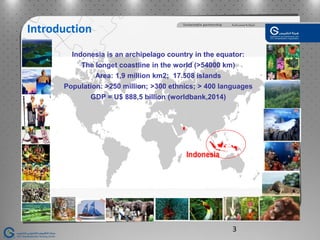
Indonesia is an archipelago country in the equator:
The longet coastline in the world (>54000 km)
Area: 1,9 million km2; 17.508 islands
Population: >250 million; >300 ethnics; > 400 languages
GDP = U$ 888,5 billion (worldbank,2014)
3
National Standardization Agency of Indonesia
- Established in 1997
- Member of ISO and IEC since 1955
- Act No.20/2014 – Standardization and
Conformity Assessement
- Developed 10520 national standard (SNI)
- 3635 SNI is harmonized with ISO and IEC
Standards
- Participated in 228 ISO TC and 64 IEC TC
- Website: www.bsn.go.id
4
Globalization
&
Standardization
Global
Acceptance
Global
Product
Globalization
Free Trade
Agreement
Global
Supply Chain
Standards
Metrology
Conformity
Assessment
Certification
Accreditation
International
Recognition
INDONESIA
RATIFIKASI
TH. 1994
Globalization and Standardization
5
Why do we need Standards Education in universities?
Source: APEC SCSC Education Guideline 1, 2007
NSB &
CAB
1. have the maximum
potential for interaction
with the standards
world
2. the ultimate bridge
between younger
generations and
professions and
3. at the same time, they
are key producers of
knowledge .
Source: Teaching Standards, ISO, 2014
6
The Ultimate Goal of Standards Education
To create a rich pool of standards professionals
equipped with:
1. deep insight in their specific field
2. a competency in international standardization
3. ability to keep a head of the rapidly changing
technology, market, and policy environments
Source: APEC SCSC Guideline on Standards Infrastructure 2014
7
Source: Teaching Standards, ISO, 2014
Key success
Factor in SE
Development
8
Standards Education Program
in Indonesia
SE Program Activities
Higher Education
Undergraduate : MoUs, Curricula and Textbook
Development. Courses, Workshop, Internship,
Competition, ToT for lecturers, community network for
lecturer and student, industrial visit
Graduate: Courses and Curricula Development
Secondary
Education
Awareness raising through seminars, reference book
development, competions (poster, games)
Elementary
Education
Awareness raising through Jambore, games, comic, story
telling, Industrial visit
Professional
Education
Training for professional awareness, skills and
competencies in: documentation, auditing, certification,
measurement and testing
Regional/
International
Cooperation
Active participation in APEC SCSC, PASC, ICES-WSC
(workshop, competition, textbook development and
implementation)
9
DEVELOPMENT PROCESS OF SE
20102009 2011 20122007 20082005 2006
NATIONAL LEVEL
INTERNATIONAL LEVEL
CURRICULUM AND TEXT OOK DEVELOPMENT
UNDIP
ITB
COLLABORATION WITH UNIVERSITIES
2013 2014 2015
Hosting ICES
& wsc ad
Standardization Education Forum
Pilot
Implementation
APEC Textbook
Teaching Standards
Textbook: Standardisation in
Companies and Market
Education Guidelines 1-4
PASC
38th ISO GA
ICES
Board
Member
10
Lesson Learned
1. Exchange information and experiences, allowing NSBs
and universities to take advantage of ideas and
approaches from other countries
2. Development and sharing of teaching materials
3. Development of extended, across-the-border, pools of
experts
4. Enrich national events initiatives bringing into
international dimension
5. Facilitating the establishment of university networks
(providing additional opportunities for students and
academicians; and increasing the attractiveness of
Standards Education in universities)
Source: Teaching Standards, ISO, 2014
11
Standard Education Cooperation
Between BSN and Universities
4.IPB
8.UNY
1.UNDIP
6.UB
3.UNHAS
2.UNLAM
7.ITB
9.UNS
5.UGM
10.USU
11.UNSRI
18.UNUD
13.UNAS
12.UI
14.USAKTI
15.UII
17.UBAYA
19.UNRI
21.UNTAN
22.UNPAR
20.UNIKA
23.UNSRAT
16.ITS
28.UNMUL
25. UNINDRA 27.UAJY
24.UMM26.UNPAD
30. UNCEN
29. UNRAM
31. ITI
32. UPN Jakarta
33. UPS
MoU 34 Universities
Undergraduate 12 Universities
Graduate universities2
34. UNSOED
12
1. Education,Training , and
Promotion of standardization;
2. Experts participation in
standardization;
3. Information exchanges;
4. Capacity building for
laboratories in universities;
5. Research on standardization
and its result dissemination
Scope of MoU between
BSN and Universities
13
Standardization taught as:
1. embeded in specific discipline courses e.g.
engineering, ICT, International Trade, Business
Management, etc);
2. specific subject matter e.g. through a
standardization courses (as mandatory or elective
course);
3. major of academic curricula e.g. Master Program
on Quality and Standardization
14
Creating Values of SE
1. Study visit
2. Internship program
3. Standards competition
4. SE Lecturers forum
5. University Award
15
Recent Development
1. Webconference using
ISO Webex
2. Flipbook
3. SNI Corner
(standards outlet)
4. Distance learning
http://fliphtml5.com/bookcase/gean
http://elearning.bsn.go.id
16
Awareness raising:
Primary and Secondary Education
1. Jambore, Games,
Comic, Story
telling, Industrial
visit
2. Textbook for
Vocational School
3. National and
International
Standard Olympiad
17
Professional Training
on Standardization
480
730
921
1019
1158
1114 1131
0
200
400
600
800
1000
1200
1400
2008 2009 2010 2011 2012 2013 2014
Total Training Participants
The most favored topics of training:
1. SNI ISO/IEC 17025 (Testing and Calibration Laboratories)
2. SNI ISO/IEC 17020 (Inspection Body)
3. SNI ISO/IEC 17065 (Product Certification)
4. SNI ISO/IEC 17021 (Certification of Management
System)
5. SNI ISO 9001 (Quality Management System)
6. SNI ISO 15189 (Medical Laboratories)
18
1178
2015
Thank you
19

Developing Standards Education in Indonesia

  • 1.
    Developing Standards Education inIndonesia Dewi Odjar Ratna Komala Deputy Chairman for Information and Promotion of Standardization National Standardization Agency, Indonesia email: odjar@bsn.go.id photo 1
  • 2.
    Outline 1. Introduction 2. Globalizationand Standardization 3. Why do we need Standards Education? 4. Standards Education Program in Indonesia 5. Cooperation between BSN and Universities 6. Creating values through Standards Education 7. Lessons learnt and key success factors 8. Recent Development on Standards Education Program 9. Awareness Raising in Primary Education and Professional Training 2
  • 3.
    Introduction Indonesia is anarchipelago country in the equator: The longet coastline in the world (>54000 km) Area: 1,9 million km2; 17.508 islands Population: >250 million; >300 ethnics; > 400 languages GDP = U$ 888,5 billion (worldbank,2014) 3
  • 4.
    National Standardization Agencyof Indonesia - Established in 1997 - Member of ISO and IEC since 1955 - Act No.20/2014 – Standardization and Conformity Assessement - Developed 10520 national standard (SNI) - 3635 SNI is harmonized with ISO and IEC Standards - Participated in 228 ISO TC and 64 IEC TC - Website: www.bsn.go.id 4
  • 5.
  • 6.
    Why do weneed Standards Education in universities? Source: APEC SCSC Education Guideline 1, 2007 NSB & CAB 1. have the maximum potential for interaction with the standards world 2. the ultimate bridge between younger generations and professions and 3. at the same time, they are key producers of knowledge . Source: Teaching Standards, ISO, 2014 6
  • 7.
    The Ultimate Goalof Standards Education To create a rich pool of standards professionals equipped with: 1. deep insight in their specific field 2. a competency in international standardization 3. ability to keep a head of the rapidly changing technology, market, and policy environments Source: APEC SCSC Guideline on Standards Infrastructure 2014 7
  • 8.
    Source: Teaching Standards,ISO, 2014 Key success Factor in SE Development 8
  • 9.
    Standards Education Program inIndonesia SE Program Activities Higher Education Undergraduate : MoUs, Curricula and Textbook Development. Courses, Workshop, Internship, Competition, ToT for lecturers, community network for lecturer and student, industrial visit Graduate: Courses and Curricula Development Secondary Education Awareness raising through seminars, reference book development, competions (poster, games) Elementary Education Awareness raising through Jambore, games, comic, story telling, Industrial visit Professional Education Training for professional awareness, skills and competencies in: documentation, auditing, certification, measurement and testing Regional/ International Cooperation Active participation in APEC SCSC, PASC, ICES-WSC (workshop, competition, textbook development and implementation) 9
  • 10.
    DEVELOPMENT PROCESS OFSE 20102009 2011 20122007 20082005 2006 NATIONAL LEVEL INTERNATIONAL LEVEL CURRICULUM AND TEXT OOK DEVELOPMENT UNDIP ITB COLLABORATION WITH UNIVERSITIES 2013 2014 2015 Hosting ICES & wsc ad Standardization Education Forum Pilot Implementation APEC Textbook Teaching Standards Textbook: Standardisation in Companies and Market Education Guidelines 1-4 PASC 38th ISO GA ICES Board Member 10
  • 11.
    Lesson Learned 1. Exchangeinformation and experiences, allowing NSBs and universities to take advantage of ideas and approaches from other countries 2. Development and sharing of teaching materials 3. Development of extended, across-the-border, pools of experts 4. Enrich national events initiatives bringing into international dimension 5. Facilitating the establishment of university networks (providing additional opportunities for students and academicians; and increasing the attractiveness of Standards Education in universities) Source: Teaching Standards, ISO, 2014 11
  • 12.
    Standard Education Cooperation BetweenBSN and Universities 4.IPB 8.UNY 1.UNDIP 6.UB 3.UNHAS 2.UNLAM 7.ITB 9.UNS 5.UGM 10.USU 11.UNSRI 18.UNUD 13.UNAS 12.UI 14.USAKTI 15.UII 17.UBAYA 19.UNRI 21.UNTAN 22.UNPAR 20.UNIKA 23.UNSRAT 16.ITS 28.UNMUL 25. UNINDRA 27.UAJY 24.UMM26.UNPAD 30. UNCEN 29. UNRAM 31. ITI 32. UPN Jakarta 33. UPS MoU 34 Universities Undergraduate 12 Universities Graduate universities2 34. UNSOED 12
  • 13.
    1. Education,Training ,and Promotion of standardization; 2. Experts participation in standardization; 3. Information exchanges; 4. Capacity building for laboratories in universities; 5. Research on standardization and its result dissemination Scope of MoU between BSN and Universities 13
  • 14.
    Standardization taught as: 1.embeded in specific discipline courses e.g. engineering, ICT, International Trade, Business Management, etc); 2. specific subject matter e.g. through a standardization courses (as mandatory or elective course); 3. major of academic curricula e.g. Master Program on Quality and Standardization 14
  • 15.
    Creating Values ofSE 1. Study visit 2. Internship program 3. Standards competition 4. SE Lecturers forum 5. University Award 15
  • 16.
    Recent Development 1. Webconferenceusing ISO Webex 2. Flipbook 3. SNI Corner (standards outlet) 4. Distance learning http://fliphtml5.com/bookcase/gean http://elearning.bsn.go.id 16
  • 17.
    Awareness raising: Primary andSecondary Education 1. Jambore, Games, Comic, Story telling, Industrial visit 2. Textbook for Vocational School 3. National and International Standard Olympiad 17
  • 18.
    Professional Training on Standardization 480 730 921 1019 1158 11141131 0 200 400 600 800 1000 1200 1400 2008 2009 2010 2011 2012 2013 2014 Total Training Participants The most favored topics of training: 1. SNI ISO/IEC 17025 (Testing and Calibration Laboratories) 2. SNI ISO/IEC 17020 (Inspection Body) 3. SNI ISO/IEC 17065 (Product Certification) 4. SNI ISO/IEC 17021 (Certification of Management System) 5. SNI ISO 9001 (Quality Management System) 6. SNI ISO 15189 (Medical Laboratories) 18 1178 2015
  • 19.