Controlling, supervising,
problem solving
Developing
Organizational
skills
Organizational skills are the abilities that let you stay
focused on different tasks, and use your time, energy, strength,
mental capacity, physical space, etc. effectively and efficiently
in order to achieve the desired outcome.
This helps employees meet the company's goals more
effectively which may lead to a successful overall company
performance.
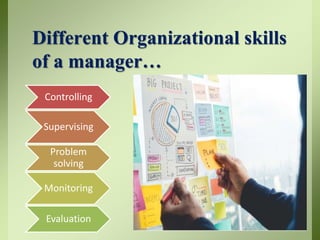
Different Organizational skills
of a manager…
Controlling
Supervising
Problem
solving
Monitoring
Evaluation
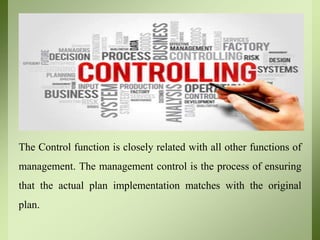
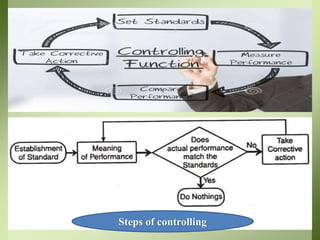
The Control function is closely related with all other functions of
management. The management control is the process of ensuring
that the actual plan implementation matches with the original
plan.
Steps of controlling
The control process involves four basic steps as mentioned below:-
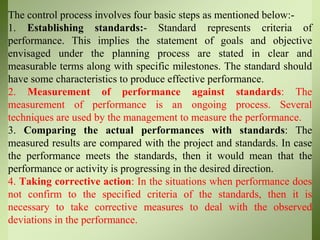
1. Establishing standards:- Standard represents criteria of
performance. This implies the statement of goals and objective
envisaged under the planning process are stated in clear and
measurable terms along with specific milestones. The standard should
have some characteristics to produce effective performance.
2. Measurement of performance against standards: The
measurement of performance is an ongoing process. Several
techniques are used by the management to measure the performance.
3. Comparing the actual performances with standards: The
measured results are compared with the project and standards. In case
the performance meets the standards, then it would mean that the
performance or activity is progressing in the desired direction.
4. Taking corrective action: In the situations when performance does
not confirm to the specified criteria of the standards, then it is
necessary to take corrective measures to deal with the observed
deviations in the performance.
SUPERVISION
Supervision is all about immediate and direct guidance and control
of subordinates while performing their work. It involves closely
observing the subordinates at work and ensuring that they work
according to the policies and plans of the organization
The following are the main functions performed by a
supervisor:
1. Provides a Link between Workers and Management
2. Direct Contact with the Workers
3. Avoidance of Conflicts and Misunderstanding
4. Unity among Workers
5. Motivating Workers
6. Training of Workers
7. Analysis of Work Performed
8. Leadership qualities
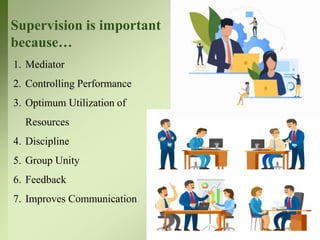
Supervision is important
because…
1. Mediator
2. Controlling Performance
3. Optimum Utilization of
Resources
4. Discipline
5. Group Unity
6. Feedback
7. Improves Communication
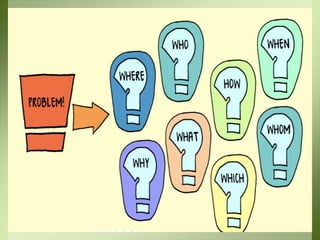
PROBLEM
SOLVING
As both the founder of your organization and the leader of your
team, you'll be responsible for identifying and solving the problems
of your customers, partners, employees and your company, in
general.
Problem-solving is one of
the most important
aspects of
entrepreneurship
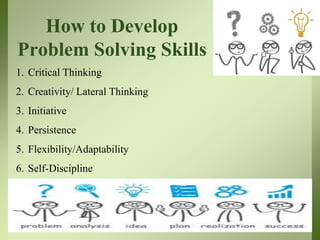
How to Develop
Problem Solving Skills
1. Critical Thinking
2. Creativity/ Lateral Thinking
3. Initiative
4. Persistence
5. Flexibility/Adaptability
6. Self-Discipline
what's different about
entrepreneurs-as-problem-solvers
1. They identify problems first
2. They stay calm
3. They start with the general and work toward the specific
4. They adapt
5. They delegate and distribute
6. They measure outcomes and reflect
developing organisational skills- Controlling, Supervising, problem solving

developing organisational skills- Controlling, Supervising, problem solving

  • 1.
  • 2.
    Organizational skills arethe abilities that let you stay focused on different tasks, and use your time, energy, strength, mental capacity, physical space, etc. effectively and efficiently in order to achieve the desired outcome. This helps employees meet the company's goals more effectively which may lead to a successful overall company performance.
  • 3.
    Different Organizational skills ofa manager… Controlling Supervising Problem solving Monitoring Evaluation
  • 4.
    The Control functionis closely related with all other functions of management. The management control is the process of ensuring that the actual plan implementation matches with the original plan.
  • 5.
  • 6.
    The control processinvolves four basic steps as mentioned below:- 1. Establishing standards:- Standard represents criteria of performance. This implies the statement of goals and objective envisaged under the planning process are stated in clear and measurable terms along with specific milestones. The standard should have some characteristics to produce effective performance. 2. Measurement of performance against standards: The measurement of performance is an ongoing process. Several techniques are used by the management to measure the performance. 3. Comparing the actual performances with standards: The measured results are compared with the project and standards. In case the performance meets the standards, then it would mean that the performance or activity is progressing in the desired direction. 4. Taking corrective action: In the situations when performance does not confirm to the specified criteria of the standards, then it is necessary to take corrective measures to deal with the observed deviations in the performance.
  • 7.
    SUPERVISION Supervision is allabout immediate and direct guidance and control of subordinates while performing their work. It involves closely observing the subordinates at work and ensuring that they work according to the policies and plans of the organization
  • 8.
    The following arethe main functions performed by a supervisor: 1. Provides a Link between Workers and Management 2. Direct Contact with the Workers 3. Avoidance of Conflicts and Misunderstanding 4. Unity among Workers 5. Motivating Workers 6. Training of Workers 7. Analysis of Work Performed 8. Leadership qualities
  • 9.
    Supervision is important because… 1.Mediator 2. Controlling Performance 3. Optimum Utilization of Resources 4. Discipline 5. Group Unity 6. Feedback 7. Improves Communication
  • 10.
    PROBLEM SOLVING As both thefounder of your organization and the leader of your team, you'll be responsible for identifying and solving the problems of your customers, partners, employees and your company, in general. Problem-solving is one of the most important aspects of entrepreneurship
  • 12.
    How to Develop ProblemSolving Skills 1. Critical Thinking 2. Creativity/ Lateral Thinking 3. Initiative 4. Persistence 5. Flexibility/Adaptability 6. Self-Discipline
  • 13.
    what's different about entrepreneurs-as-problem-solvers 1.They identify problems first 2. They stay calm 3. They start with the general and work toward the specific 4. They adapt 5. They delegate and distribute 6. They measure outcomes and reflect