SUBMITTED TO:
Dr. UMESH KUMAR sir
Assistant Professor
Dept of Genetics and Plant Breeding
SUBMITTED BY:
NAA/18-17
NAA/18-32
NAA/18-53
 Prof. Yaun Long Ping is the father of hybrid rice in
China
 Hybrid rice gives 1.0 ton more yield than the best
variety available
 The first rice hybrid has been developed in the country
by ANGRAU i.e., APHR-1 and APHR-2
 Hybrid rice can be produced by 3 different methods
1) Three line system
2) Two-line system
3) By using chemical emasculants
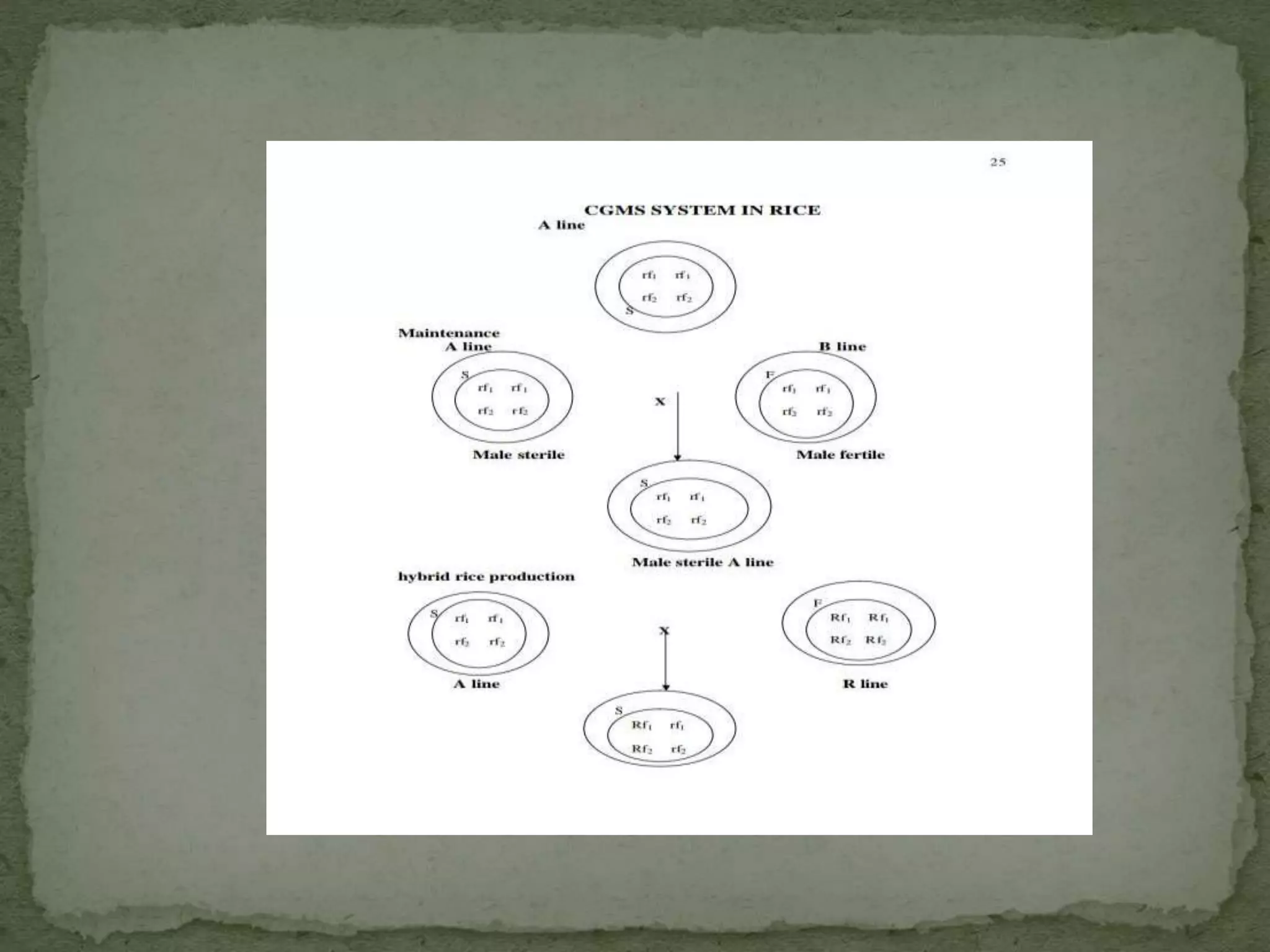
 By using CGMS system. In this method, three
different lines are used i.e.,
1) A-line or male sterile line
2) B-line or maintainer line
3) R-line or restorer line
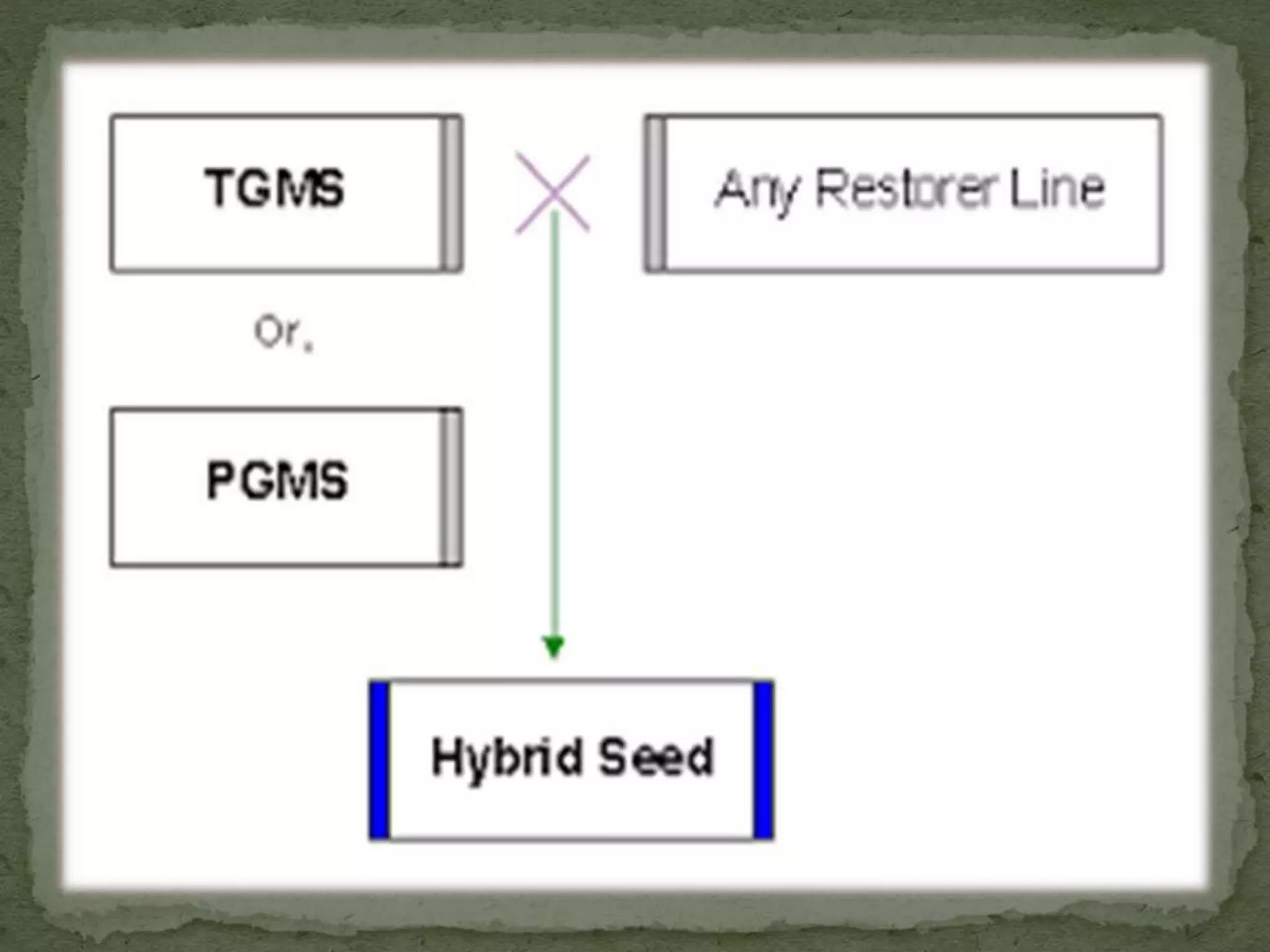
 This method hybrid rice seed production involves the
use of both PGMS or TGMS system
 Any normal line can used as restorer line
 Maintainer line is absent
 Chemicals which kill or sterilize the male gametes
with no effect on female gametes can be used to
emasculate female parental line
 In China: these emasculants commonly used in hybrid
seed of rice
 In India: not used for Hybrid seed of rice but used in
academic studies
 Chemical used as potent gametocides are ethrel,
maleic hydrazide etc
 Hybrid rice seed is produced by CGMS system
 Involves two steps:
Maintenance of parental lines (A-line; B-line and R-
line)
Commercial hybrid seed production (A*R)
 Land Requirement: The same crop should not be grown on the
same piece of land for the last one season
 Isolation Requirement: The hybrid paddy fields
Certified seed – 200 meters
Foundation seed – 100 meters
 Brief Cultural Practices: Follow all recommended package of
practices and take necessary prophylactic measures to raise a
good crop
 Planting Ratio: The planting ratio of male and female are 2:6; 2:8
or 3:8
 Number of Field Inspections: Minimum 4 field
inspections must be held
1st field inspection – before flowering
2nd and 3rd field inspection – during flowering stage
4th field inspection – before harvesting
 Roughing: Removal of off types and plants which are
infected with stem borer and diseased plants like
paddy bunt
 Paddy is highly self pollinated crop and extent of
natural cross pollination is very less,
 To increase out crossing certain methods should be
followed:
1) Flag Leaf Clipping
2) GA3 Application
3) Rope Pulling
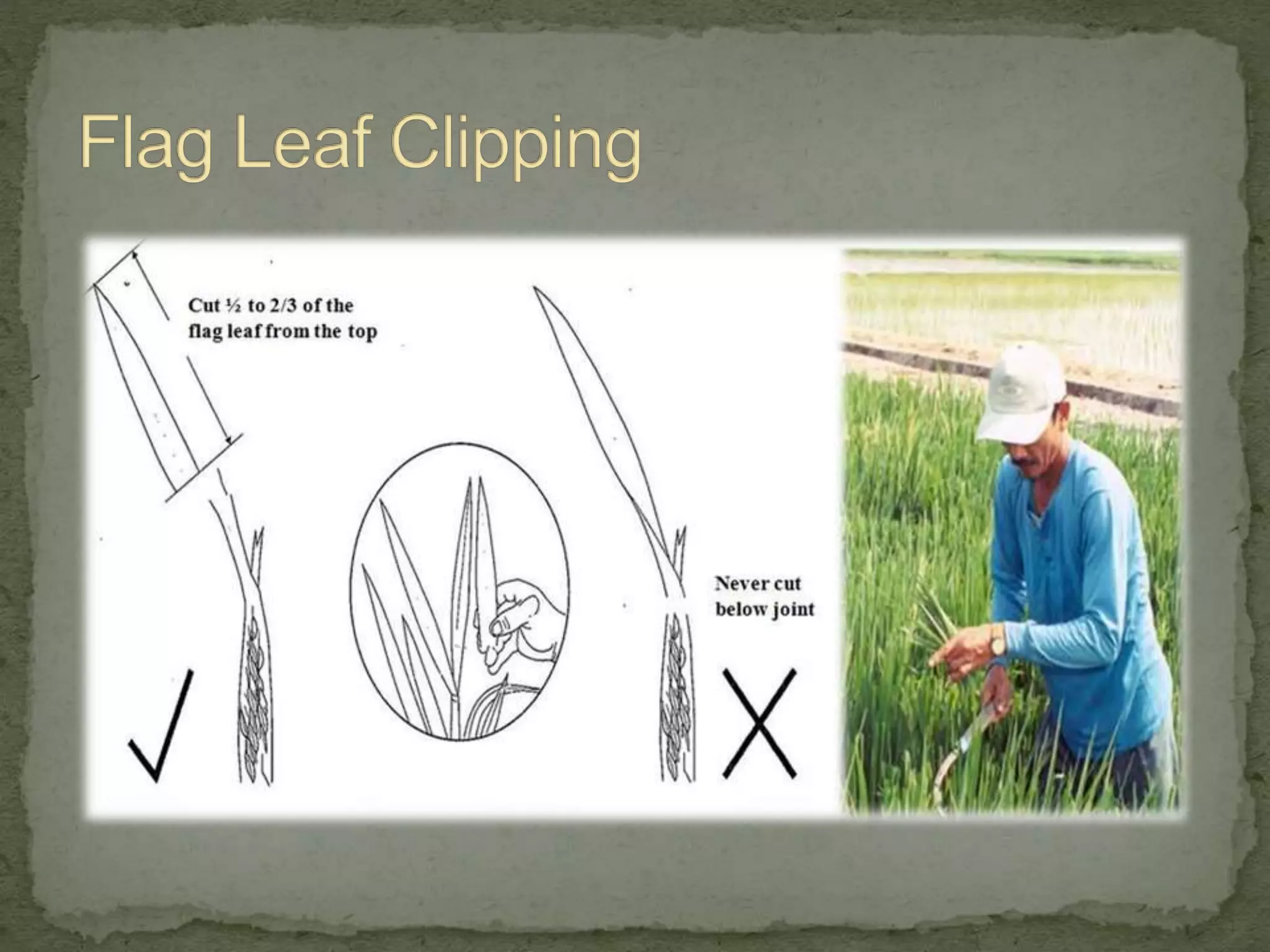
 Flag leaves are taller than panicles and are the main
obstacles for pollen dispersal and cross pollination
 Hence the flag leaves should be removed so as to
improve cross pollination and seed set
 The flag leaves should be clipped one or two days
before heading so that it enhances uniform pollen
movement and wide dispersal of pollen grains to give
higher seed set
 First cut the flag leaf of the main tiller at the flag leaf
joint and use it as a guide in clipping the remaining
plants
 The flag leaves should be cut to half or 2/3 of the blade
from tip
 Do not clip the flag leaves in plants which are infected
with bacterial leaf blight or sheath blight
 The cut leaves can infect other plants or contaminating
tools used for flag leaf clipping can spread infection.
 The infected plants may be clipped after completing
the clipping of healthy leaves
Application of GA3
 Increases the internodes length
 Increases the duration of floret opening and stigma
receptivity
Spraying of GA3 should be done twice
 1st – 15-20% of the plants started heading with 40% of
chemicals
 2nd – 50% flowering with 60% of chemicals
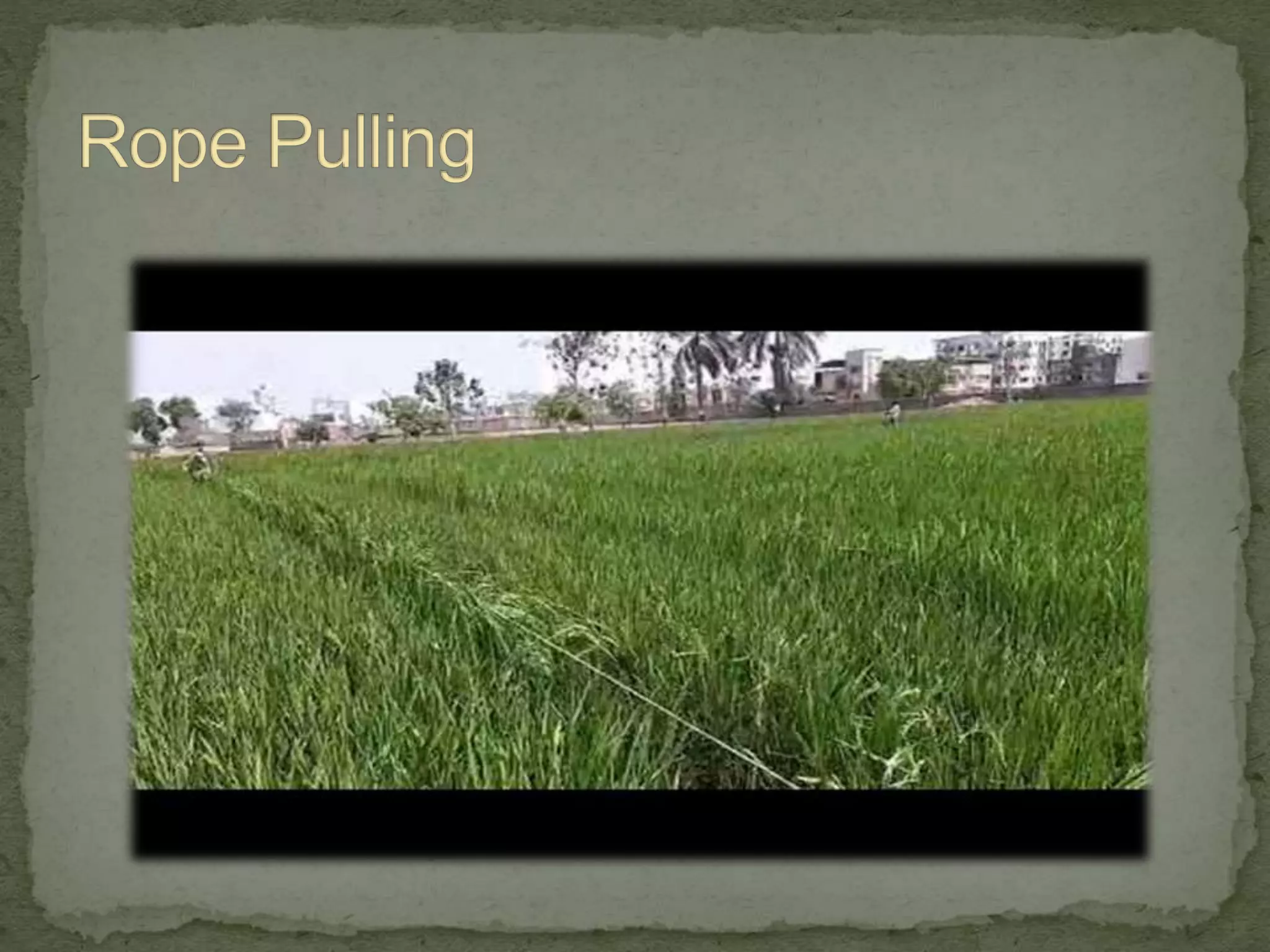
 Rope pulling should be done during the peak
flowering time, which helps in shaking of the male
plants and dispersal of pollen grains
 Rope pulling should be done daily during peak
flowering stage at 8:30 AM and it should be repeated
3-4 times a day at an interval of half an hour
 Harvest the male row first and remove them from
fields so as to avoid mechanical mixture.
 Then harvest female rows
 Precautions should be taken while harvesting, not mix
male and female plants
 Threshing should be done on clean floor and should
be winnowed before storage
 Depending on the management practices adopted and
the potentiality of the parental line in the seed yield
may be in the range of 0.5-1.5 t/ha.
THANK YOU

Hybrid seed production of rice

  • 1.
    SUBMITTED TO: Dr. UMESHKUMAR sir Assistant Professor Dept of Genetics and Plant Breeding SUBMITTED BY: NAA/18-17 NAA/18-32 NAA/18-53
  • 2.
     Prof. YaunLong Ping is the father of hybrid rice in China  Hybrid rice gives 1.0 ton more yield than the best variety available  The first rice hybrid has been developed in the country by ANGRAU i.e., APHR-1 and APHR-2
  • 3.
     Hybrid ricecan be produced by 3 different methods 1) Three line system 2) Two-line system 3) By using chemical emasculants
  • 4.
     By usingCGMS system. In this method, three different lines are used i.e., 1) A-line or male sterile line 2) B-line or maintainer line 3) R-line or restorer line
  • 6.
     This methodhybrid rice seed production involves the use of both PGMS or TGMS system  Any normal line can used as restorer line  Maintainer line is absent
  • 8.
     Chemicals whichkill or sterilize the male gametes with no effect on female gametes can be used to emasculate female parental line  In China: these emasculants commonly used in hybrid seed of rice  In India: not used for Hybrid seed of rice but used in academic studies  Chemical used as potent gametocides are ethrel, maleic hydrazide etc
  • 9.
     Hybrid riceseed is produced by CGMS system  Involves two steps: Maintenance of parental lines (A-line; B-line and R- line) Commercial hybrid seed production (A*R)
  • 10.
     Land Requirement:The same crop should not be grown on the same piece of land for the last one season  Isolation Requirement: The hybrid paddy fields Certified seed – 200 meters Foundation seed – 100 meters  Brief Cultural Practices: Follow all recommended package of practices and take necessary prophylactic measures to raise a good crop  Planting Ratio: The planting ratio of male and female are 2:6; 2:8 or 3:8
  • 11.
     Number ofField Inspections: Minimum 4 field inspections must be held 1st field inspection – before flowering 2nd and 3rd field inspection – during flowering stage 4th field inspection – before harvesting  Roughing: Removal of off types and plants which are infected with stem borer and diseased plants like paddy bunt
  • 12.
     Paddy ishighly self pollinated crop and extent of natural cross pollination is very less,  To increase out crossing certain methods should be followed: 1) Flag Leaf Clipping 2) GA3 Application 3) Rope Pulling
  • 14.
     Flag leavesare taller than panicles and are the main obstacles for pollen dispersal and cross pollination  Hence the flag leaves should be removed so as to improve cross pollination and seed set  The flag leaves should be clipped one or two days before heading so that it enhances uniform pollen movement and wide dispersal of pollen grains to give higher seed set  First cut the flag leaf of the main tiller at the flag leaf joint and use it as a guide in clipping the remaining plants
  • 15.
     The flagleaves should be cut to half or 2/3 of the blade from tip  Do not clip the flag leaves in plants which are infected with bacterial leaf blight or sheath blight  The cut leaves can infect other plants or contaminating tools used for flag leaf clipping can spread infection.  The infected plants may be clipped after completing the clipping of healthy leaves
  • 16.
    Application of GA3 Increases the internodes length  Increases the duration of floret opening and stigma receptivity Spraying of GA3 should be done twice  1st – 15-20% of the plants started heading with 40% of chemicals  2nd – 50% flowering with 60% of chemicals
  • 18.
     Rope pullingshould be done during the peak flowering time, which helps in shaking of the male plants and dispersal of pollen grains  Rope pulling should be done daily during peak flowering stage at 8:30 AM and it should be repeated 3-4 times a day at an interval of half an hour
  • 19.
     Harvest themale row first and remove them from fields so as to avoid mechanical mixture.  Then harvest female rows  Precautions should be taken while harvesting, not mix male and female plants  Threshing should be done on clean floor and should be winnowed before storage
  • 20.
     Depending onthe management practices adopted and the potentiality of the parental line in the seed yield may be in the range of 0.5-1.5 t/ha.
  • 21.