Marketing Management Task 
 Developing Marketing Management Strategies 
 Connecting With Customers 
 Building Strong Brands 
 Shaping the Market offerings 
 Delivering Value 
 Communicating Value 
 Creating Long Term Growth
Developing Marketing 
Strategies and Plans
Objectives 
1. How does marketing affect customer value? 
2. How is strategic planning carried out at 
different levels of the organization? 
3. What does a marketing plan include?
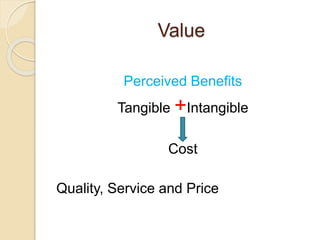
Value 
Perceived Benefits 
Tangible +Intangible 
Cost 
Quality, Service and Price
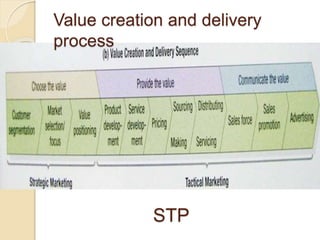
Value creation and delivery 
process 
STP
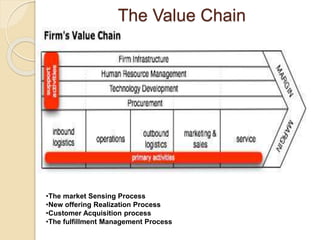
The Value Chain 
•The market Sensing Process 
•New offering Realization Process 
•Customer Acquisition process 
•The fulfillment Management Process
Core Competencies 
Own and nurture the resources and competencies that make up 
the essence of Business. 
Core Competency refers to areas of special technical and 
production expertise, whereas distinctive capability describes 
excellence in broader business processes. Market-driven 
organizations generally excel in three distinctive capabilities: 
market sensing, customer linking and channel bonding. 
 Source of Competitive Advantage 
 Application in wide variety of Markets 
 Difficult for Competitors to imitate 
Examples 
1. Addidas 
2. Software industry in Pakistan and India 
3. VIP Marketing
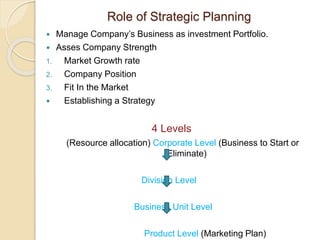
Role of Strategic Planning 
 Manage Company’s Business as investment Portfolio. 
 Asses Company Strength 
1. Market Growth rate 
2. Company Position 
3. Fit In the Market 
 Establishing a Strategy 
4 Levels 
(Resource allocation) Corporate Level (Business to Start or 
Eliminate) 
Division Level 
Business Unit Level 
Product Level (Marketing Plan)
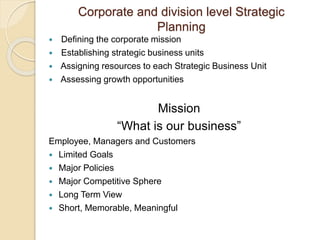
Corporate and division level Strategic 
Planning 
 Defining the corporate mission 
 Establishing strategic business units 
 Assigning resources to each Strategic Business Unit 
 Assessing growth opportunities 
Mission 
“What is our business” 
Employee, Managers and Customers 
 Limited Goals 
 Major Policies 
 Major Competitive Sphere 
 Long Term View 
 Short, Memorable, Meaningful
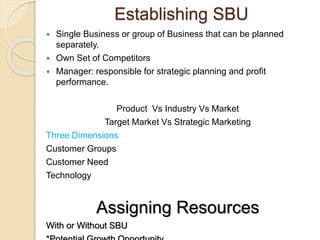
Establishing SBU 
 Single Business or group of Business that can be planned 
separately. 
 Own Set of Competitors 
 Manager: responsible for strategic planning and profit 
performance. 
Product Vs Industry Vs Market 
Target Market Vs Strategic Marketing 
Three Dimensions 
Customer Groups 
Customer Need 
Technology 
Assigning Resources 
With or Without SBU 
*Potential Growth Opportunity
Assessing Growth 
Present Sales Vs Desired Sales 
1. Intensive (P/G Matrix) 
2. Integrative (Backward, Forward, Horizontal Integration) 
3. Diversification (Concentric, Horizontal and Conglomerate) 
 Innovation in marketing is critical. Senior management should identify 
and encourage fresh ideas from a youth perspective, from people new 
to the field and organization, to gain an understanding and a new 
approach to marketing.
Product Growth Matrix 
Market 
Penetration 
Product 
Development 
Market 
Development 
Diversificatio 
n
Market Penetration 
1. Markets are not saturated 
2. Usage rate can be increased 
3. Correlations between sales and marketing expenditures is high 
4. Economies of scale provide major competitive advantage 
Market Development 
1. New channels are available 
2. New untapped market exists 
3. Excess production capacity 
4. Excess capital and human resource 
Product Development 
1. Successful products at maturity stage 
2. Organization competes in high growth industry 
3. Company has strong R&D 
Diversification 
1. Value chain is common among different businesses
Business Unit Strategic 
Planning
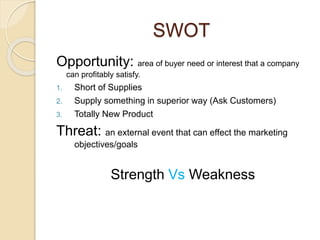
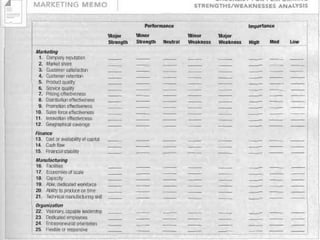
SWOT 
Opportunity: area of buyer need or interest that a company 
can profitably satisfy. 
1. Short of Supplies 
2. Supply something in superior way (Ask Customers) 
3. Totally New Product 
Threat: an external event that can effect the marketing 
objectives/goals 
Strength Vs Weakness
Goal Formulation: Developing specific goals for a short term is 
known as Goal Formulation. They are specific with respect to 
magnitude and time. Goals must be consistent and realistic and 
could be a mix of various objectives. 
SMART 
 Strategy Formulation: Strategy is a game plan for achieving 
the goals. It consists of a Marketing Strategy, Technology 
Strategy and a Sourcing Strategy. 
1. Overall Cost Leadership 
2. Differentiation 
3. Focus 
a) Product or service alliance 
b) Promotional alliance 
c) Logistics alliance 
d) Pricing Collaboration
Product Planning 
 The marketing plan is the central instrument for 
directing and coordinating the marketing effort. The 
marketing plan operates at two levels: strategic 
and tactical. 
Components Of Marketing Plan: 
1. Executive summary 
2. Situation Analysis 
3. Marketing Opportunity and Issues 
4. Objectives 
5. Marketing strategy 
6. Target Market 
7. Positioning 
8. Marketing Mix 
9. Review and Control 
10. Marketing Organization 
11. Contingency Plan

Developing marketing strategies and plans(ch 2)

  • 1.
    Marketing Management Task  Developing Marketing Management Strategies  Connecting With Customers  Building Strong Brands  Shaping the Market offerings  Delivering Value  Communicating Value  Creating Long Term Growth
  • 2.
  • 3.
    Objectives 1. Howdoes marketing affect customer value? 2. How is strategic planning carried out at different levels of the organization? 3. What does a marketing plan include?
  • 4.
    Value Perceived Benefits Tangible +Intangible Cost Quality, Service and Price
  • 5.
    Value creation anddelivery process STP
  • 6.
    The Value Chain •The market Sensing Process •New offering Realization Process •Customer Acquisition process •The fulfillment Management Process
  • 7.
    Core Competencies Ownand nurture the resources and competencies that make up the essence of Business. Core Competency refers to areas of special technical and production expertise, whereas distinctive capability describes excellence in broader business processes. Market-driven organizations generally excel in three distinctive capabilities: market sensing, customer linking and channel bonding.  Source of Competitive Advantage  Application in wide variety of Markets  Difficult for Competitors to imitate Examples 1. Addidas 2. Software industry in Pakistan and India 3. VIP Marketing
  • 8.
    Role of StrategicPlanning  Manage Company’s Business as investment Portfolio.  Asses Company Strength 1. Market Growth rate 2. Company Position 3. Fit In the Market  Establishing a Strategy 4 Levels (Resource allocation) Corporate Level (Business to Start or Eliminate) Division Level Business Unit Level Product Level (Marketing Plan)
  • 9.
    Corporate and divisionlevel Strategic Planning  Defining the corporate mission  Establishing strategic business units  Assigning resources to each Strategic Business Unit  Assessing growth opportunities Mission “What is our business” Employee, Managers and Customers  Limited Goals  Major Policies  Major Competitive Sphere  Long Term View  Short, Memorable, Meaningful
  • 10.
    Establishing SBU Single Business or group of Business that can be planned separately.  Own Set of Competitors  Manager: responsible for strategic planning and profit performance. Product Vs Industry Vs Market Target Market Vs Strategic Marketing Three Dimensions Customer Groups Customer Need Technology Assigning Resources With or Without SBU *Potential Growth Opportunity
  • 11.
    Assessing Growth PresentSales Vs Desired Sales 1. Intensive (P/G Matrix) 2. Integrative (Backward, Forward, Horizontal Integration) 3. Diversification (Concentric, Horizontal and Conglomerate)  Innovation in marketing is critical. Senior management should identify and encourage fresh ideas from a youth perspective, from people new to the field and organization, to gain an understanding and a new approach to marketing.
  • 12.
    Product Growth Matrix Market Penetration Product Development Market Development Diversificatio n
  • 13.
    Market Penetration 1.Markets are not saturated 2. Usage rate can be increased 3. Correlations between sales and marketing expenditures is high 4. Economies of scale provide major competitive advantage Market Development 1. New channels are available 2. New untapped market exists 3. Excess production capacity 4. Excess capital and human resource Product Development 1. Successful products at maturity stage 2. Organization competes in high growth industry 3. Company has strong R&D Diversification 1. Value chain is common among different businesses
  • 14.
  • 15.
    SWOT Opportunity: areaof buyer need or interest that a company can profitably satisfy. 1. Short of Supplies 2. Supply something in superior way (Ask Customers) 3. Totally New Product Threat: an external event that can effect the marketing objectives/goals Strength Vs Weakness
  • 17.
    Goal Formulation: Developingspecific goals for a short term is known as Goal Formulation. They are specific with respect to magnitude and time. Goals must be consistent and realistic and could be a mix of various objectives. SMART  Strategy Formulation: Strategy is a game plan for achieving the goals. It consists of a Marketing Strategy, Technology Strategy and a Sourcing Strategy. 1. Overall Cost Leadership 2. Differentiation 3. Focus a) Product or service alliance b) Promotional alliance c) Logistics alliance d) Pricing Collaboration
  • 18.
    Product Planning The marketing plan is the central instrument for directing and coordinating the marketing effort. The marketing plan operates at two levels: strategic and tactical. Components Of Marketing Plan: 1. Executive summary 2. Situation Analysis 3. Marketing Opportunity and Issues 4. Objectives 5. Marketing strategy 6. Target Market 7. Positioning 8. Marketing Mix 9. Review and Control 10. Marketing Organization 11. Contingency Plan

Editor's Notes

  • #7 *Cokesolutions.com