Developing 
listening 
skills 
module. Davydova T.D. 
2013
Content area 
• 1. What is comprehension? 
• 1.1 Listening in real life 
• 1.2 Listening in the classroom 
• 2. Teaching to listen 
• 2.1 Listening standards 
• 2.2 Activities for teaching to listen 
• 3. Designing materials for teaching to listen 
• 3.1 Three - phase framework 
• 3.2 Practice
What is Listening Comprehension? 
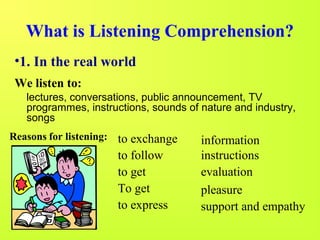
•1. In the real world 
We listen to: 
lectures, conversations, public announcement, TV 
programmes, instructions, sounds of nature and industry, 
songs 
Reasons for listening: information 
instructions 
evaluation 
pleasure 
support and empathy 
to exchange 
to follow 
to get 
To get 
to express
Consolidation 
• Listening – is an act of interpreting 
speech that one receives through ears. 
• Hearing – is an act of receiving the 
language through ears without 
interpretation. 
• Listening is a communicative skill to 
get the meaning of what we hear.
What is Listening Comprehension? 
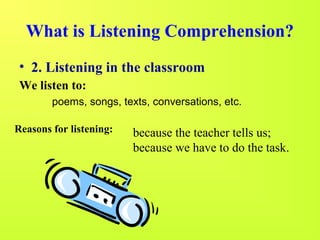
• 2. Listening in the classroom 
We listen to: 
poems, songs, texts, conversations, etc. 
Reasons for listening: because the teacher tells us; 
because we have to do the task.
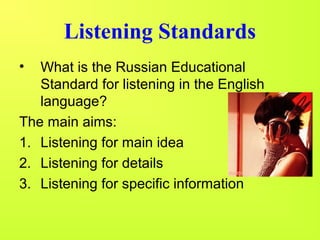
Listening Standards 
• What is the Russian Educational 
Standard for listening in the English 
language? 
The main aims: 
1. Listening for main idea 
2. Listening for details 
3. Listening for specific information
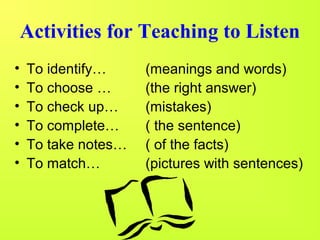
Activities for Teaching to Listen 
• To identify… 
• To choose … 
• To check up… 
• To complete… 
• To take notes… 
• To match… 
(meanings and words) 
(the right answer) 
(mistakes) 
( the sentence) 
( of the facts) 
(pictures with sentences)
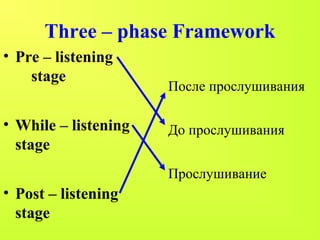
Three – phase Framework 
• Pre – listening 
stage 
• While – listening 
stage 
• Post – listening 
stage 
После прослушивания 
До прослушивания 
Прослушивание
Consolidation 
• Classroom Listening is not real – 
life listening. Training in listening 
comprehension should give the 
students practice in coping with at 
least some of the features of real – 
life situations.
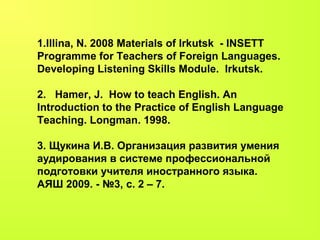
1.Illina, N. 2008 Materials of Irkutsk - INSETT 
Programme for Teachers of Foreign Languages. 
Developing Listening Skills Module. Irkutsk. 
2. Hamer, J. How to teach English. An 
Introduction to the Practice of English Language 
Teaching. Longman. 1998. 
3. Щукина И.В. Организация развития умения 
аудирования в системе профессиональной 
подготовки учителя иностранного языка. 
АЯШ 2009. - №3, с. 2 – 7.
Developing listening skills

Developing listening skills

  • 1.
    Developing listening skills module. Davydova T.D. 2013
  • 2.
    Content area •1. What is comprehension? • 1.1 Listening in real life • 1.2 Listening in the classroom • 2. Teaching to listen • 2.1 Listening standards • 2.2 Activities for teaching to listen • 3. Designing materials for teaching to listen • 3.1 Three - phase framework • 3.2 Practice
  • 3.
    What is ListeningComprehension? •1. In the real world We listen to: lectures, conversations, public announcement, TV programmes, instructions, sounds of nature and industry, songs Reasons for listening: information instructions evaluation pleasure support and empathy to exchange to follow to get To get to express
  • 4.
    Consolidation • Listening– is an act of interpreting speech that one receives through ears. • Hearing – is an act of receiving the language through ears without interpretation. • Listening is a communicative skill to get the meaning of what we hear.
  • 5.
    What is ListeningComprehension? • 2. Listening in the classroom We listen to: poems, songs, texts, conversations, etc. Reasons for listening: because the teacher tells us; because we have to do the task.
  • 6.
    Listening Standards •What is the Russian Educational Standard for listening in the English language? The main aims: 1. Listening for main idea 2. Listening for details 3. Listening for specific information
  • 7.
    Activities for Teachingto Listen • To identify… • To choose … • To check up… • To complete… • To take notes… • To match… (meanings and words) (the right answer) (mistakes) ( the sentence) ( of the facts) (pictures with sentences)
  • 8.
    Three – phaseFramework • Pre – listening stage • While – listening stage • Post – listening stage После прослушивания До прослушивания Прослушивание
  • 9.
    Consolidation • ClassroomListening is not real – life listening. Training in listening comprehension should give the students practice in coping with at least some of the features of real – life situations.
  • 10.
    1.Illina, N. 2008Materials of Irkutsk - INSETT Programme for Teachers of Foreign Languages. Developing Listening Skills Module. Irkutsk. 2. Hamer, J. How to teach English. An Introduction to the Practice of English Language Teaching. Longman. 1998. 3. Щукина И.В. Организация развития умения аудирования в системе профессиональной подготовки учителя иностранного языка. АЯШ 2009. - №3, с. 2 – 7.