Phase I and Phase II
detoxification of wastes
Dr. Radhakrihna G Pillai
Department of Life Sciences
University of Calicut, India 673 635
Toxins in around the body
• in 1994 alone, over 2.2 billion pounds of toxic chemicals
were released into the environment in the United States
• By 2002 had grown to 4.7 billion pounds
• the body produces a steady stream of metabolic waste
products (ammonia, bilirubin, urea, lactic acid, etc.)
• toxic byproducts called – exotoxins produced as a result of
microbial activity in the human intestine
• The sole purpose of the hepatic biotransformation process
is to convert toxic compounds into non-toxic, water-
soluble compounds which can easily be eliminated
• The liver (hepatic) is the key player in this process
• Biotransformation - is defined as a metabolic process
whereby chemical modifications or alterations are made
by the body on a specific chemical compound, usually by
means of enzymatic activity
Entry of xogenous compounds
• Exogenous compounds enter the body through four
primary routes
– inhalation (nose/lungs),
– ingestion (mouth/intestines)
– transdermal (skin), or
– intravenous (veins).
• Exogenous compounds can either be compounds that
the human body is familiar with (e.g. food, nutrients,
water, oxygen) or
• They can be compounds which are foreign to the
body (e.g. drugs, pesticides, solvents, industrial
chemicals).
• Exogenous compounds which are foreign to the body
are referred to as xenobiotics
Hepatic biotransformation
• The chemical modification or alteration of compounds (endogenous or
exogenous)
• via enzymatic activity,
• which takes place in the liver.
• Biotransformation can take place in most tissues anywhere in the body
• The liver is the primary site for biotransformation to occur
• This is due in part because of the large size of the liver and because it
also contains the highest concentration of biotransformation enzymes
• Biotransformation enzymes exist in the
– smooth endoplasmic reticulum,
– cystosol (intracellular fluid) and
– to a lesser degree in the membranes of the mitochondria,
– nuclei and lysosomes (small spherical organelles) of the liver’s hepatocytes
• The kidneys and lungs are the next major biotransformation sites, but
only at 10 – 30% of the livers capacity.
• The skin, nasal mucosa and intestinal mucosa also have some
biotransformation capacity.
Entry into cells
• Most xenobiotics entering the body are lipophilic (affinity for lipids)
• This property enables them to penetrate the lipid membranes of cells, to
be transported by lipoproteins with blood, and to be rapidly absorbed by
the target organ
• The excretory mechanism of the body requires a certain degree of
hydrophilicity (water loving) for efficient excretion
• Lipophilic compounds are more absorbable and retainable, while
hydophilic molecules are less able to cross cellular membranes and
therefore are easily filtered out by the kidneys
• In the absence of efficient means of excretion constant exposure to
lipophilic xenobiotics could result in accumulation of these compounds in
human tissue potentially becoming toxic to the body
• Therefore, the main function of biotransformational enzymatic activity is
to make lipophilic compounds less toxic and harmful
• By converting or biotransforming them to hydrophilic compounds and
preparing them for elimination
Continuous process in different phases
• Hepatic biotransformation takes place non-stop
• High energy dependent enzymatic process
• It requires and uses a tremendous amount of
cellular energy
• Hepatic biotransformation requires and uses a
large variety of enzymes
• Biotransformation enzymatic activity occurs in
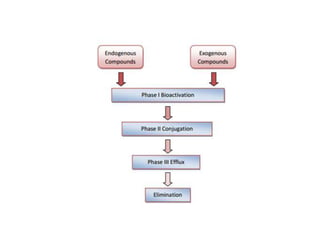
two sequential steps called - Phase I and Phase II
• Also, Phase III occurs, however this phase
requires the use of transporter proteins as
opposed to enzymes
Phase I Bioactivation
• The process whereby enzymes act upon a compound to
biotransform it
• During this phase the compound is only partially
biotransformed
• Thereby creating an intermediate or metabolite of the
original chemical compound
• Which has been bioactivated into a more chemically
reactive, toxic compound
• This reactive compound, if not fully biotransformed, will
remain in the body
• Potentially causing damage, especially to the liver where it
was formed
• And/or it will be stored in adipose (fat) tissue where it will
be difficult to excrete
Phase II Conjugation
• The bioactivated Phase I intermediate is further acted
upon by a different set of enzymes and undergoes further
biotransformation
• The result is a safer, non-toxic water soluble compound
• This process is sometimes referred to as – bioinactivation
• Phase III Efflux – is the process of removing the water
soluble Phase II conjugated compound from the cell
• Phase III uses transporter proteins rather than enzymes to
complete this process
• Completely biotransformed compounds are removed from
the cell
• It will then be eliminated from the body via – kidneys,
bowels, breath, sweat, saliva or hair - completing the
detoxification process
Enzymes
• There are numerous biotransformation enzymes
• Each enzyme has an affinity for a certain molecular
compound or substrate
• Regulation of the biotransformation enzymatic
process is highly complex
• It is the widespread variability in the regulation of
biotransformation enzymes which determines the
efficiency of the biotransformation process
• And therefore a determining factor in whether an
individual is highly sensitive or reactive to xenobiotic
compounds or is more resilient and less sensitive
Biotransformation Regulation
• The regulation, expression and activity of
biotransfomation enzymes and the extend of
detoxificaition is determined in large part by two general
factors:
• (1) environmental factors - the level/amount of exposure
or ingestion of a toxic compound and
• (2) biochemical factors – an individual’s unique level of
biochemistry; referred to as - biochemical individuality.
• Biochemical individuality is a simple concept that states
all humans differ biochemically from others
• Biochemical individuality directly affects the degree to
which a chemical compound is biotransformed from
person to person
Factors affecting biochemical
individuality
• Some of the factors that determine a person’s level of
biochemical individuality are;
– Endogenous Compounds
– Exogenous Compounds
– Phase I Bioactivation
– Phase II Conjugation
– Phase III Efflux Elimination
– Genetics factors –
– the structure, amount of or complete lack of a specific
biotransformation enzyme may differ among individuals and
this can give rise to differences in rates of biotransformation
– These genetic variations are referred to as – polymorphism
Factors affecting biochemical
individuality
• Non-genetic host factors – such as disease, stress, obesity,
physical exercise and age
– For example - In some disease states, detoxification activities appear
to be up-regulated, while in other conditions these activities may be
inhibited
– Another example - elderly people are generally more “sensitive” due
to a less active life style causing poor blood flow to the liver, along
with the fact that they produce fewer biotransformation enzymes
• Co-factors - differences in the availability of co-factors and
nutrients cause very different biotransformation abilities from
person to person, or even within the same person due to a daily
changing nutritional status
• Wide variety of environmental factors regulates the interplay
between
– inducible and
– inhibitory functions of the biotransformation process
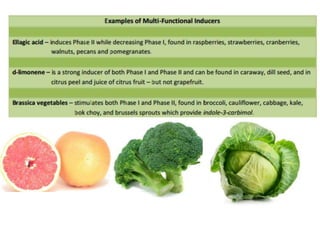
Inducers
• Can be either:
– mono-functional - affecting only one enzyme or one phase of
biotransformation or
– they can be multi-functional – affecting multiple enzymes or
phases
• Mono-functional inducers that increase Phase I but not Phase
II can result in:
– Bioactivation - the increased formation of highly reactive metabolic
intermediates which are associated with damage to proteins, RNA,
DNA or increased inflammation, cell death or cancer
– The increased biotransformation of multiple compounds
potentially clearing and reducing availability of a desirable
substance – such as a helpful medication
• Multi-functional inducers tend to affect both phases by:
– increasing Phase II activity and to either slightly increase Phase I
activity or
– to slow Phase I relative to Phase II – generally a good thing
Inhibition of Phase I and Phase II
processes
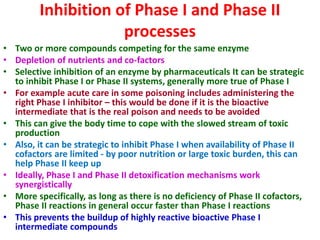
• Two or more compounds competing for the same enzyme
• Depletion of nutrients and co-factors
• Selective inhibition of an enzyme by pharmaceuticals It can be strategic
to inhibit Phase I or Phase II systems, generally more true of Phase I
• For example acute care in some poisoning includes administering the
right Phase I inhibitor – this would be done if it is the bioactive
intermediate that is the real poison and needs to be avoided
• This can give the body time to cope with the slowed stream of toxic
production
• Also, it can be strategic to inhibit Phase I when availability of Phase II
cofactors are limited - by poor nutrition or large toxic burden, this can
help Phase II keep up
• Ideally, Phase I and Phase II detoxification mechanisms work
synergistically
• More specifically, as long as there is no deficiency of Phase II cofactors,
Phase II reactions in general occur faster than Phase I reactions
• This prevents the buildup of highly reactive bioactive Phase I
intermediate compounds
Imbalance in Phase I and Phase II
• However, If Phase I detoxification is highly active and Phase II
detoxification is lethargic or if an individual is exposed to large
amounts of xenobiotics along with a weakened biochemical
individual response, imbalances between Phase I and Phase II
can occur
• In such situations critical nutrients and co-factors can become
depleted allowing unwanted compounds and bioactive
intermediates to buildup in the body’s tissues
• Individuals with such situations are referred to as a “pathological
detoxifiers” (diseased detoxification) a condition which
contributes significantly to free radical formation, oxidative
stress and ultimately tissue damage.
Liver in detoxification
• Phase I - Bioactivation Hepatocytes are bathed in blood as the
blood passes through the sinusoids
• - 70% of the hepatocytes surface membrane contacts the blood in
the sinusoid
• This provides for a tremendous surface area across which various
compounds, especially xenobiotics, can gain entry into the
hepatoyctes.
• This can occur by one of several ways:
• compounds may passively diffuse across the sinusoidal membrane
of the hepatocytes
• they may be exchanged between blood transport proteins and the
sinusoidal membranes
• their carrier proteins may bind to sinusoidal membrane receptors
and then undergo endocytosis (cells absorb or engulf)
• Once mobilized in the hepatocyte, unwanted compounds can
contact and interact with biotransformation enzymes, the first
being the Phase I enzymes
Phase I enzymes
• Phase I enzymes are lipid membrane bound proteins and are
mostly found in the endoplasmic reticulum membrane
• The primary function of Phase I enzymatic activity is to
either:
– Biotransform a toxic lipophilic compound directly to a more
hydrophilic compound
– Enable its direct excretion in the kidneys (e.g. caffeine)
– Phase I usually results in only a small amount of direct
hydrophilicity and excretion
• The bulk of Phase I enzymatic activity takes place in the form
of altering unwanted compounds in a way as to either
expose or introduce a functional group
• Functional groups such as:
– Carboxyl group (–COOH)
– hydroxyl group (– OH)
– amino group (-NH2), or
– sulfhydryl group/thiol (-SH) are introduced
Role of Phase I enzymes
• This Phase I enzymatic alteration results in the unwanted compound now
becoming a bioactivated intermediate
• This gives rise to a more reactive and potentially more toxic and harmful
substance than the original compound
• Therefore, it must be acted upon rapidly by antioxidants and/or Phase II
enzymes
• Complicating matters, often a single compound goes through a series of two
to three Phase I reactions before it is ready for Phase II
• which may occur in different parts of the cell (e.g. ER - lysomsomes –
mitochondria)
• This gives rise to increased opportunity for a toxic intermediate to encounter
a target molecule and have a toxic effect during the transition
• Phase I enzymatic activity occurs by means of one of three possible chemical
reactions:
– Hydrolysis
– reduction or
– oxidation
Types of reactions
• The type of reaction depends on the chemistry of the original
compound and whether or not the compound is a substrate for
one of the various Phase I enzymes
• Hydrolysis is a chemical process in which a molecule is cleaved into
two parts by the addition of a molecule of water.
• One fragment of the parent molecule gains a hydrogen ion (H+ )
from the additional water molecule
• The other fragment collects the remaining hydroxyl group (-OH),
which is a functional group and thereby prepares the compound
for Phase II
• The major enzymes associated with the actions of hydrolysis are:
• esterases, peptidase and epoxide hydolase
• Reduction: The process of moving electrons from one
element to another element during chemical reactions is
called reduction and
Oxidation-redox
• Reduction is the opposite of oxidation, whereby oxygen is removed or at least
one electron is added when compounds come into contact with each other
• The major reductions associated with Phase I are:
– Azo reduction
– Disulfide reduction
– Nitro reduction
– Carbonyl reduction
– Quinone reduction
– Reductive dehalogenation
– Sulfoxide reduction Oxidation
• Over whelming majority of Phase I reactions occur as oxidative enzymatic
reactions
• In Phase I, oxidation is carried out by a large family of enzymes called - mixed
function oxidases or monooxygenases
• These enzymes introduce oxygen into the chemical structure of unwanted
compounds, creating bioactivated intermediates such as reactive oxygen
species (ROS)
• These reactive oxygen species, also known as free radicals, can be extremely
toxic, far more so than the original compound
Common Phase I transformation enzymes
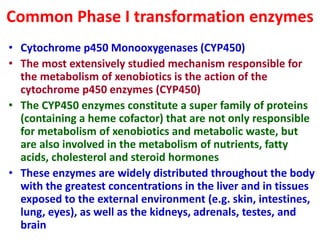
• Cytochrome p450 Monooxygenases (CYP450)
• The most extensively studied mechanism responsible for
the metabolism of xenobiotics is the action of the
cytochrome p450 enzymes (CYP450)
• The CYP450 enzymes constitute a super family of proteins
(containing a heme cofactor) that are not only responsible
for metabolism of xenobiotics and metabolic waste, but
are also involved in the metabolism of nutrients, fatty
acids, cholesterol and steroid hormones
• These enzymes are widely distributed throughout the body
with the greatest concentrations in the liver and in tissues
exposed to the external environment (e.g. skin, intestines,
lung, eyes), as well as the kidneys, adrenals, testes, and
brain
Cytochrome p450
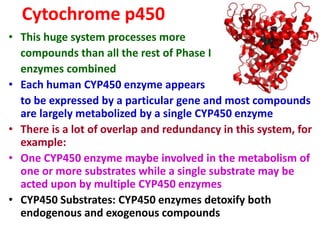
• This huge system processes more
compounds than all the rest of Phase I
enzymes combined
• Each human CYP450 enzyme appears
to be expressed by a particular gene and most compounds
are largely metabolized by a single CYP450 enzyme
• There is a lot of overlap and redundancy in this system, for
example:
• One CYP450 enzyme maybe involved in the metabolism of
one or more substrates while a single substrate may be
acted upon by multiple CYP450 enzymes
• CYP450 Substrates: CYP450 enzymes detoxify both
endogenous and exogenous compounds
Inducers of Cytochrome p450
• The cytochrome p450 family of biotransformation enzymes
(CYP1, 2, 3) can be induced by numerous compounds;
except for CYP2D6, which cannot be induced
• List of several compounds known to induce CYP450
enzymes
– Chemicals – air pollution, petroleum derivatives, solvents,
organochlorines, herbicides, pesticides, acetate, paint fumes,
dioxin, carbon tetrachloride (fire extinguisher, refrigerants,
cleaning agents), etc
– Drugs – acetaminophen, diazepam, sleeping pills, contraceptive
pills, steroids, barbiturates, sulfonamides/sulfa drugs, nicotine,
ethanol/alcohol, caffeine, phenobarbital, etc.
– Foods – charcoal-broiled fats, saturated fats, high protein diets,
brassica vegetables, d-limonene, sassafras.
– Supplements – thiamin (B1), riboflavin (B2), niacin (B3),
ascorbic acid (C), protein powders, St. John’s wort
CYP450 Inhibitors
• Many substances inhibit cytochrome p450 enzymes
• This situation can cause substantial problems as it makes
toxins potentially more damaging because they remain
in the body longer before detoxification
• Such blocking results in a build-up of more toxic
compounds in tissue
• This can in turn lead to a spreading phenomenon, with
increasing sensitivity to more chemicals such as
perfumes, colognes, cleaners, detergents and many other
environmental chemicals
• Also, the spreading phenomenon can eventually cause
and individual to become sensitive and reactive to even
natural chemicals occurring in foods, pollen and mold
• The most severely ill chemically sensitive patients not
only have abnormally low anti-pollutant enzymes in
addition to toxic suppression and nutrient depletion
Inhibitors of cytochrome p450
• In some instances antibodies are produced against
cytochrome p450 enzymes and may inhibit or decrease
their effectiveness
• Some examples of substances that inhibit CYP450
enzymes are:
– Chemicals –Carbon monoxide, etc.
– Drugs – H2-blockers (for acid reflux), benzodiazepines (for anxiety,
insomnia), anti-histamines (for allergies), anti-fungals, barbiturates
(sedatives, anticonvulsants), etc.
– Foods – naringenin (flavonoid in grapefruit), curcumin (turmeric),
capsaicin/cayenne (chili peppers), eugenol (clove oil), quercetin
(onions), etc. Supplements – quercetin (flavonoid), calendula
(calendula officianalis), N-acetylcysteine, etc. Endogeneous – gut
bacteria endotoxins/exotoxins
– Other – aging, loss of oxygen
Other Phase I Oxidative Enzymes
• As mentioned there are well over one hundred
mixed function oxidase or monooxygenase enzymes
used in the Phase I hepatic biotransformation
process
• some of the other more common phase I
biotransformation enzymes are:
– Flavin-Containing Monooxygenases (FMO)
– Alcohol Dehydrogenase
– Aldehyde dehydrogenase
– Aldehyde Oxidase
– Xanthine oxidase
– Diamine oxidase
– Monomine oxidase
– Molybdenum hydroxylase
Phase II - Conjugation
• Most compounds enter Phase II as Phase I bioactivated
intermediates
• Some endogenous and exogenous compounds by-pass
Phase I and enter Phase II directly
• The primary function of Phase II is to further
biotransform compounds to a less toxic, more
hydrophilic compound.
• To do this, Phase II incorporates the use of another type
of enzyme called a transferase enzyme
• Transferase enzymes are a family of enzymes whose
function is to catalyze the transfer of various chemical
groups from one compound to another
• In hepatic biotransformation, the transferase enzyme
transfers and attaches a co-factor to the exposed
functional group of the entered Phase I intermediate
• This process is referred to as conjugation
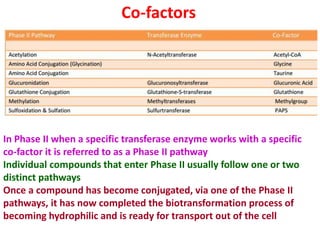
Co-factors
In Phase II when a specific transferase enzyme works with a specific
co-factor it is referred to as a Phase II pathway
Individual compounds that enter Phase II usually follow one or two
distinct pathways
Once a compound has become conjugated, via one of the Phase II
pathways, it has now completed the biotransformation process of
becoming hydrophilic and is ready for transport out of the cell
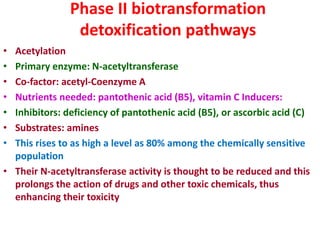
Phase II biotransformation
detoxification pathways
• Acetylation
• Primary enzyme: N-acetyltransferase
• Co-factor: acetyl-Coenzyme A
• Nutrients needed: pantothenic acid (B5), vitamin C Inducers:
• Inhibitors: deficiency of pantothenic acid (B5), or ascorbic acid (C)
• Substrates: amines
• This rises to as high a level as 80% among the chemically sensitive
population
• Their N-acetyltransferase activity is thought to be reduced and this
prolongs the action of drugs and other toxic chemicals, thus
enhancing their toxicity
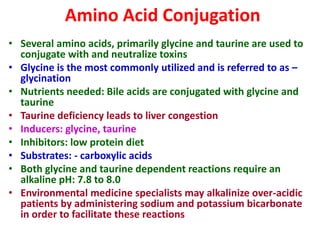
Amino Acid Conjugation
• Several amino acids, primarily glycine and taurine are used to
conjugate with and neutralize toxins
• Glycine is the most commonly utilized and is referred to as –
glycination
• Nutrients needed: Bile acids are conjugated with glycine and
taurine
• Taurine deficiency leads to liver congestion
• Inducers: glycine, taurine
• Inhibitors: low protein diet
• Substrates: - carboxylic acids
• Both glycine and taurine dependent reactions require an
alkaline pH: 7.8 to 8.0
• Environmental medicine specialists may alkalinize over-acidic
patients by administering sodium and potassium bicarbonate
in order to facilitate these reactions
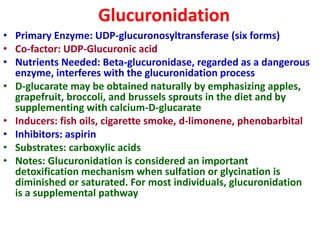
Glucuronidation
• Primary Enzyme: UDP-glucuronosyltransferase (six forms)
• Co-factor: UDP-Glucuronic acid
• Nutrients Needed: Beta-glucuronidase, regarded as a dangerous
enzyme, interferes with the glucuronidation process
• D-glucarate may be obtained naturally by emphasizing apples,
grapefruit, broccoli, and brussels sprouts in the diet and by
supplementing with calcium-D-glucarate
• Inducers: fish oils, cigarette smoke, d-limonene, phenobarbital
• Inhibitors: aspirin
• Substrates: carboxylic acids
• Notes: Glucuronidation is considered an important
detoxification mechanism when sulfation or glycination is
diminished or saturated. For most individuals, glucuronidation
is a supplemental pathway
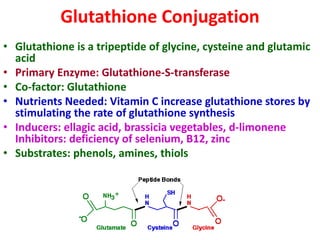
Glutathione Conjugation
• Glutathione is a tripeptide of glycine, cysteine and glutamic
acid
• Primary Enzyme: Glutathione-S-transferase
• Co-factor: Glutathione
• Nutrients Needed: Vitamin C increase glutathione stores by
stimulating the rate of glutathione synthesis
• Inducers: ellagic acid, brassicia vegetables, d-limonene
Inhibitors: deficiency of selenium, B12, zinc
• Substrates: phenols, amines, thiols
Methylation
• A common but minor pathway -involves conjugating methyl groups to
toxins
• The methyl group is attached by various methyl-transferase enzymes to an
N, O, or S imbedded in a 6-carbon ring respectively called N, O and
Smethylation
• Primary Enzyme: methyltransferases (four types – Pheno O-, Catechol O-,
N-, S-)
• Co-factor: methyl groups – S-adenosylmethionine (SAM)
• Nutrients Needed: Most of the methyl groups used for detoxification
comes from S-adenosylmethionine (SAM)
• SAM is synthesized from the amino acid methionine, a process which
requires the nutrients choline, the active form of B12 – methyl cobalamin,
and the active form of folic acid – 5-methyltertahydrofolate.
• The activity of the methyltransferase enzyme is dependent on magnesium
and due to the frequency of magnesium deficiency; supplementation with
this nutrient will often stabilize chemically sensitive individuals.
• Inducers: choline, methionine, betain, folic acid, cobalamin
• Inhibitors: deficiency of folic acid, B12
• Substrates: phenols, amines
Phase III - Efflux
• The small intestine is the first site of xenobiotic exposure
• CYP450 activity declines along the length of the intestine
and from the tip of the microvilli to its base
• Levels of intestinal cytochrome p450 are reported to be
much less than those found in the liver
• This difference between intestine and liver CYP450 activity
is often used as the basis for the idea that the intestine is
of little importance in the detoxification process
• The intestines are now being recognized as having a major
role in the biotransformation process
• This is in part because of the Phase I and Phase II activities
found in enterocytes, along with a biochemical mechanism
referred to as – antiporter
Antiporter
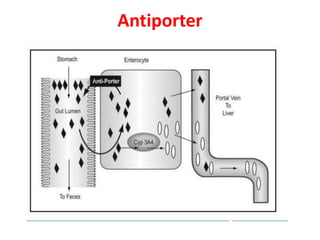
• The antiporter is an energy dependent efflux pump
(transport protein)
• Contained within the enterocytes, whose function is to
export unwanted compounds immediately back into the
intestines
• Once the exported unwanted compound arrives back into
the intestine one of several things can take place:
– It can be eliminated in the stool
– It can re-enter the enterocyte only to be exported back out
into the intestine and start the cycle over again
– It can re-enter the enterocyte and pass into the blood stream
and travel to the liver
– It can re-enter the enterocyte and be acted on by the Phase I
CYP3A4 enzymes thereby starting the biotransformation
process before it is passed into the blood stream to travel to
the liver
Antiporter
– Researchers have found that the antiporter activity in
the intestines appears to be co-regulated with the
Phase I CYP3A4 enzyme
– It has been speculated that this allows more
opportunities for Phase I activity to metabolize
unwanted chemicals before they are taken into
circulation
– This makes antiporter activity an important factor in
the first pass metabolism of pharmaceuticals and other
xenobiotics
– First pass effect is the biotransformation of unwanted
compounds by intestinal enzymes and the liver before
the compound reaches systemic circulation
– This results in lower systemic bioavailability of a parent
compound, which is an important effect when
pharmaceuticals are involved
Antiporter
Phase II transporters
• After Phase II the transformed substances need
to be transported out of the cell
• This happens during Phase III
• This is a vital function in the detoxification
process and is accomplished by the efflux
transporters or efflux pumps
• The same efflux pumps involved in the
antiporter mechanism
• So it is also included in the Phase III
• Therefore, efflux transporters / pumps serve a
dual function with the Phase III
Transporters
– Phase III metabolism – transporters act by eliminating both
endogenous and exogenous Phase II conjugated metabolites
from hepatocytes and other tissues
– Antiporter action – transporters acting as nature’s gatekeeper
for cellular entry by eliminating unwanted compounds pre-
biotransformation
– More than 350 unique human transporters have been
identified
– The best known and most studied transporter is the P-
glycoprotein
– These efflux transporters, like Phase I and Phase II enzymes,
work on specific substrates
– Efflux transporters can also be induced – increasing the
transporters activity, and
– Can be inhibited – causing substrate levels to become higher.
De-Conjugation
• Once an unwanted compound completes the
biotransformation process and is eliminated from the cell it
finds its way into either the urine or the bile
• Conjugated compounds released into the bile, may be
subjected to the action of hydrolytic enzymes
• Hydrolytic enzymes originate from some types of intestinal
microflora (bacterial microorganisms), which varies from
person to person
• One of the functions of these intestinal microflora enzymes
twist the whole detoxification process by de-conjugating
some of the biotransformed compounds
• De-conjugation results in an increase in lipophilic
compounds and renders them once again subject to
passive uptake
De-conjugation
• Re-absorbed compounds enter the circulation via the hepatic portal vein,
which shunts the compound back to the liver where the compound can,
once again, go through the biotransformation process
• This process is called entero-hepatic circulation (EHC)
• A compound may undergo several cycles of EHC resulting in a significant
increase in the retention time of a compound in the body and increased
toxicity
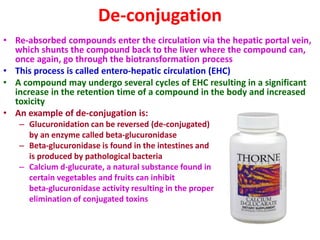
• An example of de-conjugation is:
– Glucuronidation can be reversed (de-conjugated)
by an enzyme called beta-glucuronidase
– Beta-glucuronidase is found in the intestines and
is produced by pathological bacteria
– Calcium d-glucurate, a natural substance found in
certain vegetables and fruits can inhibit
beta-glucuronidase activity resulting in the proper
elimination of conjugated toxins
• file:///C:/Users/LIFE%20SCIENCE/Downloads/
Report%20%2310%20-
%20Hepatic%20Biotrans.pdf

Detoxification phase i and ii

  • 1.
    Phase I andPhase II detoxification of wastes Dr. Radhakrihna G Pillai Department of Life Sciences University of Calicut, India 673 635
  • 2.
    Toxins in aroundthe body • in 1994 alone, over 2.2 billion pounds of toxic chemicals were released into the environment in the United States • By 2002 had grown to 4.7 billion pounds • the body produces a steady stream of metabolic waste products (ammonia, bilirubin, urea, lactic acid, etc.) • toxic byproducts called – exotoxins produced as a result of microbial activity in the human intestine • The sole purpose of the hepatic biotransformation process is to convert toxic compounds into non-toxic, water- soluble compounds which can easily be eliminated • The liver (hepatic) is the key player in this process • Biotransformation - is defined as a metabolic process whereby chemical modifications or alterations are made by the body on a specific chemical compound, usually by means of enzymatic activity
  • 3.
    Entry of xogenouscompounds • Exogenous compounds enter the body through four primary routes – inhalation (nose/lungs), – ingestion (mouth/intestines) – transdermal (skin), or – intravenous (veins). • Exogenous compounds can either be compounds that the human body is familiar with (e.g. food, nutrients, water, oxygen) or • They can be compounds which are foreign to the body (e.g. drugs, pesticides, solvents, industrial chemicals). • Exogenous compounds which are foreign to the body are referred to as xenobiotics
  • 4.
    Hepatic biotransformation • Thechemical modification or alteration of compounds (endogenous or exogenous) • via enzymatic activity, • which takes place in the liver. • Biotransformation can take place in most tissues anywhere in the body • The liver is the primary site for biotransformation to occur • This is due in part because of the large size of the liver and because it also contains the highest concentration of biotransformation enzymes • Biotransformation enzymes exist in the – smooth endoplasmic reticulum, – cystosol (intracellular fluid) and – to a lesser degree in the membranes of the mitochondria, – nuclei and lysosomes (small spherical organelles) of the liver’s hepatocytes • The kidneys and lungs are the next major biotransformation sites, but only at 10 – 30% of the livers capacity. • The skin, nasal mucosa and intestinal mucosa also have some biotransformation capacity.
  • 5.
    Entry into cells •Most xenobiotics entering the body are lipophilic (affinity for lipids) • This property enables them to penetrate the lipid membranes of cells, to be transported by lipoproteins with blood, and to be rapidly absorbed by the target organ • The excretory mechanism of the body requires a certain degree of hydrophilicity (water loving) for efficient excretion • Lipophilic compounds are more absorbable and retainable, while hydophilic molecules are less able to cross cellular membranes and therefore are easily filtered out by the kidneys • In the absence of efficient means of excretion constant exposure to lipophilic xenobiotics could result in accumulation of these compounds in human tissue potentially becoming toxic to the body • Therefore, the main function of biotransformational enzymatic activity is to make lipophilic compounds less toxic and harmful • By converting or biotransforming them to hydrophilic compounds and preparing them for elimination
  • 6.
    Continuous process indifferent phases • Hepatic biotransformation takes place non-stop • High energy dependent enzymatic process • It requires and uses a tremendous amount of cellular energy • Hepatic biotransformation requires and uses a large variety of enzymes • Biotransformation enzymatic activity occurs in two sequential steps called - Phase I and Phase II • Also, Phase III occurs, however this phase requires the use of transporter proteins as opposed to enzymes
  • 8.
    Phase I Bioactivation •The process whereby enzymes act upon a compound to biotransform it • During this phase the compound is only partially biotransformed • Thereby creating an intermediate or metabolite of the original chemical compound • Which has been bioactivated into a more chemically reactive, toxic compound • This reactive compound, if not fully biotransformed, will remain in the body • Potentially causing damage, especially to the liver where it was formed • And/or it will be stored in adipose (fat) tissue where it will be difficult to excrete
  • 9.
    Phase II Conjugation •The bioactivated Phase I intermediate is further acted upon by a different set of enzymes and undergoes further biotransformation • The result is a safer, non-toxic water soluble compound • This process is sometimes referred to as – bioinactivation • Phase III Efflux – is the process of removing the water soluble Phase II conjugated compound from the cell • Phase III uses transporter proteins rather than enzymes to complete this process • Completely biotransformed compounds are removed from the cell • It will then be eliminated from the body via – kidneys, bowels, breath, sweat, saliva or hair - completing the detoxification process
  • 10.
    Enzymes • There arenumerous biotransformation enzymes • Each enzyme has an affinity for a certain molecular compound or substrate • Regulation of the biotransformation enzymatic process is highly complex • It is the widespread variability in the regulation of biotransformation enzymes which determines the efficiency of the biotransformation process • And therefore a determining factor in whether an individual is highly sensitive or reactive to xenobiotic compounds or is more resilient and less sensitive
  • 11.
    Biotransformation Regulation • Theregulation, expression and activity of biotransfomation enzymes and the extend of detoxificaition is determined in large part by two general factors: • (1) environmental factors - the level/amount of exposure or ingestion of a toxic compound and • (2) biochemical factors – an individual’s unique level of biochemistry; referred to as - biochemical individuality. • Biochemical individuality is a simple concept that states all humans differ biochemically from others • Biochemical individuality directly affects the degree to which a chemical compound is biotransformed from person to person
  • 12.
    Factors affecting biochemical individuality •Some of the factors that determine a person’s level of biochemical individuality are; – Endogenous Compounds – Exogenous Compounds – Phase I Bioactivation – Phase II Conjugation – Phase III Efflux Elimination – Genetics factors – – the structure, amount of or complete lack of a specific biotransformation enzyme may differ among individuals and this can give rise to differences in rates of biotransformation – These genetic variations are referred to as – polymorphism
  • 13.
    Factors affecting biochemical individuality •Non-genetic host factors – such as disease, stress, obesity, physical exercise and age – For example - In some disease states, detoxification activities appear to be up-regulated, while in other conditions these activities may be inhibited – Another example - elderly people are generally more “sensitive” due to a less active life style causing poor blood flow to the liver, along with the fact that they produce fewer biotransformation enzymes • Co-factors - differences in the availability of co-factors and nutrients cause very different biotransformation abilities from person to person, or even within the same person due to a daily changing nutritional status • Wide variety of environmental factors regulates the interplay between – inducible and – inhibitory functions of the biotransformation process
  • 14.
    Inducers • Can beeither: – mono-functional - affecting only one enzyme or one phase of biotransformation or – they can be multi-functional – affecting multiple enzymes or phases • Mono-functional inducers that increase Phase I but not Phase II can result in: – Bioactivation - the increased formation of highly reactive metabolic intermediates which are associated with damage to proteins, RNA, DNA or increased inflammation, cell death or cancer – The increased biotransformation of multiple compounds potentially clearing and reducing availability of a desirable substance – such as a helpful medication • Multi-functional inducers tend to affect both phases by: – increasing Phase II activity and to either slightly increase Phase I activity or – to slow Phase I relative to Phase II – generally a good thing
  • 16.
    Inhibition of PhaseI and Phase II processes • Two or more compounds competing for the same enzyme • Depletion of nutrients and co-factors • Selective inhibition of an enzyme by pharmaceuticals It can be strategic to inhibit Phase I or Phase II systems, generally more true of Phase I • For example acute care in some poisoning includes administering the right Phase I inhibitor – this would be done if it is the bioactive intermediate that is the real poison and needs to be avoided • This can give the body time to cope with the slowed stream of toxic production • Also, it can be strategic to inhibit Phase I when availability of Phase II cofactors are limited - by poor nutrition or large toxic burden, this can help Phase II keep up • Ideally, Phase I and Phase II detoxification mechanisms work synergistically • More specifically, as long as there is no deficiency of Phase II cofactors, Phase II reactions in general occur faster than Phase I reactions • This prevents the buildup of highly reactive bioactive Phase I intermediate compounds
  • 17.
    Imbalance in PhaseI and Phase II • However, If Phase I detoxification is highly active and Phase II detoxification is lethargic or if an individual is exposed to large amounts of xenobiotics along with a weakened biochemical individual response, imbalances between Phase I and Phase II can occur • In such situations critical nutrients and co-factors can become depleted allowing unwanted compounds and bioactive intermediates to buildup in the body’s tissues • Individuals with such situations are referred to as a “pathological detoxifiers” (diseased detoxification) a condition which contributes significantly to free radical formation, oxidative stress and ultimately tissue damage.
  • 18.
    Liver in detoxification •Phase I - Bioactivation Hepatocytes are bathed in blood as the blood passes through the sinusoids • - 70% of the hepatocytes surface membrane contacts the blood in the sinusoid • This provides for a tremendous surface area across which various compounds, especially xenobiotics, can gain entry into the hepatoyctes. • This can occur by one of several ways: • compounds may passively diffuse across the sinusoidal membrane of the hepatocytes • they may be exchanged between blood transport proteins and the sinusoidal membranes • their carrier proteins may bind to sinusoidal membrane receptors and then undergo endocytosis (cells absorb or engulf) • Once mobilized in the hepatocyte, unwanted compounds can contact and interact with biotransformation enzymes, the first being the Phase I enzymes
  • 19.
    Phase I enzymes •Phase I enzymes are lipid membrane bound proteins and are mostly found in the endoplasmic reticulum membrane • The primary function of Phase I enzymatic activity is to either: – Biotransform a toxic lipophilic compound directly to a more hydrophilic compound – Enable its direct excretion in the kidneys (e.g. caffeine) – Phase I usually results in only a small amount of direct hydrophilicity and excretion • The bulk of Phase I enzymatic activity takes place in the form of altering unwanted compounds in a way as to either expose or introduce a functional group • Functional groups such as: – Carboxyl group (–COOH) – hydroxyl group (– OH) – amino group (-NH2), or – sulfhydryl group/thiol (-SH) are introduced
  • 20.
    Role of PhaseI enzymes • This Phase I enzymatic alteration results in the unwanted compound now becoming a bioactivated intermediate • This gives rise to a more reactive and potentially more toxic and harmful substance than the original compound • Therefore, it must be acted upon rapidly by antioxidants and/or Phase II enzymes • Complicating matters, often a single compound goes through a series of two to three Phase I reactions before it is ready for Phase II • which may occur in different parts of the cell (e.g. ER - lysomsomes – mitochondria) • This gives rise to increased opportunity for a toxic intermediate to encounter a target molecule and have a toxic effect during the transition • Phase I enzymatic activity occurs by means of one of three possible chemical reactions: – Hydrolysis – reduction or – oxidation
  • 21.
    Types of reactions •The type of reaction depends on the chemistry of the original compound and whether or not the compound is a substrate for one of the various Phase I enzymes • Hydrolysis is a chemical process in which a molecule is cleaved into two parts by the addition of a molecule of water. • One fragment of the parent molecule gains a hydrogen ion (H+ ) from the additional water molecule • The other fragment collects the remaining hydroxyl group (-OH), which is a functional group and thereby prepares the compound for Phase II • The major enzymes associated with the actions of hydrolysis are: • esterases, peptidase and epoxide hydolase • Reduction: The process of moving electrons from one element to another element during chemical reactions is called reduction and
  • 22.
    Oxidation-redox • Reduction isthe opposite of oxidation, whereby oxygen is removed or at least one electron is added when compounds come into contact with each other • The major reductions associated with Phase I are: – Azo reduction – Disulfide reduction – Nitro reduction – Carbonyl reduction – Quinone reduction – Reductive dehalogenation – Sulfoxide reduction Oxidation • Over whelming majority of Phase I reactions occur as oxidative enzymatic reactions • In Phase I, oxidation is carried out by a large family of enzymes called - mixed function oxidases or monooxygenases • These enzymes introduce oxygen into the chemical structure of unwanted compounds, creating bioactivated intermediates such as reactive oxygen species (ROS) • These reactive oxygen species, also known as free radicals, can be extremely toxic, far more so than the original compound
  • 23.
    Common Phase Itransformation enzymes • Cytochrome p450 Monooxygenases (CYP450) • The most extensively studied mechanism responsible for the metabolism of xenobiotics is the action of the cytochrome p450 enzymes (CYP450) • The CYP450 enzymes constitute a super family of proteins (containing a heme cofactor) that are not only responsible for metabolism of xenobiotics and metabolic waste, but are also involved in the metabolism of nutrients, fatty acids, cholesterol and steroid hormones • These enzymes are widely distributed throughout the body with the greatest concentrations in the liver and in tissues exposed to the external environment (e.g. skin, intestines, lung, eyes), as well as the kidneys, adrenals, testes, and brain
  • 24.
    Cytochrome p450 • Thishuge system processes more compounds than all the rest of Phase I enzymes combined • Each human CYP450 enzyme appears to be expressed by a particular gene and most compounds are largely metabolized by a single CYP450 enzyme • There is a lot of overlap and redundancy in this system, for example: • One CYP450 enzyme maybe involved in the metabolism of one or more substrates while a single substrate may be acted upon by multiple CYP450 enzymes • CYP450 Substrates: CYP450 enzymes detoxify both endogenous and exogenous compounds
  • 25.
    Inducers of Cytochromep450 • The cytochrome p450 family of biotransformation enzymes (CYP1, 2, 3) can be induced by numerous compounds; except for CYP2D6, which cannot be induced • List of several compounds known to induce CYP450 enzymes – Chemicals – air pollution, petroleum derivatives, solvents, organochlorines, herbicides, pesticides, acetate, paint fumes, dioxin, carbon tetrachloride (fire extinguisher, refrigerants, cleaning agents), etc – Drugs – acetaminophen, diazepam, sleeping pills, contraceptive pills, steroids, barbiturates, sulfonamides/sulfa drugs, nicotine, ethanol/alcohol, caffeine, phenobarbital, etc. – Foods – charcoal-broiled fats, saturated fats, high protein diets, brassica vegetables, d-limonene, sassafras. – Supplements – thiamin (B1), riboflavin (B2), niacin (B3), ascorbic acid (C), protein powders, St. John’s wort
  • 26.
    CYP450 Inhibitors • Manysubstances inhibit cytochrome p450 enzymes • This situation can cause substantial problems as it makes toxins potentially more damaging because they remain in the body longer before detoxification • Such blocking results in a build-up of more toxic compounds in tissue • This can in turn lead to a spreading phenomenon, with increasing sensitivity to more chemicals such as perfumes, colognes, cleaners, detergents and many other environmental chemicals • Also, the spreading phenomenon can eventually cause and individual to become sensitive and reactive to even natural chemicals occurring in foods, pollen and mold • The most severely ill chemically sensitive patients not only have abnormally low anti-pollutant enzymes in addition to toxic suppression and nutrient depletion
  • 27.
    Inhibitors of cytochromep450 • In some instances antibodies are produced against cytochrome p450 enzymes and may inhibit or decrease their effectiveness • Some examples of substances that inhibit CYP450 enzymes are: – Chemicals –Carbon monoxide, etc. – Drugs – H2-blockers (for acid reflux), benzodiazepines (for anxiety, insomnia), anti-histamines (for allergies), anti-fungals, barbiturates (sedatives, anticonvulsants), etc. – Foods – naringenin (flavonoid in grapefruit), curcumin (turmeric), capsaicin/cayenne (chili peppers), eugenol (clove oil), quercetin (onions), etc. Supplements – quercetin (flavonoid), calendula (calendula officianalis), N-acetylcysteine, etc. Endogeneous – gut bacteria endotoxins/exotoxins – Other – aging, loss of oxygen
  • 28.
    Other Phase IOxidative Enzymes • As mentioned there are well over one hundred mixed function oxidase or monooxygenase enzymes used in the Phase I hepatic biotransformation process • some of the other more common phase I biotransformation enzymes are: – Flavin-Containing Monooxygenases (FMO) – Alcohol Dehydrogenase – Aldehyde dehydrogenase – Aldehyde Oxidase – Xanthine oxidase – Diamine oxidase – Monomine oxidase – Molybdenum hydroxylase
  • 29.
    Phase II -Conjugation • Most compounds enter Phase II as Phase I bioactivated intermediates • Some endogenous and exogenous compounds by-pass Phase I and enter Phase II directly • The primary function of Phase II is to further biotransform compounds to a less toxic, more hydrophilic compound. • To do this, Phase II incorporates the use of another type of enzyme called a transferase enzyme • Transferase enzymes are a family of enzymes whose function is to catalyze the transfer of various chemical groups from one compound to another • In hepatic biotransformation, the transferase enzyme transfers and attaches a co-factor to the exposed functional group of the entered Phase I intermediate • This process is referred to as conjugation
  • 30.
    Co-factors In Phase IIwhen a specific transferase enzyme works with a specific co-factor it is referred to as a Phase II pathway Individual compounds that enter Phase II usually follow one or two distinct pathways Once a compound has become conjugated, via one of the Phase II pathways, it has now completed the biotransformation process of becoming hydrophilic and is ready for transport out of the cell
  • 31.
    Phase II biotransformation detoxificationpathways • Acetylation • Primary enzyme: N-acetyltransferase • Co-factor: acetyl-Coenzyme A • Nutrients needed: pantothenic acid (B5), vitamin C Inducers: • Inhibitors: deficiency of pantothenic acid (B5), or ascorbic acid (C) • Substrates: amines • This rises to as high a level as 80% among the chemically sensitive population • Their N-acetyltransferase activity is thought to be reduced and this prolongs the action of drugs and other toxic chemicals, thus enhancing their toxicity
  • 32.
    Amino Acid Conjugation •Several amino acids, primarily glycine and taurine are used to conjugate with and neutralize toxins • Glycine is the most commonly utilized and is referred to as – glycination • Nutrients needed: Bile acids are conjugated with glycine and taurine • Taurine deficiency leads to liver congestion • Inducers: glycine, taurine • Inhibitors: low protein diet • Substrates: - carboxylic acids • Both glycine and taurine dependent reactions require an alkaline pH: 7.8 to 8.0 • Environmental medicine specialists may alkalinize over-acidic patients by administering sodium and potassium bicarbonate in order to facilitate these reactions
  • 33.
    Glucuronidation • Primary Enzyme:UDP-glucuronosyltransferase (six forms) • Co-factor: UDP-Glucuronic acid • Nutrients Needed: Beta-glucuronidase, regarded as a dangerous enzyme, interferes with the glucuronidation process • D-glucarate may be obtained naturally by emphasizing apples, grapefruit, broccoli, and brussels sprouts in the diet and by supplementing with calcium-D-glucarate • Inducers: fish oils, cigarette smoke, d-limonene, phenobarbital • Inhibitors: aspirin • Substrates: carboxylic acids • Notes: Glucuronidation is considered an important detoxification mechanism when sulfation or glycination is diminished or saturated. For most individuals, glucuronidation is a supplemental pathway
  • 34.
    Glutathione Conjugation • Glutathioneis a tripeptide of glycine, cysteine and glutamic acid • Primary Enzyme: Glutathione-S-transferase • Co-factor: Glutathione • Nutrients Needed: Vitamin C increase glutathione stores by stimulating the rate of glutathione synthesis • Inducers: ellagic acid, brassicia vegetables, d-limonene Inhibitors: deficiency of selenium, B12, zinc • Substrates: phenols, amines, thiols
  • 35.
    Methylation • A commonbut minor pathway -involves conjugating methyl groups to toxins • The methyl group is attached by various methyl-transferase enzymes to an N, O, or S imbedded in a 6-carbon ring respectively called N, O and Smethylation • Primary Enzyme: methyltransferases (four types – Pheno O-, Catechol O-, N-, S-) • Co-factor: methyl groups – S-adenosylmethionine (SAM) • Nutrients Needed: Most of the methyl groups used for detoxification comes from S-adenosylmethionine (SAM) • SAM is synthesized from the amino acid methionine, a process which requires the nutrients choline, the active form of B12 – methyl cobalamin, and the active form of folic acid – 5-methyltertahydrofolate. • The activity of the methyltransferase enzyme is dependent on magnesium and due to the frequency of magnesium deficiency; supplementation with this nutrient will often stabilize chemically sensitive individuals. • Inducers: choline, methionine, betain, folic acid, cobalamin • Inhibitors: deficiency of folic acid, B12 • Substrates: phenols, amines
  • 36.
    Phase III -Efflux • The small intestine is the first site of xenobiotic exposure • CYP450 activity declines along the length of the intestine and from the tip of the microvilli to its base • Levels of intestinal cytochrome p450 are reported to be much less than those found in the liver • This difference between intestine and liver CYP450 activity is often used as the basis for the idea that the intestine is of little importance in the detoxification process • The intestines are now being recognized as having a major role in the biotransformation process • This is in part because of the Phase I and Phase II activities found in enterocytes, along with a biochemical mechanism referred to as – antiporter
  • 37.
    Antiporter • The antiporteris an energy dependent efflux pump (transport protein) • Contained within the enterocytes, whose function is to export unwanted compounds immediately back into the intestines • Once the exported unwanted compound arrives back into the intestine one of several things can take place: – It can be eliminated in the stool – It can re-enter the enterocyte only to be exported back out into the intestine and start the cycle over again – It can re-enter the enterocyte and pass into the blood stream and travel to the liver – It can re-enter the enterocyte and be acted on by the Phase I CYP3A4 enzymes thereby starting the biotransformation process before it is passed into the blood stream to travel to the liver
  • 38.
    Antiporter – Researchers havefound that the antiporter activity in the intestines appears to be co-regulated with the Phase I CYP3A4 enzyme – It has been speculated that this allows more opportunities for Phase I activity to metabolize unwanted chemicals before they are taken into circulation – This makes antiporter activity an important factor in the first pass metabolism of pharmaceuticals and other xenobiotics – First pass effect is the biotransformation of unwanted compounds by intestinal enzymes and the liver before the compound reaches systemic circulation – This results in lower systemic bioavailability of a parent compound, which is an important effect when pharmaceuticals are involved
  • 39.
  • 40.
    Phase II transporters •After Phase II the transformed substances need to be transported out of the cell • This happens during Phase III • This is a vital function in the detoxification process and is accomplished by the efflux transporters or efflux pumps • The same efflux pumps involved in the antiporter mechanism • So it is also included in the Phase III • Therefore, efflux transporters / pumps serve a dual function with the Phase III
  • 41.
    Transporters – Phase IIImetabolism – transporters act by eliminating both endogenous and exogenous Phase II conjugated metabolites from hepatocytes and other tissues – Antiporter action – transporters acting as nature’s gatekeeper for cellular entry by eliminating unwanted compounds pre- biotransformation – More than 350 unique human transporters have been identified – The best known and most studied transporter is the P- glycoprotein – These efflux transporters, like Phase I and Phase II enzymes, work on specific substrates – Efflux transporters can also be induced – increasing the transporters activity, and – Can be inhibited – causing substrate levels to become higher.
  • 42.
    De-Conjugation • Once anunwanted compound completes the biotransformation process and is eliminated from the cell it finds its way into either the urine or the bile • Conjugated compounds released into the bile, may be subjected to the action of hydrolytic enzymes • Hydrolytic enzymes originate from some types of intestinal microflora (bacterial microorganisms), which varies from person to person • One of the functions of these intestinal microflora enzymes twist the whole detoxification process by de-conjugating some of the biotransformed compounds • De-conjugation results in an increase in lipophilic compounds and renders them once again subject to passive uptake
  • 43.
    De-conjugation • Re-absorbed compoundsenter the circulation via the hepatic portal vein, which shunts the compound back to the liver where the compound can, once again, go through the biotransformation process • This process is called entero-hepatic circulation (EHC) • A compound may undergo several cycles of EHC resulting in a significant increase in the retention time of a compound in the body and increased toxicity • An example of de-conjugation is: – Glucuronidation can be reversed (de-conjugated) by an enzyme called beta-glucuronidase – Beta-glucuronidase is found in the intestines and is produced by pathological bacteria – Calcium d-glucurate, a natural substance found in certain vegetables and fruits can inhibit beta-glucuronidase activity resulting in the proper elimination of conjugated toxins
  • 44.