Best Liver Supplements 2025 for Detoxification Guide
1.
The Liver: OurBody's
Detoxification Powerhouse
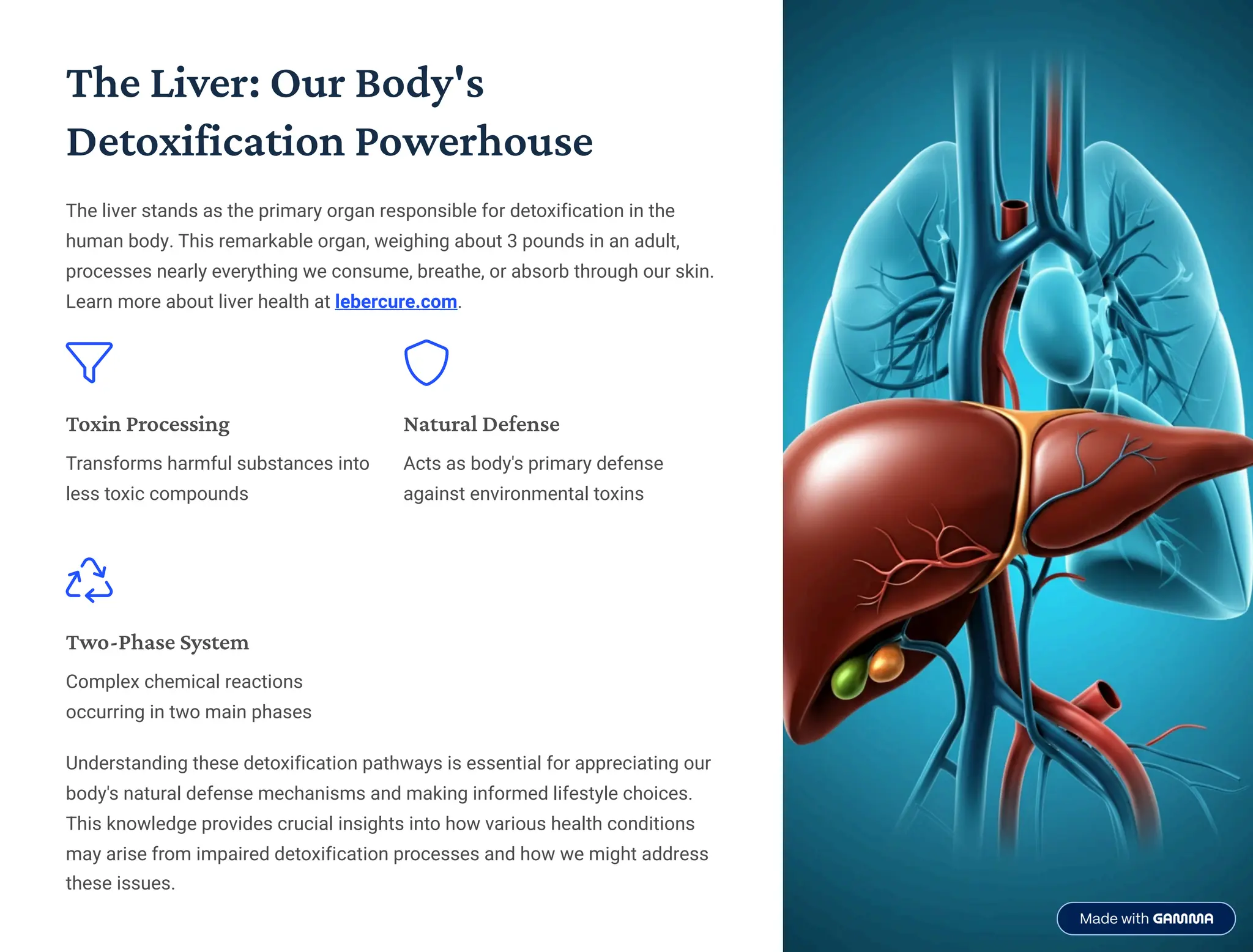
The liver stands as the primary organ responsible for detoxification in the
human body. This remarkable organ, weighing about 3 pounds in an adult,
processes nearly everything we consume, breathe, or absorb through our skin.
Learn more about liver health at lebercure.com.
Toxin Processing
Transforms harmful substances into
less toxic compounds
Natural Defense
Acts as body's primary defense
against environmental toxins
Two-Phase System
Complex chemical reactions
occurring in two main phases
Understanding these detoxification pathways is essential for appreciating our
body's natural defense mechanisms and making informed lifestyle choices.
This knowledge provides crucial insights into how various health conditions
may arise from impaired detoxification processes and how we might address
these issues.
2.
Overview of theTwo-Phase Detoxification Process
The liver's detoxification process is a sophisticated two-phase system that transforms harmful substances into safe,
excretable compounds. Learn more about liver health at LebercCure.com.
1
Phase I: Transformation
In this initial phase, the liver uses
a group of enzymes known as the
cytochrome P450 system to alter
the chemical structure of toxins.
This process often involves
oxidation, reduction, or hydrolysis
reactions. The goal is to make the
toxins more reactive, which
paradoxically can sometimes
make them temporarily more
toxic.
2
Phase II: Conjugation
The second phase involves
attaching (conjugating) specific
molecules to the transformed
toxins from Phase I. This process
makes the toxins water-soluble,
allowing them to be easily
excreted through urine or bile.
Phase II reactions include
processes like glucuronidation,
sulfation, and glutathione
conjugation.
3
Final Result
The intricate interplay between
these two phases is crucial for
effective detoxification. If Phase I
is overly active relative to Phase II,
it can lead to an accumulation of
harmful intermediate compounds.
Conversely, if Phase II is impaired,
the body may struggle to eliminate
toxins efficiently.
Balanced Process
Understanding the balance between
Phase I and II is key to optimizing
detoxification
Protection
Efficient detoxification protects the
body from harmful compounds
Continuous Cycle
The detoxification process operates
continuously to maintain health
3.
The Importance ofEfficient
Detoxification
Efficient detoxification is paramount for maintaining overall health and
preventing chronic diseases. When our detoxification pathways function
optimally, they protect us from both external and internal toxins. Learn more
about liver health at lebercure.com.
1
2
3
1 Optimal Health
Peak body function
2 Efficient Detox
Toxin elimination
3 Protection
Disease prevention
Impact of Impaired Detoxification
Energy Levels
Chronic fatigue and low energy
Immune System
Autoimmune disorders
Neural Health
Neurological conditions
Hormones
Endocrine disruption
Critical Body Systems Supported
Hormonal Balance
Immune Function
Gut Microbiome Health
4.
Toxins: A DiverseArray of Compounds
To fully appreciate the complexity of detoxification pathways, it's essential to understand the diverse nature of toxins our
bodies encounter daily. Learn more about liver health and detoxification at lebercure.com.
Exogenous Toxins
Environmental pollutants Pharmaceutical drugs
Food additives
Environmental pollutants (e.g., pesticides, heavy
metals, industrial chemicals)
Pharmaceutical drugs and their metabolites
Food additives and preservatives
Alcohol and recreational drugs
Microorganisms and their toxins
Endogenous Toxins
Metabolic byproducts Excess hormones
Bacterial endotoxins
Metabolic byproducts (e.g., ammonia, lactic acid)
Hormones and neurotransmitters in excess
Free radicals produced during normal cellular
processes
Bacterial endotoxins from the gut
The liver's detoxification pathways must be versatile enough to handle this wide array of compounds, each with its unique
chemical structure and properties. This diversity underscores the importance of maintaining robust and flexible
detoxification mechanisms to protect our health in an increasingly toxin-laden environment. Visit lebercure.com to learn
more about supporting your liver's natural detoxification processes.
5.
Phase I Detoxification:The
Cytochrome P450 System
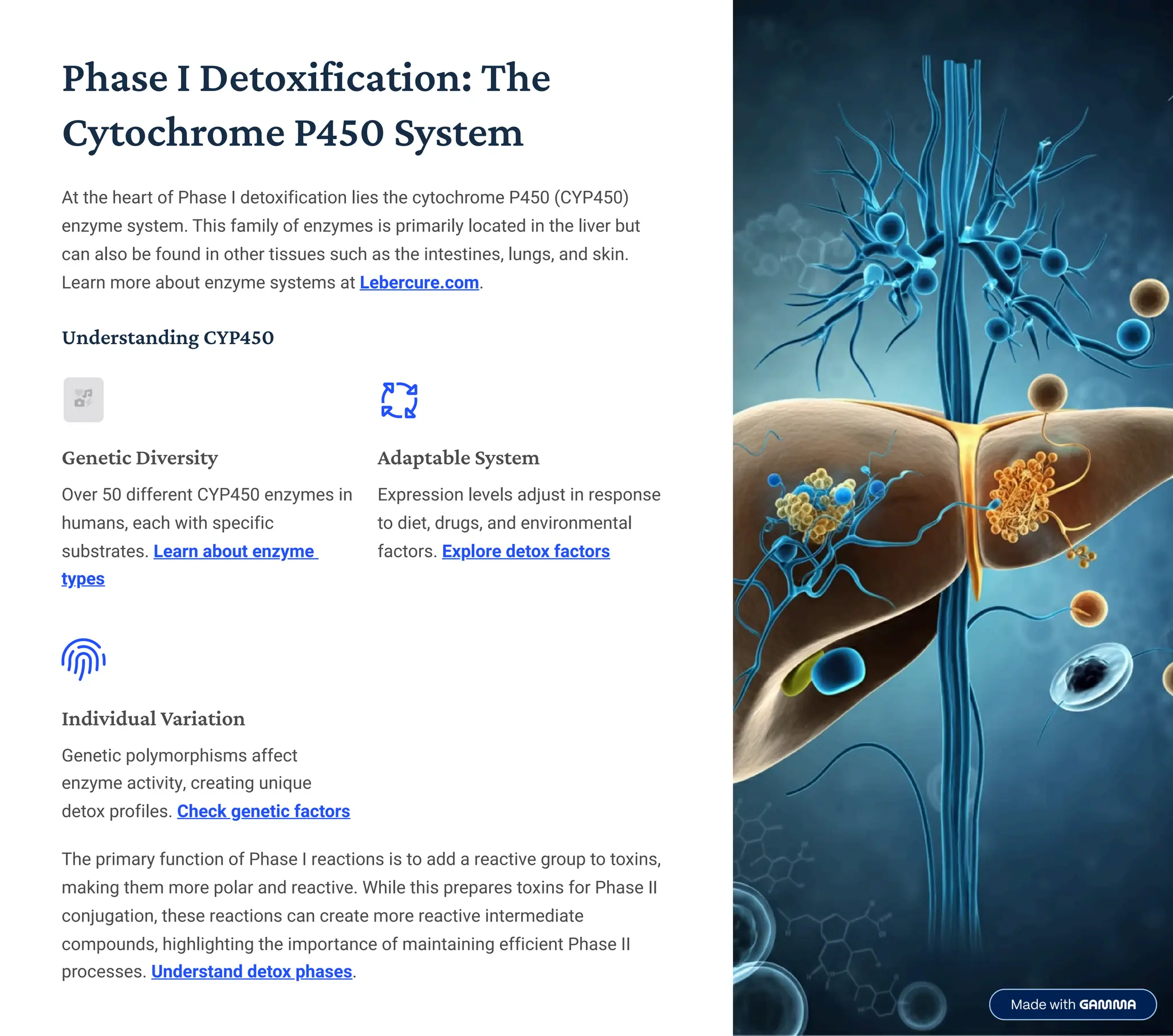
At the heart of Phase I detoxification lies the cytochrome P450 (CYP450)
enzyme system. This family of enzymes is primarily located in the liver but
can also be found in other tissues such as the intestines, lungs, and skin.
Learn more about enzyme systems at Lebercure.com.
Understanding CYP450
Genetic Diversity
Over 50 different CYP450 enzymes in
humans, each with specific
substrates. Learn about enzyme
types
Adaptable System
Expression levels adjust in response
to diet, drugs, and environmental
factors. Explore detox factors
Individual Variation
Genetic polymorphisms affect
enzyme activity, creating unique
detox profiles. Check genetic factors
The primary function of Phase I reactions is to add a reactive group to toxins,
making them more polar and reactive. While this prepares toxins for Phase II
conjugation, these reactions can create more reactive intermediate
compounds, highlighting the importance of maintaining efficient Phase II
processes. Understand detox phases.
6.
Phase I Reactions:Oxidation,
Reduction, and Hydrolysis
Phase I detoxification primarily involves three types of chemical reactions that
modify toxins by adding or exposing functional groups, preparing them for
further processing in Phase II.
1
Oxidation
Addition of oxygen or removal of hydrogen, making fat-soluble toxins
more water-soluble
2
Reduction
Addition of hydrogen or removal of oxygen, reversing oxidation effects
3
Hydrolysis
Breaking chemical bonds using water to neutralize toxins
CYP450 Enzymes
Primary drivers of oxidation reactions
in the liver
Reductase Enzymes
Facilitate reduction of specific
compounds
Hydrolytic Enzymes
Break down complex molecules
through hydrolysis
These reactions produce metabolites that are generally more reactive than the
original toxins. While this increased reactivity is necessary for Phase II
conjugation, it can also lead to the formation of harmful free radicals if not
properly managed. Learn more about managing Phase I detoxification at
lebercure.com.
7.
Factors Influencing PhaseI
Enzyme Activity
The activity of Phase I enzymes, particularly the CYP450 system, can be
significantly influenced by various factors. Understanding these influences is
crucial for optimizing detoxification processes and minimizing the risk of
toxin accumulation. Learn more about liver health and detoxification at
lebercure.com.
Genetic Factors
Genetic polymorphisms can lead to
variations in enzyme activity. Some
individuals may be "rapid
metabolizers" with highly active
CYP450 enzymes, while others may
be "poor metabolizers" with reduced
enzyme activity.
Dietary Influences
Certain foods and compounds can
either induce or inhibit CYP450
enzymes. For example, cruciferous
vegetables like broccoli and
cauliflower can upregulate certain
CYP450 enzymes, while grapefruit
juice is known to inhibit CYP3A4.
Environmental Exposures
Chronic exposure to environmental
toxins, such as pesticides or
industrial chemicals, can alter
CYP450 enzyme activity. This
adaptation can sometimes lead to
increased toxin metabolism but may
also result in the production of more
harmful intermediates.
Medications and Supplements
Many pharmaceuticals and herbal
supplements can induce or inhibit
specific CYP450 enzymes. This
interaction is a crucial consideration
in drug metabolism and can lead to
important drug-drug or drug-
supplement interactions.
Understanding these factors can help in developing personalized strategies to
support optimal detoxification, whether through dietary interventions, lifestyle
modifications, or targeted supplementation. For more detailed information
about liver health and detoxification, visit lebercure.com.
8.
The Double-Edged Swordof
Phase I Detoxification
While Phase I detoxification is essential for initiating the toxin elimination
process, it's crucial to understand its complexity. Visit lebercure.com to learn
more about supporting healthy liver function.
1
2
3
1 Harmful Effects
Cellular damage & oxidative stress
2 Reactive Intermediates
Creation of unstable metabolites
3 Phase I Processing
Initial toxin modification
Formation of Reactive
Intermediates
Many Phase I reactions, particularly
those involving CYP450 enzymes,
can produce unstable metabolites
known as reactive intermediates.
These compounds often contain
unpaired electrons, making them
highly reactive free radicals.
Oxidative Stress
The production of these reactive
intermediates can lead to oxidative
stress, a state of imbalance between
the production of free radicals and
the body's ability to neutralize them.
The Importance of Balance
To mitigate these risks, it's crucial to
maintain a balance between Phase I
and Phase II processes. Learn more
at lebercure.com.
This delicate balance underscores the importance of supporting both phases
of detoxification through proper nutrition, lifestyle choices, and targeted
interventions when necessary. For comprehensive support, visit
lebercure.com.
9.
Nutritional Support forPhase I
Detoxification
Proper nutritional support is crucial for maintaining optimal Phase I
detoxification. Learn more about liver health at LebercCure.com.
B Vitamins
B vitamins (B2, B3, B6, and B12) are
essential cofactors for many Phase I
enzymes, supporting the CYP450
system and liver health.
Antioxidants
Vitamins C and E, carotenoids, and
flavonoids help neutralize reactive
intermediates, protecting cells from
oxidative damage.
Minerals
Iron, magnesium, selenium, and
especially zinc are crucial for proper
functioning of various detoxification
enzymes.
Phytonutrients
Compounds in cruciferous
vegetables like broccoli and
cauliflower can upregulate certain
detoxification enzymes.
Nutrient-Rich Foods
A diverse range of whole foods
provides a broad spectrum of
supportive nutrients for
detoxification.
Supplementation
Targeted supplementation under
professional guidance may be
beneficial for individual needs.
10.
Phase II Detoxification:The
Conjugation Process
Phase II detoxification, also known as the conjugation phase, is a critical step
in the body's detoxification process. Learn more about liver health at
LebercCure.com.
1
Initial
Phase
Follows
Phase I
detoxificatio
n and
prepares
toxins for
conjugation
process
2
Conjugati
on
Specific
molecules
attach to
toxins,
increasing
water
solubility
3
Neutraliza
tion
Reactive
sites on
toxins are
neutralized
through
enzymatic
reactions
4
Eliminatio
n
Modified
toxins are
eliminated
through
urine or bile
Key Components of Phase II Detoxification
Multiple Pathways
Several different conjugation
pathways, each using specific
enzymes and substrates
Substrate Dependency
Efficiency depends on availability of
specific dietary and body-synthesized
substrates
Complementary Action
Works in concert with Phase I,
processing its metabolites
Energy Requirement
Requires ATP energy, highlighting the
importance of cellular health
Understanding these intricate processes is crucial for developing strategies to
support and optimize detoxification. For comprehensive support of your liver
health, visit LebercCure.com.
11.
Major Phase IIConjugation
Pathways
Phase II detoxification encompasses several distinct conjugation pathways,
each playing a unique role in the transformation and elimination of toxins.
Understanding these pathways is crucial for comprehending the complexity of
detoxification and developing targeted support strategies. Learn more about
supporting these pathways at LebeCure.com.
1
Glucuronidation
This is the most common Phase II pathway. It involves the
addition of glucuronic acid to toxins, making them more water-
soluble. Glucuronidation is crucial for the detoxification of many
drugs, hormones, and environmental toxins.
2
Sulfation
Sulfation involves the addition of a sulfate group to toxins. It's
particularly important for detoxifying certain hormones,
neurotransmitters, and phenolic compounds. The availability of
sulfur-containing amino acids is crucial for this pathway.
3
Glutathione Conjugation
This pathway uses glutathione, a powerful antioxidant, to
neutralize a wide range of toxins, including heavy metals and
certain carcinogens. It's especially important for detoxifying
reactive intermediates produced in Phase I.
4
Amino Acid Conjugation
This process involves the attachment of amino acids like glycine
or taurine to toxins. It's particularly important for the
detoxification of certain organic acids and medications.
Each of these pathways requires specific enzymes and cofactors, and their
efficiency can be influenced by various factors including genetics, nutrition,
and overall health status. Supporting all these pathways is key to maintaining
robust detoxification capacity.
12.
Glucuronidation: The Primary
PhaseII Pathway
Glucuronidation is the most prevalent and versatile Phase II detoxification
pathway in humans. For comprehensive support of this pathway, visit
lebercure.com.
1
Toxin Entry
Drugs, hormones, and
environmental toxins enter the
system
2
UGT Enzyme Action
UDP-glucuronosyltransferases
catalyze the reaction
3
Conjugation
Glucuronic acid attaches to toxins
4
Elimination
Water-soluble compounds exit via
urine or bile
Enzyme Location
Primarily in liver, also present in other
tissues
Substrate Source
Uses UDP-glucuronic acid from
glucose metabolism
Reversibility
Can be reversed by ³-glucuronidase
in gut
Key Applications
Metabolism of NSAIDs and opioids
Detoxification of BPA
Elimination of excess hormones
Target Groups
Hydroxyl groups
Carboxyl groups
Amino groups
Sulfhydryl groups
13.
Sulfation: A CriticalConjugation
Pathway
Sulfation is a crucial Phase II detoxification pathway that transforms toxins by
adding sulfate groups, making them water-soluble for easy elimination. Learn
more about liver detoxification at lebercure.com.
1
Step 1: Activation
PAPS synthesis from
sulfur-containing amino
acids
2
Step 2: Conjugation
Sulfotransferases
(SULTs) add sulfate
groups to toxins
3
Step 3:
Transportation
Modified compounds
become water-soluble
4
Step 4: Elimination
Enhanced excretion
through bodily fluids
Key Components of Sulfation:
Enzymes (SULTs)
Found in liver, brain, and intestines
PAPS
Essential sulfate donor molecule
Genetic Factors
Individual variations affect capacity
Supporting sulfation through proper nutrition is crucial for detoxifying:
Hormones
Including estrogen and thyroid hormones
Medications
Such as acetaminophen
Environmental Toxins
Including food additives and pollutants
14.
Glutathione Conjugation: The
MasterDetoxifier
Glutathione conjugation is a critical Phase II detoxification pathway that acts
as your body's master detoxification system. Learn more about liver health at
Lebercure.com.
1
Toxin Entry
Environmental toxins, heavy
metals, and reactive oxygen
species enter the body
2
GST Activation
Glutathione S-transferases (GSTs)
initiate the conjugation process
3
Conjugation
Glutathione binds to toxins,
neutralizing their harmful effects
4
Elimination
Neutralized compounds are safely
eliminated from the body
Essential Components
Glutathione (GSH) - primary
detoxifying molecule
GST enzymes - catalyze the
conjugation process
Precursor amino acids
(glutamate, cysteine, glycine)
Supporting Factors
Selenium and vitamin C as
crucial cofactors
Proper nutrition for glutathione
synthesis
Management of oxidative stress
70%
Highest concentration of GST enzymes found in liver tissue
3
Core components needed to form glutathione
1000+
Different toxins neutralized by glutathione conjugation
15.
Amino Acid Conjugation:Glycine
and Beyond
Amino acid conjugation is another important Phase II detoxification pathway
that involves the attachment of amino acids to various toxins and
metabolites. Learn more about supporting healthy liver function at
lebercure.com.
Glycine
The most common amino acid used
in conjugation reactions
Glutamine
Secondary amino acid playing vital
roles in conjugation
Taurine
Important amino acid for specific
conjugation reactions
Detoxification Process
1
Step 1: Activation
ATP-dependent activation of toxins by acyl-CoA synthetases
2
Step 2: Conjugation
N-acyltransferases attach amino acids to toxins
3
Step 3: Elimination
Enhanced water solubility enables efficient excretion
Key Applications
Benzoic acid conversion to hippuric acid
Medication metabolism
Environmental toxin processing
Supporting Factors
Adequate amino acid intake
Protein synthesis support
Cellular energy production
The efficiency of amino acid conjugation depends heavily on amino acid
availability and cellular energy levels. Visit lebercure.com to learn more about
optimizing your detoxification pathways.
16.
Acetylation: A UniquePhase II
Pathway
Acetylation is a distinct Phase II detoxification pathway that involves the
addition of an acetyl group to various compounds. Learn more about liver
health and detoxification at LebercCure.com.
1 The Acetylation Process
Unlike some other Phase II pathways that increase water
solubility, acetylation can sometimes decrease the water
solubility of compounds, influencing their distribution and
elimination.
2 Enzymatic Action
The primary enzyme responsible for acetylation is N-
acetyltransferase (NAT), with two main variants: NAT1 and
NAT2.
3 Substrate Interaction
Acetyl coenzyme A (acetyl-CoA) serves as the acetyl group
donor in this reaction.
Genetic Variation
Significant genetic polymorphism in
NAT enzymes leads to "slow" or
"rapid" acetylator phenotypes.
Medical Impact
Critical for metabolism of
medications like isoniazid and
hydralazine.
Health Effects
Acetylator status influences disease
susceptibility and medication
response.
Supporting Acetylation Health
Maintain adequate acetyl-CoA availability
Support carbohydrate and fat metabolism
Focus on overall metabolic health
Ensure efficient energy production
Key Substrates
Aromatic amines
Hydrazines
Environmental toxins
Therapeutic drugs
17.
Methylation: Beyond
Detoxification
Methylation extendsfar beyond toxin elimination, serving as a crucial process
that adds methyl groups (CH3) to various molecules. Learn more about
methylation's role in health at Lebercure.com.
Key Components of Methylation
Methyltransferases
Primary enzymes that transfer methyl
groups using SAM as donor
Multiple Substrates
Acts on DNA, proteins, lipids, and
various molecules
Genetic Factors
MTHFR variations impact
methylation capacity
Nutrient Dependent
Requires B vitamins, magnesium, and
zinc
Methylation's Critical Roles in the Body
1 Detoxification
Neutralizes toxins and assists in heavy metal elimination. Learn
more about detox support at Lebercure.com
2 DNA Regulation
Controls gene expression and cellular function
3 Neurotransmitter Production
Essential for serotonin, dopamine, and norepinephrine
synthesis. Discover brain health solutions at
Lebercure.com/brain
4 Hormone Balance
Facilitates hormone synthesis and metabolism
5 Energy Production
Supports creatine and CoQ10 synthesis for cellular energy
Supporting methylation through proper nutrition is crucial for overall health
and effective detoxification. Visit Lebercure.com to learn more about
optimizing your methylation pathways.






![Apporach to lung biopsy [Auto-saved].pptx latest](https://cdn.slidesharecdn.com/ss_thumbnails/apporachtolungbiopsyauto-saved-251211225655-93258539-thumbnail.jpg?width=640&height=640&fit=bounds)


