Tyrosinosis
Dr. V. MAGENDIRA MANI., M.Sc., M.Phil., Ph.D.,TNSET
Assistant Professor of Biochemistry
Islamiah College (Autonomous), Vaniyambadi
magivbio@gmail.com; 9486000227
Inborn errors of metabolism
are inherited metabolic disorders that result from defects in genes
coding for specific enzymes. This defect generates abnormal
chemical reactions that disrupt the normal metabolic pathways
resulting in the toxic accumulation of the substrate behind the
block or a deficiency in the product.
is a genetic disorder caused by the deficiency of one of the
enzymes required for the multistep process that breaks down
tyrosine.
If untreated, tyrosine and its byproducts build up in tissues and
organs, which leads to serious medical problems.
Tyrosinosis/Tyrosinemia
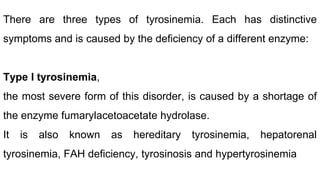
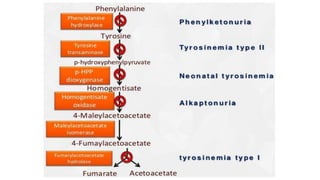
There are three types of tyrosinemia. Each has distinctive
symptoms and is caused by the deficiency of a different enzyme:
Type I tyrosinemia,
the most severe form of this disorder, is caused by a shortage of
the enzyme fumarylacetoacetate hydrolase.
It is also known as hereditary tyrosinemia, hepatorenal
tyrosinemia, FAH deficiency, tyrosinosis and hypertyrosinemia
Type II tyrosinemia
It is caused by a deficiency
of the enzyme tyrosine
aminotransferase. This
form of the disorder can
affect the eyes, skin, and
mental development.
Type III tyrosinemia is a rare disorder caused by a deficiency of
the enzyme 4-hydroxyphenylpyruvate dioxygenase.
Characteristic features include
Intellectual disability,
Seizures - A seizure is a sudden, uncontrolled electrical disturbance in the
brain. It can cause changes in your behavior, movements or feelings, and in
levels of consciousness
Periodic loss of balance and coordination (intermittent ataxia).
About 10 percent of newborns have temporarily elevated levels of
● but, in these cases, the cause is not genetic.
● The most likely cause is immature liver enzymes due to
premature birth and this condition is essentially benign and
spontaneously disappears with no sequelae.
● Transient tyrosinemia is not categorized as an inborn error of
metabolism because it is not caused by a genetic mutation.
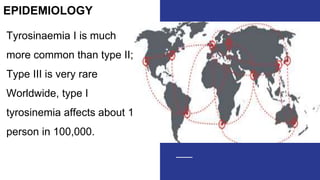
EPIDEMIOLOGY
Tyrosinaemia I is much
more common than type II;
Type III is very rare
Worldwide, type I
tyrosinemia affects about 1
person in 100,000.
SYMPTOMS
Different babies may have different symptoms
Some may show symptoms within the first few months of life
(acute form); others may develop symptoms around 1 year of
age (chronic form). Some symptoms may be:
Acute form:
★ Poor appetite and failure to grow normally
★ Vomiting
★ Diarrhea, bloody stools
★ Cabbage-like odor
★ Jaundice
★ Hepatomegaly
★ Lethargy - lack of energy
Chronic form:
★ Cirrhosis of the liver
★ Pain, numbness, and tingling in parts of the body
★ Kidney problems
★ Episodes of intense abdominal pain
★ Heart muscle weakness
Both forms of tyrosinemia type I may cause liver failure and/or
develop liver cancer
DIAGNOSIS
Typical biochemical findings include
● Elevated plasma concentrations of tyrosine, methionine, and
phenylalanine
● Elevated urinary concentration of tyrosine metabolites (p-
hydroxyphenylpyruvate, phydroxyphenyllactate, and p-
hydroxyphenylacetate)
● Decreased fumarylaceteoacetic acid hydrolase (FAH) enzyme
activity
THERAPY
★ Nitisinone was approved by the Food and Drug
Administration for treatment of tyrosinemia type I.
★ Nitisinone blocks parahydroxyphenylpyruvic acid
dioxygenase (p-HPPD), the second step in the tyrosine
degradation pathway, and prevents the accumulation of
FAA and its conversion to succinylacetone.
★ Nitisinone should be prescribed as soon as the diagnosis of
tyrosinemia type I is confirmed
★ Low-tyrosine diet to prevent tyrosine crystals from forming in
the cornea.
★ Dietary management should be started immediately upon
diagnosis and should provide a nutritionally complete diet
with controlled intakes of phenylalanine and tyrosine using a
vegetarian diet with low-protein foods.
Tyrosinosis

Tyrosinosis

  • 1.
    Tyrosinosis Dr. V. MAGENDIRAMANI., M.Sc., M.Phil., Ph.D.,TNSET Assistant Professor of Biochemistry Islamiah College (Autonomous), Vaniyambadi magivbio@gmail.com; 9486000227
  • 2.
    Inborn errors ofmetabolism are inherited metabolic disorders that result from defects in genes coding for specific enzymes. This defect generates abnormal chemical reactions that disrupt the normal metabolic pathways resulting in the toxic accumulation of the substrate behind the block or a deficiency in the product.
  • 3.
    is a geneticdisorder caused by the deficiency of one of the enzymes required for the multistep process that breaks down tyrosine. If untreated, tyrosine and its byproducts build up in tissues and organs, which leads to serious medical problems. Tyrosinosis/Tyrosinemia
  • 4.
    There are threetypes of tyrosinemia. Each has distinctive symptoms and is caused by the deficiency of a different enzyme: Type I tyrosinemia, the most severe form of this disorder, is caused by a shortage of the enzyme fumarylacetoacetate hydrolase. It is also known as hereditary tyrosinemia, hepatorenal tyrosinemia, FAH deficiency, tyrosinosis and hypertyrosinemia
  • 6.
    Type II tyrosinemia Itis caused by a deficiency of the enzyme tyrosine aminotransferase. This form of the disorder can affect the eyes, skin, and mental development.
  • 7.
    Type III tyrosinemiais a rare disorder caused by a deficiency of the enzyme 4-hydroxyphenylpyruvate dioxygenase. Characteristic features include Intellectual disability, Seizures - A seizure is a sudden, uncontrolled electrical disturbance in the brain. It can cause changes in your behavior, movements or feelings, and in levels of consciousness Periodic loss of balance and coordination (intermittent ataxia). About 10 percent of newborns have temporarily elevated levels of
  • 8.
    ● but, inthese cases, the cause is not genetic. ● The most likely cause is immature liver enzymes due to premature birth and this condition is essentially benign and spontaneously disappears with no sequelae. ● Transient tyrosinemia is not categorized as an inborn error of metabolism because it is not caused by a genetic mutation.
  • 9.
    EPIDEMIOLOGY Tyrosinaemia I ismuch more common than type II; Type III is very rare Worldwide, type I tyrosinemia affects about 1 person in 100,000.
  • 10.
    SYMPTOMS Different babies mayhave different symptoms Some may show symptoms within the first few months of life (acute form); others may develop symptoms around 1 year of age (chronic form). Some symptoms may be: Acute form: ★ Poor appetite and failure to grow normally ★ Vomiting ★ Diarrhea, bloody stools ★ Cabbage-like odor ★ Jaundice ★ Hepatomegaly ★ Lethargy - lack of energy
  • 11.
    Chronic form: ★ Cirrhosisof the liver ★ Pain, numbness, and tingling in parts of the body ★ Kidney problems ★ Episodes of intense abdominal pain ★ Heart muscle weakness Both forms of tyrosinemia type I may cause liver failure and/or develop liver cancer
  • 12.
    DIAGNOSIS Typical biochemical findingsinclude ● Elevated plasma concentrations of tyrosine, methionine, and phenylalanine ● Elevated urinary concentration of tyrosine metabolites (p- hydroxyphenylpyruvate, phydroxyphenyllactate, and p- hydroxyphenylacetate) ● Decreased fumarylaceteoacetic acid hydrolase (FAH) enzyme activity
  • 13.
    THERAPY ★ Nitisinone wasapproved by the Food and Drug Administration for treatment of tyrosinemia type I. ★ Nitisinone blocks parahydroxyphenylpyruvic acid dioxygenase (p-HPPD), the second step in the tyrosine degradation pathway, and prevents the accumulation of FAA and its conversion to succinylacetone. ★ Nitisinone should be prescribed as soon as the diagnosis of tyrosinemia type I is confirmed
  • 14.
    ★ Low-tyrosine dietto prevent tyrosine crystals from forming in the cornea. ★ Dietary management should be started immediately upon diagnosis and should provide a nutritionally complete diet with controlled intakes of phenylalanine and tyrosine using a vegetarian diet with low-protein foods.