Determining
Geologic Time Scale
Using Absolute and
Relative Dating
Dating Techniques Used
to Determine
Subdivisions of Geologic
Time
Geologic Time Scale
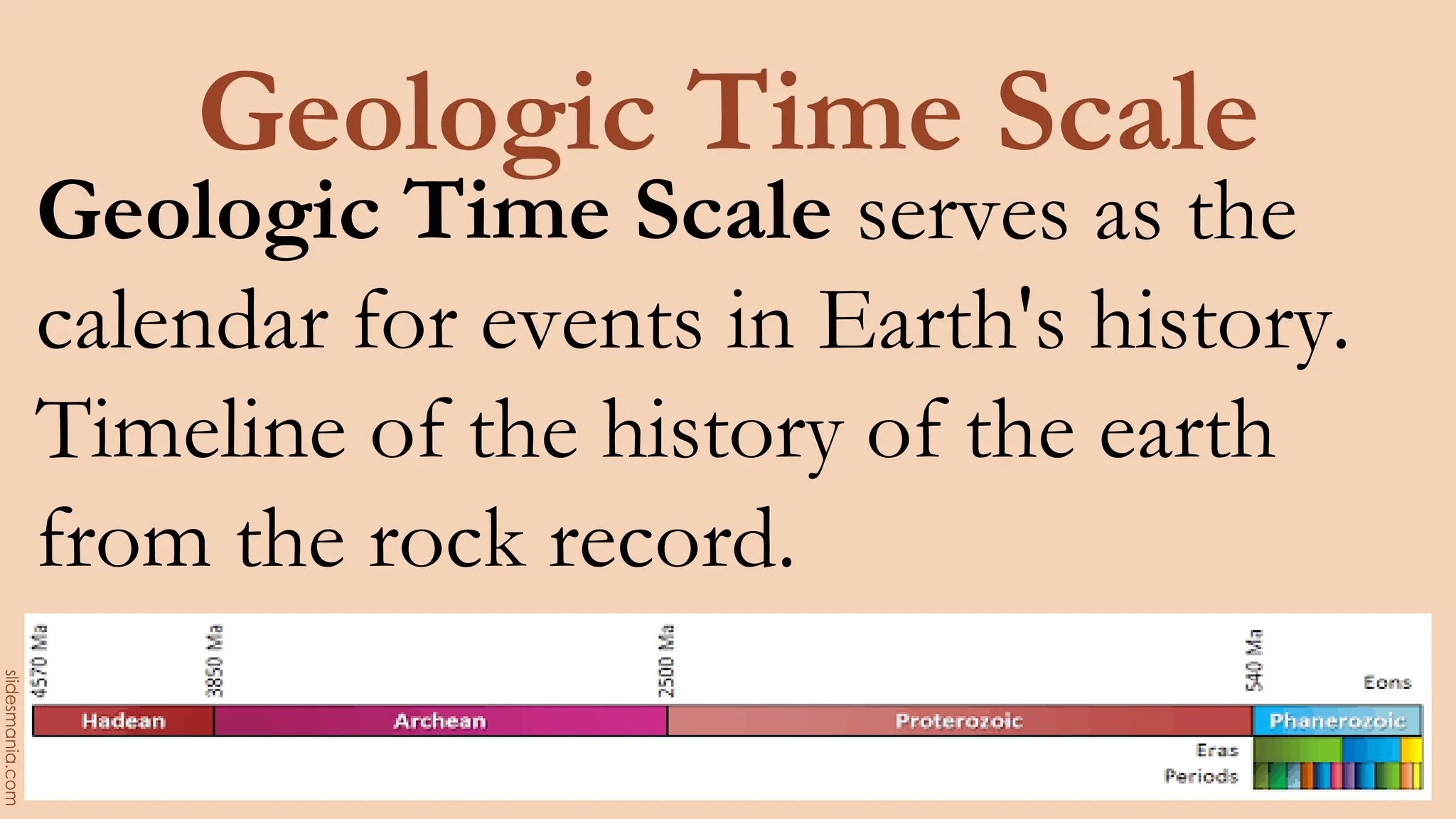
Geologic Time Scale serves as the
calendar for events in Earth's history.
Timeline of the history of the earth
from the rock record.
Geologic Time Scale
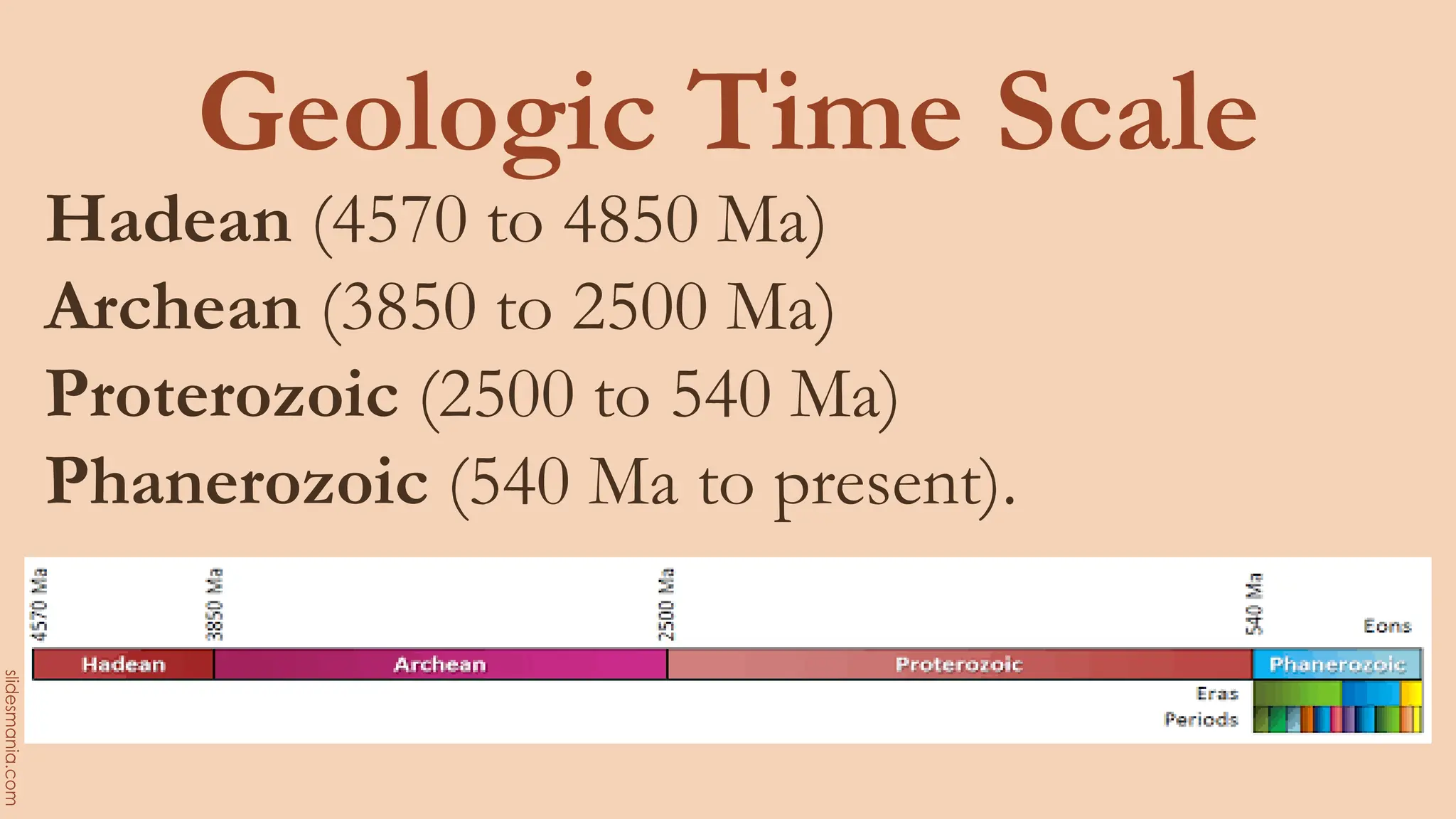
It has been divided into four eons:
Hadean (4570 to 4850 Ma)
Archean (3850 to 2500 Ma)
Proterozoic (2500 to 540 Ma)
Phanerozoic (540 Ma to present).
Geologic Time Scale
Hadean (4570 to 4850 Ma)
Archean (3850 to 2500 Ma)
Proterozoic (2500 to 540 Ma)
Phanerozoic (540 Ma to present).
Dating Techniques Used
to Determine Subdivision
of Geologic Time
1.) Relative Dating
Methods
Relative Dating Methods
Simplest and most intuitive way
of dating geological features is to
look at the relationships between
them.
Relative Dating Methods
The principle of superposition,
Principle of inclusions,
Principle of cross-cutting
relationships, Unconformity,
Principle of faunal succession,
Principle of horizontality.
Evidences
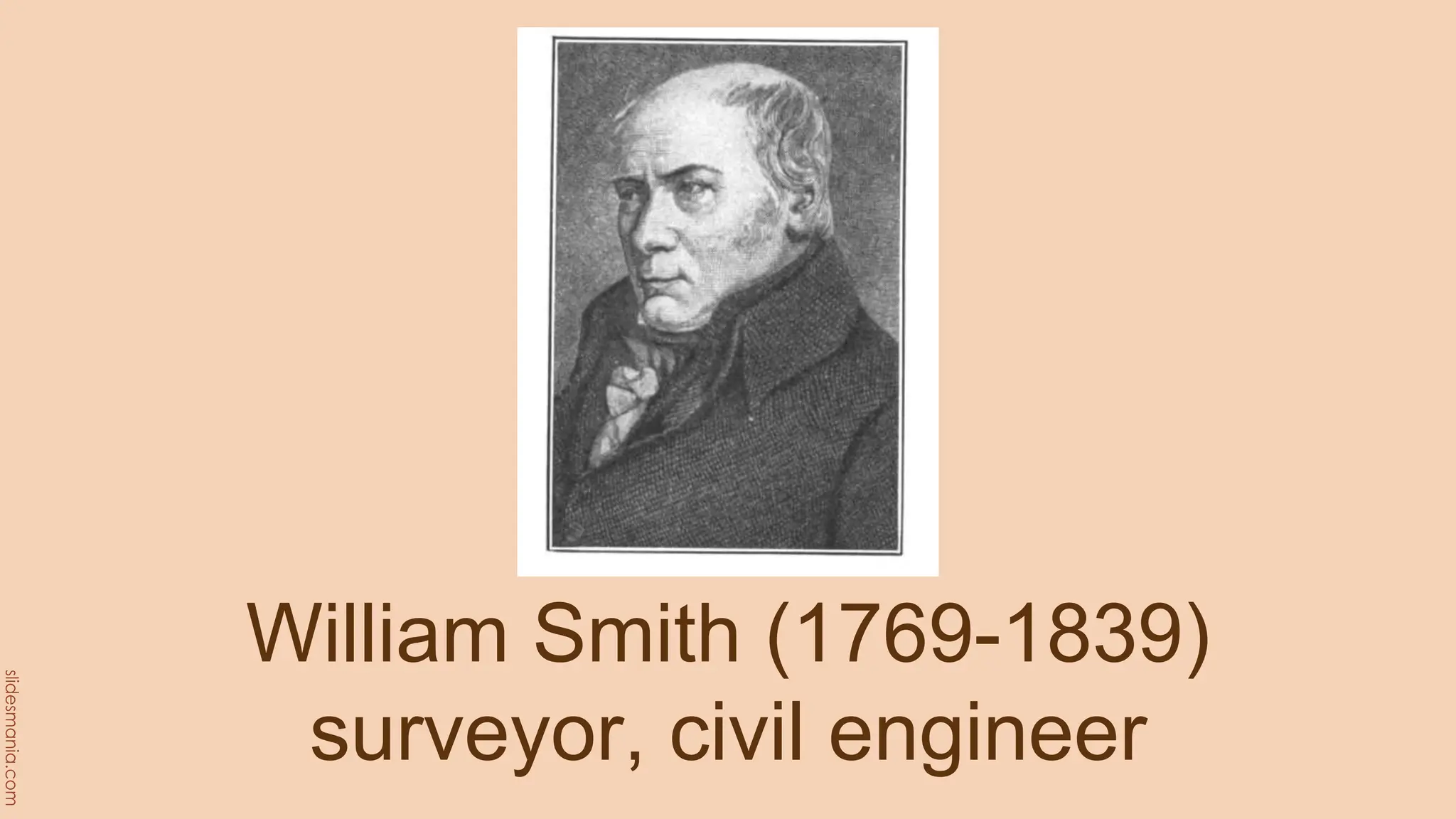
William Smith (1769-1839)
surveyor, civil engineer
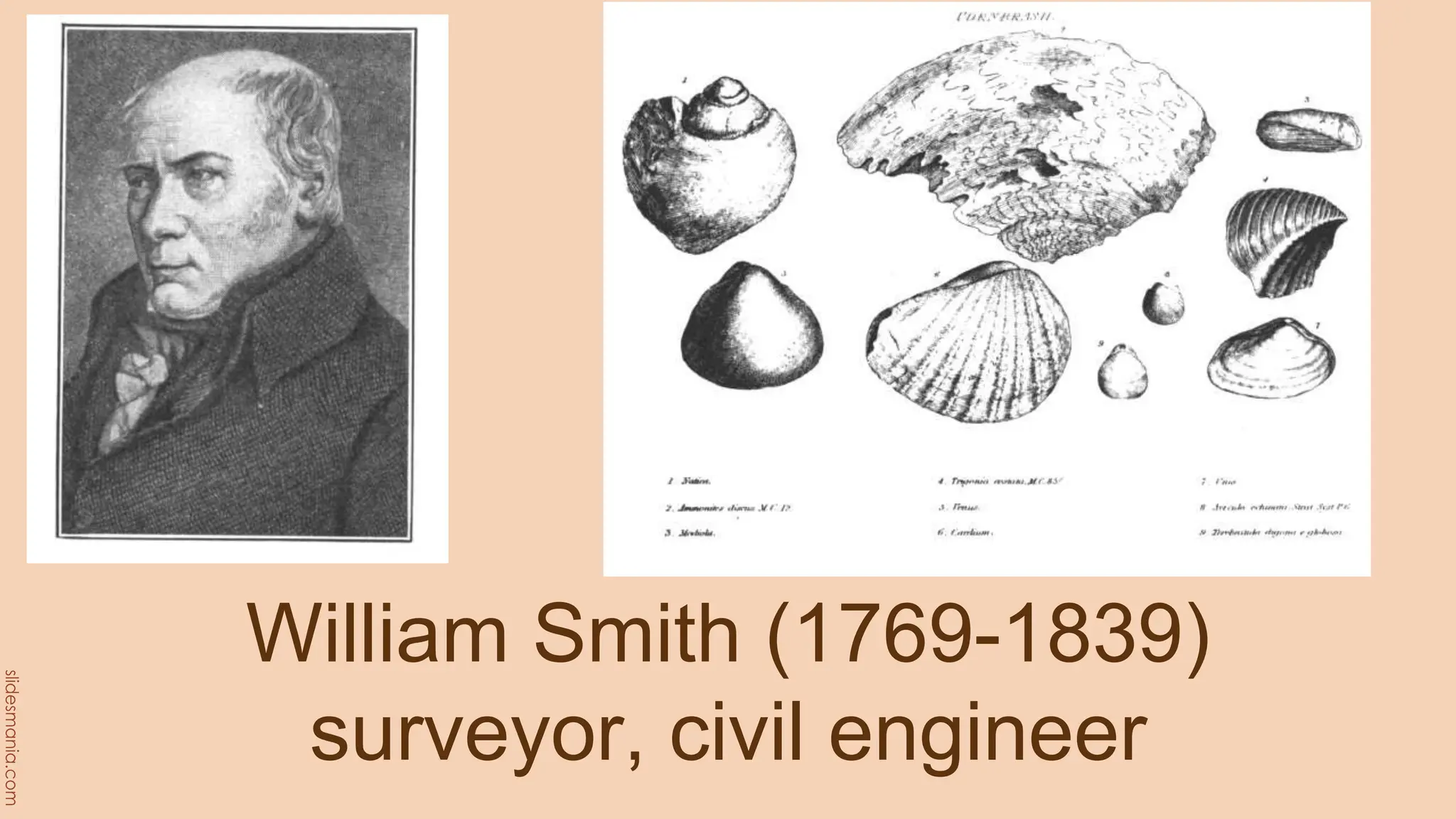
William Smith (1769-1839)
surveyor, civil engineer
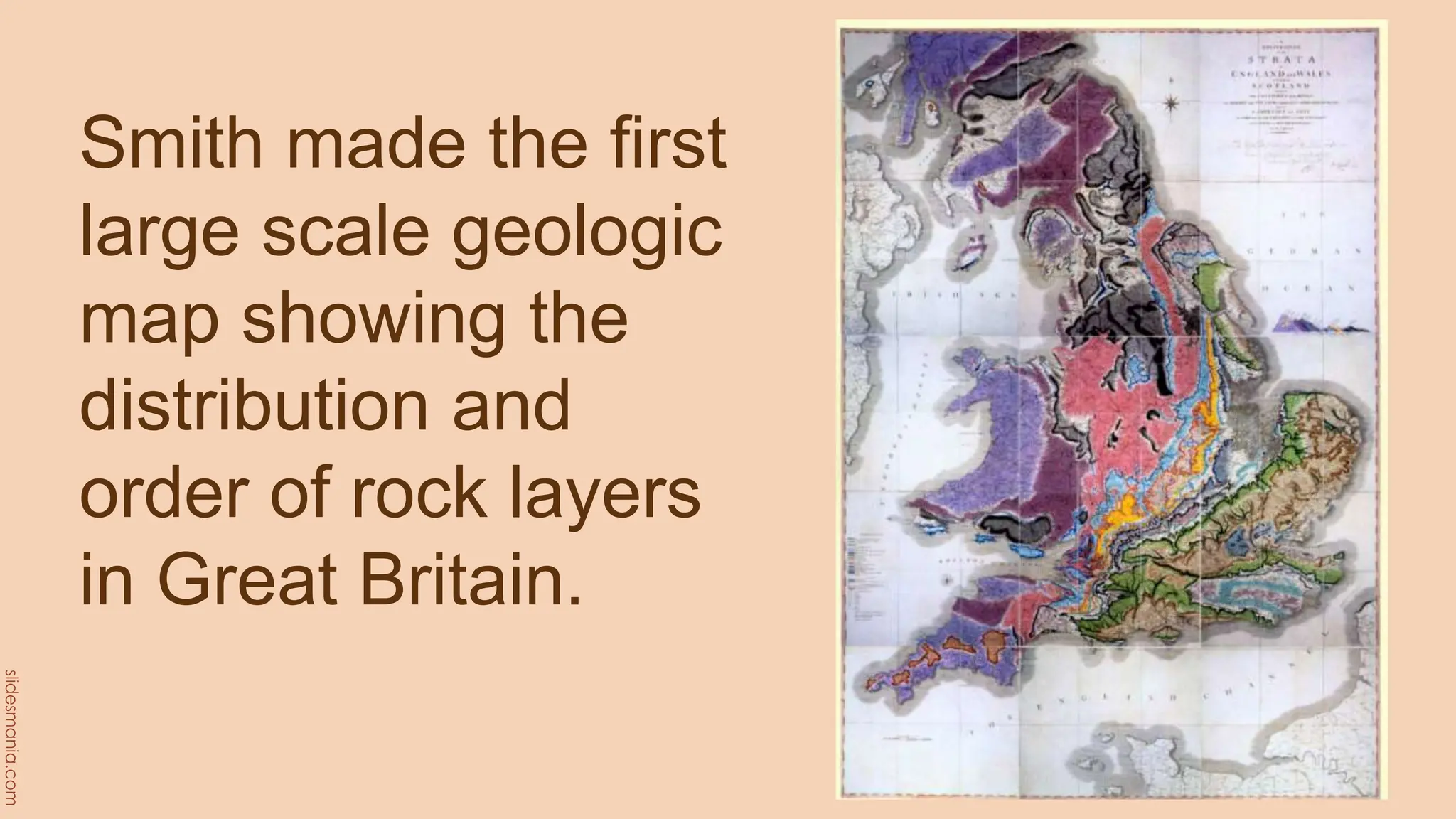
Smith made the first
large scale geologic
map showing the
distribution and
order of rock layers
in Great Britain.
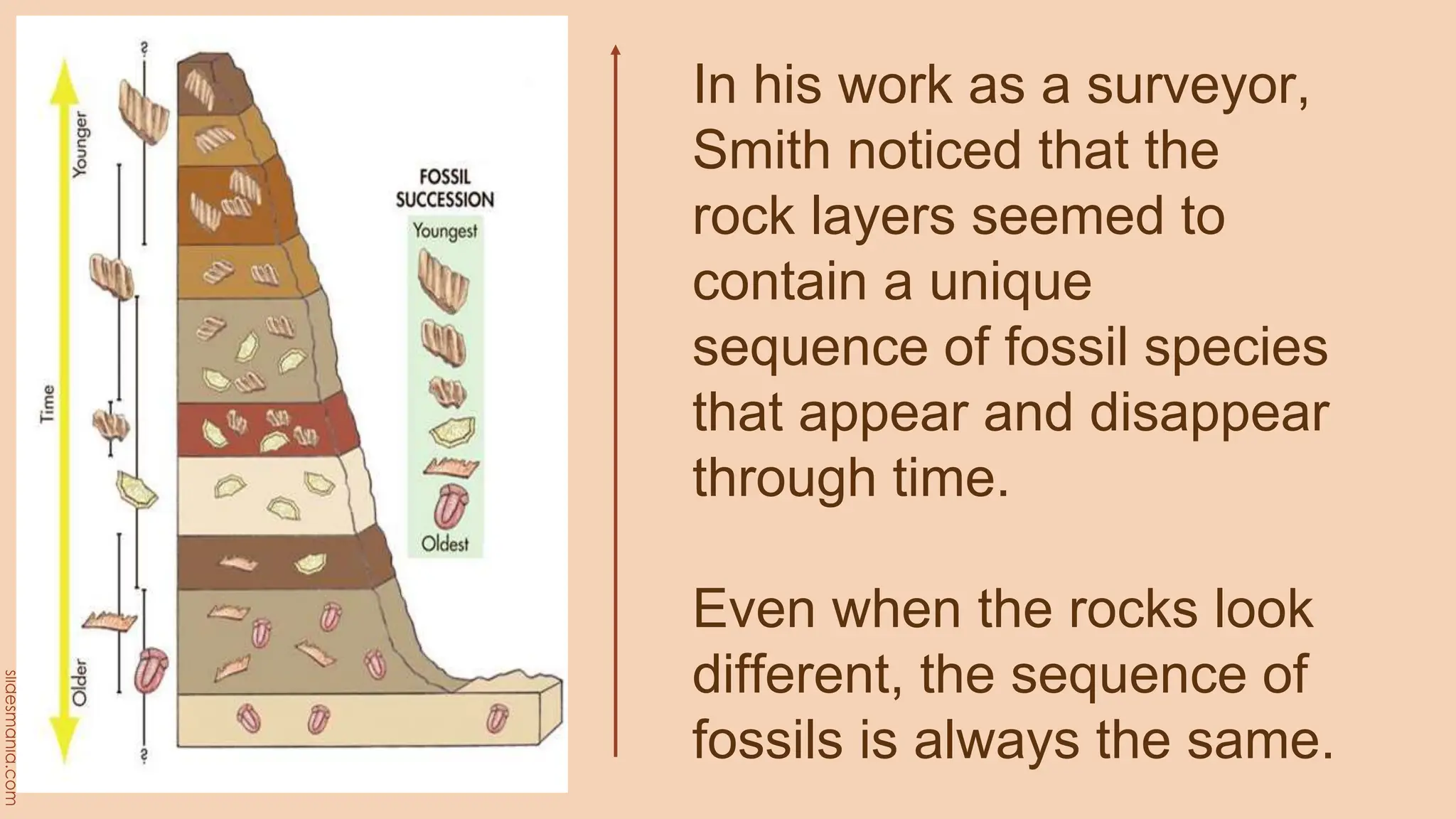
In his work as a surveyor,
Smith noticed that the
rock layers seemed to
contain a unique
sequence of fossil species
that appear and disappear
through time.
Even when the rocks look
different, the sequence of
fossils is always the same.
Many of the periods are named for places
where rocks of that age are found
Such as Cambrian for Cambria (Wales),Devonian
for Devon in England, Jurassic for the Jura
Mountains in France and Switzerland, and
Permian for the Perm region of Russia.
Some are named for the type of rock that is
common during that age,such as
Carboniferous for the coal-and carbonate-
bearing rocks of England,and Cretaceous
for the chalks of England and France.
Geologists get a wide range of
information from fossils. They help us to
understand evolution and life in general;
they provide critical information for
understanding depositional environments
and changes in Earth's climate; and, of
course, they can be used to date rocks.
1.) Absolute Dating
Methods
Absolute Dating Methods
Absolute dating
methods measure the
physical properties of
an object itself and
use these
measurements to
calculate its age.
Absolute Dating Methods
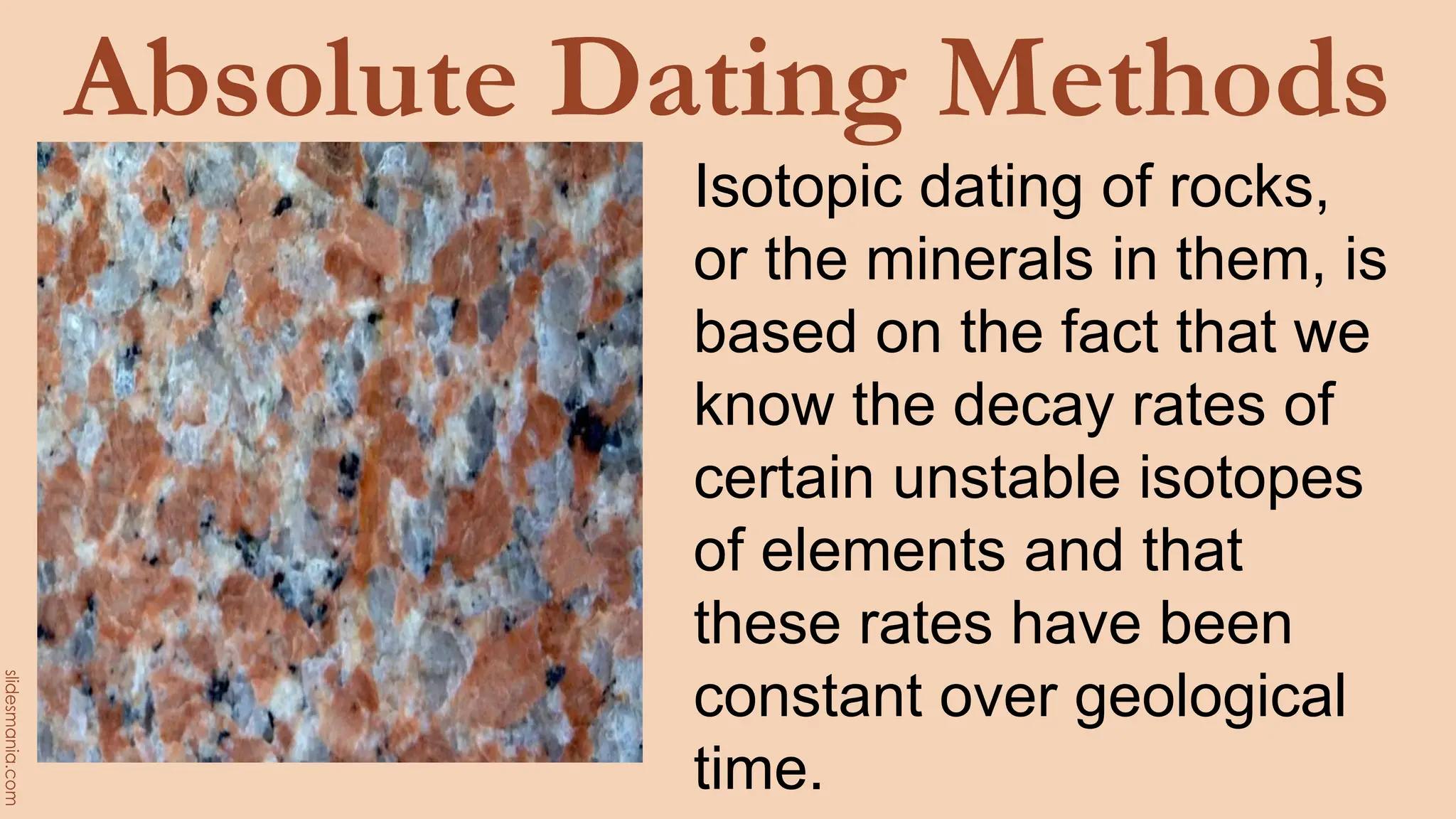
Isotopic dating of rocks,
or the minerals in them, is
based on the fact that we
know the decay rates of
certain unstable isotopes
of elements and that
these rates have been
constant over geological
time.
Absolute Dating Methods
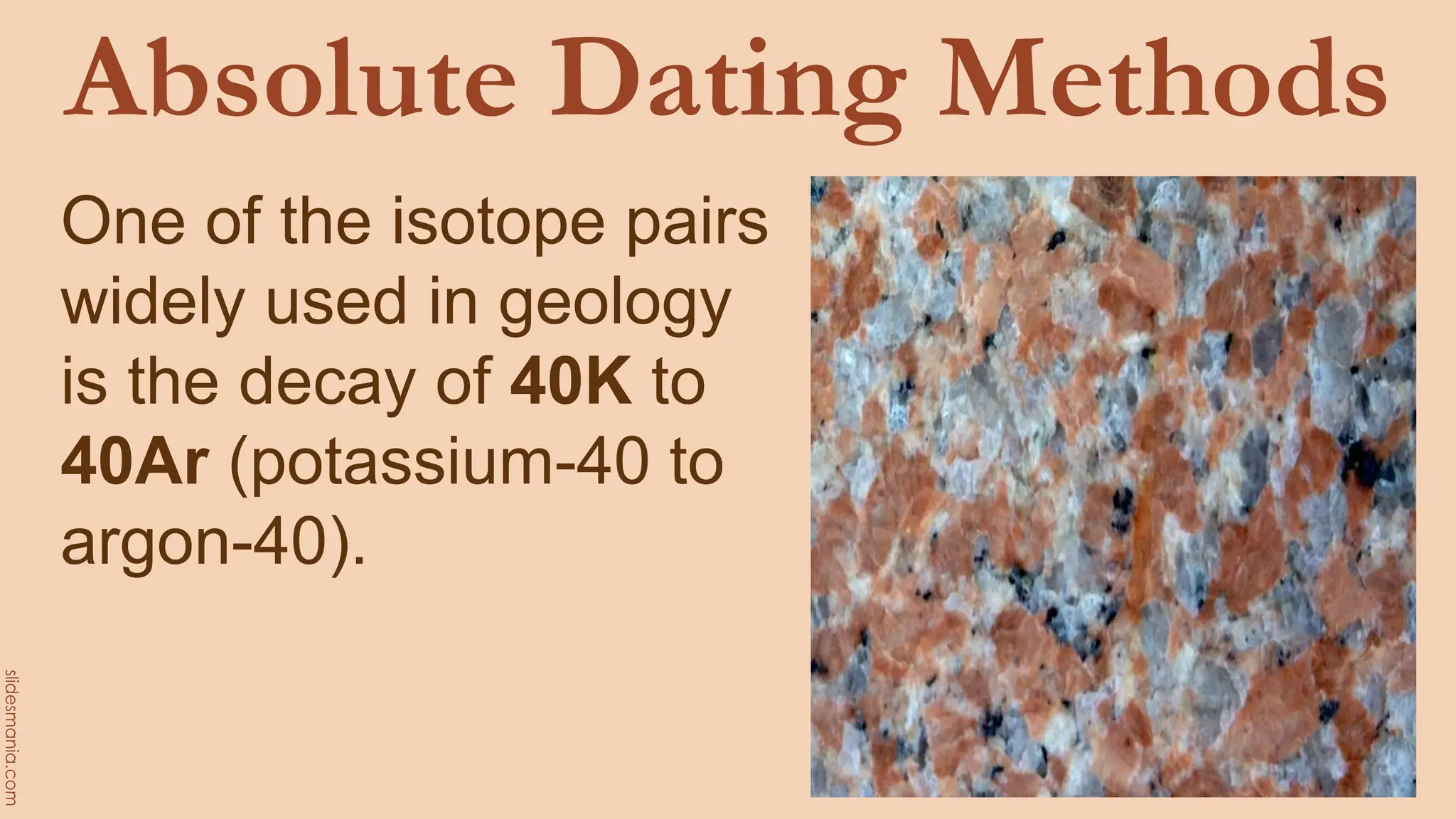
One of the isotope pairs
widely used in geology
is the decay of 40K to
40Ar (potassium-40 to
argon-40).
Absolute Dating Methods
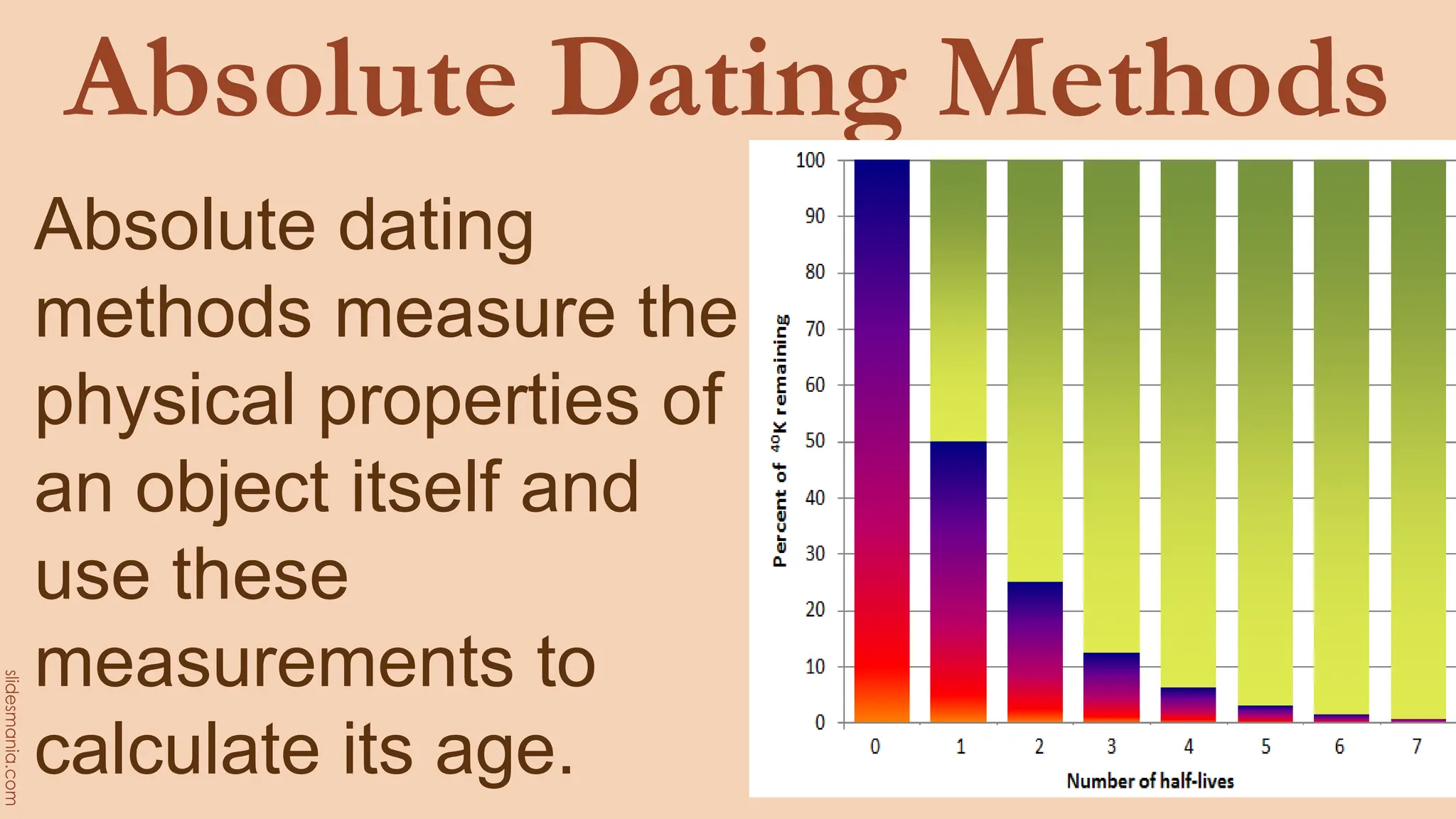
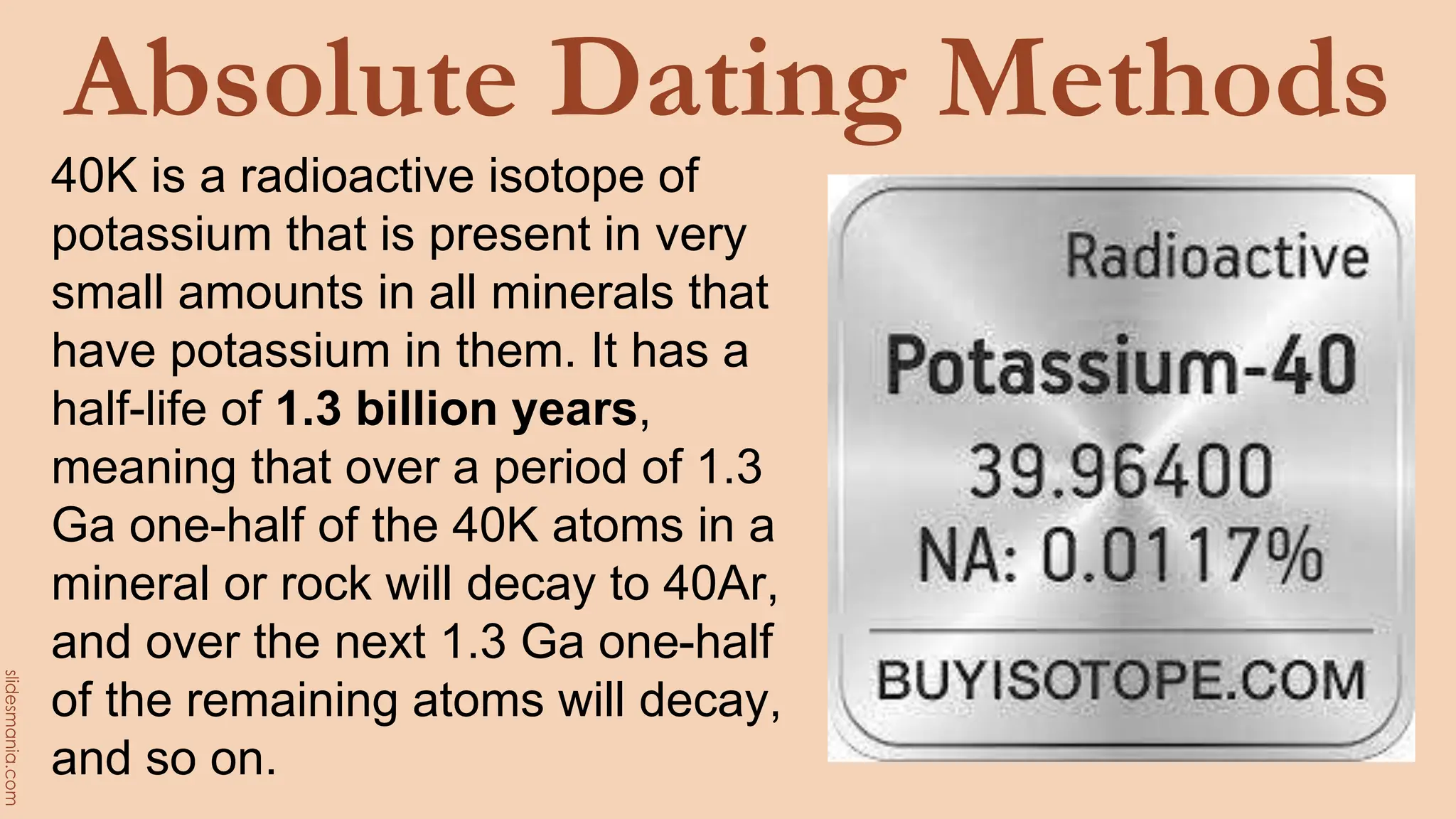
40K is a radioactive isotope of
potassium that is present in very
small amounts in all minerals that
have potassium in them. It has a
half-life of 1.3 billion years,
meaning that over a period of 1.3
Ga one-half of the 40K atoms in a
mineral or rock will decay to 40Ar,
and over the next 1.3 Ga one-half
of the remaining atoms will decay,
and so on.
Absolute Dating Methods
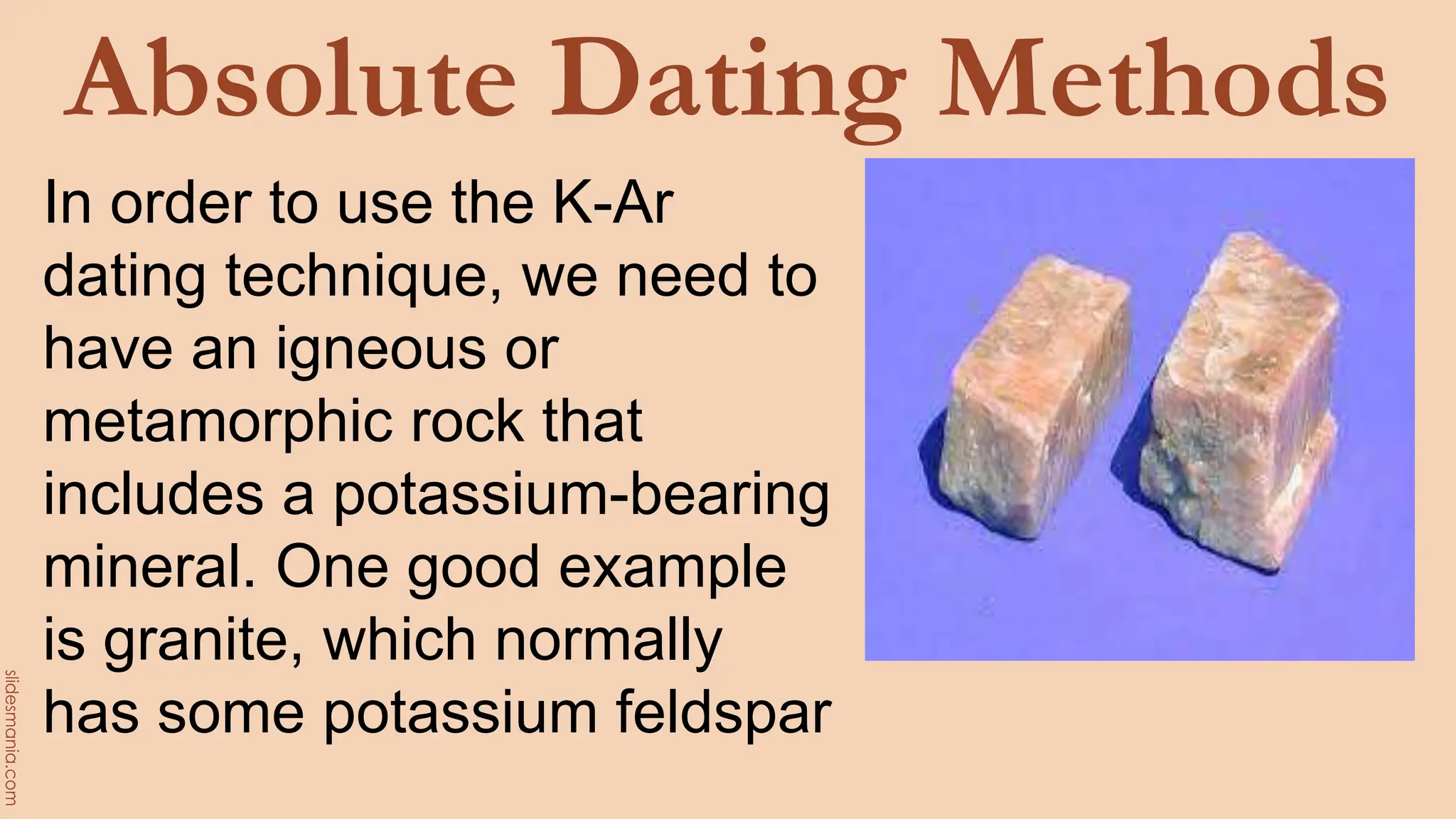
In order to use the K-Ar
dating technique, we need to
have an igneous or
metamorphic rock that
includes a potassium-bearing
mineral. One good example
is granite, which normally
has some potassium feldspar
Absolute Dating Methods
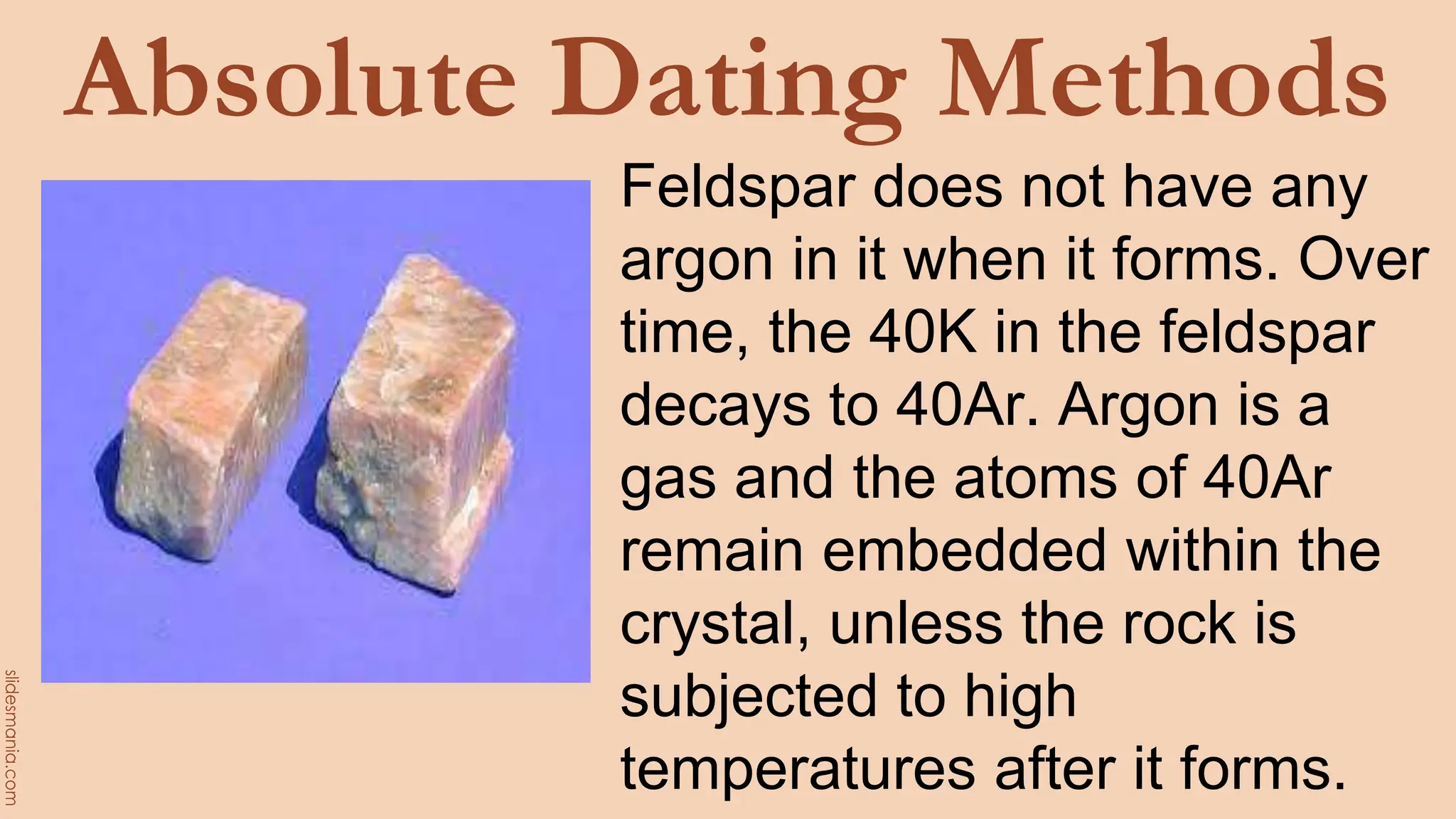
Feldspar does not have any
argon in it when it forms. Over
time, the 40K in the feldspar
decays to 40Ar. Argon is a
gas and the atoms of 40Ar
remain embedded within the
crystal, unless the rock is
subjected to high
temperatures after it forms.
Absolute Dating Methods
The sample must be analyzed using a very
sensitive mass-spectrometer, which can detect
the differences between the masses of atoms,
and can therefore distinguish between 40K
and the much more abundant 39K.
Absolute Dating Methods
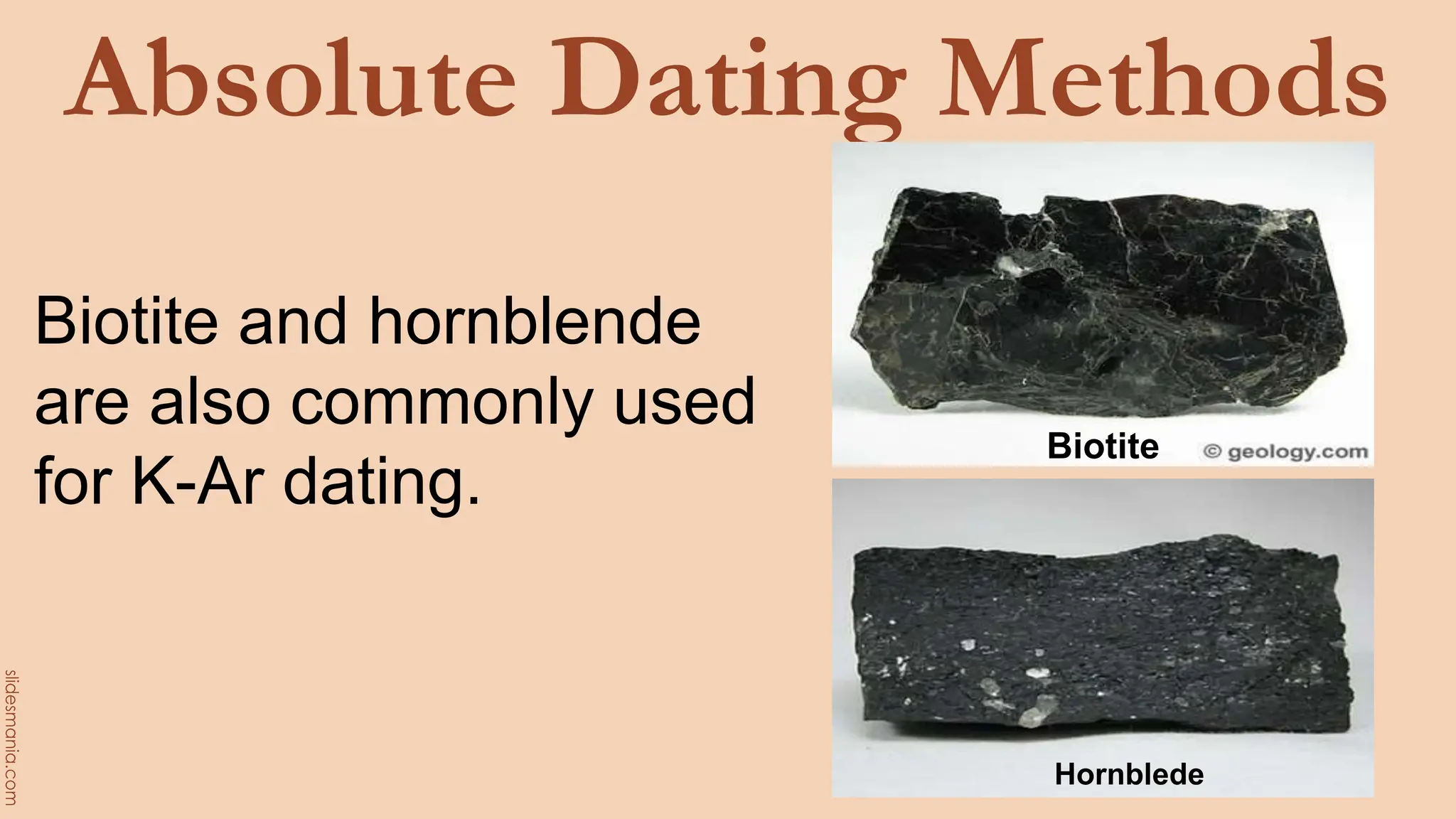
Biotite and hornblende
are also commonly used
for K-Ar dating.
Biotite
Hornblede
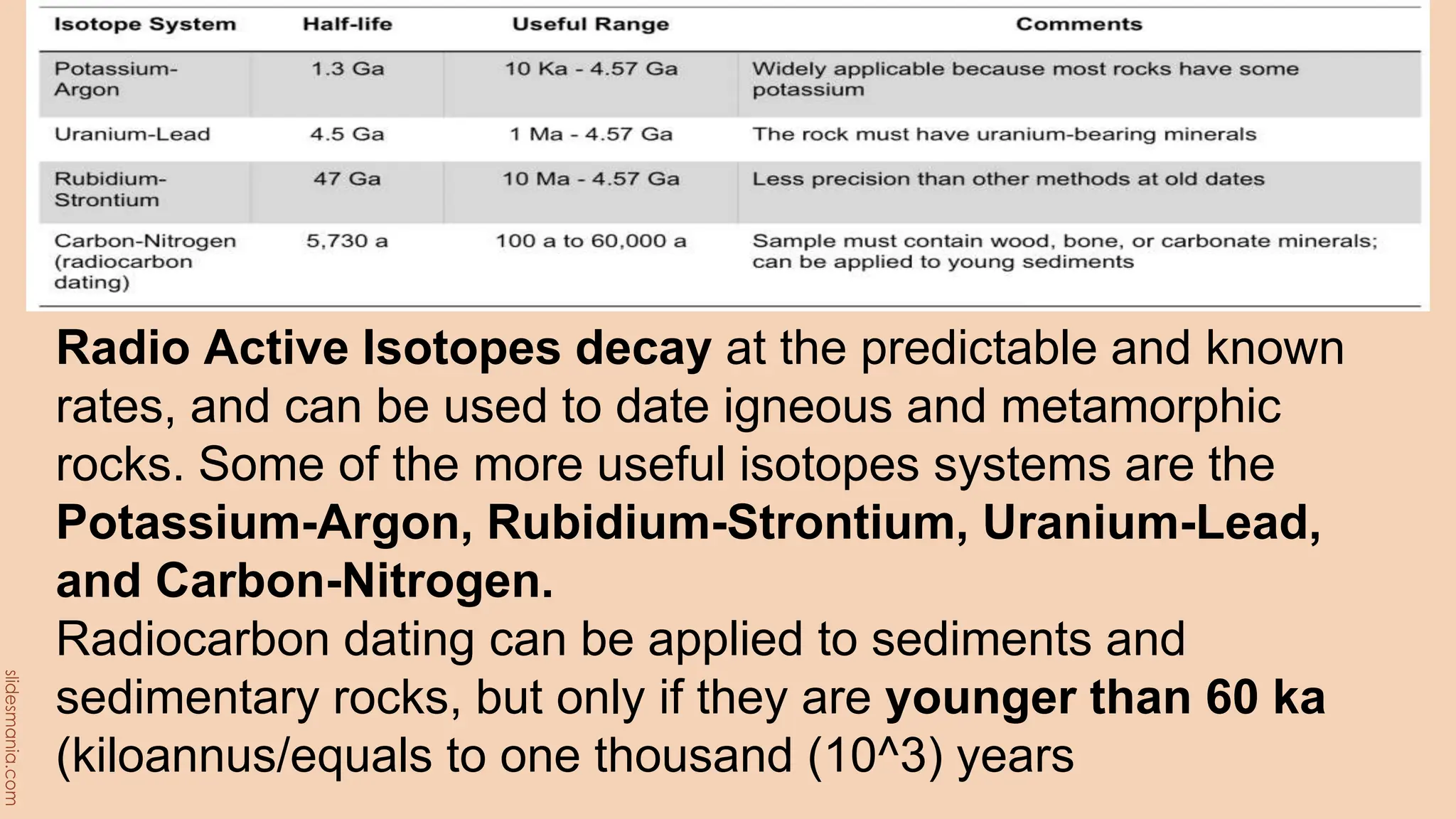
A Few Isotope System that are
Widely used for Dating Geological
Materials
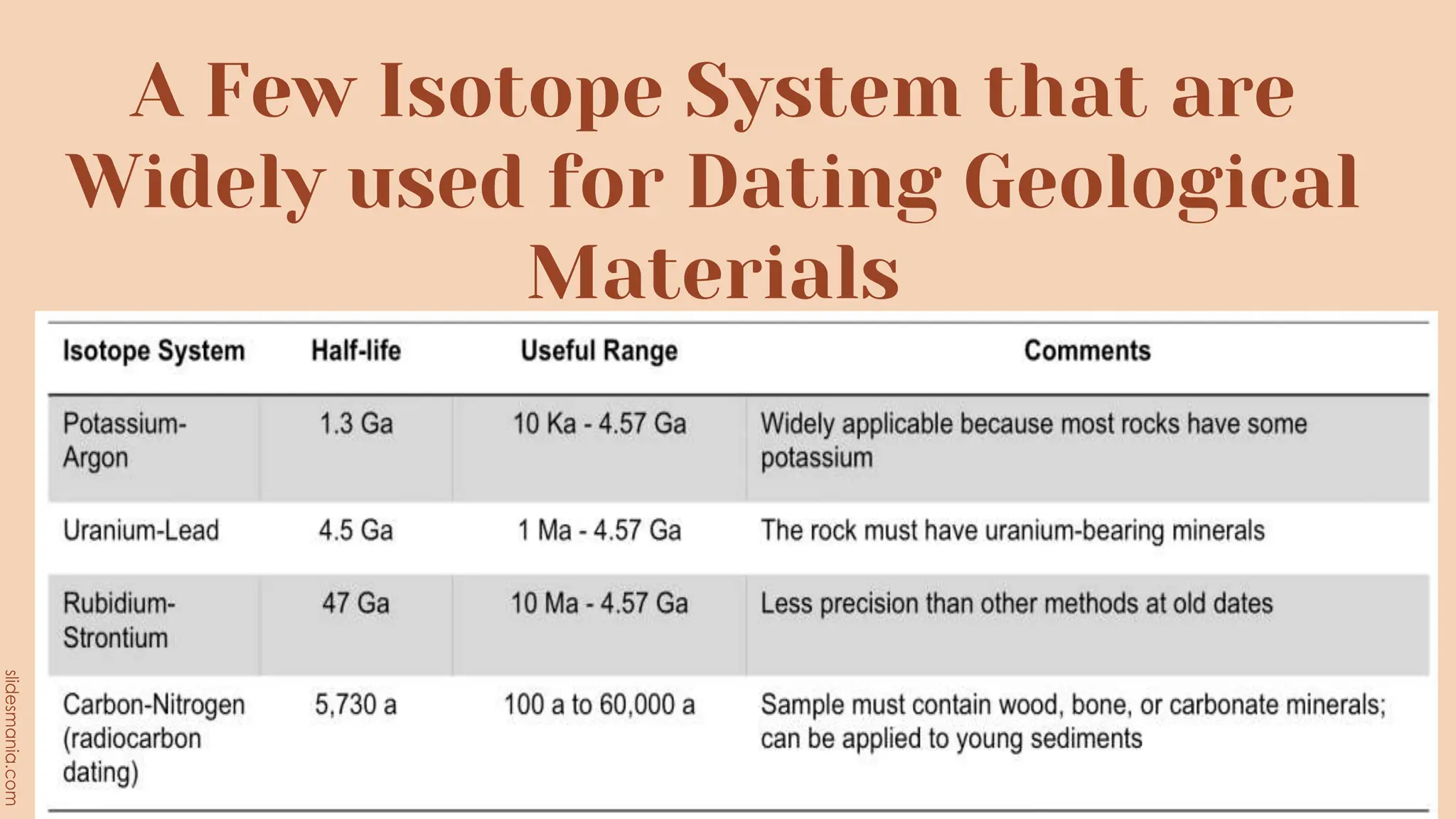
Radio Active Isotopes decay at the predictable and known
rates, and can be used to date igneous and metamorphic
rocks. Some of the more useful isotopes systems are the
Potassium-Argon, Rubidium-Strontium, Uranium-Lead,
and Carbon-Nitrogen.
Radiocarbon dating can be applied to sediments and
sedimentary rocks, but only if they are younger than 60 ka
(kiloannus/equals to one thousand (10^3) years
Thank You

Determining Geologic Time Scale using Absolute and Relative Dating Earth Science.pptx

  • 1.
    Determining Geologic Time Scale UsingAbsolute and Relative Dating
  • 2.
    Dating Techniques Used toDetermine Subdivisions of Geologic Time
  • 3.
    Geologic Time Scale GeologicTime Scale serves as the calendar for events in Earth's history. Timeline of the history of the earth from the rock record.
  • 4.
    Geologic Time Scale Ithas been divided into four eons: Hadean (4570 to 4850 Ma) Archean (3850 to 2500 Ma) Proterozoic (2500 to 540 Ma) Phanerozoic (540 Ma to present).
  • 5.
    Geologic Time Scale Hadean(4570 to 4850 Ma) Archean (3850 to 2500 Ma) Proterozoic (2500 to 540 Ma) Phanerozoic (540 Ma to present).
  • 6.
    Dating Techniques Used toDetermine Subdivision of Geologic Time
  • 7.
  • 8.
    Relative Dating Methods Simplestand most intuitive way of dating geological features is to look at the relationships between them.
  • 9.
    Relative Dating Methods Theprinciple of superposition, Principle of inclusions, Principle of cross-cutting relationships, Unconformity, Principle of faunal succession, Principle of horizontality.
  • 10.
  • 11.
  • 12.
  • 13.
    Smith made thefirst large scale geologic map showing the distribution and order of rock layers in Great Britain.
  • 14.
    In his workas a surveyor, Smith noticed that the rock layers seemed to contain a unique sequence of fossil species that appear and disappear through time. Even when the rocks look different, the sequence of fossils is always the same.
  • 16.
    Many of theperiods are named for places where rocks of that age are found Such as Cambrian for Cambria (Wales),Devonian for Devon in England, Jurassic for the Jura Mountains in France and Switzerland, and Permian for the Perm region of Russia.
  • 17.
    Some are namedfor the type of rock that is common during that age,such as Carboniferous for the coal-and carbonate- bearing rocks of England,and Cretaceous for the chalks of England and France.
  • 18.
    Geologists get awide range of information from fossils. They help us to understand evolution and life in general; they provide critical information for understanding depositional environments and changes in Earth's climate; and, of course, they can be used to date rocks.
  • 19.
  • 20.
    Absolute Dating Methods Absolutedating methods measure the physical properties of an object itself and use these measurements to calculate its age.
  • 21.
    Absolute Dating Methods Isotopicdating of rocks, or the minerals in them, is based on the fact that we know the decay rates of certain unstable isotopes of elements and that these rates have been constant over geological time.
  • 22.
    Absolute Dating Methods Oneof the isotope pairs widely used in geology is the decay of 40K to 40Ar (potassium-40 to argon-40).
  • 23.
    Absolute Dating Methods 40Kis a radioactive isotope of potassium that is present in very small amounts in all minerals that have potassium in them. It has a half-life of 1.3 billion years, meaning that over a period of 1.3 Ga one-half of the 40K atoms in a mineral or rock will decay to 40Ar, and over the next 1.3 Ga one-half of the remaining atoms will decay, and so on.
  • 24.
    Absolute Dating Methods Inorder to use the K-Ar dating technique, we need to have an igneous or metamorphic rock that includes a potassium-bearing mineral. One good example is granite, which normally has some potassium feldspar
  • 25.
    Absolute Dating Methods Feldspardoes not have any argon in it when it forms. Over time, the 40K in the feldspar decays to 40Ar. Argon is a gas and the atoms of 40Ar remain embedded within the crystal, unless the rock is subjected to high temperatures after it forms.
  • 26.
    Absolute Dating Methods Thesample must be analyzed using a very sensitive mass-spectrometer, which can detect the differences between the masses of atoms, and can therefore distinguish between 40K and the much more abundant 39K.
  • 27.
    Absolute Dating Methods Biotiteand hornblende are also commonly used for K-Ar dating. Biotite Hornblede
  • 28.
    A Few IsotopeSystem that are Widely used for Dating Geological Materials
  • 29.
    Radio Active Isotopesdecay at the predictable and known rates, and can be used to date igneous and metamorphic rocks. Some of the more useful isotopes systems are the Potassium-Argon, Rubidium-Strontium, Uranium-Lead, and Carbon-Nitrogen. Radiocarbon dating can be applied to sediments and sedimentary rocks, but only if they are younger than 60 ka (kiloannus/equals to one thousand (10^3) years
  • 30.