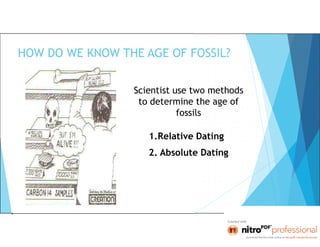
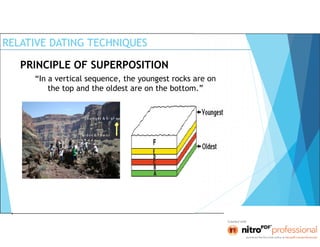
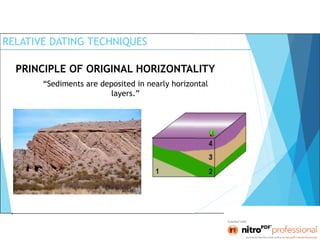
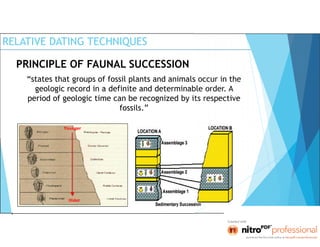
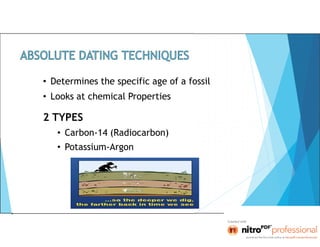
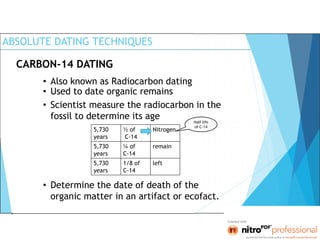
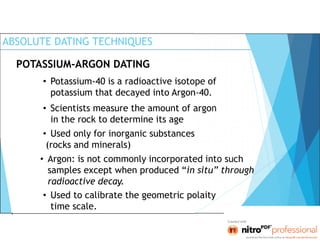
Scientists determine the age of fossils using two methods: relative dating and absolute dating. Relative dating involves principles such as superposition and faunal succession to establish a sequence of events, while absolute dating uses techniques like carbon-14 and potassium-argon dating to ascertain specific ages based on radioactive decay rates. Carbon-14 is used for organic remains, and potassium-argon is used for inorganic substances.