A Seminar as a part of Curricular requirement for
M.Pharmacy I year II Semester
Presented by
P. Naresh
Reg.No.20L81S0701
Pharmaceutical Analysis
DETERMINATION OF ACID VALUE,
SAPONIFICATION VALUE AND ESTER
VALUE
Contents:
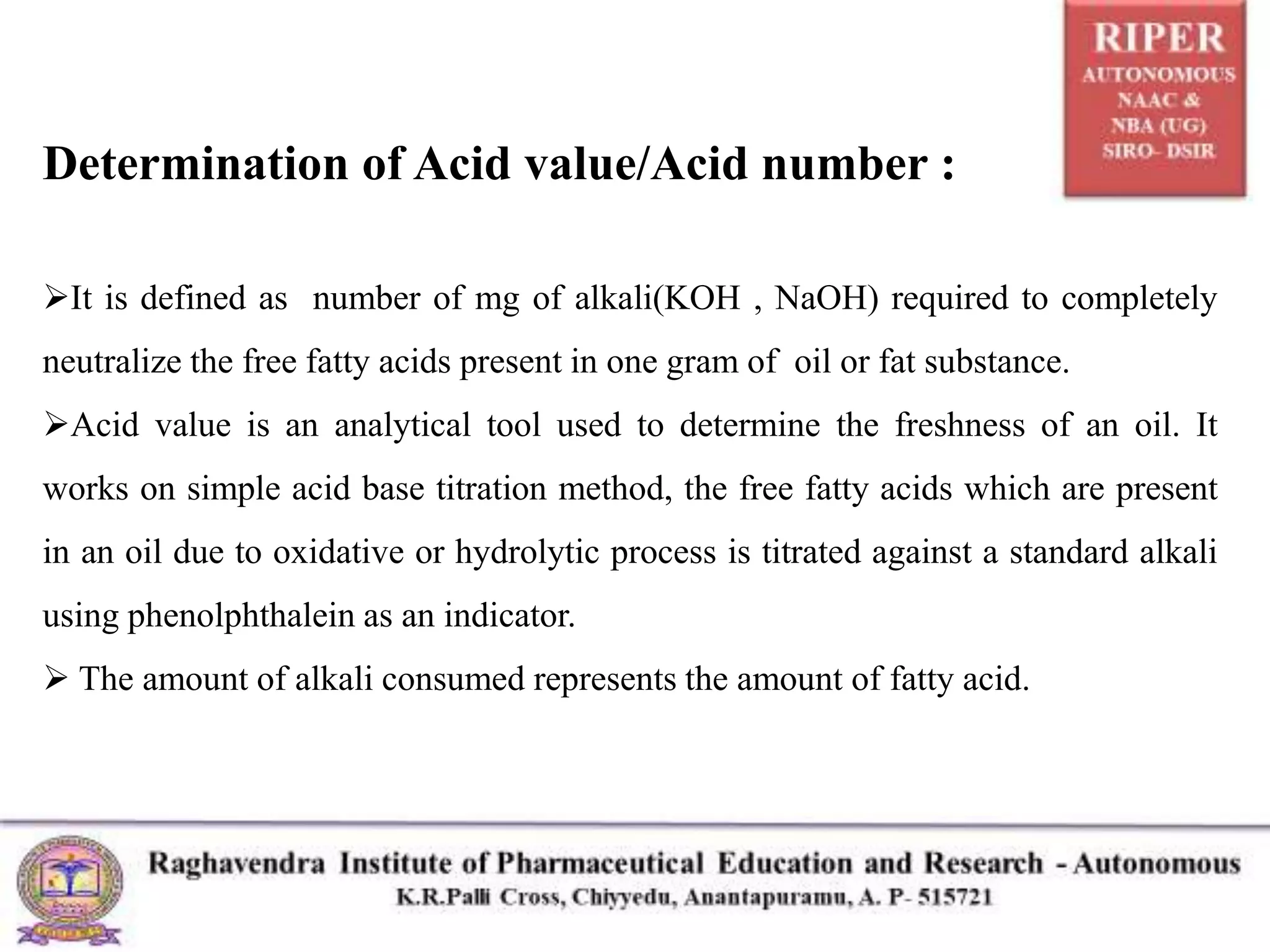
 Determination of
 Acid value
 Saponification value
 Ester value
 Applications
 References
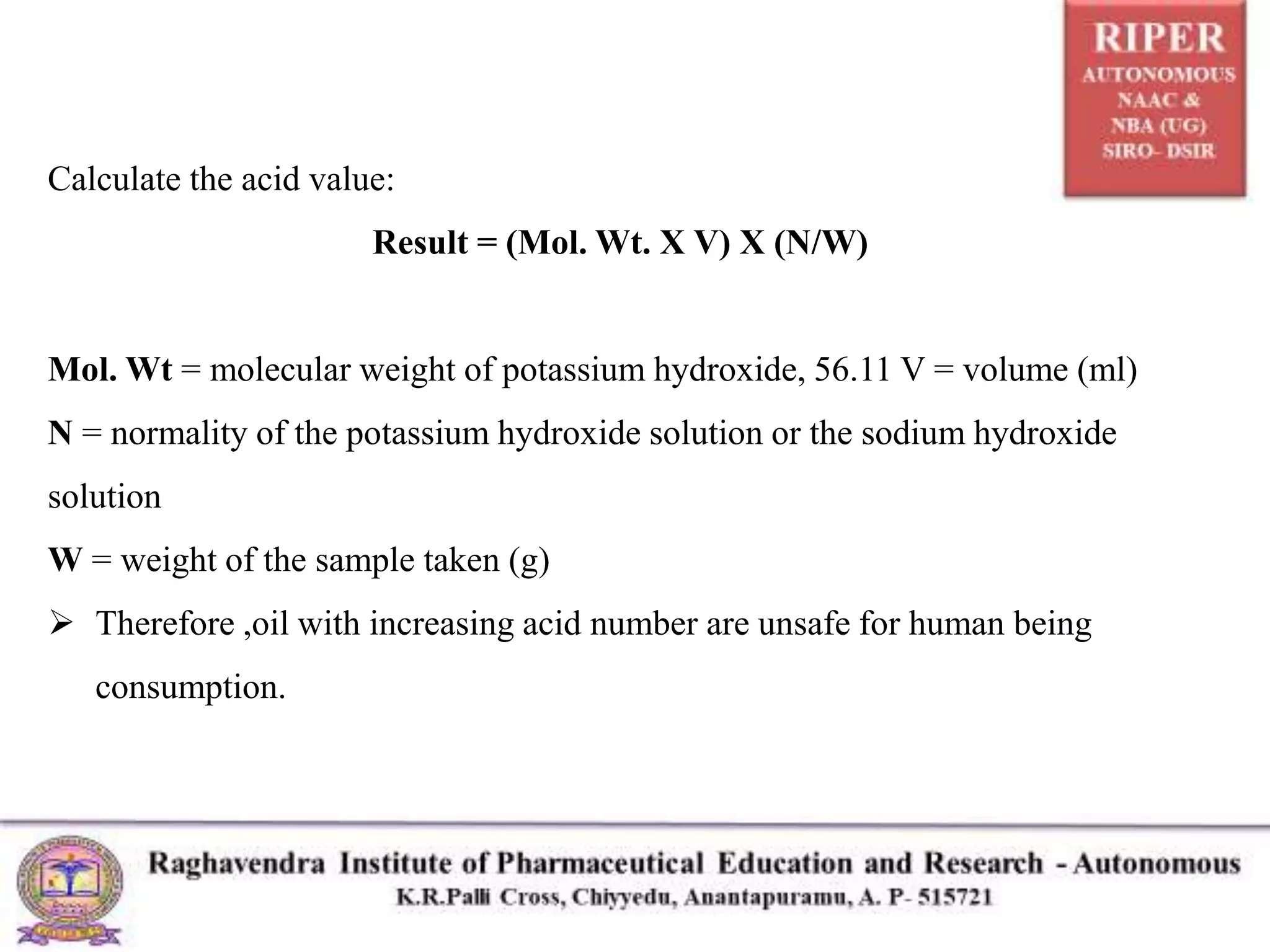
Determination of Acid value/Acid number :
It is defined as number of mg of alkali(KOH , NaOH) required to completely
neutralize the free fatty acids present in one gram of oil or fat substance.
Acid value is an analytical tool used to determine the freshness of an oil. It
works on simple acid base titration method, the free fatty acids which are present
in an oil due to oxidative or hydrolytic process is titrated against a standard alkali
using phenolphthalein as an indicator.
 The amount of alkali consumed represents the amount of fatty acid.
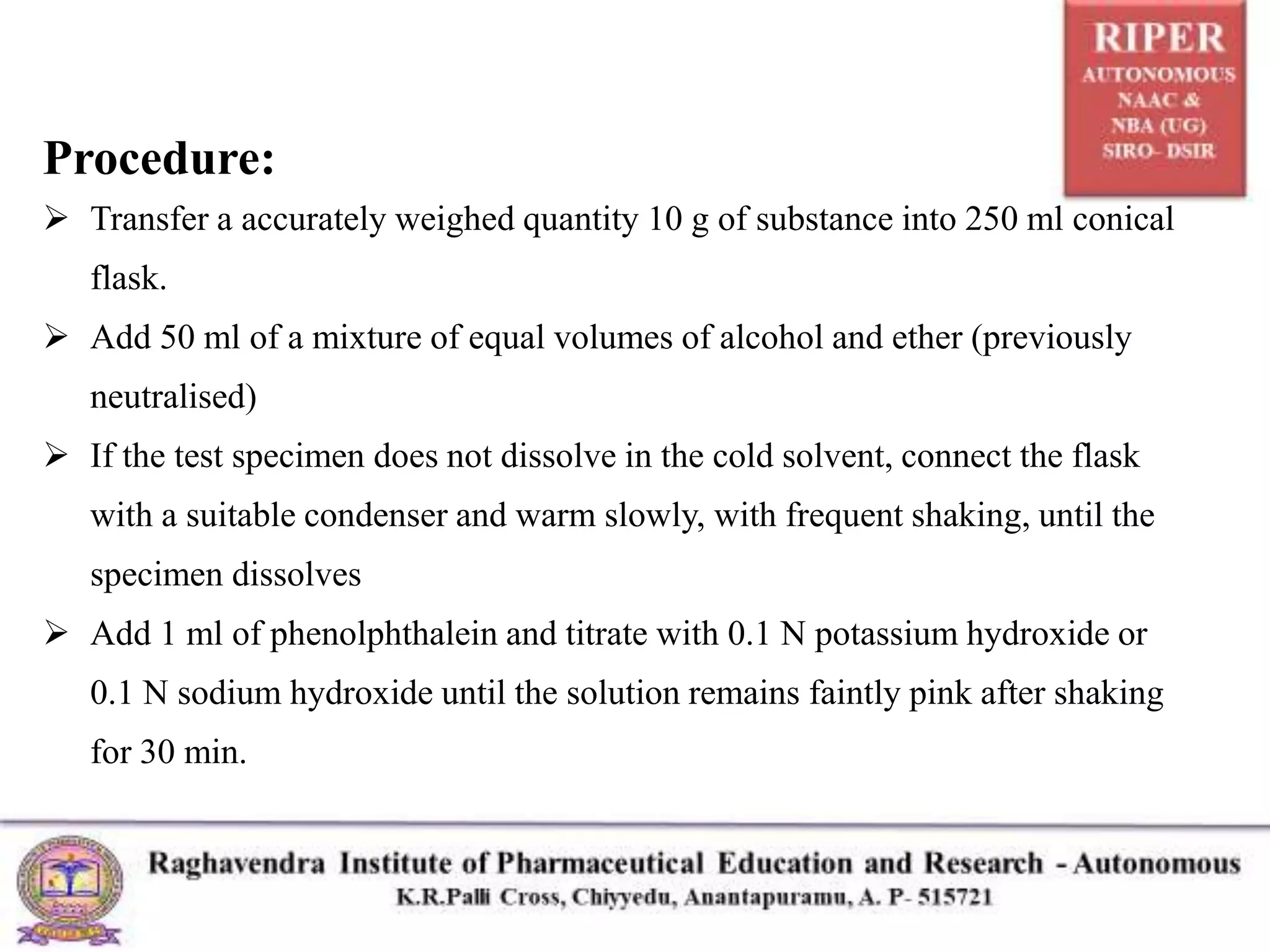
Calculate the acid value:
Result = (Mol. Wt. X V) X (N/W)
Mol. Wt = molecular weight of potassium hydroxide, 56.11 V = volume (ml)
N = normality of the potassium hydroxide solution or the sodium hydroxide
solution
W = weight of the sample taken (g)
 Therefore ,oil with increasing acid number are unsafe for human being
consumption.
Procedure:
 Transfer a accurately weighed quantity 10 g of substance into 250 ml conical
flask.
 Add 50 ml of a mixture of equal volumes of alcohol and ether (previously
neutralised)
 If the test specimen does not dissolve in the cold solvent, connect the flask
with a suitable condenser and warm slowly, with frequent shaking, until the
specimen dissolves
 Add 1 ml of phenolphthalein and titrate with 0.1 N potassium hydroxide or
0.1 N sodium hydroxide until the solution remains faintly pink after shaking
for 30 min.
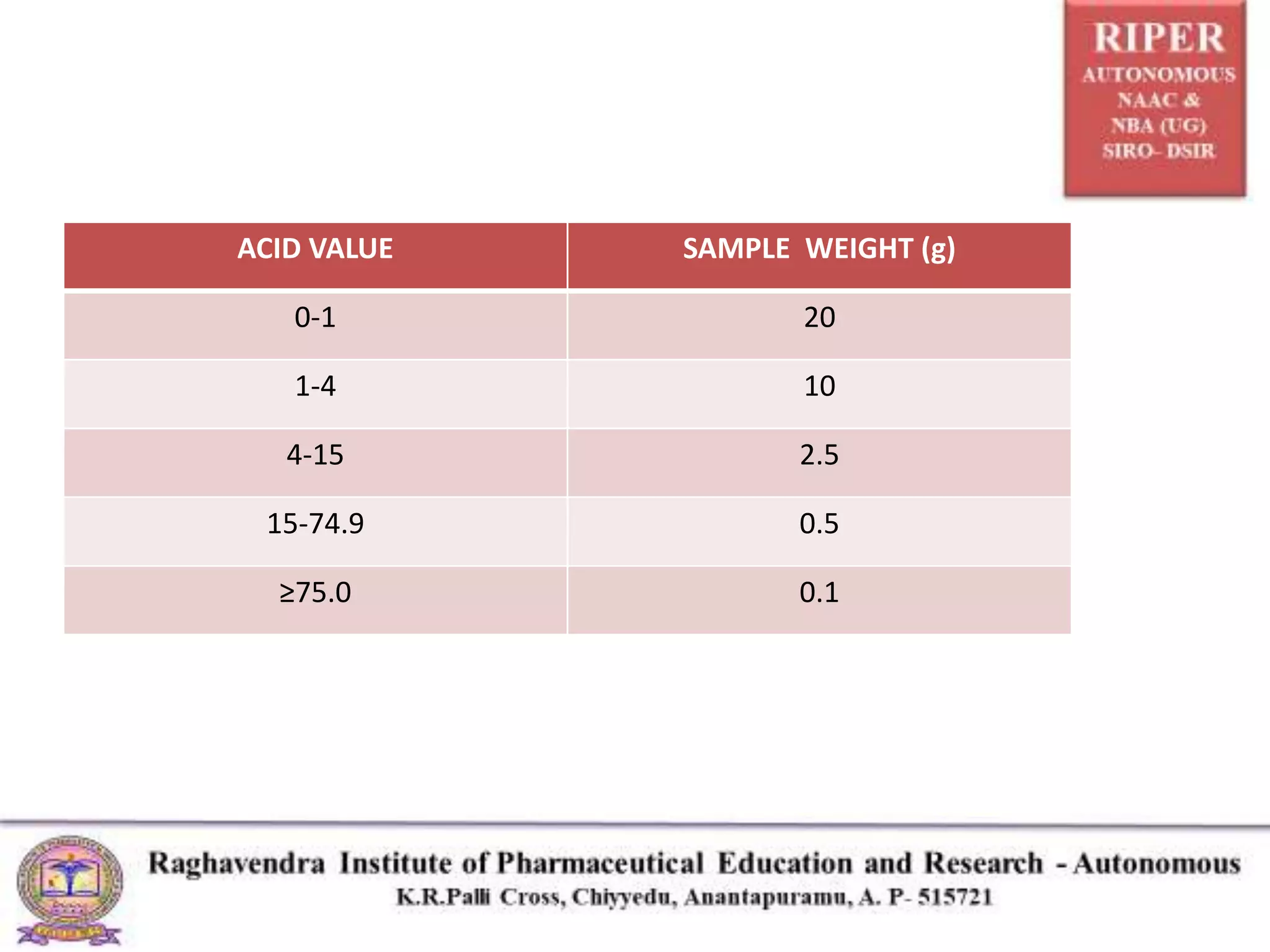
ACID VALUE SAMPLE WEIGHT (g)
0-1 20
1-4 10
4-15 2.5
15-74.9 0.5
≥75.0 0.1
Applications :
 Its measure of the free fatty acids present in the fat or oil .
 Used to determine the freshness of an oil / check the rancidity
Saponification value/ Koettstorfer number :
 The Saponification Value is the number of mg of potassium hydroxide required
to neutralize the free acids and saponify the esters contained in 1.0 g of the fat
or oil substance.
Procedure:
 Transfer a accurately weighed quantity 1.5-2 g of substance
 Into 250 ml conical flask
 Add to it 25.0 ml of 0.5 N alcoholic potassium hydroxide
 Heat the flask on a steam bath, under a suitable condenser to maintain reflux for
30 min, frequently rotating the contents
Then add 1 ml of phenolphthalein and titrate the excess KOH
with 0.5 N hydrochloric acid .
Perform a blank determination(without sample).
Calculate the Saponification Value:
Result = [M x ( Vb – Vt ) X N] / W
M = molecular weight of potassium hydroxide, 56.11
Vb = volume of 0.5 N hydrochloric acid consumed in the blank test (ml)
Vt = volume of 0.5 N hydrochloric acid consumed in the actual test (ml)
N = exact normality of the hydrochloric acid
W = Weight of the substance taken for the test(g)
Applications:
 Saponification value determine the length of carbon chain of the acid
present in oil or fat .
 It also determine the average molecular weight of the fat or oil.
 Higher the saponification value greater the percentage of the short chain
acids .
 Higher the molecular weight of the fat ,the smaller is its saponification
value .
Ester value:
 The Ester Value is the number of mg of potassium hydroxide required to
saponify the esters in 1.0 g of the substance.
 If the saponification value and the acid value have been determined, the
difference between these two represents the Ester Value .
Ester Value = Saponification Value - Acid Value
Procedure:
 Place 1.5-2 g of accurately weighed substance, into a 250 ml flask, add 20-
30 ml of neutralized alcohol and shake. Add 1 ml of phenolphthalein and
titrate with 0.5 N alcoholic potassium hydroxide until the free acid is
neutralized.
 Add 25.0 ml of 0.5 N alcoholic potassium hydroxide and proceed as
directed in saponification value, beginning with “Heat the flask” and omitting
the further addition of phenolphthalein and titrate with standardised HCl acid,
calculate the Ester Value.
Result = [Mol wt X (Vb - Vt) x N] / W
Mol wt = molecular weight of potassium hydroxide, 56.11
VB = volume of 0.5 N hydrochloric acid consumed in the blank test (ml)
Vt = volume of 0.5 N hydrochloric acid consumed in the actual test (ml)
N = exact normality of the hydrochloric acid
W = weight of the substance taken for the test (g)
References:
1.Bureau of Indian standards for cosmetic raw materials.
2.Gurudeep Chatwal, edited by m.arora LIPIDS, 7.1-7.33.
3.Methods from Indian pharmacopeia volume-1,2007.
Determination of Acid value, Saponification value and Ester value

Determination of Acid value, Saponification value and Ester value

  • 1.
    A Seminar asa part of Curricular requirement for M.Pharmacy I year II Semester Presented by P. Naresh Reg.No.20L81S0701 Pharmaceutical Analysis DETERMINATION OF ACID VALUE, SAPONIFICATION VALUE AND ESTER VALUE
  • 2.
    Contents:  Determination of Acid value  Saponification value  Ester value  Applications  References
  • 3.
    Determination of Acidvalue/Acid number : It is defined as number of mg of alkali(KOH , NaOH) required to completely neutralize the free fatty acids present in one gram of oil or fat substance. Acid value is an analytical tool used to determine the freshness of an oil. It works on simple acid base titration method, the free fatty acids which are present in an oil due to oxidative or hydrolytic process is titrated against a standard alkali using phenolphthalein as an indicator.  The amount of alkali consumed represents the amount of fatty acid.
  • 4.
    Calculate the acidvalue: Result = (Mol. Wt. X V) X (N/W) Mol. Wt = molecular weight of potassium hydroxide, 56.11 V = volume (ml) N = normality of the potassium hydroxide solution or the sodium hydroxide solution W = weight of the sample taken (g)  Therefore ,oil with increasing acid number are unsafe for human being consumption.
  • 5.
    Procedure:  Transfer aaccurately weighed quantity 10 g of substance into 250 ml conical flask.  Add 50 ml of a mixture of equal volumes of alcohol and ether (previously neutralised)  If the test specimen does not dissolve in the cold solvent, connect the flask with a suitable condenser and warm slowly, with frequent shaking, until the specimen dissolves  Add 1 ml of phenolphthalein and titrate with 0.1 N potassium hydroxide or 0.1 N sodium hydroxide until the solution remains faintly pink after shaking for 30 min.
  • 6.
    ACID VALUE SAMPLEWEIGHT (g) 0-1 20 1-4 10 4-15 2.5 15-74.9 0.5 ≥75.0 0.1
  • 7.
    Applications :  Itsmeasure of the free fatty acids present in the fat or oil .  Used to determine the freshness of an oil / check the rancidity
  • 8.
    Saponification value/ Koettstorfernumber :  The Saponification Value is the number of mg of potassium hydroxide required to neutralize the free acids and saponify the esters contained in 1.0 g of the fat or oil substance. Procedure:  Transfer a accurately weighed quantity 1.5-2 g of substance  Into 250 ml conical flask  Add to it 25.0 ml of 0.5 N alcoholic potassium hydroxide  Heat the flask on a steam bath, under a suitable condenser to maintain reflux for 30 min, frequently rotating the contents
  • 9.
    Then add 1ml of phenolphthalein and titrate the excess KOH with 0.5 N hydrochloric acid . Perform a blank determination(without sample). Calculate the Saponification Value: Result = [M x ( Vb – Vt ) X N] / W M = molecular weight of potassium hydroxide, 56.11 Vb = volume of 0.5 N hydrochloric acid consumed in the blank test (ml) Vt = volume of 0.5 N hydrochloric acid consumed in the actual test (ml) N = exact normality of the hydrochloric acid W = Weight of the substance taken for the test(g)
  • 10.
    Applications:  Saponification valuedetermine the length of carbon chain of the acid present in oil or fat .  It also determine the average molecular weight of the fat or oil.  Higher the saponification value greater the percentage of the short chain acids .  Higher the molecular weight of the fat ,the smaller is its saponification value .
  • 11.
    Ester value:  TheEster Value is the number of mg of potassium hydroxide required to saponify the esters in 1.0 g of the substance.  If the saponification value and the acid value have been determined, the difference between these two represents the Ester Value . Ester Value = Saponification Value - Acid Value Procedure:  Place 1.5-2 g of accurately weighed substance, into a 250 ml flask, add 20- 30 ml of neutralized alcohol and shake. Add 1 ml of phenolphthalein and titrate with 0.5 N alcoholic potassium hydroxide until the free acid is neutralized.
  • 12.
     Add 25.0ml of 0.5 N alcoholic potassium hydroxide and proceed as directed in saponification value, beginning with “Heat the flask” and omitting the further addition of phenolphthalein and titrate with standardised HCl acid, calculate the Ester Value. Result = [Mol wt X (Vb - Vt) x N] / W Mol wt = molecular weight of potassium hydroxide, 56.11 VB = volume of 0.5 N hydrochloric acid consumed in the blank test (ml) Vt = volume of 0.5 N hydrochloric acid consumed in the actual test (ml) N = exact normality of the hydrochloric acid W = weight of the substance taken for the test (g)
  • 13.
    References: 1.Bureau of Indianstandards for cosmetic raw materials. 2.Gurudeep Chatwal, edited by m.arora LIPIDS, 7.1-7.33. 3.Methods from Indian pharmacopeia volume-1,2007.