Human Resource
Management
ELEVENTH EDITION

1

GARY DESSLER

Part 2 | Recruitment and Placement

Chapter 5

Personnel Planning and Recruiting
© 2008 Prentice Hall, Inc.
All rights reserved.

PowerPoint Presentation by Charlie Cook
The University of West Alabama
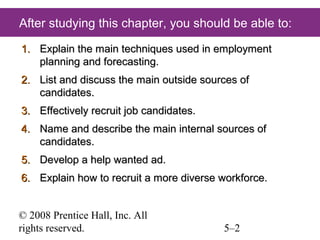
After studying this chapter, you should be able to:
1. Explain the main techniques used in employment
planning and forecasting.
2. List and discuss the main outside sources of
candidates.
3. Effectively recruit job candidates.
4. Name and describe the main internal sources of
candidates.
5. Develop a help wanted ad.
6. Explain how to recruit a more diverse workforce.
© 2008 Prentice Hall, Inc. All
rights reserved.

5–2
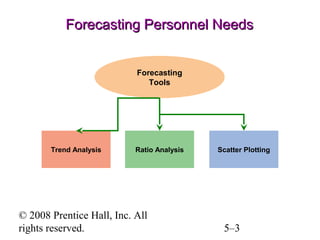
Forecasting Personnel Needs
Forecasting
Tools

Trend Analysis

Ratio Analysis

© 2008 Prentice Hall, Inc. All
rights reserved.

Scatter Plotting

5–3
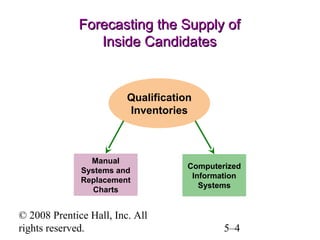
Forecasting the Supply of
Inside Candidates

Qualification
Inventories

Manual
Systems and
Replacement
Charts

© 2008 Prentice Hall, Inc. All
rights reserved.

Computerized
Information
Systems

5–4
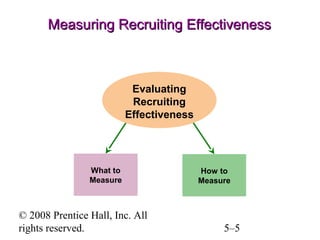
Measuring Recruiting Effectiveness

Evaluating
Recruiting
Effectiveness

What to
Measure

© 2008 Prentice Hall, Inc. All
rights reserved.

How to
Measure

5–5
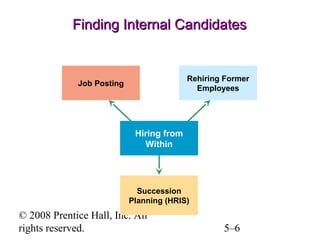
Finding Internal Candidates

Rehiring Former
Employees

Job Posting

Hiring from
Within

Succession
Planning (HRIS)

© 2008 Prentice Hall, Inc. All
rights reserved.

5–6
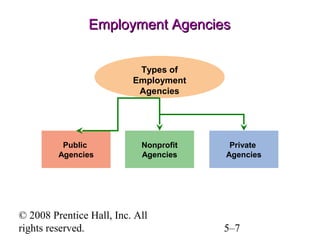
Employment Agencies
Types of
Employment
Agencies

Public
Agencies

Nonprofit
Agencies

© 2008 Prentice Hall, Inc. All
rights reserved.

Private
Agencies

5–7
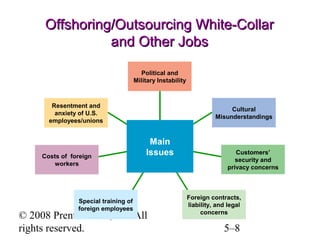
Offshoring/Outsourcing White-Collar
and Other Jobs
Political and
Military Instability

Resentment and
anxiety of U.S.
employees/unions

Costs of foreign
workers

Special training of
foreign employees

Cultural
Misunderstandings

Main
Issues

© 2008 Prentice Hall, Inc. All
rights reserved.

Customers’
security and
privacy concerns

Foreign contracts,
liability, and legal
concerns

5–8
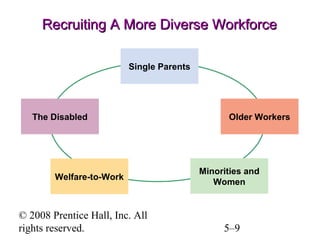
Recruiting A More Diverse Workforce
Single Parents

The Disabled

Welfare-to-Work

© 2008 Prentice Hall, Inc. All
rights reserved.

Older Workers

Minorities and
Women

5–9
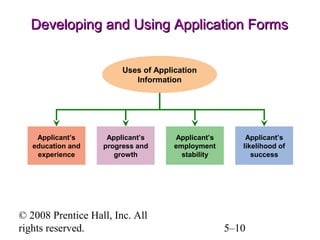
Developing and Using Application Forms
Uses of Application
Information

Applicant’s
education and
experience

Applicant’s
progress and
growth

© 2008 Prentice Hall, Inc. All
rights reserved.

Applicant’s
employment
stability

Applicant’s
likelihood of
success

5–10
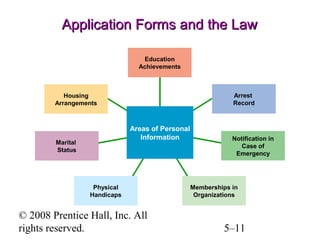
Application Forms and the Law
Education
Achievements

Arrest
Record

Housing
Arrangements

Areas of Personal
Information

Marital
Status

Physical
Handicaps

© 2008 Prentice Hall, Inc. All
rights reserved.

Notification in
Case of
Emergency

Memberships in
Organizations

5–11
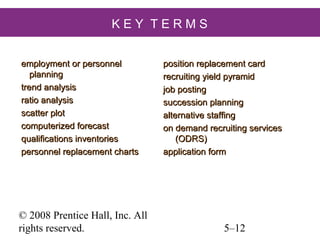
KEY TERMS
employment or personnel
planning
trend analysis
ratio analysis
scatter plot
computerized forecast
qualifications inventories
personnel replacement charts

© 2008 Prentice Hall, Inc. All
rights reserved.

position replacement card
recruiting yield pyramid
job posting
succession planning
alternative staffing
on demand recruiting services
(ODRS)
application form

5–12

Personnel Planning and Recruiting ( chapter 5 )

  • 1.
    Human Resource Management ELEVENTH EDITION 1 GARYDESSLER Part 2 | Recruitment and Placement Chapter 5 Personnel Planning and Recruiting © 2008 Prentice Hall, Inc. All rights reserved. PowerPoint Presentation by Charlie Cook The University of West Alabama
  • 2.
    After studying thischapter, you should be able to: 1. Explain the main techniques used in employment planning and forecasting. 2. List and discuss the main outside sources of candidates. 3. Effectively recruit job candidates. 4. Name and describe the main internal sources of candidates. 5. Develop a help wanted ad. 6. Explain how to recruit a more diverse workforce. © 2008 Prentice Hall, Inc. All rights reserved. 5–2
  • 3.
    Forecasting Personnel Needs Forecasting Tools TrendAnalysis Ratio Analysis © 2008 Prentice Hall, Inc. All rights reserved. Scatter Plotting 5–3
  • 4.
    Forecasting the Supplyof Inside Candidates Qualification Inventories Manual Systems and Replacement Charts © 2008 Prentice Hall, Inc. All rights reserved. Computerized Information Systems 5–4
  • 5.
    Measuring Recruiting Effectiveness Evaluating Recruiting Effectiveness Whatto Measure © 2008 Prentice Hall, Inc. All rights reserved. How to Measure 5–5
  • 6.
    Finding Internal Candidates RehiringFormer Employees Job Posting Hiring from Within Succession Planning (HRIS) © 2008 Prentice Hall, Inc. All rights reserved. 5–6
  • 7.
    Employment Agencies Types of Employment Agencies Public Agencies Nonprofit Agencies ©2008 Prentice Hall, Inc. All rights reserved. Private Agencies 5–7
  • 8.
    Offshoring/Outsourcing White-Collar and OtherJobs Political and Military Instability Resentment and anxiety of U.S. employees/unions Costs of foreign workers Special training of foreign employees Cultural Misunderstandings Main Issues © 2008 Prentice Hall, Inc. All rights reserved. Customers’ security and privacy concerns Foreign contracts, liability, and legal concerns 5–8
  • 9.
    Recruiting A MoreDiverse Workforce Single Parents The Disabled Welfare-to-Work © 2008 Prentice Hall, Inc. All rights reserved. Older Workers Minorities and Women 5–9
  • 10.
    Developing and UsingApplication Forms Uses of Application Information Applicant’s education and experience Applicant’s progress and growth © 2008 Prentice Hall, Inc. All rights reserved. Applicant’s employment stability Applicant’s likelihood of success 5–10
  • 11.
    Application Forms andthe Law Education Achievements Arrest Record Housing Arrangements Areas of Personal Information Marital Status Physical Handicaps © 2008 Prentice Hall, Inc. All rights reserved. Notification in Case of Emergency Memberships in Organizations 5–11
  • 12.
    KEY TERMS employment orpersonnel planning trend analysis ratio analysis scatter plot computerized forecast qualifications inventories personnel replacement charts © 2008 Prentice Hall, Inc. All rights reserved. position replacement card recruiting yield pyramid job posting succession planning alternative staffing on demand recruiting services (ODRS) application form 5–12