

Designing a To-Be Process
By Romana Hnatkivska
5/16/2015
About the speaker
 Business Analyst at SoftServe
 8 years total experience in IT
 CCBA – Certification of Competency in Business Analysis
 Projects in Healthcare and Human Resource
Management
About the topic
 Today’s business demands constant change
 Legacy systems often function-centric and hard to change
 Multiple channels for interactions with customers
 Increasing demand for customer self-service
 Focus shifting from applications to managing and optimizing
processes.
 Demand for process agility
Agenda
 Definitions
 Typical Process Flaws
 Process Optimization Principles
 Process Optimization Anti-Patterns
 Q&A
What is a business process?
A collection of activities that takes one or more kinds of input
and creates an output that is of value to the customer.
Hammer & Champy, 1993
A process is essentially a way an organisation can choose to
organize its resources (people and their work, equipment,
information, etc.) to accomplish necessary results. Processes
exist only to produce desired outputs (results).
Alec Sharp
What is a business process?
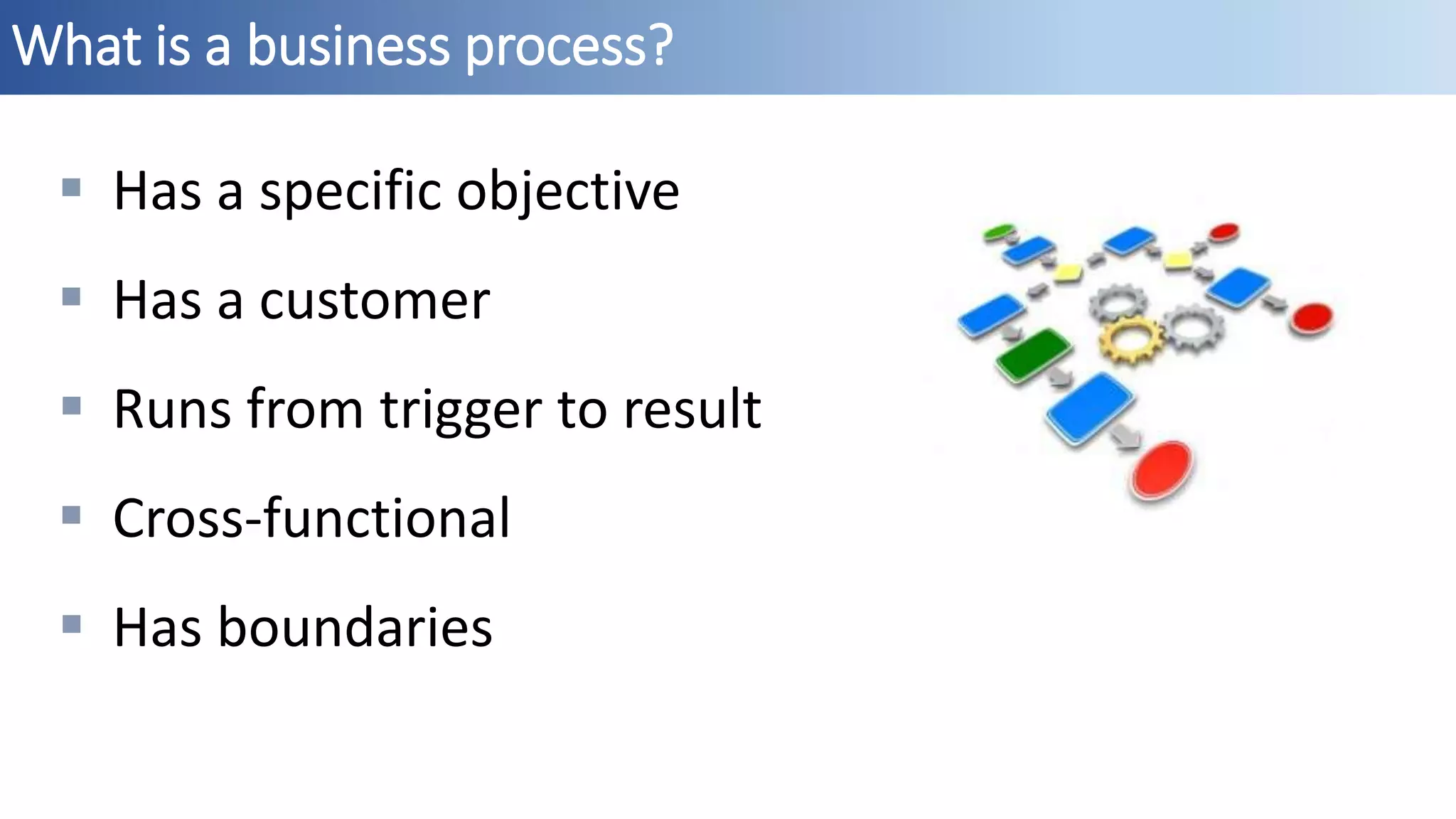
 Has a specific objective
 Has a customer
 Runs from trigger to result
 Cross-functional
 Has boundaries
What about workflow?
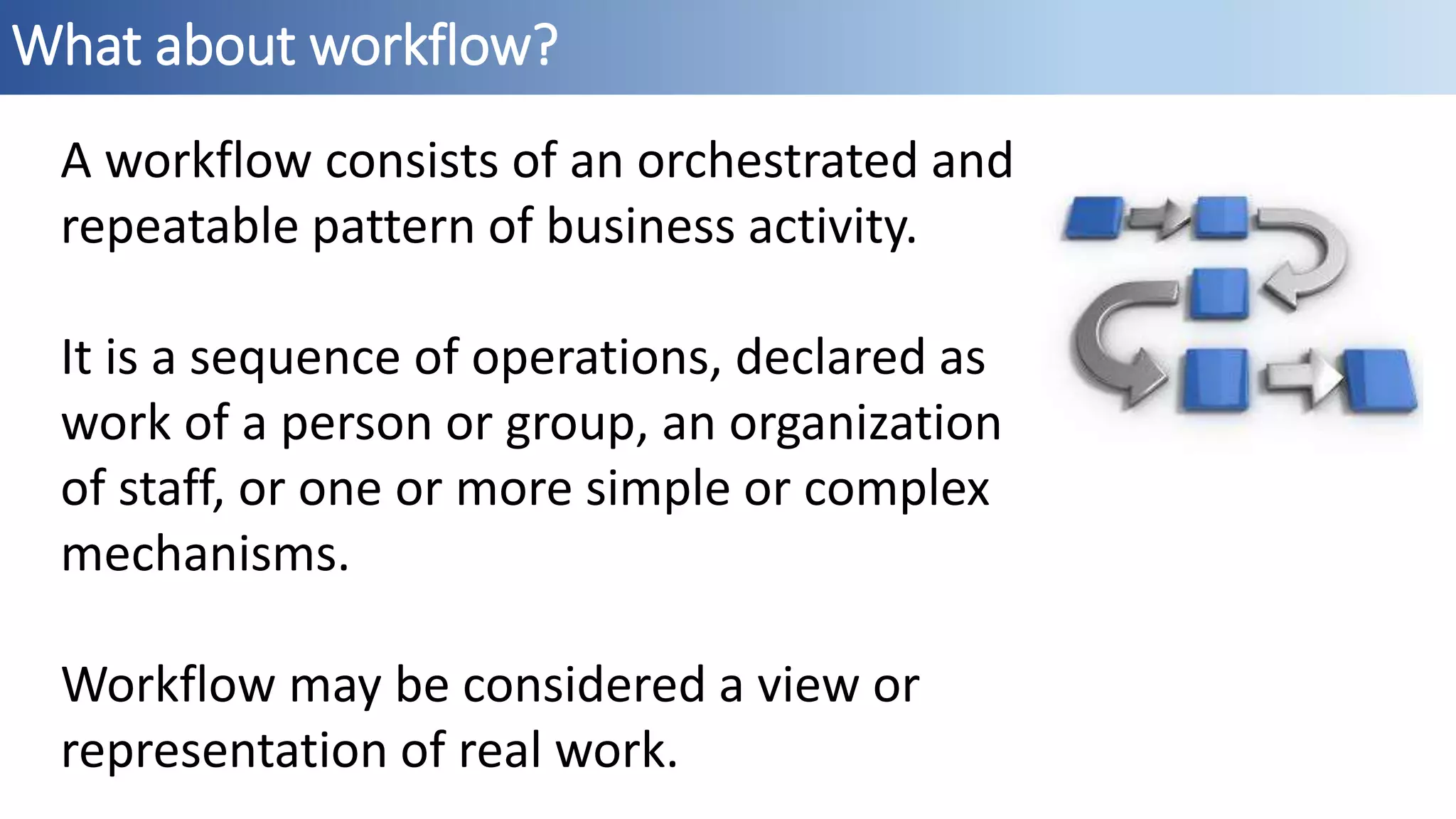
A workflow consists of an orchestrated and
repeatable pattern of business activity.
It is a sequence of operations, declared as
work of a person or group, an organization
of staff, or one or more simple or complex
mechanisms.
Workflow may be considered a view or
representation of real work.
Types of Business Processes
 Management processes
 Operational processes
 Support processes
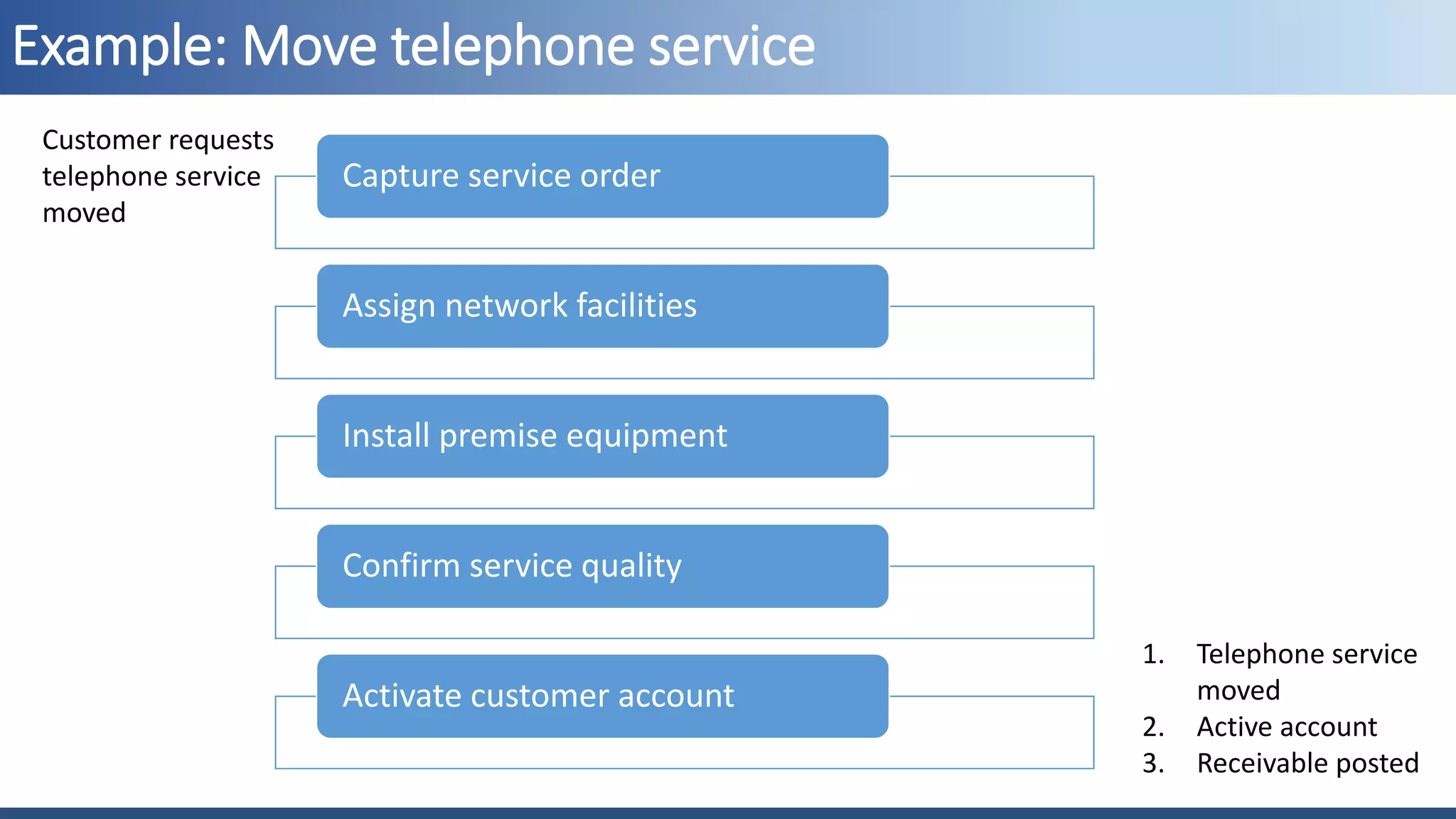
Example: Move telephone service
Capture service order
Assign network facilities
Install premise equipment
Confirm service quality
Activate customer account
Customer requests
telephone service
moved
1. Telephone service
moved
2. Active account
3. Receivable posted
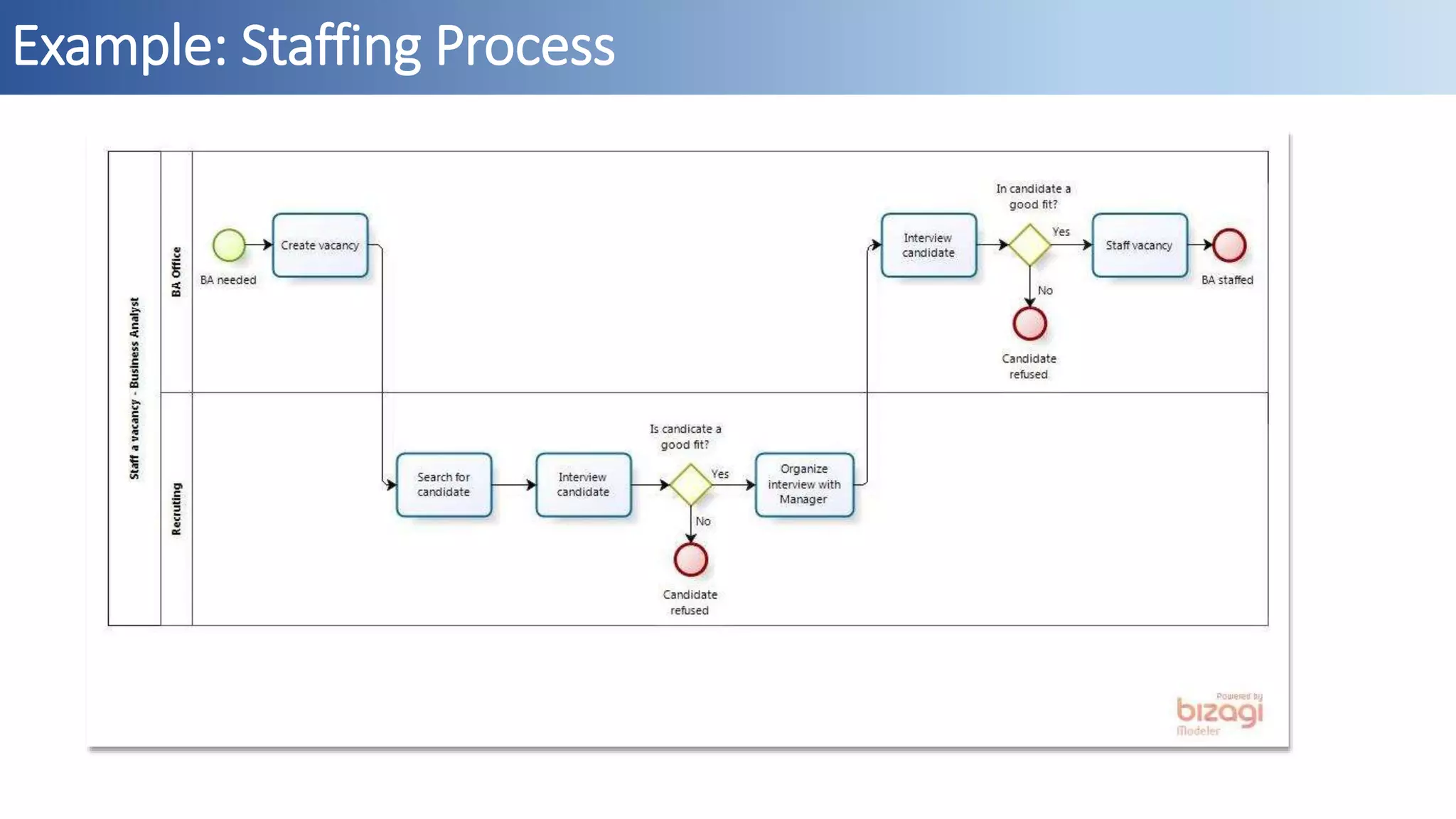
Example: Staffing Process
The BA perspective
Business analysis is the practice of enabling change in an
enterprise by defining needs and recommending solutions
that deliver value to stakeholders.
Business analysis can be used to understand the current state,
to define the future state, and to determine the activities
required to move from the current to the future state.
BABOK 3.0
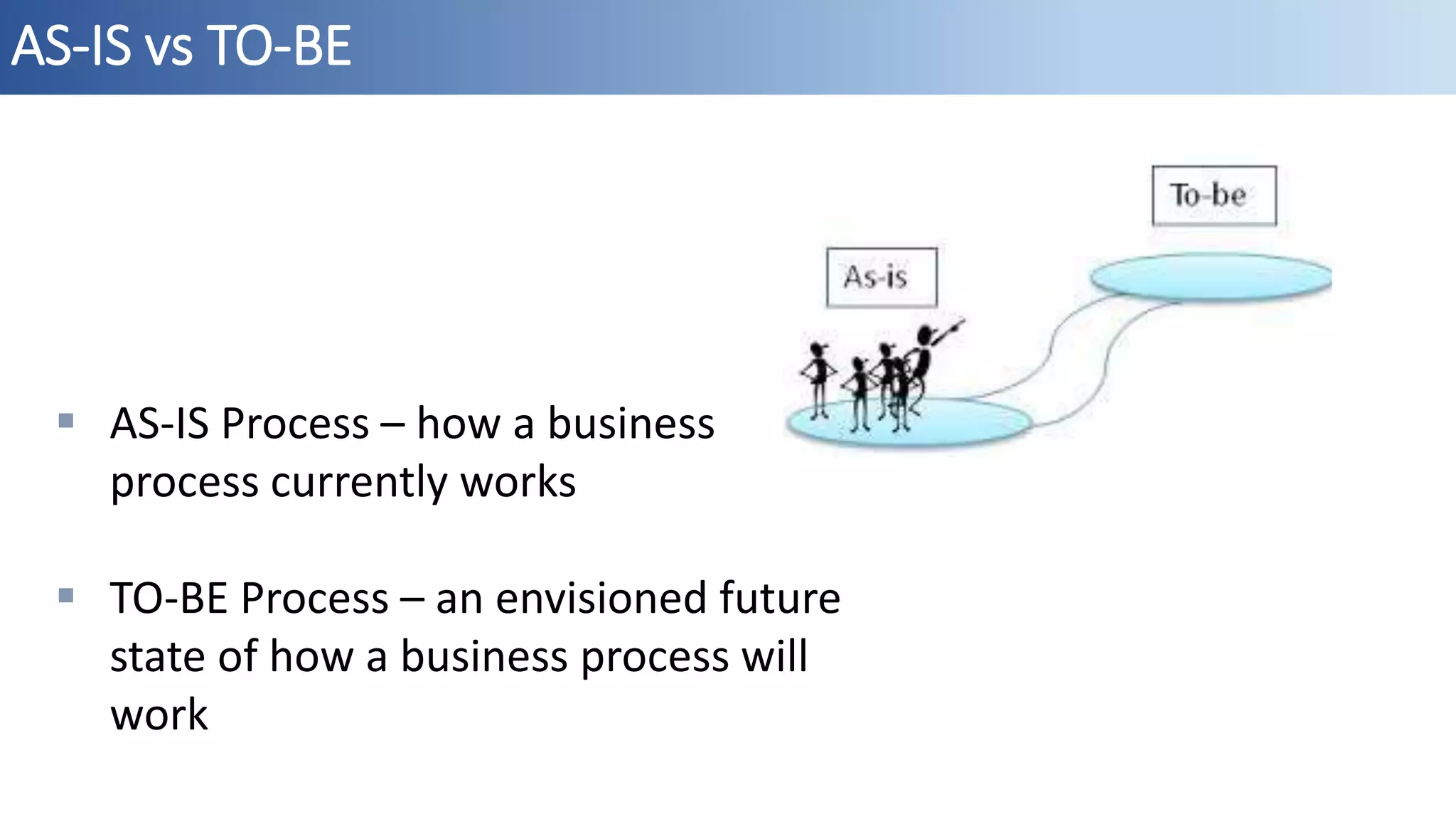
AS-IS vs TO-BE
 AS-IS Process – how a business
process currently works
 TO-BE Process – an envisioned future
state of how a business process will
work
How to improve a business process?
Automate it!
Or not?
The first rule of any technology used in a business is that automation
applied to an efficient operation will magnify the efficiency. The
second is that automation applied to an inefficient operation will
magnify the inefficiency.
Bill Gates
Automation simply provides more efficient ways of doing the wrong
kinds of things.
Michael Hammer
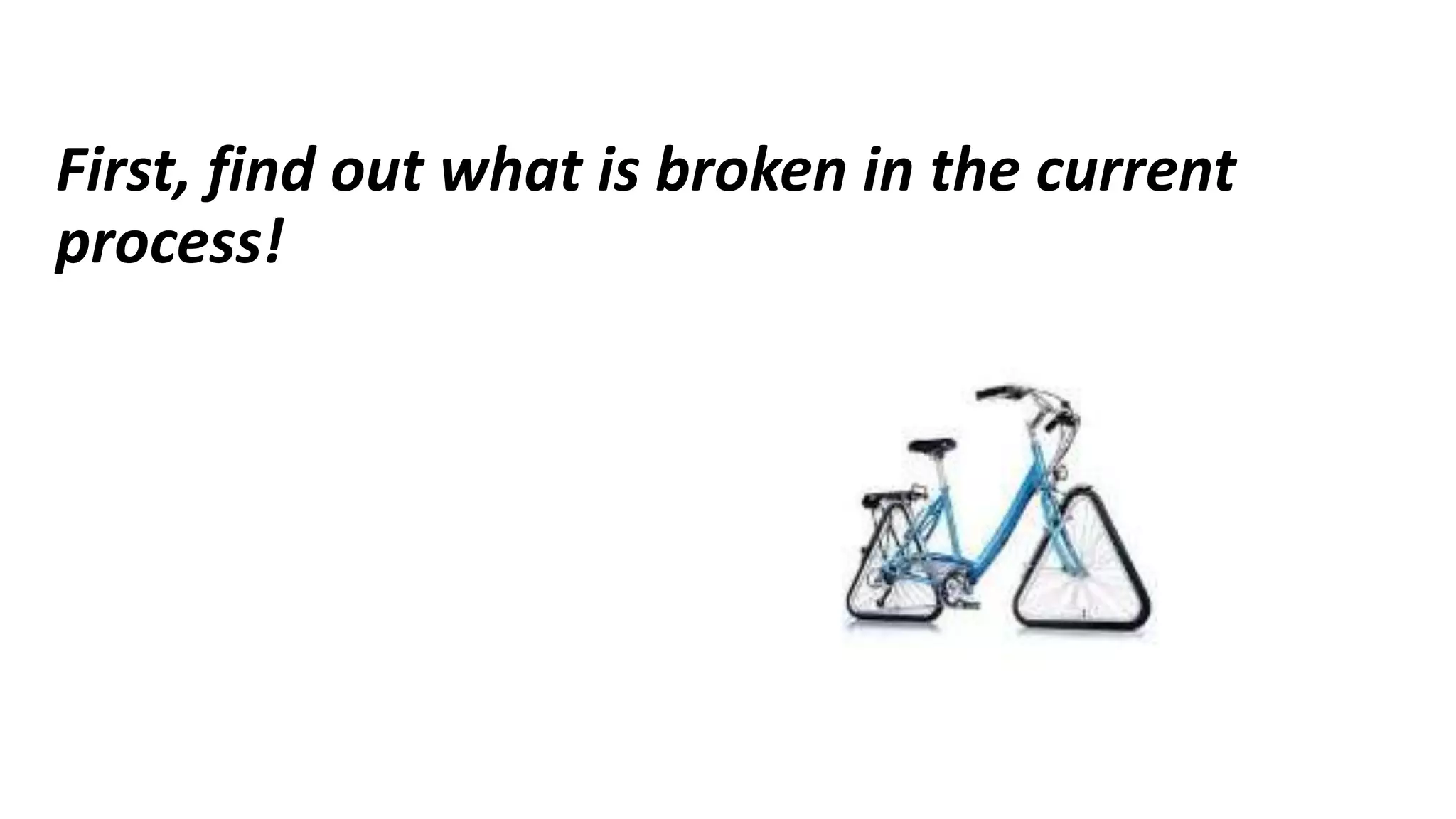
First, find out what is broken in the current
process!
Typical Process Flaws
 Too much manual work
 Too much tracking and control
 Outdated assumptions on what is important to the
customer of the process
Alec Sharp
Diagnosing the AS-IS process
Dan Madison
Four lenses of analysis:
 Frustration
 Quality
 Time
 Cost
Example: Permit Issue Process
Dan Madison
Main problem: Incomplete information on permit forms
Need: Ensure all the information that was needed was in
place from the beginning
The amendments to the process included:
 Single point of contact
 Permits clustered, with a separate process for each cluster
 Check sheets and templates
Key Process Design Principles
 Design the workflow around value-adding activities, not
around job titles, functions, departments, or locations
 Ensure a continuous flow of the "main sequence" – those
activities that directly add value to the customer
Key Process Design Principles
 Make sure work is performed where it makes the most sense
Key Process Design Principles
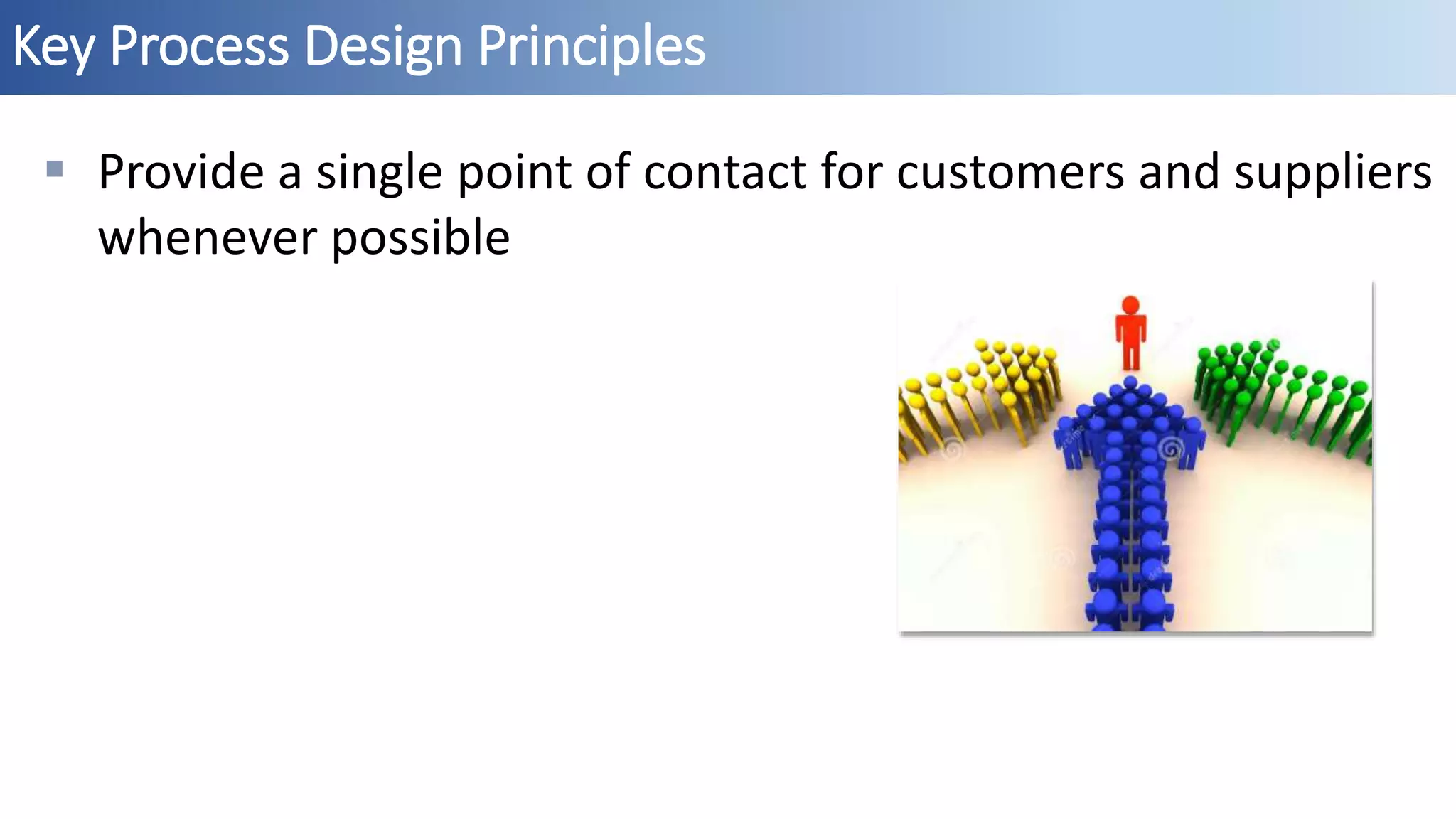
 Provide a single point of contact for customers and suppliers
whenever possible
Key Process Design Principles
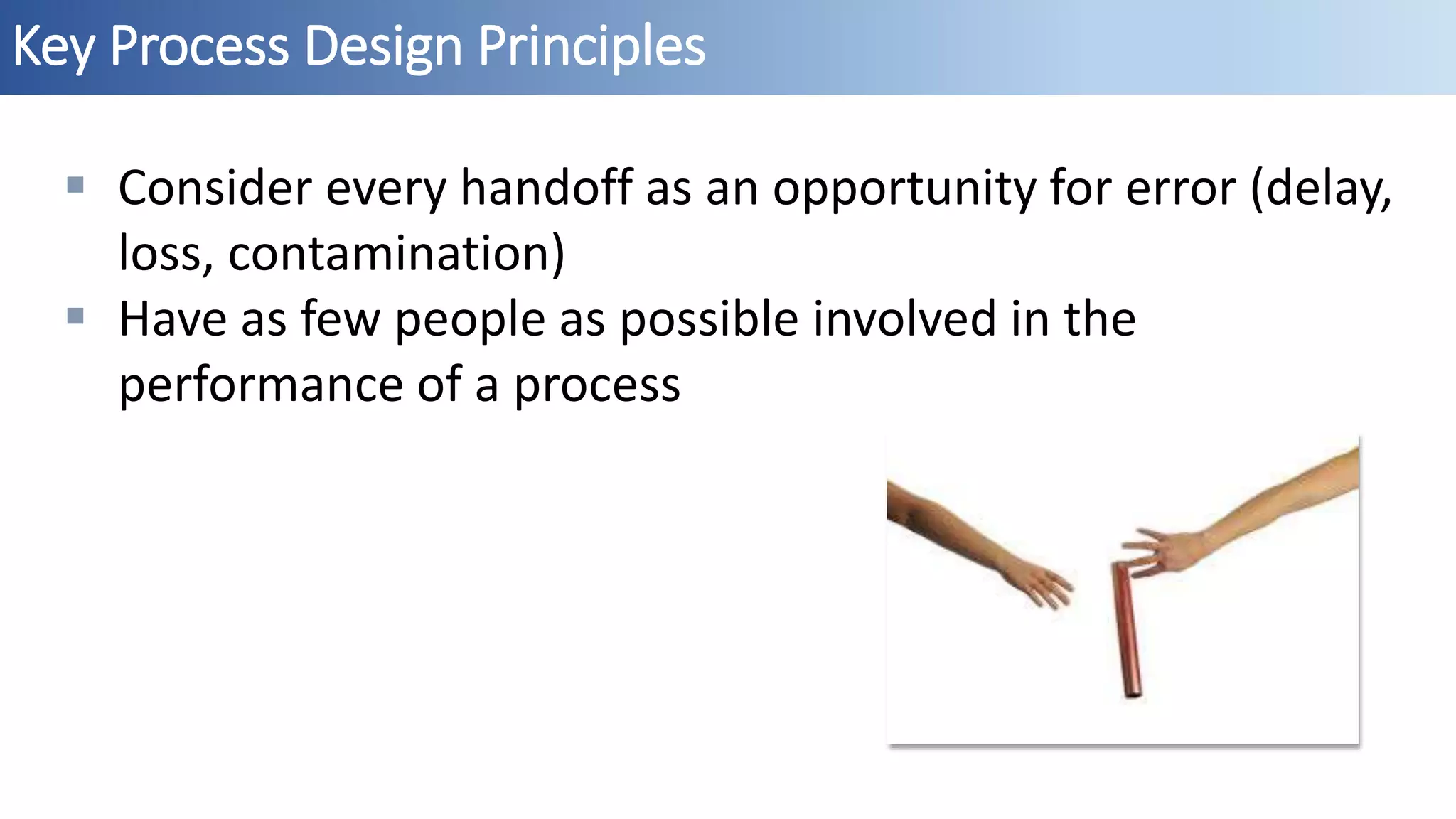
 Consider every handoff as an opportunity for error (delay,
loss, contamination)
 Have as few people as possible involved in the
performance of a process
Key Process Design Principles
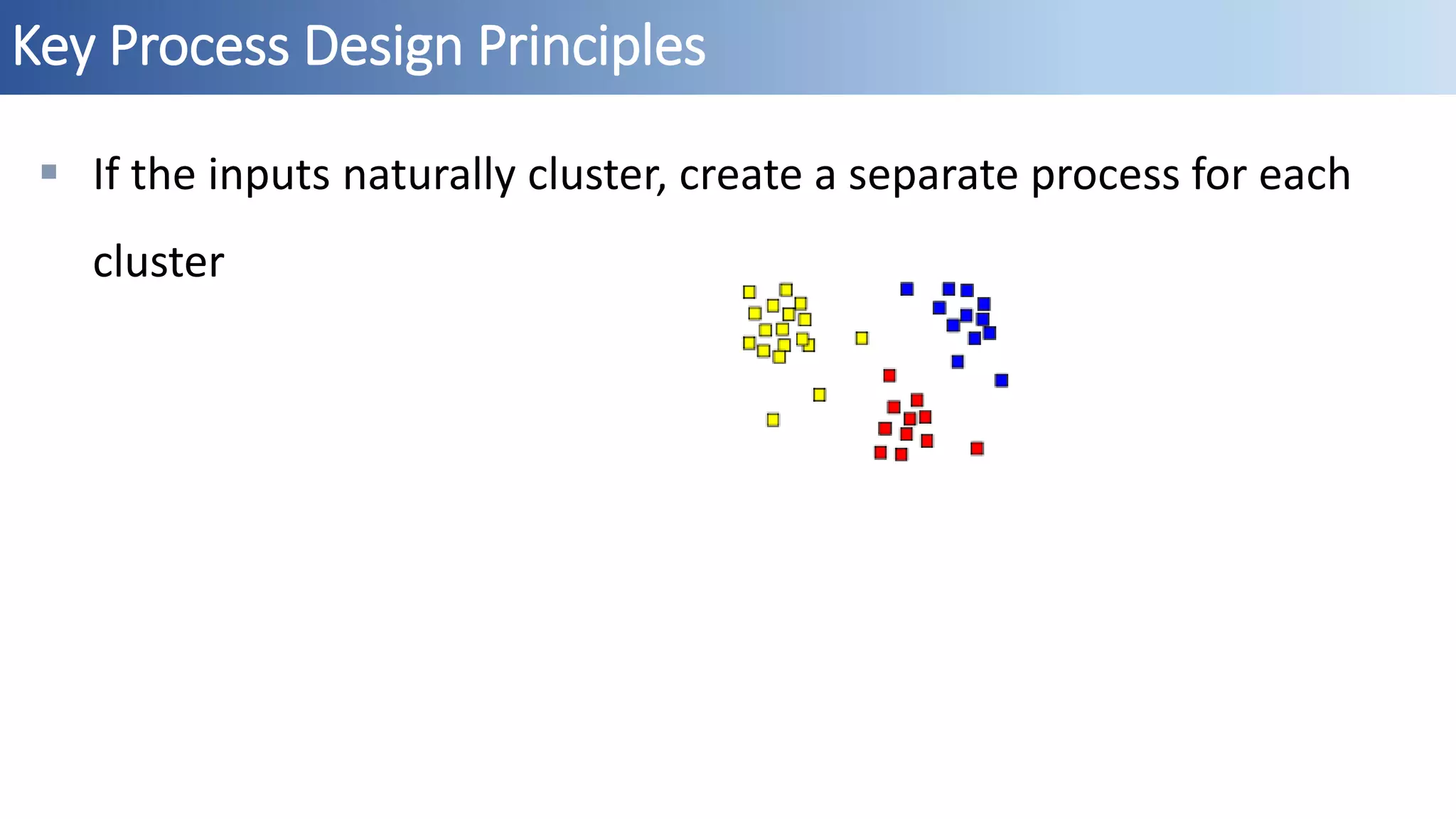
 If the inputs naturally cluster, create a separate process for each
cluster
Key Process Design Principles
 Redesign the process first, then automate it
Key Process Design Principles
 Bring downstream information needs upstream
 Capture information once at the source and share it widely
Key Process Design Principles
 Push decision-making down to the lowest levels that make sense
Key Process Design Principles
 Use simulation, practice, or role play to test new process designs
risk free
Key Process Design Principles
 If your process deals with complexity, consider using teams
 Co-locate or network the teams
Key Process Design Principles
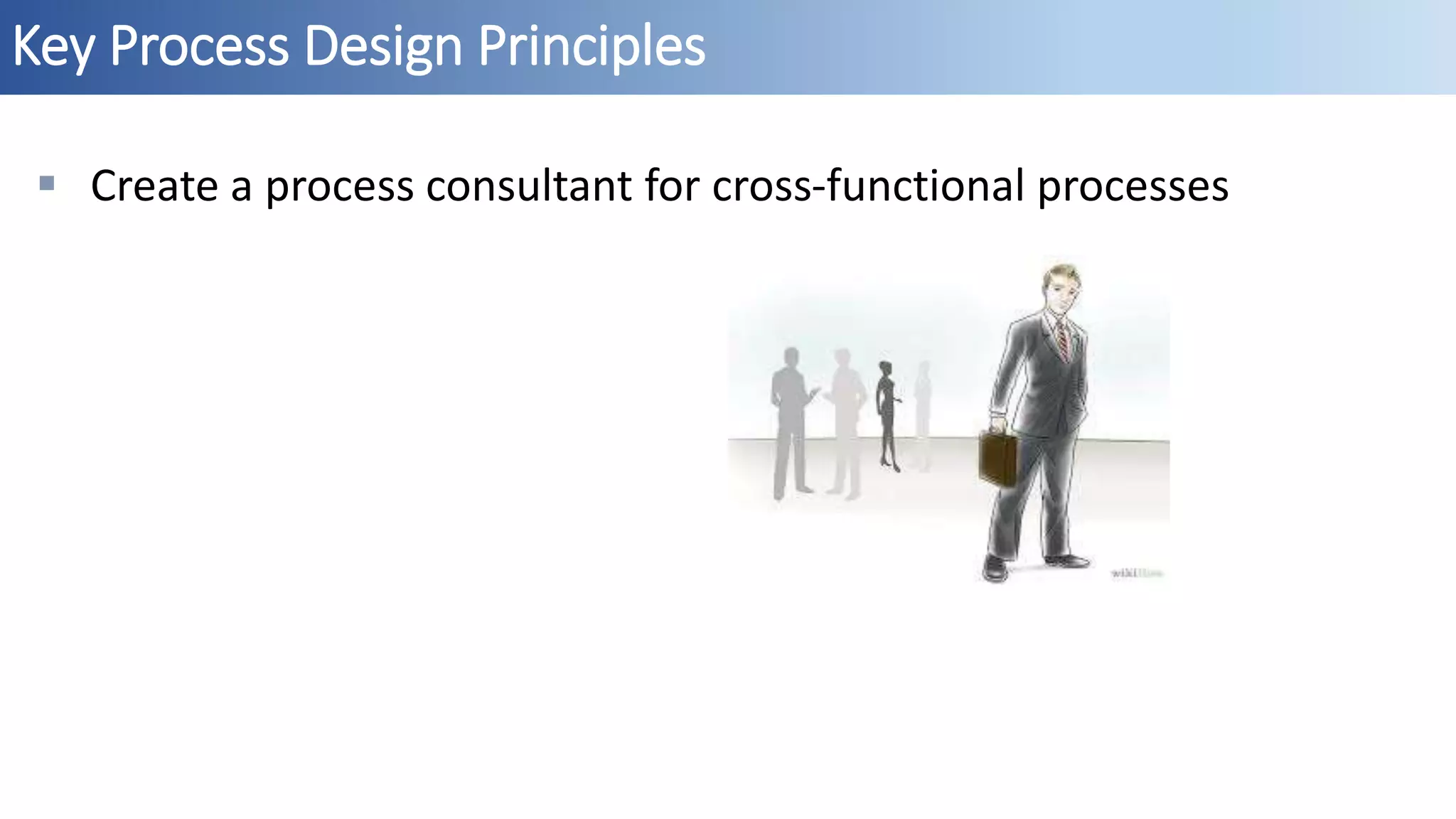
 Create a process consultant for cross-functional processes
Key Process Design Principles
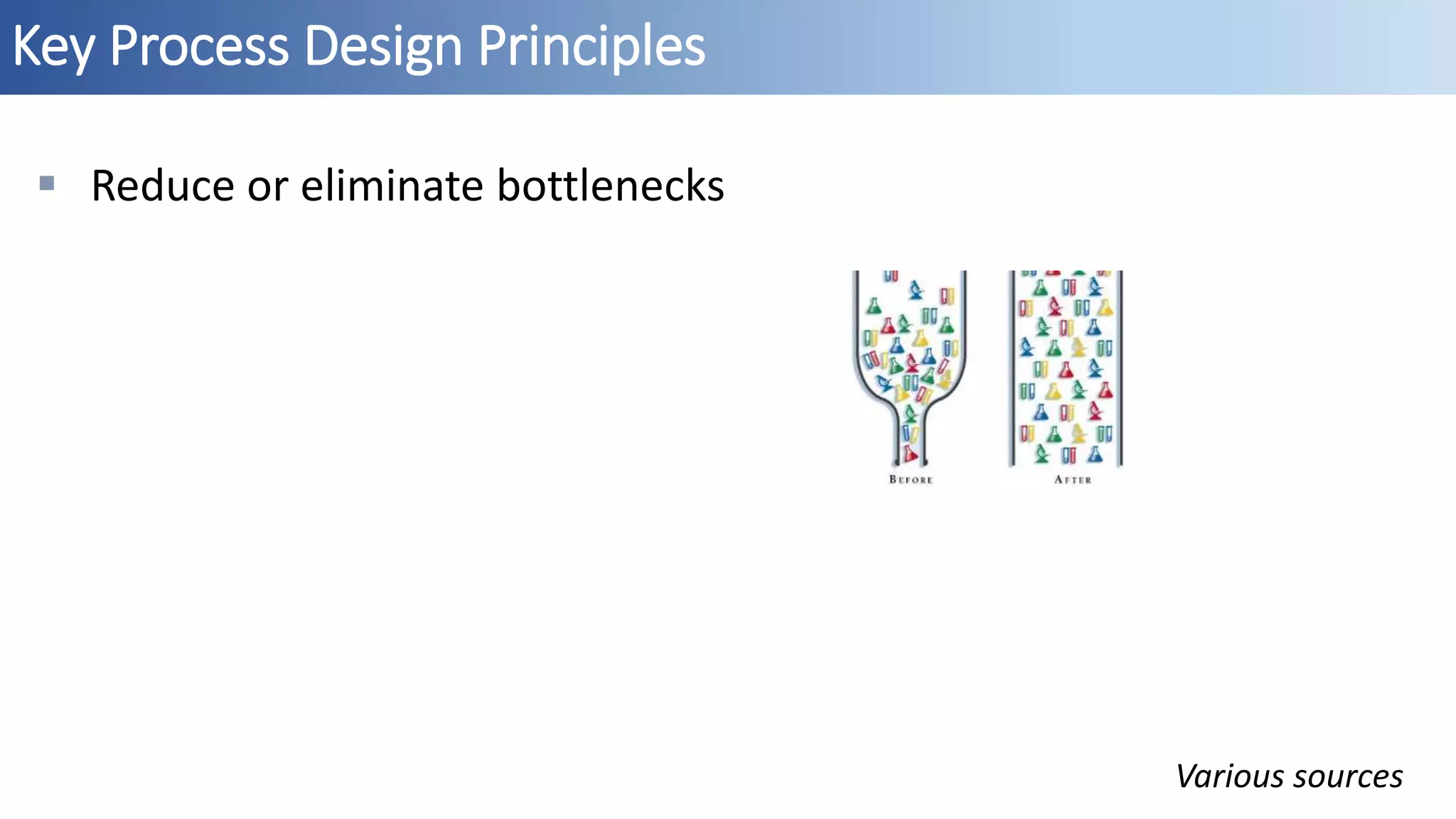
 Reduce or eliminate bottlenecks
Various sources
Key Process Design Principles
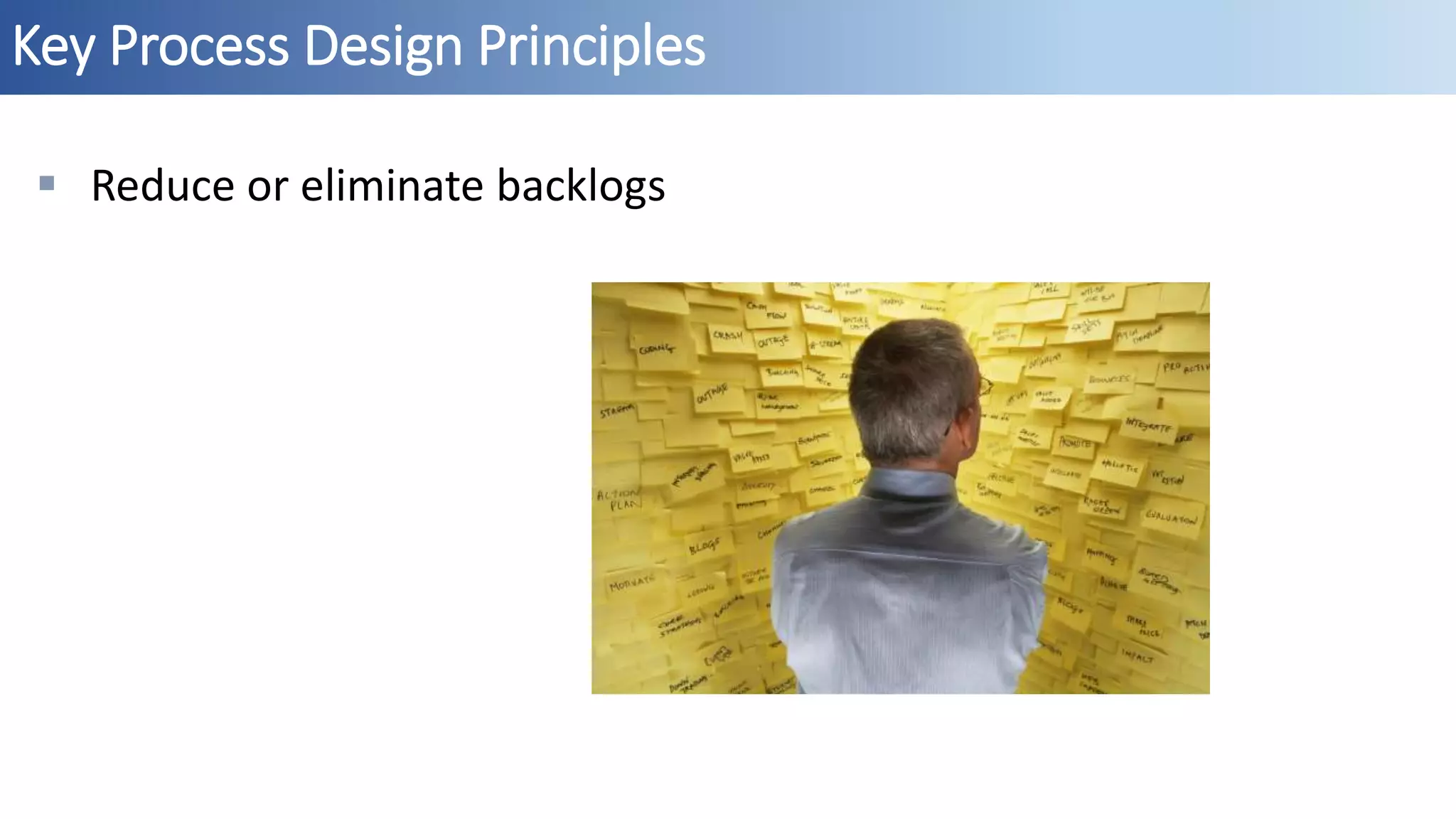
 Reduce or eliminate backlogs
Key Process Design Principles
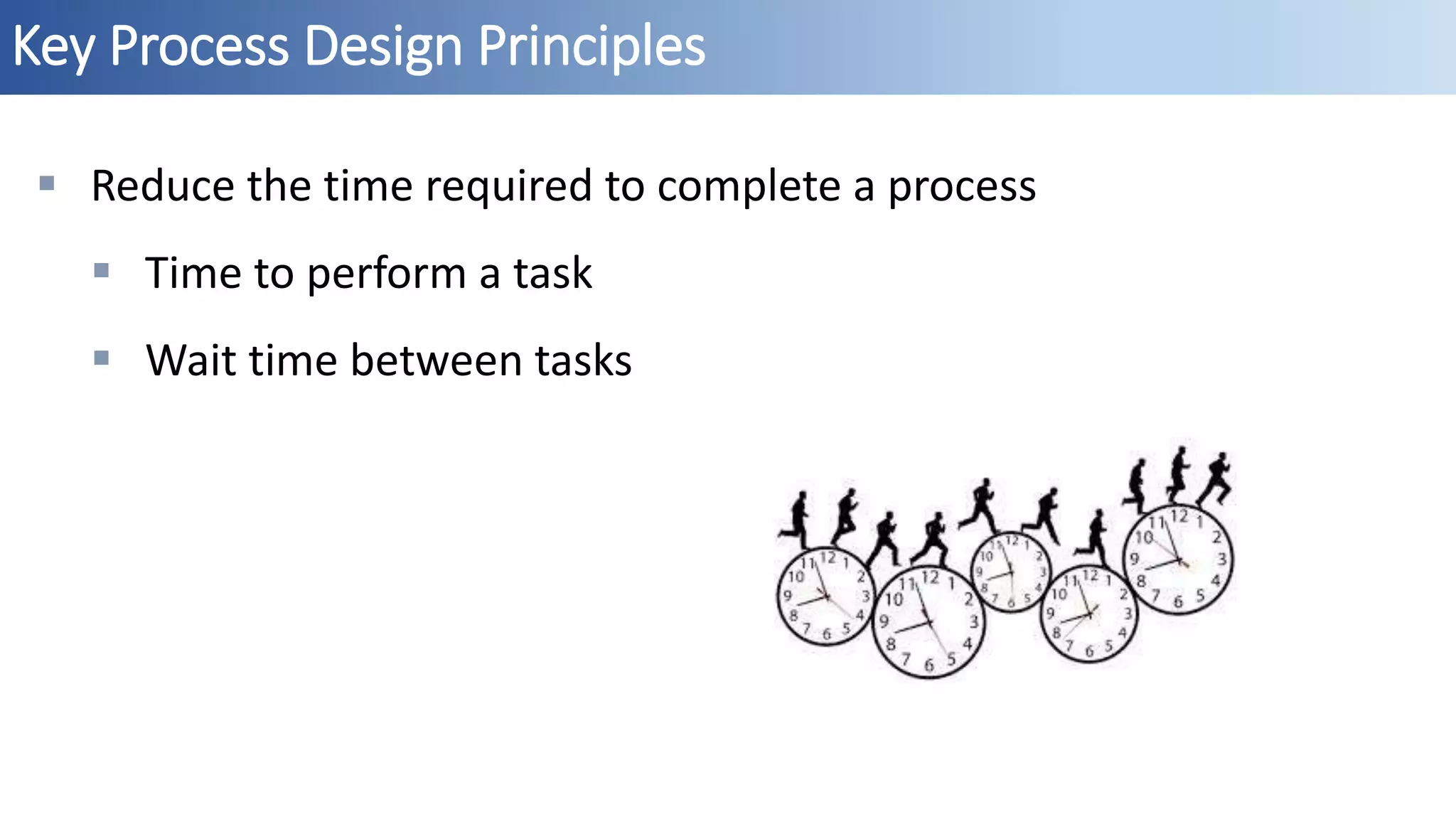
 Reduce the time required to complete a process
 Time to perform a task
 Wait time between tasks
Key Process Design Principles
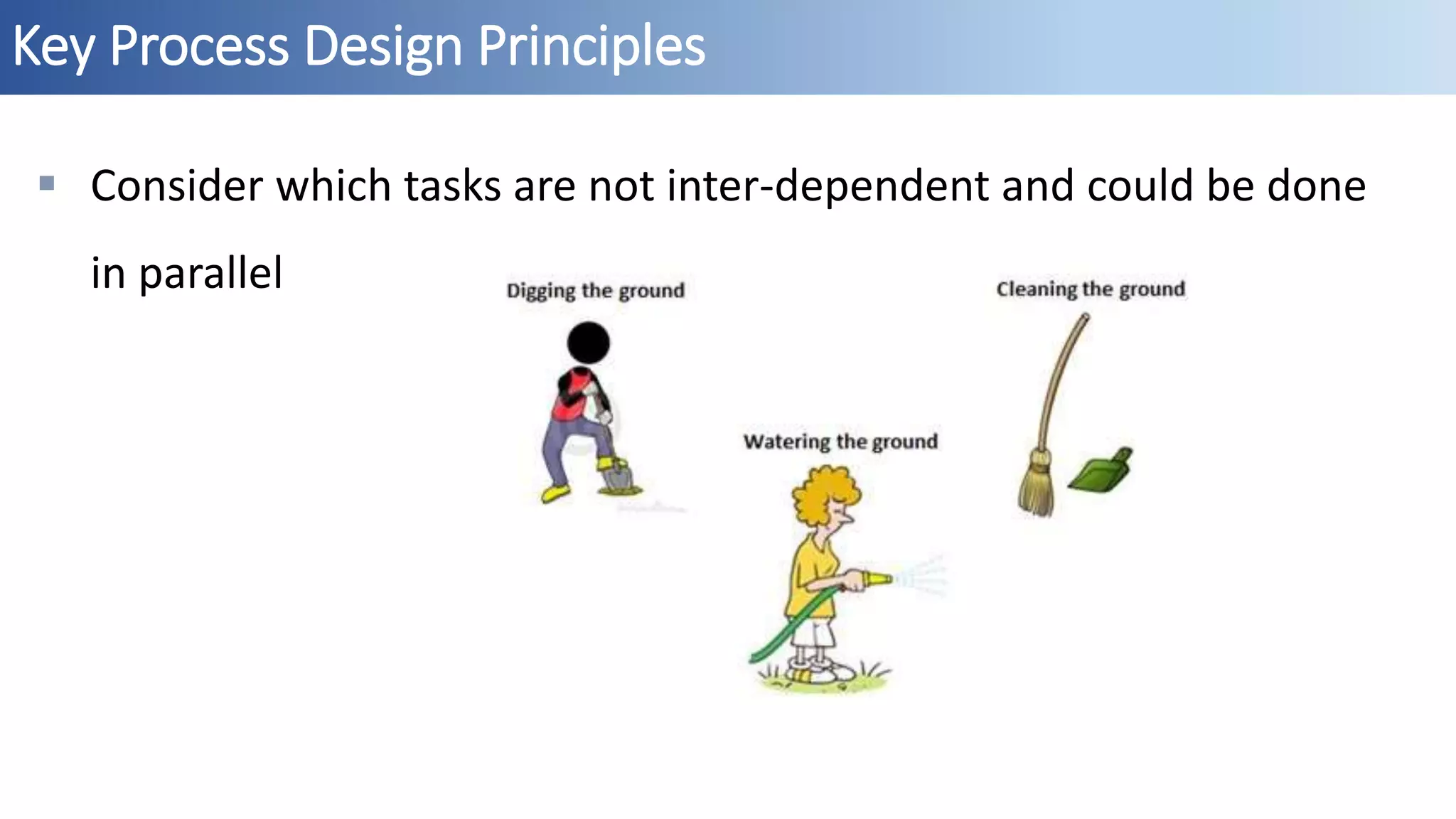
 Consider which tasks are not inter-dependent and could be done
in parallel
Process Optimization Anti-Patterns
Rainer Stropek
 Optimize during initial development
 Optimize without measuring
 Measure in non-representative environments
 Optimize without a baseline
 Optimize without specific, quantifiable goals
 Optimize without knowing the basics
 Optimize everything at once
 Confuse performance with user experience
Assess proposed improvements against
business goals
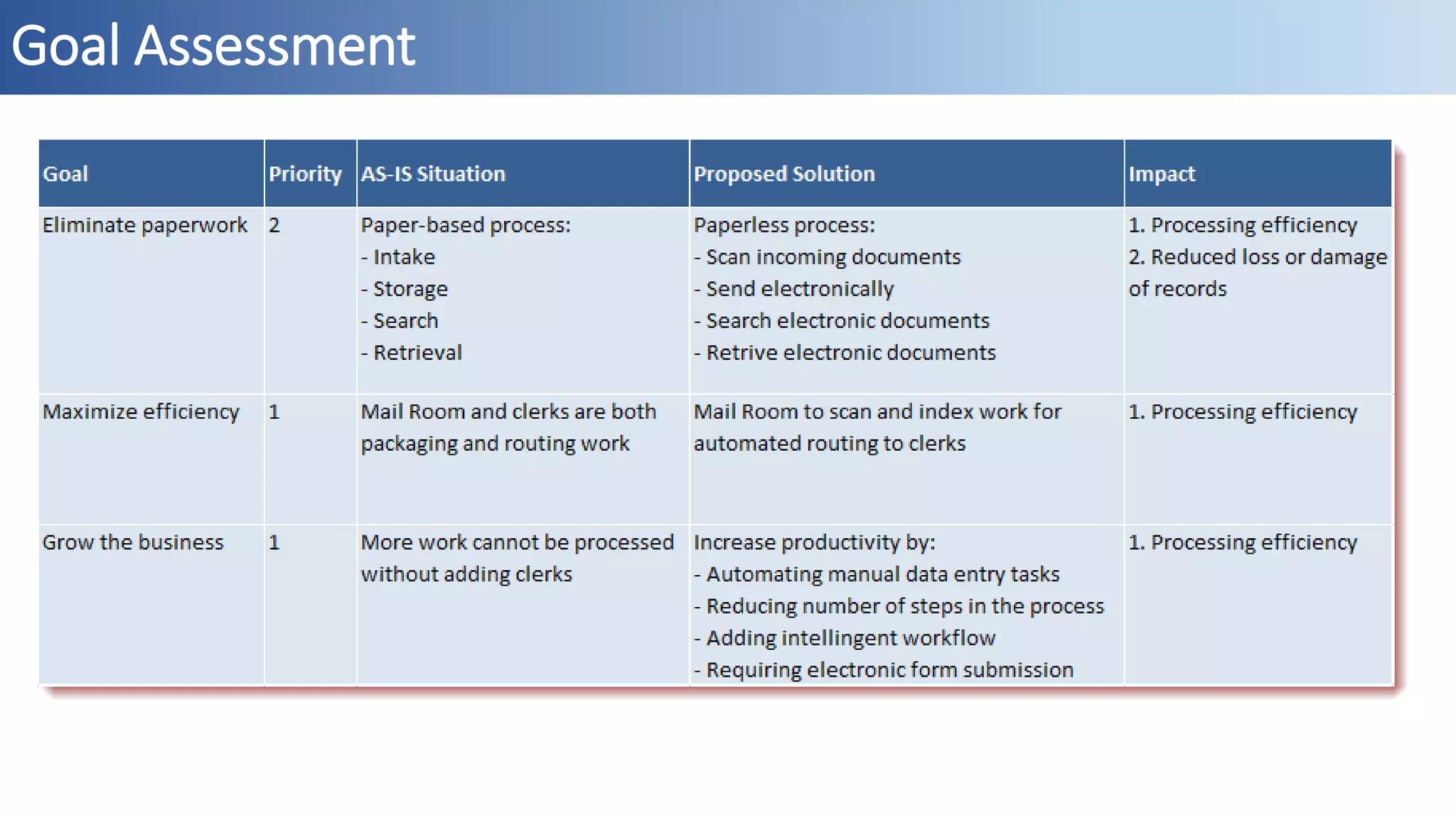
Goal Assessment
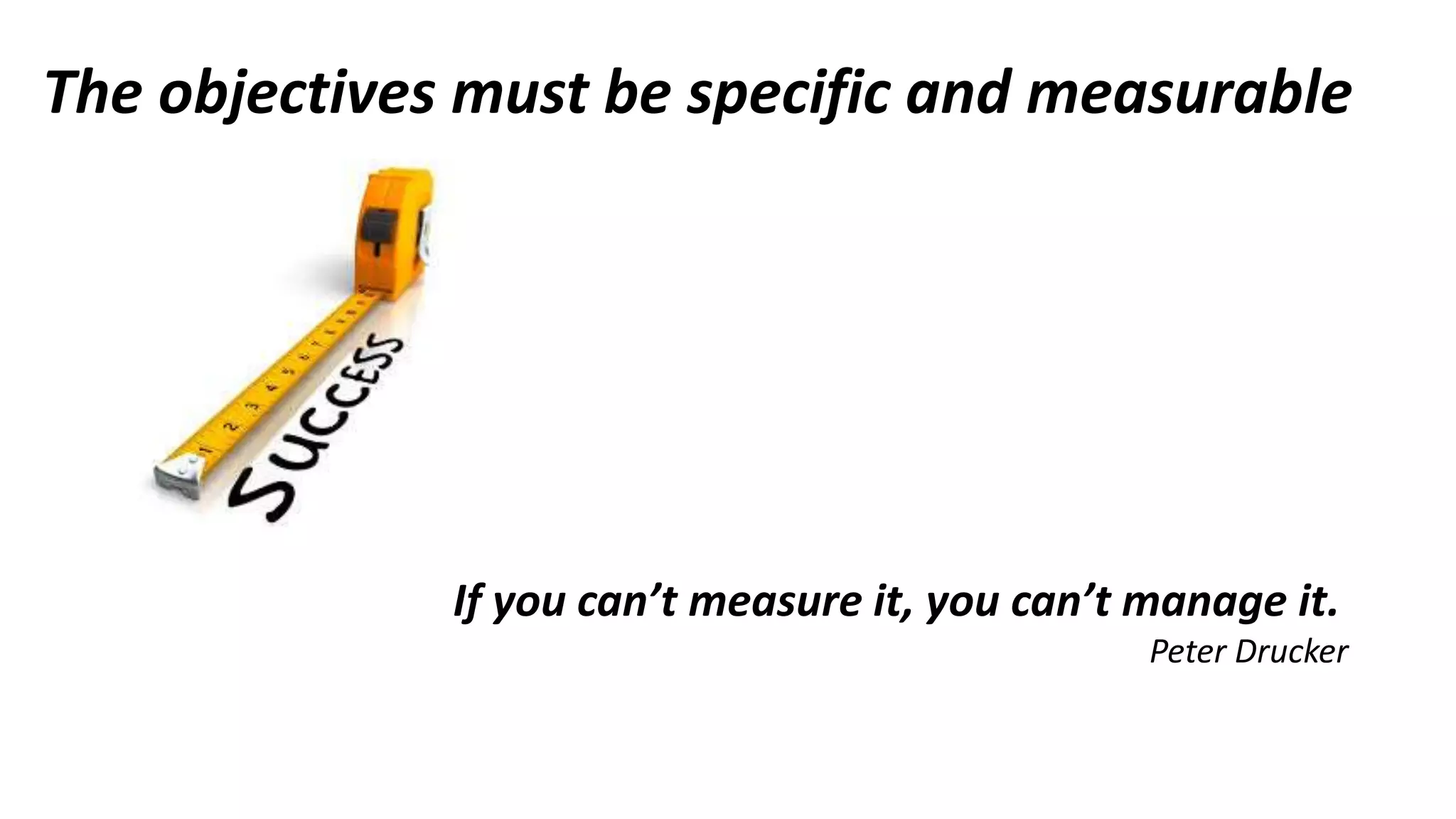
The objectives must be specific and measurable
If you can’t measure it, you can’t manage it.
Peter Drucker
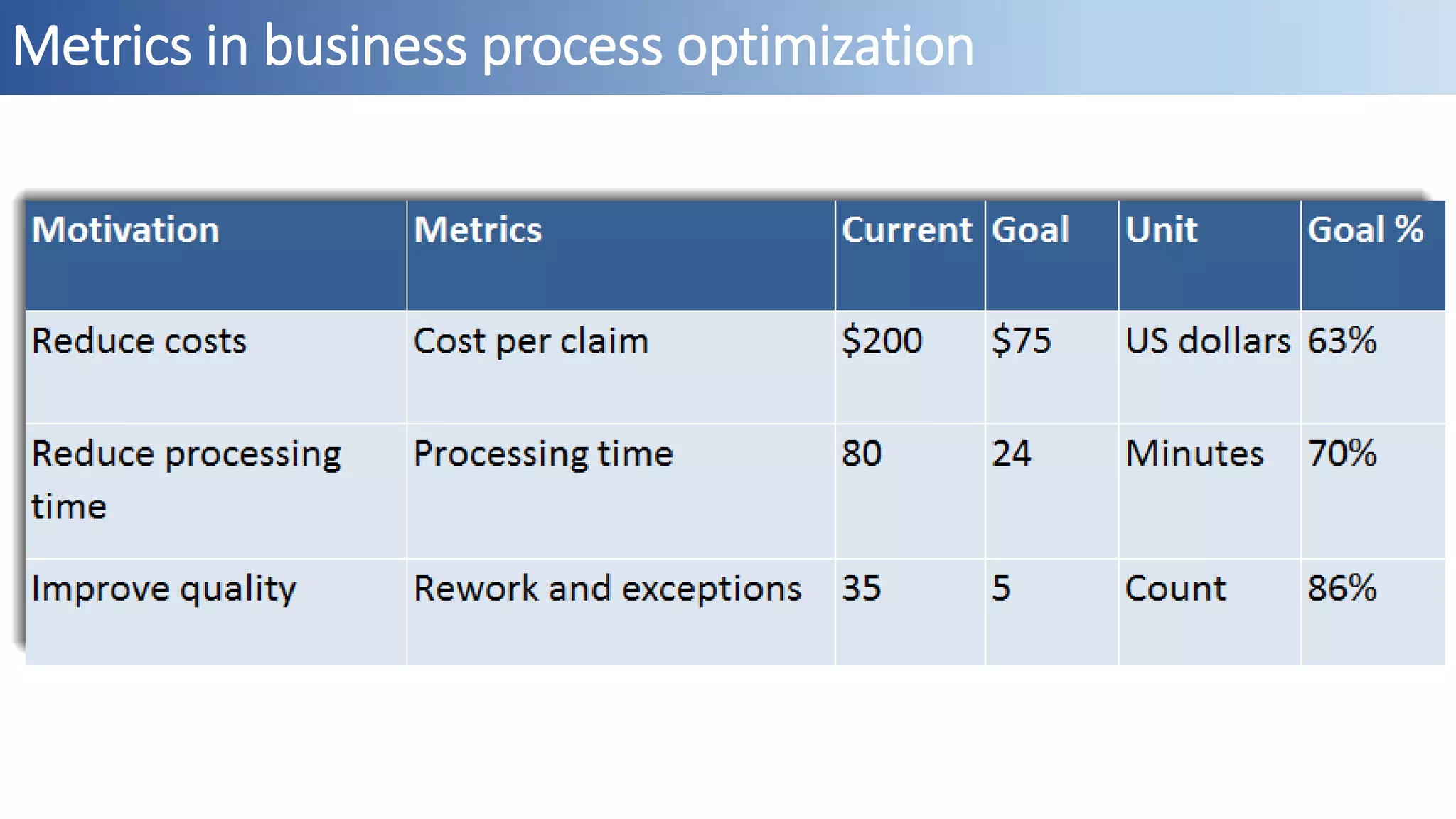
Metrics in business process optimization
References
 Alec Sharp “Workflow Modeling”
 Daniel Madison “Process Mapping, Process Improvement, and Process
Management”
 BPM CBOK
Questions?
Thank you!

Designing a to be process

  • 1.
    Designing a To-BeProcess By Romana Hnatkivska 5/16/2015
  • 2.
    About the speaker Business Analyst at SoftServe  8 years total experience in IT  CCBA – Certification of Competency in Business Analysis  Projects in Healthcare and Human Resource Management
  • 3.
    About the topic Today’s business demands constant change  Legacy systems often function-centric and hard to change  Multiple channels for interactions with customers  Increasing demand for customer self-service  Focus shifting from applications to managing and optimizing processes.  Demand for process agility
  • 4.
    Agenda  Definitions  TypicalProcess Flaws  Process Optimization Principles  Process Optimization Anti-Patterns  Q&A
  • 5.
    What is abusiness process? A collection of activities that takes one or more kinds of input and creates an output that is of value to the customer. Hammer & Champy, 1993 A process is essentially a way an organisation can choose to organize its resources (people and their work, equipment, information, etc.) to accomplish necessary results. Processes exist only to produce desired outputs (results). Alec Sharp
  • 6.
    What is abusiness process?  Has a specific objective  Has a customer  Runs from trigger to result  Cross-functional  Has boundaries
  • 7.
    What about workflow? Aworkflow consists of an orchestrated and repeatable pattern of business activity. It is a sequence of operations, declared as work of a person or group, an organization of staff, or one or more simple or complex mechanisms. Workflow may be considered a view or representation of real work.
  • 8.
    Types of BusinessProcesses  Management processes  Operational processes  Support processes
  • 9.
    Example: Move telephoneservice Capture service order Assign network facilities Install premise equipment Confirm service quality Activate customer account Customer requests telephone service moved 1. Telephone service moved 2. Active account 3. Receivable posted
  • 10.
  • 11.
    The BA perspective Businessanalysis is the practice of enabling change in an enterprise by defining needs and recommending solutions that deliver value to stakeholders. Business analysis can be used to understand the current state, to define the future state, and to determine the activities required to move from the current to the future state. BABOK 3.0
  • 12.
    AS-IS vs TO-BE AS-IS Process – how a business process currently works  TO-BE Process – an envisioned future state of how a business process will work
  • 13.
    How to improvea business process? Automate it! Or not?
  • 14.
    The first ruleof any technology used in a business is that automation applied to an efficient operation will magnify the efficiency. The second is that automation applied to an inefficient operation will magnify the inefficiency. Bill Gates Automation simply provides more efficient ways of doing the wrong kinds of things. Michael Hammer
  • 15.
    First, find outwhat is broken in the current process!
  • 16.
    Typical Process Flaws Too much manual work  Too much tracking and control  Outdated assumptions on what is important to the customer of the process Alec Sharp
  • 17.
    Diagnosing the AS-ISprocess Dan Madison Four lenses of analysis:  Frustration  Quality  Time  Cost
  • 18.
    Example: Permit IssueProcess Dan Madison Main problem: Incomplete information on permit forms Need: Ensure all the information that was needed was in place from the beginning The amendments to the process included:  Single point of contact  Permits clustered, with a separate process for each cluster  Check sheets and templates
  • 19.
    Key Process DesignPrinciples  Design the workflow around value-adding activities, not around job titles, functions, departments, or locations  Ensure a continuous flow of the "main sequence" – those activities that directly add value to the customer
  • 20.
    Key Process DesignPrinciples  Make sure work is performed where it makes the most sense
  • 21.
    Key Process DesignPrinciples  Provide a single point of contact for customers and suppliers whenever possible
  • 22.
    Key Process DesignPrinciples  Consider every handoff as an opportunity for error (delay, loss, contamination)  Have as few people as possible involved in the performance of a process
  • 23.
    Key Process DesignPrinciples  If the inputs naturally cluster, create a separate process for each cluster
  • 24.
    Key Process DesignPrinciples  Redesign the process first, then automate it
  • 25.
    Key Process DesignPrinciples  Bring downstream information needs upstream  Capture information once at the source and share it widely
  • 26.
    Key Process DesignPrinciples  Push decision-making down to the lowest levels that make sense
  • 27.
    Key Process DesignPrinciples  Use simulation, practice, or role play to test new process designs risk free
  • 28.
    Key Process DesignPrinciples  If your process deals with complexity, consider using teams  Co-locate or network the teams
  • 29.
    Key Process DesignPrinciples  Create a process consultant for cross-functional processes
  • 30.
    Key Process DesignPrinciples  Reduce or eliminate bottlenecks Various sources
  • 31.
    Key Process DesignPrinciples  Reduce or eliminate backlogs
  • 32.
    Key Process DesignPrinciples  Reduce the time required to complete a process  Time to perform a task  Wait time between tasks
  • 33.
    Key Process DesignPrinciples  Consider which tasks are not inter-dependent and could be done in parallel
  • 34.
    Process Optimization Anti-Patterns RainerStropek  Optimize during initial development  Optimize without measuring  Measure in non-representative environments  Optimize without a baseline  Optimize without specific, quantifiable goals  Optimize without knowing the basics  Optimize everything at once  Confuse performance with user experience
  • 35.
    Assess proposed improvementsagainst business goals
  • 36.
  • 37.
    The objectives mustbe specific and measurable If you can’t measure it, you can’t manage it. Peter Drucker
  • 38.
    Metrics in businessprocess optimization
  • 39.
    References  Alec Sharp“Workflow Modeling”  Daniel Madison “Process Mapping, Process Improvement, and Process Management”  BPM CBOK
  • 40.
  • 41.

Editor's Notes

  • #4 Today’s businesses operate in a different world than the 80s and 90s when many business systems were developed. Legacy systems are often data-centric as well as product- or function-centric. They are not designed to be customer facing. They are also cumbersome to change. Business today demands constant change, and with ever-shortening change cycles, customers and suppliers expect to interact via multiple channels and there is an increasing demand for self-service and straight-through processing. In this world, new, smarter systems are needed to accommodate rapid changes in the business processes spanning multiple legacy systems. These systems also need to be able to accept input from a variety of new sources (e.g. Web services, data-feeds, Internet, forms, call centres, and other applications). To achieve this agility, organisations are beginning to adapt BPM (Business Process Management) approaches and tools. Focus is shifting from applications to managing and optimising business processes. In addition to the operational efficiency, businesses are looking for process agility, which is the ability to change operations, and the way its people and systems work, to adapt to change. Process models are used to coordinate the interactions between people, systems, policies, and information. A process-centric approach has clear advantages. Firstly, transactional applications have hard-wired process elements and business logic that are slow to change. Secondly, business processes are rarely completed within a single application.
  • #6 Michael Hammer, James Champy “Reengineering the Corporation: A Manifesto for Business Revolution” A business process is end-to-end – from an initial trigger to final results. It is the complete set of activities needed to fully deliver the final expected results from a specific triggering event.
  • #7 Customers can be internal and external. A business process typically has two or more results, each for a different stakeholder. These could be treated as coming from separate processes, which intuitively might seem more efficient, but choosing to see them as coming from a single process triggered by a single event has proven to be very efficient and effective.
  • #9 Give examples
  • #10 This example is an end-to-end process which consists of 5 sub-processes within different functional areas. By independently “improving” the five subprocesses, not the entire end-to-end business process, the behavior of the whole was made worse, not better. A business process must be managed as a single entity. If you manage each of the sub-processes as a separate entity, the performance of the “whole” will almost always be sub-optimal. A process typically has two or more results, each for a different stakeholder. These could be treated as coming from separate processes, which intuitively might seem more efficient, but choosing to see them as coming from a single process triggered by a single event has proven to be very efficient and effective.
  • #14 Things are not as simple as that!
  • #18 The four lenses are pictures of how a process is done and how the results are judged. Frustration, as experienced by the people in the process, is important, because it has a high correlation to quality. Also, there is usually immediate buy-in from people within the process. Simply ask the people who work in the process, what if anything, frustrates them as they do their work.
  • #19 There were 14 different permits. A developer who wanted to build a high rise had a different process and form than a homeowner who wanted to put in a swimming pool. More about frustration and engaging stakeholders: Problems in a process cannot always be identified by looking at the model! We need to engage stakeholders directly to find problems they have encountered while working with a process.
  • #20 Dan Madison “Process Mapping, Process Improvement, and Process Management” Dan Madison has studied what a business process should look like for fifteen years. He studied what major corporations did in process improvement that made them successful and distilled his findings into design principles that anyone can use. He has come up with 38 design principles that apply to all business processes. Lean framework Steps: Find value-adding steps Pull them out of the AS-IS process Design a new process as close to pure value-add as possible. Remove activities that do not add value to a stakeholder At this point, do not get bogged down into who will do the work - just create the flow. Then you can discuss who should do each step. In order for a step to be considered value added, the activity must meet all three of the following criteria: The customer is willing to pay for this activity It must be done right the first time The action must change the product or service in some manner (into something the customer wants) Examples of non-value added steps include: Inspection by a third party not part of the process (like traditional Quality Assurance) A decision or review board as part of production Multiple offices or entities performing the same or similar tasks. Non value added tasks can be further broken down into two categories: Non value added business required Non value added pure waste Non value added business required activities includes things like: Hosting a Health Department Inspection Filling out Tax Forms in Accounting Accommodating a SOX Audit Paying for a Business License Ensuring hiring compliance policies for Federal, State, and Local Government Paying for training for workers that they don't want or need, but are required to receive. (Driver's training for blind employees for example.) Non value added pure waste activities include things like: Having an expense form or time sheet printed out, then scanned, then emailed to its destination Having 10 people approve a document electronically when 9 need to read it and 1 approve it Heating up fries for 10 people that only 5 people will order at your restaurant Placing workstations 20 feet apart with parts that need to be carried back and forth instead of next to each other Non value added business required activities need to be kept in tight control, because many times, the people in charge of them will expand the activities because no one questions them. These are necessary, but not desirable activities. They cost everyone money, but provide no value. Non value added pure waste activities need to be eliminated - not the people that perform the activities, but the activities themselves. They don't need to be performed for any reason.
  • #22 Being transferred from person to person when there are questions or requests is a common frustration reason. The single point of contact can be: - Person - Website - Data depository
  • #23 Handoffs are a source of the “three deadly sins”: Delay Errors Expense Minimize the number of handoffs between roles and organizational units. Have as few people as possible involved in the performance of a process. I would say, as few as possible, but as many as needed.
  • #24 Dismiss “One size fits all.” At the beginning of the process, insert a decision point that transfers the input to its appropriate process.
  • #25 Do not apply technology to a broken as-is process.
  • #26 For example, when patient is registered for a visit, Front Desk capture their insurance information. This information will be needed later in the process – when billing for the services provided, but it is captured from the beginning.
  • #28 Simulation can be leveraged to validate the existing process performance and to examine the likely process performance improvements under varying workloads.
  • #31 Bottleneck is a situation where performance or capacity of an entire system is limited by a single or limited number of components or resources. Add additional resources at the bottleneck or move work away from the bottleneck.
  • #32 Backlog is an accumulation over time of work waiting to be done or orders to be fulfilled.
  • #37 Tips: Rank the goals first to ensure that you focus on those that have the most impact to the business or your project Analyze process improvements mapped to your specific goals Define the impact to the process and/or business
  • #38 Peter Ferdinand Drucker was an Austrian-born American management consultant, educator, and author, whose writings contributed to the philosophical and practical foundations of the modern business corporation.
  • #39 Motivation: Why do we want to improve this process? Metrics: Measures that represent the value of what needs to change Current: Current value of the metrics Goal: Target value of the metrics Unit: Unit of measure Goal %: Goal as % of improvement Tips: 1. Goals drive the process design activity. 2. The goals must be measurable. 3. Costs, performance, quality and time are very closely linked. Improving one is highly likely to improve another in a similar fashion. 4. In some cases, goals or the „possibilities‟ are not known. In this case you can „skip‟ goals and use improvement activities to „size‟ the goals, then come back to this step. Process performance metrics: Process capacity Capacity Utilization Throughput Flow time Idle time Work in process Set-up time