Download to read offline
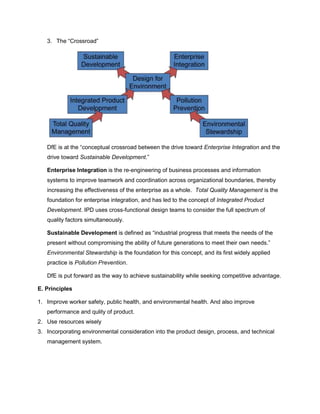
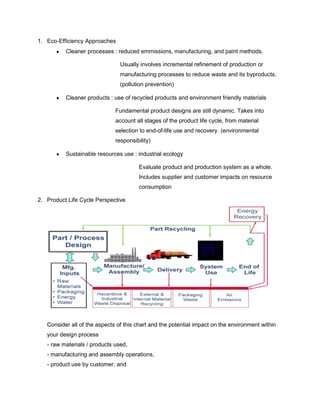
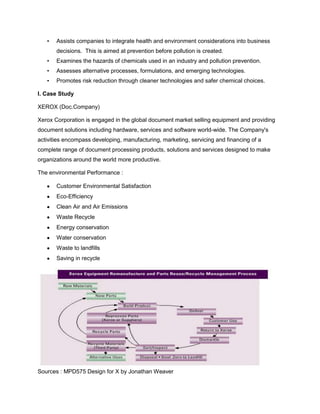

1. Design for environment (DfE) is a systematic approach to evaluate the environmental impacts of products and processes throughout their life cycles, with the goals of minimizing pollution and waste. 2. DfE implementation involves identifying environmental aspects, providing environmental management, and evaluating environmental impacts. It aims to improve resource efficiency, worker safety, and incorporate environmental considerations into design. 3. Examples of successful DfE programs include Xerox designing products for easy disassembly and recycling to save hundreds of millions, and Ford aiming for 100% recyclable vehicles using recycled materials.


