Environmental Management
Fitria Intan A.
105030200121014
“DESIGN FOR
ENVIRONMENT”
( DFE )
DEFINITION
Systematic approach to evaluate the consequences of the
environmental impact of products and processes, and their impact
on human health and the environment (Fiksel, 1996)
A systematic consideration of design performance with respect to
environmental, health, and safety objectives, over the full product
and process life cycle (Jonathan Weaver).
to minimize the environmental-economic cost to consumers
3 Main
GOALS
1. Promoting green cleaning and recognizing safer
consumer and industrial and institutional products
through safer product labeling.
2. Defining Best Practices in areas ranging from auto
refinishing to nail salon safety.
3. Identifying safer chemicals, including life cycle
considerations, through Alternatives Assessment.
Implementation
1. Identification the environmental aspect
2. Providing the society for environment management
3. Evaluation the environment
Characteristic
1. Natural resources are transformed into useful
goods and harmful by-products
2. Our economic system measures the efficiency of
production or “productivity” in a way that keeps
better track of the good things we produce than
the bad
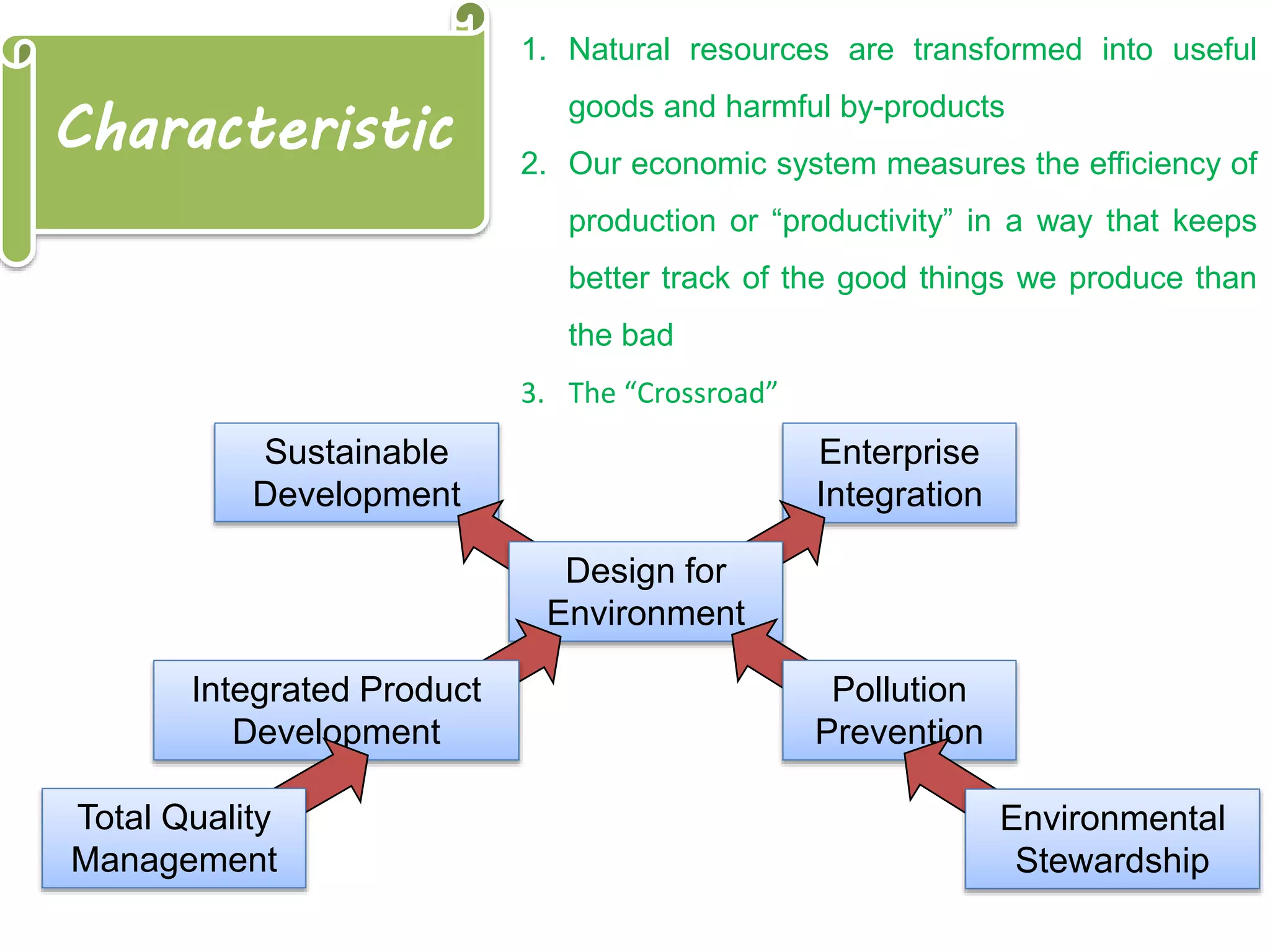
3. The “Crossroad”
Sustainable
Development
Enterprise
Integration
Design for
Environment
Pollution
Prevention
Integrated Product
Development
Environmental
Stewardship
Total Quality
Management
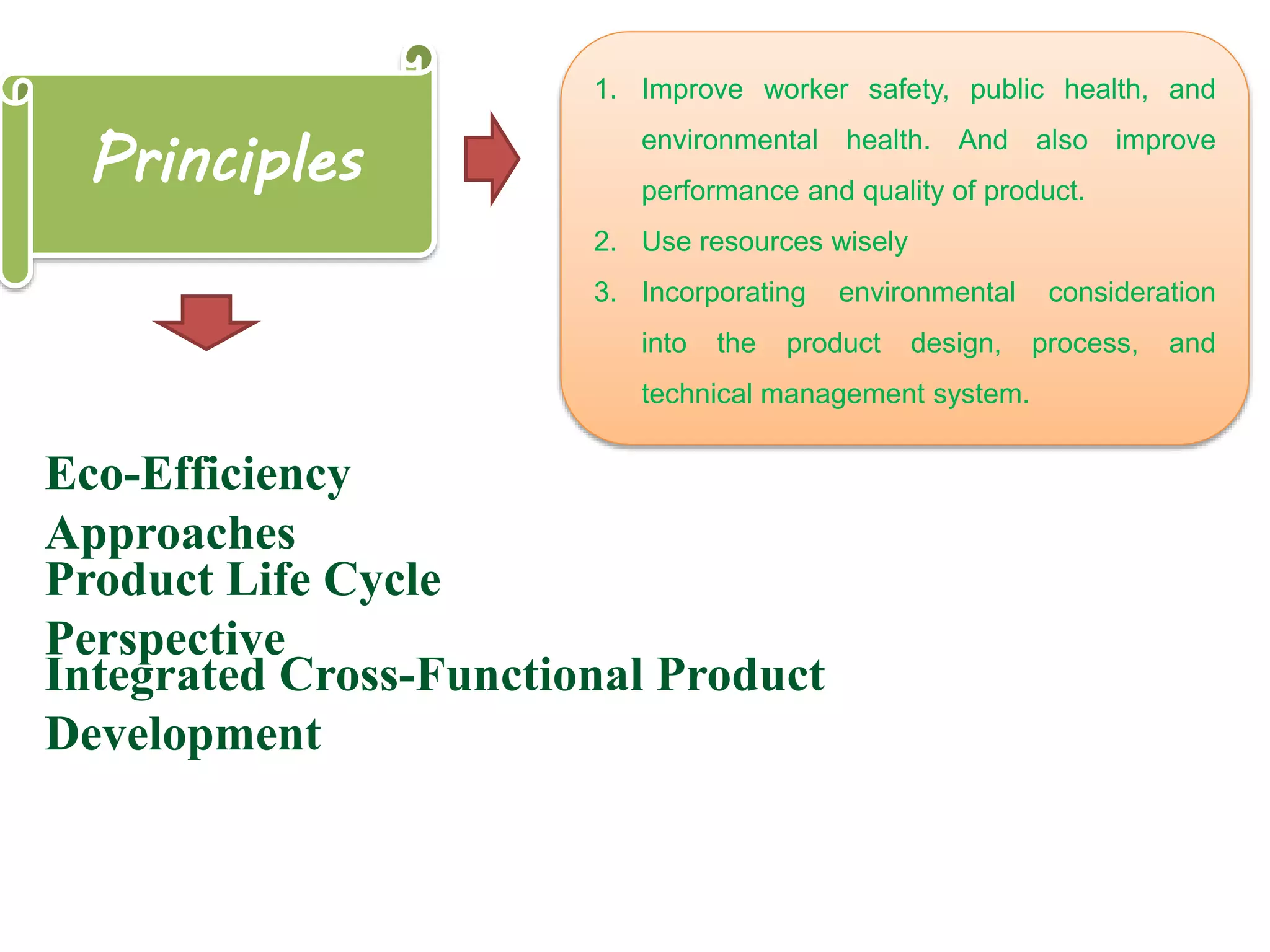
Principles
1. Improve worker safety, public health, and
environmental health. And also improve
performance and quality of product.
2. Use resources wisely
3. Incorporating environmental consideration
into the product design, process, and
technical management system.
Eco-Efficiency
Approaches
Product Life Cycle
Perspective
Integrated Cross-Functional Product
Development
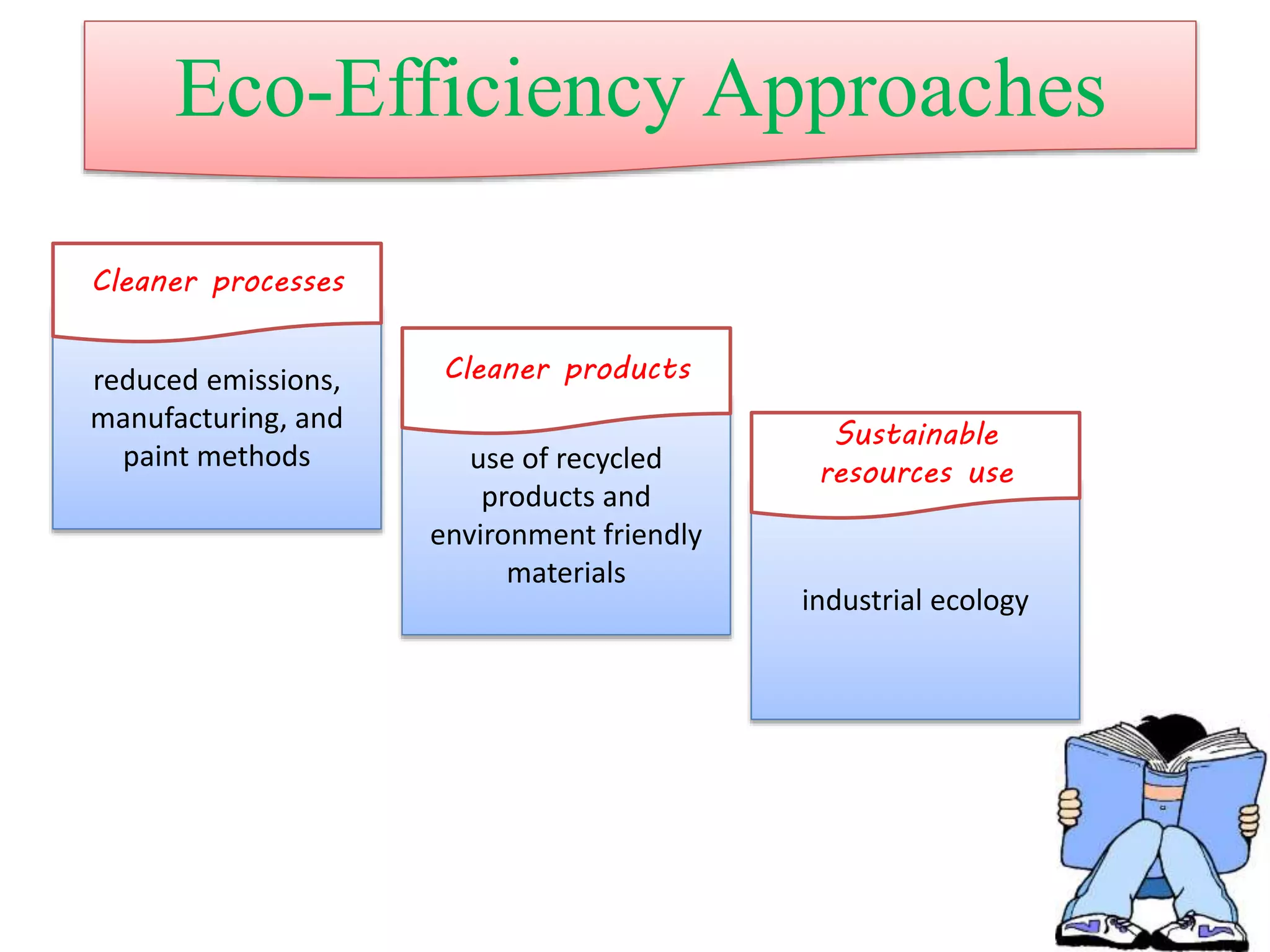
Eco-Efficiency Approaches
reduced emissions,
manufacturing, and
paint methods
Cleaner processes
use of recycled
products and
environment friendly
materials
Cleaner products
industrial ecology
Sustainable
resources use
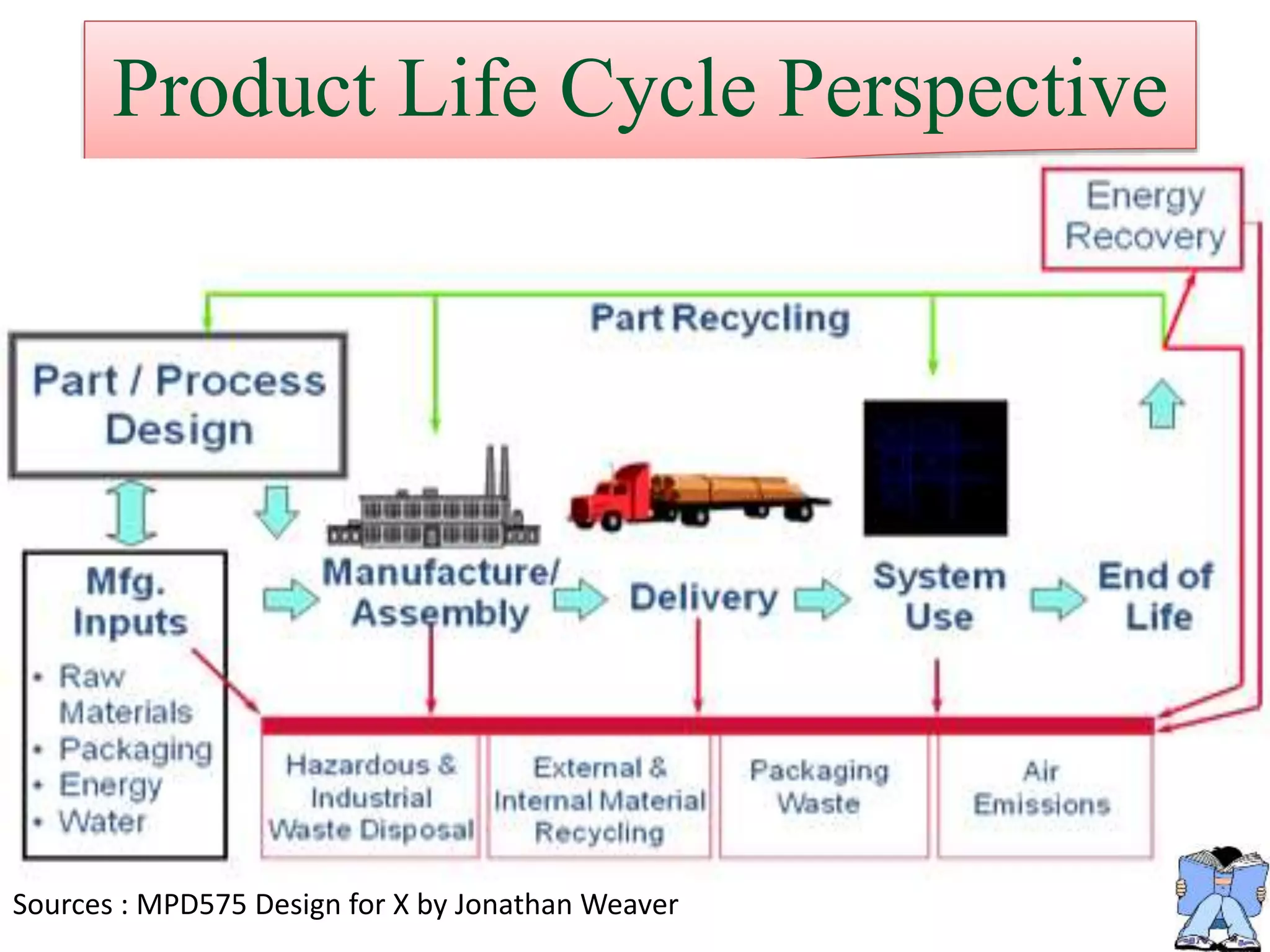
Product Life Cycle Perspective
Sources : MPD575 Design for X by Jonathan Weaver
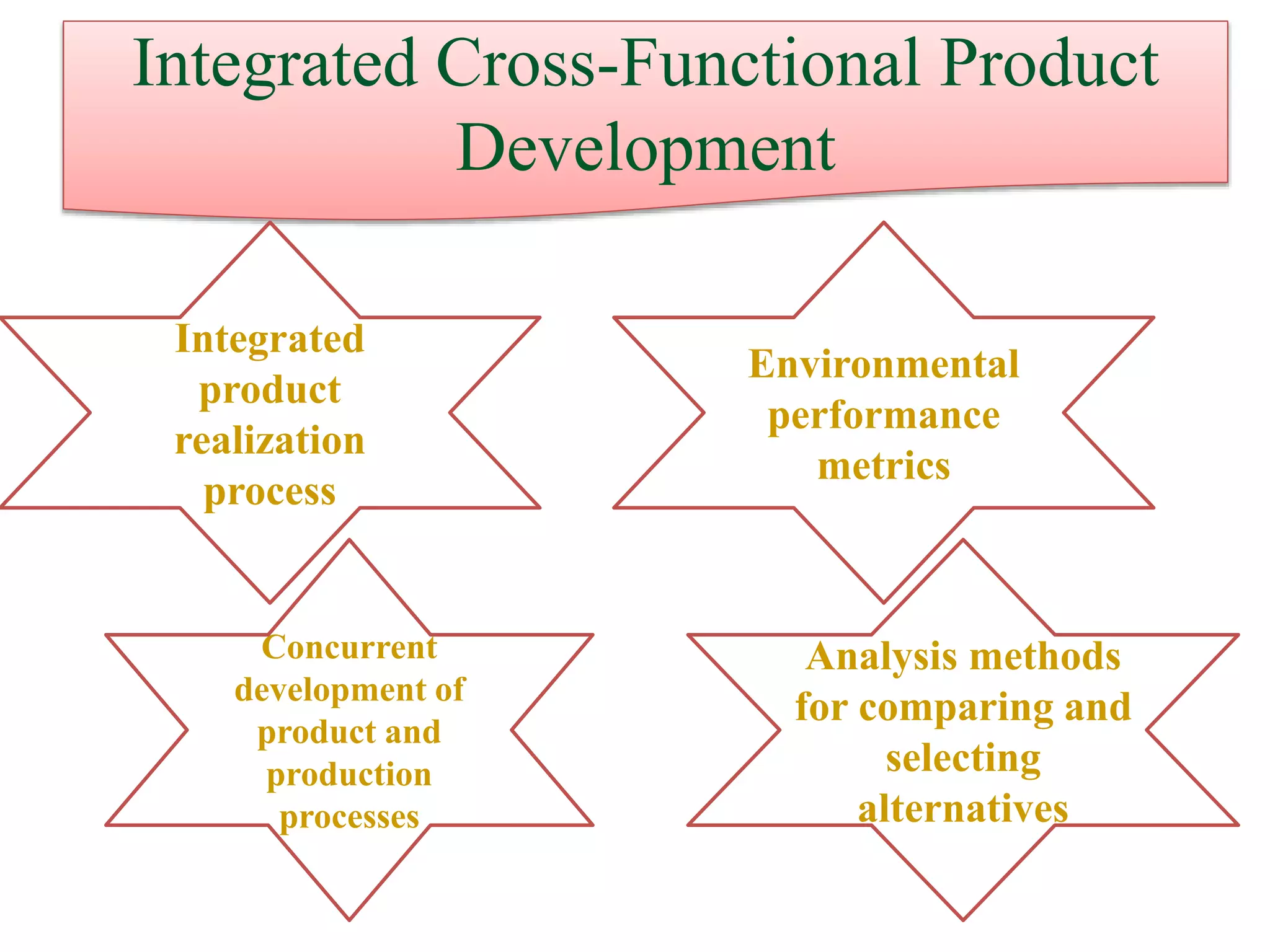
Integrated Cross-Functional Product
Development
Integrated
product
realization
process
Concurrent
development of
product and
production
processes
Environmental
performance
metrics
Analysis methods
for comparing and
selecting
alternatives
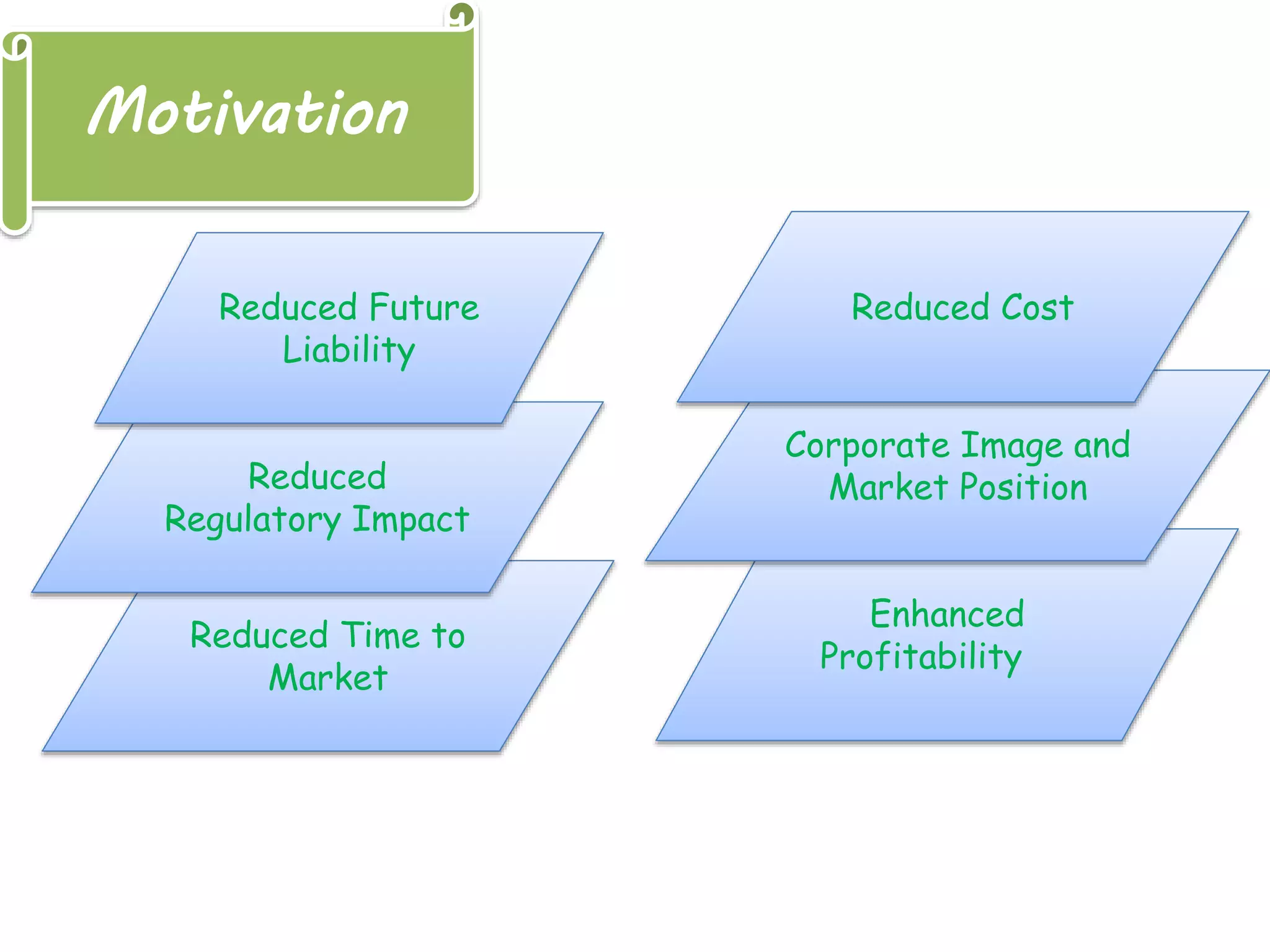
Enhanced
Profitability
Corporate Image and
Market Position
Reduced Time to
Market
Reduced
Regulatory Impact
Motivation
Reduced Future
Liability
Reduced Cost
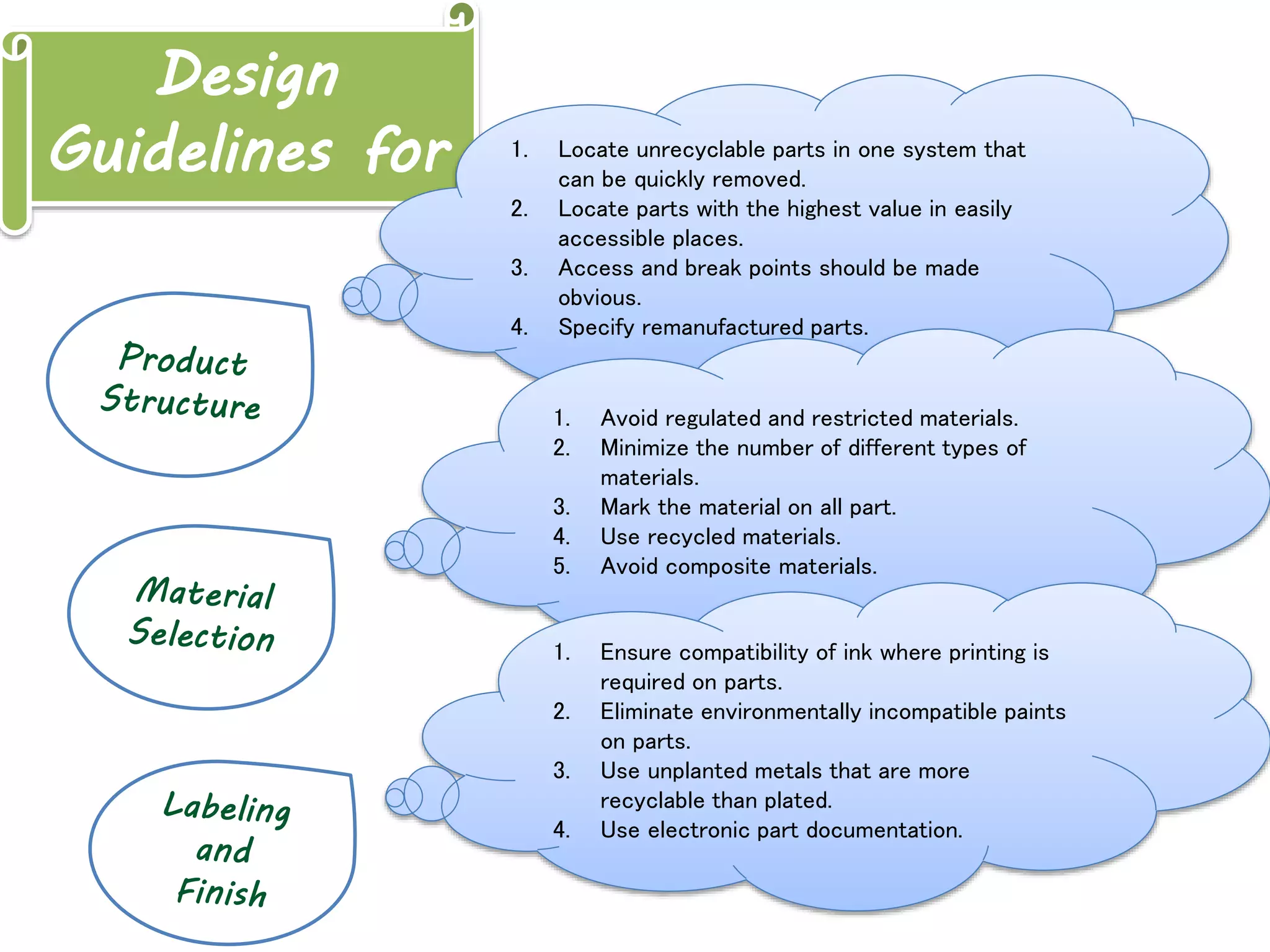
Design
Guidelines for 1. Locate unrecyclable parts in one system that
can be quickly removed.
2. Locate parts with the highest value in easily
accessible places.
3. Access and break points should be made
obvious.
4. Specify remanufactured parts.
1. Avoid regulated and restricted materials.
2. Minimize the number of different types of
materials.
3. Mark the material on all part.
4. Use recycled materials.
5. Avoid composite materials.
1. Ensure compatibility of ink where printing is
required on parts.
2. Eliminate environmentally incompatible paints
on parts.
3. Use unplanted metals that are more
recyclable than plated.
4. Use electronic part documentation.
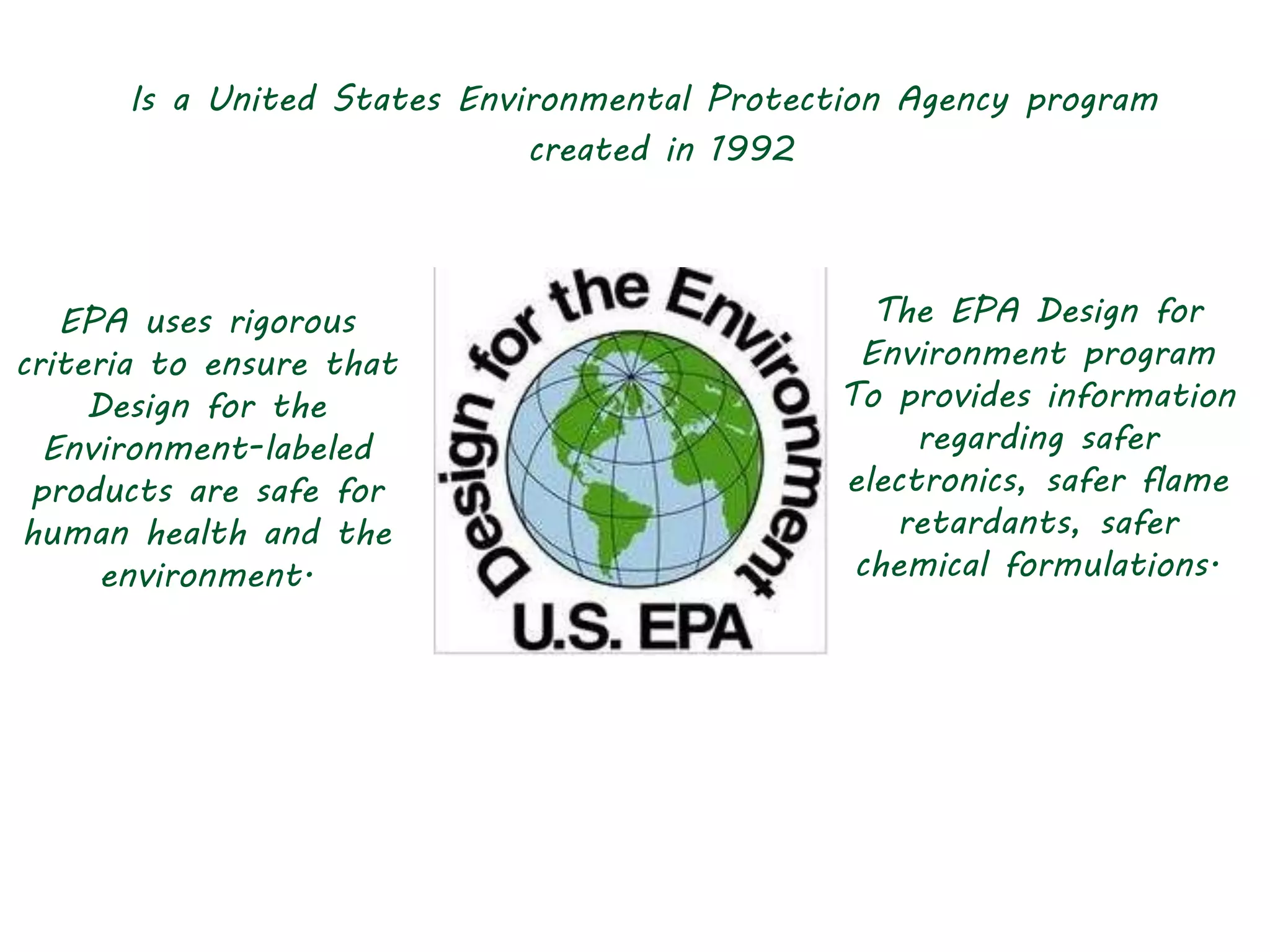
Is a United States Environmental Protection Agency program
created in 1992
The EPA Design for
Environment program
To provides information
regarding safer
electronics, safer flame
retardants, safer
chemical formulations.
EPA uses rigorous
criteria to ensure that
Design for the
Environment-labeled
products are safe for
human health and the
environment.
Successes
Xerox Corporation is engaged in the global
document market selling equipment and providing
document solutions including hardware, services and
software world-wide. The Company's activities
encompass developing, manufacturing, marketing,
servicing and financing of a complete range of
document processing products, solutions and
services designed to make organizations around the
world more productive.
 Goal – zero materials to landfill
 Set trends to reuse, recycle and remanufacture their products
 Take accountability for products to end-of-life
 New copiers have easily removed components
 Disposable fuser rolls now made re-usable
Successes
Their goal is to extend product life
beyond just production, and to use
reusable and recyclable products. This
means that IBM is currently working
on creating products that can be safely
disposed of at the end of its product
life. They are also reducing
consumption of energy to minimize
their carbon footprint
 Goals – reuse, recycle, less energy
 On/off power programming
 Coding of plastic parts for
recycle
 Improved acoustic foam removal
 Recycled plastic in many product lines
 Plastic kept free of paint & label
contamination
 Upgradeable printing systems
 Powder coating of components
Brand of
success use
Design your Dream !!
Nothing is impossible
Try and Do everything
Cause . . .
Never Give up!
The Dream will Be
Came True
T
H
A
N
K
S
By : Fitria Intan A. 105030200121014

Desaign for environment

  • 1.
    Environmental Management Fitria IntanA. 105030200121014 “DESIGN FOR ENVIRONMENT” ( DFE )
  • 2.
    DEFINITION Systematic approach toevaluate the consequences of the environmental impact of products and processes, and their impact on human health and the environment (Fiksel, 1996) A systematic consideration of design performance with respect to environmental, health, and safety objectives, over the full product and process life cycle (Jonathan Weaver). to minimize the environmental-economic cost to consumers
  • 3.
    3 Main GOALS 1. Promotinggreen cleaning and recognizing safer consumer and industrial and institutional products through safer product labeling. 2. Defining Best Practices in areas ranging from auto refinishing to nail salon safety. 3. Identifying safer chemicals, including life cycle considerations, through Alternatives Assessment. Implementation 1. Identification the environmental aspect 2. Providing the society for environment management 3. Evaluation the environment
  • 4.
    Characteristic 1. Natural resourcesare transformed into useful goods and harmful by-products 2. Our economic system measures the efficiency of production or “productivity” in a way that keeps better track of the good things we produce than the bad 3. The “Crossroad” Sustainable Development Enterprise Integration Design for Environment Pollution Prevention Integrated Product Development Environmental Stewardship Total Quality Management
  • 5.
    Principles 1. Improve workersafety, public health, and environmental health. And also improve performance and quality of product. 2. Use resources wisely 3. Incorporating environmental consideration into the product design, process, and technical management system. Eco-Efficiency Approaches Product Life Cycle Perspective Integrated Cross-Functional Product Development
  • 6.
    Eco-Efficiency Approaches reduced emissions, manufacturing,and paint methods Cleaner processes use of recycled products and environment friendly materials Cleaner products industrial ecology Sustainable resources use
  • 7.
    Product Life CyclePerspective Sources : MPD575 Design for X by Jonathan Weaver
  • 8.
    Integrated Cross-Functional Product Development Integrated product realization process Concurrent developmentof product and production processes Environmental performance metrics Analysis methods for comparing and selecting alternatives
  • 9.
    Enhanced Profitability Corporate Image and MarketPosition Reduced Time to Market Reduced Regulatory Impact Motivation Reduced Future Liability Reduced Cost
  • 10.
    Design Guidelines for 1.Locate unrecyclable parts in one system that can be quickly removed. 2. Locate parts with the highest value in easily accessible places. 3. Access and break points should be made obvious. 4. Specify remanufactured parts. 1. Avoid regulated and restricted materials. 2. Minimize the number of different types of materials. 3. Mark the material on all part. 4. Use recycled materials. 5. Avoid composite materials. 1. Ensure compatibility of ink where printing is required on parts. 2. Eliminate environmentally incompatible paints on parts. 3. Use unplanted metals that are more recyclable than plated. 4. Use electronic part documentation.
  • 11.
    Is a UnitedStates Environmental Protection Agency program created in 1992 The EPA Design for Environment program To provides information regarding safer electronics, safer flame retardants, safer chemical formulations. EPA uses rigorous criteria to ensure that Design for the Environment-labeled products are safe for human health and the environment.
  • 12.
    Successes Xerox Corporation isengaged in the global document market selling equipment and providing document solutions including hardware, services and software world-wide. The Company's activities encompass developing, manufacturing, marketing, servicing and financing of a complete range of document processing products, solutions and services designed to make organizations around the world more productive.  Goal – zero materials to landfill  Set trends to reuse, recycle and remanufacture their products  Take accountability for products to end-of-life  New copiers have easily removed components  Disposable fuser rolls now made re-usable
  • 13.
    Successes Their goal isto extend product life beyond just production, and to use reusable and recyclable products. This means that IBM is currently working on creating products that can be safely disposed of at the end of its product life. They are also reducing consumption of energy to minimize their carbon footprint  Goals – reuse, recycle, less energy  On/off power programming  Coding of plastic parts for recycle  Improved acoustic foam removal  Recycled plastic in many product lines  Plastic kept free of paint & label contamination  Upgradeable printing systems  Powder coating of components
  • 14.
  • 15.
    Design your Dream!! Nothing is impossible Try and Do everything Cause . . . Never Give up! The Dream will Be Came True T H A N K S By : Fitria Intan A. 105030200121014