Desensitisation Theory
Dylan Oakes
What is it?
 The theory suggests that we, as a general population, have become less sensitive
to things that are particularly meant to be sensitive.
 Things that can be included in this theory is violence, sexual content, horror or any
other shocking material.
 In recent times, more ‘shocking’ material has been allowed to be shown on TV.
Now, we have become ‘desensitised to this sensitive material.
 However, people may say that it has no direct contact on real life. People believe
that although we may be ‘desensitised’ to things we see in the media, we would
not be ‘desensitised’ to it in a real life situation as we know the content in the
media may not be real.
Applying this theory to a music magazine.
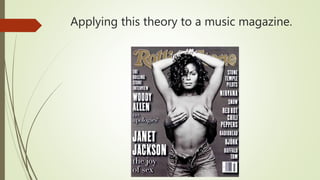
 This is an example of a music magazine that can be classed as ‘sensitive’ in a sexual
way towards certain viewers.
 If we applied this theory, it would indicate that the viewers wouldn’t be particularly
bothered about this sexual material as we see it that often.
 Additionally, the words ‘the joy of sex’ can also be seen as not acceptable,
particularly in past times. However, as the desensitisation theory suggests, we no
longer are sensitive to this kind of material.
 Due to modern day material we see everyday, this type of sexual material is just the
‘normal’ in todays society as we have been gradually made to accept this material
whether it is offensive or not.
Relations to other theories
 A theory which is fairly close to this theory is the hypodermic syringe/needle
model.
 This theory suggests that if something is said in the media then the public just
simply accept the idea, due to the heavy influences within the media.
 This relates to the desensitisation theory as if something is said/seen in the media
that is sensitive, people will just accept it and not consider it as sensitive material as
such.

Desensitisation theory

  • 1.
  • 2.
    What is it? The theory suggests that we, as a general population, have become less sensitive to things that are particularly meant to be sensitive.  Things that can be included in this theory is violence, sexual content, horror or any other shocking material.  In recent times, more ‘shocking’ material has been allowed to be shown on TV. Now, we have become ‘desensitised to this sensitive material.  However, people may say that it has no direct contact on real life. People believe that although we may be ‘desensitised’ to things we see in the media, we would not be ‘desensitised’ to it in a real life situation as we know the content in the media may not be real.
  • 3.
    Applying this theoryto a music magazine.
  • 4.
    Applying this theoryto a music magazine.  This is an example of a music magazine that can be classed as ‘sensitive’ in a sexual way towards certain viewers.  If we applied this theory, it would indicate that the viewers wouldn’t be particularly bothered about this sexual material as we see it that often.  Additionally, the words ‘the joy of sex’ can also be seen as not acceptable, particularly in past times. However, as the desensitisation theory suggests, we no longer are sensitive to this kind of material.  Due to modern day material we see everyday, this type of sexual material is just the ‘normal’ in todays society as we have been gradually made to accept this material whether it is offensive or not.
  • 5.
    Relations to othertheories  A theory which is fairly close to this theory is the hypodermic syringe/needle model.  This theory suggests that if something is said in the media then the public just simply accept the idea, due to the heavy influences within the media.  This relates to the desensitisation theory as if something is said/seen in the media that is sensitive, people will just accept it and not consider it as sensitive material as such.