Aim:

To understand the meaning, examples, studies
and application of the desensitisation theory
to the horror genre.
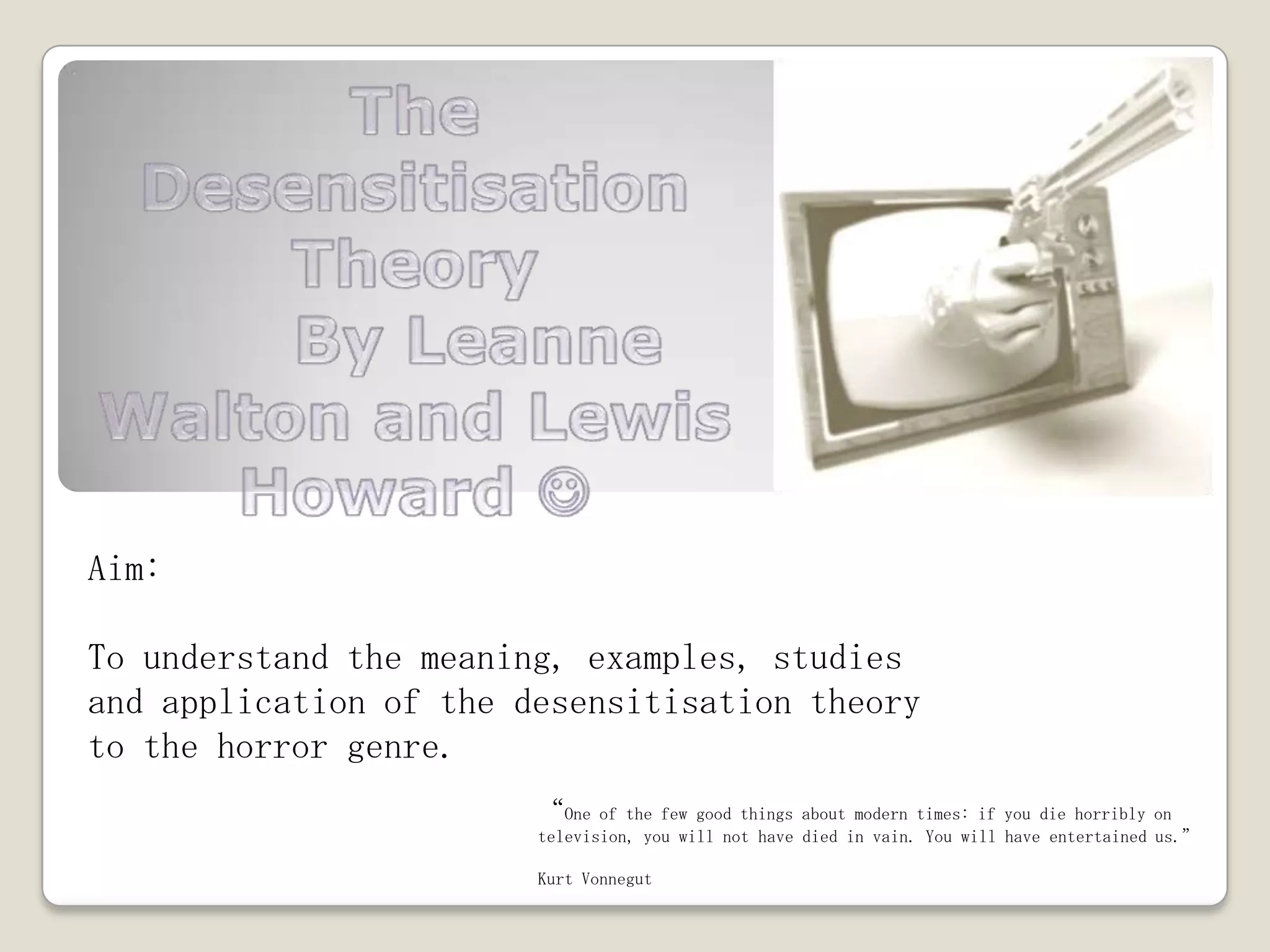
                        “One   of the few good things about modern times: if you die horribly on
                        television, you will not have died in vain. You will have entertained us.”

                        Kurt Vonnegut
Desensitisation

   The theory of a media audiences’ reactions
    growing weaker according to the
    level/amount of exposure to violence, death
    and sex.

   A decrease in fear and sensitivity to
    extremely aggressive behaviour and taboo
    subjects, and possible introduction to every
    day life.
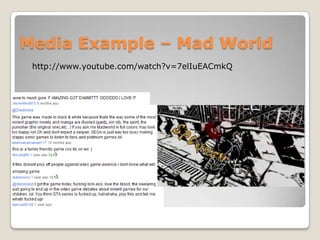
Media Example – Mad World
 http://www.youtube.com/watch?v=7elIuEACmkQ
Real Example – The Columbine
    High School Massacre
   1999 - Two senior students embarked on a massacre,
    killing 12 students and 1 teacher. They also injured 21
    other students directly, and three people were injured while
    attempting to escape. The pair then committed suicide. It
    is the fourth-deadliest school massacre in United States
    history.
   Provoked a debate about gun violence involving youths.
    Much discussion also centred on the nature of high school
    subcultures and bullying, as well as the role of violent
    movies and video games in American society.

   The shooting resulted in moral panic aimed at Goth culture,
    social outcasts, the gun culture amongst teenagers, violent
    films and music, teenage internet use, and violent video
    games.
How it relates to Horror!
   Horror movies a are prime examples of violence in
    the media since they usual involve a gruesome death
    scene. But as time went on horror films became more
    and more violent rather than focusing on atmosphere
    and tension but these days we’ve seen so much
    violence in horror films that it not longer shocks us.
    There have been many horror films that are dedicated
    to being as grotesque as possible like: saw. A
    nightmare on elm street, Friday the 13th etc, and
    because of we’ve some many films like the3se we’ve
    just become accustomed to this type of violence in
    movies.

    Watch the YouTube clip and decided whether of not it is to
    violent http://www.youtube.com/watch?v=6rFrxHEeP0s
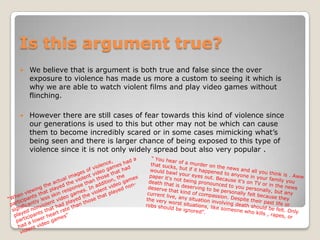
Is this argument true?
   We believe that is argument is both true and false since the over
    exposure to violence has made us more a custom to seeing it which is
    why we are able to watch violent films and play video games without
    flinching.

   However there are still cases of fear towards this kind of violence since
    our generations is used to this but other may not be which can cause
    them to become incredibly scared or in some cases mimicking what’s
    being seen and there is larger chance of being exposed to this type of
    violence since it is not only widely spread bout also very popular .
Relation to other theories
   The closest theory that we could relate this
    theory to was the hypodermic syringe model.
    This theory suggest that when something
    said by the media, it is simply accepted by
    the general public. This could relate
    desensitisation because if the media say
    something is violent or expose us to it, we
    simply accept this fact and as time goes on
    we become more and more accustomed to
    seeing or hearing about violence that the
    effect being to weaken.
Conclusion
   This theory suggesting that constant exposure to such accessible
    violence on a regular basis within the media, no longer makes
    such a strong emotional impact upon the audience, possibly
    causing them to also be insensitive towards violence in everyday
    life.
    Thousands of studies have looked at whether there is a link
    between exposure to media violence and violent behaviour. Over
    98% say yes. According to the American Academy of Paediatrics,
    "Extensive research evidence indicates that media violence can
    contribute to aggressive behaviour, desensitization to violence,
    nightmares, and fear of being harmed." Children and adults alike
    are becoming immune to the horror of violence, gradually accept
    violence as a way to solve problems, imitate violence they
    observe on TV, and identify with characters (victims or
    victimizers) they see on TV.

Desensitisation theory

  • 1.
    Aim: To understand themeaning, examples, studies and application of the desensitisation theory to the horror genre. “One of the few good things about modern times: if you die horribly on television, you will not have died in vain. You will have entertained us.” Kurt Vonnegut
  • 2.
    Desensitisation  The theory of a media audiences’ reactions growing weaker according to the level/amount of exposure to violence, death and sex.  A decrease in fear and sensitivity to extremely aggressive behaviour and taboo subjects, and possible introduction to every day life.
  • 3.
    Media Example –Mad World http://www.youtube.com/watch?v=7elIuEACmkQ
  • 4.
    Real Example –The Columbine High School Massacre  1999 - Two senior students embarked on a massacre, killing 12 students and 1 teacher. They also injured 21 other students directly, and three people were injured while attempting to escape. The pair then committed suicide. It is the fourth-deadliest school massacre in United States history.  Provoked a debate about gun violence involving youths. Much discussion also centred on the nature of high school subcultures and bullying, as well as the role of violent movies and video games in American society.  The shooting resulted in moral panic aimed at Goth culture, social outcasts, the gun culture amongst teenagers, violent films and music, teenage internet use, and violent video games.
  • 5.
    How it relatesto Horror!  Horror movies a are prime examples of violence in the media since they usual involve a gruesome death scene. But as time went on horror films became more and more violent rather than focusing on atmosphere and tension but these days we’ve seen so much violence in horror films that it not longer shocks us. There have been many horror films that are dedicated to being as grotesque as possible like: saw. A nightmare on elm street, Friday the 13th etc, and because of we’ve some many films like the3se we’ve just become accustomed to this type of violence in movies. Watch the YouTube clip and decided whether of not it is to violent http://www.youtube.com/watch?v=6rFrxHEeP0s
  • 6.
    Is this argumenttrue?  We believe that is argument is both true and false since the over exposure to violence has made us more a custom to seeing it which is why we are able to watch violent films and play video games without flinching.  However there are still cases of fear towards this kind of violence since our generations is used to this but other may not be which can cause them to become incredibly scared or in some cases mimicking what’s being seen and there is larger chance of being exposed to this type of violence since it is not only widely spread bout also very popular .
  • 7.
    Relation to othertheories  The closest theory that we could relate this theory to was the hypodermic syringe model. This theory suggest that when something said by the media, it is simply accepted by the general public. This could relate desensitisation because if the media say something is violent or expose us to it, we simply accept this fact and as time goes on we become more and more accustomed to seeing or hearing about violence that the effect being to weaken.
  • 8.
    Conclusion  This theory suggesting that constant exposure to such accessible violence on a regular basis within the media, no longer makes such a strong emotional impact upon the audience, possibly causing them to also be insensitive towards violence in everyday life. Thousands of studies have looked at whether there is a link between exposure to media violence and violent behaviour. Over 98% say yes. According to the American Academy of Paediatrics, "Extensive research evidence indicates that media violence can contribute to aggressive behaviour, desensitization to violence, nightmares, and fear of being harmed." Children and adults alike are becoming immune to the horror of violence, gradually accept violence as a way to solve problems, imitate violence they observe on TV, and identify with characters (victims or victimizers) they see on TV.