DERMATOPHYTES
PREPARED BY
MRS . SHIPRA PARAG SHRIVASTAVA
ASSOCIATE PROFESSOR
RAJEEV GANDHI COLLEGE, BHOPAL
INTRODUCTION
• dermatophytosis most species of trico phytin produce infections of hairs and nails
and skin important species of trichophyton are:
• C dermatomycosis are fungal infections that involve only superficial keratinized
tissue of the body: skin, hair and nails.
• this cutaneous mycourses are most common fungal infections of men and are
popularly called taenia or ringworm.
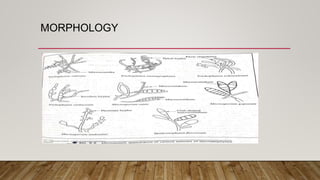
MORPHOLOGY
DERMATOPHYTES SPECIES
• The infection caused by dermatophytes is known as dermatomycosis.
• Causative agents of dermatomycoses are collectively called dermatophytoses.
• About 40 species of dermatophytes are known to cause infections in man and
animals.
• They belong to 3 genera:-
• 1. Trichophyton
• 2. Microsporum
• 3. Epidermophyton
CONTINUE
• The genus trichophyton is capable of invading the hair skin and nails.
• The genus microsporum involves the hair and skin.
• The genus epidermophyton the skin and nails involved.
CLINICAL DISEASE
• Dermatophytes grow only in the keratinized layers of the skin and its
appendages.
• They utilise keratin as a source of nitrogen and are usually in capable of
penetrating into the deeper, living tissue.
• The lesions caused by dermatophytes are referred to as tinea.
CONTINUE
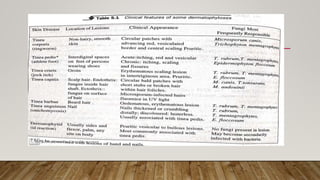
In gross appearance, the legend shows and outer Ring of an active, progressive
infection with Central healing region.
The body sites affected include scalp and hair(tenia capitis), beard (tinea barbae),
body (tinea corporis), food (tinea pedis ) ,nail (tinea unguinum), shows features of
some ringworm infections and their causative agents.
CONTINUE
• The ringworm infections have a world wide distribution.
• The infections can be acquired from :
• i. Man to man (anthropophilic ) e.g. Trichophyton rubrum ,Micrsporum audouinii,
or Epidermophyton floccosum.
• ii. Animal to man ( zoophilic) e.g.Microsporum canis , Trichophyton verucosum .
• iii. Soil to man (geophilic).e.g. Micrsporum gypseum, trichophyton ajelloi.
CLINICAL FEATURES
• Itchy ,red scaly ,patch like lesions that spread outwards leaving a pale ,healed
centre ; chronic nail infection produces discoloration and thickening ; scalp
infection is often associated with hair loss and scarring.
• Clinical diagnostic labels are based on the site of infection (e.g. tinea
capitis),head and scalp ;tinea corporis,trunck lesions).
• Lesions are rarely painful ,but zoophilic species produce an intense inflammatory
reaction with pustular lesions or an inflamed swelling (kerion ).
TRANSMISSION OF DISEASE
LABORATORY DIAGNOSIS
• Specimen:-
• Skin scrapings
• Nail scraping or fragments
• Hair
METHODOLOGY
• Microscopic methods
• Culture technique
• Biochemical testing
• Sequencing of the 18 S rRNA Gene.
1. MICROSCOPIC METHODS
• 1. Direct KOH preparation:-
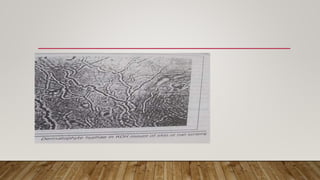
in the KOH mount of a properly digested skin scraping or nails fragments , the
fungus appears as hyaline septate hyphae bof uniform width (3-15 micrometer)
which may be associated with chains of arthroconidia.
The cave which Mount of infected hairs may show two types of infections.
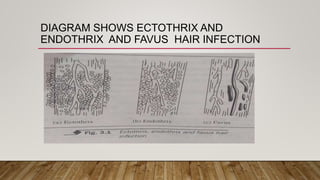
The infection may be ectothrix and endothrix .
In ectothrix , arthroconidia appears on the periphery of the hair shaft ,or endothrix
,when the arthroconidia are seen within the hair shaft .
DIAGRAM SHOWS ECTOTHRIX AND
ENDOTHRIX AND FAVUS HAIR INFECTION
CONTINUE
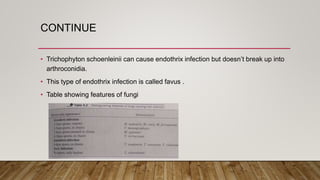
• Trichophyton schoenleinii can cause endothrix infection but doesn’t break up into
arthroconidia.
• This type of endothrix infection is called favus .
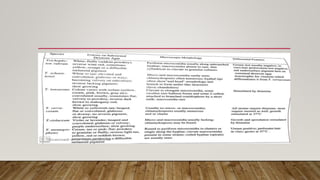
• Table showing features of fungi
CULTURE TECHNIQUE
• Inoculate the specimen on sabouraud’s agar plates with or without cycloheximide
and chloramphenicol .
• Incubate the culture at 22-26 degree celscuis , examining every 2-3 days for up to
4-6 weeks .
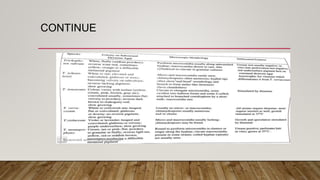
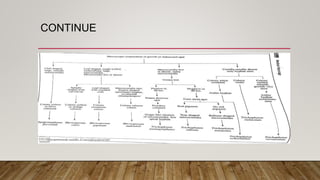
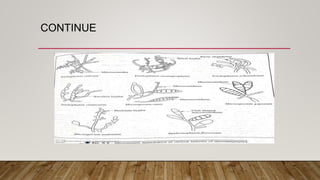
• Identify the isolated fungus by colonial microscopic morphology.
CONTINUE
CONTINUE
CONTINUE

Dermatophytes , morphology, lifecycle and lab diagnosis

  • 1.
    DERMATOPHYTES PREPARED BY MRS .SHIPRA PARAG SHRIVASTAVA ASSOCIATE PROFESSOR RAJEEV GANDHI COLLEGE, BHOPAL
  • 2.
    INTRODUCTION • dermatophytosis mostspecies of trico phytin produce infections of hairs and nails and skin important species of trichophyton are: • C dermatomycosis are fungal infections that involve only superficial keratinized tissue of the body: skin, hair and nails. • this cutaneous mycourses are most common fungal infections of men and are popularly called taenia or ringworm.
  • 3.
  • 4.
    DERMATOPHYTES SPECIES • Theinfection caused by dermatophytes is known as dermatomycosis. • Causative agents of dermatomycoses are collectively called dermatophytoses. • About 40 species of dermatophytes are known to cause infections in man and animals. • They belong to 3 genera:- • 1. Trichophyton • 2. Microsporum • 3. Epidermophyton
  • 5.
    CONTINUE • The genustrichophyton is capable of invading the hair skin and nails. • The genus microsporum involves the hair and skin. • The genus epidermophyton the skin and nails involved.
  • 6.
    CLINICAL DISEASE • Dermatophytesgrow only in the keratinized layers of the skin and its appendages. • They utilise keratin as a source of nitrogen and are usually in capable of penetrating into the deeper, living tissue. • The lesions caused by dermatophytes are referred to as tinea.
  • 7.
    CONTINUE In gross appearance,the legend shows and outer Ring of an active, progressive infection with Central healing region. The body sites affected include scalp and hair(tenia capitis), beard (tinea barbae), body (tinea corporis), food (tinea pedis ) ,nail (tinea unguinum), shows features of some ringworm infections and their causative agents.
  • 9.
    CONTINUE • The ringworminfections have a world wide distribution. • The infections can be acquired from : • i. Man to man (anthropophilic ) e.g. Trichophyton rubrum ,Micrsporum audouinii, or Epidermophyton floccosum. • ii. Animal to man ( zoophilic) e.g.Microsporum canis , Trichophyton verucosum . • iii. Soil to man (geophilic).e.g. Micrsporum gypseum, trichophyton ajelloi.
  • 10.
    CLINICAL FEATURES • Itchy,red scaly ,patch like lesions that spread outwards leaving a pale ,healed centre ; chronic nail infection produces discoloration and thickening ; scalp infection is often associated with hair loss and scarring. • Clinical diagnostic labels are based on the site of infection (e.g. tinea capitis),head and scalp ;tinea corporis,trunck lesions). • Lesions are rarely painful ,but zoophilic species produce an intense inflammatory reaction with pustular lesions or an inflamed swelling (kerion ).
  • 11.
  • 12.
    LABORATORY DIAGNOSIS • Specimen:- •Skin scrapings • Nail scraping or fragments • Hair
  • 13.
    METHODOLOGY • Microscopic methods •Culture technique • Biochemical testing • Sequencing of the 18 S rRNA Gene.
  • 14.
    1. MICROSCOPIC METHODS •1. Direct KOH preparation:- in the KOH mount of a properly digested skin scraping or nails fragments , the fungus appears as hyaline septate hyphae bof uniform width (3-15 micrometer) which may be associated with chains of arthroconidia. The cave which Mount of infected hairs may show two types of infections. The infection may be ectothrix and endothrix . In ectothrix , arthroconidia appears on the periphery of the hair shaft ,or endothrix ,when the arthroconidia are seen within the hair shaft .
  • 15.
    DIAGRAM SHOWS ECTOTHRIXAND ENDOTHRIX AND FAVUS HAIR INFECTION
  • 16.
    CONTINUE • Trichophyton schoenleiniican cause endothrix infection but doesn’t break up into arthroconidia. • This type of endothrix infection is called favus . • Table showing features of fungi
  • 18.
    CULTURE TECHNIQUE • Inoculatethe specimen on sabouraud’s agar plates with or without cycloheximide and chloramphenicol . • Incubate the culture at 22-26 degree celscuis , examining every 2-3 days for up to 4-6 weeks . • Identify the isolated fungus by colonial microscopic morphology.
  • 19.
  • 21.
  • 22.