
-Meaning 
-Depreciable assets 
-Factors causing depreciation 
-The need and objective of providing depreciation 
-Basics factor to be known before calculating depreciation 
-Methods of depreciation 
-Straight line method &written down value method
Meaning- 
Depreciation may be described as 
a permanent, continuing and 
gradual shrinkage in the value of fixed 
assets. It is a fall in the quality, or value of 
fixed asset. The net result of an 
depreciation is that sooner or later the 
asset will become useless.
1. Used during more than one year 
2. Have a limited useful life 
3. Are held by an enterprise for use in : 
-the production or supply of goods and 
services 
-for renting to others 
-for administrative purposes 
-not for the purpose sale in the 
ordinary course of business.
1. Wear and tear due to actual use 
2. Efflux of time 
3. Obsolescence 
4. Accident 
5. Fall in market price
1. Depreciation means expiration of the 
cost of the fixed asset, concerned 
during the period for which accounts 
are being prepared. 
2. To continue to show the fixed assets at 
their original worth in the balance sheet. 
3. The amount debited in the profit and 
loss a/c are retained in the business.
1. Cost of the assets 
2. The estimated residual or scrap value at 
the end of it’s life 
3. The estimated numbers of the years of 
it’s life
1. Straight line method 
2. Written down value method 
3. Annuity method 
4. Insurance fund method 
5. Depreciation fund method 
6. Sum of digits method 
7. Revaluation method 
8. Depletion method 
9. Machine hour rate method 
10. Repair provision method
This method is based on the assumption 
of equal usage of the asset over it’s 
entire useful life. It is also called fixed 
installment method because the amount 
of depreciation remains constant from 
year to year over the useful life of the 
asset. According to the method ,a fixed 
and an equal amount is changed as 
depreciation in the every accounting 
period during the lifetime of an asset.
25000 
20000 
15000 
10000 
5000 
1000 
(Rs) 0 
2000 2001 2002 2003 2004 2005 (year) 
depreciation
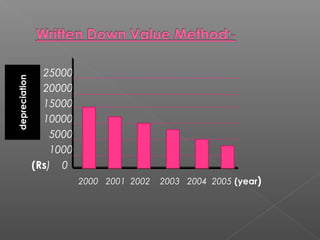
Under this method, depreciation is 
charged on the book value of the asset. 
Since book value keeps on reducing by 
the annual charge of depreciation, it is 
also known as reducing balance 
method. The amount of depreciation 
reduce year after year.
25000 
20000 
15000 
10000 
5000 
1000 
(Rs) 0 
2000 2001 2002 2003 2004 2005 (year) 
depreciation
- N.C SHUKLA,S.C GUPTA,P.S GREWAL ADVANCED 
ACCOUNTS,2008,S C CHAND 
- ASHOK BANERJEE,FINANCIAL 
ACCOUNTING,2005,EXCEL BOOKS
Depreciation

Depreciation

  • 2.
    -Meaning -Depreciable assets -Factors causing depreciation -The need and objective of providing depreciation -Basics factor to be known before calculating depreciation -Methods of depreciation -Straight line method &written down value method
  • 3.
    Meaning- Depreciation maybe described as a permanent, continuing and gradual shrinkage in the value of fixed assets. It is a fall in the quality, or value of fixed asset. The net result of an depreciation is that sooner or later the asset will become useless.
  • 4.
    1. Used duringmore than one year 2. Have a limited useful life 3. Are held by an enterprise for use in : -the production or supply of goods and services -for renting to others -for administrative purposes -not for the purpose sale in the ordinary course of business.
  • 5.
    1. Wear andtear due to actual use 2. Efflux of time 3. Obsolescence 4. Accident 5. Fall in market price
  • 6.
    1. Depreciation meansexpiration of the cost of the fixed asset, concerned during the period for which accounts are being prepared. 2. To continue to show the fixed assets at their original worth in the balance sheet. 3. The amount debited in the profit and loss a/c are retained in the business.
  • 7.
    1. Cost ofthe assets 2. The estimated residual or scrap value at the end of it’s life 3. The estimated numbers of the years of it’s life
  • 8.
    1. Straight linemethod 2. Written down value method 3. Annuity method 4. Insurance fund method 5. Depreciation fund method 6. Sum of digits method 7. Revaluation method 8. Depletion method 9. Machine hour rate method 10. Repair provision method
  • 9.
    This method isbased on the assumption of equal usage of the asset over it’s entire useful life. It is also called fixed installment method because the amount of depreciation remains constant from year to year over the useful life of the asset. According to the method ,a fixed and an equal amount is changed as depreciation in the every accounting period during the lifetime of an asset.
  • 10.
    25000 20000 15000 10000 5000 1000 (Rs) 0 2000 2001 2002 2003 2004 2005 (year) depreciation
  • 11.
    Under this method,depreciation is charged on the book value of the asset. Since book value keeps on reducing by the annual charge of depreciation, it is also known as reducing balance method. The amount of depreciation reduce year after year.
  • 12.
    25000 20000 15000 10000 5000 1000 (Rs) 0 2000 2001 2002 2003 2004 2005 (year) depreciation
  • 13.
    - N.C SHUKLA,S.CGUPTA,P.S GREWAL ADVANCED ACCOUNTS,2008,S C CHAND - ASHOK BANERJEE,FINANCIAL ACCOUNTING,2005,EXCEL BOOKS