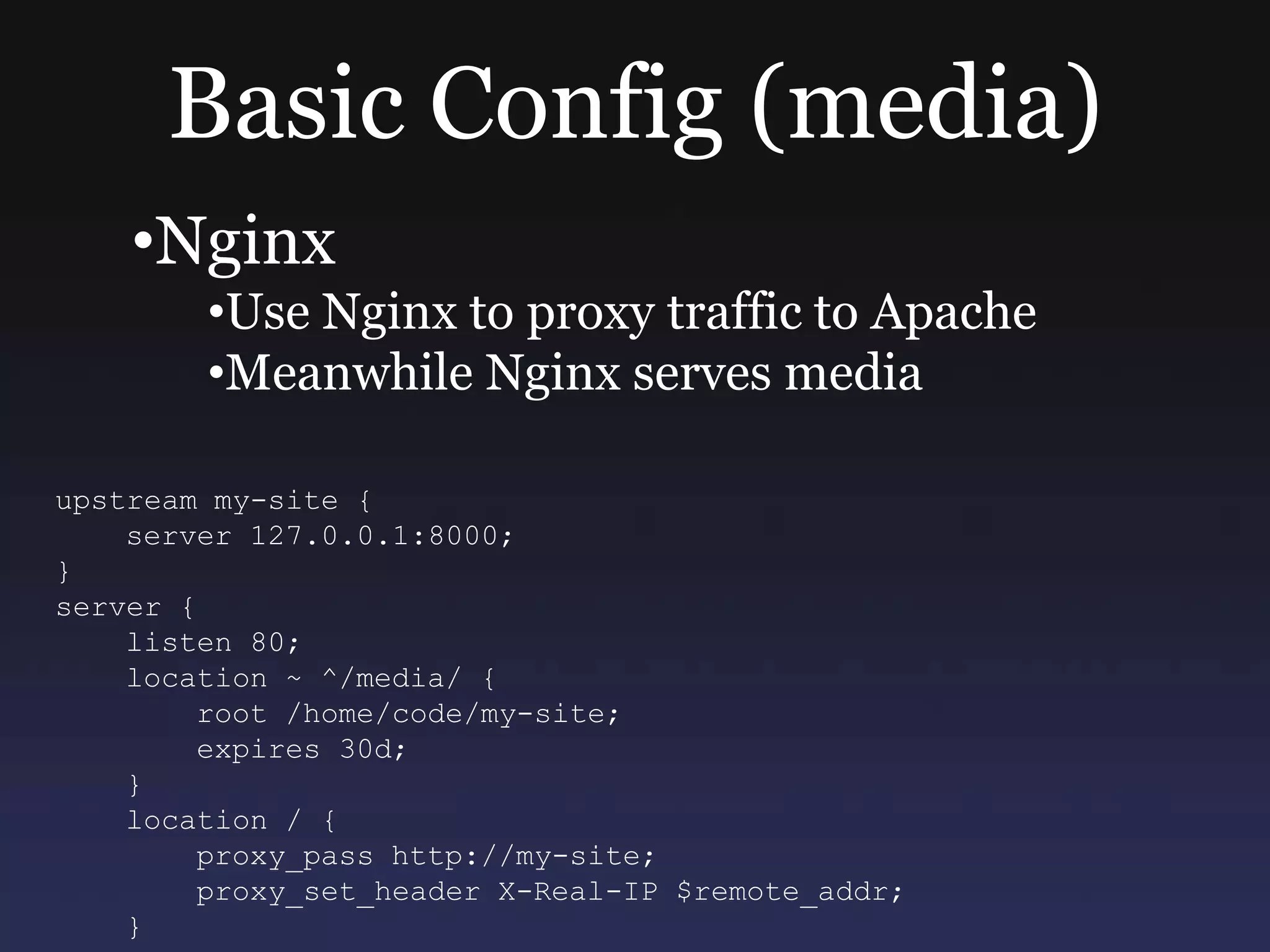
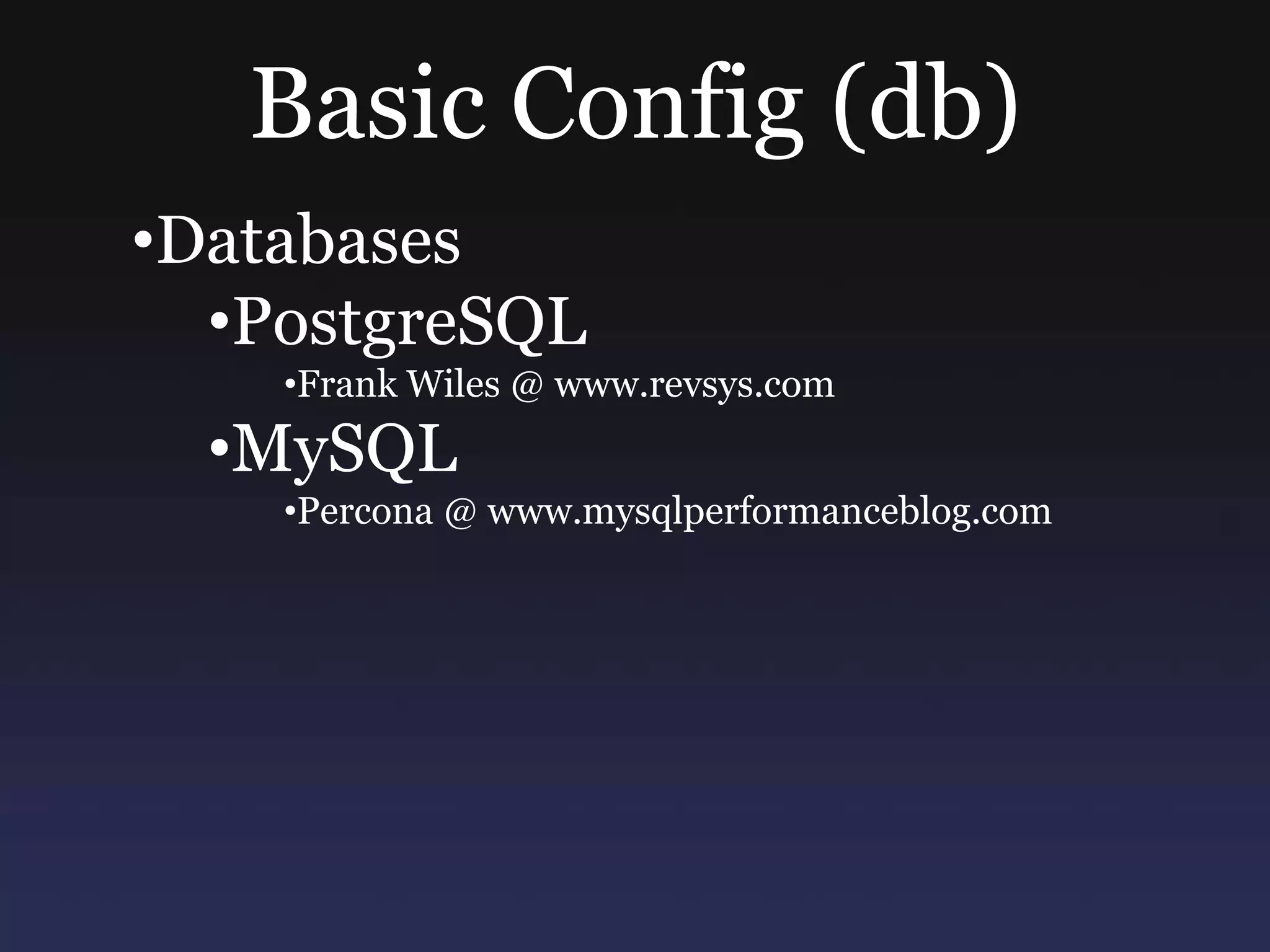
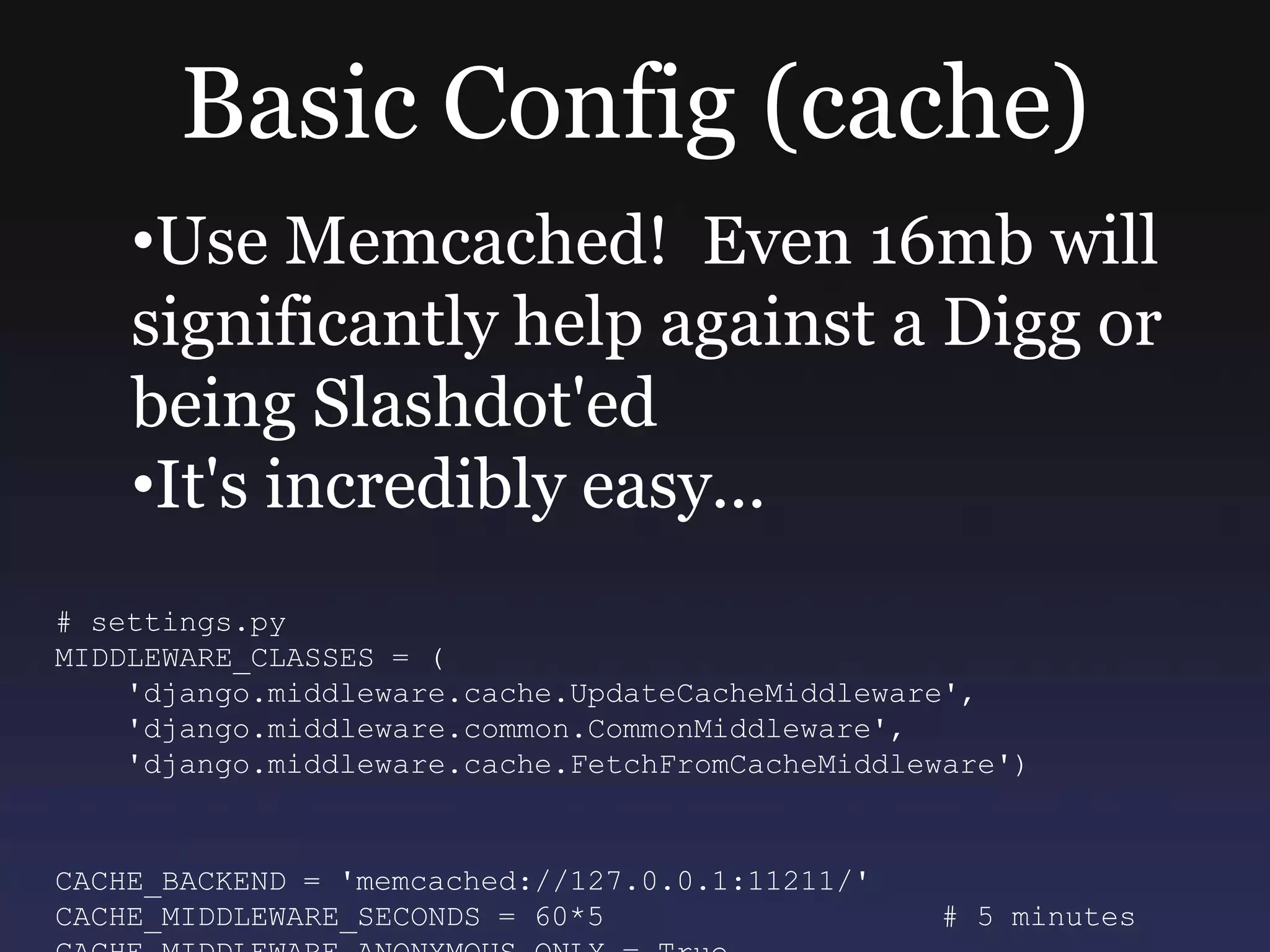
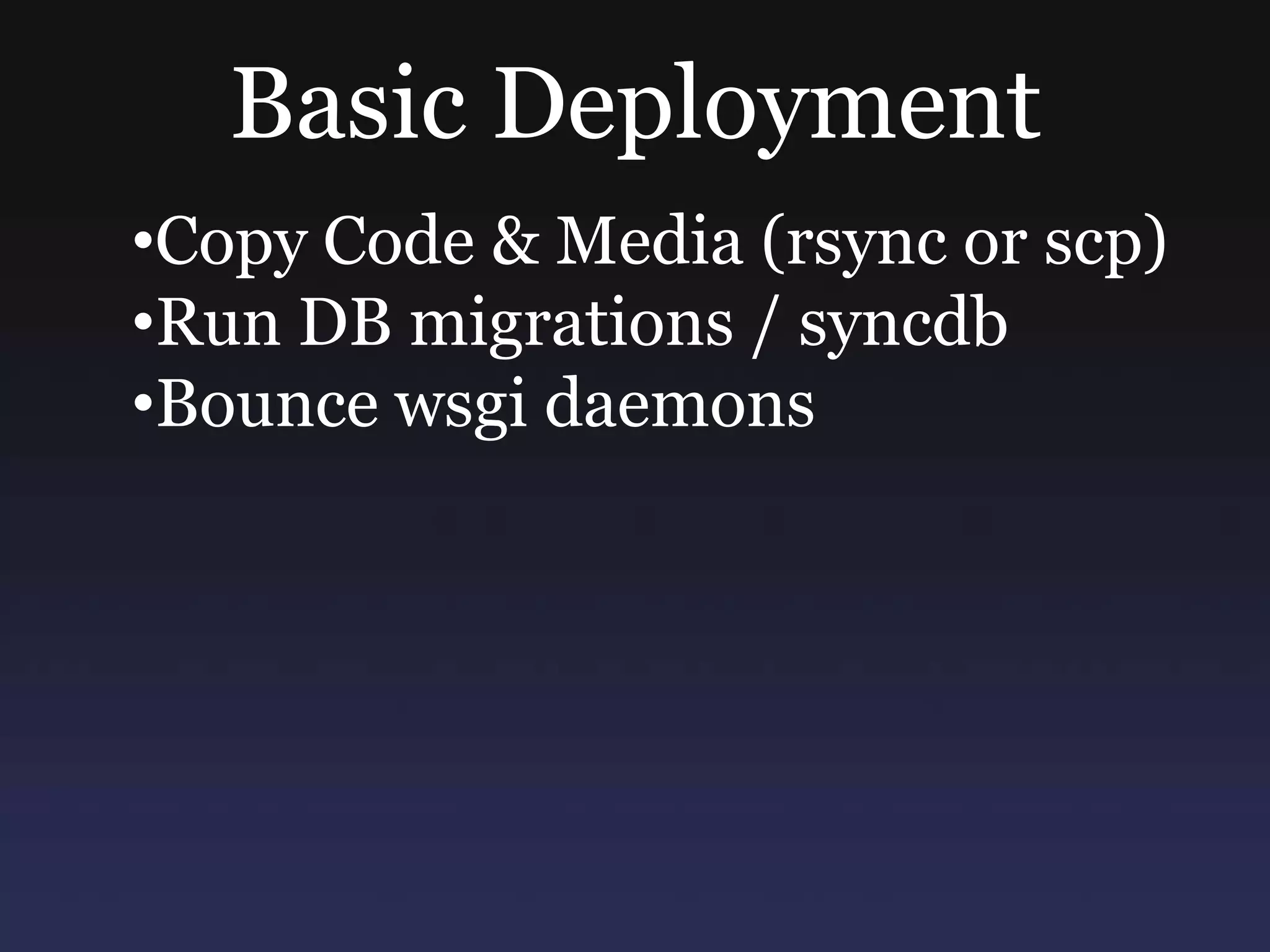
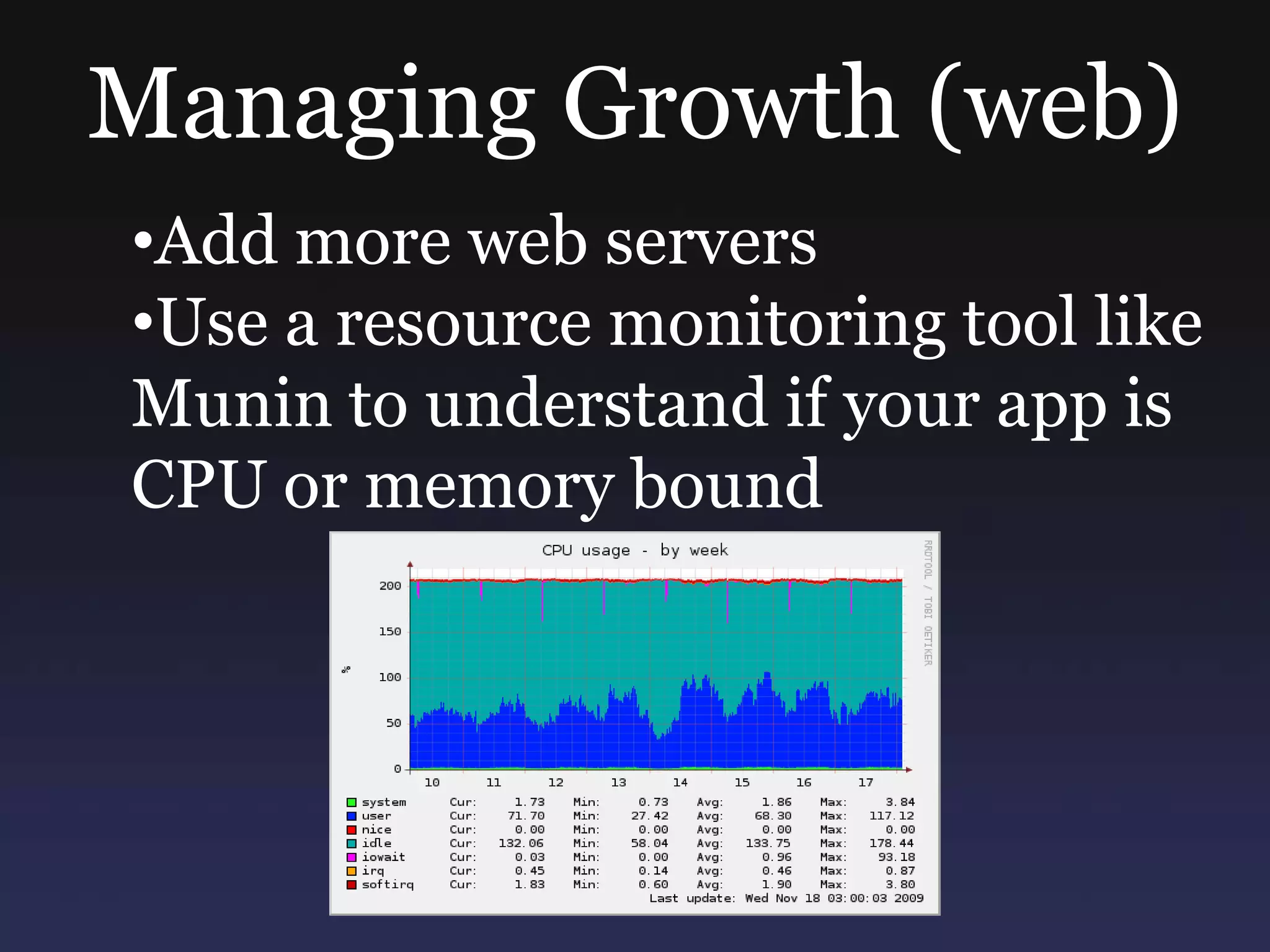
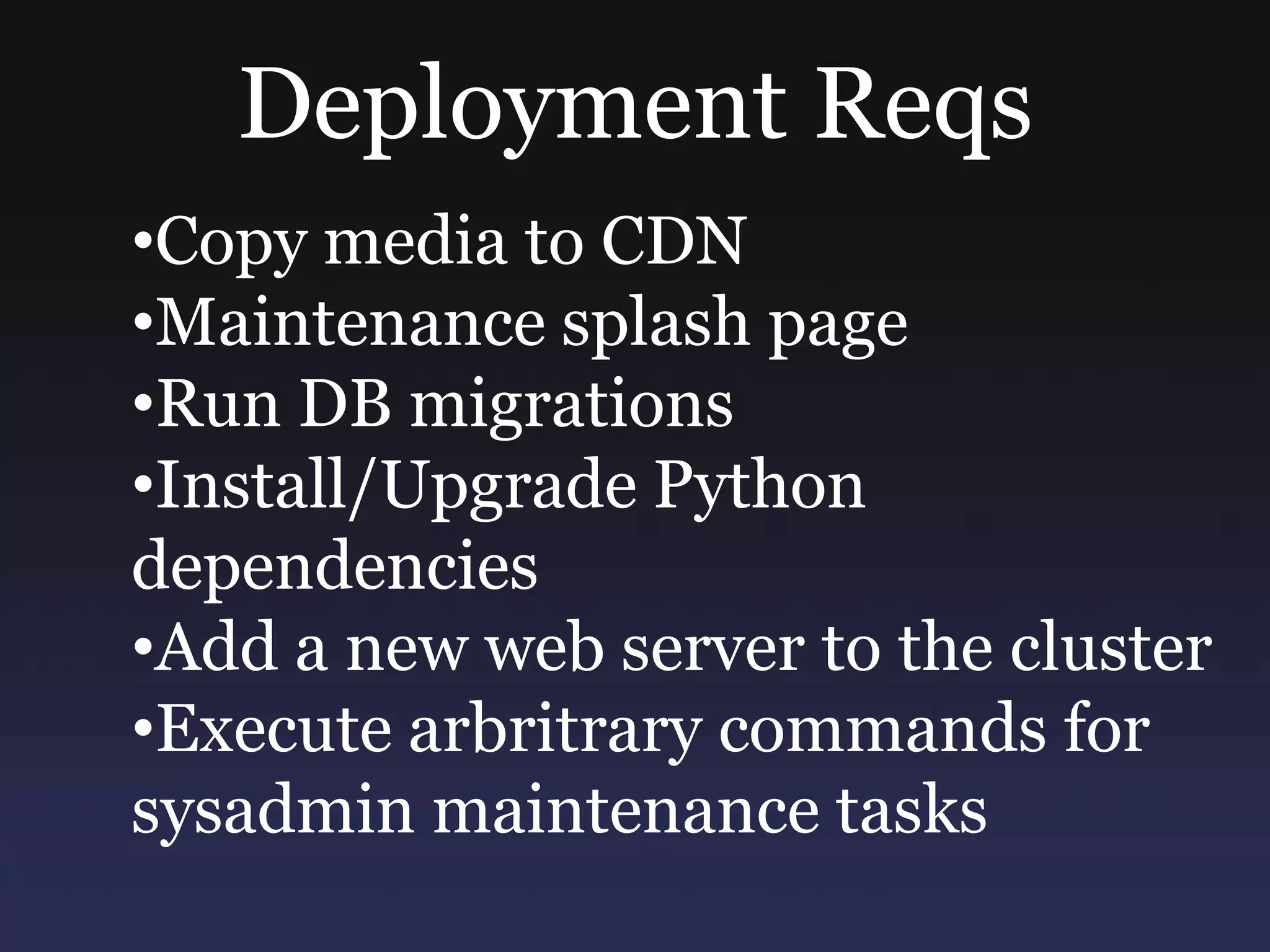
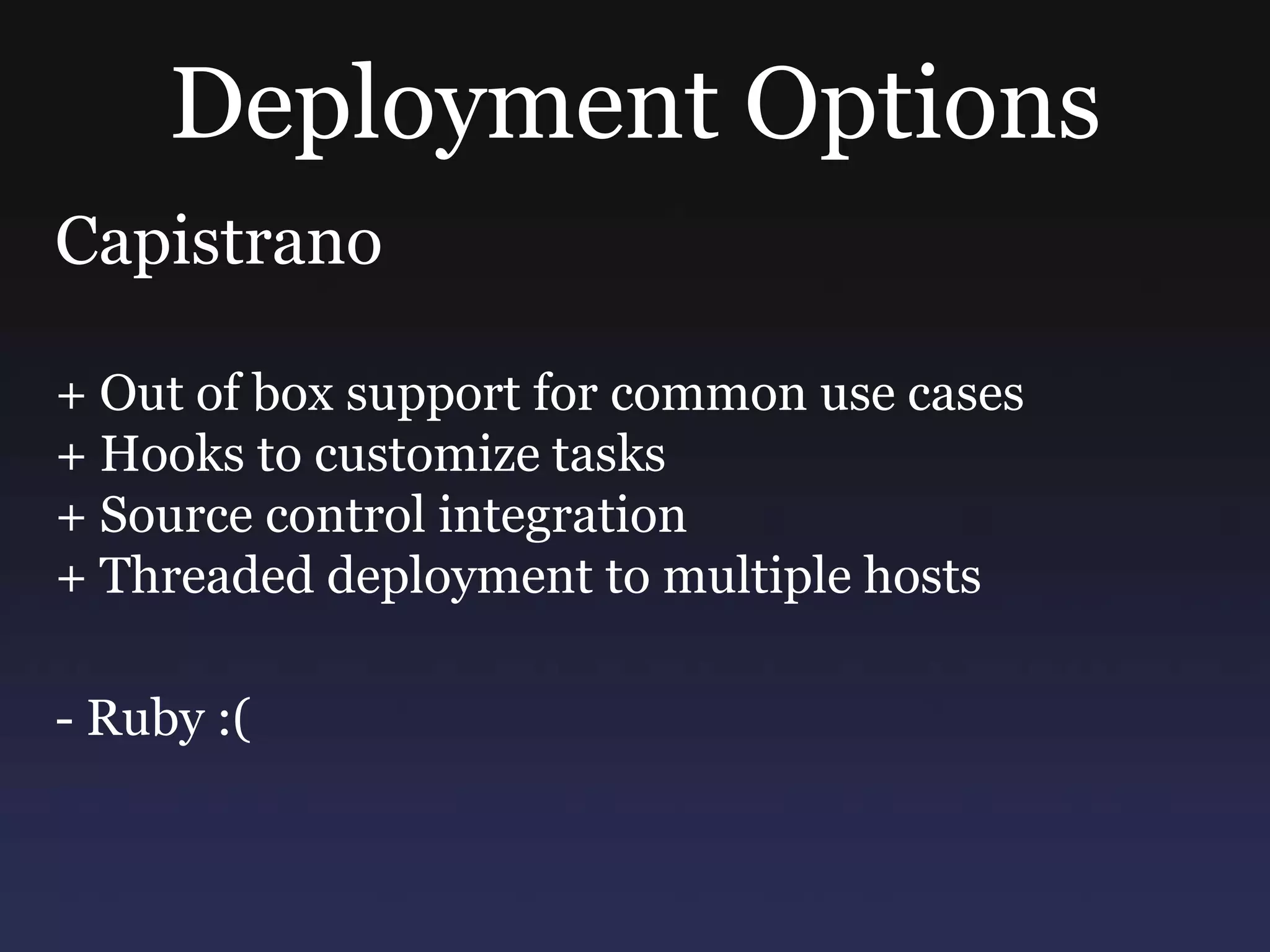
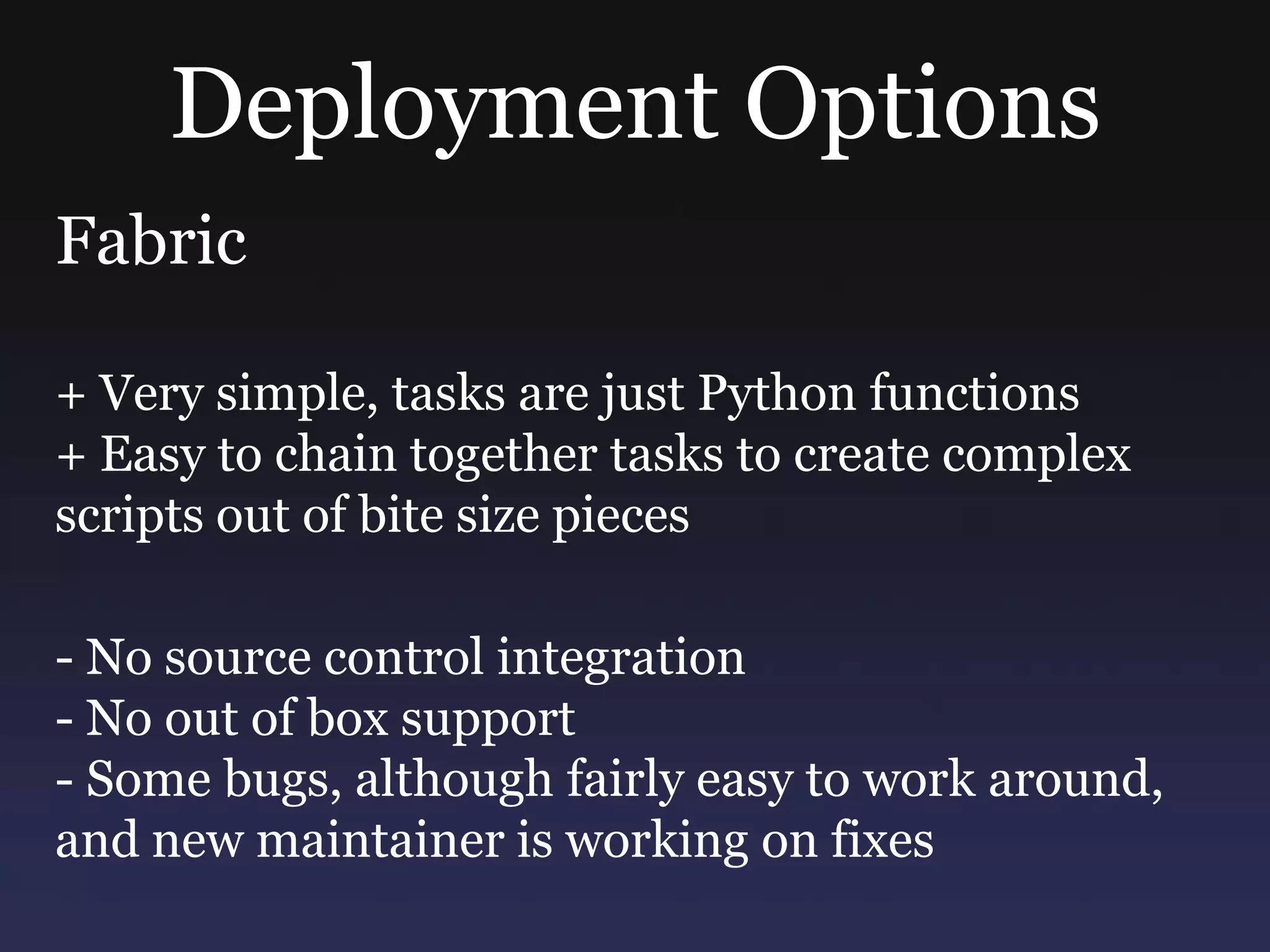
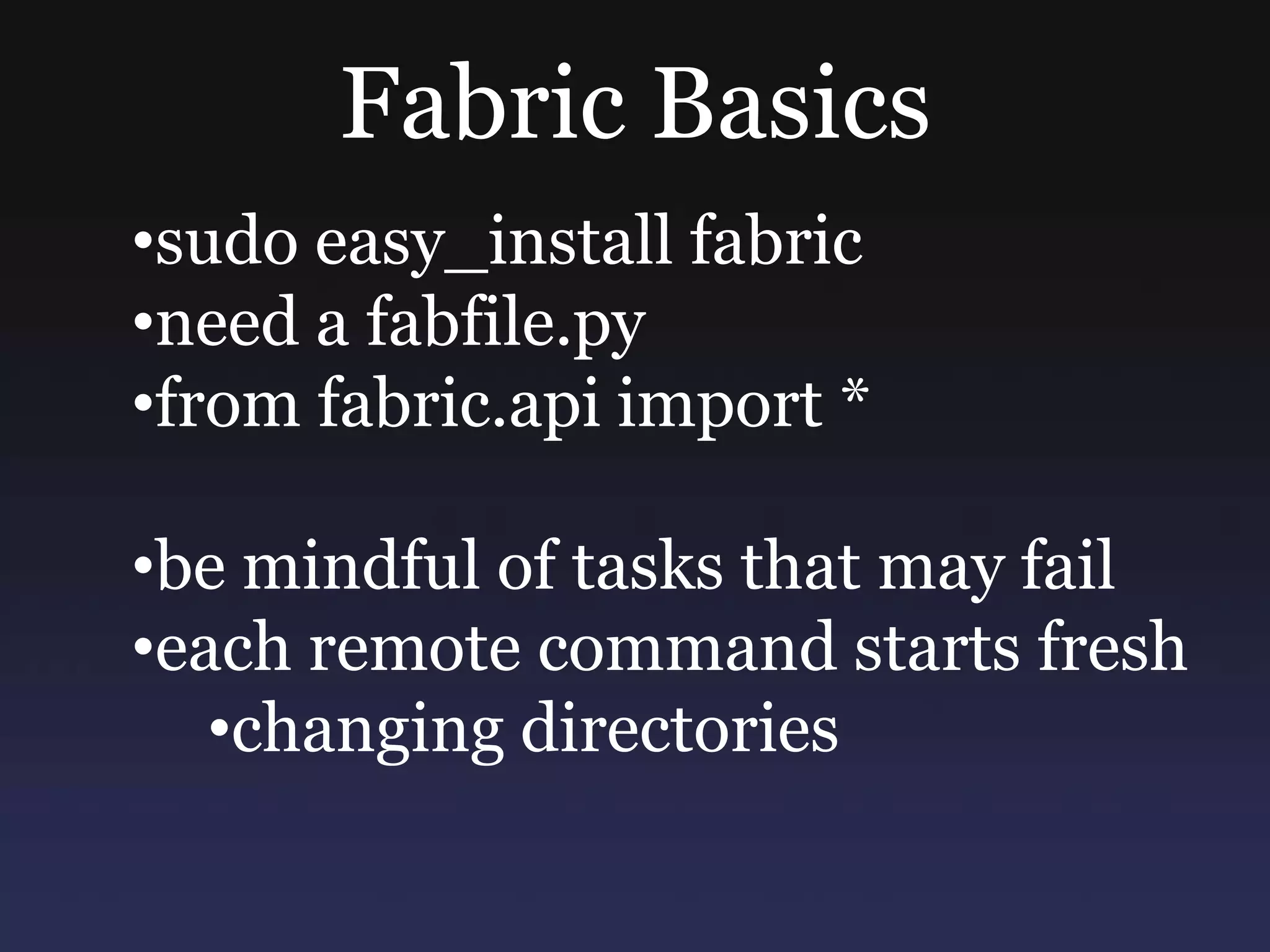
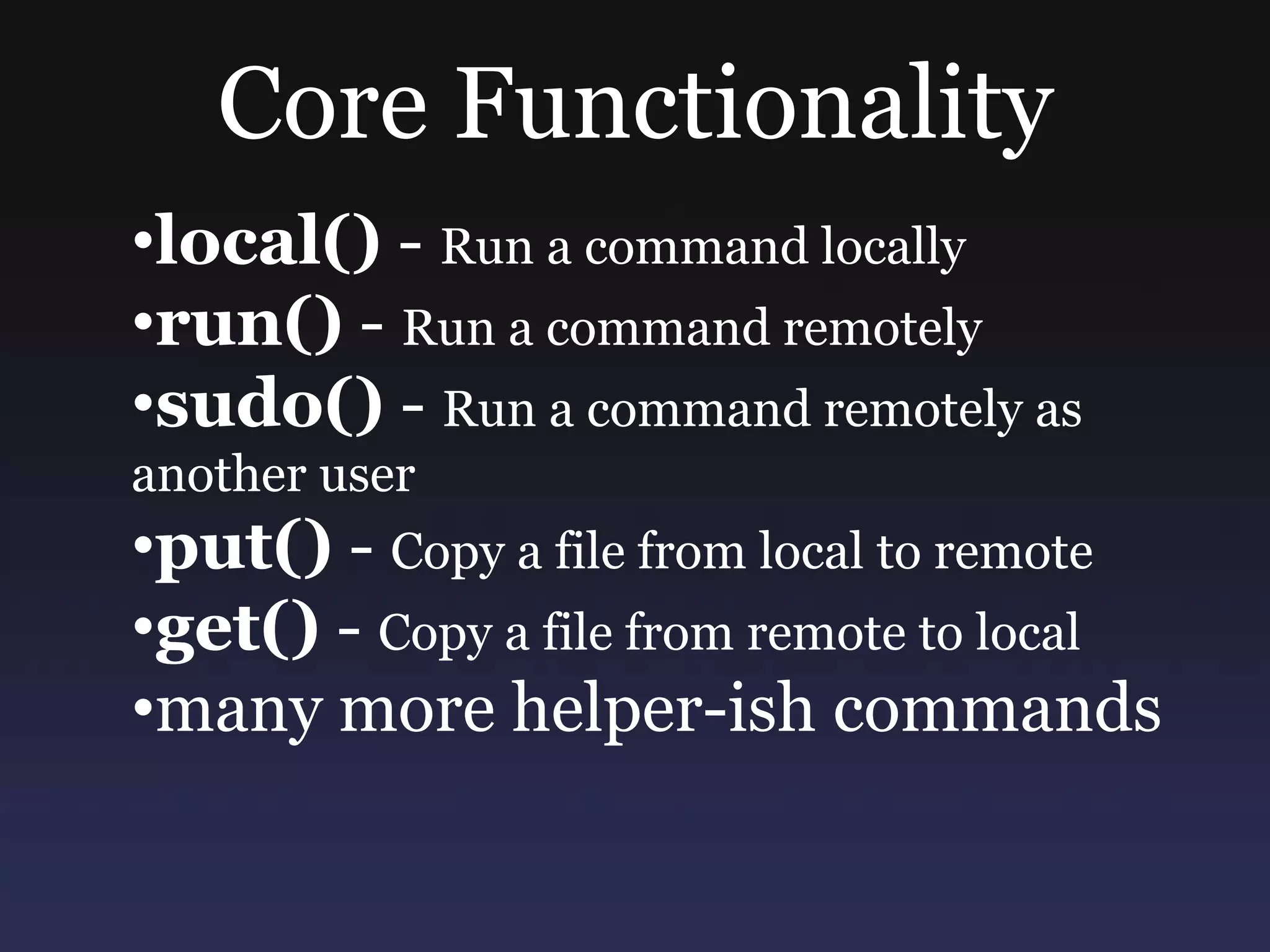
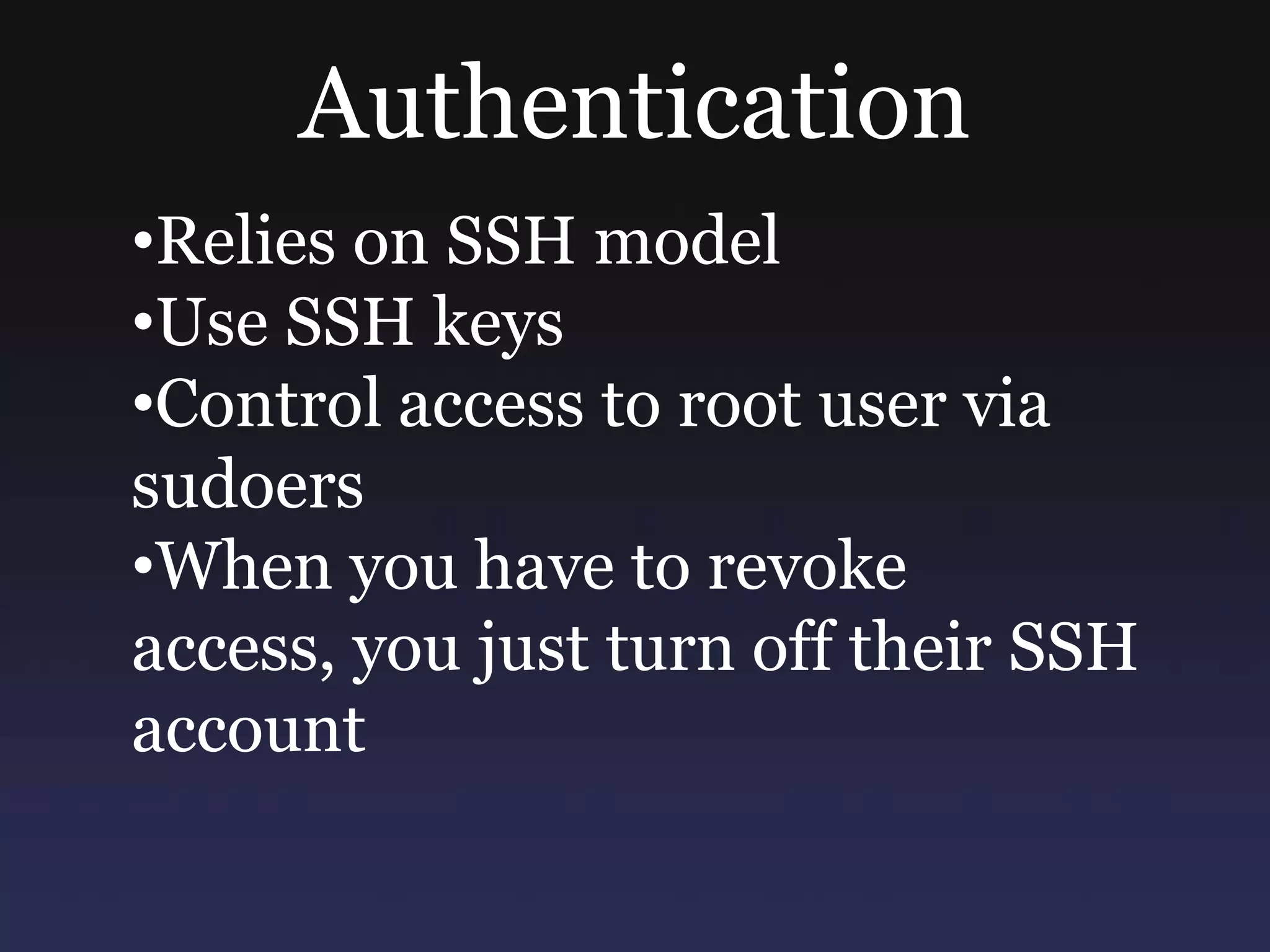
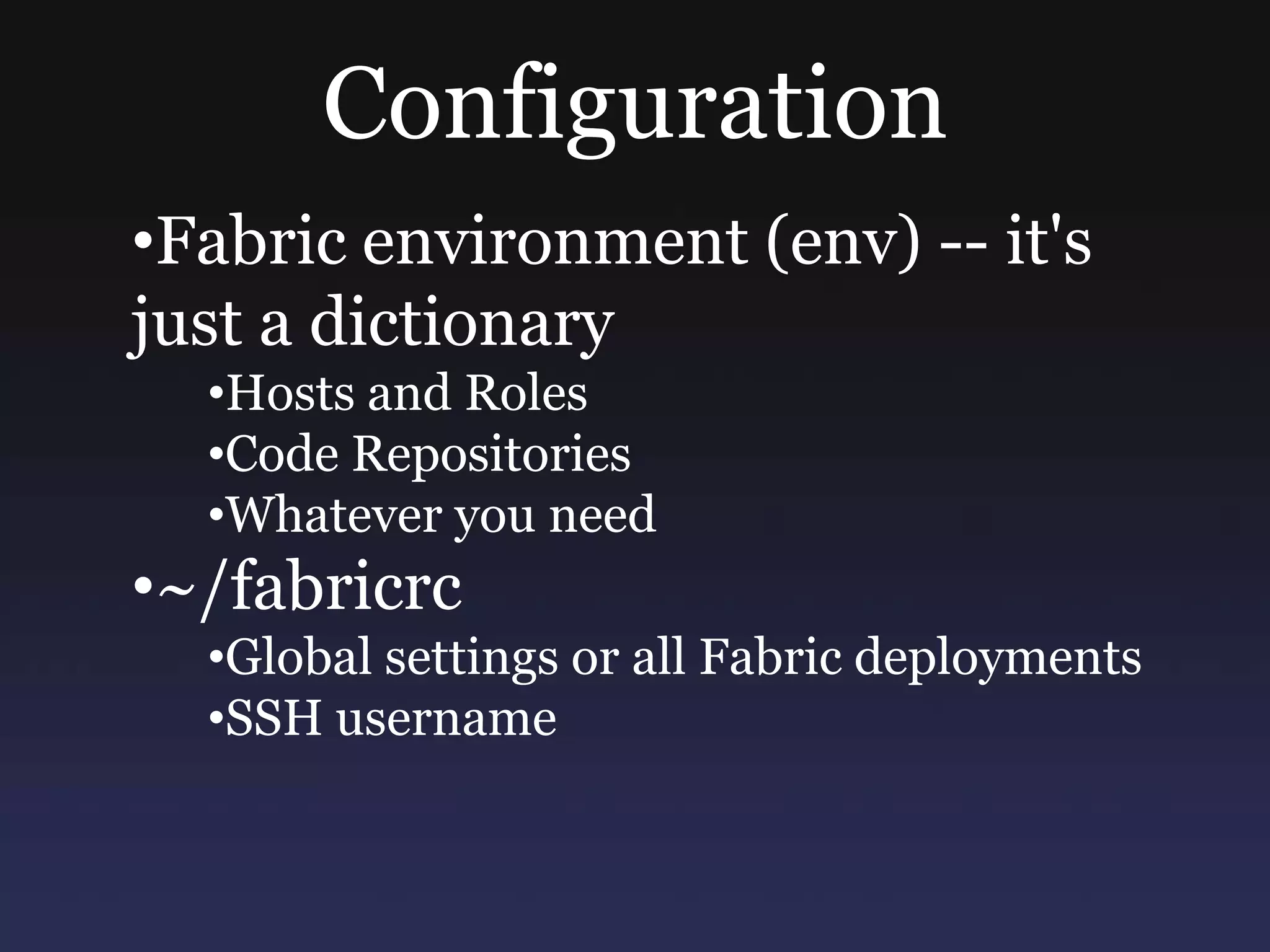
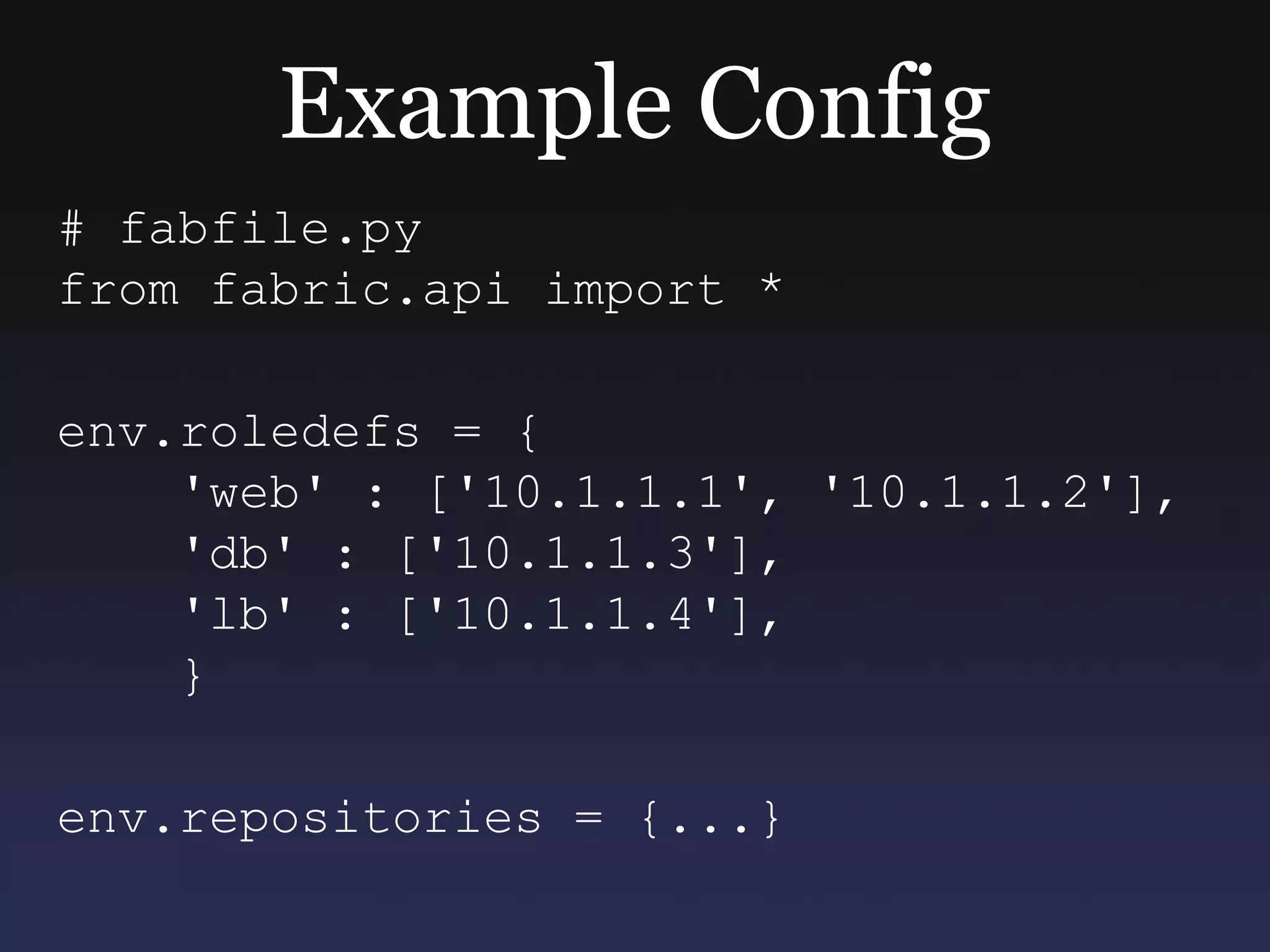
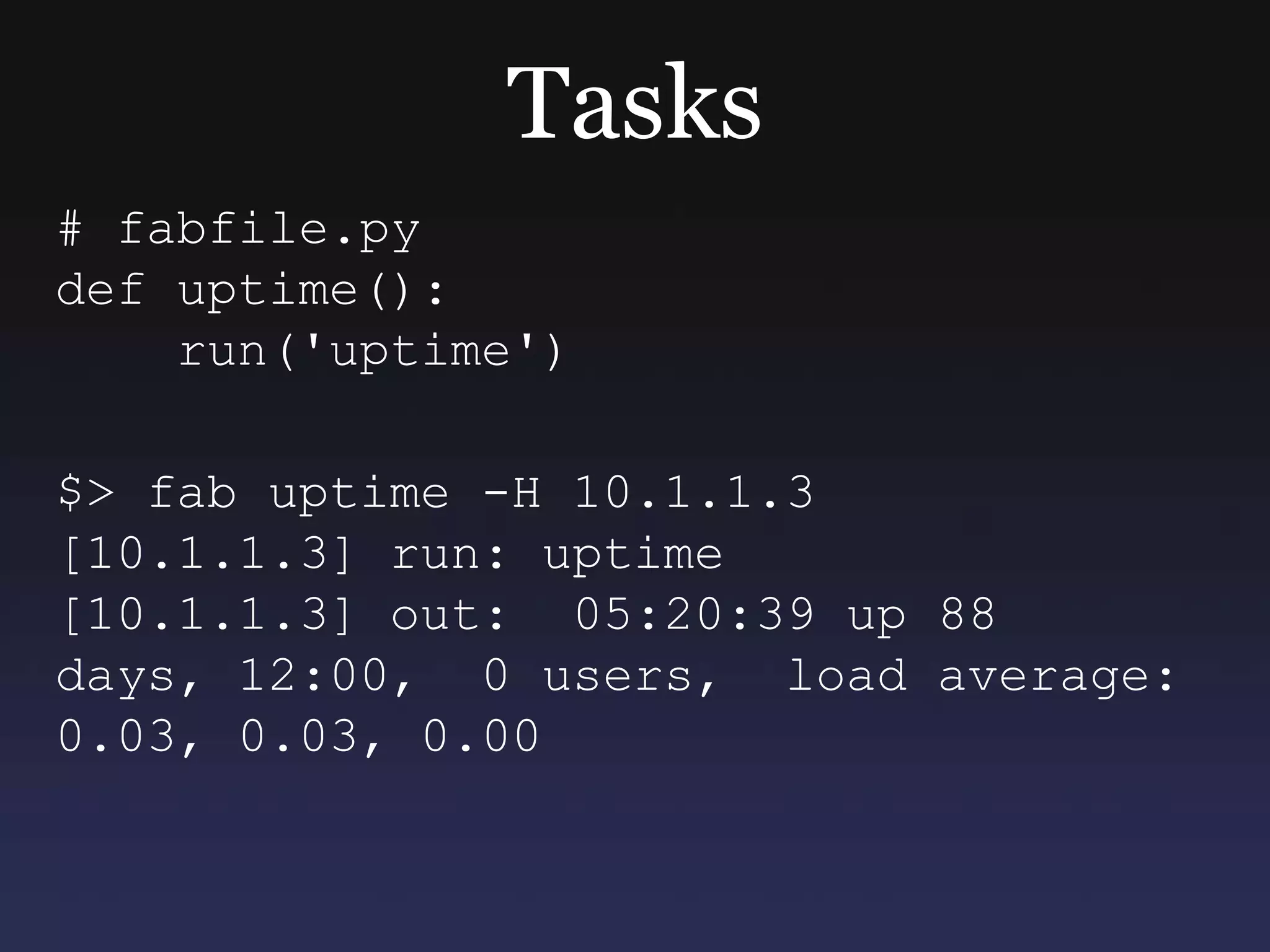
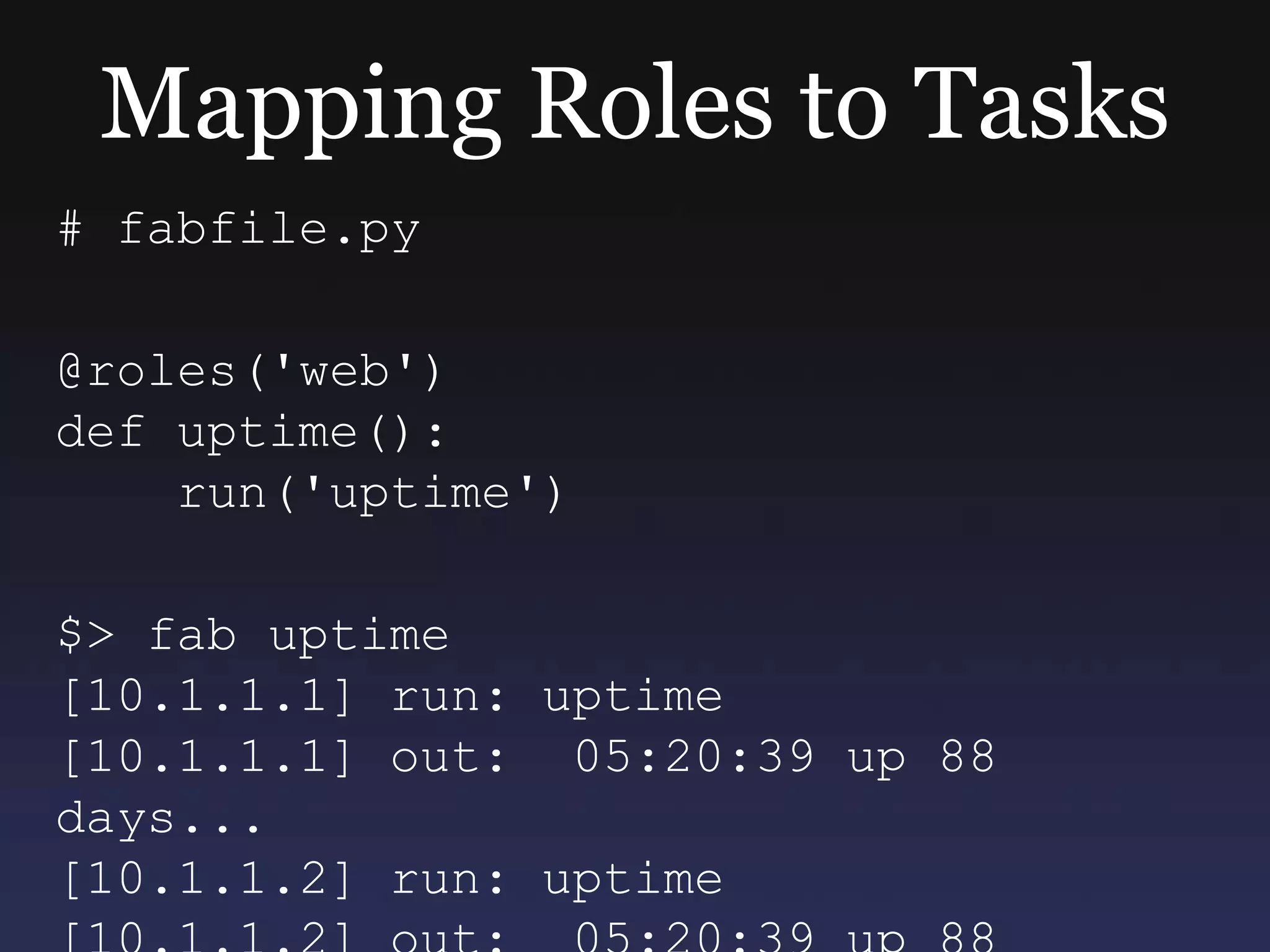
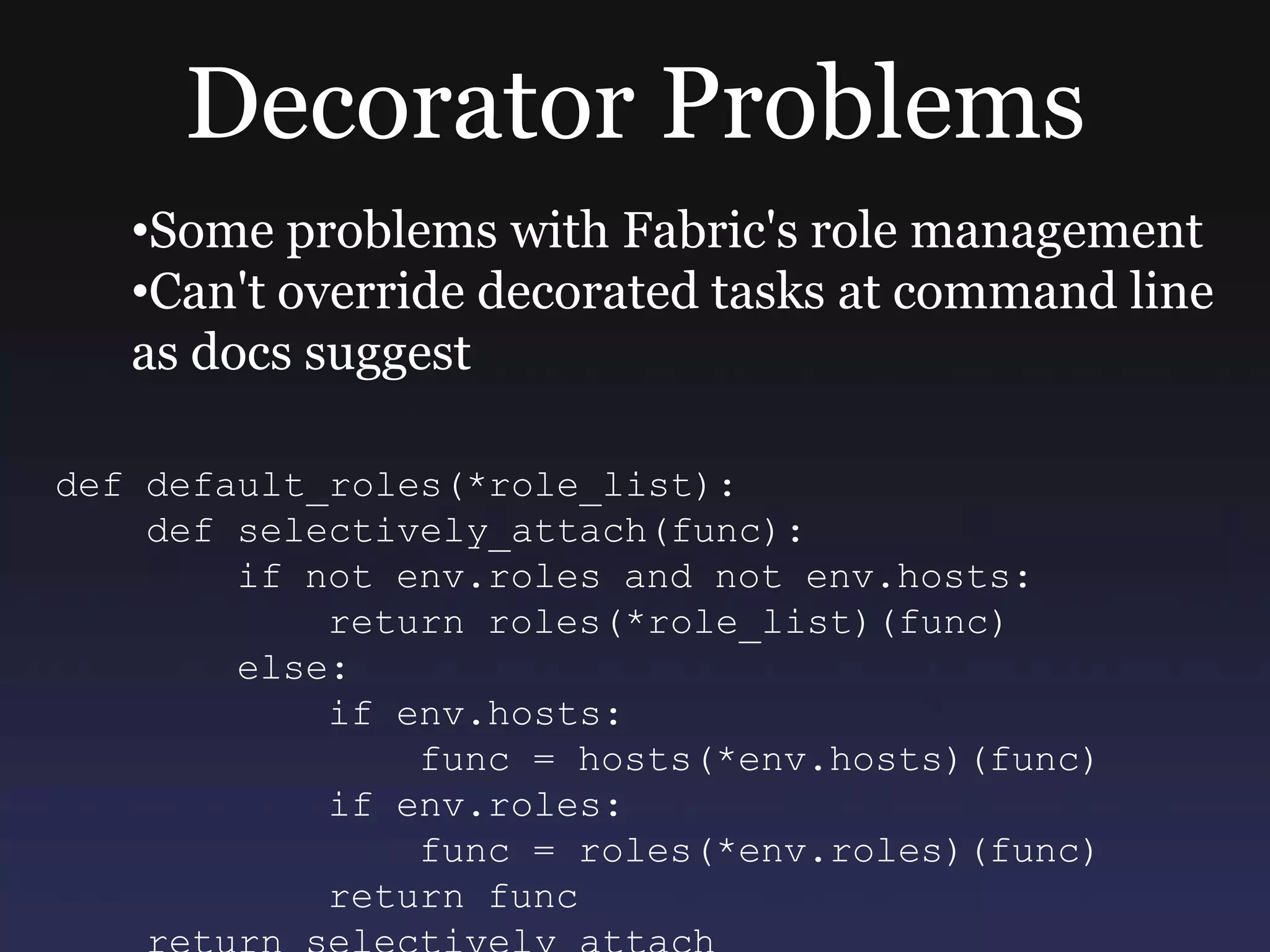
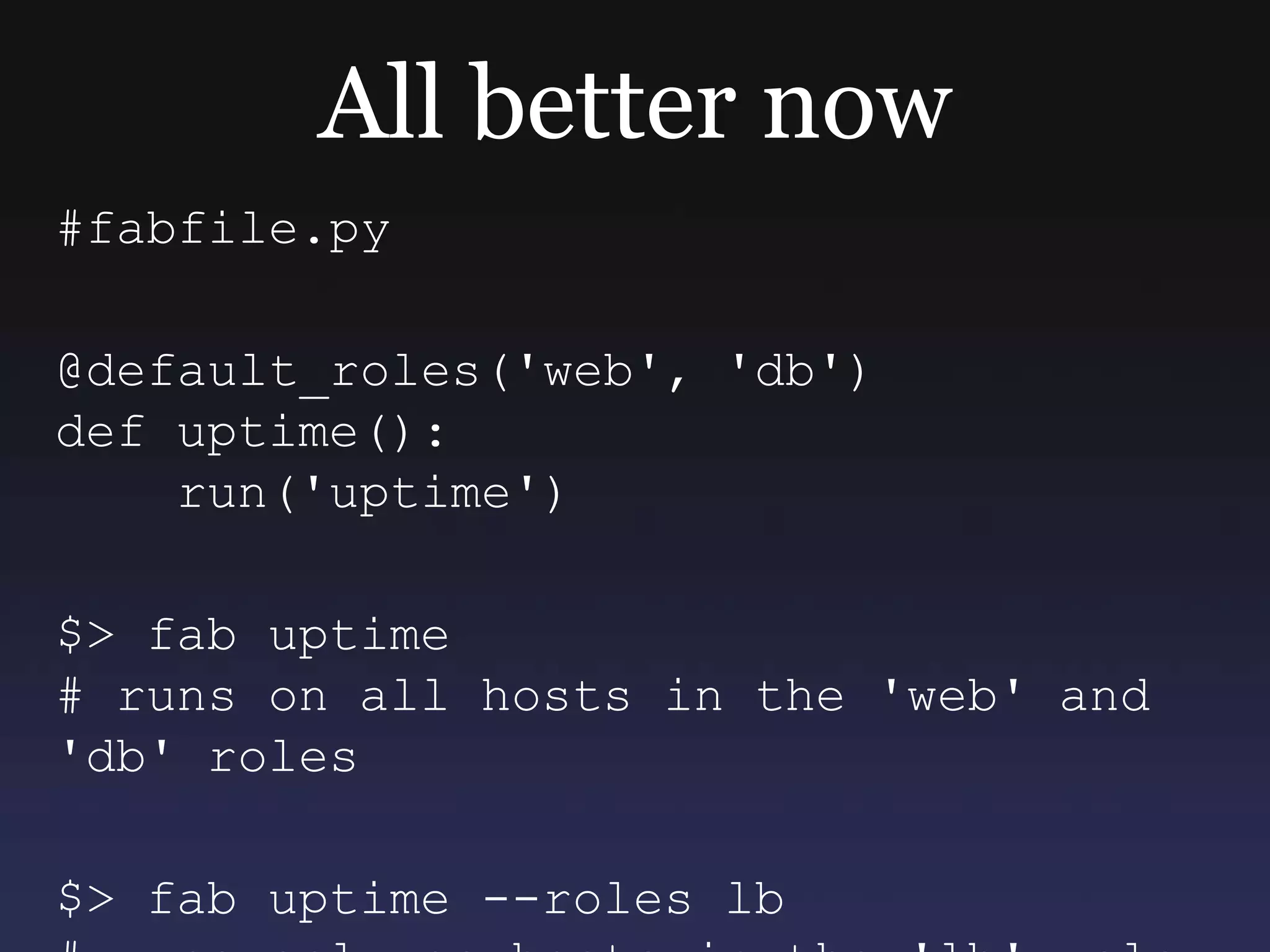
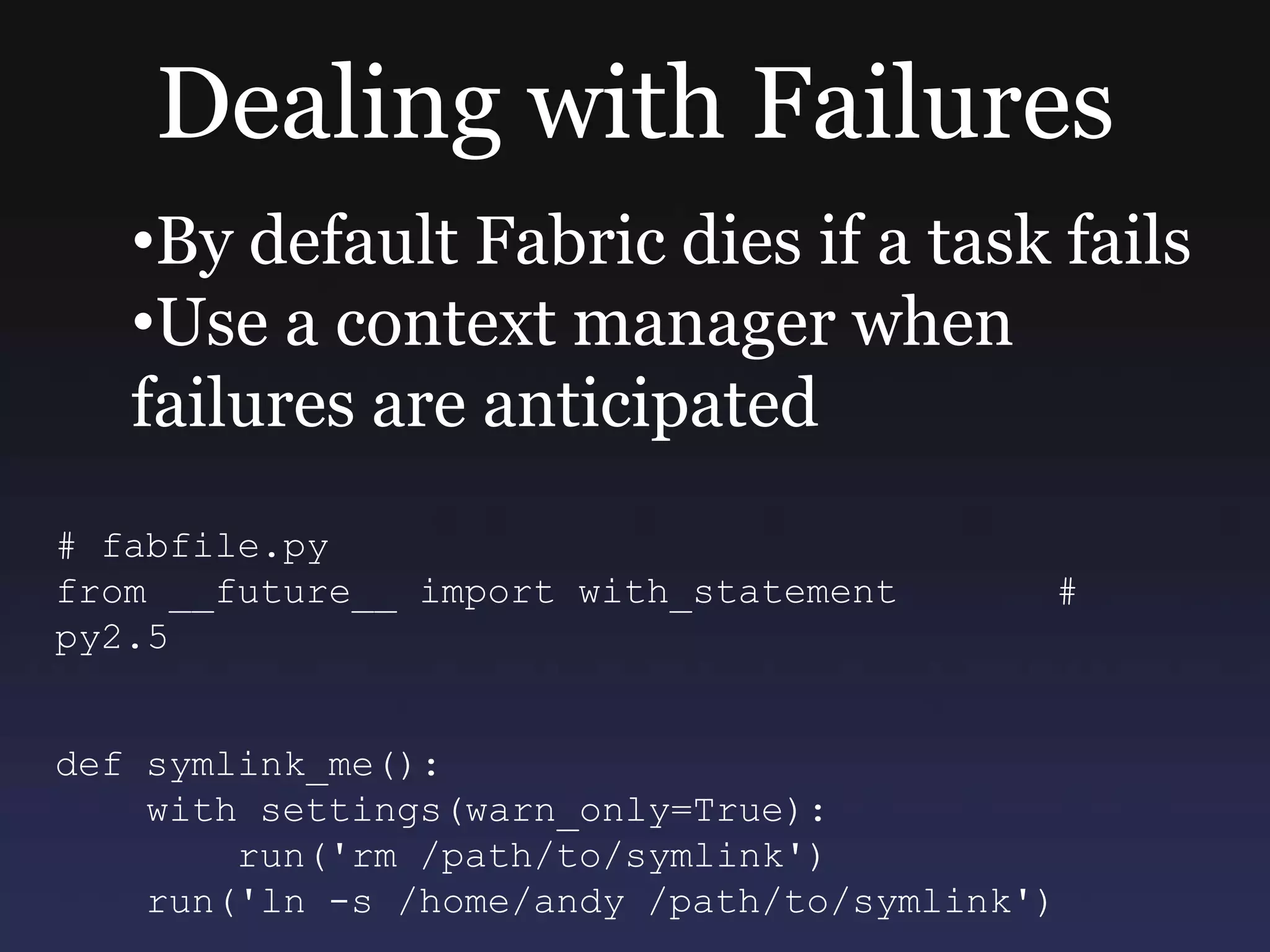
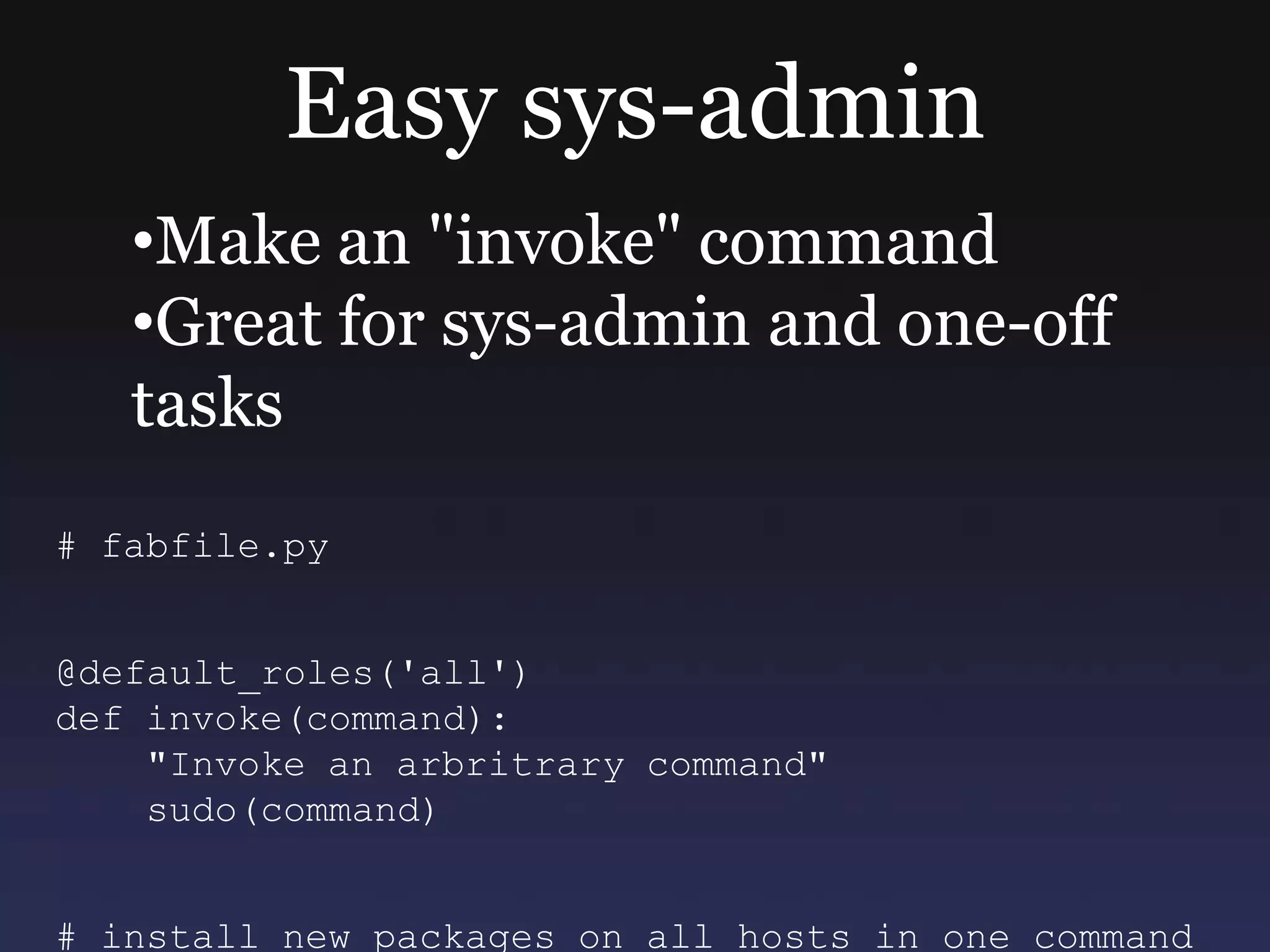
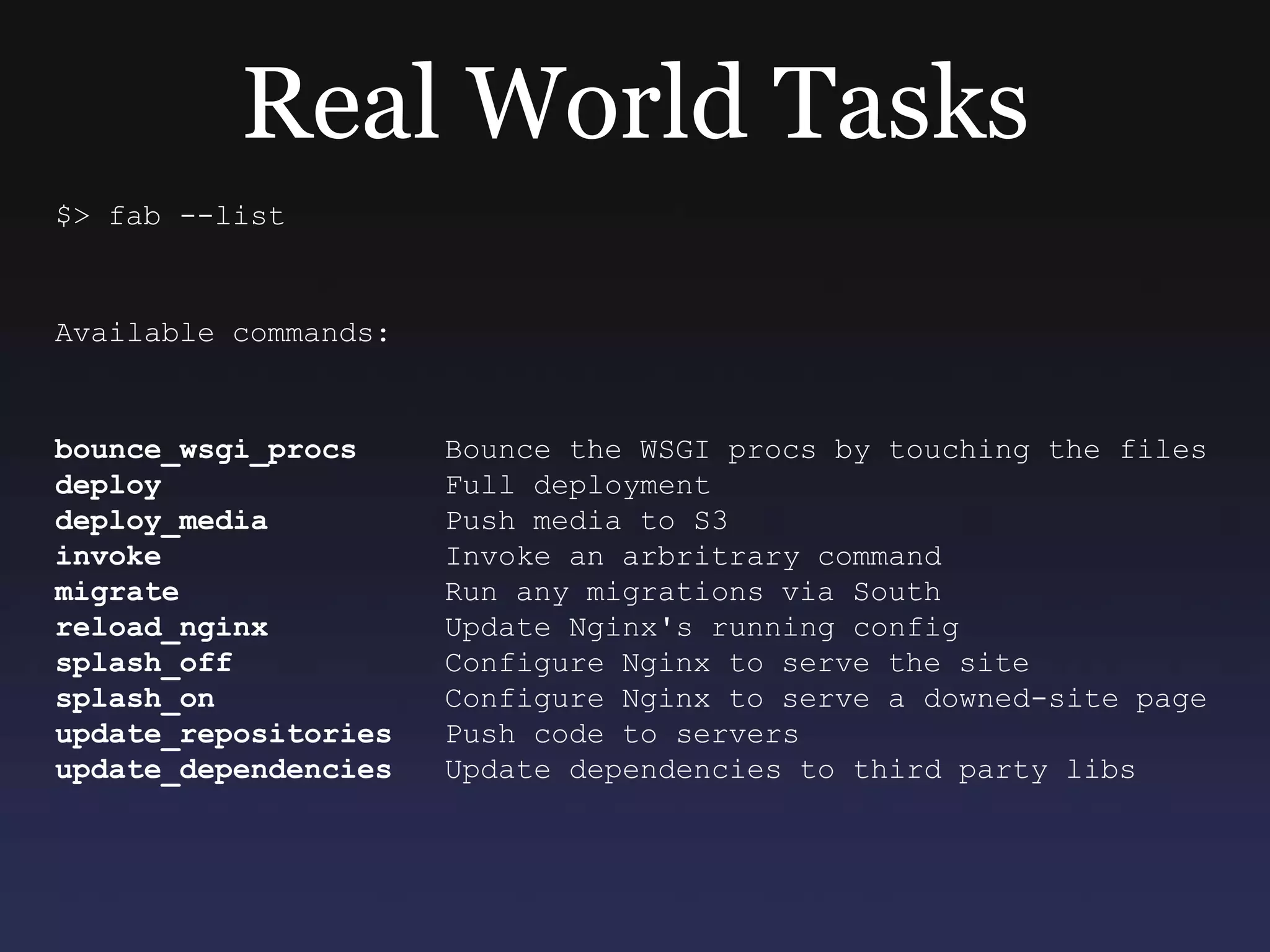
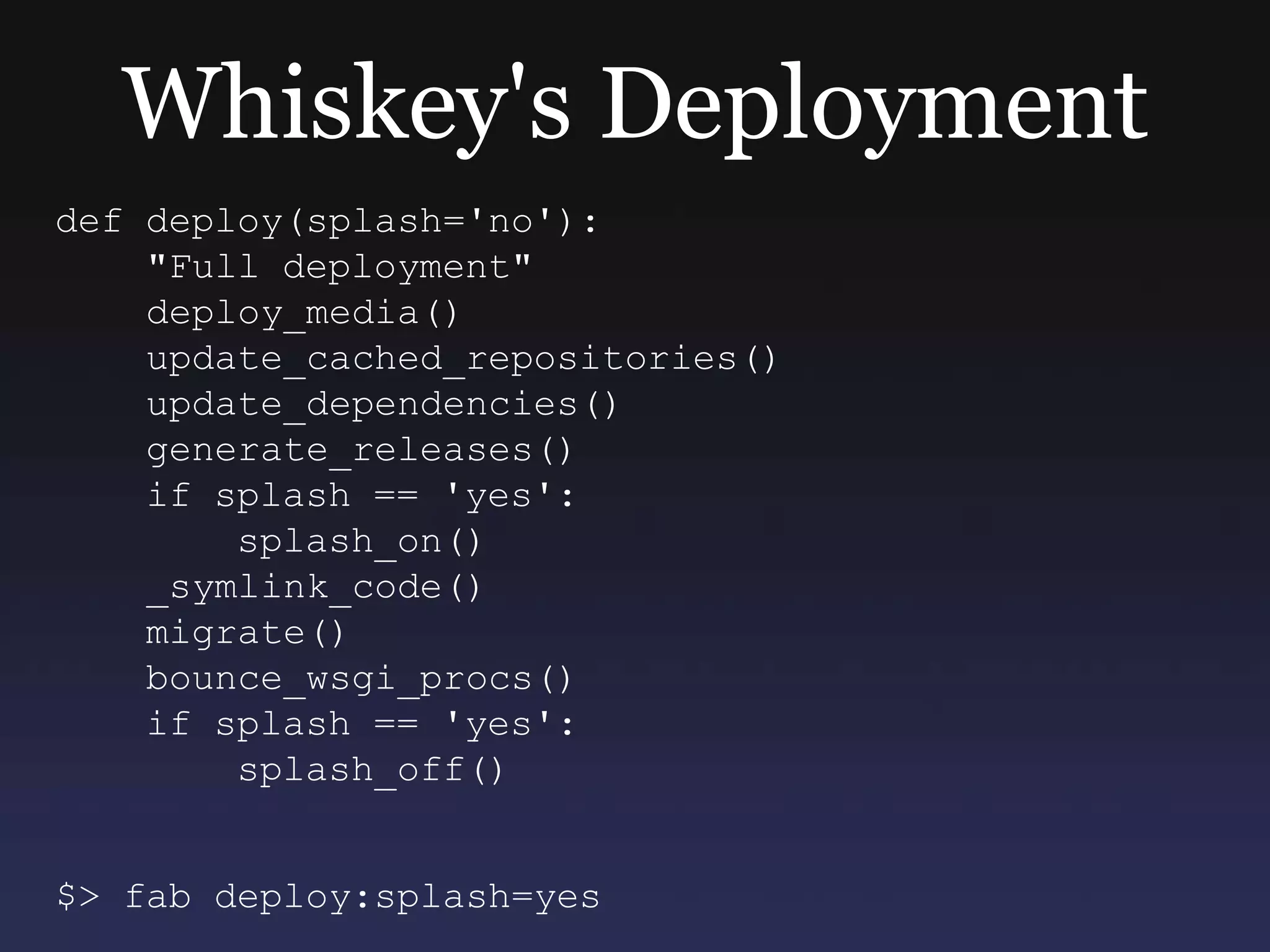
This document discusses using Fabric for Python application deployment and configuration management. It provides an overview of Fabric basics like tasks, roles, and environments. It also describes using Fabric for common operations like code deployment, database migrations, and managing server growth. Key advantages of Fabric include its simple task-based interface and ability to control multiple servers simultaneously. The document provides an example of using Fabric for a full deployment process including pushing code, running migrations, and restarting processes.



![Vibe Coding vs. Spec-Driven Development [Free Meetup]](https://cdn.slidesharecdn.com/ss_thumbnails/vibecodingvsspecdrivendevelopment-251209105622-43f455e7-thumbnail.jpg?width=640&height=640&fit=bounds)


