

DR.UMA KADAM   M.B.B.S. MD ASSOCIATE PROFESSOR PHARMACOLOGY SKNMC
Drug of abuse/addiction/dependence: CNS stimulants: Cocaine Cannabinoids/THC Nicotine Amphetamine  Opioids (morphine, heroin, fentanyl) CNS depressants:  Barbiturates Benzodiazepines Alcohol
Definitions I.  Drug abuse. II.  Drug dependence. A) Psychological dependence. B) Physiological dependence. III.  Drug addiction. IV.  Drug tolerance.
I.  Drug abuse Inappropriate and usually excessive, self-administration of a drug for non-medical purposes. Abused drugs exert their effects in the CNS. Compulsive  drug-seeking behavior . Preoccupation with the procurement and use of the drug may be so demanding as to  decrease the users productivity. Prolonged abuse may cause  chronic toxicity.
II.  Drug dependence Repetitive use of substances that produce an optimal state of well being because of  their  positive reinforcing effects  in the CNS.  A) Psychological dependence. B) Physical dependence.
II.  Drug dependence A) Psychological Dependence Motivational component: great subjective need, compulsion, drive to get the drug. Will take drug periodically. Although physical dependence for a drug may not occur,  “drug-seeking behavior” is present. Habituation; Just "like" the drug; Drug effects serve as “positive reinforcers”. No tolerance increase.
II.  Drug dependence B) Physiological Dependence The body needs the drug for normal physiological function. Tend to increase dose because of tolerance. Withdrawal Symptoms/Absence Syndrome  (negative reinforcement). Predictable group of signs and symptoms resulting from abrupt removal of a drug. Psychological dependence is also present.
III.  Drug addiction The drug-use and drug-seeking behavior of dependent individuals is maintained by the   reinforcing central activity   of the drug despite its negative social, psychological and physical consequences. Physiological and psychological dependence is present.  Physiological changes have occurred. Symptoms of withdrawal, will be involved. High tendency to relapse.
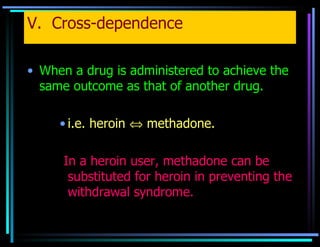
V.  Cross-dependence When a drug is administered to achieve the same outcome as that of another drug.   i.e. heroin    methadone. In a heroin user, methadone can be substituted for heroin in preventing the withdrawal syndrome.
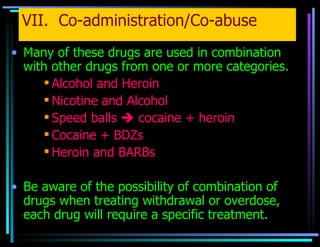
VII.  Co-administration/Co-abuse Many of these drugs are used in combination with other drugs from one or more categories. Alcohol and Heroin Nicotine and Alcohol Speed balls    cocaine + heroin Cocaine + BDZs Heroin and BARBs Be aware of the possibility of combination of drugs when treating withdrawal or overdose, each drug will require a specific treatment.
Because of the diverse character of these drugs, there is no “single reason” for their use,  nor is there an “addictive personality". IT IS NOT NECESSARY TO HAVE A PREEXISTING EMOTIONAL OR PSYCHIATRIC PROBLEM TO BECOME DRUG DEPENDENT!!!
 
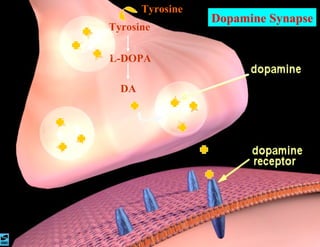
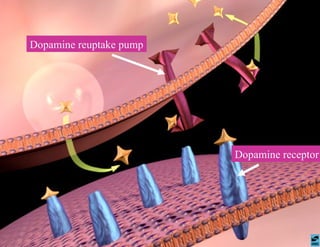
Dopamine Synapse DA L-DOPA Tyrosine Tyrosine
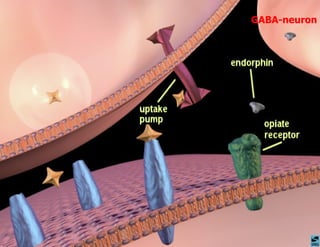
GABA-neuron
 
 
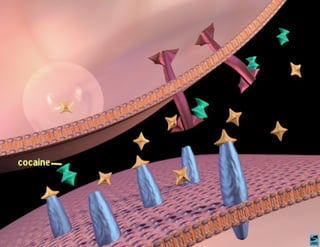
Dopamine receptor Dopamine reuptake pump
 
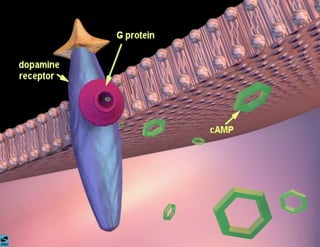
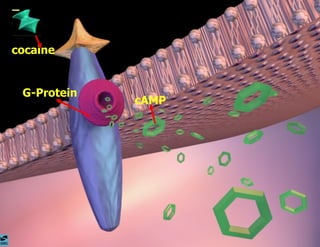
cAMP G-Protein cocaine
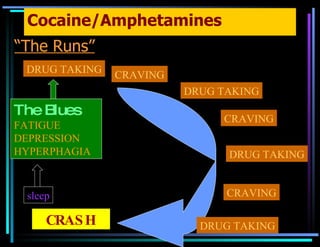
Cocaine/Amphetamines “ The Runs” DRUG TAKING CRAVING DRUG TAKING DRUG TAKING CRAVING CRAVING The Blues FATIGUE DEPRESSION HYPERPHAGIA CRASH DRUG TAKING sleep
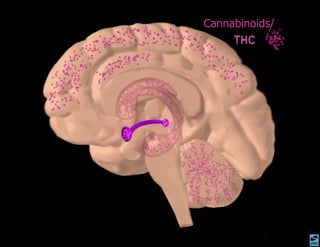
Cannabinoids/
 
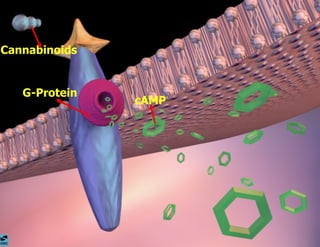
cAMP G-Protein Cannabinoids
 
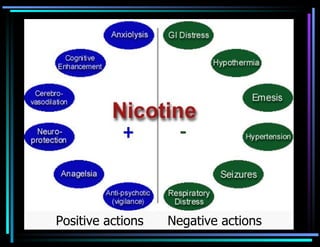
Positive actions  Negative actions
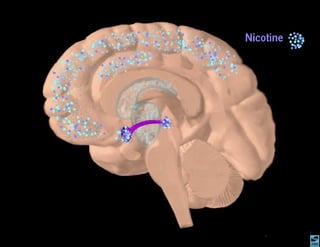
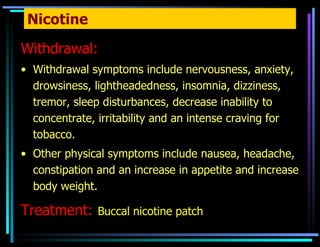
Nicotine Withdrawal: Withdrawal symptoms include   nervousness, anxiety, drowsiness, lightheadedness, insomnia, dizziness, tremor, sleep disturbances, decrease inability to concentrate, irritability and an intense craving for tobacco.  Other physical symptoms include nausea, headache, constipation and an increase in appetite and increase body weight.  Treatment:   Buccal nicotine patch
 
Drugs of Abuse: Opiates
Introduction: Opioid drugs are used primarily for the treatment of pain.  Some of the CNS mechanisms that reduce the perception of pain also produce a state of  well-being or euphoria . Thus, opioid drugs also are taken outside of medical channels for the purpose of  obtaining the effects on mood.
General Comments: Desirable Effects : Euphoria Sedation Relief of anxiety and various other forms of distress. Analgesia. Depression of cough reflex* Undesirable Effects : Dysphoria Dizziness Nausea Vomiting Constipation* Biliary tract spasm Urinary retention
General Comments: The drug-use and drug-seeking behavior of dependent individuals is maintained by the  reinforcing central activity   of the drug despite its negative social, psychological and physical consequences. Physiological effects, including negative reinforcers such as symptoms of withdrawal may also be involved. High tendency to relapse.
General Comments: OPIOID withdrawal is NOT fatal, person won't die; but with barbiturates, withdrawal can be fatal Withdrawal from OPIOID is called going cold turkey (goose bumps on skin) and also called kicking the habit due to leg motions As a general rule, a drug that is more potent as analgesic than morphine will have more intense drug withdrawal symptoms
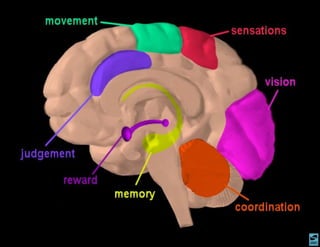
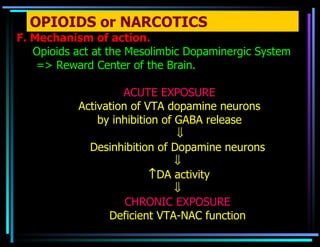
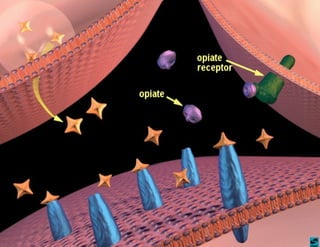
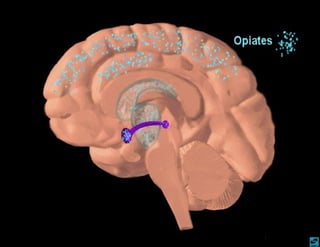
OPIOIDS or NARCOTICS F. Mechanism of action. Opioids act at the Mesolimbic Dopaminergic System => Reward Center of the Brain. ACUTE EXPOSURE Activation of VTA dopamine neurons by inhibition of GABA release   Desinhibition of Dopamine neurons   DA activity  CHRONIC EXPOSURE Deficient VTA-NAC function
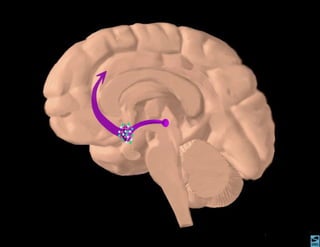
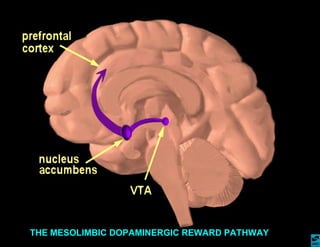
THE MESOLIMBIC DOPAMINERGIC REWARD PATHWAY
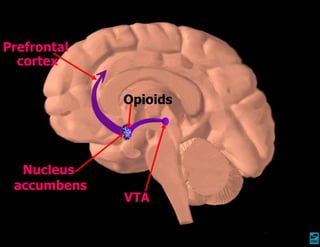
VTA Nucleus accumbens Prefrontal  cortex Opioids
 
 
The reward system is shown and the major structures are highlighted: the ventral tegmental area (VTA), the nucleus accumbens (nuc. acc.) and the prefrontal cortex. Also, the pathway connecting these structures is highlighted. The information travels from the VTA to the nucleus accumbens and then up to the prefrontal cortex.
Withdrawal: Withdrawal, onset related to time-effect curve and t½ of narcotic. 6-8hr =>drug seeking behavior, restless, anxious. 8-12hr =>  Pupils dilated , reactive to light; increased pulse rate,   blood pressure, yawning; chills; rhinorrhea; lacrimation; gooseflesh; sweating; restless sleep. 48-72 hrs (peak) => All of the above plus muscular weakness, aches (cramps) and twitches; nausea, vomiting and diarrhea;    temperature and respiration rate elevated; heart rate and blood pressure elevated; dehydration. Not life threatening, no convulsions, no delirium, no disorientation. Treatment of withdrawal: symptoms =>  clonidine
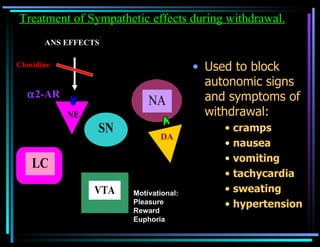
Used to block autonomic signs and symptoms of withdrawal: cramps nausea vomiting tachycardia sweating hypertension Treatment of Sympathetic effects during withdrawal. ANS EFFECTS Clonidine Motivational: Pleasure Reward Euphoria NE DA  2-AR
Treatment of Dependence Narcotic dependence is one of very few cases where there are partially effective pharmacological therapies. 1.  Opioid replacement Methadone Long half-life produces a longer but less stressful withdrawal (although more prolonged). Onset =>24hrs, peak =>5-7 days. Lessens the “highs” and “lows” of withdrawal. Oral administration Decrease dose over several weeks to months
Antagonist Treatment . Another pharmacological option is opioid antagonist treatment. Naltrexone is an antagonist with a high affinity for m receptors; it will competitively block the effects of heroin or other    agonists.  Can  be utilized after detoxification for patients with high motivation to remain opioid free.  Physicians, nurses, and pharmacists who have frequent access to opioid drugs make excellent candidates for this treatment approach.
Major problem in detoxification and maintenance of abstinence is the motivational component of the CNS effect, which is responsible for the “drug craving” sensations, also conditional dependence  and social factors play an important role.
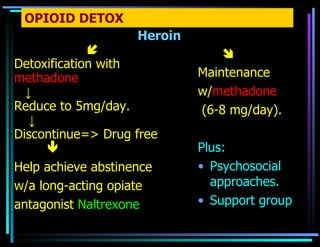
OPIOID DETOX Heroin  Detoxification with  methadone  ↓ Reduce to 5mg/day. ↓ Discontinue=> Drug free  Help achieve abstinence  w/a long-acting opiate antagonist  Naltrexone  Maintenance w/ methadone (6-8 mg/day). Plus: Psychosocial approaches. Support group
CNS DEPRESSANTS   I. Alcohol II. Sedative/Hypnotics, Anxiolytics All are very addictive and cause withdrawal symptoms (mild anxiety, convulsions, seizures). All of these drugs create   &quot; lethal potentiation &quot;   when combined. Alcohol<>Anxiolytics<>Hypnotics<> Anesthetics
Alcohol Withdrawal Withdrawal Syndrome   When an alcoholic stops drinking, withdrawal symptoms begin within six to 48 hours and peak about 24 to 35 hours after the last drink. During this period the inhibition of brain activity caused by alcohol is abruptly reversed. Stress hormones are over-produced and the central nervous system becomes over-excited. Depending on severity, withdrawal symptoms may include the following: Fever. Rapid heart beat. Changes in blood pressure either higher or lower. Extremely aggressive behavior. Hallucinations and other mental disturbances. Seizures occur in about 10% of adults during withdrawal, and in about 60% of these patients, the seizures are multiple. The time between the first and last seizure is usually six hours or less. About 5% of alcoholic patients experience delirium tremens, which usually develops two to four days after the last drink.
Delirium Tremens C. Withdrawal Syndrome (con’t)   In severe cases, it can develop into: “ Delirium Tremens”: Insomnia, tremulousness, REM rebound, reflexes are high, weakness, anorexia, orthostatic hypotension, sweating, agitation Delirium, vivid auditory and visual hallucinations; convulsions and seizures (probably caused by increase NMDA receptor number and hyperexcitability), may generate “status epilepticus”. Disorientation, paranoid delusions, hyperthermia dehydration, cardiovascular collapse. Risk of death
Alcohol Treatment of Withdrawal Benzodiazepines. To inhibit nerve-cell excitability in the brain. Help prevent progression to delirium tremens. Reduce the risk for seizures. Benzodiazepines may be administered intravenously or orally, depending on the severity of symptoms. These drugs vary in how long they are effective. diazepam  alprazolam  lorazepam  midazolam  benzodiazepines are usually not prescribed for more than two weeks or administered for more than three nights per week
Alcohol DETOX D. Treatment of Dependence Detox Center/Clinic Disulfiram (antabuse)  * CCC (citrate calcium carbamate) *
Sedative/Hypnotics a. Concurrent or substitute use May be lethal with other depressants. Co-abused with alcohol, amphetamines, cocaine.   Not likely to abuse narcotics, but not vice-versa. b. Tolerance Pharmacodynamic tolerance exists to most CNS  depressants. Tolerance of modest degree to the sedative effects but  not to the respiratory depressant effects. Cross-tolerance with alcohol, anesthetics and volatile intoxicants .
Sedative/Hypnotics Acute effects Euphoria, impaired judgment, loss of self-control and anterograde amnesic effects. Physiological consequences resemble those of alcohol intoxication. Slowed and slurred speech. Drowsiness    coma. Fatal with Barbiturates or mixtures of CNS depressants.  Death unlikely with pure benzodiazepines. The person may feel a remarkable capability for coping with stress and anxiety, a general feeling of well being, may feel euphoric and stimulated.  These effects (euphoria and stimulation) may be due to inhibition of inhibitory pathways, in other words, desinhibition.
Sedative Hypnotics I). Barbiturates: Used clinically as anticonvulsant, anti-anxiety drugs or preanaesthetic. Street Names Phenobarbital  purple hearts Pentobarbital yellow jackets Secobarbital red devils Amobarbital blue angels
Sedative Hypnotics II.)  Benzodiazepines : Used as anxiolytics and hypnotics. Flurazepam => sleeping pills. Diazepam (Valium) => tranquilizer. Chlordiazepoxide (Librium) => tranquilizer. Clonazepam => anticonvulsant. They all cause sedation and muscle relaxation. Induce sleep (hypnosis). Abuse may cause &quot;BDZ-induced aggression&quot;.
Sedative/Hypnotics Rapid acting barbiturates such as secobarbital or pentobarbital are more widely abused than depressants with a slower onset  such as phenobarbital or the benzodiazepines. Drugs with half-lives of 8 to 24 hrs produce a rapid evolving, severe withdrawal syndrome. Drugs with half-lives of 48 to 96 hrs produce a slow evolving, less severe but longer withdrawal.
Sedative/Hypnotics Withdrawal: Minor:  tremors; insomnia (REM rebound); high fever; Anxiety and dysphoria.  12-16hrs:  minor symptoms plus abdominal cramps; GI upsets, hypotension; hyperreflexia. 24hrs:  pronounced weakness, course tremors (“the shakes”), hyperactive reflexes, illusions, hallucinations and hyperpyrexia. 48-72hrs:  convulsive seizures (“rum fits”); vivid auditory and visual hallucinations (“the horrors”), paranoid delusions, formication.
Sedative/ Hypnotics Hyperthermia, dehydration, electrolyte imbalance,  exhaustion, cardiovascular collapse =>  Threat to life. Treatment of withdrawal: Drug tapered off slowly to prevent onset of withdrawal (reversible only early in course). Stabilization    diazepam, chlordiazepoxide, phenobarbital (cross-dependence).  Vomiting, nausea, tremor and twitching    Propranolol or clonidine.
THANK YOU

Dependence

  • 1.
    DR.UMA KADAM M.B.B.S. MD ASSOCIATE PROFESSOR PHARMACOLOGY SKNMC
  • 2.
    Drug of abuse/addiction/dependence:CNS stimulants: Cocaine Cannabinoids/THC Nicotine Amphetamine Opioids (morphine, heroin, fentanyl) CNS depressants: Barbiturates Benzodiazepines Alcohol
  • 3.
    Definitions I. Drug abuse. II. Drug dependence. A) Psychological dependence. B) Physiological dependence. III. Drug addiction. IV. Drug tolerance.
  • 4.
    I. Drugabuse Inappropriate and usually excessive, self-administration of a drug for non-medical purposes. Abused drugs exert their effects in the CNS. Compulsive drug-seeking behavior . Preoccupation with the procurement and use of the drug may be so demanding as to decrease the users productivity. Prolonged abuse may cause chronic toxicity.
  • 5.
    II. Drugdependence Repetitive use of substances that produce an optimal state of well being because of their positive reinforcing effects in the CNS. A) Psychological dependence. B) Physical dependence.
  • 6.
    II. Drugdependence A) Psychological Dependence Motivational component: great subjective need, compulsion, drive to get the drug. Will take drug periodically. Although physical dependence for a drug may not occur, “drug-seeking behavior” is present. Habituation; Just &quot;like&quot; the drug; Drug effects serve as “positive reinforcers”. No tolerance increase.
  • 7.
    II. Drugdependence B) Physiological Dependence The body needs the drug for normal physiological function. Tend to increase dose because of tolerance. Withdrawal Symptoms/Absence Syndrome (negative reinforcement). Predictable group of signs and symptoms resulting from abrupt removal of a drug. Psychological dependence is also present.
  • 8.
    III. Drugaddiction The drug-use and drug-seeking behavior of dependent individuals is maintained by the reinforcing central activity of the drug despite its negative social, psychological and physical consequences. Physiological and psychological dependence is present. Physiological changes have occurred. Symptoms of withdrawal, will be involved. High tendency to relapse.
  • 9.
    V. Cross-dependenceWhen a drug is administered to achieve the same outcome as that of another drug. i.e. heroin  methadone. In a heroin user, methadone can be substituted for heroin in preventing the withdrawal syndrome.
  • 10.
    VII. Co-administration/Co-abuseMany of these drugs are used in combination with other drugs from one or more categories. Alcohol and Heroin Nicotine and Alcohol Speed balls  cocaine + heroin Cocaine + BDZs Heroin and BARBs Be aware of the possibility of combination of drugs when treating withdrawal or overdose, each drug will require a specific treatment.
  • 11.
    Because of thediverse character of these drugs, there is no “single reason” for their use, nor is there an “addictive personality&quot;. IT IS NOT NECESSARY TO HAVE A PREEXISTING EMOTIONAL OR PSYCHIATRIC PROBLEM TO BECOME DRUG DEPENDENT!!!
  • 12.
  • 13.
    Dopamine Synapse DAL-DOPA Tyrosine Tyrosine
  • 14.
  • 15.
  • 16.
  • 17.
  • 18.
  • 19.
  • 20.
    Cocaine/Amphetamines “ TheRuns” DRUG TAKING CRAVING DRUG TAKING DRUG TAKING CRAVING CRAVING The Blues FATIGUE DEPRESSION HYPERPHAGIA CRASH DRUG TAKING sleep
  • 21.
  • 22.
  • 23.
  • 24.
  • 25.
    Positive actions Negative actions
  • 26.
    Nicotine Withdrawal: Withdrawalsymptoms include nervousness, anxiety, drowsiness, lightheadedness, insomnia, dizziness, tremor, sleep disturbances, decrease inability to concentrate, irritability and an intense craving for tobacco. Other physical symptoms include nausea, headache, constipation and an increase in appetite and increase body weight. Treatment: Buccal nicotine patch
  • 27.
  • 28.
  • 29.
    Introduction: Opioid drugsare used primarily for the treatment of pain. Some of the CNS mechanisms that reduce the perception of pain also produce a state of well-being or euphoria . Thus, opioid drugs also are taken outside of medical channels for the purpose of obtaining the effects on mood.
  • 30.
    General Comments: DesirableEffects : Euphoria Sedation Relief of anxiety and various other forms of distress. Analgesia. Depression of cough reflex* Undesirable Effects : Dysphoria Dizziness Nausea Vomiting Constipation* Biliary tract spasm Urinary retention
  • 31.
    General Comments: Thedrug-use and drug-seeking behavior of dependent individuals is maintained by the reinforcing central activity of the drug despite its negative social, psychological and physical consequences. Physiological effects, including negative reinforcers such as symptoms of withdrawal may also be involved. High tendency to relapse.
  • 32.
    General Comments: OPIOIDwithdrawal is NOT fatal, person won't die; but with barbiturates, withdrawal can be fatal Withdrawal from OPIOID is called going cold turkey (goose bumps on skin) and also called kicking the habit due to leg motions As a general rule, a drug that is more potent as analgesic than morphine will have more intense drug withdrawal symptoms
  • 33.
    OPIOIDS or NARCOTICSF. Mechanism of action. Opioids act at the Mesolimbic Dopaminergic System => Reward Center of the Brain. ACUTE EXPOSURE Activation of VTA dopamine neurons by inhibition of GABA release  Desinhibition of Dopamine neurons   DA activity  CHRONIC EXPOSURE Deficient VTA-NAC function
  • 34.
  • 35.
    VTA Nucleus accumbensPrefrontal cortex Opioids
  • 36.
  • 37.
  • 38.
    The reward systemis shown and the major structures are highlighted: the ventral tegmental area (VTA), the nucleus accumbens (nuc. acc.) and the prefrontal cortex. Also, the pathway connecting these structures is highlighted. The information travels from the VTA to the nucleus accumbens and then up to the prefrontal cortex.
  • 39.
    Withdrawal: Withdrawal, onsetrelated to time-effect curve and t½ of narcotic. 6-8hr =>drug seeking behavior, restless, anxious. 8-12hr => Pupils dilated , reactive to light; increased pulse rate,  blood pressure, yawning; chills; rhinorrhea; lacrimation; gooseflesh; sweating; restless sleep. 48-72 hrs (peak) => All of the above plus muscular weakness, aches (cramps) and twitches; nausea, vomiting and diarrhea;  temperature and respiration rate elevated; heart rate and blood pressure elevated; dehydration. Not life threatening, no convulsions, no delirium, no disorientation. Treatment of withdrawal: symptoms => clonidine
  • 40.
    Used to blockautonomic signs and symptoms of withdrawal: cramps nausea vomiting tachycardia sweating hypertension Treatment of Sympathetic effects during withdrawal. ANS EFFECTS Clonidine Motivational: Pleasure Reward Euphoria NE DA  2-AR
  • 41.
    Treatment of DependenceNarcotic dependence is one of very few cases where there are partially effective pharmacological therapies. 1. Opioid replacement Methadone Long half-life produces a longer but less stressful withdrawal (although more prolonged). Onset =>24hrs, peak =>5-7 days. Lessens the “highs” and “lows” of withdrawal. Oral administration Decrease dose over several weeks to months
  • 42.
    Antagonist Treatment .Another pharmacological option is opioid antagonist treatment. Naltrexone is an antagonist with a high affinity for m receptors; it will competitively block the effects of heroin or other  agonists. Can be utilized after detoxification for patients with high motivation to remain opioid free. Physicians, nurses, and pharmacists who have frequent access to opioid drugs make excellent candidates for this treatment approach.
  • 43.
    Major problem indetoxification and maintenance of abstinence is the motivational component of the CNS effect, which is responsible for the “drug craving” sensations, also conditional dependence and social factors play an important role.
  • 44.
    OPIOID DETOX Heroin Detoxification with methadone ↓ Reduce to 5mg/day. ↓ Discontinue=> Drug free  Help achieve abstinence w/a long-acting opiate antagonist Naltrexone  Maintenance w/ methadone (6-8 mg/day). Plus: Psychosocial approaches. Support group
  • 45.
    CNS DEPRESSANTS I. Alcohol II. Sedative/Hypnotics, Anxiolytics All are very addictive and cause withdrawal symptoms (mild anxiety, convulsions, seizures). All of these drugs create &quot; lethal potentiation &quot; when combined. Alcohol<>Anxiolytics<>Hypnotics<> Anesthetics
  • 46.
    Alcohol Withdrawal WithdrawalSyndrome When an alcoholic stops drinking, withdrawal symptoms begin within six to 48 hours and peak about 24 to 35 hours after the last drink. During this period the inhibition of brain activity caused by alcohol is abruptly reversed. Stress hormones are over-produced and the central nervous system becomes over-excited. Depending on severity, withdrawal symptoms may include the following: Fever. Rapid heart beat. Changes in blood pressure either higher or lower. Extremely aggressive behavior. Hallucinations and other mental disturbances. Seizures occur in about 10% of adults during withdrawal, and in about 60% of these patients, the seizures are multiple. The time between the first and last seizure is usually six hours or less. About 5% of alcoholic patients experience delirium tremens, which usually develops two to four days after the last drink.
  • 47.
    Delirium Tremens C.Withdrawal Syndrome (con’t) In severe cases, it can develop into: “ Delirium Tremens”: Insomnia, tremulousness, REM rebound, reflexes are high, weakness, anorexia, orthostatic hypotension, sweating, agitation Delirium, vivid auditory and visual hallucinations; convulsions and seizures (probably caused by increase NMDA receptor number and hyperexcitability), may generate “status epilepticus”. Disorientation, paranoid delusions, hyperthermia dehydration, cardiovascular collapse. Risk of death
  • 48.
    Alcohol Treatment ofWithdrawal Benzodiazepines. To inhibit nerve-cell excitability in the brain. Help prevent progression to delirium tremens. Reduce the risk for seizures. Benzodiazepines may be administered intravenously or orally, depending on the severity of symptoms. These drugs vary in how long they are effective. diazepam alprazolam lorazepam midazolam benzodiazepines are usually not prescribed for more than two weeks or administered for more than three nights per week
  • 49.
    Alcohol DETOX D.Treatment of Dependence Detox Center/Clinic Disulfiram (antabuse) * CCC (citrate calcium carbamate) *
  • 50.
    Sedative/Hypnotics a. Concurrentor substitute use May be lethal with other depressants. Co-abused with alcohol, amphetamines, cocaine. Not likely to abuse narcotics, but not vice-versa. b. Tolerance Pharmacodynamic tolerance exists to most CNS depressants. Tolerance of modest degree to the sedative effects but not to the respiratory depressant effects. Cross-tolerance with alcohol, anesthetics and volatile intoxicants .
  • 51.
    Sedative/Hypnotics Acute effectsEuphoria, impaired judgment, loss of self-control and anterograde amnesic effects. Physiological consequences resemble those of alcohol intoxication. Slowed and slurred speech. Drowsiness  coma. Fatal with Barbiturates or mixtures of CNS depressants. Death unlikely with pure benzodiazepines. The person may feel a remarkable capability for coping with stress and anxiety, a general feeling of well being, may feel euphoric and stimulated. These effects (euphoria and stimulation) may be due to inhibition of inhibitory pathways, in other words, desinhibition.
  • 52.
    Sedative Hypnotics I).Barbiturates: Used clinically as anticonvulsant, anti-anxiety drugs or preanaesthetic. Street Names Phenobarbital purple hearts Pentobarbital yellow jackets Secobarbital red devils Amobarbital blue angels
  • 53.
    Sedative Hypnotics II.) Benzodiazepines : Used as anxiolytics and hypnotics. Flurazepam => sleeping pills. Diazepam (Valium) => tranquilizer. Chlordiazepoxide (Librium) => tranquilizer. Clonazepam => anticonvulsant. They all cause sedation and muscle relaxation. Induce sleep (hypnosis). Abuse may cause &quot;BDZ-induced aggression&quot;.
  • 54.
    Sedative/Hypnotics Rapid actingbarbiturates such as secobarbital or pentobarbital are more widely abused than depressants with a slower onset such as phenobarbital or the benzodiazepines. Drugs with half-lives of 8 to 24 hrs produce a rapid evolving, severe withdrawal syndrome. Drugs with half-lives of 48 to 96 hrs produce a slow evolving, less severe but longer withdrawal.
  • 55.
    Sedative/Hypnotics Withdrawal: Minor: tremors; insomnia (REM rebound); high fever; Anxiety and dysphoria. 12-16hrs: minor symptoms plus abdominal cramps; GI upsets, hypotension; hyperreflexia. 24hrs: pronounced weakness, course tremors (“the shakes”), hyperactive reflexes, illusions, hallucinations and hyperpyrexia. 48-72hrs: convulsive seizures (“rum fits”); vivid auditory and visual hallucinations (“the horrors”), paranoid delusions, formication.
  • 56.
    Sedative/ Hypnotics Hyperthermia,dehydration, electrolyte imbalance, exhaustion, cardiovascular collapse => Threat to life. Treatment of withdrawal: Drug tapered off slowly to prevent onset of withdrawal (reversible only early in course). Stabilization  diazepam, chlordiazepoxide, phenobarbital (cross-dependence). Vomiting, nausea, tremor and twitching  Propranolol or clonidine.
  • 57.