Downloaded 114 times
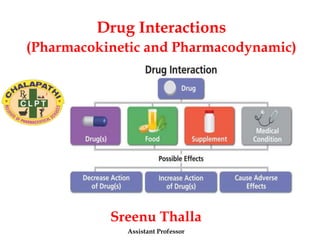
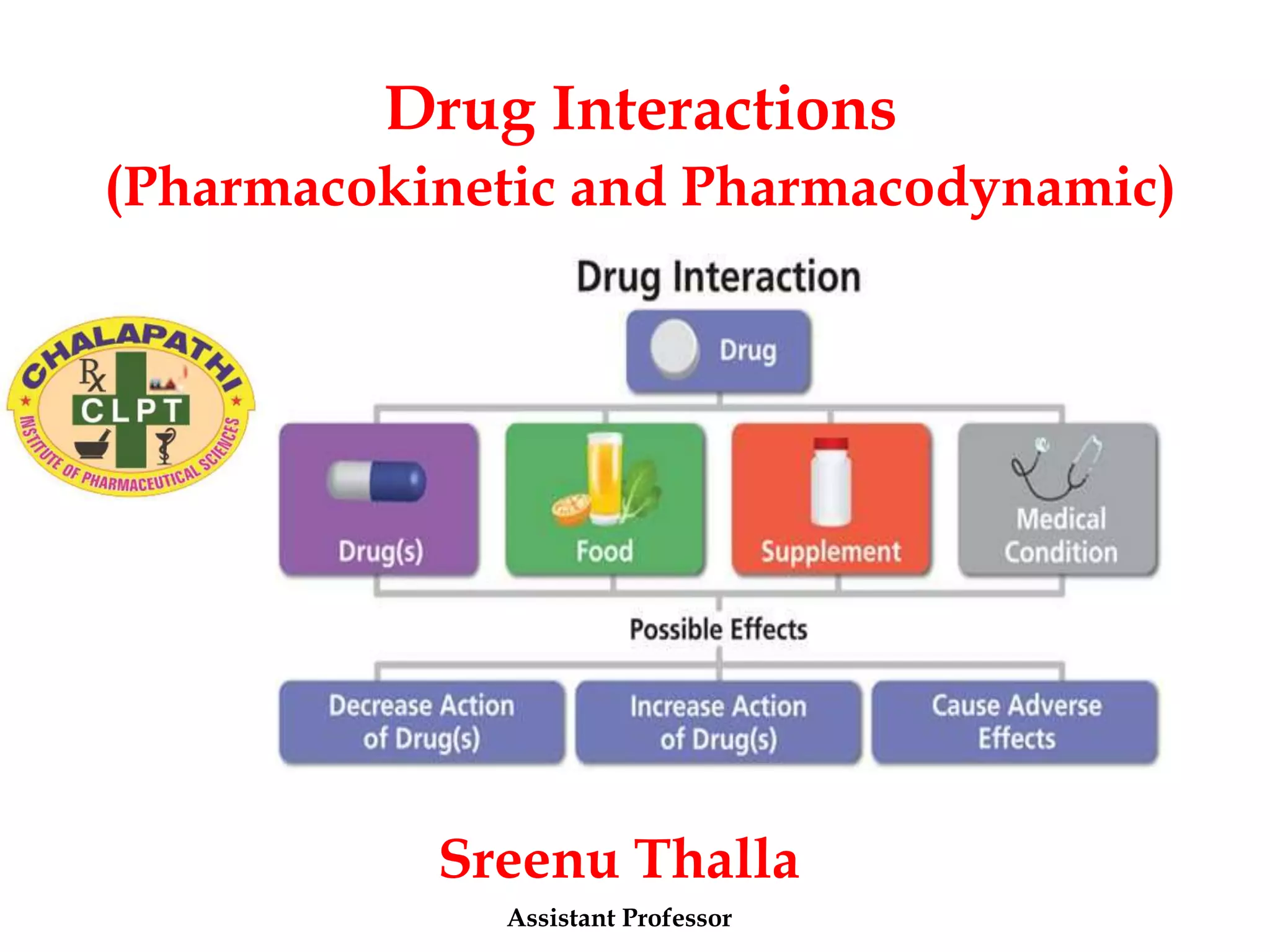
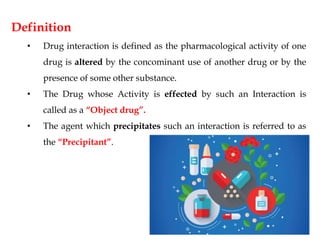
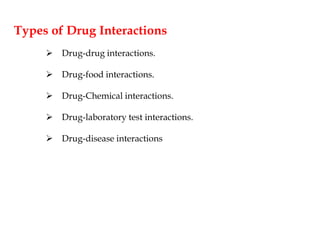
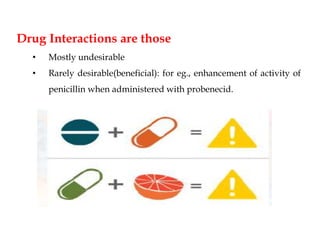
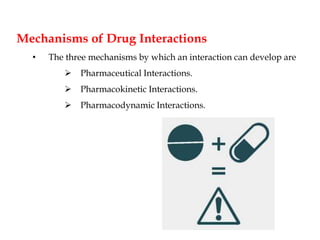
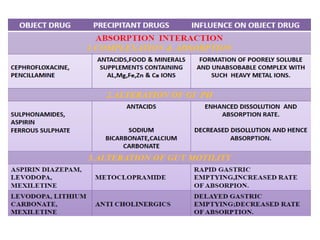
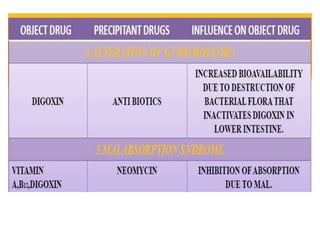
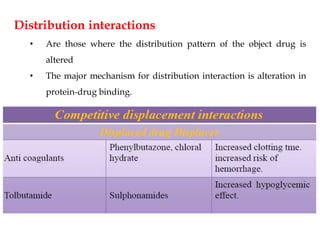
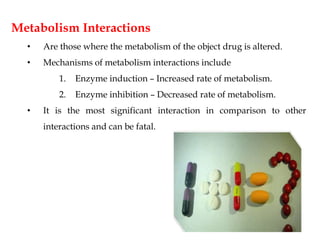
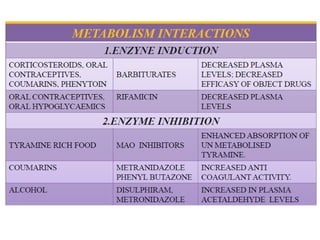
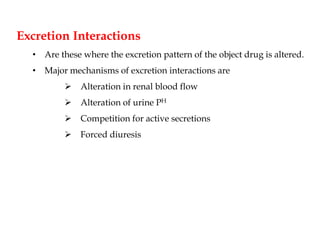
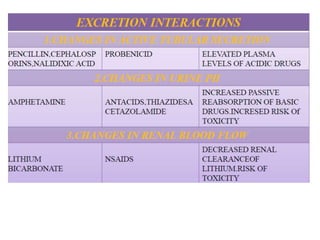
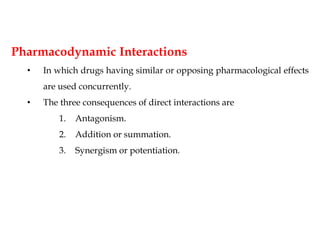
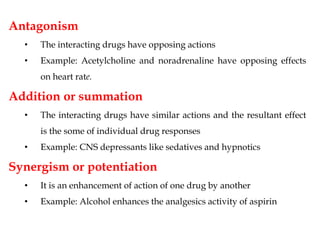
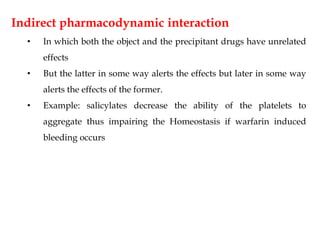
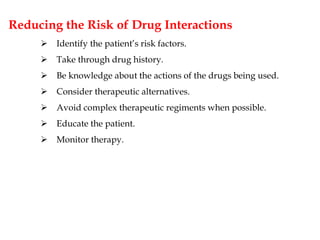
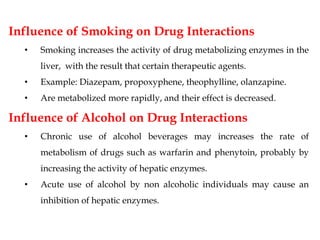
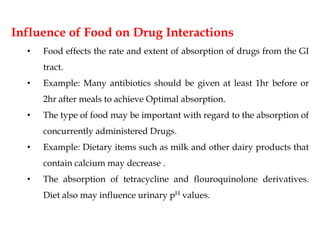

This document discusses drug interactions, which occur when the pharmacological activity of one drug is altered by another substance like another drug, food, or disease. It describes the main types of interactions as drug-drug, drug-food, drug-chemical, drug-test, and drug-disease. Interactions can be undesirable or beneficial. The three main mechanisms are pharmaceutical, pharmacokinetic, and pharmacodynamic. Pharmacokinetic interactions alter absorption, distribution, metabolism, or excretion of a drug. Pharmacodynamic interactions involve drugs with similar, opposing, additive, antagonistic, or synergistic effects. Managing interactions requires identifying risks, reviewing drug history, monitoring therapy, and educating patients.


![ONFH[AVN HIP] -TRIPLE REGIME -A NOVAL SURGICAL CONCEPT .pptx](https://cdn.slidesharecdn.com/ss_thumbnails/onfhavnhip2026koaconcalicutdrgokuldevdrmashraf-260210064517-213ec005-thumbnail.jpg?width=640&height=640&fit=bounds)

![CTEV [ clubfoot] DR ARUN LAL ,DR MOHAMED ASHRAF travancore medical college k...](https://cdn.slidesharecdn.com/ss_thumbnails/ctevclubfootdrarunlaldrmohamedashraftravancoremedicalcollegekollamkeralaindia-260208063247-18fc466c-thumbnail.jpg?width=640&height=640&fit=bounds)


