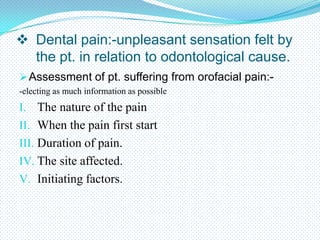
 Dental pain:-unpleasant sensation felt by
the pt. in relation to odontological cause.
 Assessment of pt. suffering from orofacial pain:-electing as much information as possible

I. The nature of the pain
II. When the pain first start

III. Duration of pain.
IV. The site affected.
V. Initiating factors.
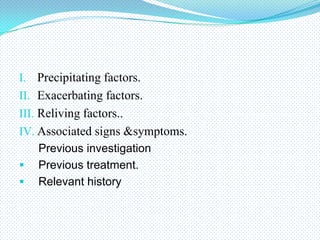
I. Precipitating factors.
II. Exacerbating factors.
III. Reliving factors..
IV. Associated signs &symptoms.
Previous investigation
 Previous treatment.
 Relevant history
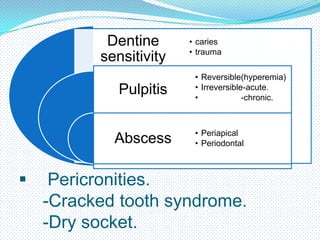
Dentine
sensitivity
Pulpitis

Abscess



• caries
• trauma
• Reversible(hyperemia)
• Irreversible-acute.
•
-chronic.

• Periapical
• Periodontal

Pericronities.
-Cracked tooth syndrome.
-Dry socket.
Dentine sensitivity: S&S:

The pain is best described as a sensation of sudden
shock and is sharp in nature. It is never spontaneous
in onset.
Precipitating by a noxious stimulus, either hot or
cold, sweet or sour, or touch.
 Localized &last for short time.
 Diagnosed by inspection or by x-ray…..etc.
 Management:-removal of caries & isolation of
dentine.
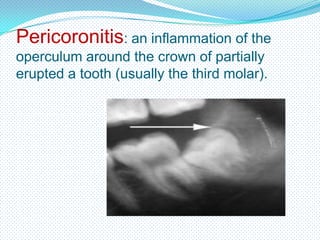
Pericoronitis: an inflammation of the
operculum around the crown of partially
erupted a tooth (usually the third molar).
 S&S:-

radiating pain in back of the mouth and
the inability to comfortably open or close the jaw. Not
only is it painful to close against the inflamed
operculum behind the erupting mandibular molar.
 sever pain & inflammation .
 Trismus
 Halitosis
Management:I. Preservative: irrigation ,anti-inflammatory
&analgesic .
II. Surgical:
 Operculectomy.
 Tooth extraction.
Dry socket:-failure of formation or maintenance of
blood clot in extraction socket leaving bare bone.
 S&S: sever pain.
 Halitosis..
 Bare bone.

Management:

Irrigation under L.A.
II. Alveogel or an abundant material is placed in the
socket
III. M.W&analgesic.
I.
Pulpitis:-I-Reversible pulpitis
 Causes:
1. trauma
2. thermal shock
3. chemical
4. caries
 symptoms
 sharp pain with stimuli (esp cold)
 subside within seconds after its removal
 diagnosis
 1-pain for short duration
 2-visual checking for caries or fracture
 3- percussion
-ve
 4-vitaltity test
+ve
 Treatment:
 Conservative treatment
II-Irreversible pulpitis: Cause:
1. trauma

2. Thermal shock
3. Chemical irritation

 Symptoms:
1. Pain with food impaction &cold & sweet food and
may be spontaneous intermitted or continuous.
 The pain persist after removal of the stimuli and increase

when the patient lies down or bend over and relived with
cold
 The pain may referred to adjacent teeth or to ear or tmj
area

 Diagnosis:
1. Visual deep cavity or secondary caries.
2. probing will cause pain.
3.
Percussion +ve.
4. Vitality test hyperplasia respond of the pulp (esp. cold)

which persist after its removal.
5. In late stage cold relief the pain.

 Treatment :
 Rct or extraction
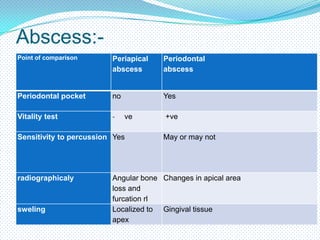
Abscess:Point of comparison

Periapical
abscess

Periodontal
abscess

Periodontal pocket

no

Yes

Vitality test

-

ve

Sensitivity to percussion Yes

radiographicaly

sweling

+ve
May or may not

Angular bone Changes in apical area
loss and
furcation rl
Localized to Gingival tissue
apex
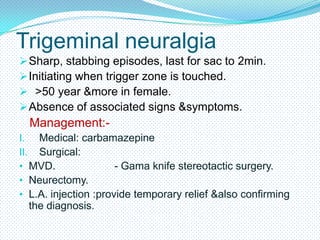
Trigeminal neuralgia
 Sharp, stabbing episodes, last for sac to 2min.
 Initiating when trigger zone is touched.
 >50 year &more in female.
 Absence of associated signs &symptoms.

Management:I. Medical: carbamazepine
II. Surgical:
• MVD.
- Gama knife stereotactic surgery.
• Neurectomy.
• L.A. injection :provide temporary relief &also confirming

the diagnosis.
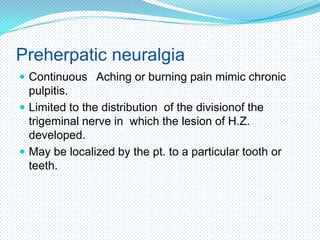
Preherpatic neuralgia
 Continuous Aching or burning pain mimic chronic

pulpitis.
 Limited to the distribution of the divisionof the
trigeminal nerve in which the lesion of H.Z.
developed.
 May be localized by the pt. to a particular tooth or
teeth.
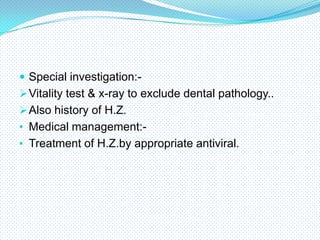
 Special investigation: Vitality test & x-ray to exclude dental pathology..
 Also history of H.Z.
• Medical management:-

• Treatment of H.Z.by appropriate antiviral.
Atypical odontalgia
 The pt. localized the pain to a tooth or group of teeth

are clinically and radiographically normal.
 The pt. may have already undergone dental
treatment in an attempt to alleviate their
symptoms, including the extraction of one or more
tooth, with only temporary relief of symptoms.
 The dentist must resist extracting healthy tooth in
such pt.

Dental pain

  • 2.
     Dental pain:-unpleasantsensation felt by the pt. in relation to odontological cause.  Assessment of pt. suffering from orofacial pain:-electing as much information as possible I. The nature of the pain II. When the pain first start III. Duration of pain. IV. The site affected. V. Initiating factors.
  • 3.
    I. Precipitating factors. II.Exacerbating factors. III. Reliving factors.. IV. Associated signs &symptoms. Previous investigation  Previous treatment.  Relevant history
  • 4.
    Dentine sensitivity Pulpitis Abscess  • caries • trauma •Reversible(hyperemia) • Irreversible-acute. • -chronic. • Periapical • Periodontal Pericronities. -Cracked tooth syndrome. -Dry socket.
  • 5.
    Dentine sensitivity: S&S: Thepain is best described as a sensation of sudden shock and is sharp in nature. It is never spontaneous in onset. Precipitating by a noxious stimulus, either hot or cold, sweet or sour, or touch.  Localized &last for short time.  Diagnosed by inspection or by x-ray…..etc.  Management:-removal of caries & isolation of dentine.
  • 6.
    Pericoronitis: an inflammationof the operculum around the crown of partially erupted a tooth (usually the third molar).
  • 7.
     S&S:- radiating painin back of the mouth and the inability to comfortably open or close the jaw. Not only is it painful to close against the inflamed operculum behind the erupting mandibular molar.  sever pain & inflammation .  Trismus  Halitosis Management:I. Preservative: irrigation ,anti-inflammatory &analgesic . II. Surgical:  Operculectomy.  Tooth extraction.
  • 8.
    Dry socket:-failure offormation or maintenance of blood clot in extraction socket leaving bare bone.  S&S: sever pain.  Halitosis..  Bare bone. Management: Irrigation under L.A. II. Alveogel or an abundant material is placed in the socket III. M.W&analgesic. I.
  • 9.
    Pulpitis:-I-Reversible pulpitis  Causes: 1.trauma 2. thermal shock 3. chemical 4. caries  symptoms  sharp pain with stimuli (esp cold)  subside within seconds after its removal
  • 10.
     diagnosis  1-painfor short duration  2-visual checking for caries or fracture  3- percussion -ve  4-vitaltity test +ve  Treatment:  Conservative treatment
  • 11.
    II-Irreversible pulpitis: Cause: 1.trauma 2. Thermal shock 3. Chemical irritation  Symptoms: 1. Pain with food impaction &cold & sweet food and may be spontaneous intermitted or continuous.
  • 12.
     The painpersist after removal of the stimuli and increase when the patient lies down or bend over and relived with cold  The pain may referred to adjacent teeth or to ear or tmj area  Diagnosis: 1. Visual deep cavity or secondary caries. 2. probing will cause pain. 3. Percussion +ve. 4. Vitality test hyperplasia respond of the pulp (esp. cold) which persist after its removal. 5. In late stage cold relief the pain.  Treatment :  Rct or extraction
  • 13.
    Abscess:Point of comparison Periapical abscess Periodontal abscess Periodontalpocket no Yes Vitality test - ve Sensitivity to percussion Yes radiographicaly sweling +ve May or may not Angular bone Changes in apical area loss and furcation rl Localized to Gingival tissue apex
  • 14.
    Trigeminal neuralgia  Sharp,stabbing episodes, last for sac to 2min.  Initiating when trigger zone is touched.  >50 year &more in female.  Absence of associated signs &symptoms. Management:I. Medical: carbamazepine II. Surgical: • MVD. - Gama knife stereotactic surgery. • Neurectomy. • L.A. injection :provide temporary relief &also confirming the diagnosis.
  • 15.
    Preherpatic neuralgia  ContinuousAching or burning pain mimic chronic pulpitis.  Limited to the distribution of the divisionof the trigeminal nerve in which the lesion of H.Z. developed.  May be localized by the pt. to a particular tooth or teeth.
  • 16.
     Special investigation:Vitality test & x-ray to exclude dental pathology..  Also history of H.Z. • Medical management:- • Treatment of H.Z.by appropriate antiviral.
  • 17.
    Atypical odontalgia  Thept. localized the pain to a tooth or group of teeth are clinically and radiographically normal.  The pt. may have already undergone dental treatment in an attempt to alleviate their symptoms, including the extraction of one or more tooth, with only temporary relief of symptoms.  The dentist must resist extracting healthy tooth in such pt.