DENTAL CALCULUS AND ROLE OF
IATROGENIC FACTORS
Presented by
Mansi Gandhi
Definitions
History
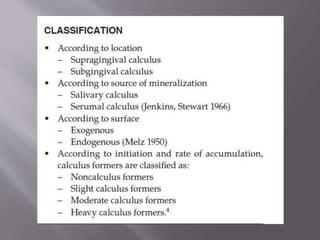
Classification
Supragingival calculus
Subgingival calculus
Prevalance
Rate of formation
Attachment of calculus
Diagnosis
Formation of calculus
Theories of mineralization
Clinical significance
Anticalculus agents
Indices
Future research
CONCLUSION
REFERENCES
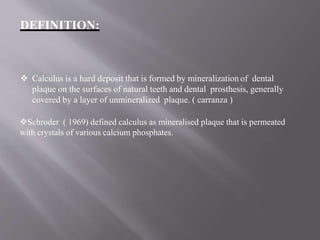
DEFINITION:
 Calculus is a hard deposit that is formed by mineralization of dental
plaque on the surfaces of natural teeth and dental prosthesis, generally
covered by a layer of unmineralized plaque. ( carranza )
Schroder ( 1969) defined calculus as mineralised plaque that is permeated
with crystals of various calcium phosphates.
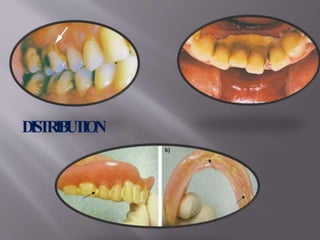
DISTRIBUTION
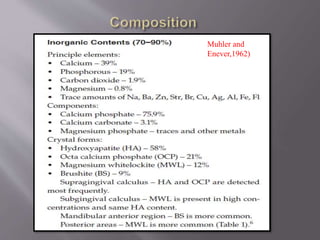
Muhler and
Enever,1962)
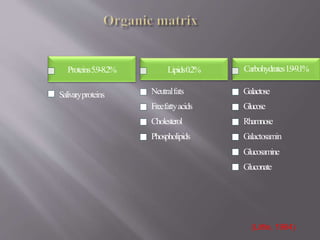
Proteins5.9-8.2%
Salivaryproteins
Lipids0.2%
Neutralfats
Freefattyacids
Cholesterol
Phospholipids
Carbohydrates1.9-9.1%
Galactose
Glucose
Rhamnose
Galactosamin
Glucosamine
Gluconate
(Little, 1964)
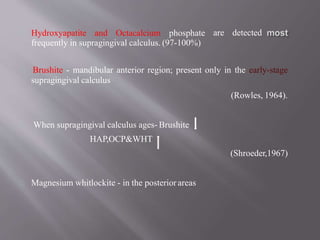
are detectedHydroxyapatite and Octacalcium phosphate
frequently in supragingival calculus. (97-100%)
Brushite - mandibular anterior region; present only in the early-stage
supragingival calculus
(Rowles, 1964).
When supragingival calculus ages- Brushite
HAP,OCP&WHT
(Shroeder,1967)
Magnesium whitlockite - in the posterior areas
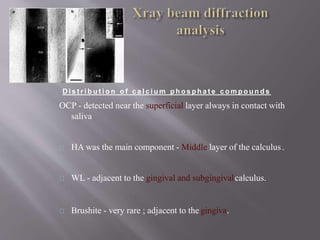
D i s t r i b u t i o n o f c a l c i u m p h o s p h a t e c o m p o u n d s
OCP - detected near the superficial layer always in contact with
saliva
HA was the main component - Middle layer of the calculus.
WL - adjacent to the gingival and subgingivalcalculus.
Brushite - very rare ; adjacent to the gingiva.
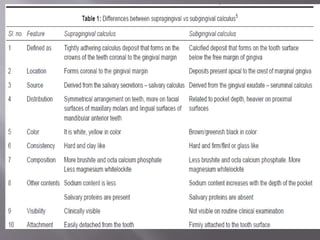
Location
Colour
Textureand consistency
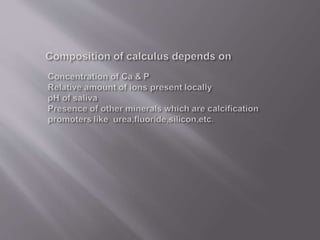
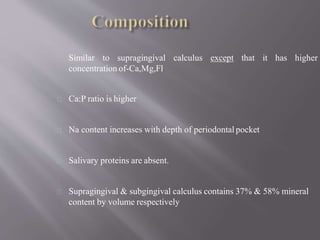
calculus except that it has higherSimilar to supragingival
concentration of-Ca,Mg,Fl.
Ca:P ratio is higher
Na content increases with depth of periodontal pocket
Salivary proteins are absent.
Supragingival & subgingival calculus contains 37% & 58% mineral
content by volume respectively
Whitlockite – mainly found
Same HAP, more WL, less Brushite and OCP as compared to
supragingival calculus
WL to HAP ratio ishigher
calculus - interproximal surface ; least- buccalSubgingival
surfaces.
Maxillary incisors and bicuspids - least involved.
Supragingival calculus starts forming with 6 years of eruption age
while Subgingival at 8 yrs of age ; Subgingival calculus is least
before 20 yrs of age.
Deposition of supragingival calculus - maximal scores around 25 to
30 yrs. of age; By age 45 only a few teeth ,typically the premolars
were without calculus
By age 30 - all surfaces of all teeth had subgingival calculus
without any pattern of predilection.
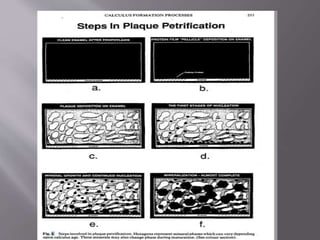
Plaque mineralization begins within 24-72 hrs and takes an average of
12 days to mature.
Soft plaque is hardened by mineralization between 1st and 14th days
of plaque formation.
Calcification is reported to occur in as little as 4-8 hrs. (Tibetts 1970)
Calcifying plaque may become 50% mineralized in 2 days and 60%
to 90%mineralization in 12 days
Calculus is formed in layers which are often separated by a thin cuticle that
becomes embedded in calculus as calcification progresses.
Plaque has the ability to concentrate calcium at 2 to 20 times its level in
saliva.
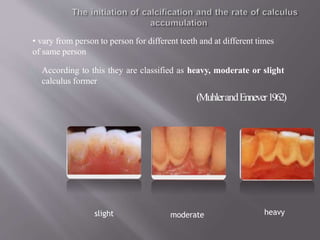
• vary from person to person for different teeth and at different times
of same person
According to this they are classified as heavy, moderate or slight
calculus former
(MuhlerandEnnever1962)
slight moderate heavy
Early plaque of heavy calculus former - more calcium, three
times more phosphorous and less potassium than that of non-
calculus former
The average daily increment in calculus former- 0.10% to
0.15% of dry weight
The time required by calculus to reach the maximal level has
been reported as 10 weeks(Conroy 1968) and 6 months.(Volpe
1969)
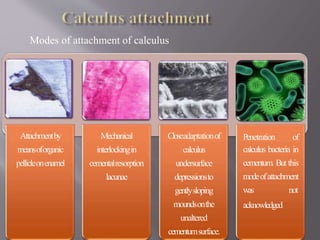
Attachmentby
meansoforganic
pellicleonenamel
Mechanical
interlockingin
cementalresorption
lacunae
Closeadaptationof
calculus
undersurface
depressionsto
gentlysloping
moundsonthe
unaltered
cementumsurface.
Penetration of
calculus bacteria in
cementum. But this
modeofattachment
was not
acknowledged
Modes of attachment of calculus
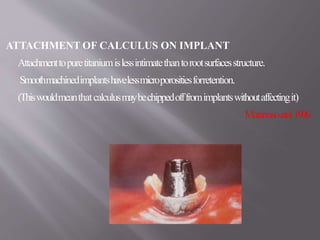
ATTACHMENT OF CALCULUS ON IMPLANT
Attachmenttopuretitaniumislessintimatethantorootsurfacesstructure.
Smoothmachinedimplantshavelessmicroporositiesforretention.
(Thiswouldmeanthatcalculusmaybechippedofffromimplantswithoutaffectingit)
Matarrasoetal1996
ROLE OF MICRO-ORGANISMS IN MINERALIZATION
Mineralization of plaque starts both extracellulary & intracellulary by gram +ve
and –ve microorganisms.
Filamentous organisms,diptheroids,bacterionema and vellionella species have the
ability to form intracellular apatite crystals.
Bacterial plaque may actively participate in the mineralization of calculus by
forming phosphates, which changes the Ph of plaque and induces mineralization.
 Two principal categories are
 Mineral precipitation theory - resultsfromlocalriseinthe
degreeofsaturationof CaandPhosphate ions which maybe dueto
 1.risein phofsaliva.
 2.colloidalproteins.
 3.phosphatase liberatedfrom dentalplaque
 Epitactic concept or hetrogenous nucleation or Seeding
theory – seeding agents induce small foci of
calcification that enlarge and coalesce to form a calcified
mass.
FEW PROPOSED THEORIESARE:
1. Booster mechanism
2. Epitactic concept
3. Inhibition theory
4. Transformation theory
5. Bacterial theory
6. Enzymatic theory
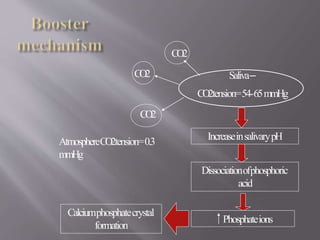
Calcification will occur in a particular locus when local pH +
calcium and phosphorous concentrations  precipitation of a
calcium phosphate salt.
Factors such as
1. loss of CO2 & production of ammonia could account for an
elevation in pH;
2. Acid or alkaline phosphatase activity could result in a higher
phosphate concentration;
3. Liberation of bound or complexed calcium from the salivary
proteins would produce higher calciumlevels.
Saliva–
CO2tension=54-65mmHg
AtmosphereCO2tension=0.3
mmHg
CO2
CO2
CO2
IncreaseinsalivarypH
Dissociationofphosphoric
acid
Phosphateions
Calciumphosphatecrystal
formation
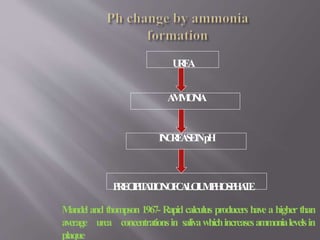
UREA
AMMONIA
INCREASEINpH
PRECIPITATIONOFCALCIUMPHOSPHATE
Mandel and thompson 1967- Rapid calculus producers have a higher than
average urea concentrationsin salivawhichincreasesammonialevelsin
plaque
 Seeding agents induce small foci of calcification that enlarge and coalesce to form
a calcified mass.
 Carbohydrate protein complexes initiates the calcification by removing calcium
from saliva by chelation and binds with the nuclei that induce subsequent
deposition of minerals.
Calcification at specific sites - because of inhibiting mechanism at
non-calcifying sites.
The sites where calcification occurs , the inhibitor is apparently
altered or removed.
Possible inhibiting substance- pyrophosphate & other
polyphosphates.
Among controlling mechanisms is the enzyme
pyrophosphatase - hydrolyze the pyrophosphate 
alkaline
phosphate
(Russell and Fleisch 1970).
Pyrophosphate inhibits calcification - prevents the initial nucleus from
growing, possibly by poisoning the growth centers of thecrystals
Hypothesis - hydroxyapatite need not arise exclusivelyvia
epitaxis or nucleation.
Amorphous non-crystalline deposits and brushite can be
transformed into octacalcium phosphate and then to
hydroxyapatite (Eanes et al 1970).
It has been suggested that controlling mechanism in
transformation mechanism can be pyrophosphate (Fleisch et al
1968).
Oral microorganisms are the primary cause of calculus, and that
they are invovled in its attachment to the tooth surface.
Leptotrichia and Actinomyces have been considered most often
as the causative microorganism.
Calculus formation resultant of the
derived
is the
from either oral tissues
action of
or oral
on some salivary phosphate containing
phosphatases
microorganism
complex,most probably phospheric esters of the
hexophosphoric group.(Adamson.KT1929)
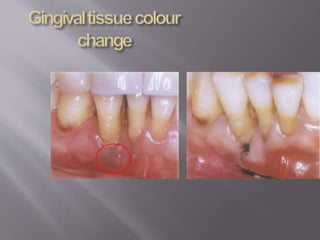
Visualexamination
Gentleairblast
Transillumination
Gingivaltissuecolorchange
Tactileexamination
Probe
Explorer
Radiographs
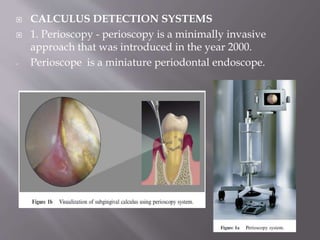
 CALCULUS DETECTION SYSTEMS
 1. Perioscopy - perioscopy is a minimally invasive
approach that was introduced in the year 2000.
- Perioscope is a miniature periodontal endoscope.
 When inserted into the periodontal pocket, it images the
subgingival root surface, tooth surface, and calculus.
 Components of the perioscope include fiber-optic bundles
bound by multiple illumination fibers, a light source, and an
irrigation system.
 Not widely used, owing to its high cost and the need for a
rigorous training period prior to use.
2. Optical spectrometry
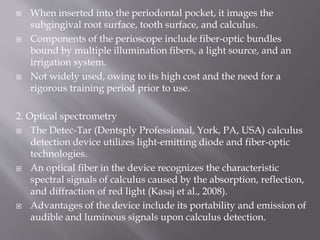
 The Detec-Tar (Dentsply Professional, York, PA, USA) calculus
detection device utilizes light-emitting diode and fiber-optic
technologies.
 An optical fiber in the device recognizes the characteristic
spectral signals of calculus caused by the absorption, reflection,
and diffraction of red light (Kasaj et al., 2008).
 Advantages of the device include its portability and emission of
audible and luminous signals upon calculus detection.
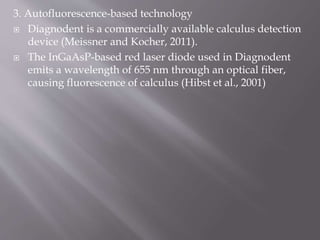
3. Autofluorescence-based technology
 Diagnodent is a commercially available calculus detection
device (Meissner and Kocher, 2011).
 The InGaAsP-based red laser diode used in Diagnodent
emits a wavelength of 655 nm through an optical fiber,
causing fluorescence of calculus (Hibst et al., 2001)
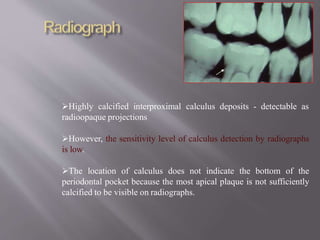
Highly calcified interproximal calculus deposits - detectable as
radioopaque projections
However, the sensitivity level of calculus detection by radiographs
is low.
The location of calculus does not indicate the bottom of the
periodontal pocket because the most apical plaque is not sufficiently
calcified to be visible on radiographs.
• Brings plaque bacteria close to supporting tissues.
• Provides fixed nidus for plaque accumulation.
• Interferes with local self cleansing mechanisms.
• Reservoir for substances like endotoxins, antigenic materials and
bone resorbing factors because of its permeability and porous
nature.
 Calculus inhibition influences
 (1) calculus adhesion, (2) the microbial matrix and (3) crystal formation.
 Two methods of theoretically inhibiting calculus are discussed:
 1. Combating the colonization and adhesion of microorganisms, their
multiplication, their extracellular products and their metabolic activity.
Inhibitors directed against certain types of microorganisms which form a
large portion of the calculus matrix (intermicrobial polysaccharides)
would be required to achieve significant change in microbial composition
or activity.
 2. Combating initial nucleation of crystals which would play only a
subordinate role in the interphase reactions between oral fluid and tooth
substances..
TOOTHBRUSHING
Toothpaste abrasives may interfere with supragingival calculus
formation, either by removal of the matrix for the deposition of
salts or removal of the calculus in the early stages of calcification.
Using a quantitative scoring procedure, Villa in 1968 was able to
demonstrate that thorough brushing alone could reduce calculus
formation by as much as 50 percent on the lingual surfaces of the
lower anterior teeth.
It is the most commonly practiced therapeutic intervention for
calculus formation.
Scaling and root planing is done to remove plaque and
calculus from crowns and root surface of teeth.
Sickles, curettes and ultrasonic and sonic instruments are most
commonly used for the removal of calculus.
Laser most commonly used in periodontal therapy include
1. Semiconductor diode laser(gallium,arsenide,alluminium)
2. Solid state laser such as Nd:YAG(neodenium doped-yttrium
aluminium garnet),Er:YAG &
Er,Cr:YSGG(yttrium,scandilium,garnet,galium)
3. Carbon dioxide laser
Among all lasers - Er:YAG laser is most suitable for the non
surgical periodontal debridement.
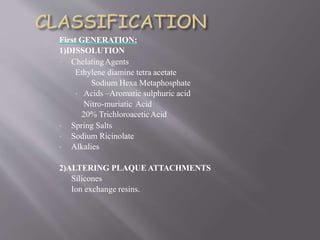
First GENERATION:
1)DISSOLUTION
• ChelatingAgents
Ethylene diamine tetra acetate
Sodium Hexa Metaphosphate
• Acids –Aromatic sulphuric acid
Nitro-muriatic Acid
20% TrichloroaceticAcid
• Spring Salts
• Sodium Ricinolate
• Alkalies
2)ALTERING PLAQUE ATTACHMENTS
Silicones
Ion exchange resins.
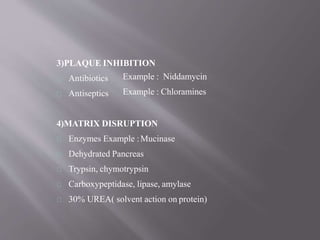
3)PLAQUE INHIBITION
Antibiotics
Antiseptics
Example : Niddamycin
Example : Chloramines
4)MATRIX DISRUPTION
Enzymes Example :Mucinase
Dehydrated Pancreas
Trypsin, chymotrypsin
Carboxypeptidase, lipase, amylase
30% UREA( solvent action on protein)
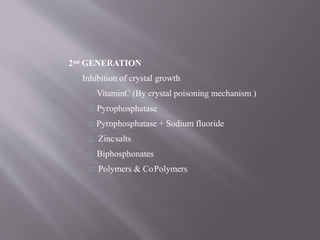
2nd GENERATION
Inhibition of crystal growth
VitaminC (By crystal poisoning mechanism )
Pyrophosphatase
Pyrophosphatase + Sodium fluoride
Zincsalts
Biphosphonates
Polymers & CoPolymers
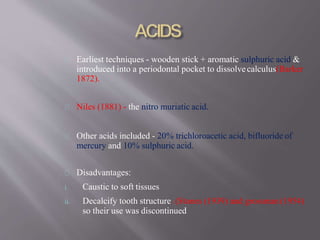
Earliest techniques - wooden stick + aromatic sulphuric acid &
introduced into a periodontal pocket to dissolvecalculus(Barker
1872).
Niles (1881) - the nitro muriatic acid.
Other acids included - 20% trichloroacetic acid, bifluoride of
mercury and 10% sulphuric acid.
Disadvantages:
i. Caustic to soft tissues
ii. Decalcify tooth structure. (Stones (1939) and grossman (1954)
so their use was discontinued
Badanes (1929) argued that it was the action of the mild alkalis
contained in the waters that dissolved the principal organic
constituents of salivary calculus.
These findings agreed with those of Prinz (1921), but the ideafailed
to find support.
Thesechemicals removecalcium from solution.
• Sodium hexametaphosphate was found to remove supragingival calculus
from extracted teeth in 10 to 15 days (Kerr & Field 1944).
• Warren et al. (1964) exposed extracted teeth to a saturated solution of
sodium hexametaphosphate for 24 h and found a large reduction in the
hardness of the cementum and the decalcification of the calculus was less
than that of cementum. Because of this nonspecific demineralization
effect, the use of chelating agents in anticalculus dentifrices ceased.
EDTA gelJabro et al. (1992) found that application of
(SofscaleTM) resulted in ease of calculus removal.
However, subsequent studies by Maynar et al. (1994), Smith et al.
(1994), Harding et al.(1996) and Nagy et al. (1998) have failed to
confirm this effect.
Smith et al. (1994) noted that sufficient time has to be allowed for
the gel to penetrate the bulk of the calculus deposit and this may
negate the reason for using it.
Mode of action – 1.To break down plaque matrix OR
2. To affect the binding of the calculus to the tooth.
The first enzyme to be tested- mucinase (Stewart 1952)Calculus
formation reduced & calculus formed was softer and more easily
removed (Stewart 1952).
Aleece & Forscher (1954) - introduced mylase.
Enzyme with high proteolytic and low amylase activity- most
effective inhibitor of calculus formation. Draus et al. (1963)
Dehydrated pancreas (Viokase) - tested on the basis of a high
proteolytic enzyme activity - reduce calculus formation by 60%
(Jensen 1959).
Enzymes of fungal origin have also been tested.
The anticalculus effect - ability to dissolve the mucoproteinaceous material
within which the calcium salts are deposited and/or by increasing the
solubility of calcium saltsin saliva.
It was found that increasing the concentration of urea resulted in progressive
inhibition of calcium deposition.
A maximum inhibition of 70% was reached at a concentration of 30% urea.
greater than 30% led to a progressiveUrea concentrations
decrease in inhibition.
Then came into research, the concept of inhibiting urease
activity.
Ethanehydroxydiphosphonate (EHDP) or acetohydroxamic acid
(AHA) were tested for their anti calculus potential
Results demonstrated a significant reduction
formation in both the EHDP and AHAgroups.
not significant in humans. ( SonBut such changes were
&Muhlemann 1971)
This finding together with the observation that AHA had been
shown to increase caries (Regolati & Muhlemann 1971) led to a
decline in interest in AHA as an anticalculusagent.
Attempts have been made to prevent calculus deposition by
coating the teeth with adhesive to alter the binding of the calculus
to the tooth.
Dimethylpolysiloxane and cyanoacrylate monomer adhesive,- no
effect
Silicones- no effect
Lactone- effective but caused de-mineralisation of teeth.
Sulphonated polystyrene membrane – effective but temporary
Sodium ricinoleate - interferes with the attachment of
microorganisms to teeth. (Dossenbach & Muhlemann (1961)
The results showed almost total absence of microorganisms,and
calculus formation was almost totally inhibited.
Unfortunately, sodium ricinoleate had a particularly unacceptable
taste and needed to be applied at high concentrations.
The magnetic water was thought to bring Ca2 and PO4 ions closer
together, consequently reducing attachment.
The group using a magnetic water irrigator had 44% greater
reduction in calculus volume and a 42% greater reduction in
calculus area when compared with the group using an irrigator
with no magnetic water.
Schaeken et al. (1990) investigated a 5% calcium lactate solution on
calcium and phosphate levels in saliva.
The group using the dentifrices with calcium lactate had a 44%
reduction in calculus and those using the calcium lactate with sodium
lauryl sulphate had a 47% reduction in calculus with respect to the
control group.
The authors concluded that calcium lactate probably did not act asan
inhibitor of crystal growth but may offset secretion and activity of
salivary phosphoproteins.
Penicillin- no effect
Cetylpyridinium chloride- no effect
Chlorhexidine
Chlorhexidine is a cationic bis-biguanide which acts by being adsorbed
onto the bacterial cell wall, leading to damage of the permeability
barriers. At higher concentrations, precipitation and coagulation of the
cytoplasmic contents occurs (Hennessey 1977).
Many studies have confirmed that chlorhexidine is an excellent
antiplaque agent (Lo¨ e & Schiott 1970, Hamp et al. 1973, Tepeet
al.1983)
Strong activity toward a variety of gram positive organisms;
enterococci, corynebacteria, bacilli and certainstreptococci,
protozoas.
No known medical uses; not significantly absorbed orally or
systemically, and no in vivo bacterial resistance had been reported
(Stallard et al.1969).
Research into the use of Niddamycin as an anticalculus agent was
discontinued - concern over the development of bacterial cross
resistance to other antimicrobials.
Triclosan ( trivial name of 2,4,4-trichloro-2-hydroxydiphenyl ether) a
non-ionic antibacterial agent with a wide spectrum of activity against
bacteria, fungi and yeasts.
When delivered from a dentifrice- seems to bind to oral mucous
membranes and tooth surfaces, and is particularly well retained in
plaque.
Triclosan is predominantly used in combination with other anti-
calculus
PVM/MA Copolymer is a copolymer of methyl vinyl ether and
maleic anhydride and is used as a binder.
Promotes uptake of triclosan by enamel and buccal epithelial
cells (Nabi et al., 1989).
Composed of two groups: an attachment group and a
solubilizing group.
The solubilizing group retains triclosan in surfactant micelles so
that the attachment group can have enough time to react with
tooth surfaces via calcium in the liquid adherent layer.
Metals
Use of heavy metals - suggested by Hanke (1940) - in solution,
these metals suffered from having a disagreeable metallic taste, or
caused an unsightly discoloration of the teeth.
Mechanisms by which they can affect calculus formation:
i. Firstly, they inhibit plaque growth.
ii. Secondly, metal salts are potent inhibitors of mineralization
(Bachra & van Harskamp 1970, Thomas 1982).
Metal ions can bind to hydroxyapatite although this binding is
reversible.
ZINC ions
1. Reduce plaque acidogenicity (Opperman 1980)
2. Plaque growth (Saxton 1986)
It inhibits crystal growth by binding to the surface of solid CaP
(Gilbert 1988)
Zn at a conc of 0.1mmol/L inhibits the formation of
DCPD,OCP and amorphous Ca P but at a higher conc of0.5-2
mmol/L promotes the formation of amorphousCaP.
Bisphosphonates are a group of synthetic pyrophosphate analogues
thought to prevent calculus deposition by inhibiting crystal growth.
BISPHOSPHONATES
Vitamin C is a surface active organophosphorus compound that
has been shown to be effective in inhibiting the in vitro
crystallization of calcium phosphate on to smears of
supragingival calculus (Turesky et al. 1965).
crystal growth by a crystal poisoningVitamin C inhibits
mechanism.
Pyrophosphate could prevent calcification by
1. Interrupting the conversion of amorphous calcium phosphate to
hydroxyapatite (Fleisch & Bisaz 1962
2. Inhibiting crystal growth
3. Reduce acquired pellicle formation.
Lower concentrations of pyrophosphate were noted in the parotid
saliva of calculus formers than in saliva of non-formers (Vogel &
Amdur 1967).
The concentration of pyrophosphate in the plaque of low calculus
formers was also significantly greater than that in heavy calculus
formers (Edgar & Jenkins 1972).
Pyrophosphate undergo rapid hydrolysis in the oral cavityby
bacterial and host phosphatases (Gaffar et al 1986)
The addition of co polymer PVM/MA is believed toprevent
this hydrolysis
Two indices – quantitating calculus deposits
calculus component of OHI
calculus component of PI
Calculus surface index (Ennever 1961)
Marginal line calculus index (Muhlem1967)
Volpe – manhold index (1965)
Calculus surface severity index
 Role of iatrogenic factors
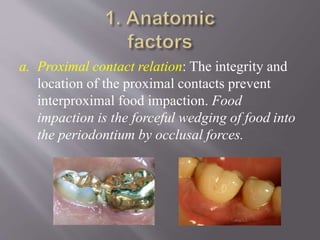
a. Proximal contact relation: The integrity and
location of the proximal contacts prevent
interproximal food impaction. Food
impaction is the forceful wedging of food into
the periodontium by occlusal forces.
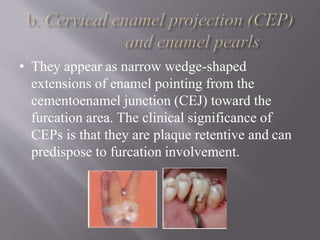
• They appear as narrow wedge-shaped
extensions of enamel pointing from the
cementoenamel junction (CEJ) toward the
furcation area. The clinical significance of
CEPs is that they are plaque retentive and can
predispose to furcation involvement.
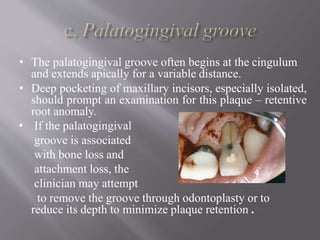
• The palatogingival groove often begins at the cingulum
and extends apically for a variable distance.
• Deep pocketing of maxillary incisors, especially isolated,
should prompt an examination for this plaque – retentive
root anomaly.
• If the palatogingival
groove is associated
with bone loss and
attachment loss, the
clinician may attempt
to remove the groove through odontoplasty or to
reduce its depth to minimize plaque retention .
• Inadequate dental procedures that contribute to
the deterioration of the periodontal tissues are
referred to as iatrogenic factors.
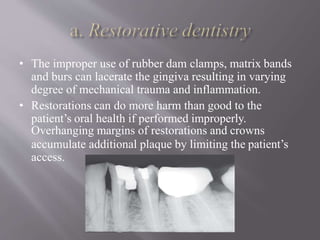
• The improper use of rubber dam clamps, matrix bands
and burs can lacerate the gingiva resulting in varying
degree of mechanical trauma and inflammation.
• Restorations can do more harm than good to the
patient’s oral health if performed improperly.
Overhanging margins of restorations and crowns
accumulate additional plaque by limiting the patient’s
access.
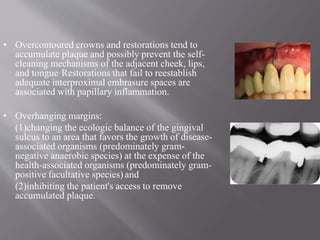
• Overcontoured crowns and restorations tend to
accumulate plaque and possibly prevent the self-
cleaning mechanisms of the adjacent cheek, lips,
and tongue. Restorations that fail to reestablish
adequate interproximal embrasure spaces are
associated with papillary inflammation.
• Overhanging margins:
(1)changing the ecologic balance of the gingival
sulcus to an area that favors the growth of disease-
associated organisms (predominately gram-
negative anaerobic species) at the expense of the
health-associated organisms (predominately gram-
positive facultative species) and
(2)inhibiting the patient's access to remove
accumulated plaque.
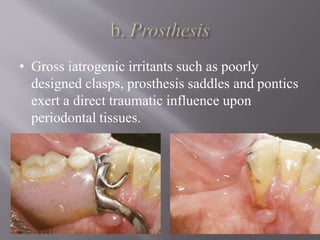
• Gross iatrogenic irritants such as poorly
designed clasps, prosthesis saddles and pontics
exert a direct traumatic influence upon
periodontal tissues.
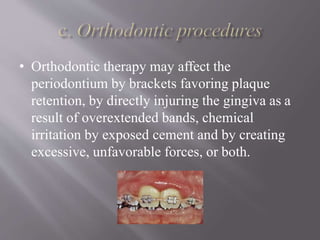
• Orthodontic therapy may affect the
periodontium by brackets favoring plaque
retention, by directly injuring the gingiva as a
result of overextended bands, chemical
irritation by exposed cement and by creating
excessive, unfavorable forces, or both.
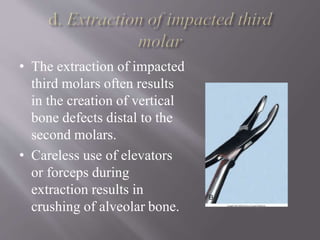
• The extraction of impacted
third molars often results
in the creation of vertical
bone defects distal to the
second molars.
• Careless use of elevators
or forceps during
extraction results in
crushing of alveolar bone.
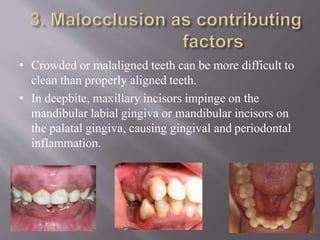
• Crowded or malaligned teeth can be more difficult to
clean than properly aligned teeth.
• In deepbite, maxillary incisors impinge on the
mandibular labial gingiva or mandibular incisors on
the palatal gingiva, causing gingival and periodontal
inflammation.
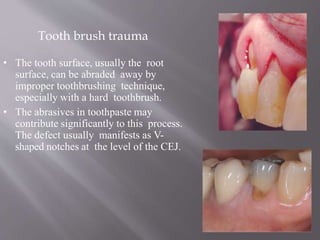
• The tooth surface, usually the root
surface, can be abraded away by
improper toothbrushing technique,
especially with a hard toothbrush.
• The abrasives in toothpaste may
contribute significantly to this process.
The defect usually manifests as V-
shaped notches at the level of the CEJ.
Tooth brush trauma
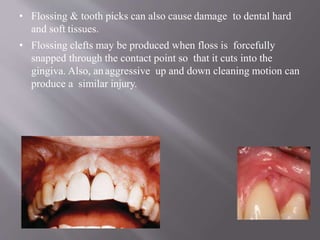
• Flossing & tooth picks can also cause damage to dental hard
and soft tissues.
• Flossing clefts may be produced when floss is forcefully
snapped through the contact point so that it cuts into the
gingiva. Also, anaggressive up and down cleaning motion can
produce a similar injury.
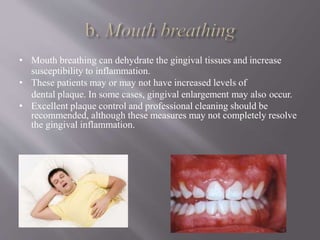
• Mouth breathing can dehydrate the gingival tissues and increase
susceptibility to inflammation.
• These patients may or may not have increased levels of
dental plaque. In some cases, gingival enlargement may also occur.
• Excellent plaque control and professional cleaning should be
recommended, although these measures may not completely resolve
the gingival inflammation.
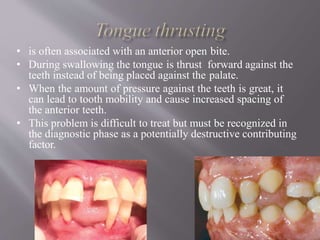
• is often associated with an anterior open bite.
• During swallowing the tongue is thrust forward against the
teeth instead of being placed against the palate.
• When the amount of pressure against the teeth is great, it
can lead to tooth mobility and cause increased spacing of
the anterior teeth.
• This problem is difficult to treat but must be recognized in
the diagnostic phase as a potentially destructive contributing
factor.
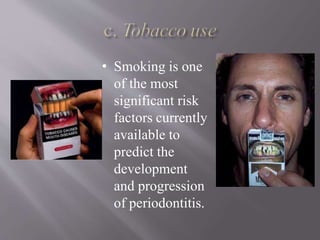
• Smoking is one
of the most
significant risk
factors currently
available to
predict the
development
and progression
of periodontitis.
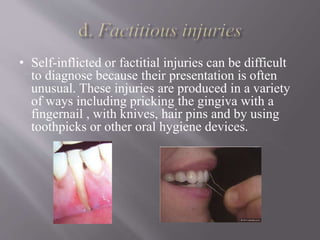
• Self-inflicted or factitial injuries can be difficult
to diagnose because their presentation is often
unusual. These injuries are produced in a variety
of ways including pricking the gingiva with a
fingernail , with knives, hair pins and by using
toothpicks or other oral hygiene devices.
While the bacterial plaque that coats the teeth is the
main etiologic factor in the development of
periodontal disease, the removal of subgingival
plaque and calculus constitute the cornerstone of
periodontal therapy.
Calculus plays an important role in maintaining and
accentuating periodontal disease by keeping plaque in
close contact with the gingival tissue and creating
areas where plaque removal is impossible. Therefore
the clinician must possess the clinical skill to remove
the calculus and other irritants as a basis for adequate
periodontal and prophylactic therapy.
CARRANZA–CLINICALPERIODONTOLOGY10THED
JANLINDHE– CLINICALPERIODONTOLOGYANDIMPLANTOLOGY4THED
SUPRAGINGIVALCALCULUS:FORMATIONANDCONTROL(YEJIN)
SUPRAGINGIVALCALCULUSANDPERIODONTALDISEASE,PERIO2000(ROBINM
.DAVIESR,OGERP.ELLWOODA,NTHONYR.VOLPE&MARGAREET.P
ETRONE)
CALCULUSREVISITED:Areview
,MandeiIDandGaffar249-257PeriodontolJ9S6;
ANTICALCULUSAGENTS
(FairbrotherKJ,HeasmanPA:Anticalculusagents.JClinPeriodontol2000;27:285–
301.CMunksgaard, 2000.)
SUBGINGIVALCALCULUS:WHEREAREWENOW?ACOMPARATIVEREVIEW
(E.A.Roberts-Harry*,V.Clerehugh)
CALCULUS-DETECTIONTECHNOLOGIESANDTHEIRCLINICALAPPLICATION
(GritMeissner&ThomasKocher)PERIO2000
CALCULUSREMOVALANDTHEPREVENTIONOFITSFORMATION
(SørenJepsen,JamesDeschner,AndreasBraun,FrankSchwarz&Jo¨ Rg Eberhard)
PERIO2000.
WHITEDJ:DENTEDCALCULUS:RECENTINSIGHTSINTOOCCURRENCE,
FORMATION,PREVENTION,REMOVALANDORALHEALTHEFFECTSOF
SUPRAGINGIVALANDSUBGINGIVALDEPOSITS
(.EurJOralSci1997:105:508-522.©Munksgaard,1997)
Dental calculus

Dental calculus

  • 1.
    DENTAL CALCULUS ANDROLE OF IATROGENIC FACTORS Presented by Mansi Gandhi
  • 2.
    Definitions History Classification Supragingival calculus Subgingival calculus Prevalance Rateof formation Attachment of calculus Diagnosis Formation of calculus Theories of mineralization Clinical significance Anticalculus agents Indices Future research CONCLUSION REFERENCES
  • 3.
    DEFINITION:  Calculus isa hard deposit that is formed by mineralization of dental plaque on the surfaces of natural teeth and dental prosthesis, generally covered by a layer of unmineralized plaque. ( carranza ) Schroder ( 1969) defined calculus as mineralised plaque that is permeated with crystals of various calcium phosphates.
  • 5.
  • 6.
  • 7.
  • 8.
    are detectedHydroxyapatite andOctacalcium phosphate frequently in supragingival calculus. (97-100%) Brushite - mandibular anterior region; present only in the early-stage supragingival calculus (Rowles, 1964). When supragingival calculus ages- Brushite HAP,OCP&WHT (Shroeder,1967) Magnesium whitlockite - in the posterior areas
  • 11.
    D i st r i b u t i o n o f c a l c i u m p h o s p h a t e c o m p o u n d s OCP - detected near the superficial layer always in contact with saliva HA was the main component - Middle layer of the calculus. WL - adjacent to the gingival and subgingivalcalculus. Brushite - very rare ; adjacent to the gingiva.
  • 12.
  • 13.
    calculus except thatit has higherSimilar to supragingival concentration of-Ca,Mg,Fl. Ca:P ratio is higher Na content increases with depth of periodontal pocket Salivary proteins are absent. Supragingival & subgingival calculus contains 37% & 58% mineral content by volume respectively
  • 14.
    Whitlockite – mainlyfound Same HAP, more WL, less Brushite and OCP as compared to supragingival calculus WL to HAP ratio ishigher
  • 15.
    calculus - interproximalsurface ; least- buccalSubgingival surfaces. Maxillary incisors and bicuspids - least involved. Supragingival calculus starts forming with 6 years of eruption age while Subgingival at 8 yrs of age ; Subgingival calculus is least before 20 yrs of age. Deposition of supragingival calculus - maximal scores around 25 to 30 yrs. of age; By age 45 only a few teeth ,typically the premolars were without calculus By age 30 - all surfaces of all teeth had subgingival calculus without any pattern of predilection.
  • 16.
    Plaque mineralization beginswithin 24-72 hrs and takes an average of 12 days to mature. Soft plaque is hardened by mineralization between 1st and 14th days of plaque formation. Calcification is reported to occur in as little as 4-8 hrs. (Tibetts 1970) Calcifying plaque may become 50% mineralized in 2 days and 60% to 90%mineralization in 12 days
  • 17.
    Calculus is formedin layers which are often separated by a thin cuticle that becomes embedded in calculus as calcification progresses. Plaque has the ability to concentrate calcium at 2 to 20 times its level in saliva.
  • 18.
    • vary fromperson to person for different teeth and at different times of same person According to this they are classified as heavy, moderate or slight calculus former (MuhlerandEnnever1962) slight moderate heavy
  • 19.
    Early plaque ofheavy calculus former - more calcium, three times more phosphorous and less potassium than that of non- calculus former The average daily increment in calculus former- 0.10% to 0.15% of dry weight The time required by calculus to reach the maximal level has been reported as 10 weeks(Conroy 1968) and 6 months.(Volpe 1969)
  • 20.
  • 21.
    ATTACHMENT OF CALCULUSON IMPLANT Attachmenttopuretitaniumislessintimatethantorootsurfacesstructure. Smoothmachinedimplantshavelessmicroporositiesforretention. (Thiswouldmeanthatcalculusmaybechippedofffromimplantswithoutaffectingit) Matarrasoetal1996
  • 22.
    ROLE OF MICRO-ORGANISMSIN MINERALIZATION Mineralization of plaque starts both extracellulary & intracellulary by gram +ve and –ve microorganisms. Filamentous organisms,diptheroids,bacterionema and vellionella species have the ability to form intracellular apatite crystals. Bacterial plaque may actively participate in the mineralization of calculus by forming phosphates, which changes the Ph of plaque and induces mineralization.
  • 23.
     Two principalcategories are  Mineral precipitation theory - resultsfromlocalriseinthe degreeofsaturationof CaandPhosphate ions which maybe dueto  1.risein phofsaliva.  2.colloidalproteins.  3.phosphatase liberatedfrom dentalplaque  Epitactic concept or hetrogenous nucleation or Seeding theory – seeding agents induce small foci of calcification that enlarge and coalesce to form a calcified mass.
  • 25.
    FEW PROPOSED THEORIESARE: 1.Booster mechanism 2. Epitactic concept 3. Inhibition theory 4. Transformation theory 5. Bacterial theory 6. Enzymatic theory
  • 26.
    Calcification will occurin a particular locus when local pH + calcium and phosphorous concentrations  precipitation of a calcium phosphate salt. Factors such as 1. loss of CO2 & production of ammonia could account for an elevation in pH; 2. Acid or alkaline phosphatase activity could result in a higher phosphate concentration; 3. Liberation of bound or complexed calcium from the salivary proteins would produce higher calciumlevels.
  • 27.
  • 28.
    UREA AMMONIA INCREASEINpH PRECIPITATIONOFCALCIUMPHOSPHATE Mandel and thompson1967- Rapid calculus producers have a higher than average urea concentrationsin salivawhichincreasesammonialevelsin plaque
  • 29.
     Seeding agentsinduce small foci of calcification that enlarge and coalesce to form a calcified mass.  Carbohydrate protein complexes initiates the calcification by removing calcium from saliva by chelation and binds with the nuclei that induce subsequent deposition of minerals.
  • 30.
    Calcification at specificsites - because of inhibiting mechanism at non-calcifying sites. The sites where calcification occurs , the inhibitor is apparently altered or removed. Possible inhibiting substance- pyrophosphate & other polyphosphates. Among controlling mechanisms is the enzyme pyrophosphatase - hydrolyze the pyrophosphate  alkaline phosphate (Russell and Fleisch 1970). Pyrophosphate inhibits calcification - prevents the initial nucleus from growing, possibly by poisoning the growth centers of thecrystals
  • 31.
    Hypothesis - hydroxyapatiteneed not arise exclusivelyvia epitaxis or nucleation. Amorphous non-crystalline deposits and brushite can be transformed into octacalcium phosphate and then to hydroxyapatite (Eanes et al 1970). It has been suggested that controlling mechanism in transformation mechanism can be pyrophosphate (Fleisch et al 1968).
  • 32.
    Oral microorganisms arethe primary cause of calculus, and that they are invovled in its attachment to the tooth surface. Leptotrichia and Actinomyces have been considered most often as the causative microorganism.
  • 33.
    Calculus formation resultantof the derived is the from either oral tissues action of or oral on some salivary phosphate containing phosphatases microorganism complex,most probably phospheric esters of the hexophosphoric group.(Adamson.KT1929)
  • 34.
  • 35.
     CALCULUS DETECTIONSYSTEMS  1. Perioscopy - perioscopy is a minimally invasive approach that was introduced in the year 2000. - Perioscope is a miniature periodontal endoscope.
  • 36.
     When insertedinto the periodontal pocket, it images the subgingival root surface, tooth surface, and calculus.  Components of the perioscope include fiber-optic bundles bound by multiple illumination fibers, a light source, and an irrigation system.  Not widely used, owing to its high cost and the need for a rigorous training period prior to use. 2. Optical spectrometry  The Detec-Tar (Dentsply Professional, York, PA, USA) calculus detection device utilizes light-emitting diode and fiber-optic technologies.  An optical fiber in the device recognizes the characteristic spectral signals of calculus caused by the absorption, reflection, and diffraction of red light (Kasaj et al., 2008).  Advantages of the device include its portability and emission of audible and luminous signals upon calculus detection.
  • 37.
    3. Autofluorescence-based technology Diagnodent is a commercially available calculus detection device (Meissner and Kocher, 2011).  The InGaAsP-based red laser diode used in Diagnodent emits a wavelength of 655 nm through an optical fiber, causing fluorescence of calculus (Hibst et al., 2001)
  • 39.
    Highly calcified interproximalcalculus deposits - detectable as radioopaque projections However, the sensitivity level of calculus detection by radiographs is low. The location of calculus does not indicate the bottom of the periodontal pocket because the most apical plaque is not sufficiently calcified to be visible on radiographs.
  • 40.
    • Brings plaquebacteria close to supporting tissues. • Provides fixed nidus for plaque accumulation. • Interferes with local self cleansing mechanisms. • Reservoir for substances like endotoxins, antigenic materials and bone resorbing factors because of its permeability and porous nature.
  • 41.
     Calculus inhibitioninfluences  (1) calculus adhesion, (2) the microbial matrix and (3) crystal formation.  Two methods of theoretically inhibiting calculus are discussed:  1. Combating the colonization and adhesion of microorganisms, their multiplication, their extracellular products and their metabolic activity. Inhibitors directed against certain types of microorganisms which form a large portion of the calculus matrix (intermicrobial polysaccharides) would be required to achieve significant change in microbial composition or activity.  2. Combating initial nucleation of crystals which would play only a subordinate role in the interphase reactions between oral fluid and tooth substances..
  • 42.
    TOOTHBRUSHING Toothpaste abrasives mayinterfere with supragingival calculus formation, either by removal of the matrix for the deposition of salts or removal of the calculus in the early stages of calcification. Using a quantitative scoring procedure, Villa in 1968 was able to demonstrate that thorough brushing alone could reduce calculus formation by as much as 50 percent on the lingual surfaces of the lower anterior teeth.
  • 43.
    It is themost commonly practiced therapeutic intervention for calculus formation. Scaling and root planing is done to remove plaque and calculus from crowns and root surface of teeth. Sickles, curettes and ultrasonic and sonic instruments are most commonly used for the removal of calculus.
  • 44.
    Laser most commonlyused in periodontal therapy include 1. Semiconductor diode laser(gallium,arsenide,alluminium) 2. Solid state laser such as Nd:YAG(neodenium doped-yttrium aluminium garnet),Er:YAG & Er,Cr:YSGG(yttrium,scandilium,garnet,galium) 3. Carbon dioxide laser Among all lasers - Er:YAG laser is most suitable for the non surgical periodontal debridement.
  • 46.
    First GENERATION: 1)DISSOLUTION • ChelatingAgents Ethylenediamine tetra acetate Sodium Hexa Metaphosphate • Acids –Aromatic sulphuric acid Nitro-muriatic Acid 20% TrichloroaceticAcid • Spring Salts • Sodium Ricinolate • Alkalies 2)ALTERING PLAQUE ATTACHMENTS Silicones Ion exchange resins.
  • 47.
    3)PLAQUE INHIBITION Antibiotics Antiseptics Example :Niddamycin Example : Chloramines 4)MATRIX DISRUPTION Enzymes Example :Mucinase Dehydrated Pancreas Trypsin, chymotrypsin Carboxypeptidase, lipase, amylase 30% UREA( solvent action on protein)
  • 48.
    2nd GENERATION Inhibition ofcrystal growth VitaminC (By crystal poisoning mechanism ) Pyrophosphatase Pyrophosphatase + Sodium fluoride Zincsalts Biphosphonates Polymers & CoPolymers
  • 49.
    Earliest techniques -wooden stick + aromatic sulphuric acid & introduced into a periodontal pocket to dissolvecalculus(Barker 1872). Niles (1881) - the nitro muriatic acid. Other acids included - 20% trichloroacetic acid, bifluoride of mercury and 10% sulphuric acid. Disadvantages: i. Caustic to soft tissues ii. Decalcify tooth structure. (Stones (1939) and grossman (1954) so their use was discontinued
  • 50.
    Badanes (1929) arguedthat it was the action of the mild alkalis contained in the waters that dissolved the principal organic constituents of salivary calculus. These findings agreed with those of Prinz (1921), but the ideafailed to find support.
  • 51.
    Thesechemicals removecalcium fromsolution. • Sodium hexametaphosphate was found to remove supragingival calculus from extracted teeth in 10 to 15 days (Kerr & Field 1944). • Warren et al. (1964) exposed extracted teeth to a saturated solution of sodium hexametaphosphate for 24 h and found a large reduction in the hardness of the cementum and the decalcification of the calculus was less than that of cementum. Because of this nonspecific demineralization effect, the use of chelating agents in anticalculus dentifrices ceased.
  • 52.
    EDTA gelJabro etal. (1992) found that application of (SofscaleTM) resulted in ease of calculus removal. However, subsequent studies by Maynar et al. (1994), Smith et al. (1994), Harding et al.(1996) and Nagy et al. (1998) have failed to confirm this effect. Smith et al. (1994) noted that sufficient time has to be allowed for the gel to penetrate the bulk of the calculus deposit and this may negate the reason for using it.
  • 53.
    Mode of action– 1.To break down plaque matrix OR 2. To affect the binding of the calculus to the tooth. The first enzyme to be tested- mucinase (Stewart 1952)Calculus formation reduced & calculus formed was softer and more easily removed (Stewart 1952). Aleece & Forscher (1954) - introduced mylase. Enzyme with high proteolytic and low amylase activity- most effective inhibitor of calculus formation. Draus et al. (1963) Dehydrated pancreas (Viokase) - tested on the basis of a high proteolytic enzyme activity - reduce calculus formation by 60% (Jensen 1959). Enzymes of fungal origin have also been tested.
  • 54.
    The anticalculus effect- ability to dissolve the mucoproteinaceous material within which the calcium salts are deposited and/or by increasing the solubility of calcium saltsin saliva. It was found that increasing the concentration of urea resulted in progressive inhibition of calcium deposition. A maximum inhibition of 70% was reached at a concentration of 30% urea. greater than 30% led to a progressiveUrea concentrations decrease in inhibition.
  • 55.
    Then came intoresearch, the concept of inhibiting urease activity. Ethanehydroxydiphosphonate (EHDP) or acetohydroxamic acid (AHA) were tested for their anti calculus potential
  • 56.
    Results demonstrated asignificant reduction formation in both the EHDP and AHAgroups. not significant in humans. ( SonBut such changes were &Muhlemann 1971) This finding together with the observation that AHA had been shown to increase caries (Regolati & Muhlemann 1971) led to a decline in interest in AHA as an anticalculusagent.
  • 57.
    Attempts have beenmade to prevent calculus deposition by coating the teeth with adhesive to alter the binding of the calculus to the tooth. Dimethylpolysiloxane and cyanoacrylate monomer adhesive,- no effect Silicones- no effect Lactone- effective but caused de-mineralisation of teeth. Sulphonated polystyrene membrane – effective but temporary
  • 58.
    Sodium ricinoleate -interferes with the attachment of microorganisms to teeth. (Dossenbach & Muhlemann (1961) The results showed almost total absence of microorganisms,and calculus formation was almost totally inhibited. Unfortunately, sodium ricinoleate had a particularly unacceptable taste and needed to be applied at high concentrations.
  • 59.
    The magnetic waterwas thought to bring Ca2 and PO4 ions closer together, consequently reducing attachment. The group using a magnetic water irrigator had 44% greater reduction in calculus volume and a 42% greater reduction in calculus area when compared with the group using an irrigator with no magnetic water.
  • 60.
    Schaeken et al.(1990) investigated a 5% calcium lactate solution on calcium and phosphate levels in saliva. The group using the dentifrices with calcium lactate had a 44% reduction in calculus and those using the calcium lactate with sodium lauryl sulphate had a 47% reduction in calculus with respect to the control group. The authors concluded that calcium lactate probably did not act asan inhibitor of crystal growth but may offset secretion and activity of salivary phosphoproteins.
  • 61.
    Penicillin- no effect Cetylpyridiniumchloride- no effect Chlorhexidine Chlorhexidine is a cationic bis-biguanide which acts by being adsorbed onto the bacterial cell wall, leading to damage of the permeability barriers. At higher concentrations, precipitation and coagulation of the cytoplasmic contents occurs (Hennessey 1977). Many studies have confirmed that chlorhexidine is an excellent antiplaque agent (Lo¨ e & Schiott 1970, Hamp et al. 1973, Tepeet al.1983)
  • 62.
    Strong activity towarda variety of gram positive organisms; enterococci, corynebacteria, bacilli and certainstreptococci, protozoas. No known medical uses; not significantly absorbed orally or systemically, and no in vivo bacterial resistance had been reported (Stallard et al.1969). Research into the use of Niddamycin as an anticalculus agent was discontinued - concern over the development of bacterial cross resistance to other antimicrobials.
  • 63.
    Triclosan ( trivialname of 2,4,4-trichloro-2-hydroxydiphenyl ether) a non-ionic antibacterial agent with a wide spectrum of activity against bacteria, fungi and yeasts. When delivered from a dentifrice- seems to bind to oral mucous membranes and tooth surfaces, and is particularly well retained in plaque. Triclosan is predominantly used in combination with other anti- calculus
  • 64.
    PVM/MA Copolymer isa copolymer of methyl vinyl ether and maleic anhydride and is used as a binder. Promotes uptake of triclosan by enamel and buccal epithelial cells (Nabi et al., 1989). Composed of two groups: an attachment group and a solubilizing group. The solubilizing group retains triclosan in surfactant micelles so that the attachment group can have enough time to react with tooth surfaces via calcium in the liquid adherent layer.
  • 65.
    Metals Use of heavymetals - suggested by Hanke (1940) - in solution, these metals suffered from having a disagreeable metallic taste, or caused an unsightly discoloration of the teeth. Mechanisms by which they can affect calculus formation: i. Firstly, they inhibit plaque growth. ii. Secondly, metal salts are potent inhibitors of mineralization (Bachra & van Harskamp 1970, Thomas 1982). Metal ions can bind to hydroxyapatite although this binding is reversible.
  • 66.
    ZINC ions 1. Reduceplaque acidogenicity (Opperman 1980) 2. Plaque growth (Saxton 1986) It inhibits crystal growth by binding to the surface of solid CaP (Gilbert 1988) Zn at a conc of 0.1mmol/L inhibits the formation of DCPD,OCP and amorphous Ca P but at a higher conc of0.5-2 mmol/L promotes the formation of amorphousCaP.
  • 67.
    Bisphosphonates are agroup of synthetic pyrophosphate analogues thought to prevent calculus deposition by inhibiting crystal growth. BISPHOSPHONATES
  • 68.
    Vitamin C isa surface active organophosphorus compound that has been shown to be effective in inhibiting the in vitro crystallization of calcium phosphate on to smears of supragingival calculus (Turesky et al. 1965). crystal growth by a crystal poisoningVitamin C inhibits mechanism.
  • 69.
    Pyrophosphate could preventcalcification by 1. Interrupting the conversion of amorphous calcium phosphate to hydroxyapatite (Fleisch & Bisaz 1962 2. Inhibiting crystal growth 3. Reduce acquired pellicle formation. Lower concentrations of pyrophosphate were noted in the parotid saliva of calculus formers than in saliva of non-formers (Vogel & Amdur 1967). The concentration of pyrophosphate in the plaque of low calculus formers was also significantly greater than that in heavy calculus formers (Edgar & Jenkins 1972).
  • 70.
    Pyrophosphate undergo rapidhydrolysis in the oral cavityby bacterial and host phosphatases (Gaffar et al 1986) The addition of co polymer PVM/MA is believed toprevent this hydrolysis
  • 71.
    Two indices –quantitating calculus deposits calculus component of OHI calculus component of PI Calculus surface index (Ennever 1961) Marginal line calculus index (Muhlem1967) Volpe – manhold index (1965) Calculus surface severity index
  • 72.
     Role ofiatrogenic factors
  • 73.
    a. Proximal contactrelation: The integrity and location of the proximal contacts prevent interproximal food impaction. Food impaction is the forceful wedging of food into the periodontium by occlusal forces.
  • 74.
    • They appearas narrow wedge-shaped extensions of enamel pointing from the cementoenamel junction (CEJ) toward the furcation area. The clinical significance of CEPs is that they are plaque retentive and can predispose to furcation involvement.
  • 75.
    • The palatogingivalgroove often begins at the cingulum and extends apically for a variable distance. • Deep pocketing of maxillary incisors, especially isolated, should prompt an examination for this plaque – retentive root anomaly. • If the palatogingival groove is associated with bone loss and attachment loss, the clinician may attempt to remove the groove through odontoplasty or to reduce its depth to minimize plaque retention .
  • 76.
    • Inadequate dentalprocedures that contribute to the deterioration of the periodontal tissues are referred to as iatrogenic factors.
  • 77.
    • The improperuse of rubber dam clamps, matrix bands and burs can lacerate the gingiva resulting in varying degree of mechanical trauma and inflammation. • Restorations can do more harm than good to the patient’s oral health if performed improperly. Overhanging margins of restorations and crowns accumulate additional plaque by limiting the patient’s access.
  • 78.
    • Overcontoured crownsand restorations tend to accumulate plaque and possibly prevent the self- cleaning mechanisms of the adjacent cheek, lips, and tongue. Restorations that fail to reestablish adequate interproximal embrasure spaces are associated with papillary inflammation. • Overhanging margins: (1)changing the ecologic balance of the gingival sulcus to an area that favors the growth of disease- associated organisms (predominately gram- negative anaerobic species) at the expense of the health-associated organisms (predominately gram- positive facultative species) and (2)inhibiting the patient's access to remove accumulated plaque.
  • 79.
    • Gross iatrogenicirritants such as poorly designed clasps, prosthesis saddles and pontics exert a direct traumatic influence upon periodontal tissues.
  • 80.
    • Orthodontic therapymay affect the periodontium by brackets favoring plaque retention, by directly injuring the gingiva as a result of overextended bands, chemical irritation by exposed cement and by creating excessive, unfavorable forces, or both.
  • 81.
    • The extractionof impacted third molars often results in the creation of vertical bone defects distal to the second molars. • Careless use of elevators or forceps during extraction results in crushing of alveolar bone.
  • 82.
    • Crowded ormalaligned teeth can be more difficult to clean than properly aligned teeth. • In deepbite, maxillary incisors impinge on the mandibular labial gingiva or mandibular incisors on the palatal gingiva, causing gingival and periodontal inflammation.
  • 84.
    • The toothsurface, usually the root surface, can be abraded away by improper toothbrushing technique, especially with a hard toothbrush. • The abrasives in toothpaste may contribute significantly to this process. The defect usually manifests as V- shaped notches at the level of the CEJ. Tooth brush trauma
  • 85.
    • Flossing &tooth picks can also cause damage to dental hard and soft tissues. • Flossing clefts may be produced when floss is forcefully snapped through the contact point so that it cuts into the gingiva. Also, anaggressive up and down cleaning motion can produce a similar injury.
  • 86.
    • Mouth breathingcan dehydrate the gingival tissues and increase susceptibility to inflammation. • These patients may or may not have increased levels of dental plaque. In some cases, gingival enlargement may also occur. • Excellent plaque control and professional cleaning should be recommended, although these measures may not completely resolve the gingival inflammation.
  • 87.
    • is oftenassociated with an anterior open bite. • During swallowing the tongue is thrust forward against the teeth instead of being placed against the palate. • When the amount of pressure against the teeth is great, it can lead to tooth mobility and cause increased spacing of the anterior teeth. • This problem is difficult to treat but must be recognized in the diagnostic phase as a potentially destructive contributing factor.
  • 88.
    • Smoking isone of the most significant risk factors currently available to predict the development and progression of periodontitis.
  • 89.
    • Self-inflicted orfactitial injuries can be difficult to diagnose because their presentation is often unusual. These injuries are produced in a variety of ways including pricking the gingiva with a fingernail , with knives, hair pins and by using toothpicks or other oral hygiene devices.
  • 90.
    While the bacterialplaque that coats the teeth is the main etiologic factor in the development of periodontal disease, the removal of subgingival plaque and calculus constitute the cornerstone of periodontal therapy. Calculus plays an important role in maintaining and accentuating periodontal disease by keeping plaque in close contact with the gingival tissue and creating areas where plaque removal is impossible. Therefore the clinician must possess the clinical skill to remove the calculus and other irritants as a basis for adequate periodontal and prophylactic therapy.
  • 91.
  • 92.