BAQAI MEDICAL UNIVERSITY
FATIMA HOSPITAL
DEPARTMENT OF PEDIATERIC
Presenter; Dr. Shamsul Ahmad
 Introduction
 Epidemiology
 Pathophysiology
 Clinical features
 Management
 Prevention
Dengue fever(break bone fever) is a mosquito borne
disease that is caused by any one of four dengue virus
serotypes (Den1, 2, 3, 4).
Infection with one serotype will provide immunity
for life but not provide to other serotypes.
Dengue virus is a single stranded RNA flavivirus.
Dengue virus are transmitted from person to person
by bite of infective female aedes aegypti mosquitos.
Incubation period is from 8 to 10 days.
 Dengue virus distributed worldwide in tropical
and subtropical areas.
 Dengue virus infects 50 million (WHO) million
worldwide annually.
 Rate of dengue increased 30 fold between 1960 to
2010, this increase is believed to be due to a
combination of urbanization, population growth,
increased international travel and global warming.
 For the decade of 2000s 12 countries in southeast
Asia were estimated to have about 3 millions
infections and 6000 deaths annually.
 Dengue virus can cause dengue fever, dengue
hemorrhagic fever and dengue shock syndrome.
 When mosquito carrying dengue virus bites a person the
virus enters from the saliva of mosquito to the body of
person.
 It binds to the WBC and reproduce inside the cells and they
spreed throughout the body.
 WBC respond by producing a number of signaling proteins
such as cytokines and interferon which are responsible for
the many of the symptoms such as fever and pain.
 In sever infections the virus production is greatly increased
and many more organs such as liver and bone marrow
affected..
 Fluid leaks through wall of blood vessels into body cavities
due to capillary permeability leads to Hct. Changes.
 Classic dengue fever
• Fever
• Headache
• Muscle and joint pain
• Nausea and vomiting
• Retro- orbital pain
• Flushes face
• Rash
 Dengue hemorrhagic fever
A potentially and deadly complication that is
characterized by
• Fever or history of fever lasting 2-7 days.
• Hemorrhagic tendencies
Skin hemorrhage: patchiae, purpura,
ecchymosis.
Bleeding from mucosa: Nasal bleeding, GI
bleeding, gingival bleeding
• Thrombocytopenia
• Evidence of plasma leakage, increase Hct.
 Dengue shock syndrome
It is a medical emergency
• All of the above four criteria for DHF plus
evidence of circulatory failure such as
Rapid and weak pulse
Hypotension
Narrow pulse pressure(<20).
Signs of poor perfusion (cold clammy
skin and restlessness).
 Malaria
 chikungunya
 Enteric fever
 Viral hepatitis
 Dengue serology: IgM and IgG rapid strip test.
 Dengue NS1 antigen
This test should be done during early phase of the
disease.
 CBC; will shows leukopenia,
thrombocytopenia, hematocrit changes.
 PCR ability to determine the dengue serotypes
but take 2 weeks and expensive.
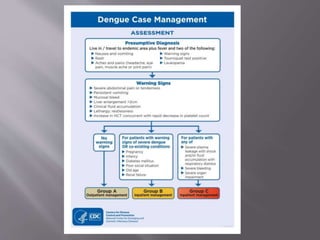
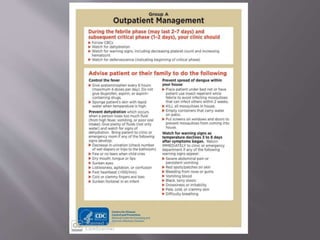
 All dengue fever patients must be carefully
observed for complications for at least 2 days
after recovery of fever because life-threatening
complications occur at this phase.
 Patients and household should be informed
that sever abdominal pain, persistent vomiting,
passage of black stools, bleeding into the skin
or from nose and gums or cold skin are danger
signs.
 If any of these signs noticed the patient should
be taken to the hospital.
 No specific treatment.
 Mainly supportive therapy.
 Analgesic and antipyretic for pain and fever such
as Paracetamol at dose of 10 to 15 mg/kg/dose.
 Bed rest
 Oral rehydration.
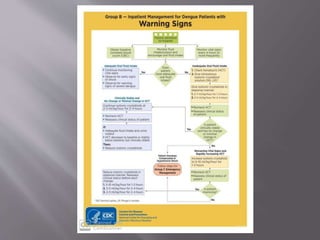
 IV hydration if required is typically needed for one
to two days.
 NSAID such as aspirin and ibuprofen are
contraindicated.
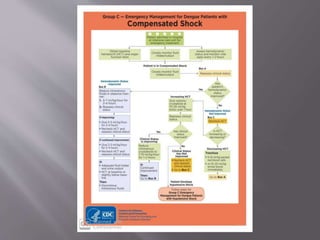
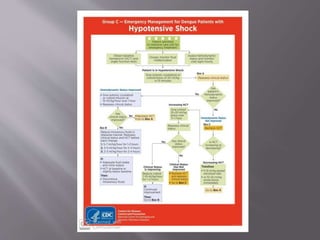
 Management of dengue hemorrhagic fever and
dengue shock syndrome include;
• Immediate evaluations of vital signs and
degrees of hemoconcentration, dehydration,
and electrolyte imbalance.
• O2 should be given in a cyanotic patient.
• Rapid replacement of fluid and electrolyte.
• Transfusion of fresh blood or platelets may
require to control bleeding.
 The only method for controlling or preventing the
dengue is to combat the vector mosquitoes.
 Mosquito control;
Vector control is implemented by using
environmental management and chemical methods.
Proper solid waste disposal and improved water storage
practices including covering the containers to prevent
mosquito breeding.
 Prevent mosquito bites;
Screen home with mesh
Wear full clothing
Apply mosquito repellent
Keep dengue fever patient under mosquito net.
Thank you

Dengue fever

  • 1.
    BAQAI MEDICAL UNIVERSITY FATIMAHOSPITAL DEPARTMENT OF PEDIATERIC Presenter; Dr. Shamsul Ahmad
  • 2.
     Introduction  Epidemiology Pathophysiology  Clinical features  Management  Prevention
  • 3.
    Dengue fever(break bonefever) is a mosquito borne disease that is caused by any one of four dengue virus serotypes (Den1, 2, 3, 4). Infection with one serotype will provide immunity for life but not provide to other serotypes. Dengue virus is a single stranded RNA flavivirus. Dengue virus are transmitted from person to person by bite of infective female aedes aegypti mosquitos. Incubation period is from 8 to 10 days.
  • 5.
     Dengue virusdistributed worldwide in tropical and subtropical areas.  Dengue virus infects 50 million (WHO) million worldwide annually.  Rate of dengue increased 30 fold between 1960 to 2010, this increase is believed to be due to a combination of urbanization, population growth, increased international travel and global warming.  For the decade of 2000s 12 countries in southeast Asia were estimated to have about 3 millions infections and 6000 deaths annually.  Dengue virus can cause dengue fever, dengue hemorrhagic fever and dengue shock syndrome.
  • 6.
     When mosquitocarrying dengue virus bites a person the virus enters from the saliva of mosquito to the body of person.  It binds to the WBC and reproduce inside the cells and they spreed throughout the body.  WBC respond by producing a number of signaling proteins such as cytokines and interferon which are responsible for the many of the symptoms such as fever and pain.  In sever infections the virus production is greatly increased and many more organs such as liver and bone marrow affected..  Fluid leaks through wall of blood vessels into body cavities due to capillary permeability leads to Hct. Changes.
  • 7.
     Classic denguefever • Fever • Headache • Muscle and joint pain • Nausea and vomiting • Retro- orbital pain • Flushes face • Rash
  • 8.
     Dengue hemorrhagicfever A potentially and deadly complication that is characterized by • Fever or history of fever lasting 2-7 days. • Hemorrhagic tendencies Skin hemorrhage: patchiae, purpura, ecchymosis. Bleeding from mucosa: Nasal bleeding, GI bleeding, gingival bleeding • Thrombocytopenia • Evidence of plasma leakage, increase Hct.
  • 9.
     Dengue shocksyndrome It is a medical emergency • All of the above four criteria for DHF plus evidence of circulatory failure such as Rapid and weak pulse Hypotension Narrow pulse pressure(<20). Signs of poor perfusion (cold clammy skin and restlessness).
  • 10.
     Malaria  chikungunya Enteric fever  Viral hepatitis
  • 11.
     Dengue serology:IgM and IgG rapid strip test.  Dengue NS1 antigen This test should be done during early phase of the disease.  CBC; will shows leukopenia, thrombocytopenia, hematocrit changes.  PCR ability to determine the dengue serotypes but take 2 weeks and expensive.
  • 12.
     All denguefever patients must be carefully observed for complications for at least 2 days after recovery of fever because life-threatening complications occur at this phase.  Patients and household should be informed that sever abdominal pain, persistent vomiting, passage of black stools, bleeding into the skin or from nose and gums or cold skin are danger signs.  If any of these signs noticed the patient should be taken to the hospital.
  • 13.
     No specifictreatment.  Mainly supportive therapy.  Analgesic and antipyretic for pain and fever such as Paracetamol at dose of 10 to 15 mg/kg/dose.  Bed rest  Oral rehydration.  IV hydration if required is typically needed for one to two days.  NSAID such as aspirin and ibuprofen are contraindicated.
  • 14.
     Management ofdengue hemorrhagic fever and dengue shock syndrome include; • Immediate evaluations of vital signs and degrees of hemoconcentration, dehydration, and electrolyte imbalance. • O2 should be given in a cyanotic patient. • Rapid replacement of fluid and electrolyte. • Transfusion of fresh blood or platelets may require to control bleeding.
  • 20.
     The onlymethod for controlling or preventing the dengue is to combat the vector mosquitoes.  Mosquito control; Vector control is implemented by using environmental management and chemical methods. Proper solid waste disposal and improved water storage practices including covering the containers to prevent mosquito breeding.  Prevent mosquito bites; Screen home with mesh Wear full clothing Apply mosquito repellent Keep dengue fever patient under mosquito net.
  • 21.