Dengue Fever
= Semester 4 (Cohort 1/16) =
by: Ms.Kong Mun Yi
CTM 1/17
International Medical University
Learning Outcomes
At the end of this lesson, the students will be able to:
1. Define dengue fever
2. State the pathophysiology of dengue fever
3. Describe the clinical manifestation of dengue fever.
4. State the assessment, diagnostic test of patients with
dengue fever.
5. Explain the management of patients with dengue fever.
6. State the complications of dengue fever.
7. Discuss the nursing diagnosis and nursing interventions
of patients with dengue fever.
8. Recognize the importance of proper management of
patients with dengue fever.
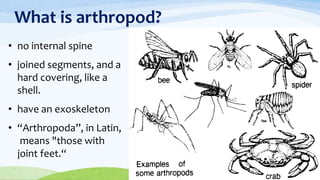
What is arthropod?
• no internal spine
• joined segments, and a
hard covering, like a
shell.
• have an exoskeleton
• “Arthropoda”, in Latin,
means "those with
joint feet.“
Arboviral (Arthropod-borne Viral)
Diseases
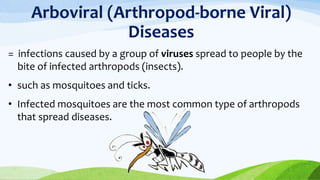
= infections caused by a group of viruses spread to people by the
bite of infected arthropods (insects).
• such as mosquitoes and ticks.
• Infected mosquitoes are the most common type of arthropods
that spread diseases.
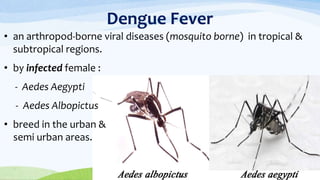
Dengue Fever
• an arthropod-borne viral diseases (mosquito borne) in tropical &
subtropical regions.
• by infected female :
- Aedes Aegypti
- Aedes Albopictus
• breed in the urban &
semi urban areas.
Dengue Fever Virus
• There are 4 distinct, but closely related, serotypes of the virus that
cause dengue (DENV-1, DENV-2, DENV-3 and DENV-4).
• single-stranded RNA viruses that belong to the family Flaviviridae
and the genus Flavivirus - a family which includes other relates
vector-borne viruses
(e.g., West Nile virus, Yellow Fever virus, Japanese Encephalitis virus)
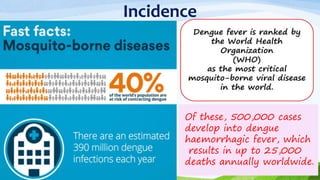
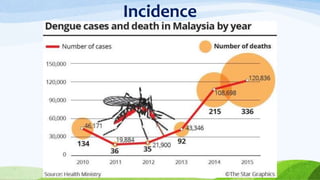
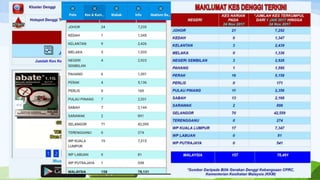
Incidence
Of these, 500,000 cases
develop into dengue
haemorrhagic fever, which
results in up to 25,000
deaths annually worldwide.
Incidence
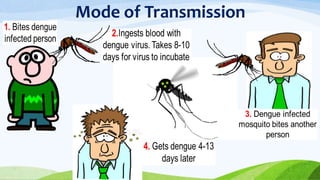
Mode of Transmission
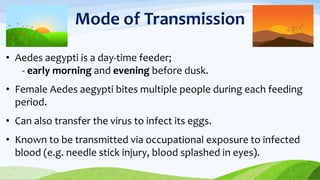
• Aedes aegypti is a day-time feeder;
- early morning and evening before dusk.
• Female Aedes aegypti bites multiple people during each feeding
period.
• Can also transfer the virus to infect its eggs.
• Known to be transmitted via occupational exposure to infected
blood (e.g. needle stick injury, blood splashed in eyes).
Epidemiology of Dengue Fever
• predominantly an urban disease due to close proximity in high
densities of susceptible hosts (human).
• inadequate basic urban infrastructure – unreliable water supply
(e.g. store water in containers close to homes)
• ↑ solid waste discarded which provide larval habitats in urban
areas.
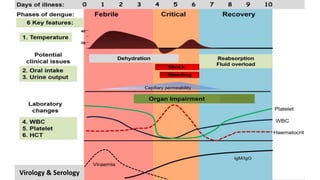
Pathophysiology of dengue fever
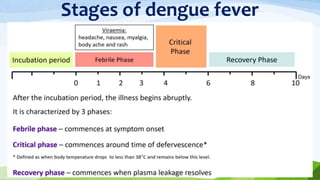
• Incubation period for dengue infection is 4–7 days.
• May be asymptomatic or from mild febrile to severe, with / without
plasma leakage and organ impairment.
• After the incubation period, the illness begins and followed by
three phases:
i. febrile
ii. critical
iii. recovery phase
Stages of dengue fever
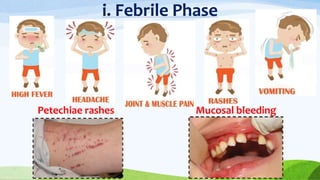
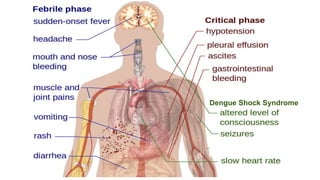
i. Febrile Phase
- Sudden high grade fever (> 39°C) usually last 2-7 days.
~ rashes, myalgia, arthralgia, headache, retro-orbital pain
~ Anorexia, nausea & vomiting
- Mild hemorrhagic manifestations:
~ petechiae & mucosal bleeding
~ Positive Tourniquet test
- Full Blood Count - progressive ↓ in WBCC & Platelet Count
(should alert the suspicion of dengue infection)
i. Febrile Phase
Petechiae rashes Mucosal bleeding
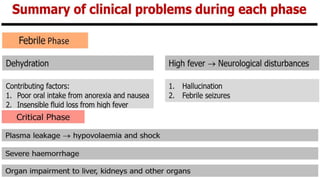
ii. Critical Phase
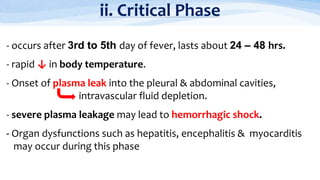
- occurs after 3rd to 5th day of fever, lasts about 24 – 48 hrs.
- rapid ↓ in body temperature.
- Onset of plasma leak into the pleural & abdominal cavities,
intravascular fluid depletion.
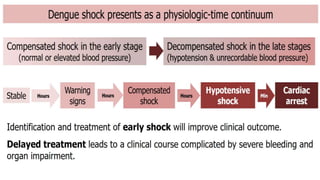
- severe plasma leakage may lead to hemorrhagic shock.
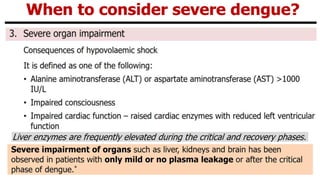
- Organ dysfunctions such as hepatitis, encephalitis & myocarditis
may occur during this phase
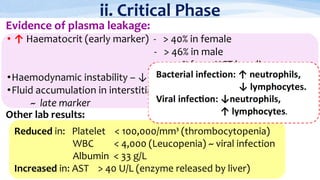
Reduced in: Platelet < 100,000/mm³ (thrombocytopenia)
WBC < 4,000 (Leucopenia) ~ viral infection
Albumin < 33 g/L
Increased in: AST > 40 U/L (enzyme released by liver)
• ↑ Haematocrit (early marker) - > 40% in female
- > 46% in male
- > 20% from HCT baseline
•Haemodynamic instability – ↓BP
•Fluid accumulation in interstitial space (eg:pleural effusion,ascites)
~ late marker
ii. Critical Phase
Evidence of plasma leakage:
Other lab results:
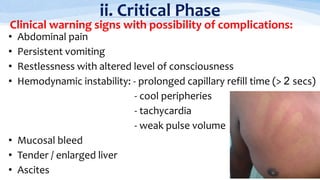
• Abdominal pain
• Persistent vomiting
• Restlessness with altered level of consciousness
• Hemodynamic instability: - prolonged capillary refill time (> 2 secs)
- cool peripheries
- tachycardia
- weak pulse volume
• Mucosal bleed
• Tender / enlarged liver
• Ascites
ii. Critical Phase
Clinical warning signs with possibility of complications:
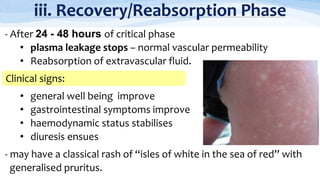
iii. Recovery/Reabsorption Phase
- After 24 - 48 hours of critical phase
• plasma leakage stops – normal vascular permeability
• Reabsorption of extravascular fluid.
• general well being improve
• gastrointestinal symptoms improve
• haemodynamic status stabilises
• diuresis ensues
- may have a classical rash of “isles of white in the sea of red” with
generalised pruritus.
Clinical signs:
iii. Recovery/Reabsorption Phase
• HCT level stabilizes
- further ↓ due to dilutional effect (haemodilution) following
reabsorption of extravascular fluid.
• WBC and Platelet starts to ↑.
Lab tests:
Virology & Serology
Dengue Shock Syndrome
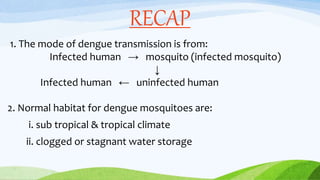
RECAP
1. The mode of dengue transmission is from:
Infected human → mosquito (infected mosquito)
↓
Infected human ← uninfected human
2. Normal habitat for dengue mosquitoes are:
i. sub tropical & tropical climate
ii. clogged or stagnant water storage
Dengue fever
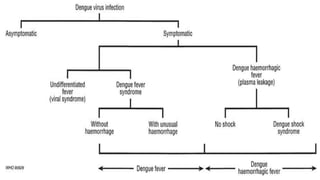
- infected patients are either asymptomatic or they have one of
three clinical presentations:
i. Undifferentiated Fever;
ii. Dengue Fever with or without hemorrhage; or
iii. Dengue Hemorrhagic Fever or Dengue Shock Syndrome.
Dengue fever
Undifferentiated Fever
- benign
- fever with non-specific symptoms
- do not meet criteria for DF
- Normally young children or those experiencing their first infection,
recover fully without hospitalization
Dengue Fever with or without hemorrhage
- Normally older children or adults
Dengue hemorrhagic fever
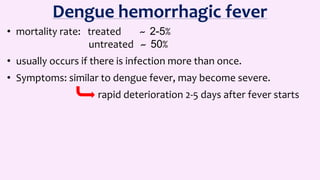
• mortality rate: treated ~ 2-5%
untreated ~ 50%
• usually occurs if there is infection more than once.
• Symptoms: similar to dengue fever, may become severe.
rapid deterioration 2-5 days after fever starts
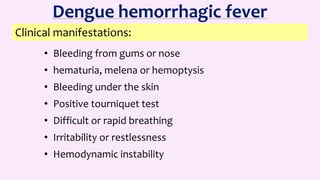
• Bleeding from gums or nose
• hematuria, melena or hemoptysis
• Bleeding under the skin
• Positive tourniquet test
• Difficult or rapid breathing
• Irritability or restlessness
• Hemodynamic instability
Clinical manifestations:
Dengue hemorrhagic fever
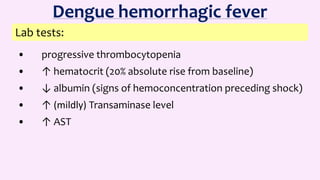
• progressive thrombocytopenia
• ↑ hematocrit (20% absolute rise from baseline)
• ↓ albumin (signs of hemoconcentration preceding shock)
• ↑ (mildly) Transaminase level
• ↑ AST
Lab tests:
Dengue hemorrhagic fever
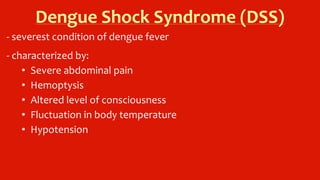
Dengue Shock Syndrome (DSS)
- severest condition of dengue fever
- characterized by:
• Severe abdominal pain
• Hemoptysis
• Altered level of consciousness
• Fluctuation in body temperature
• Hypotension
Risk Factors
- Dengue fever has a mortality rate of less than 1%.
- When treated, DHF has a mortality rate of 2-5%, but if left
untreated, mortality rate is as high as 50%.
- However, the figure can be minimized to 0.2% in hospitals with
staff trained in managing the disease.
Diagnostic tests
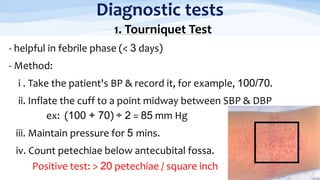
1. Tourniquet Test
- helpful in febrile phase (< 3 days)
- Method:
i . Take the patient's BP & record it, for example, 100/70.
ii. Inflate the cuff to a point midway between SBP & DBP
ex: (100 + 70) ÷ 2 = 85 mm Hg
iii. Maintain pressure for 5 mins.
iv. Count petechiae below antecubital fossa.
Positive test: > 20 petechiae / square inch
Diagnostic tests
2. Non-Structural Protein-1 (NS1 Antigen)
- Secretion of the NS1 protein indicates viral infection.
- The presence after day 5 predicts severe dengue.
- Detection rate is much better in acute primary infection (75%-97%)
Diagnostic tests
3. RNA test for dengue viral antigen (ELISA)
i) Dengue IgM test
- higher in primary infections compared to secondary infections.
- usually positive after day 5-7 of illness.
- Negative IgM taken before day 5-7 of illness does not exclude
dengue infection.
- If dengue IgM is negative before day 7, a repeat sample must be
taken in recovery phase.
Diagnostic tests
3. RNA test for dengue viral antigen (ELISA)
ii) Dengue IgG test
- can be detected in patients after day 7 of onset of fever.
- A repeat dengue IgG is recommended if dengue IgM is still
negative after day 7 to confirm secondary dengue infection.
Diagnostic tests
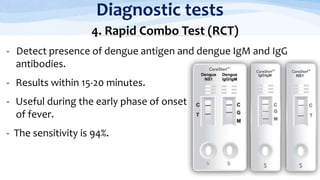
4. Rapid Combo Test (RCT)
- Detect presence of dengue antigen and dengue IgM and IgG
antibodies.
- Results within 15-20 minutes.
- Useful during the early phase of onset
of fever.
- The sensitivity is 94%.
Investigations for monitoring
1. White cell count (WCC) and Platelet count
• normal – in early febrile phase
• ↓ rapidly - as the disease progresses (due to ↓of neutrophils)
• In recovery phase, the WCC normalises followed by platelet
2. Haematocrit (HCT)
- ↑ (>20%) a marker of plasma leakage
- normal are: ~ male – 42 to 46%
~ female – 40
- should be done on first visit in suspected dengue fever
Investigations for monitoring
3. Full Blood Count
- Monitor Hb for signs of bleeding
4. Liver Function Test (LFT)
• ↓ albumin (due to loss of protein)
• ↑ Transaminase level - mildly
• ↑AST & ALT (>1,000 u/l)
5. Coagulation profile
• ↑ coagulation time (>14 seconds)
- Prothrombin time, Thrombin time, Partial thromboplastin time
Investigations for monitoring
6. Blood gases - Metabolic acidosis in prolonged shock
7. Blood Urea Nitrogen - ↑ in the terminal stage of shock
8. Chest X-ray - bilateral pleural effusion in shock due to plasma
leakage.
9. Ultrasound - pleural effusion, pericardial effusion,
gallbladder wall oedema & intraperitoneal fluid
collection
1. What are 3 severities of dengue
fever?
i. Dengue fever – asymptomatic
- symptomatic
ii. Dengue hemorrhagic fever (DHF)
iii. Dengue Shock Syndrome (DSS)
2. Name the tests used to diagnose
Dengue antigen in the body.
i. IgM
ii.IgG
iii. NS1 Antigen
iv. Rapid Combo test (RCT)
3. Name the blood tests done to monitor for:
- thrombocytopenia:
platelet count – low
- leucopenia:
WBC – low
- Dehydration and plasma leakage:
HCT – High
- Hemorrhage:
Hb – low
- Coagulation:
PT, PTT - high
Management for dengue fever
Medication
- no specific medications for dengue fever
- symptomatic & supportive treatment
1. Mild analgesic-antipyretics (Acetaminophen-Tylenol, Paracetamol)
~ lethargy, malaise, and fever
2. Oral Rehydrating Salt (ORS)
~ diarrhoea
~ in small amount for children.
Management for dengue fever
Medication
3. Sodium bicarbonate
- to treat acidosis, if not treated, may lead to DIVC
(Disseminated intravascular Coagulation)
AVOID
- Aspirin
- Nonsteroidal anti-inflammatory drugs (NSAIDs)
- Corticosteroids
Management for dengue fever
Fluid Management
1. Oral rehydration therapy
- recommended for patients with moderate dehydration caused
by high fever & vomiting.
2. IV fluids (0.9% saline or Ringer’s Lactate solution)
- patients with increasing HCT & evidence of ongoing plasma
leakage, despite increased oral intake.
- patients who are vomiting, severe diarrhoea and not tolerating
orally.
Management for dengue fever
Fluid Management
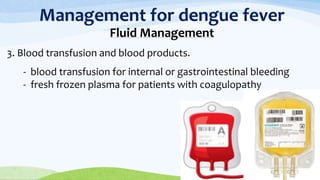
3. Blood transfusion and blood products.
- blood transfusion for internal or gastrointestinal bleeding
- fresh frozen plasma for patients with coagulopathy
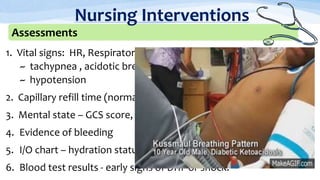
1. Vital signs: HR, Respiratory rate, T °, BP
~ tachypnea , acidotic breathing (rapid & deep)
~ hypotension
2. Capillary refill time (normal <2 seconds) & skin colour
3. Mental state – GCS score, conscious level
4. Evidence of bleeding
5. I/O chart – hydration status, urine output
6. Blood test results - early signs of DHF or shock.
Assessments
Nursing Interventions
1. Monitor:
i) Blood pressure
ii) Monitoring pain ~ location, increasing, diffused, or localized.
iii) Vascular access ~ maintain patency for fluid administration or
blood replacement
iv) Medication regimen ~ identify medications that might
exacerbate bleeding problem
2. Fluid replacement. Establish 24-hour fluid replacement needs.
Interventions
Nursing Interventions
6. Managing nose bleeds :
~ Elevate position of the patient
~ apply ice bag to the bridge of the nose and forehead.
7. Trendelenburg position:
~ restore blood volume to the head
8. Continuous monitoring of blood test results
~ inform doctor immediately for signs of impending shock.
9. Continuous monitoring of intake output chart
~ encourage patient to drink more water
Interventions
Nursing Interventions
Achieved the following:
 Displayed hemodynamic stability.
 Absence of signs of bleeding.
 Displayed laboratory results within normal range
 Maintained optimum fluid volume
 Reported pain is relieved or controlled.
 Demonstrated adequate tissue perfusion.
Evaluation:
Nursing Interventions
Complications of dengue
- are rare, but may include the following:
 Cardiomyopathy
 Seizures, encephalopathy, and viral encephalitis
 Hepatic injury
 Pneumonia
 Pleural effusion
 Renal complications
 Death
Discharge and Home Care Guidelines
• Avoid diuretics.
~ Avoid caffeine and alcohol, to reduce effects of diuresis.
• Follow-up appointments.
~ Comply with the recommended medical and laboratory
follow- ups.
• Oral care.
~ use soft toothbrush to reduce risk of injury to the oral
mucosa.
Discharge and Home Care Guidelines
• Diet.
~ Food rich in vitamin K to promote blood clotting.
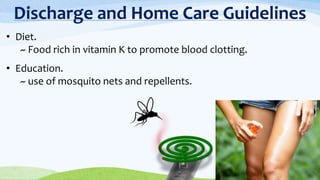
• Education.
~ use of mosquito nets and repellents.
Prevention
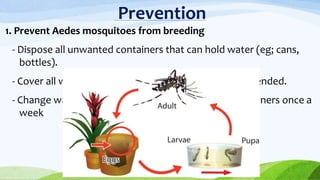
1. Prevent Aedes mosquitoes from breeding
- Dispose all unwanted containers that can hold water (eg; cans,
bottles).
- Cover all water containers, add larvicides, as recommended.
- Change water and scrub the insides of all water containers once a
week
Prevention
2. Keep adult mosquitoes away
~ Using aerosol insect repellant (DEET)
~ Wear full sleeves clothes and long dresses
~ Use mosquito coils and electric vapour mats during the daytime
~ Use mosquito nets to protect children, old and weak people
Nursing diagnosis
1. Deficient Fluid Volume related to increased capillary permeability,
bleeding, vomiting, and fever.
Goal: Adequate fluid volume.
1. Observation of vital signs at least every 4 hours.
R: detect signs of hypovolemia, plasma leakage
2. Assess the general state and condition of the patient
R: detect signs of hypovolemia
3. Record and observe intake and output chart.
R: Poor fluid intake and poor urine output indicates hypovolemia
Nursing diagnosisCont:
4. Provide adequate hydration according to the needs of the body by
encouraging patient to drink water or fruit juices at least 1.5 L/day.
R: Ensure patient is well hydrated
5. Monitor laboratory values: electrolyte / blood tests
R: Early interventions can be taken if suspected hemorrhagic shock
6. Monitor and record the daily weight.
R: Ensure patient is not losing too much body weight from dehydration
7. Monitor the patency of intravenous fluids infusion
R: Ensure that patient receives enough fluid.
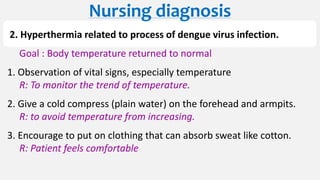
2. Hyperthermia related to process of dengue virus infection.
Goal : Body temperature returned to normal
1. Observation of vital signs, especially temperature
R: To monitor the trend of temperature.
2. Give a cold compress (plain water) on the forehead and armpits.
R: to avoid temperature from increasing.
3. Encourage to put on clothing that can absorb sweat like cotton.
R: Patient feels comfortable
Nursing diagnosis
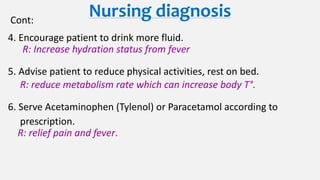
Nursing diagnosisCont:
4. Encourage patient to drink more fluid.
R: Increase hydration status from fever
5. Advise patient to reduce physical activities, rest on bed.
R: reduce metabolism rate which can increase body T°.
6. Serve Acetaminophen (Tylenol) or Paracetamol according to
prescription.
R: relief pain and fever.
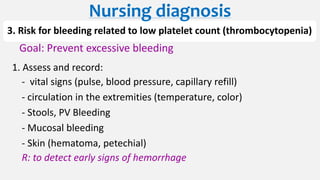
3. Risk for bleeding related to low platelet count (thrombocytopenia)
Goal: Prevent excessive bleeding
1. Assess and record:
- vital signs (pulse, blood pressure, capillary refill)
- circulation in the extremities (temperature, color)
- Stools, PV Bleeding
- Mucosal bleeding
- Skin (hematoma, petechial)
R: to detect early signs of hemorrhage
Nursing diagnosis
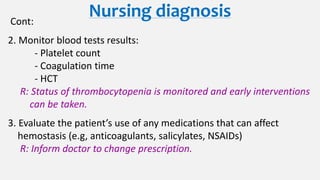
Nursing diagnosisCont:
2. Monitor blood tests results:
- Platelet count
- Coagulation time
- HCT
R: Status of thrombocytopenia is monitored and early interventions
can be taken.
3. Evaluate the patient’s use of any medications that can affect
hemostasis (e.g, anticoagulants, salicylates, NSAIDs)
R: Inform doctor to change prescription.
Nursing diagnosisCont:
4. Use a soft-bristled toothbrush and non- abrasive toothpaste.
Avoid the use of toothpicks and dental floss.
R: Reduce trauma to mucous membrane.
5. Limit straining with bowel movements, forceful nose blowing,
coughing, or sneezing.
R: may cause trauma to the mucosal linings in rectum, nasal
passages, or upper airways.
4. Imbalanced nutrition less than body requirements related to
nausea, vomiting, no appetite
Goal: Patient increase in food intake.
1. Encourage patient to eat in small amount, but frequent.
R: Ensure patient has sufficient intake
2. Serve patient’s favourite food if possible.
R: to improve of nutritional intake
3.Measure daily weight at the same time and with the same scale.
R: monitor weight loss due to poor intake
Nursing diagnosis
Nursing diagnosisCont:
4. Explain to the patient on importance of adequate intake for fast
recovery
R: encourage patient to have adequate intake
5. Give and help with oral hygiene.
R: Increased appetite and oral input.
6. Avoid food that are gassy and oily
R: Reduce distention and gastric irritation.
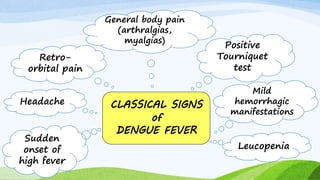
CLASSICAL SIGNS
of
DENGUE FEVER
Headache
Retro-
orbital pain
General body pain
(arthralgias,
myalgias)
Positive
Tourniquet
test
Mild
hemorrhagic
manifestations
Sudden
onset of
high fever
Leucopenia
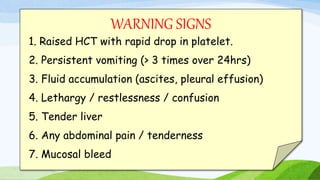
WARNING SIGNS
1. Raised HCT with rapid drop in platelet.
2. Persistent vomiting (> 3 times over 24hrs)
3. Fluid accumulation (ascites, pleural effusion)
4. Lethargy / restlessness / confusion
5. Tender liver
6. Any abdominal pain / tenderness
7. Mucosal bleed
Dengue fever for nurses

Dengue fever for nurses

  • 3.
    Dengue Fever = Semester4 (Cohort 1/16) = by: Ms.Kong Mun Yi CTM 1/17 International Medical University
  • 4.
    Learning Outcomes At theend of this lesson, the students will be able to: 1. Define dengue fever 2. State the pathophysiology of dengue fever 3. Describe the clinical manifestation of dengue fever. 4. State the assessment, diagnostic test of patients with dengue fever.
  • 5.
    5. Explain themanagement of patients with dengue fever. 6. State the complications of dengue fever. 7. Discuss the nursing diagnosis and nursing interventions of patients with dengue fever. 8. Recognize the importance of proper management of patients with dengue fever.
  • 6.
    What is arthropod? •no internal spine • joined segments, and a hard covering, like a shell. • have an exoskeleton • “Arthropoda”, in Latin, means "those with joint feet.“
  • 7.
    Arboviral (Arthropod-borne Viral) Diseases =infections caused by a group of viruses spread to people by the bite of infected arthropods (insects). • such as mosquitoes and ticks. • Infected mosquitoes are the most common type of arthropods that spread diseases.
  • 8.
    Dengue Fever • anarthropod-borne viral diseases (mosquito borne) in tropical & subtropical regions. • by infected female : - Aedes Aegypti - Aedes Albopictus • breed in the urban & semi urban areas.
  • 9.
    Dengue Fever Virus •There are 4 distinct, but closely related, serotypes of the virus that cause dengue (DENV-1, DENV-2, DENV-3 and DENV-4). • single-stranded RNA viruses that belong to the family Flaviviridae and the genus Flavivirus - a family which includes other relates vector-borne viruses (e.g., West Nile virus, Yellow Fever virus, Japanese Encephalitis virus)
  • 10.
    Incidence Of these, 500,000cases develop into dengue haemorrhagic fever, which results in up to 25,000 deaths annually worldwide.
  • 11.
  • 13.
  • 14.
    Mode of Transmission •Aedes aegypti is a day-time feeder; - early morning and evening before dusk. • Female Aedes aegypti bites multiple people during each feeding period. • Can also transfer the virus to infect its eggs. • Known to be transmitted via occupational exposure to infected blood (e.g. needle stick injury, blood splashed in eyes).
  • 15.
    Epidemiology of DengueFever • predominantly an urban disease due to close proximity in high densities of susceptible hosts (human). • inadequate basic urban infrastructure – unreliable water supply (e.g. store water in containers close to homes) • ↑ solid waste discarded which provide larval habitats in urban areas.
  • 17.
    Pathophysiology of denguefever • Incubation period for dengue infection is 4–7 days. • May be asymptomatic or from mild febrile to severe, with / without plasma leakage and organ impairment. • After the incubation period, the illness begins and followed by three phases: i. febrile ii. critical iii. recovery phase
  • 18.
  • 19.
    i. Febrile Phase -Sudden high grade fever (> 39°C) usually last 2-7 days. ~ rashes, myalgia, arthralgia, headache, retro-orbital pain ~ Anorexia, nausea & vomiting - Mild hemorrhagic manifestations: ~ petechiae & mucosal bleeding ~ Positive Tourniquet test - Full Blood Count - progressive ↓ in WBCC & Platelet Count (should alert the suspicion of dengue infection)
  • 20.
    i. Febrile Phase Petechiaerashes Mucosal bleeding
  • 21.
    ii. Critical Phase -occurs after 3rd to 5th day of fever, lasts about 24 – 48 hrs. - rapid ↓ in body temperature. - Onset of plasma leak into the pleural & abdominal cavities, intravascular fluid depletion. - severe plasma leakage may lead to hemorrhagic shock. - Organ dysfunctions such as hepatitis, encephalitis & myocarditis may occur during this phase
  • 22.
    Reduced in: Platelet< 100,000/mm³ (thrombocytopenia) WBC < 4,000 (Leucopenia) ~ viral infection Albumin < 33 g/L Increased in: AST > 40 U/L (enzyme released by liver) • ↑ Haematocrit (early marker) - > 40% in female - > 46% in male - > 20% from HCT baseline •Haemodynamic instability – ↓BP •Fluid accumulation in interstitial space (eg:pleural effusion,ascites) ~ late marker ii. Critical Phase Evidence of plasma leakage: Other lab results:
  • 23.
    • Abdominal pain •Persistent vomiting • Restlessness with altered level of consciousness • Hemodynamic instability: - prolonged capillary refill time (> 2 secs) - cool peripheries - tachycardia - weak pulse volume • Mucosal bleed • Tender / enlarged liver • Ascites ii. Critical Phase Clinical warning signs with possibility of complications:
  • 24.
    iii. Recovery/Reabsorption Phase -After 24 - 48 hours of critical phase • plasma leakage stops – normal vascular permeability • Reabsorption of extravascular fluid. • general well being improve • gastrointestinal symptoms improve • haemodynamic status stabilises • diuresis ensues - may have a classical rash of “isles of white in the sea of red” with generalised pruritus. Clinical signs:
  • 25.
    iii. Recovery/Reabsorption Phase •HCT level stabilizes - further ↓ due to dilutional effect (haemodilution) following reabsorption of extravascular fluid. • WBC and Platelet starts to ↑. Lab tests:
  • 26.
  • 27.
  • 28.
    RECAP 1. The modeof dengue transmission is from: Infected human → mosquito (infected mosquito) ↓ Infected human ← uninfected human 2. Normal habitat for dengue mosquitoes are: i. sub tropical & tropical climate ii. clogged or stagnant water storage
  • 29.
    Dengue fever - infectedpatients are either asymptomatic or they have one of three clinical presentations: i. Undifferentiated Fever; ii. Dengue Fever with or without hemorrhage; or iii. Dengue Hemorrhagic Fever or Dengue Shock Syndrome.
  • 31.
    Dengue fever Undifferentiated Fever -benign - fever with non-specific symptoms - do not meet criteria for DF - Normally young children or those experiencing their first infection, recover fully without hospitalization Dengue Fever with or without hemorrhage - Normally older children or adults
  • 32.
    Dengue hemorrhagic fever •mortality rate: treated ~ 2-5% untreated ~ 50% • usually occurs if there is infection more than once. • Symptoms: similar to dengue fever, may become severe. rapid deterioration 2-5 days after fever starts
  • 33.
    • Bleeding fromgums or nose • hematuria, melena or hemoptysis • Bleeding under the skin • Positive tourniquet test • Difficult or rapid breathing • Irritability or restlessness • Hemodynamic instability Clinical manifestations: Dengue hemorrhagic fever
  • 34.
    • progressive thrombocytopenia •↑ hematocrit (20% absolute rise from baseline) • ↓ albumin (signs of hemoconcentration preceding shock) • ↑ (mildly) Transaminase level • ↑ AST Lab tests: Dengue hemorrhagic fever
  • 38.
    Dengue Shock Syndrome(DSS) - severest condition of dengue fever - characterized by: • Severe abdominal pain • Hemoptysis • Altered level of consciousness • Fluctuation in body temperature • Hypotension
  • 42.
    Risk Factors - Denguefever has a mortality rate of less than 1%. - When treated, DHF has a mortality rate of 2-5%, but if left untreated, mortality rate is as high as 50%. - However, the figure can be minimized to 0.2% in hospitals with staff trained in managing the disease.
  • 43.
    Diagnostic tests 1. TourniquetTest - helpful in febrile phase (< 3 days) - Method: i . Take the patient's BP & record it, for example, 100/70. ii. Inflate the cuff to a point midway between SBP & DBP ex: (100 + 70) ÷ 2 = 85 mm Hg iii. Maintain pressure for 5 mins. iv. Count petechiae below antecubital fossa. Positive test: > 20 petechiae / square inch
  • 44.
    Diagnostic tests 2. Non-StructuralProtein-1 (NS1 Antigen) - Secretion of the NS1 protein indicates viral infection. - The presence after day 5 predicts severe dengue. - Detection rate is much better in acute primary infection (75%-97%)
  • 45.
    Diagnostic tests 3. RNAtest for dengue viral antigen (ELISA) i) Dengue IgM test - higher in primary infections compared to secondary infections. - usually positive after day 5-7 of illness. - Negative IgM taken before day 5-7 of illness does not exclude dengue infection. - If dengue IgM is negative before day 7, a repeat sample must be taken in recovery phase.
  • 46.
    Diagnostic tests 3. RNAtest for dengue viral antigen (ELISA) ii) Dengue IgG test - can be detected in patients after day 7 of onset of fever. - A repeat dengue IgG is recommended if dengue IgM is still negative after day 7 to confirm secondary dengue infection.
  • 47.
    Diagnostic tests 4. RapidCombo Test (RCT) - Detect presence of dengue antigen and dengue IgM and IgG antibodies. - Results within 15-20 minutes. - Useful during the early phase of onset of fever. - The sensitivity is 94%.
  • 48.
    Investigations for monitoring 1.White cell count (WCC) and Platelet count • normal – in early febrile phase • ↓ rapidly - as the disease progresses (due to ↓of neutrophils) • In recovery phase, the WCC normalises followed by platelet 2. Haematocrit (HCT) - ↑ (>20%) a marker of plasma leakage - normal are: ~ male – 42 to 46% ~ female – 40 - should be done on first visit in suspected dengue fever
  • 49.
    Investigations for monitoring 3.Full Blood Count - Monitor Hb for signs of bleeding 4. Liver Function Test (LFT) • ↓ albumin (due to loss of protein) • ↑ Transaminase level - mildly • ↑AST & ALT (>1,000 u/l) 5. Coagulation profile • ↑ coagulation time (>14 seconds) - Prothrombin time, Thrombin time, Partial thromboplastin time
  • 50.
    Investigations for monitoring 6.Blood gases - Metabolic acidosis in prolonged shock 7. Blood Urea Nitrogen - ↑ in the terminal stage of shock 8. Chest X-ray - bilateral pleural effusion in shock due to plasma leakage. 9. Ultrasound - pleural effusion, pericardial effusion, gallbladder wall oedema & intraperitoneal fluid collection
  • 51.
    1. What are3 severities of dengue fever? i. Dengue fever – asymptomatic - symptomatic ii. Dengue hemorrhagic fever (DHF) iii. Dengue Shock Syndrome (DSS)
  • 52.
    2. Name thetests used to diagnose Dengue antigen in the body. i. IgM ii.IgG iii. NS1 Antigen iv. Rapid Combo test (RCT)
  • 53.
    3. Name theblood tests done to monitor for: - thrombocytopenia: platelet count – low - leucopenia: WBC – low - Dehydration and plasma leakage: HCT – High - Hemorrhage: Hb – low - Coagulation: PT, PTT - high
  • 55.
    Management for denguefever Medication - no specific medications for dengue fever - symptomatic & supportive treatment 1. Mild analgesic-antipyretics (Acetaminophen-Tylenol, Paracetamol) ~ lethargy, malaise, and fever 2. Oral Rehydrating Salt (ORS) ~ diarrhoea ~ in small amount for children.
  • 56.
    Management for denguefever Medication 3. Sodium bicarbonate - to treat acidosis, if not treated, may lead to DIVC (Disseminated intravascular Coagulation) AVOID - Aspirin - Nonsteroidal anti-inflammatory drugs (NSAIDs) - Corticosteroids
  • 57.
    Management for denguefever Fluid Management 1. Oral rehydration therapy - recommended for patients with moderate dehydration caused by high fever & vomiting. 2. IV fluids (0.9% saline or Ringer’s Lactate solution) - patients with increasing HCT & evidence of ongoing plasma leakage, despite increased oral intake. - patients who are vomiting, severe diarrhoea and not tolerating orally.
  • 58.
    Management for denguefever Fluid Management 3. Blood transfusion and blood products. - blood transfusion for internal or gastrointestinal bleeding - fresh frozen plasma for patients with coagulopathy
  • 59.
    1. Vital signs:HR, Respiratory rate, T °, BP ~ tachypnea , acidotic breathing (rapid & deep) ~ hypotension 2. Capillary refill time (normal <2 seconds) & skin colour 3. Mental state – GCS score, conscious level 4. Evidence of bleeding 5. I/O chart – hydration status, urine output 6. Blood test results - early signs of DHF or shock. Assessments Nursing Interventions
  • 60.
    1. Monitor: i) Bloodpressure ii) Monitoring pain ~ location, increasing, diffused, or localized. iii) Vascular access ~ maintain patency for fluid administration or blood replacement iv) Medication regimen ~ identify medications that might exacerbate bleeding problem 2. Fluid replacement. Establish 24-hour fluid replacement needs. Interventions Nursing Interventions
  • 61.
    6. Managing nosebleeds : ~ Elevate position of the patient ~ apply ice bag to the bridge of the nose and forehead. 7. Trendelenburg position: ~ restore blood volume to the head 8. Continuous monitoring of blood test results ~ inform doctor immediately for signs of impending shock. 9. Continuous monitoring of intake output chart ~ encourage patient to drink more water Interventions Nursing Interventions
  • 62.
    Achieved the following: Displayed hemodynamic stability.  Absence of signs of bleeding.  Displayed laboratory results within normal range  Maintained optimum fluid volume  Reported pain is relieved or controlled.  Demonstrated adequate tissue perfusion. Evaluation: Nursing Interventions
  • 63.
    Complications of dengue -are rare, but may include the following:  Cardiomyopathy  Seizures, encephalopathy, and viral encephalitis  Hepatic injury  Pneumonia  Pleural effusion  Renal complications  Death
  • 64.
    Discharge and HomeCare Guidelines • Avoid diuretics. ~ Avoid caffeine and alcohol, to reduce effects of diuresis. • Follow-up appointments. ~ Comply with the recommended medical and laboratory follow- ups. • Oral care. ~ use soft toothbrush to reduce risk of injury to the oral mucosa.
  • 65.
    Discharge and HomeCare Guidelines • Diet. ~ Food rich in vitamin K to promote blood clotting. • Education. ~ use of mosquito nets and repellents.
  • 66.
    Prevention 1. Prevent Aedesmosquitoes from breeding - Dispose all unwanted containers that can hold water (eg; cans, bottles). - Cover all water containers, add larvicides, as recommended. - Change water and scrub the insides of all water containers once a week
  • 67.
    Prevention 2. Keep adultmosquitoes away ~ Using aerosol insect repellant (DEET) ~ Wear full sleeves clothes and long dresses ~ Use mosquito coils and electric vapour mats during the daytime ~ Use mosquito nets to protect children, old and weak people
  • 68.
    Nursing diagnosis 1. DeficientFluid Volume related to increased capillary permeability, bleeding, vomiting, and fever. Goal: Adequate fluid volume. 1. Observation of vital signs at least every 4 hours. R: detect signs of hypovolemia, plasma leakage 2. Assess the general state and condition of the patient R: detect signs of hypovolemia 3. Record and observe intake and output chart. R: Poor fluid intake and poor urine output indicates hypovolemia
  • 69.
    Nursing diagnosisCont: 4. Provideadequate hydration according to the needs of the body by encouraging patient to drink water or fruit juices at least 1.5 L/day. R: Ensure patient is well hydrated 5. Monitor laboratory values: electrolyte / blood tests R: Early interventions can be taken if suspected hemorrhagic shock 6. Monitor and record the daily weight. R: Ensure patient is not losing too much body weight from dehydration 7. Monitor the patency of intravenous fluids infusion R: Ensure that patient receives enough fluid.
  • 70.
    2. Hyperthermia relatedto process of dengue virus infection. Goal : Body temperature returned to normal 1. Observation of vital signs, especially temperature R: To monitor the trend of temperature. 2. Give a cold compress (plain water) on the forehead and armpits. R: to avoid temperature from increasing. 3. Encourage to put on clothing that can absorb sweat like cotton. R: Patient feels comfortable Nursing diagnosis
  • 71.
    Nursing diagnosisCont: 4. Encouragepatient to drink more fluid. R: Increase hydration status from fever 5. Advise patient to reduce physical activities, rest on bed. R: reduce metabolism rate which can increase body T°. 6. Serve Acetaminophen (Tylenol) or Paracetamol according to prescription. R: relief pain and fever.
  • 72.
    3. Risk forbleeding related to low platelet count (thrombocytopenia) Goal: Prevent excessive bleeding 1. Assess and record: - vital signs (pulse, blood pressure, capillary refill) - circulation in the extremities (temperature, color) - Stools, PV Bleeding - Mucosal bleeding - Skin (hematoma, petechial) R: to detect early signs of hemorrhage Nursing diagnosis
  • 73.
    Nursing diagnosisCont: 2. Monitorblood tests results: - Platelet count - Coagulation time - HCT R: Status of thrombocytopenia is monitored and early interventions can be taken. 3. Evaluate the patient’s use of any medications that can affect hemostasis (e.g, anticoagulants, salicylates, NSAIDs) R: Inform doctor to change prescription.
  • 74.
    Nursing diagnosisCont: 4. Usea soft-bristled toothbrush and non- abrasive toothpaste. Avoid the use of toothpicks and dental floss. R: Reduce trauma to mucous membrane. 5. Limit straining with bowel movements, forceful nose blowing, coughing, or sneezing. R: may cause trauma to the mucosal linings in rectum, nasal passages, or upper airways.
  • 75.
    4. Imbalanced nutritionless than body requirements related to nausea, vomiting, no appetite Goal: Patient increase in food intake. 1. Encourage patient to eat in small amount, but frequent. R: Ensure patient has sufficient intake 2. Serve patient’s favourite food if possible. R: to improve of nutritional intake 3.Measure daily weight at the same time and with the same scale. R: monitor weight loss due to poor intake Nursing diagnosis
  • 76.
    Nursing diagnosisCont: 4. Explainto the patient on importance of adequate intake for fast recovery R: encourage patient to have adequate intake 5. Give and help with oral hygiene. R: Increased appetite and oral input. 6. Avoid food that are gassy and oily R: Reduce distention and gastric irritation.
  • 77.
    CLASSICAL SIGNS of DENGUE FEVER Headache Retro- orbitalpain General body pain (arthralgias, myalgias) Positive Tourniquet test Mild hemorrhagic manifestations Sudden onset of high fever Leucopenia
  • 78.
    WARNING SIGNS 1. RaisedHCT with rapid drop in platelet. 2. Persistent vomiting (> 3 times over 24hrs) 3. Fluid accumulation (ascites, pleural effusion) 4. Lethargy / restlessness / confusion 5. Tender liver 6. Any abdominal pain / tenderness 7. Mucosal bleed