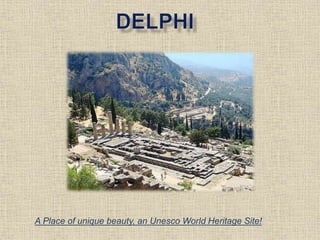
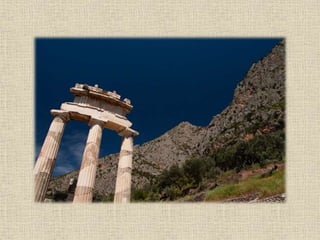
A Place of unique beauty, an Unesco World Heritage Site!
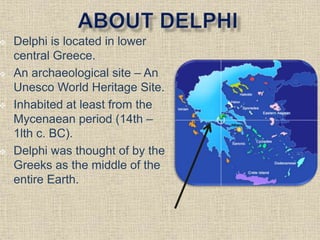
 Delphi is located in lower
central Greece.
 An archaeological site – Αn
Unesco World Heritage Site.
 Ιnhabited at least from the
Mycenaean period (14th –
1lth c. BC).
 Delphi was thought of by the
Greeks as the middle of the
entire Earth.
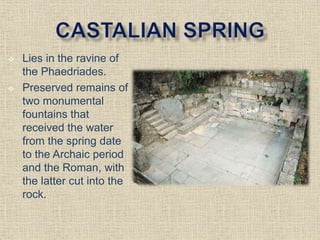
 Lies in the ravine of
the Phaedriades.
 Preserved remains of
two monumental
fountains that
received the water
from the spring date
to the Archaic period
and the Roman, with
the latter cut into the
rock.
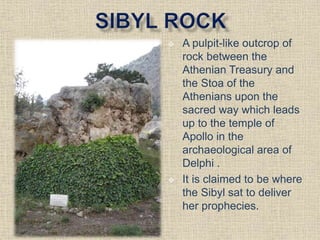
 A pulpit-like outcrop of
rock between the
Athenian Treasury and
the Stoa of the
Athenians upon the
sacred way which leads
up to the temple of
Apollo in the
archaeological area of
Delphi .
 It is claimed to be where
the Sibyl sat to deliver
her prophecies.
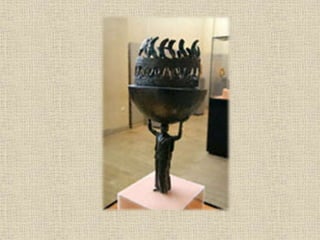
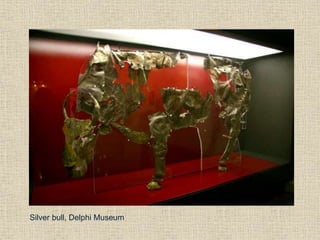
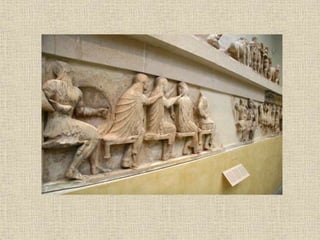
Silver bull, Delphi Museum
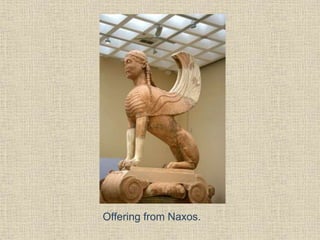
Offering from Naxos.
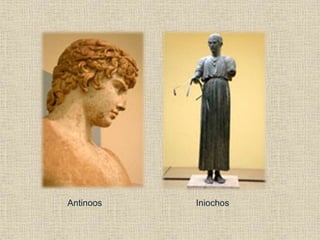
Antinoos Iniochos
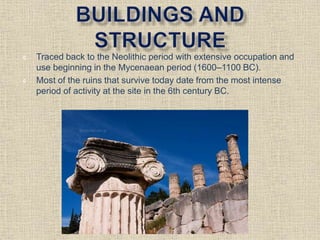
 Traced back to the Neolithic period with extensive occupation and
use beginning in the Mycenaean period (1600–1100 BC).
 Most of the ruins that survive today date from the most intense
period of activity at the site in the 6th century BC.
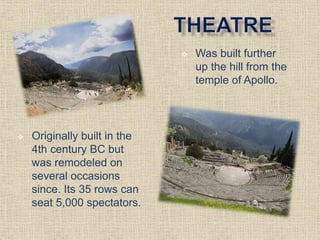
 Originally built in the
4th century BC but
was remodeled on
several occasions
since. Its 35 rows can
seat 5,000 spectators.
 Was built further
up the hill from the
temple of Apollo.
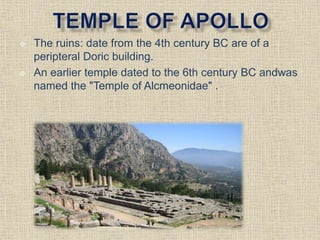
 The ruins: date from the 4th century BC are of a
peripteral Doric building.
 An earlier temple dated to the 6th century BC andwas
named the "Temple of Alcmeonidae" .
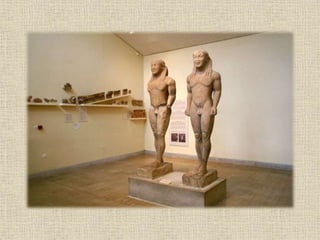
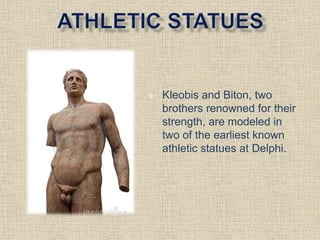
 Kleobis and Biton, two
brothers renowned for their
strength, are modeled in
two of the earliest known
athletic statues at Delphi.
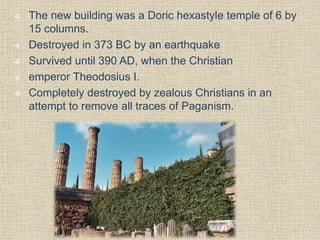
 The new building was a Doric hexastyle temple of 6 by
15 columns.
 Destroyed in 373 BC by an earthquake
 Survived until 390 AD, when the Christian
 emperor Theodosius I.
 Completely destroyed by zealous Christians in an
attempt to remove all traces of Paganism.
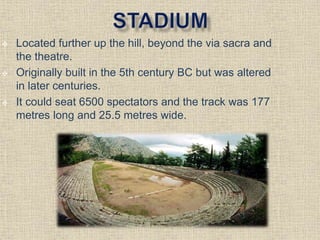
 Located further up the hill, beyond the via sacra and
the theatre.
 Originally built in the 5th century BC but was altered
in later centuries.
 It could seat 6500 spectators and the track was 177
metres long and 25.5 metres wide.
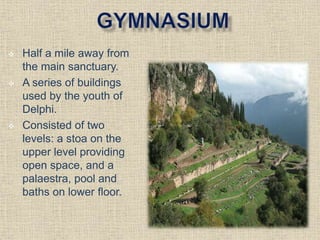
 Half a mile away from
the main sanctuary.
 A series of buildings
used by the youth of
Delphi.
 Consisted of two
levels: a stoa on the
upper level providing
open space, and a
palaestra, pool and
baths on lower floor.
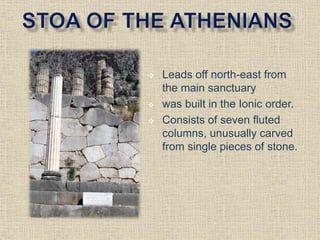
 Leads off north-east from
the main sanctuary
 was built in the Ionic order.
 Consists of seven fluted
columns, unusually carved
from single pieces of stone.
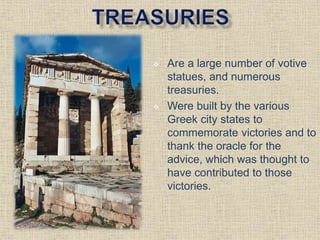
 Are a large number of votive
statues, and numerous
treasuries.
 Were built by the various
Greek city states to
commemorate victories and to
thank the oracle for the
advice, which was thought to
have contributed to those
victories.
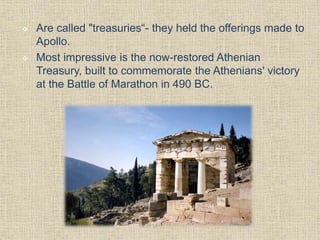
 Are called "treasuries“- they held the offerings made to
Apollo.
 Most impressive is the now-restored Athenian
Treasury, built to commemorate the Athenians' victory
at the Battle of Marathon in 490 BC.
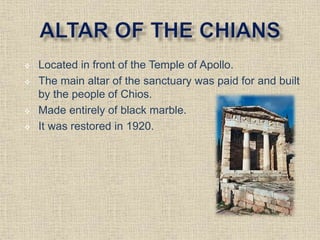
 Located in front of the Temple of Apollo.
 The main altar of the sanctuary was paid for and built
by the people of Chios.
 Made entirely of black marble.
 It was restored in 1920.
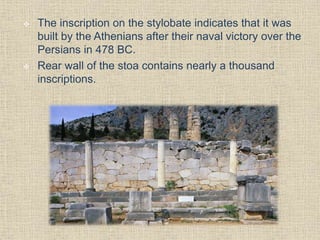
 The inscription on the stylobate indicates that it was
built by the Athenians after their naval victory over the
Persians in 478 BC.
 Rear wall of the stoa contains nearly a thousand
inscriptions.
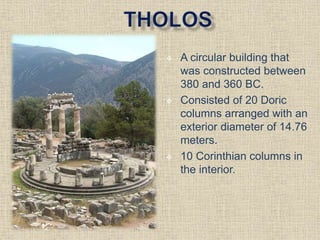
 A circular building that
was constructed between
380 and 360 BC.
 Consisted of 20 Doric
columns arranged with an
exterior diameter of 14.76
meters.
 10 Corinthian columns in
the interior.
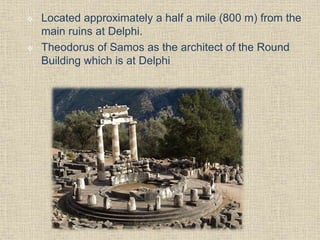
 Located approximately a half a mile (800 m) from the
main ruins at Delphi.
 Theodorus of Samos as the architect of the Round
Building which is at Delphi
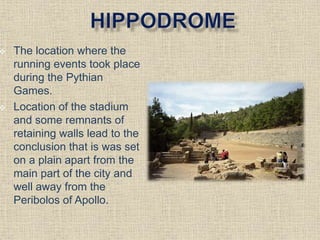
 The location where the
running events took place
during the Pythian
Games.
 Location of the stadium
and some remnants of
retaining walls lead to the
conclusion that is was set
on a plain apart from the
main part of the city and
well away from the
Peribolos of Apollo.
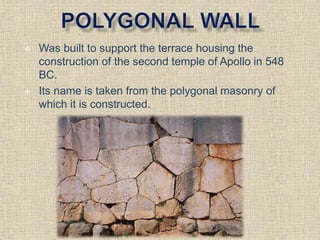
 Was built to support the terrace housing the
construction of the second temple of Apollo in 548
BC.
 Its name is taken from the polygonal masonry of
which it is constructed.
Dimitra Georgoyiannis
Danai Giannopoulou
Nefeli Kokloni

Delphi παρουσιαση

  • 1.
    A Place ofunique beauty, an Unesco World Heritage Site!
  • 2.
     Delphi islocated in lower central Greece.  An archaeological site – Αn Unesco World Heritage Site.  Ιnhabited at least from the Mycenaean period (14th – 1lth c. BC).  Delphi was thought of by the Greeks as the middle of the entire Earth.
  • 3.
     Lies inthe ravine of the Phaedriades.  Preserved remains of two monumental fountains that received the water from the spring date to the Archaic period and the Roman, with the latter cut into the rock.
  • 5.
     A pulpit-likeoutcrop of rock between the Athenian Treasury and the Stoa of the Athenians upon the sacred way which leads up to the temple of Apollo in the archaeological area of Delphi .  It is claimed to be where the Sibyl sat to deliver her prophecies.
  • 8.
  • 10.
  • 11.
  • 12.
     Traced backto the Neolithic period with extensive occupation and use beginning in the Mycenaean period (1600–1100 BC).  Most of the ruins that survive today date from the most intense period of activity at the site in the 6th century BC.
  • 14.
     Originally builtin the 4th century BC but was remodeled on several occasions since. Its 35 rows can seat 5,000 spectators.  Was built further up the hill from the temple of Apollo.
  • 15.
     The ruins:date from the 4th century BC are of a peripteral Doric building.  An earlier temple dated to the 6th century BC andwas named the "Temple of Alcmeonidae" .
  • 16.
     Kleobis andBiton, two brothers renowned for their strength, are modeled in two of the earliest known athletic statues at Delphi.
  • 17.
     The newbuilding was a Doric hexastyle temple of 6 by 15 columns.  Destroyed in 373 BC by an earthquake  Survived until 390 AD, when the Christian  emperor Theodosius I.  Completely destroyed by zealous Christians in an attempt to remove all traces of Paganism.
  • 18.
     Located furtherup the hill, beyond the via sacra and the theatre.  Originally built in the 5th century BC but was altered in later centuries.  It could seat 6500 spectators and the track was 177 metres long and 25.5 metres wide.
  • 19.
     Half amile away from the main sanctuary.  A series of buildings used by the youth of Delphi.  Consisted of two levels: a stoa on the upper level providing open space, and a palaestra, pool and baths on lower floor.
  • 20.
     Leads offnorth-east from the main sanctuary  was built in the Ionic order.  Consists of seven fluted columns, unusually carved from single pieces of stone.
  • 21.
     Are alarge number of votive statues, and numerous treasuries.  Were built by the various Greek city states to commemorate victories and to thank the oracle for the advice, which was thought to have contributed to those victories.
  • 22.
     Are called"treasuries“- they held the offerings made to Apollo.  Most impressive is the now-restored Athenian Treasury, built to commemorate the Athenians' victory at the Battle of Marathon in 490 BC.
  • 23.
     Located infront of the Temple of Apollo.  The main altar of the sanctuary was paid for and built by the people of Chios.  Made entirely of black marble.  It was restored in 1920.
  • 24.
     The inscriptionon the stylobate indicates that it was built by the Athenians after their naval victory over the Persians in 478 BC.  Rear wall of the stoa contains nearly a thousand inscriptions.
  • 25.
     A circularbuilding that was constructed between 380 and 360 BC.  Consisted of 20 Doric columns arranged with an exterior diameter of 14.76 meters.  10 Corinthian columns in the interior.
  • 26.
     Located approximatelya half a mile (800 m) from the main ruins at Delphi.  Theodorus of Samos as the architect of the Round Building which is at Delphi
  • 27.
     The locationwhere the running events took place during the Pythian Games.  Location of the stadium and some remnants of retaining walls lead to the conclusion that is was set on a plain apart from the main part of the city and well away from the Peribolos of Apollo.
  • 28.
     Was builtto support the terrace housing the construction of the second temple of Apollo in 548 BC.  Its name is taken from the polygonal masonry of which it is constructed.
  • 30.