Beyond Basic Skills: Building
Pathways to Credentials for Adult
Education Students
Marcie Foster, Policy Analyst, CLASP
Academy of Hope Workforce
Development Forum
Washington, D.C.
April 17, 2012
CLASP: Policy Solutions that Work for
Low-Income People
• CLASP develops and advocates for policies at the
federal, state and local levels that improve the lives of
low-income people.
• Our Center for Postsecondary and Economic
Success seeks to improve policy, increase investment,
and strengthen political will to increase the number of
low-income adults and youth who earn the postsecondary
credentials essential to open doors to good jobs, career
advancement, and economic mobility.
2
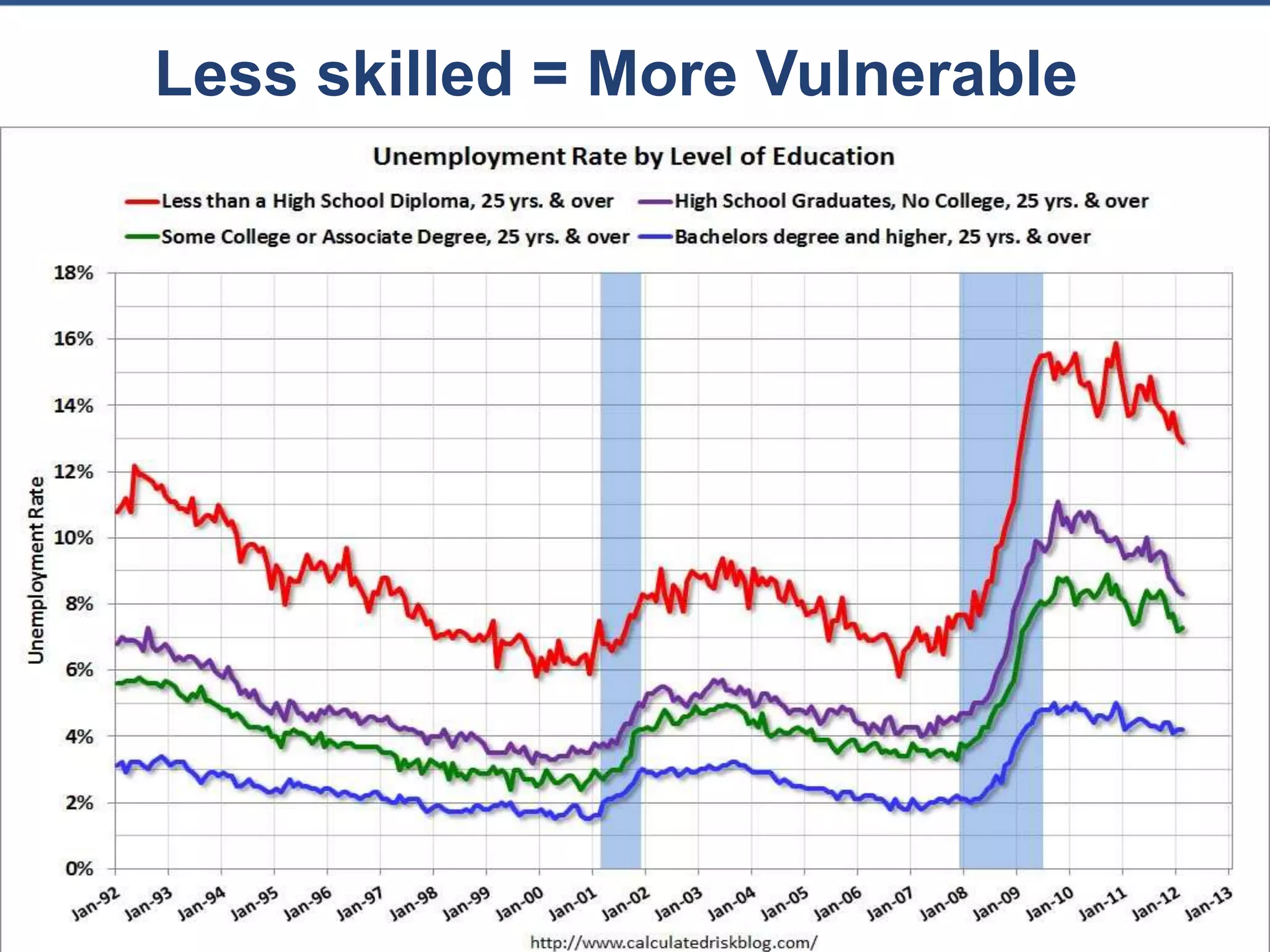
Less skilled = More Vulnerable
3
Need for a More Skilled
Adult Workforce in D.C.
• Growing Demand in the District
 By 2018, 70 percent of jobs will require a
postsecondary education. Largest growth is in
graduate-level positions, but strong growth in jobs
that require certificates and 2-year degrees.
• Dwindling Supply of Traditional Age Students
 From 2010 to 2020 there will be a steep drop in the
number of high school graduates in D.C., with a
projected decline of 24 percent. This is worse than the
trend in any state.
4
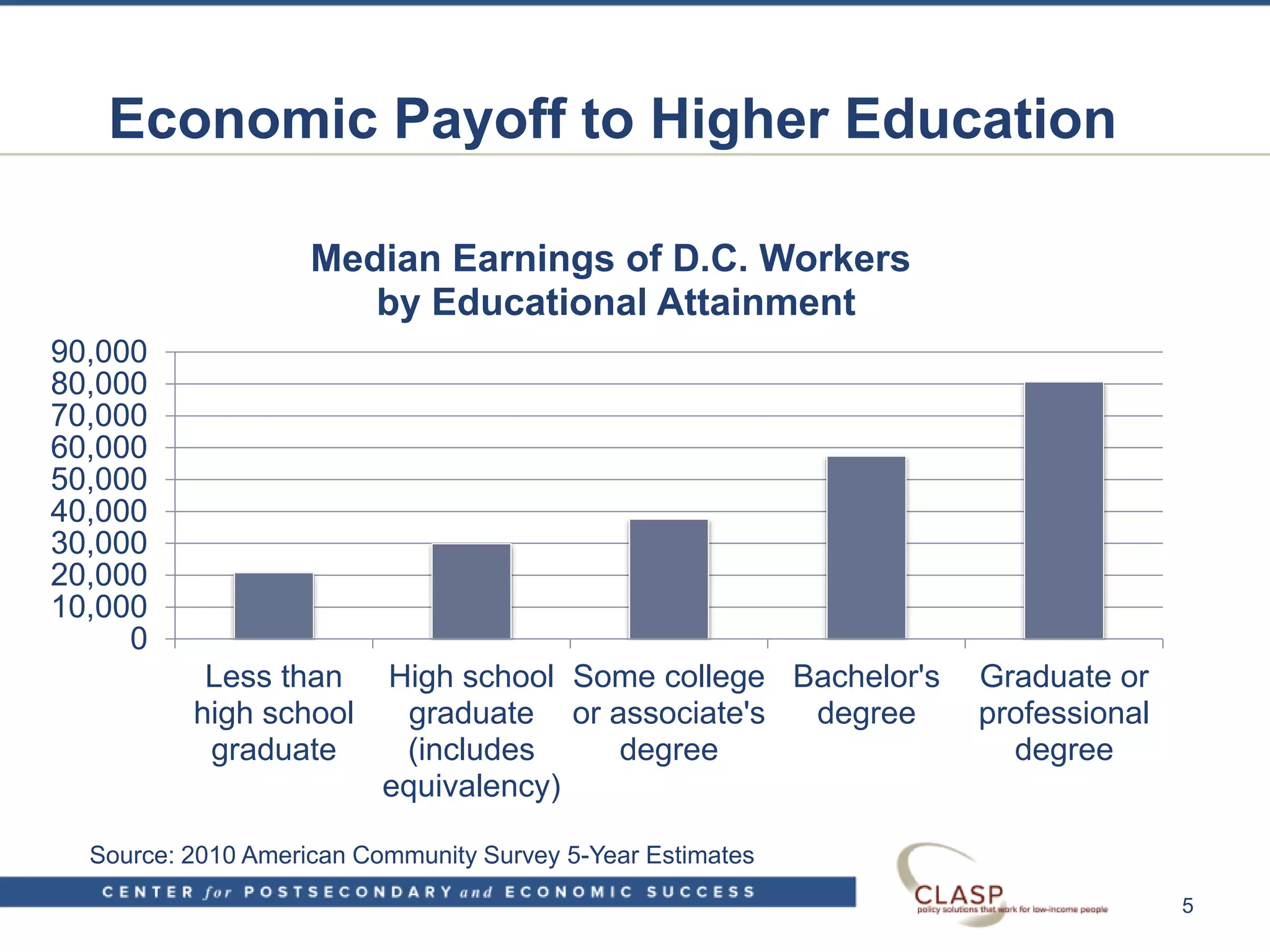
Economic Payoff to Higher Education
0
10,000
20,000
30,000
40,000
50,000
60,000
70,000
80,000
90,000
Less than
high school
graduate
High school
graduate
(includes
equivalency)
Some college
or associate's
degree
Bachelor's
degree
Graduate or
professional
degree
Median Earnings of D.C. Workers
by Educational Attainment
5
Source: 2010 American Community Survey 5-Year Estimates
Issues with Traditional Adult Education
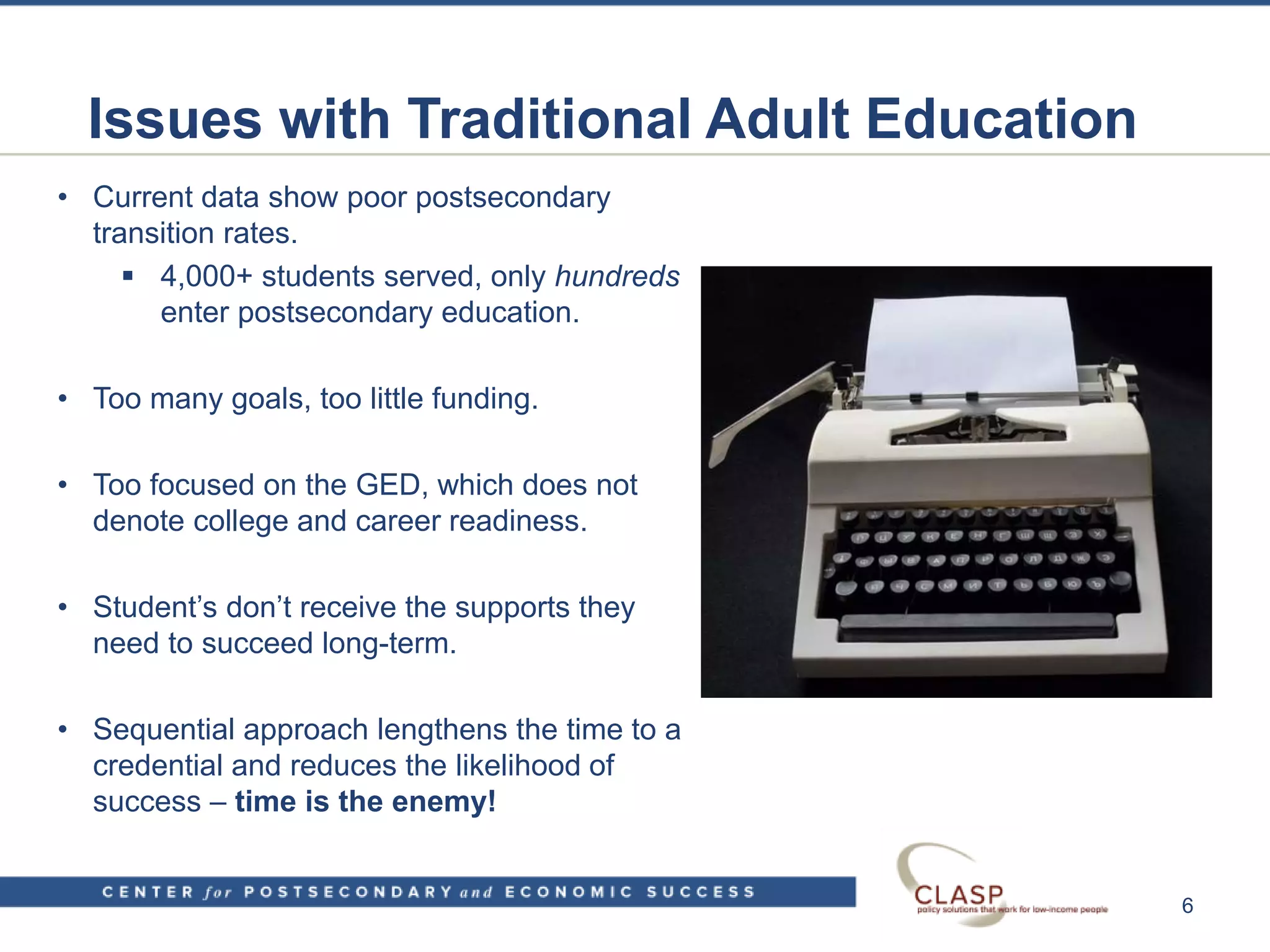
• Current data show poor postsecondary
transition rates.
 4,000+ students served, only hundreds
enter postsecondary education.
• Too many goals, too little funding.
• Too focused on the GED, which does not
denote college and career readiness.
• Student’s don’t receive the supports they
need to succeed long-term.
• Sequential approach lengthens the time to a
credential and reduces the likelihood of
success – time is the enemy!
6
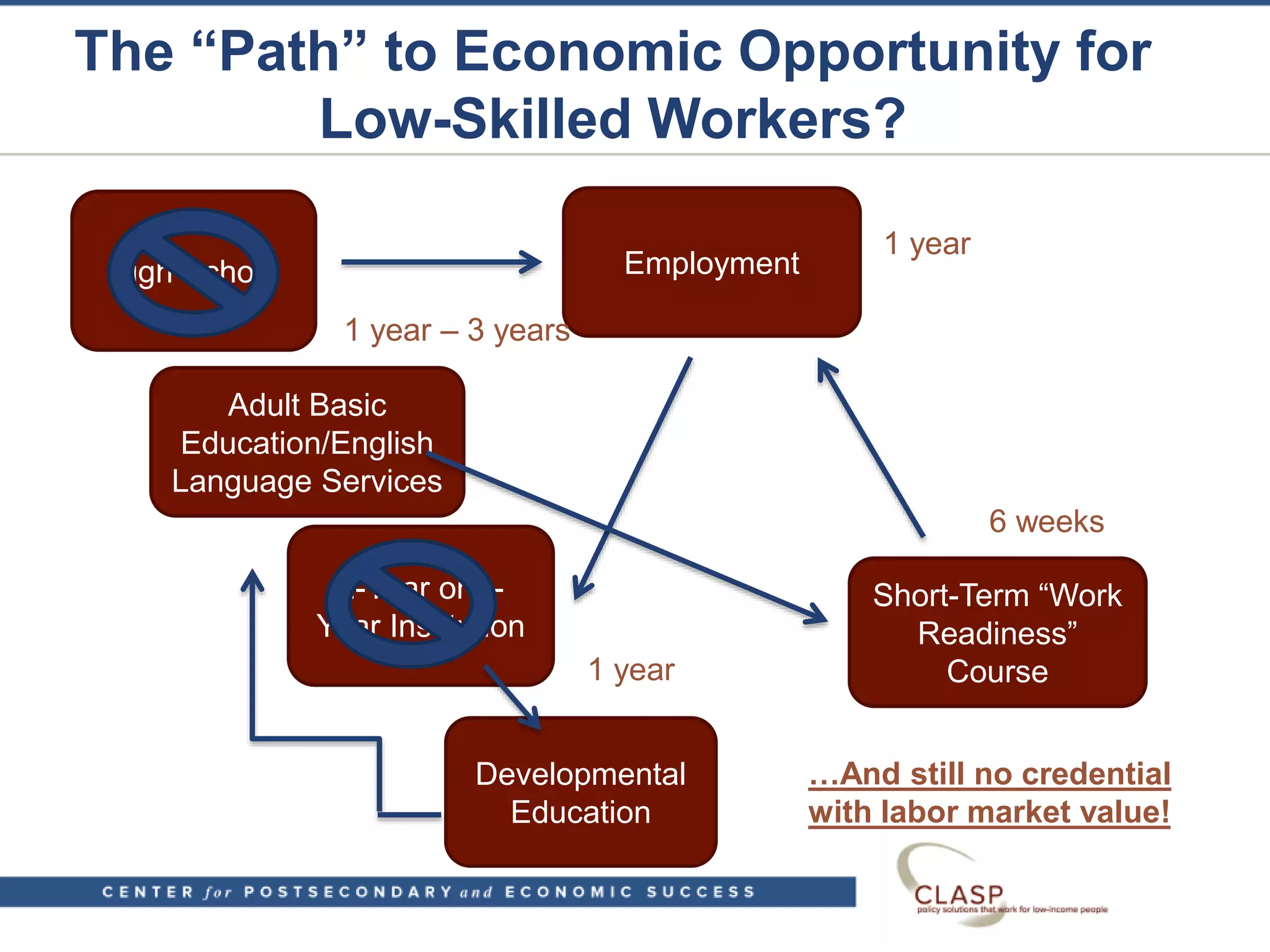
The “Path” to Economic Opportunity for
Low-Skilled Workers?
High School
Developmental
Education
Adult Basic
Education/English
Language Services
2-Year or 4-
Year Institution
Employment
Short-Term “Work
Readiness”
Course
1 year
1 year
1 year – 3 years
6 weeks
…And still no credential
with labor market value!
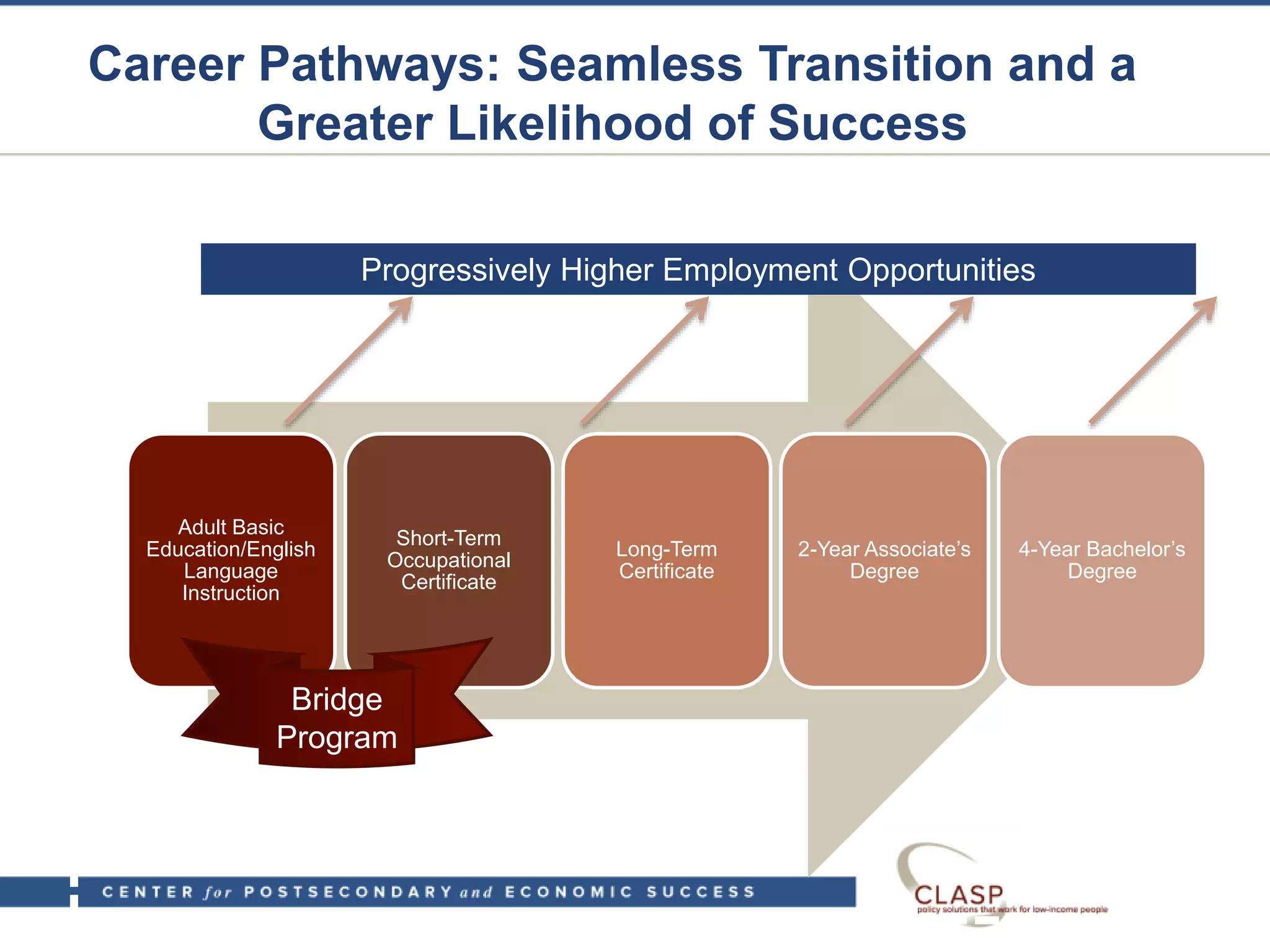
Career Pathways: Seamless Transition and a
Greater Likelihood of Success
Adult Basic
Education/English
Language
Instruction
Short-Term
Occupational
Certificate
Long-Term
Certificate
2-Year Associate’s
Degree
4-Year Bachelor’s
Degree
Bridge
Program
Progressively Higher Employment Opportunities
Building Career Pathways and Bridges
1) Combine basic skills and career-technical content,
including general workforce skills, pre-college academic
and English language skills, and specific occupational
knowledge and skills.
2) Contextualize basic skills and English language
content to the knowledge and skills needed in a
specific occupation or group of occupations.
3) Use new or modified curricula, with identified learning
targets for both academic and occupational content,
articulated to next level in college and career pathway.
9
Building Career Pathways and Bridges (cont.)
4) Change how classes are delivered, e.g. dual enrollment
in linked basic skills & occupational courses; integrated,
team-taught basic skills & occupational courses; enrolling
students in cohorts .
5) Support student success through enhanced student
services. E.g. “career coach” helps students navigate
campus processes, access college and external services,
connects students to other public benefits, and arranges
internships in field of study.
6) Connect to local employer and community needs by
engaging key partners in design and implementation of
bridges, such as employers, unions, workforce
development boards, community-based organizations and
foundations.
11
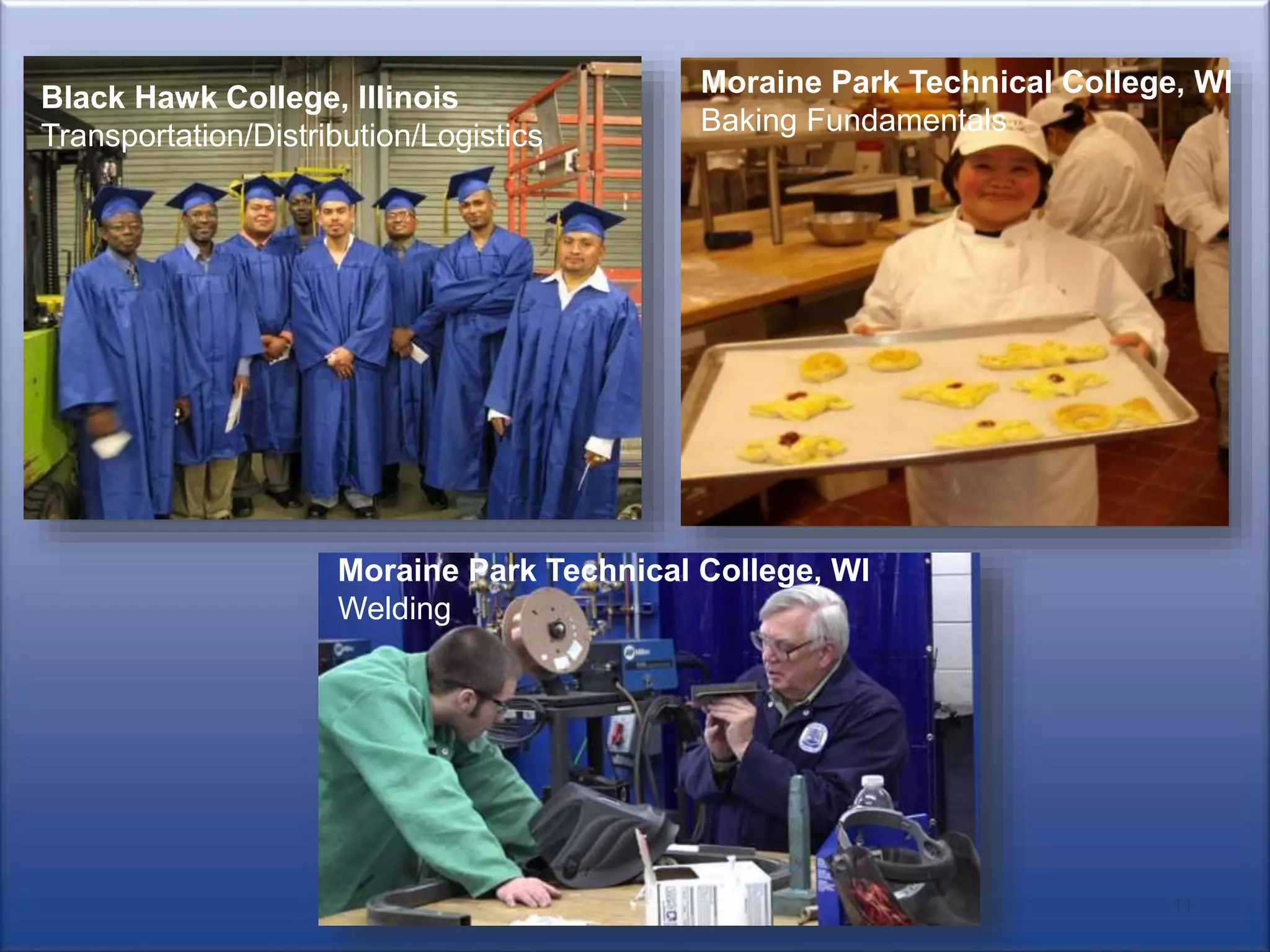
Black Hawk College, Illinois
Transportation/Distribution/Logistics
Moraine Park Technical College, WI
Welding
Moraine Park Technical College, WI
Baking Fundamentals
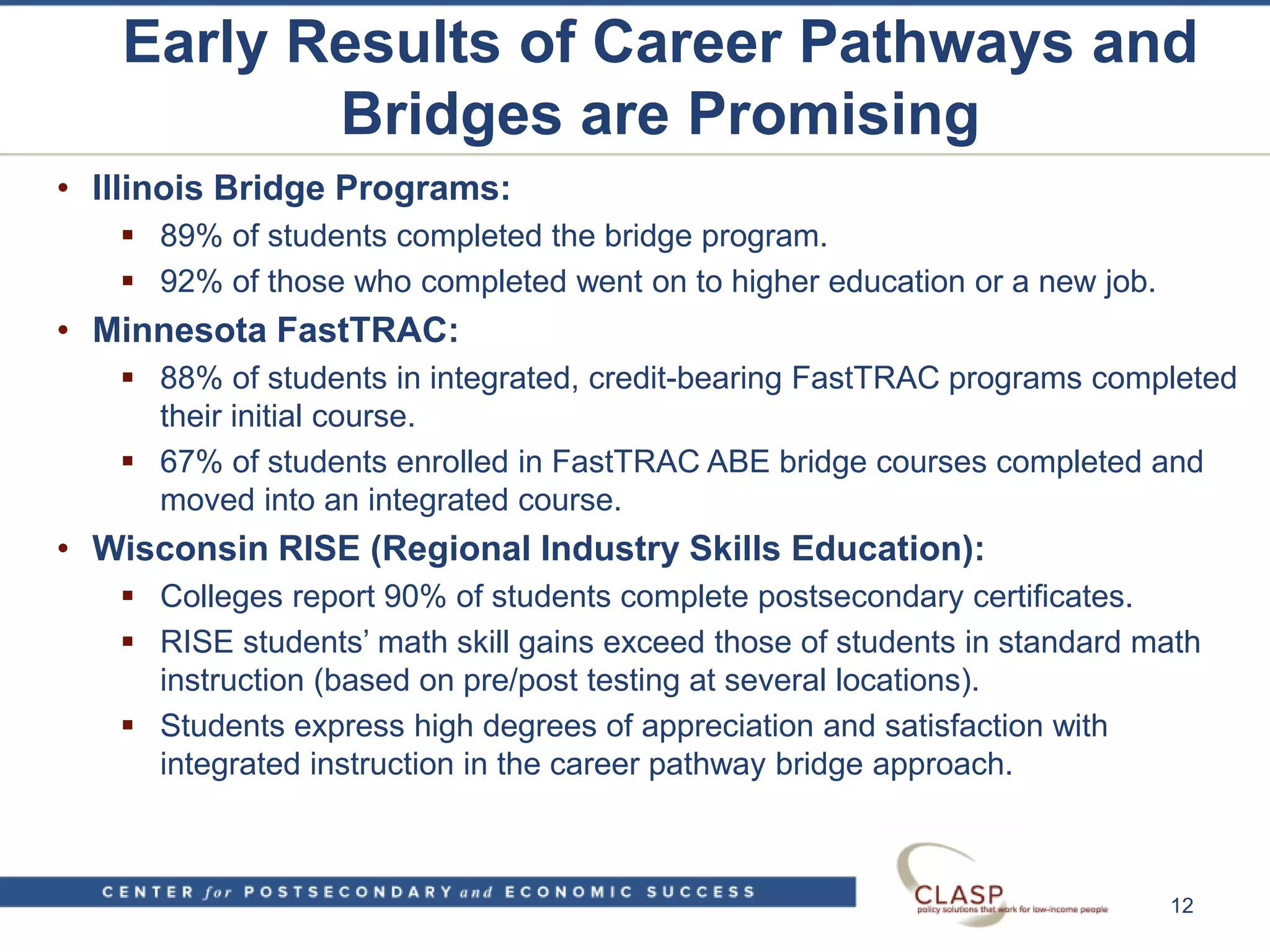
Early Results of Career Pathways and
Bridges are Promising
• Illinois Bridge Programs:
 89% of students completed the bridge program.
 92% of those who completed went on to higher education or a new job.
• Minnesota FastTRAC:
 88% of students in integrated, credit-bearing FastTRAC programs completed
their initial course.
 67% of students enrolled in FastTRAC ABE bridge courses completed and
moved into an integrated course.
• Wisconsin RISE (Regional Industry Skills Education):
 Colleges report 90% of students complete postsecondary certificates.
 RISE students’ math skill gains exceed those of students in standard math
instruction (based on pre/post testing at several locations).
 Students express high degrees of appreciation and satisfaction with
integrated instruction in the career pathway bridge approach.
12
Thank you!
Marcie Weadon-Moreno Foster
Policy Analyst, CLASP
mwmfoster@clasp.org
13

Beyond Basic Skills: Building Pathways to Credentials for Adult Education Students

  • 1.
    Beyond Basic Skills:Building Pathways to Credentials for Adult Education Students Marcie Foster, Policy Analyst, CLASP Academy of Hope Workforce Development Forum Washington, D.C. April 17, 2012
  • 2.
    CLASP: Policy Solutionsthat Work for Low-Income People • CLASP develops and advocates for policies at the federal, state and local levels that improve the lives of low-income people. • Our Center for Postsecondary and Economic Success seeks to improve policy, increase investment, and strengthen political will to increase the number of low-income adults and youth who earn the postsecondary credentials essential to open doors to good jobs, career advancement, and economic mobility. 2
  • 3.
    Less skilled =More Vulnerable 3
  • 4.
    Need for aMore Skilled Adult Workforce in D.C. • Growing Demand in the District  By 2018, 70 percent of jobs will require a postsecondary education. Largest growth is in graduate-level positions, but strong growth in jobs that require certificates and 2-year degrees. • Dwindling Supply of Traditional Age Students  From 2010 to 2020 there will be a steep drop in the number of high school graduates in D.C., with a projected decline of 24 percent. This is worse than the trend in any state. 4
  • 5.
    Economic Payoff toHigher Education 0 10,000 20,000 30,000 40,000 50,000 60,000 70,000 80,000 90,000 Less than high school graduate High school graduate (includes equivalency) Some college or associate's degree Bachelor's degree Graduate or professional degree Median Earnings of D.C. Workers by Educational Attainment 5 Source: 2010 American Community Survey 5-Year Estimates
  • 6.
    Issues with TraditionalAdult Education • Current data show poor postsecondary transition rates.  4,000+ students served, only hundreds enter postsecondary education. • Too many goals, too little funding. • Too focused on the GED, which does not denote college and career readiness. • Student’s don’t receive the supports they need to succeed long-term. • Sequential approach lengthens the time to a credential and reduces the likelihood of success – time is the enemy! 6
  • 7.
    The “Path” toEconomic Opportunity for Low-Skilled Workers? High School Developmental Education Adult Basic Education/English Language Services 2-Year or 4- Year Institution Employment Short-Term “Work Readiness” Course 1 year 1 year 1 year – 3 years 6 weeks …And still no credential with labor market value!
  • 8.
    Career Pathways: SeamlessTransition and a Greater Likelihood of Success Adult Basic Education/English Language Instruction Short-Term Occupational Certificate Long-Term Certificate 2-Year Associate’s Degree 4-Year Bachelor’s Degree Bridge Program Progressively Higher Employment Opportunities
  • 9.
    Building Career Pathwaysand Bridges 1) Combine basic skills and career-technical content, including general workforce skills, pre-college academic and English language skills, and specific occupational knowledge and skills. 2) Contextualize basic skills and English language content to the knowledge and skills needed in a specific occupation or group of occupations. 3) Use new or modified curricula, with identified learning targets for both academic and occupational content, articulated to next level in college and career pathway. 9
  • 10.
    Building Career Pathwaysand Bridges (cont.) 4) Change how classes are delivered, e.g. dual enrollment in linked basic skills & occupational courses; integrated, team-taught basic skills & occupational courses; enrolling students in cohorts . 5) Support student success through enhanced student services. E.g. “career coach” helps students navigate campus processes, access college and external services, connects students to other public benefits, and arranges internships in field of study. 6) Connect to local employer and community needs by engaging key partners in design and implementation of bridges, such as employers, unions, workforce development boards, community-based organizations and foundations.
  • 11.
    11 Black Hawk College,Illinois Transportation/Distribution/Logistics Moraine Park Technical College, WI Welding Moraine Park Technical College, WI Baking Fundamentals
  • 12.
    Early Results ofCareer Pathways and Bridges are Promising • Illinois Bridge Programs:  89% of students completed the bridge program.  92% of those who completed went on to higher education or a new job. • Minnesota FastTRAC:  88% of students in integrated, credit-bearing FastTRAC programs completed their initial course.  67% of students enrolled in FastTRAC ABE bridge courses completed and moved into an integrated course. • Wisconsin RISE (Regional Industry Skills Education):  Colleges report 90% of students complete postsecondary certificates.  RISE students’ math skill gains exceed those of students in standard math instruction (based on pre/post testing at several locations).  Students express high degrees of appreciation and satisfaction with integrated instruction in the career pathway bridge approach. 12
  • 13.
    Thank you! Marcie Weadon-MorenoFoster Policy Analyst, CLASP mwmfoster@clasp.org 13

Editor's Notes

  • #13 Illinois Bridge Programs: Outcomes for 2,436 adults enrolled in 7 career pathway bridge sites (as of fall 2011 44 bridges total in IL). 89% of students completed the bridge program. 92% of those who completed went on to higher education or a new job. Minnesota FastTRAC: Outcomes for 1,139 students enrolled in FastTRAC bridge or integrated programs (as of fall 2011 34 FastTRAC programs total in MN) 88% of students in integrated, credit-bearing FastTRAC programs completed their initial course.  67% of students enrolled in FastTRAC ABE bridge courses completed and moved into an integrated course – a success rate of 67%. Wisconsin RISE (Regional Industry Skills Education): Outcomes for 700 participants in early phase (as of spring 2011 44 career pathway bridges in WI). Colleges report 90% of students complete postsecondary certificates. RISE students’ math skill gains exceed those of students in standard math instruction (based on pre/post testing at several locations). Students express high degrees of appreciation and satisfaction with integrated instruction in the career pathway bridge approach.