Dr. Maria Idrees; PT
Degeneration and Regeneration
of Nerve Fibers
INTRODUCTION
 When a nerve fiber is injured, various changes
occur in the nerve fiber and nerve cell body. All
these changes are together called the
degenerative changes.
Causes for Injury
 Injury to nerve fiber occurs due to following
causes:
1. Obstruction of blood flow
2. Local injection of toxic substances
3. Crushing of nerve fiber
4. Transection of nerve fiber.
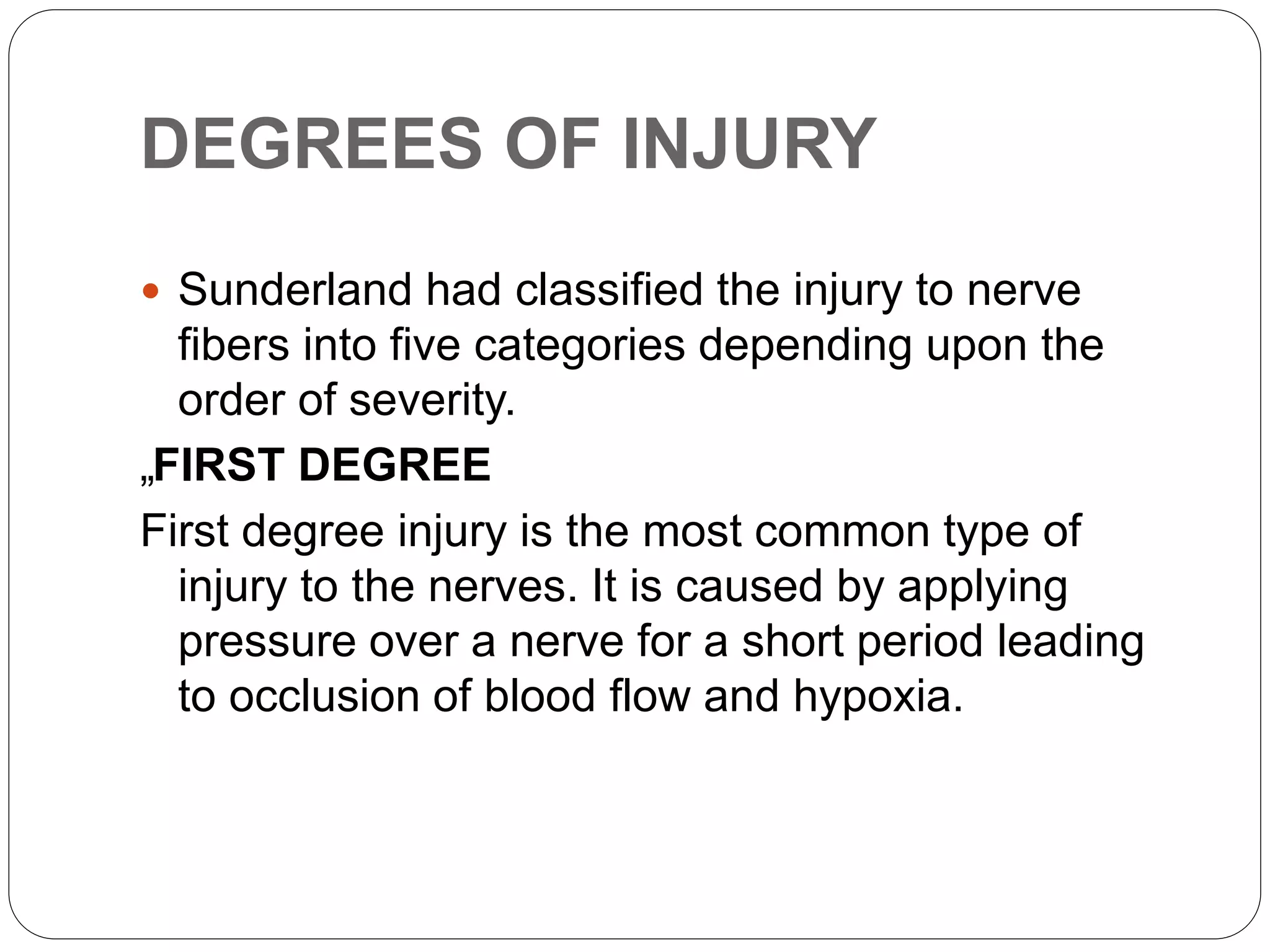
DEGREES OF INJURY
 Sunderland had classified the injury to nerve
fibers into five categories depending upon the
order of severity.
„FIRST DEGREE
First degree injury is the most common type of
injury to the nerves. It is caused by applying
pressure over a nerve for a short period leading
to occlusion of blood flow and hypoxia.
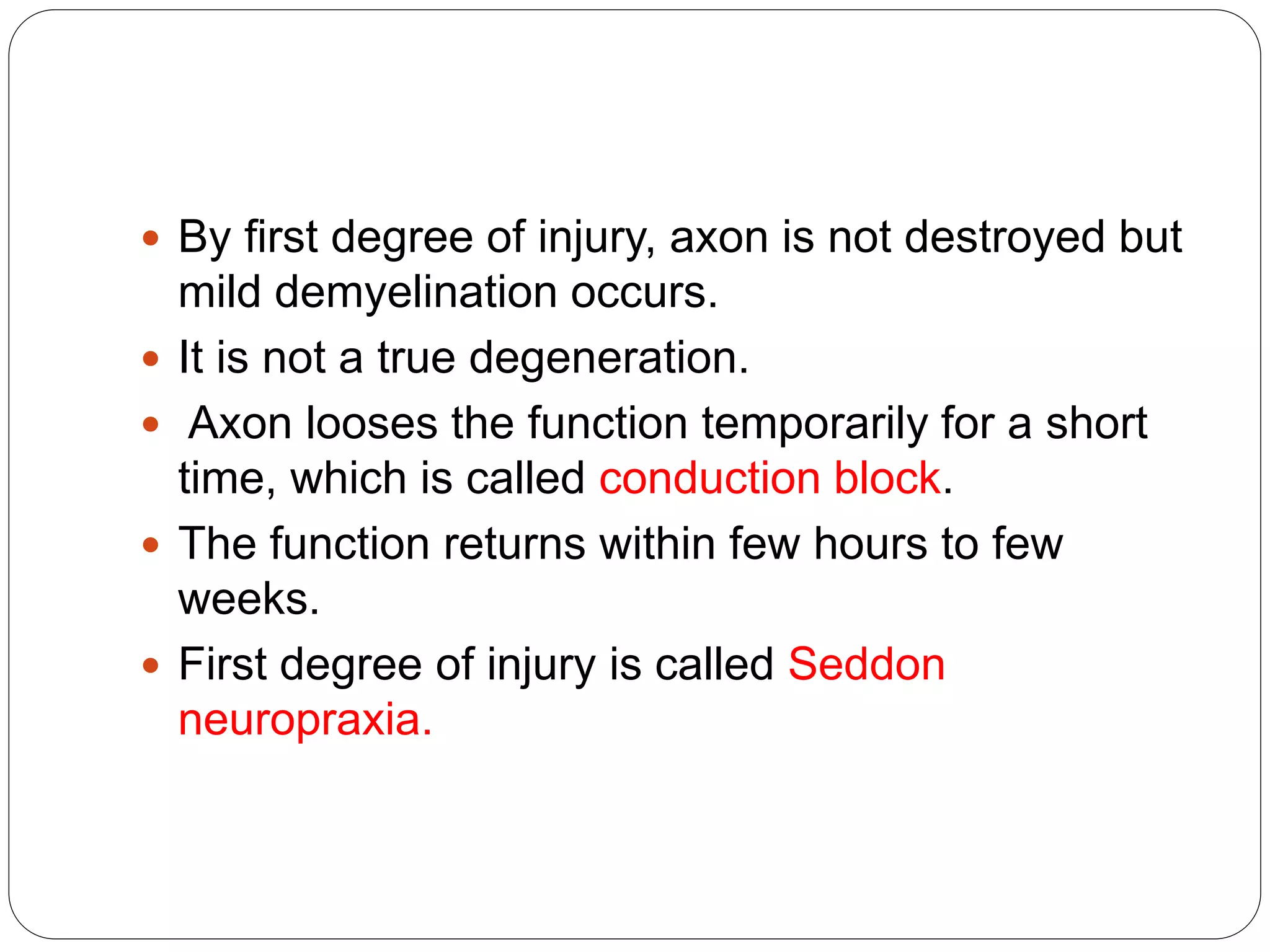
 By first degree of injury, axon is not destroyed but
mild demyelination occurs.
 It is not a true degeneration.
 Axon looses the function temporarily for a short
time, which is called conduction block.
 The function returns within few hours to few
weeks.
 First degree of injury is called Seddon
neuropraxia.
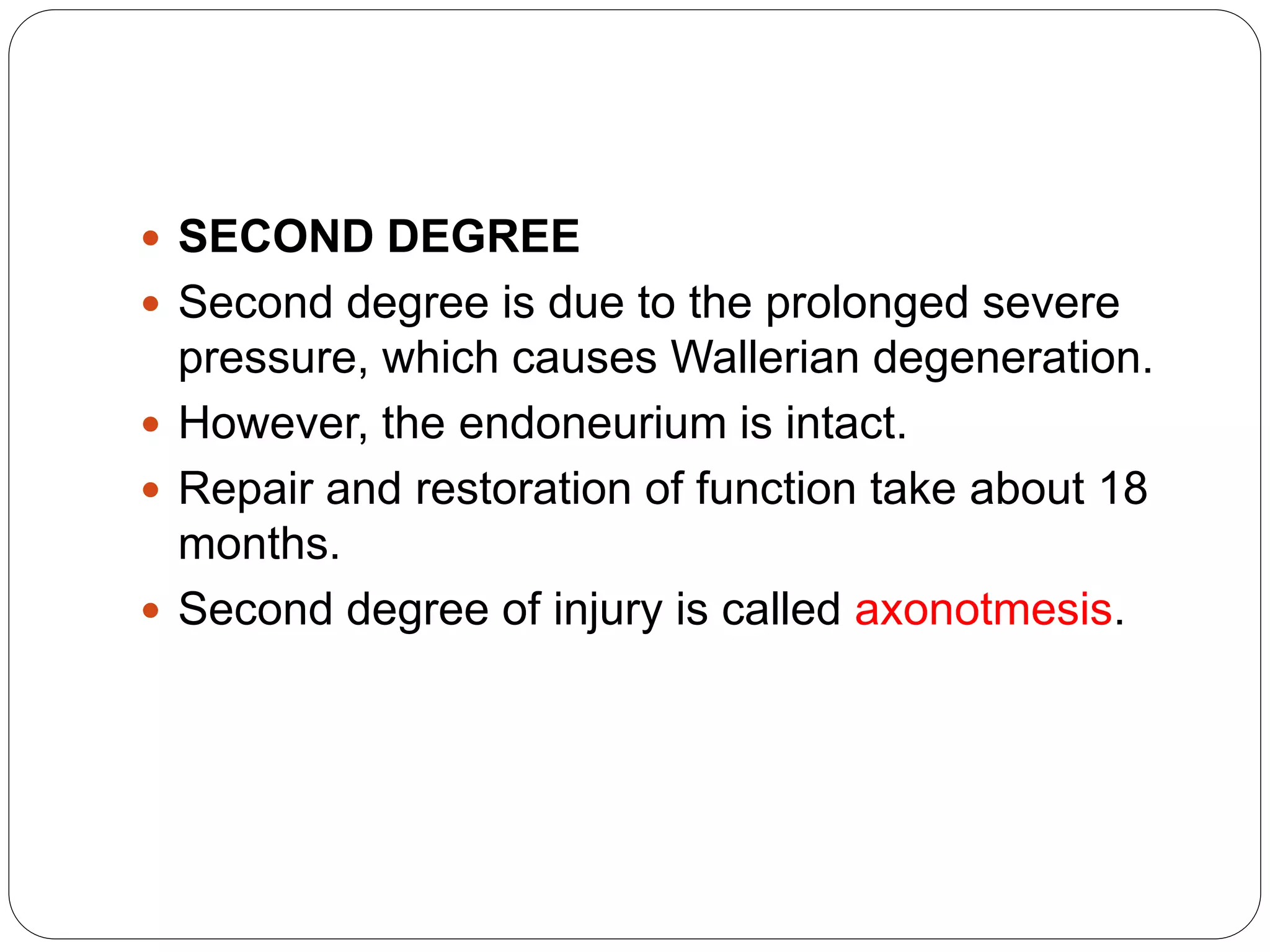
 SECOND DEGREE
 Second degree is due to the prolonged severe
pressure, which causes Wallerian degeneration.
 However, the endoneurium is intact.
 Repair and restoration of function take about 18
months.
 Second degree of injury is called axonotmesis.
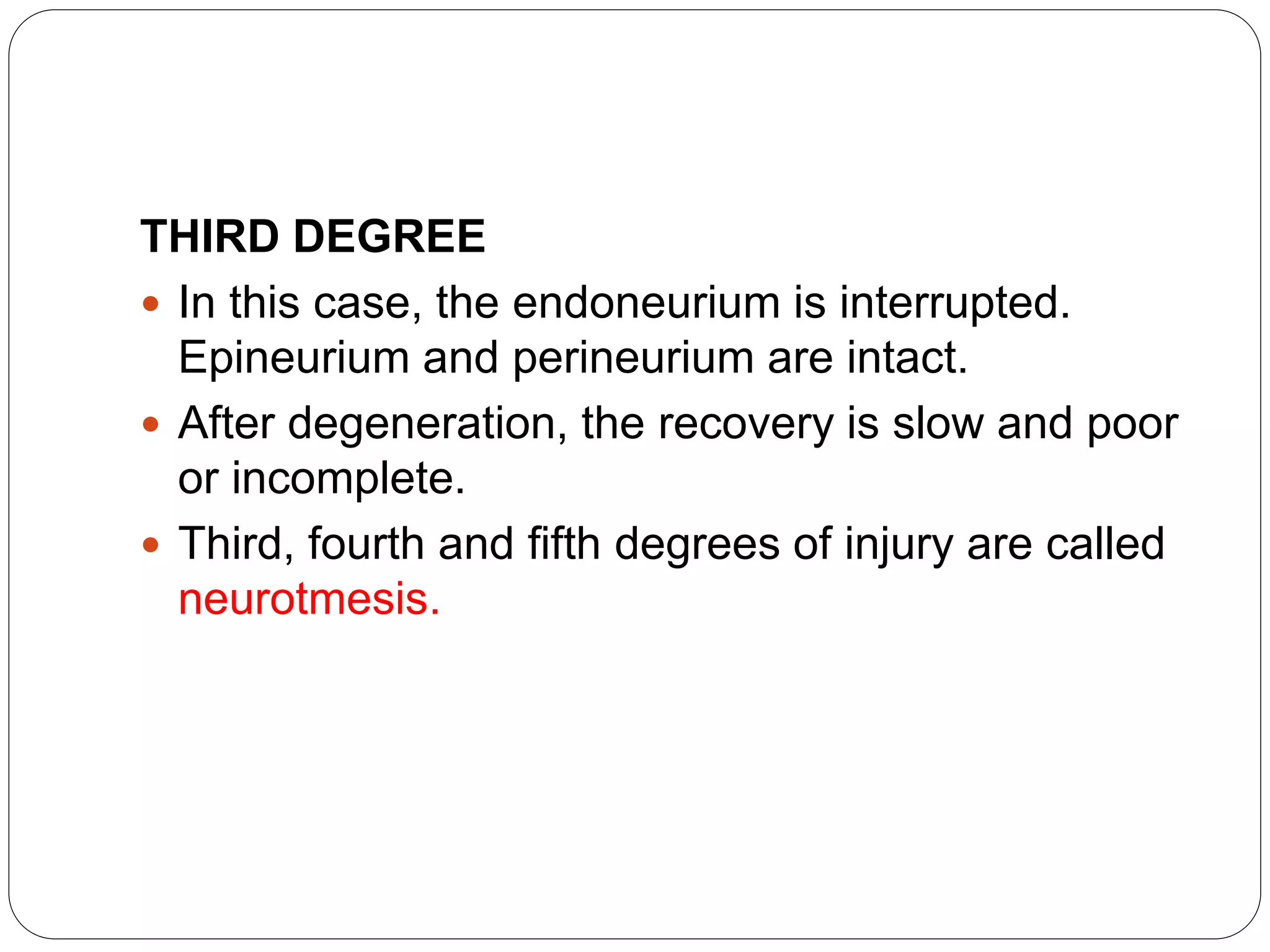
THIRD DEGREE
 In this case, the endoneurium is interrupted.
Epineurium and perineurium are intact.
 After degeneration, the recovery is slow and poor
or incomplete.
 Third, fourth and fifth degrees of injury are called
neurotmesis.
FOURTH DEGREE
 This type of injury is more severe. Epineurium
and perineurium are also interrupted. Fasciculi of
nerve fibers are disturbed and disorganized.
Regeneration is poor or incomplete.
„FIFTH DEGREE
 Fifth degree of injury involves complete
transaction of the nerve trunk with loss of
continuity. Useful regeneration is not possible
unless the cut ends are rearranged and
approximated quickly by surgery.
DEGENERATIVE CHANGES IN
THE NEURON
 Degeneration refers to deterioration or
impairment or pathological changes of an injured
tissue.
 Accordingly, degenerative changes are classified
into three types:
1. Wallerian degeneration
2. Retrograde degeneration
3. Transneuronal degeneration.
WALLERIAN DEGENERATION OR
ORTHOGRADE DEGENERATION
 Wallerian degeneration is the pathological change
that occurs in the distal cut end of nerve fiber
(axon). It is named after the discoverer Waller.
 It is also called orthograde degeneration.
 Wallerian degeneration starts within 24 hours of
injury.
 Change occurs throughout the length of distal
part of nerve fiber simultaneously.
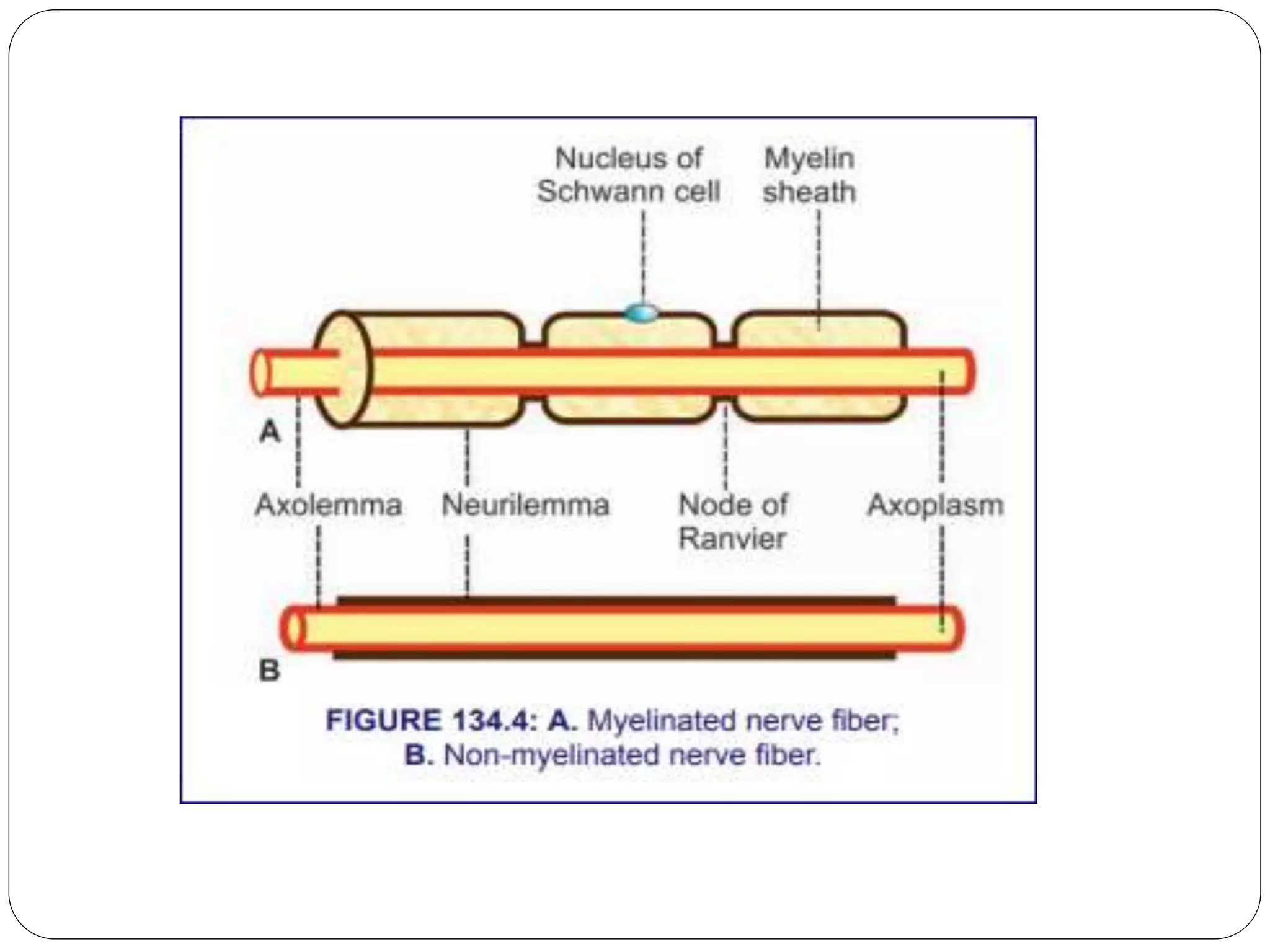
Changes in Nerve
i. Axis cylinder swells and breaks up into small pieces.
After few days, the broken pieces appear as debris
in the space occupied by axis cylinder.
ii. Myelin sheath is slowly disintegrated into fat
droplets. The changes in myelin sheath occur from
8th to 35th day.
iii. Neurilemmal sheath is unaffected, but the Schwann
cells multiply rapidly. Macrophages invade from
outside and remove the debris of axis cylinder and
fat droplets of disintegrated myelin sheath. So, the
neurilemmal tube becomes empty. Later it is filled by
the cytoplasm of Schwann cell. All these changes
take place for about 2 months from the day of injury.
RETROGRADE DEGENERATION
 Retrograde degeneration is the pathological
changes, which occur in the nerve cell body and
axon proximal to the cut end.
Changes in Nerve Cell Body
Changes in the nerve cell body commence within
48 hours after the section of nerve.
The changes are:
i. First, the Nissl granules disintegrate into
fragments by chromatolysis
ii. Golgi apparatus is disintegrated
iii. Nerve cell body swells due to accumulation of fluid
and becomes round
iv. Neurofibrils disappear followed by displacement of
the nucleus towards the periphery
v. Sometimes, the nucleus is extruded out of the cell.
In this case, death of the neuron occurs and
regeneration of the injured nerve is not possible.
Changes in Axon Proximal to Cut End
 In the axon, changes occur only up to first node of
Ranvier from the site of injury. Degenerative
changes that occur in proximal cut end of axon are
similar to those changes occurring in distal cut end
of the nerve fiber.

Degeneration and regeneration of nerve fibers

  • 1.
    Dr. Maria Idrees;PT Degeneration and Regeneration of Nerve Fibers
  • 2.
    INTRODUCTION  When anerve fiber is injured, various changes occur in the nerve fiber and nerve cell body. All these changes are together called the degenerative changes.
  • 4.
    Causes for Injury Injury to nerve fiber occurs due to following causes: 1. Obstruction of blood flow 2. Local injection of toxic substances 3. Crushing of nerve fiber 4. Transection of nerve fiber.
  • 5.
    DEGREES OF INJURY Sunderland had classified the injury to nerve fibers into five categories depending upon the order of severity. „FIRST DEGREE First degree injury is the most common type of injury to the nerves. It is caused by applying pressure over a nerve for a short period leading to occlusion of blood flow and hypoxia.
  • 6.
     By firstdegree of injury, axon is not destroyed but mild demyelination occurs.  It is not a true degeneration.  Axon looses the function temporarily for a short time, which is called conduction block.  The function returns within few hours to few weeks.  First degree of injury is called Seddon neuropraxia.
  • 7.
     SECOND DEGREE Second degree is due to the prolonged severe pressure, which causes Wallerian degeneration.  However, the endoneurium is intact.  Repair and restoration of function take about 18 months.  Second degree of injury is called axonotmesis.
  • 8.
    THIRD DEGREE  Inthis case, the endoneurium is interrupted. Epineurium and perineurium are intact.  After degeneration, the recovery is slow and poor or incomplete.  Third, fourth and fifth degrees of injury are called neurotmesis.
  • 9.
    FOURTH DEGREE  Thistype of injury is more severe. Epineurium and perineurium are also interrupted. Fasciculi of nerve fibers are disturbed and disorganized. Regeneration is poor or incomplete. „FIFTH DEGREE  Fifth degree of injury involves complete transaction of the nerve trunk with loss of continuity. Useful regeneration is not possible unless the cut ends are rearranged and approximated quickly by surgery.
  • 10.
    DEGENERATIVE CHANGES IN THENEURON  Degeneration refers to deterioration or impairment or pathological changes of an injured tissue.  Accordingly, degenerative changes are classified into three types: 1. Wallerian degeneration 2. Retrograde degeneration 3. Transneuronal degeneration.
  • 12.
    WALLERIAN DEGENERATION OR ORTHOGRADEDEGENERATION  Wallerian degeneration is the pathological change that occurs in the distal cut end of nerve fiber (axon). It is named after the discoverer Waller.  It is also called orthograde degeneration.  Wallerian degeneration starts within 24 hours of injury.  Change occurs throughout the length of distal part of nerve fiber simultaneously.
  • 13.
    Changes in Nerve i.Axis cylinder swells and breaks up into small pieces. After few days, the broken pieces appear as debris in the space occupied by axis cylinder. ii. Myelin sheath is slowly disintegrated into fat droplets. The changes in myelin sheath occur from 8th to 35th day. iii. Neurilemmal sheath is unaffected, but the Schwann cells multiply rapidly. Macrophages invade from outside and remove the debris of axis cylinder and fat droplets of disintegrated myelin sheath. So, the neurilemmal tube becomes empty. Later it is filled by the cytoplasm of Schwann cell. All these changes take place for about 2 months from the day of injury.
  • 16.
    RETROGRADE DEGENERATION  Retrogradedegeneration is the pathological changes, which occur in the nerve cell body and axon proximal to the cut end. Changes in Nerve Cell Body Changes in the nerve cell body commence within 48 hours after the section of nerve. The changes are: i. First, the Nissl granules disintegrate into fragments by chromatolysis ii. Golgi apparatus is disintegrated
  • 17.
    iii. Nerve cellbody swells due to accumulation of fluid and becomes round iv. Neurofibrils disappear followed by displacement of the nucleus towards the periphery v. Sometimes, the nucleus is extruded out of the cell. In this case, death of the neuron occurs and regeneration of the injured nerve is not possible. Changes in Axon Proximal to Cut End  In the axon, changes occur only up to first node of Ranvier from the site of injury. Degenerative changes that occur in proximal cut end of axon are similar to those changes occurring in distal cut end of the nerve fiber.