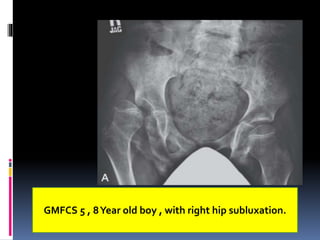
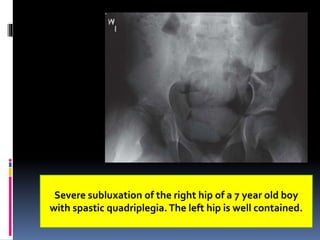
GMFCS 5 , 8Year old boy , with right hip subluxation.
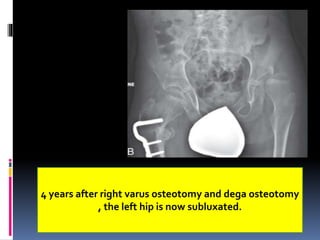
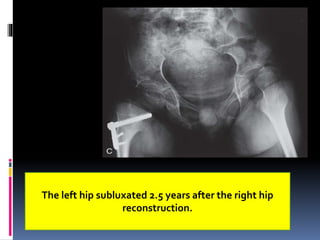
4 years after right varus osteotomy and dega osteotomy
, the left hip is now subluxated.
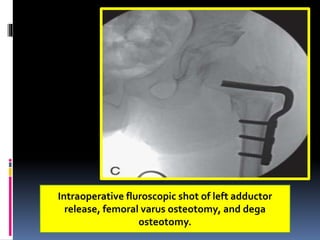
Intraoperative fluroscopic shot of left adductor
release, femoral varus osteotomy, and dega
osteotomy.
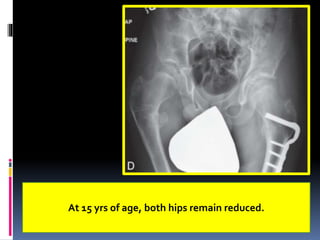
At 15 yrs of age, both hips remain reduced.
 Dega osteotomy extends through the outer
table of the ilium from the AIIS to the sciatic
notch.
 A bicortical osteotomy is performed only at the
AIIS and with a kerison rongeur at the sciatic
notch.
 The inner table of the ilium is not cut.
 The lateral osteotomy made through the outer
table is extended with curved osteotomes to the
triradiate cartilage under fluroscopic guidance.
 The osteotomy is then pried down laterally and
posteriorly with osteotomes and hinged on the
triaradiate cartilage, with the inner table of the
ilium being left intact.
 Wedges of bone graft prop the osteotomy open,
and the direction of desired coverage is
addressed by where one places the bone graft.
 The sponginess of the triradiate cartilage closes
the osteotomy around the bony wedges, so
fixation with pins is usually not necessary.
A prerequisite for the dega osteotomy is an open triradiate
cartilage.
Study by mubarak and
colleagues
Dega osteotomy combined with
adductor, iliopsoas and proximal
hamstring release and a
shortening femoralVDRO
95% Of 104 hips
remained stable at 7
yrs follow up
AVN occurred in
8% of the hips.
Allowed excellent correction
of the superior and lateral
deficiency seen
preoperatively.
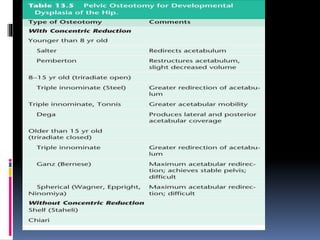
They advocated performing the osteotomy in
those with open triradiate cartilage , an
acetabular index greater than 25 degrees, MI
greater than 40%.
Open reduction if hip is 70% uncovered.
With open reduction , increased risk of AVN.
Severe subluxation of the right hip of a 7 year old boy
with spastic quadriplegia.The left hip is well contained.
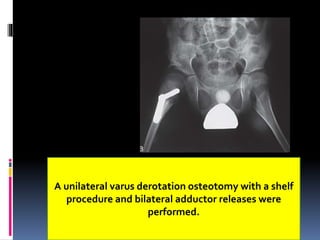
A unilateral varus derotation osteotomy with a shelf
procedure and bilateral adductor releases were
performed.
The left hip subluxated 2.5 years after the right hip
reconstruction.
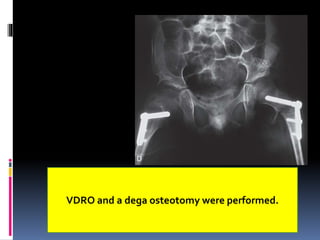
VDRO and a dega osteotomy were performed.
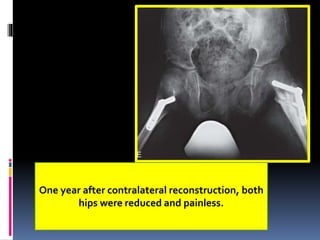
One year after contralateral reconstruction, both
hips were reduced and painless.
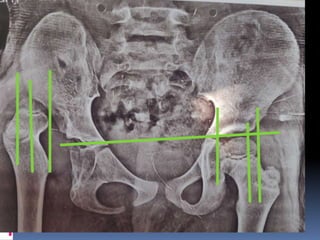
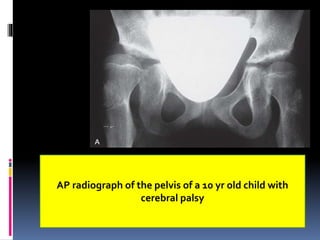
AP radiograph of the pelvis of a 10 yr old child with
cerebral palsy
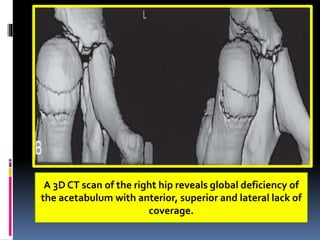
A 3D CT scan of the right hip reveals global deficiency of
the acetabulum with anterior, superior and lateral lack of
coverage.
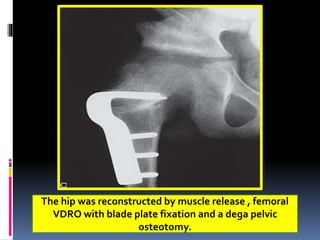
The hip was reconstructed by muscle release , femoral
VDRO with blade plate fixation and a dega pelvic
osteotomy.
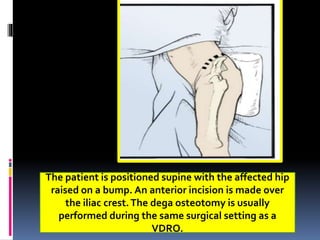
The patient is positioned supine with the affected hip
raised on a bump. An anterior incision is made over
the iliac crest.The dega osteotomy is usually
performed during the same surgical setting as a
VDRO.
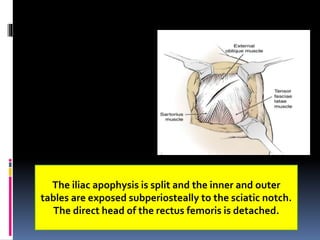
The iliac apophysis is split and the inner and outer
tables are exposed subperiosteally to the sciatic notch.
The direct head of the rectus femoris is detached.
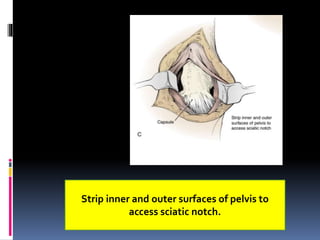
Strip inner and outer surfaces of pelvis to
access sciatic notch.

Dega osteotomy

  • 3.
    GMFCS 5 ,8Year old boy , with right hip subluxation.
  • 4.
    4 years afterright varus osteotomy and dega osteotomy , the left hip is now subluxated.
  • 5.
    Intraoperative fluroscopic shotof left adductor release, femoral varus osteotomy, and dega osteotomy.
  • 6.
    At 15 yrsof age, both hips remain reduced.
  • 7.
     Dega osteotomyextends through the outer table of the ilium from the AIIS to the sciatic notch.  A bicortical osteotomy is performed only at the AIIS and with a kerison rongeur at the sciatic notch.  The inner table of the ilium is not cut.  The lateral osteotomy made through the outer table is extended with curved osteotomes to the triradiate cartilage under fluroscopic guidance.
  • 8.
     The osteotomyis then pried down laterally and posteriorly with osteotomes and hinged on the triaradiate cartilage, with the inner table of the ilium being left intact.  Wedges of bone graft prop the osteotomy open, and the direction of desired coverage is addressed by where one places the bone graft.  The sponginess of the triradiate cartilage closes the osteotomy around the bony wedges, so fixation with pins is usually not necessary.
  • 9.
    A prerequisite forthe dega osteotomy is an open triradiate cartilage.
  • 10.
    Study by mubarakand colleagues Dega osteotomy combined with adductor, iliopsoas and proximal hamstring release and a shortening femoralVDRO 95% Of 104 hips remained stable at 7 yrs follow up AVN occurred in 8% of the hips. Allowed excellent correction of the superior and lateral deficiency seen preoperatively.
  • 11.
    They advocated performingthe osteotomy in those with open triradiate cartilage , an acetabular index greater than 25 degrees, MI greater than 40%.
  • 12.
    Open reduction ifhip is 70% uncovered. With open reduction , increased risk of AVN.
  • 13.
    Severe subluxation ofthe right hip of a 7 year old boy with spastic quadriplegia.The left hip is well contained.
  • 14.
    A unilateral varusderotation osteotomy with a shelf procedure and bilateral adductor releases were performed.
  • 15.
    The left hipsubluxated 2.5 years after the right hip reconstruction.
  • 16.
    VDRO and adega osteotomy were performed.
  • 17.
    One year aftercontralateral reconstruction, both hips were reduced and painless.
  • 18.
    AP radiograph ofthe pelvis of a 10 yr old child with cerebral palsy
  • 19.
    A 3D CTscan of the right hip reveals global deficiency of the acetabulum with anterior, superior and lateral lack of coverage.
  • 20.
    The hip wasreconstructed by muscle release , femoral VDRO with blade plate fixation and a dega pelvic osteotomy.
  • 21.
    The patient ispositioned supine with the affected hip raised on a bump. An anterior incision is made over the iliac crest.The dega osteotomy is usually performed during the same surgical setting as a VDRO.
  • 22.
    The iliac apophysisis split and the inner and outer tables are exposed subperiosteally to the sciatic notch. The direct head of the rectus femoris is detached.
  • 23.
    Strip inner andouter surfaces of pelvis to access sciatic notch.