

Defining the Research
Problem
ASIF JAMAL
Visiting Lecturer & Motivational Speaker
Defining the Research Problem
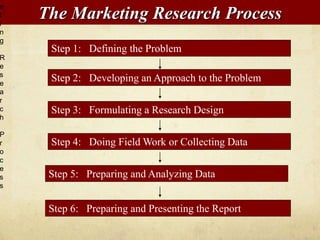
The Marketing Research Process
k
e
t
i
n
g
R
e
s
e
a
r
c
h
P
r
o
c
e
s
s
Step 1: Defining the Problem
Step 2: Developing an Approach to the Problem
Step 3: Formulating a Research Design
Step 4: Doing Field Work or Collecting Data
Step 5: Preparing and Analyzing Data
Step 6: Preparing and Presenting the Report
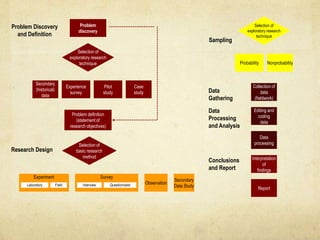
Problem
discovery
Problem definition
(statement of
research objectives)
Secondary
(historical)
data
Experience
survey
Pilot
study
Case
study
Selection of
exploratory research
technique
Selection of
basic research
method
Experiment Survey
Observation
Secondary
Data StudyLaboratory Field Interview Questionnaire
Selection of
exploratory research
technique
Sampling
Probability Nonprobability
Collection of
data
(fieldwork)
Editing and
coding
data
Data
processing
Interpretation
of
findings
Report
Data
Gathering
Data
Processing
and Analysis
Conclusions
and Report
Research Design
Problem Discovery
and Definition
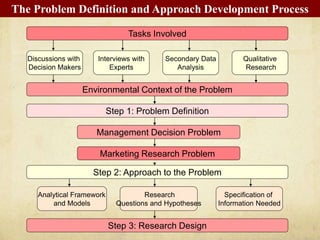
The Problem Definition and Approach Development Process
Tasks Involved
Qualitative
Research
Discussions with
Decision Makers
Interviews with
Experts
Secondary Data
Analysis
Environmental Context of the Problem
Step 1: Problem Definition
Management Decision Problem
Marketing Research Problem
Step 2: Approach to the Problem
Step 3: Research Design
Research
Questions and Hypotheses
Analytical Framework
and Models
Specification of
Information Needed
F
i
g
u
r
e
2
.
3
T
h
e
P
r
o
b
l
e
m
D
e
f
i
n
i
t
i
o
n
a
n
d
A
p
p
r
o
a
c
h
D
e
v
e
l
o
p
m
e
n
t
P
r
o
c
e
s
s
Beware the Iceberg!
The Iceberg Principle
The dangerous part of many marketing problems is
neither visible to nor understood by many marketing
managers.
“Submerged” parts of the problem must be
understood and including in the research design for the
research to be useful.
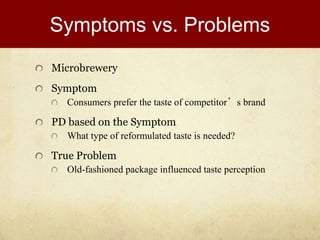
Symptoms vs. Problems
Microbrewery
Symptom
Consumers prefer the taste of competitor’s brand
PD based on the Symptom
What type of reformulated taste is needed?
True Problem
Old-fashioned package influenced taste perception
Symptoms vs. Problems
Manufacturer of palm-size computers
with Internet access
Symptom
Distributors complain prices are too high
PD based on the Symptom
Investigate business users to learn how much prices need to
be reduced
True Problem
Distributors do not have adequate product knowledge to
communicate product’s value
Management Decision Problems vs.
Marketing Research Problems
Management Decision
Problems
Ask what the decision
maker needs to do
Action oriented
Focus on symptoms
Marketing Research
Problems
Ask what information is
needed and how it should be
obtained
Information oriented
Focus on the underlying
causes
Translating Management Problems into
Research Problems (Questions)
Management Problem
Determine the best ways the firm can communicate
with potential purchasers of laptop computers
Research Questions
How familiar are consumers with the various brands of
computers?
What attitudes do consumers have toward these
brands?
How important are the various factors for evaluating
the purchase of a laptop computer?
How effective are the communications efforts of the
various competitive marketers in terms of message
recognition?
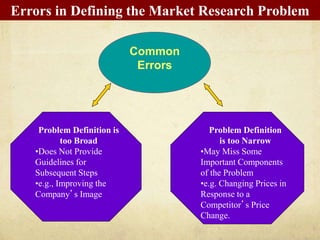
Common
Errors
Errors in Defining the Market Research ProblemF
i
g
u
r
e
2
.
7
E
r
r
o
r
s
i
n
D
e
f
i
n
i
n
g
t
h
e
M
a
r
k
e
t
R
e
s
e
a
r
c
h
P
r
o
b
l
e
m
Problem Definition is
too Broad
•Does Not Provide
Guidelines for
Subsequent Steps
•e.g., Improving the
Company’s Image
Problem Definition
is too Narrow
•May Miss Some
Important Components
of the Problem
•e.g. Changing Prices in
Response to a
Competitor’s Price
Change.
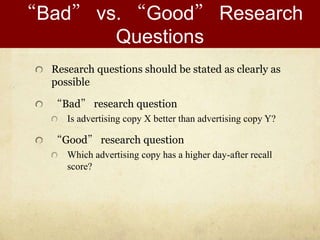
“Bad” vs. “Good” Research
Questions
Research questions should be stated as clearly as
possible
“Bad” research question
Is advertising copy X better than advertising copy Y?
“Good” research question
Which advertising copy has a higher day-after recall
score?
Components of the
Marketing Research
Problem
Research
Questions
Hypotheses
Analytical
Framework
and
Models
Development of Research Questions & HypothesisF
i
g
u
r
e
2
.
9
D
e
v
e
l
o
p
m
e
n
t
o
f
R
e
s
e
a
r
c
h
Q
u
e
s
t
i
o
1
n
s
a
n
d
H
y
p
o
t
h
e
s
i
s
Analytical Framework & Models
Research questions & hypotheses are developed
within analytical frameworks
Basically, theories & models
Theory suggests that satisfaction improves morale
& perceptions
A sales manager who wants to increase market
share (management problem) may
Ask how to encourage salespeople to generate more sales
(research question)
State that (based on theory) higher job satisfaction leads to
greater sales productivity (hypothesis)
Defining the research problem

Defining the research problem

  • 1.
    Defining the Research Problem ASIFJAMAL Visiting Lecturer & Motivational Speaker
  • 2.
  • 3.
    The Marketing ResearchProcess k e t i n g R e s e a r c h P r o c e s s Step 1: Defining the Problem Step 2: Developing an Approach to the Problem Step 3: Formulating a Research Design Step 4: Doing Field Work or Collecting Data Step 5: Preparing and Analyzing Data Step 6: Preparing and Presenting the Report
  • 4.
    Problem discovery Problem definition (statement of researchobjectives) Secondary (historical) data Experience survey Pilot study Case study Selection of exploratory research technique Selection of basic research method Experiment Survey Observation Secondary Data StudyLaboratory Field Interview Questionnaire Selection of exploratory research technique Sampling Probability Nonprobability Collection of data (fieldwork) Editing and coding data Data processing Interpretation of findings Report Data Gathering Data Processing and Analysis Conclusions and Report Research Design Problem Discovery and Definition
  • 5.
    The Problem Definitionand Approach Development Process Tasks Involved Qualitative Research Discussions with Decision Makers Interviews with Experts Secondary Data Analysis Environmental Context of the Problem Step 1: Problem Definition Management Decision Problem Marketing Research Problem Step 2: Approach to the Problem Step 3: Research Design Research Questions and Hypotheses Analytical Framework and Models Specification of Information Needed F i g u r e 2 . 3 T h e P r o b l e m D e f i n i t i o n a n d A p p r o a c h D e v e l o p m e n t P r o c e s s
  • 6.
    Beware the Iceberg! TheIceberg Principle The dangerous part of many marketing problems is neither visible to nor understood by many marketing managers. “Submerged” parts of the problem must be understood and including in the research design for the research to be useful.
  • 7.
    Symptoms vs. Problems Microbrewery Symptom Consumersprefer the taste of competitor’s brand PD based on the Symptom What type of reformulated taste is needed? True Problem Old-fashioned package influenced taste perception
  • 8.
    Symptoms vs. Problems Manufacturerof palm-size computers with Internet access Symptom Distributors complain prices are too high PD based on the Symptom Investigate business users to learn how much prices need to be reduced True Problem Distributors do not have adequate product knowledge to communicate product’s value
  • 9.
    Management Decision Problemsvs. Marketing Research Problems Management Decision Problems Ask what the decision maker needs to do Action oriented Focus on symptoms Marketing Research Problems Ask what information is needed and how it should be obtained Information oriented Focus on the underlying causes
  • 10.
    Translating Management Problemsinto Research Problems (Questions) Management Problem Determine the best ways the firm can communicate with potential purchasers of laptop computers Research Questions How familiar are consumers with the various brands of computers? What attitudes do consumers have toward these brands? How important are the various factors for evaluating the purchase of a laptop computer? How effective are the communications efforts of the various competitive marketers in terms of message recognition?
  • 11.
    Common Errors Errors in Definingthe Market Research ProblemF i g u r e 2 . 7 E r r o r s i n D e f i n i n g t h e M a r k e t R e s e a r c h P r o b l e m Problem Definition is too Broad •Does Not Provide Guidelines for Subsequent Steps •e.g., Improving the Company’s Image Problem Definition is too Narrow •May Miss Some Important Components of the Problem •e.g. Changing Prices in Response to a Competitor’s Price Change.
  • 12.
    “Bad” vs. “Good”Research Questions Research questions should be stated as clearly as possible “Bad” research question Is advertising copy X better than advertising copy Y? “Good” research question Which advertising copy has a higher day-after recall score?
  • 13.
    Components of the MarketingResearch Problem Research Questions Hypotheses Analytical Framework and Models Development of Research Questions & HypothesisF i g u r e 2 . 9 D e v e l o p m e n t o f R e s e a r c h Q u e s t i o 1 n s a n d H y p o t h e s i s
  • 14.
    Analytical Framework &Models Research questions & hypotheses are developed within analytical frameworks Basically, theories & models Theory suggests that satisfaction improves morale & perceptions A sales manager who wants to increase market share (management problem) may Ask how to encourage salespeople to generate more sales (research question) State that (based on theory) higher job satisfaction leads to greater sales productivity (hypothesis)