DefibrillatorsMichelle Randall
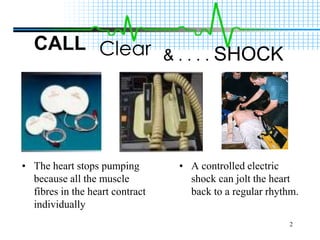
2CALLClear& . . . . SHOCKThe heart stops pumping because all the muscle fibres in the heart contract individuallyA controlled electric shock can jolt the heart back to a regular rhythm.
3PresentAutomated External Defibrillators (AED)s are for the public and are easy to use.Chances of surviving a heat attack fall about 10% every minute.AEDs analyze  the heart rhythm by computer and advises the operator whether a shock is needed.AEDs can be used in the workplace and at public events
4History1947 - Dr. Claude Beck first attempted to defribillate a human heart. After six tries, the seventh patient lived.1954 - Drs. Kowenhoven and Milnor defibrillated a dog through a closed chest.
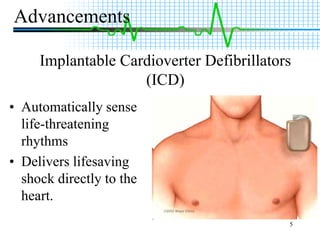
5AdvancementsImplantable Cardioverter Defibrillators(ICD)Automatically sense life-threatening rhythmsDelivers lifesaving shock directly to the heart.
6Additional InformationAmerican Heart Associationwww.americanheart.orgAmerican Red Crosswww.redcross.orgNational Safety Councilwww.nsc.orgOccupational Safety & Health Administrationwww.osha.org

Defibrillators

  • 1.
  • 2.
    2CALLClear& . .. . SHOCKThe heart stops pumping because all the muscle fibres in the heart contract individuallyA controlled electric shock can jolt the heart back to a regular rhythm.
  • 3.
    3PresentAutomated External Defibrillators(AED)s are for the public and are easy to use.Chances of surviving a heat attack fall about 10% every minute.AEDs analyze the heart rhythm by computer and advises the operator whether a shock is needed.AEDs can be used in the workplace and at public events
  • 4.
    4History1947 - Dr.Claude Beck first attempted to defribillate a human heart. After six tries, the seventh patient lived.1954 - Drs. Kowenhoven and Milnor defibrillated a dog through a closed chest.
  • 5.
    5AdvancementsImplantable Cardioverter Defibrillators(ICD)Automaticallysense life-threatening rhythmsDelivers lifesaving shock directly to the heart.
  • 6.
    6Additional InformationAmerican HeartAssociationwww.americanheart.orgAmerican Red Crosswww.redcross.orgNational Safety Councilwww.nsc.orgOccupational Safety & Health Administrationwww.osha.org