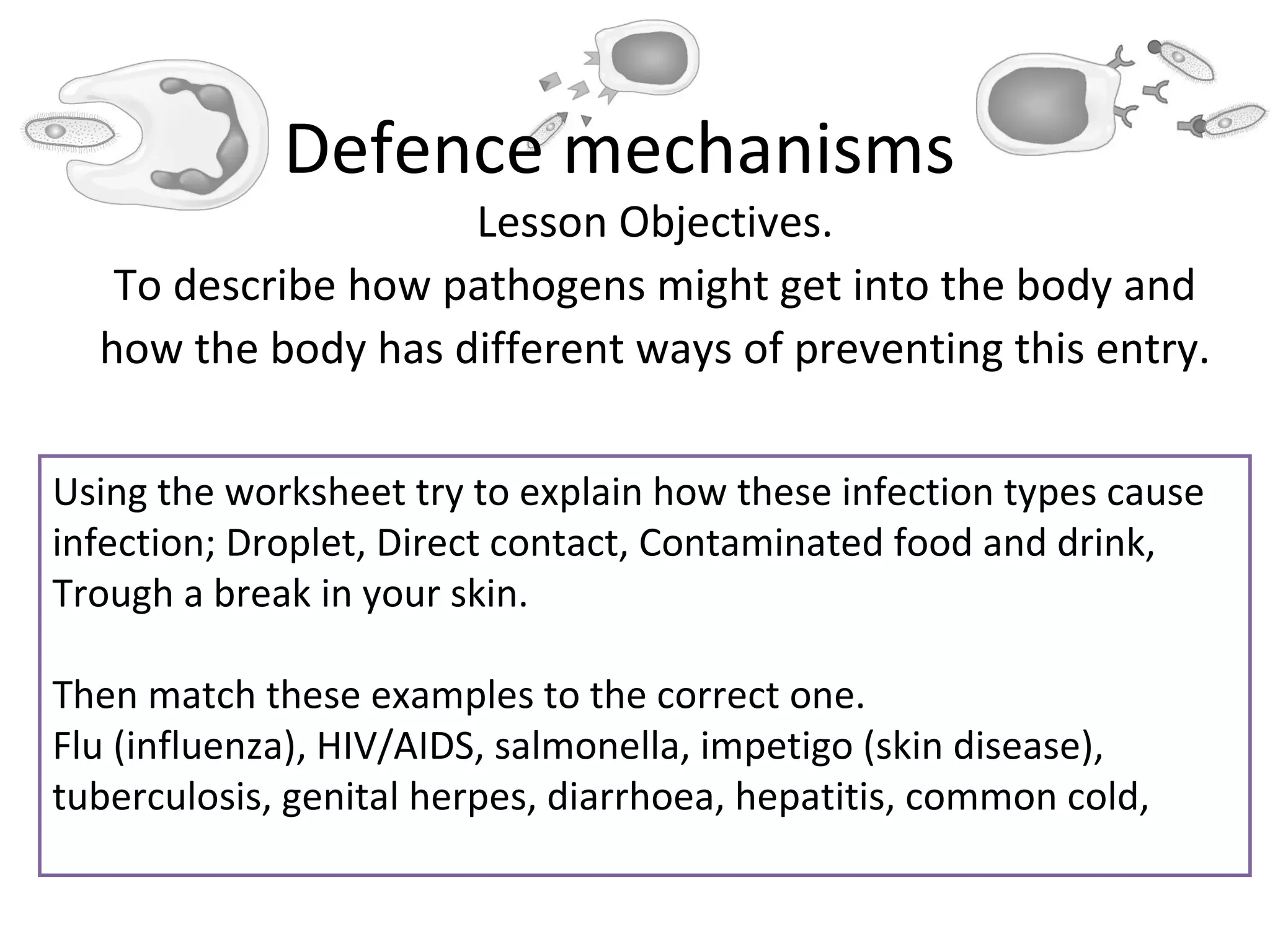
Defence mechanisms Lesson Objectives. To describe how pathogens might get into the body and how the body has different ways of preventing this entry. Using the worksheet try to explain how these infection types cause infection; Droplet, Direct contact, Contaminated food and drink, Trough a break in your skin. Then match these examples to the correct one. Flu (influenza), HIV/AIDS, salmonella, impetigo (skin disease), tuberculosis, genital herpes, diarrhoea, hepatitis, common cold,
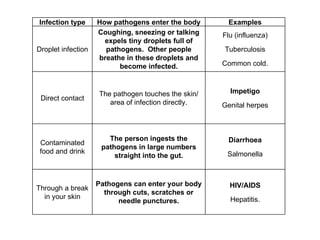
Infection type How pathogens enter the body Examples Droplet infection Coughing, sneezing or talking expels tiny droplets full of pathogens.  Other people breathe in these droplets and become infected. Flu (influenza) Tuberculosis Common cold. Direct contact The pathogen touches the skin/ area of infection directly. Impetigo Genital herpes Contaminated food and drink The person ingests the pathogens in large numbers straight into the gut. Diarrhoea Salmonella Through a break in your skin Pathogens can enter your body through cuts, scratches or needle punctures. HIV/AIDS Hepatitis.
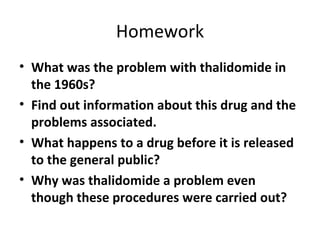
Homework What was the problem with thalidomide in the 1960s? Find out information about this drug and the problems associated. What happens to a drug before it is released to the general public? Why was thalidomide a problem even though these procedures were carried out?
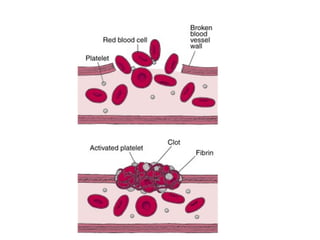
What do platelets do? Your skin is a very important barrier protecting the body from infections. If your skin gets damaged you bleed. Platelets in the blood quickly help to form a clot which dries into a scab.  These scabs act as a barrier until the skin heals.
 
What happens when your blood does not clot? Haemophilia is a condition where the blood does not clot properly. These means they bleed more than other people when they are injured.
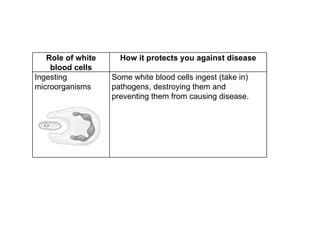
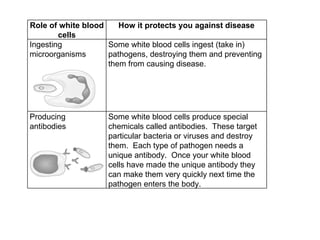
Role of white blood cells How it protects you against disease Ingesting microorganisms Some white blood cells ingest (take in) pathogens, destroying them and preventing them from causing disease.
Role of white blood cells How it protects you against disease Ingesting microorganisms Some white blood cells ingest (take in) pathogens, destroying them and preventing them from causing disease. Producing antibodies Some white blood cells produce special chemicals called antibodies.  These target particular bacteria or viruses and destroy them.  Each type of pathogen needs a unique antibody.  Once your white blood cells have made the unique antibody they can make them very quickly next time the pathogen enters the body.
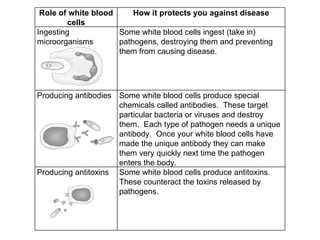
Role of white blood cells How it protects you against disease Ingesting microorganisms Some white blood cells ingest (take in) pathogens, destroying them and preventing them from causing disease. Producing antibodies Some white blood cells produce special chemicals called antibodies.  These target particular bacteria or viruses and destroy them.  Each type of pathogen needs a unique antibody.  Once your white blood cells have made the unique antibody they can make them very quickly next time the pathogen enters the body. Producing antitoxins Some white blood cells produce antitoxins.  These counteract the toxins released by pathogens.
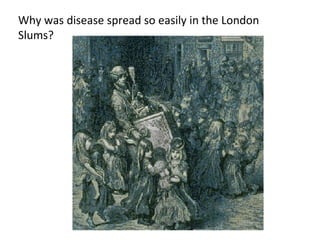
Why was disease spread so easily in the London Slums?

Defense Mechanisms

  • 1.
    Defence mechanisms LessonObjectives. To describe how pathogens might get into the body and how the body has different ways of preventing this entry. Using the worksheet try to explain how these infection types cause infection; Droplet, Direct contact, Contaminated food and drink, Trough a break in your skin. Then match these examples to the correct one. Flu (influenza), HIV/AIDS, salmonella, impetigo (skin disease), tuberculosis, genital herpes, diarrhoea, hepatitis, common cold,
  • 2.
    Infection type Howpathogens enter the body Examples Droplet infection Coughing, sneezing or talking expels tiny droplets full of pathogens. Other people breathe in these droplets and become infected. Flu (influenza) Tuberculosis Common cold. Direct contact The pathogen touches the skin/ area of infection directly. Impetigo Genital herpes Contaminated food and drink The person ingests the pathogens in large numbers straight into the gut. Diarrhoea Salmonella Through a break in your skin Pathogens can enter your body through cuts, scratches or needle punctures. HIV/AIDS Hepatitis.
  • 3.
    Homework What wasthe problem with thalidomide in the 1960s? Find out information about this drug and the problems associated. What happens to a drug before it is released to the general public? Why was thalidomide a problem even though these procedures were carried out?
  • 4.
    What do plateletsdo? Your skin is a very important barrier protecting the body from infections. If your skin gets damaged you bleed. Platelets in the blood quickly help to form a clot which dries into a scab. These scabs act as a barrier until the skin heals.
  • 5.
  • 6.
    What happens whenyour blood does not clot? Haemophilia is a condition where the blood does not clot properly. These means they bleed more than other people when they are injured.
  • 7.
    Role of whiteblood cells How it protects you against disease Ingesting microorganisms Some white blood cells ingest (take in) pathogens, destroying them and preventing them from causing disease.
  • 8.
    Role of whiteblood cells How it protects you against disease Ingesting microorganisms Some white blood cells ingest (take in) pathogens, destroying them and preventing them from causing disease. Producing antibodies Some white blood cells produce special chemicals called antibodies. These target particular bacteria or viruses and destroy them. Each type of pathogen needs a unique antibody. Once your white blood cells have made the unique antibody they can make them very quickly next time the pathogen enters the body.
  • 9.
    Role of whiteblood cells How it protects you against disease Ingesting microorganisms Some white blood cells ingest (take in) pathogens, destroying them and preventing them from causing disease. Producing antibodies Some white blood cells produce special chemicals called antibodies. These target particular bacteria or viruses and destroy them. Each type of pathogen needs a unique antibody. Once your white blood cells have made the unique antibody they can make them very quickly next time the pathogen enters the body. Producing antitoxins Some white blood cells produce antitoxins. These counteract the toxins released by pathogens.
  • 10.
    Why was diseasespread so easily in the London Slums?