Decision Making
6–2
6–3
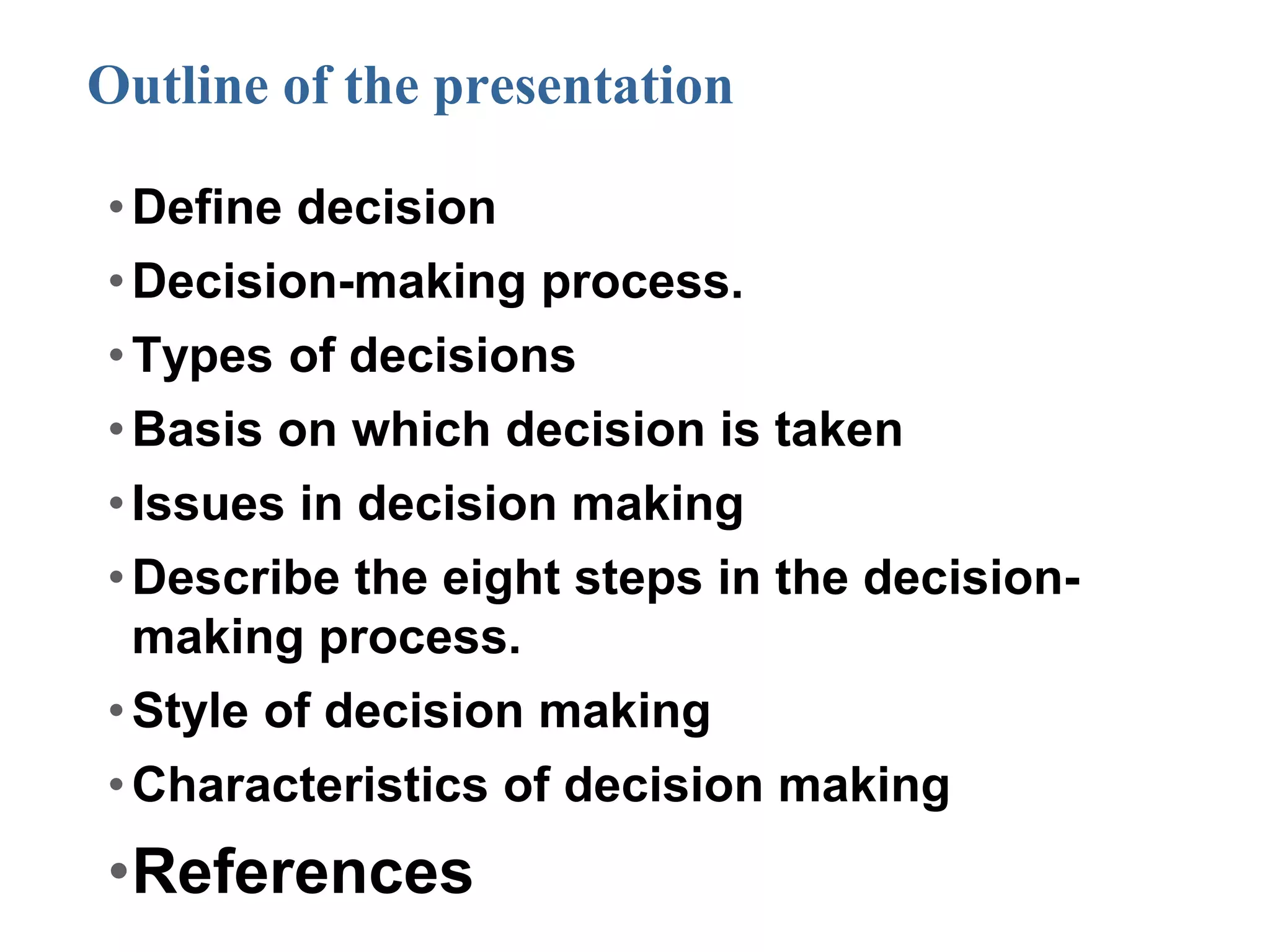
Outline of the presentation
•Define decision
•Decision-making process.
•Types of decisions
•Basis on which decision is taken
•Issues in decision making
•Describe the eight steps in the decision-
making process.
•Style of decision making
•Characteristics of decision making
•References
5
Decisions
• A decision is a choice from among the available
alternatives
• Judgment - the “thinking” aspects of the
decision-making process
• A choice made between alternative courses of
action in a situation of uncertainty.
the act or process of deciding
• a determination arrived at after consideration
6
Decisions making
•Decision making - the process
by which managers respond
to opportunities and threats
by analyzing options, and
making decisions about goals
and courses of action
7
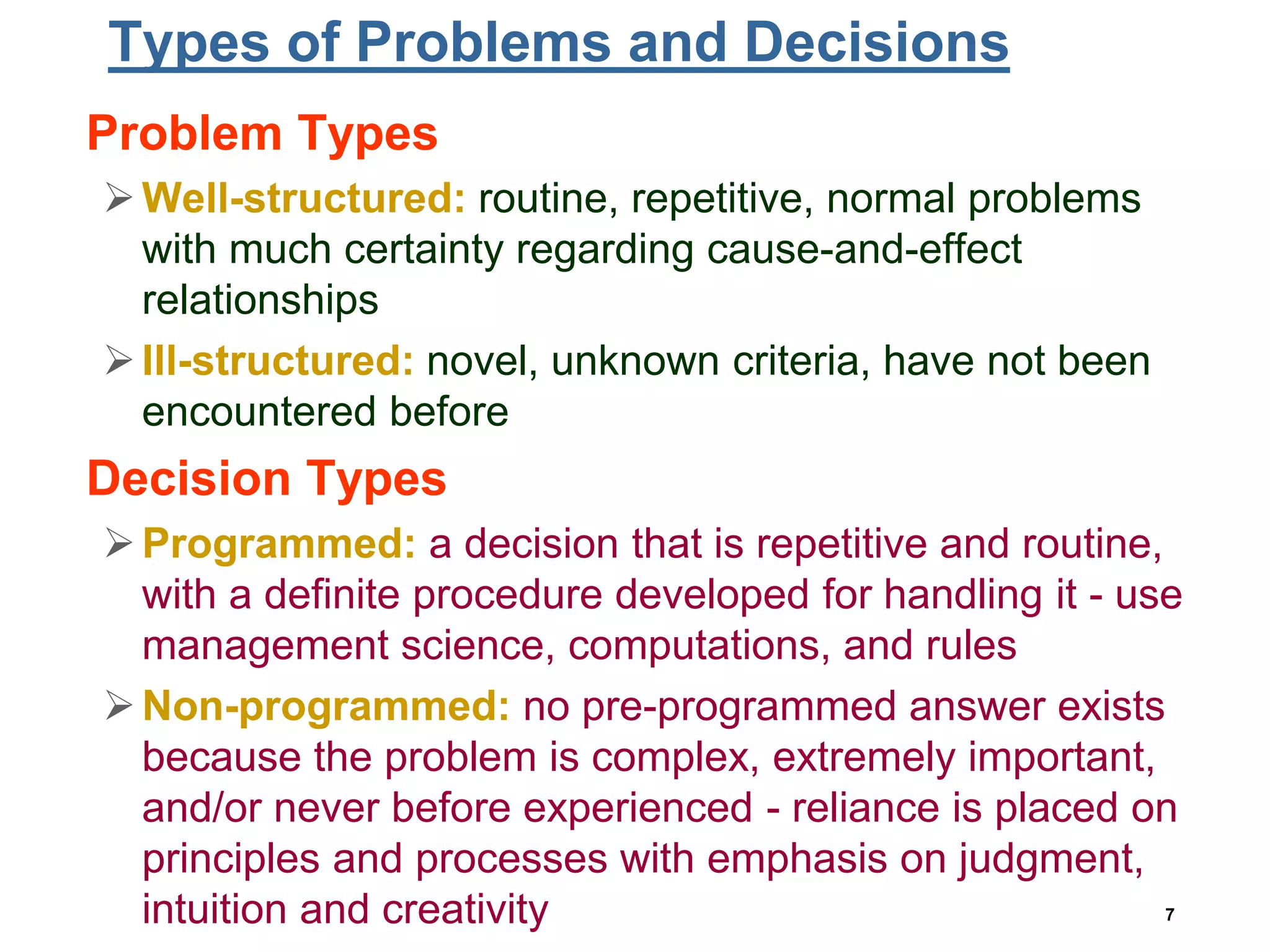
Types of Problems and Decisions
• Problem Types
Well-structured: routine, repetitive, normal problems
with much certainty regarding cause-and-effect
relationships
Ill-structured: novel, unknown criteria, have not been
encountered before
• Decision Types
Programmed: a decision that is repetitive and routine,
with a definite procedure developed for handling it - use
management science, computations, and rules
Non-programmed: no pre-programmed answer exists
because the problem is complex, extremely important,
and/or never before experienced - reliance is placed on
principles and processes with emphasis on judgment,
intuition and creativity
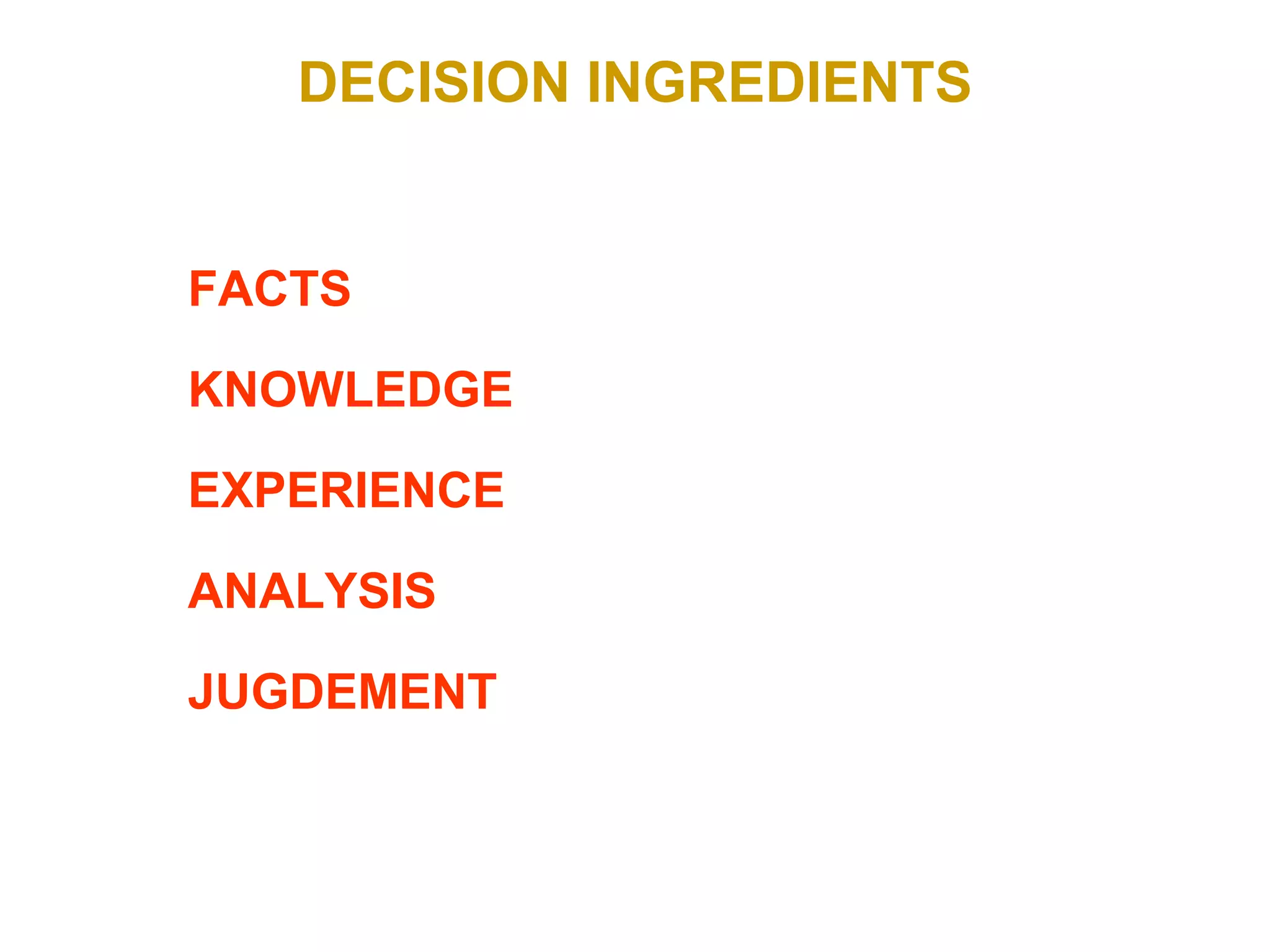
DECISION INGREDIENTS
• FACTS
• KNOWLEDGE
• EXPERIENCE
• ANALYSIS
• JUGDEMENT
KEY ELEMENTS IN A DECISION
• DECISION BODY (AUTHORITY TO MAKE
DECISION)
• DECISION OPTIONS
• UNCONTROLLABLE FACTORS
• CONSEQUENCES OF EACH OPTION
ISSUE INVOLVED IN
DECISION MAKING
• PREJUDICE
• SHOWMANSHIP
• ANALOGY
• TRANSFER
• IRRELEVANT INFORMATION
• FACTS
• INFORMATION SOURCES
• FAMILIARITY
CHALLENGES FOR DECISION MAKERS
• COMPLEXITY
• UNCERTAINITY
• DIFFERENT INFORMATION PROCESSING
STYLES
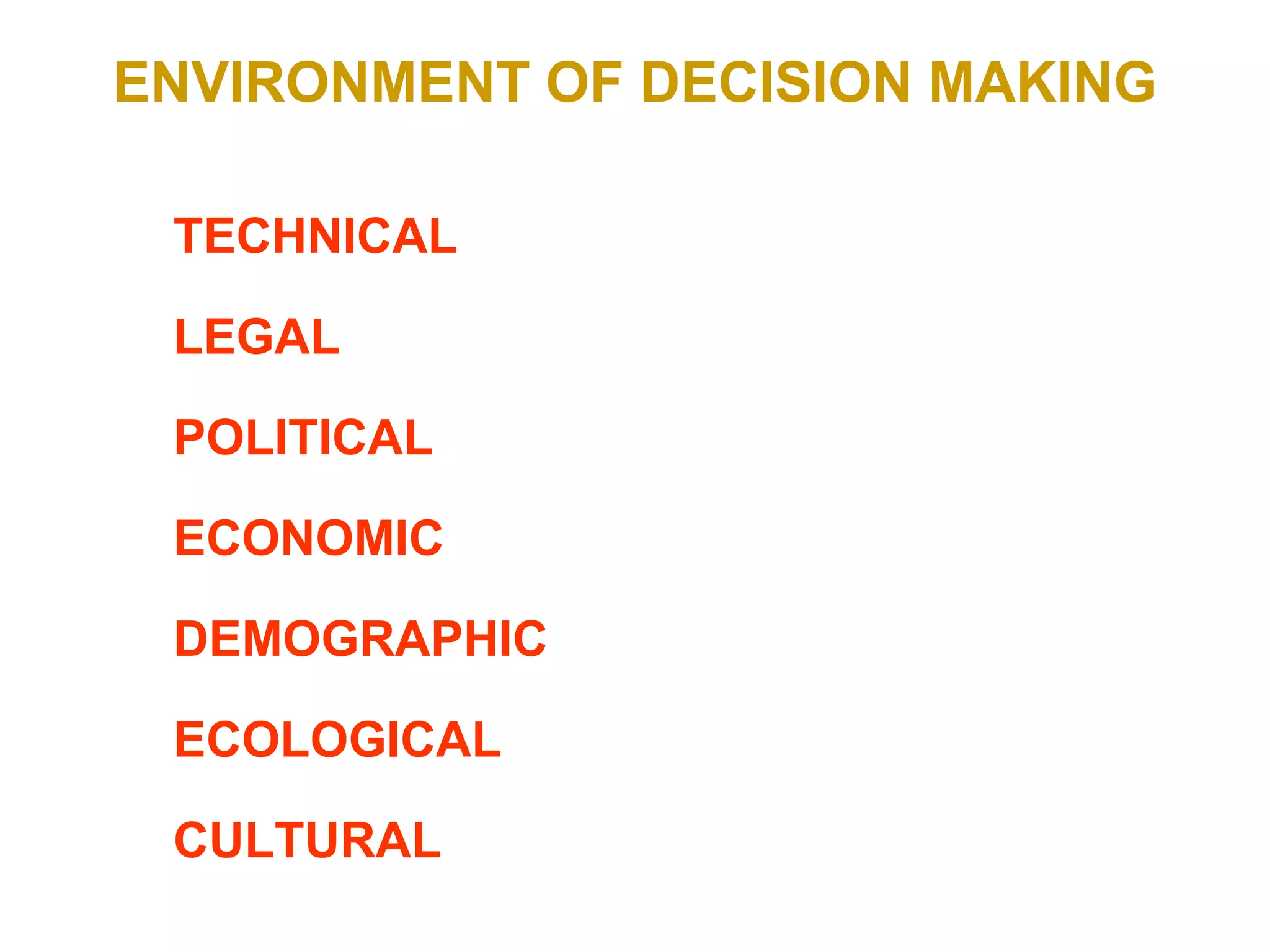
ENVIRONMENT OF DECISION MAKING
• TECHNICAL
• LEGAL
• POLITICAL
• ECONOMIC
• DEMOGRAPHIC
• ECOLOGICAL
• CULTURAL
6–13
8 Step Decision-Making Process
EXHIBIT 4.2
6–14
Step 1: Identifying the Problem
• Problem
A discrepancy between an existing and desired state
of affairs.
• Characteristics of Problems
A problem becomes a problem when a manager
becomes aware of it.
There is pressure to solve the problem.
The manager must have the authority, information, or
resources needed to solve the problem.
6–15
Step 2: Identifying Decision Criteria
• Decision criteria are factors that are important
(relevant) to resolving the problem.
Costs that will be incurred (investments required)
Risks likely to be encountered (chance of failure)
Outcomes that are desired (growth of the firm)
Step 3: Allocating Weights to the Criteria
• Decision criteria are not of equal importance:
Assigning a weight to each item places the items in
the correct priority order of their importance in the
decision making process.
6–16
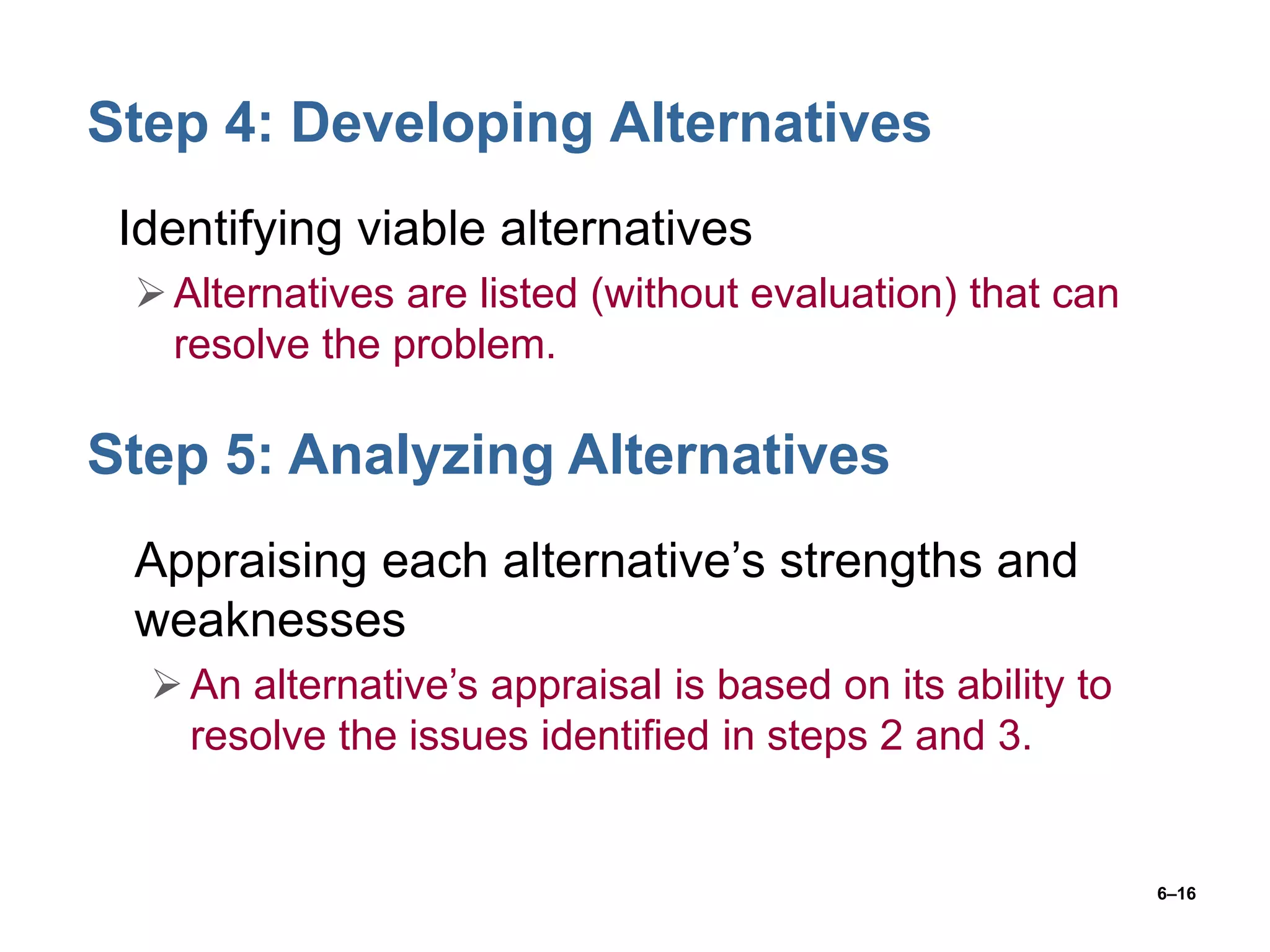
Step 4: Developing Alternatives
• Identifying viable alternatives
Alternatives are listed (without evaluation) that can
resolve the problem.
Step 5: Analyzing Alternatives
• Appraising each alternative’s strengths and
weaknesses
An alternative’s appraisal is based on its ability to
resolve the issues identified in steps 2 and 3.
6–17
Step 6: Selecting an Alternative
• Choosing the best alternative
The alternative with the highest total weight is
chosen.
Step 7: Implementing the Decision
• Putting the chosen alternative into action.
Conveying the decision to and gaining commitment
from those who will carry out the decision.
6–18
Step 8: Evaluating the Decision’s
Effectiveness
• The soundness of the decision is judged by its
outcomes.
How effectively was the problem resolved by
outcomes resulting from the chosen alternatives?
If the problem was not resolved, what went wrong?
6–19
Decision-Making Styles (cont’d)
• Types of Decision Makers
Directive
 Use minimal information and consider few alternatives.
Analytic
 Make careful decisions in unique situations.
Conceptual
 Maintain a broad outlook and consider many
alternatives in making long-term decisions.
Behavioral
 Avoid conflict by working well with others and being
receptive to suggestions.
6–20
Characteristics of an Effective Decision-
Making Process
• It focuses on what is important.
• It is logical and consistent.
• It acknowledges both subjective and objective
thinking and blends analytical with intuitive thinking
• It requires only as much information and analysis as
is necessary to resolve a particular dilemma.
• It encourages and guides the gathering of relevant
information and informed opinion.
• It is straightforward, reliable, easy to use, and
flexible.
References
• Robbins, S. Coulter M. (2010). Management. USA:
Prentice Hall.
• https://smallbusiness.chron.com
• https://www.emergenetics.com
• https://2012books.lardbucket.org
• http://www.assignmentpoint.com
• https://managementstudyguide.com
• https://www.mindtools.com
Decisions

Decisions

  • 2.
  • 3.
  • 4.
    Outline of thepresentation •Define decision •Decision-making process. •Types of decisions •Basis on which decision is taken •Issues in decision making •Describe the eight steps in the decision- making process. •Style of decision making •Characteristics of decision making •References
  • 5.
    5 Decisions • A decisionis a choice from among the available alternatives • Judgment - the “thinking” aspects of the decision-making process • A choice made between alternative courses of action in a situation of uncertainty. the act or process of deciding • a determination arrived at after consideration
  • 6.
    6 Decisions making •Decision making- the process by which managers respond to opportunities and threats by analyzing options, and making decisions about goals and courses of action
  • 7.
    7 Types of Problemsand Decisions • Problem Types Well-structured: routine, repetitive, normal problems with much certainty regarding cause-and-effect relationships Ill-structured: novel, unknown criteria, have not been encountered before • Decision Types Programmed: a decision that is repetitive and routine, with a definite procedure developed for handling it - use management science, computations, and rules Non-programmed: no pre-programmed answer exists because the problem is complex, extremely important, and/or never before experienced - reliance is placed on principles and processes with emphasis on judgment, intuition and creativity
  • 8.
    DECISION INGREDIENTS • FACTS •KNOWLEDGE • EXPERIENCE • ANALYSIS • JUGDEMENT
  • 9.
    KEY ELEMENTS INA DECISION • DECISION BODY (AUTHORITY TO MAKE DECISION) • DECISION OPTIONS • UNCONTROLLABLE FACTORS • CONSEQUENCES OF EACH OPTION
  • 10.
    ISSUE INVOLVED IN DECISIONMAKING • PREJUDICE • SHOWMANSHIP • ANALOGY • TRANSFER • IRRELEVANT INFORMATION • FACTS • INFORMATION SOURCES • FAMILIARITY
  • 11.
    CHALLENGES FOR DECISIONMAKERS • COMPLEXITY • UNCERTAINITY • DIFFERENT INFORMATION PROCESSING STYLES
  • 12.
    ENVIRONMENT OF DECISIONMAKING • TECHNICAL • LEGAL • POLITICAL • ECONOMIC • DEMOGRAPHIC • ECOLOGICAL • CULTURAL
  • 13.
    6–13 8 Step Decision-MakingProcess EXHIBIT 4.2
  • 14.
    6–14 Step 1: Identifyingthe Problem • Problem A discrepancy between an existing and desired state of affairs. • Characteristics of Problems A problem becomes a problem when a manager becomes aware of it. There is pressure to solve the problem. The manager must have the authority, information, or resources needed to solve the problem.
  • 15.
    6–15 Step 2: IdentifyingDecision Criteria • Decision criteria are factors that are important (relevant) to resolving the problem. Costs that will be incurred (investments required) Risks likely to be encountered (chance of failure) Outcomes that are desired (growth of the firm) Step 3: Allocating Weights to the Criteria • Decision criteria are not of equal importance: Assigning a weight to each item places the items in the correct priority order of their importance in the decision making process.
  • 16.
    6–16 Step 4: DevelopingAlternatives • Identifying viable alternatives Alternatives are listed (without evaluation) that can resolve the problem. Step 5: Analyzing Alternatives • Appraising each alternative’s strengths and weaknesses An alternative’s appraisal is based on its ability to resolve the issues identified in steps 2 and 3.
  • 17.
    6–17 Step 6: Selectingan Alternative • Choosing the best alternative The alternative with the highest total weight is chosen. Step 7: Implementing the Decision • Putting the chosen alternative into action. Conveying the decision to and gaining commitment from those who will carry out the decision.
  • 18.
    6–18 Step 8: Evaluatingthe Decision’s Effectiveness • The soundness of the decision is judged by its outcomes. How effectively was the problem resolved by outcomes resulting from the chosen alternatives? If the problem was not resolved, what went wrong?
  • 19.
    6–19 Decision-Making Styles (cont’d) •Types of Decision Makers Directive  Use minimal information and consider few alternatives. Analytic  Make careful decisions in unique situations. Conceptual  Maintain a broad outlook and consider many alternatives in making long-term decisions. Behavioral  Avoid conflict by working well with others and being receptive to suggestions.
  • 20.
    6–20 Characteristics of anEffective Decision- Making Process • It focuses on what is important. • It is logical and consistent. • It acknowledges both subjective and objective thinking and blends analytical with intuitive thinking • It requires only as much information and analysis as is necessary to resolve a particular dilemma. • It encourages and guides the gathering of relevant information and informed opinion. • It is straightforward, reliable, easy to use, and flexible.
  • 21.
    References • Robbins, S.Coulter M. (2010). Management. USA: Prentice Hall. • https://smallbusiness.chron.com • https://www.emergenetics.com • https://2012books.lardbucket.org • http://www.assignmentpoint.com • https://managementstudyguide.com • https://www.mindtools.com