Process
Improvement &
Statistical Thinking
Carey Turner and Felix Llanos
October 31, 2012
What we will cover…
(1) Case Study: Best Practices In Process Improvement
(2) Case Study: The Role of Statistical Thinking in
    Management
(3) Questions
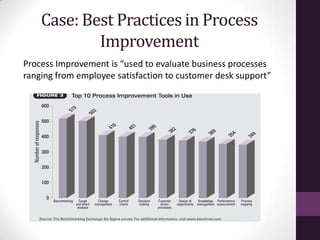
Case: Best Practices in Process
            Improvement
Process Improvement is “used to evaluate business processes
ranging from employee satisfaction to customer desk support”
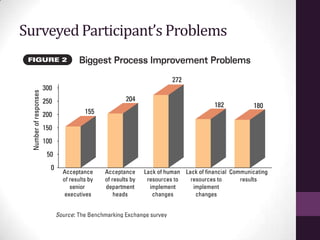
Surveyed Participant’s Problems
Recommendations
(1) Identify the cause of the problem, and why there is a need for change
  •   Impacts Customer Satisfaction
  •   Employee Involvement
  •   Financial Return
  •   Potential Risks

(2) Choosing your team.
  • Cross-functional
  • Unbiased opinions are important, so employees from unrelated departments
    are essential

(3) Answer the question “What is broken?” and “Why Should it be
Improved?”
  • Process Mapping: tool used to visually display the overall process and
    identifies gaps in the process
       • Set aggressive goals instead of incremental improvements
       • Move Fast: “Don’t let the project drift…It is better to reschedule or cancel the
         project than to let it coast”
Recommendations (cont.)
(4) Communicate, Communicate, Communicate
Develop a communication plan that articulates the vision and status of the
project, whether it be through regular meetings or a software, employees
need to be informed about the progress and benefits from the project.

(5) Empower based on Action
“Management will be more receptive to accepting change if you
demonstrate a financial benefit for the company”

(6) Celebrate Milestones
By celebrating and recognizing team achievements, it will build
enthusiasm

(7) Build for the Future…
It is important to ensure sufficient controls are in place to prevent the
backslide of problems.
Case: The Role of Statistical
Thinking in Management
Statistical techniques such as statistical process control and
experimental design has played an important role in the U.S business
and industry.

Unfortunately, the effective integration of statistics into management
science has been hampered due to plenty of issues.


Four Issues:
  •   Understanding
  •   Developing
  •   Taking measures
  •   Assessing
What Managers Should Know
about Statistics
• The word “statistics” invokes fear in many people

• Interconnected processes that are variables and reduction of
  variation provides improvement opportunities

• Short term: it can improve quality of decisions

• Long term: it can help turn managers into leaders
Key Components of Statistical
Thinking
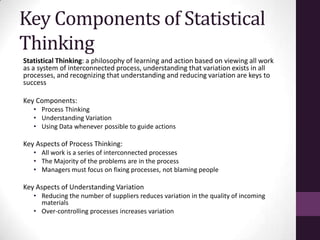
Statistical Thinking: a philosophy of learning and action based on viewing all work
as a system of interconnected process, understanding that variation exists in all
processes, and recognizing that understanding and reducing variation are keys to
success

Key Components:
   • Process Thinking
   • Understanding Variation
   • Using Data whenever possible to guide actions

Key Aspects of Process Thinking:
   • All work is a series of interconnected processes
   • The Majority of the problems are in the process
   • Managers must focus on fixing processes, not blaming people

Key Aspects of Understanding Variation
   • Reducing the number of suppliers reduces variation in the quality of incoming
     materials
   • Over-controlling processes increases variation
Learning Methods
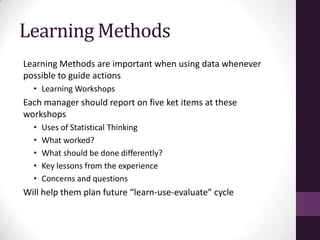
Learning Methods are important when using data whenever
possible to guide actions
  • Learning Workshops
Each manager should report on five ket items at these
workshops
  •   Uses of Statistical Thinking
  •   What worked?
  •   What should be done differently?
  •   Key lessons from the experience
  •   Concerns and questions
Will help them plan future “learn-use-evaluate” cycle
Levels of Activity
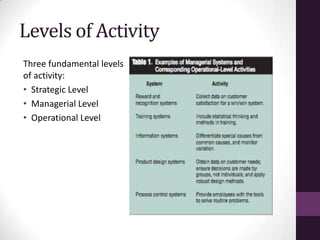
Three fundamental levels
of activity:
• Strategic Level
• Managerial Level
• Operational Level
Statistical Thinking Reaps
Many Benefits
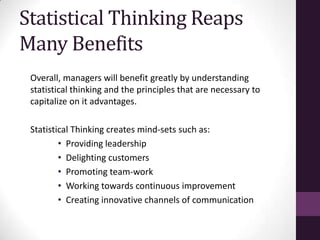
 Overall, managers will benefit greatly by understanding
 statistical thinking and the principles that are necessary to
 capitalize on it advantages.

 Statistical Thinking creates mind-sets such as:
         • Providing leadership
         • Delighting customers
         • Promoting team-work
         • Working towards continuous improvement
         • Creating innovative channels of communication
Questions?
References
• Dolan, T. (2003). Process improvement: Best practices in
  process improvement. Retrieved from www.asq.org
• Hare, L., Hoerl, R., Hromi, J., & Snee, R. (1995). The role of
  statistical thinking in management. Retrieved from
  www.asqc.org
• Evans , J. R., & Lindsay, W. M. (2011). Managing for quality and
  performance excellence. (8th ed.). Thomas South-Western.
• Harvard Business Review. (2010). Improving business
  processes. (p. 12). Harvard Business School Publishing

Chapter 10 case articles

  • 1.
    Process Improvement & Statistical Thinking CareyTurner and Felix Llanos October 31, 2012
  • 2.
    What we willcover… (1) Case Study: Best Practices In Process Improvement (2) Case Study: The Role of Statistical Thinking in Management (3) Questions
  • 3.
    Case: Best Practicesin Process Improvement Process Improvement is “used to evaluate business processes ranging from employee satisfaction to customer desk support”
  • 4.
  • 5.
    Recommendations (1) Identify thecause of the problem, and why there is a need for change • Impacts Customer Satisfaction • Employee Involvement • Financial Return • Potential Risks (2) Choosing your team. • Cross-functional • Unbiased opinions are important, so employees from unrelated departments are essential (3) Answer the question “What is broken?” and “Why Should it be Improved?” • Process Mapping: tool used to visually display the overall process and identifies gaps in the process • Set aggressive goals instead of incremental improvements • Move Fast: “Don’t let the project drift…It is better to reschedule or cancel the project than to let it coast”
  • 6.
    Recommendations (cont.) (4) Communicate,Communicate, Communicate Develop a communication plan that articulates the vision and status of the project, whether it be through regular meetings or a software, employees need to be informed about the progress and benefits from the project. (5) Empower based on Action “Management will be more receptive to accepting change if you demonstrate a financial benefit for the company” (6) Celebrate Milestones By celebrating and recognizing team achievements, it will build enthusiasm (7) Build for the Future… It is important to ensure sufficient controls are in place to prevent the backslide of problems.
  • 7.
    Case: The Roleof Statistical Thinking in Management Statistical techniques such as statistical process control and experimental design has played an important role in the U.S business and industry. Unfortunately, the effective integration of statistics into management science has been hampered due to plenty of issues. Four Issues: • Understanding • Developing • Taking measures • Assessing
  • 8.
    What Managers ShouldKnow about Statistics • The word “statistics” invokes fear in many people • Interconnected processes that are variables and reduction of variation provides improvement opportunities • Short term: it can improve quality of decisions • Long term: it can help turn managers into leaders
  • 9.
    Key Components ofStatistical Thinking Statistical Thinking: a philosophy of learning and action based on viewing all work as a system of interconnected process, understanding that variation exists in all processes, and recognizing that understanding and reducing variation are keys to success Key Components: • Process Thinking • Understanding Variation • Using Data whenever possible to guide actions Key Aspects of Process Thinking: • All work is a series of interconnected processes • The Majority of the problems are in the process • Managers must focus on fixing processes, not blaming people Key Aspects of Understanding Variation • Reducing the number of suppliers reduces variation in the quality of incoming materials • Over-controlling processes increases variation
  • 10.
    Learning Methods Learning Methodsare important when using data whenever possible to guide actions • Learning Workshops Each manager should report on five ket items at these workshops • Uses of Statistical Thinking • What worked? • What should be done differently? • Key lessons from the experience • Concerns and questions Will help them plan future “learn-use-evaluate” cycle
  • 11.
    Levels of Activity Threefundamental levels of activity: • Strategic Level • Managerial Level • Operational Level
  • 12.
    Statistical Thinking Reaps ManyBenefits Overall, managers will benefit greatly by understanding statistical thinking and the principles that are necessary to capitalize on it advantages. Statistical Thinking creates mind-sets such as: • Providing leadership • Delighting customers • Promoting team-work • Working towards continuous improvement • Creating innovative channels of communication
  • 13.
  • 14.
    References • Dolan, T.(2003). Process improvement: Best practices in process improvement. Retrieved from www.asq.org • Hare, L., Hoerl, R., Hromi, J., & Snee, R. (1995). The role of statistical thinking in management. Retrieved from www.asqc.org • Evans , J. R., & Lindsay, W. M. (2011). Managing for quality and performance excellence. (8th ed.). Thomas South-Western. • Harvard Business Review. (2010). Improving business processes. (p. 12). Harvard Business School Publishing