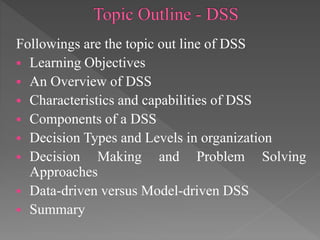

Followings are the topic out line of DSS
 Learning Objectives
 An Overview of DSS
 Characteristics and capabilities of DSS
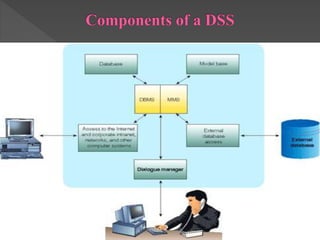
 Components of a DSS
 Decision Types and Levels in organization
 Decision Making and Problem Solving
Approaches
 Data-driven versus Model-driven DSS
 Summary
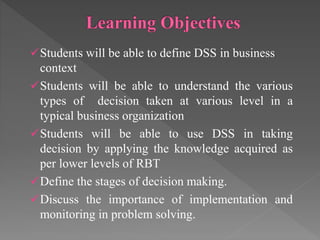
Students will be able to define DSS in business
context
Students will be able to understand the various
types of decision taken at various level in a
typical business organization
Students will be able to use DSS in taking
decision by applying the knowledge acquired as
per lower levels of RBT
Define the stages of decision making.
Discuss the importance of implementation and
monitoring in problem solving.
Decisions support systems includes _
 People and Procedures
 Software, Databases, and devices that are used in
problem-specific decision-making and problem-
solving.
 Particularly useful when dealing with semi-
structured, poorly structured, or unstructured
situations.
 Although decision support systems are used most
often at higher levels of management, all employees
may use them to assist in even programmable
decisions.
Following are the important characteristics viz.
 Management level
 Computer system combines database and
modelbase,
 User - friendly software for semi-structured &
unstructured decision making
 Offer potential to assist in solving both semi-
structured and unstructured problems
 Perform complex, sophisticated analysis
Simulation - allows a user to model a problem by
duplicating features of a real system. This generally
involves some uncertainty or probability.
What-if analysis - even simple spreadsheets support
“what-if analysis”, which allows the user to make changes
to input variables to see the result on outcomes.
Goal-seeking analysis – Allows the user to set the goal
and input can be defined by DSS.
 Handles large amount of data from various sources
 Provide report and presentation flexibility
 Offer both textual and graphical orientation
 Support drill down analysis
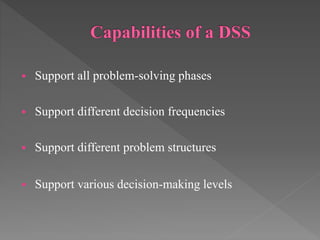
 Support all problem-solving phases
 Support different decision frequencies
 Support different problem structures
 Support various decision-making levels
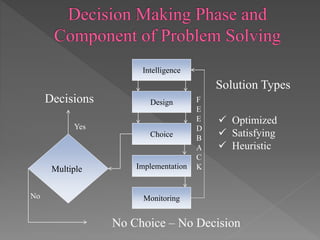
Intelligence
Design
Choice
Implementation
Monitoring
Solution Types
Decisions
 Optimized
 Satisfying
 Heuristic
Multiple
Yes
No
No Choice – No Decision
F
E
E
D
B
A
C
K
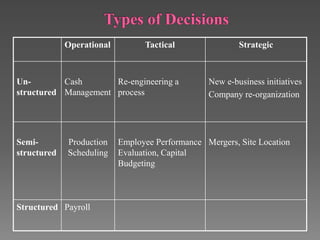
Operational Tactical Strategic
Un-
structured
Cash
Management
Re-engineering a
process
New e-business initiatives
Company re-organization
Semi-
structured
Production
Scheduling
Employee Performance
Evaluation, Capital
Budgeting
Mergers, Site Location
Structured Payroll
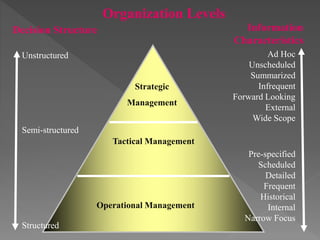
Strategic
Management
Tactical Management
Operational Management
Decision Structure Information
Characteristics
Unstructured
Semi-structured
Structured
Ad Hoc
Unscheduled
Summarized
Infrequent
Forward Looking
External
Wide Scope
Pre-specified
Scheduled
Detailed
Frequent
Historical
Internal
Narrow Focus
Organization Levels
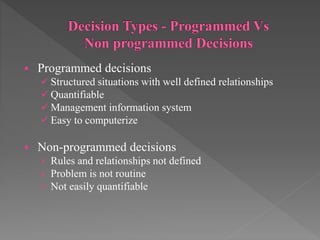
 Programmed decisions
 Structured situations with well defined relationships
 Quantifiable
 Management information system
 Easy to computerize
 Non-programmed decisions
› Rules and relationships not defined
› Problem is not routine
› Not easily quantifiable
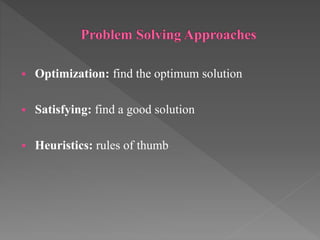
 Optimization: find the optimum solution
 Satisfying: find a good solution
 Heuristics: rules of thumb
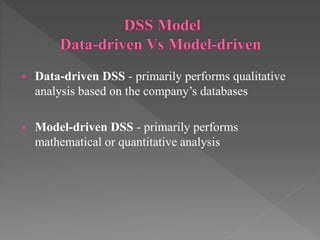
 Data-driven DSS - primarily performs qualitative
analysis based on the company’s databases
 Model-driven DSS - primarily performs
mathematical or quantitative analysis
 An organized collection of people, procedures,
software, databases, and devices working to support
managerial decision making
 Specialized decision support systems designed to
meet the needs of senior management
Decision Support System

Decision Support System

  • 2.
    Followings are thetopic out line of DSS  Learning Objectives  An Overview of DSS  Characteristics and capabilities of DSS  Components of a DSS  Decision Types and Levels in organization  Decision Making and Problem Solving Approaches  Data-driven versus Model-driven DSS  Summary
  • 3.
    Students will beable to define DSS in business context Students will be able to understand the various types of decision taken at various level in a typical business organization Students will be able to use DSS in taking decision by applying the knowledge acquired as per lower levels of RBT Define the stages of decision making. Discuss the importance of implementation and monitoring in problem solving.
  • 4.
    Decisions support systemsincludes _  People and Procedures  Software, Databases, and devices that are used in problem-specific decision-making and problem- solving.  Particularly useful when dealing with semi- structured, poorly structured, or unstructured situations.  Although decision support systems are used most often at higher levels of management, all employees may use them to assist in even programmable decisions.
  • 5.
    Following are theimportant characteristics viz.  Management level  Computer system combines database and modelbase,  User - friendly software for semi-structured & unstructured decision making  Offer potential to assist in solving both semi- structured and unstructured problems
  • 6.
     Perform complex,sophisticated analysis Simulation - allows a user to model a problem by duplicating features of a real system. This generally involves some uncertainty or probability. What-if analysis - even simple spreadsheets support “what-if analysis”, which allows the user to make changes to input variables to see the result on outcomes. Goal-seeking analysis – Allows the user to set the goal and input can be defined by DSS.
  • 7.
     Handles largeamount of data from various sources  Provide report and presentation flexibility  Offer both textual and graphical orientation  Support drill down analysis
  • 8.
     Support allproblem-solving phases  Support different decision frequencies  Support different problem structures  Support various decision-making levels
  • 10.
    Intelligence Design Choice Implementation Monitoring Solution Types Decisions  Optimized Satisfying  Heuristic Multiple Yes No No Choice – No Decision F E E D B A C K
  • 11.
    Operational Tactical Strategic Un- structured Cash Management Re-engineeringa process New e-business initiatives Company re-organization Semi- structured Production Scheduling Employee Performance Evaluation, Capital Budgeting Mergers, Site Location Structured Payroll
  • 12.
    Strategic Management Tactical Management Operational Management DecisionStructure Information Characteristics Unstructured Semi-structured Structured Ad Hoc Unscheduled Summarized Infrequent Forward Looking External Wide Scope Pre-specified Scheduled Detailed Frequent Historical Internal Narrow Focus Organization Levels
  • 13.
     Programmed decisions Structured situations with well defined relationships  Quantifiable  Management information system  Easy to computerize  Non-programmed decisions › Rules and relationships not defined › Problem is not routine › Not easily quantifiable
  • 14.
     Optimization: findthe optimum solution  Satisfying: find a good solution  Heuristics: rules of thumb
  • 15.
     Data-driven DSS- primarily performs qualitative analysis based on the company’s databases  Model-driven DSS - primarily performs mathematical or quantitative analysis
  • 16.
     An organizedcollection of people, procedures, software, databases, and devices working to support managerial decision making  Specialized decision support systems designed to meet the needs of senior management