Information Technology for 
Management and Business 
session1 
SUNIL KUMAR CHINNAMGARI 
SEPTEMBER 2011
Agenda 
 Class Introductions. 
 Course Outline and Learning Objectives. 
 Assignments Discussion. 
 Theoretical Foundations to Information 
Technology for Management and Business. 
 Session review.
Concepts of Data , Information and 
Business intelligence 
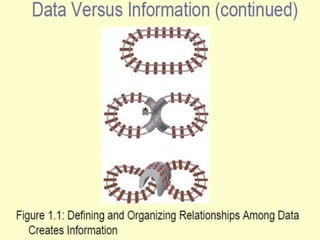
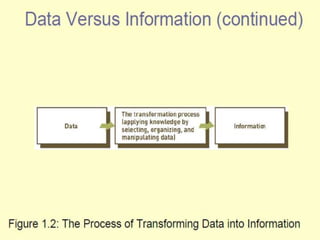
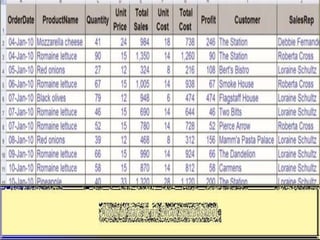
 Data - raw facts that describe the characteristic 
of an event 
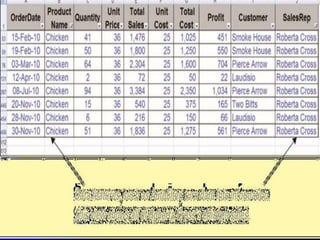
 Information - data converted into a meaningful 
and useful context 
 Business intelligence – applications and 
technologies that are used to gather, provide 
access to, and analyze data and information to 
support decision-making efforts
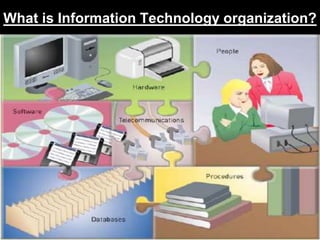
What is Information Technology organization?
Information Technology -Definition 
The hardware, software, telecommunications, 
database management, and other technologies 
used to store, process, and distribute 
information
Introduction to various IT components 
 Hardware 
 Software 
 Data and Databases 
 Telecommunications 
 The Internet and the Web
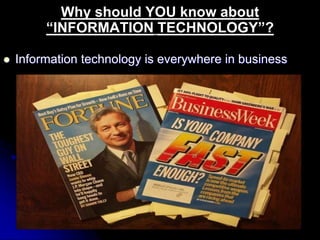
Why should YOU know about 
“INFORMATION TECHNOLOGY”? 
 Information technology is everywhere in business
Application of IT for Management & Business 
 Operations Information Systems 
 Transaction-processing systems 
 Process control systems 
 Office automation systems 
 Management Information Systems 
 Information-reporting systems 
 Decision support systems 
 Groupware 
 Executive information systems
IT applications in various industries 
 Airlines 
 Banking 
 Education 
 Police 
 Hospitals 
 Meteorology 
 Finance 
 Government 
CD on the back cover of this book
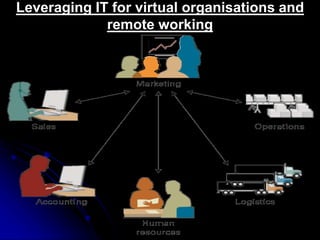
Leveraging IT for virtual organisations and 
remote working 
CD on the back cover of this book
What is Open Source Software and how is it 
relevant to business? 
 In the phrase open source, source refers to 
source code, the human-readable computer 
code which is the origin, or source, of the 
computer application. Open refers to the terms 
of access to that computer source code. So 
open source software is software for which the 
source code is freely available. 
 It is free and an obvious choice when you want 
to reduce business IT infrastructure costs. 
CD on the back cover of this book
Open Source Software - Advantages & 
Disadvantages 
Advantages 
 Access to source code and ability and right to 
modify it 
 Right to redistribute modifications to benefit 
wider community 
 Free 
 Excellent support networks 
 Large and enthusiastic user base 
Disadvantages 
CD on the back cover of this book 
 Limited or no accountability 
 Informal and unaccountable support channels
Categories of Open Source Software 
 Operating Systems 
 Linux 
 Programming Languages 
 Perl, PHP, Python 
 Applications 
 Apache, Tomcat, emacs, grep, MySQL, sendmail, 
ssh 
CD on the back cover of this book
Session Review
Thank you for your attention.

Information Technology for Management and Business

  • 1.
    Information Technology for Management and Business session1 SUNIL KUMAR CHINNAMGARI SEPTEMBER 2011
  • 2.
    Agenda  ClassIntroductions.  Course Outline and Learning Objectives.  Assignments Discussion.  Theoretical Foundations to Information Technology for Management and Business.  Session review.
  • 3.
    Concepts of Data, Information and Business intelligence  Data - raw facts that describe the characteristic of an event  Information - data converted into a meaningful and useful context  Business intelligence – applications and technologies that are used to gather, provide access to, and analyze data and information to support decision-making efforts
  • 9.
    What is InformationTechnology organization?
  • 10.
    Information Technology -Definition The hardware, software, telecommunications, database management, and other technologies used to store, process, and distribute information
  • 11.
    Introduction to variousIT components  Hardware  Software  Data and Databases  Telecommunications  The Internet and the Web
  • 12.
    Why should YOUknow about “INFORMATION TECHNOLOGY”?  Information technology is everywhere in business
  • 13.
    Application of ITfor Management & Business  Operations Information Systems  Transaction-processing systems  Process control systems  Office automation systems  Management Information Systems  Information-reporting systems  Decision support systems  Groupware  Executive information systems
  • 14.
    IT applications invarious industries  Airlines  Banking  Education  Police  Hospitals  Meteorology  Finance  Government CD on the back cover of this book
  • 15.
    Leveraging IT forvirtual organisations and remote working CD on the back cover of this book
  • 16.
    What is OpenSource Software and how is it relevant to business?  In the phrase open source, source refers to source code, the human-readable computer code which is the origin, or source, of the computer application. Open refers to the terms of access to that computer source code. So open source software is software for which the source code is freely available.  It is free and an obvious choice when you want to reduce business IT infrastructure costs. CD on the back cover of this book
  • 17.
    Open Source Software- Advantages & Disadvantages Advantages  Access to source code and ability and right to modify it  Right to redistribute modifications to benefit wider community  Free  Excellent support networks  Large and enthusiastic user base Disadvantages CD on the back cover of this book  Limited or no accountability  Informal and unaccountable support channels
  • 18.
    Categories of OpenSource Software  Operating Systems  Linux  Programming Languages  Perl, PHP, Python  Applications  Apache, Tomcat, emacs, grep, MySQL, sendmail, ssh CD on the back cover of this book
  • 19.
  • 20.
    Thank you foryour attention.