Good Decision-
making is an
Essential Skill for
Effective Leadership
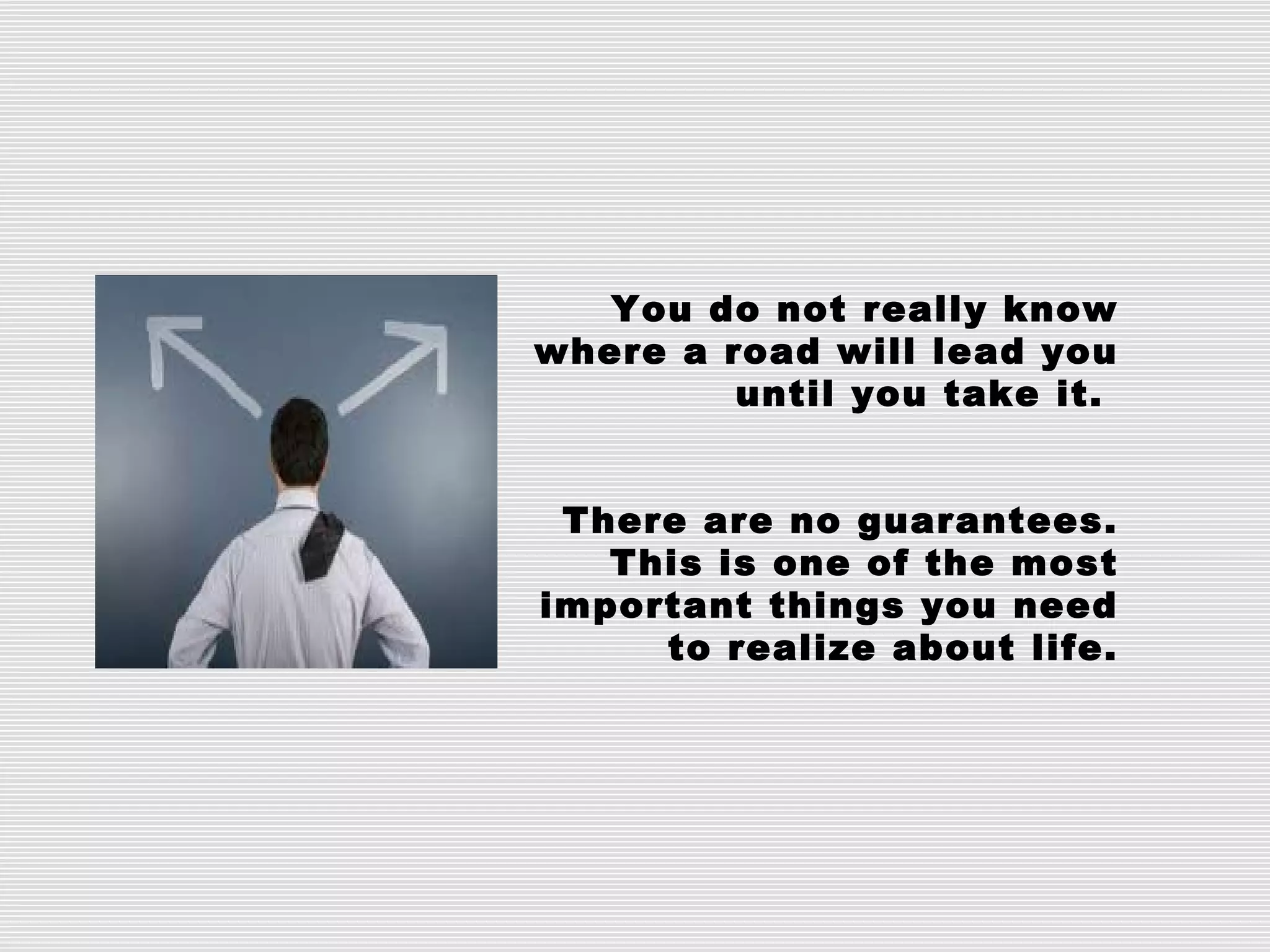
You do not really know
where a road will lead you
until you take it.
There are no guarantees.
This is one of the most
important things you need
to realize about life.
Making Decisions is a Difficult
Process that Consists of
Identifying and Selecting
Alternatives, Criteria and Possible
Outcomes, to Improve a Situation.
Whether Decisions are
Straightforward or Complex a
Methodical and Systematic
Approach will Lead to Success.
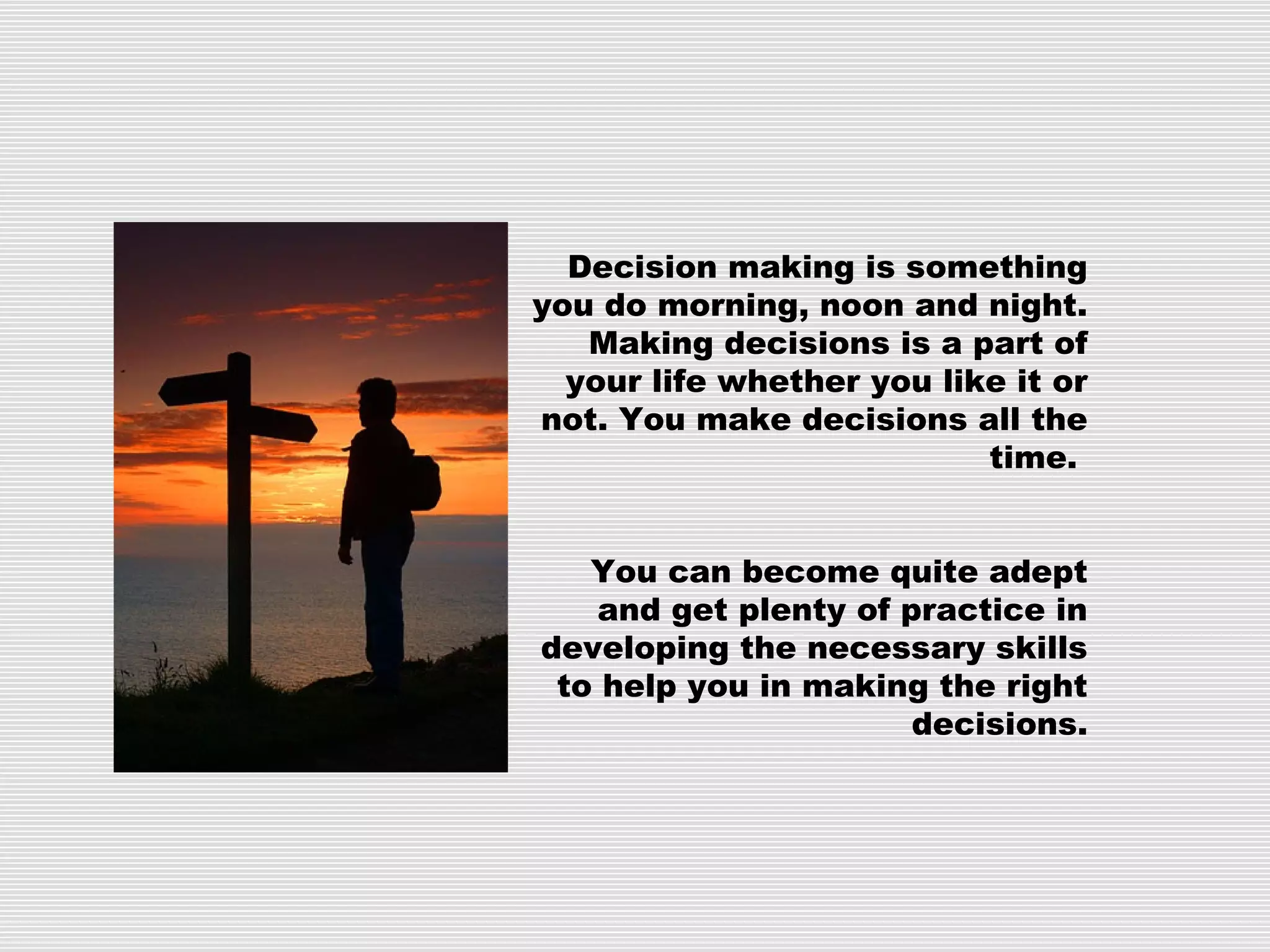
Decision making is something
you do morning, noon and night.
Making decisions is a part of
your life whether you like it or
not. You make decisions all the
time.
You can become quite adept
and get plenty of practice in
developing the necessary skills
to help you in making the right
decisions.
Have YOU Always had Problems to
Make Difficult Decisions?
Here is some advice to show you how
to take the pain out of making difficult
decisions, to make your best choices
and get it over and done with.
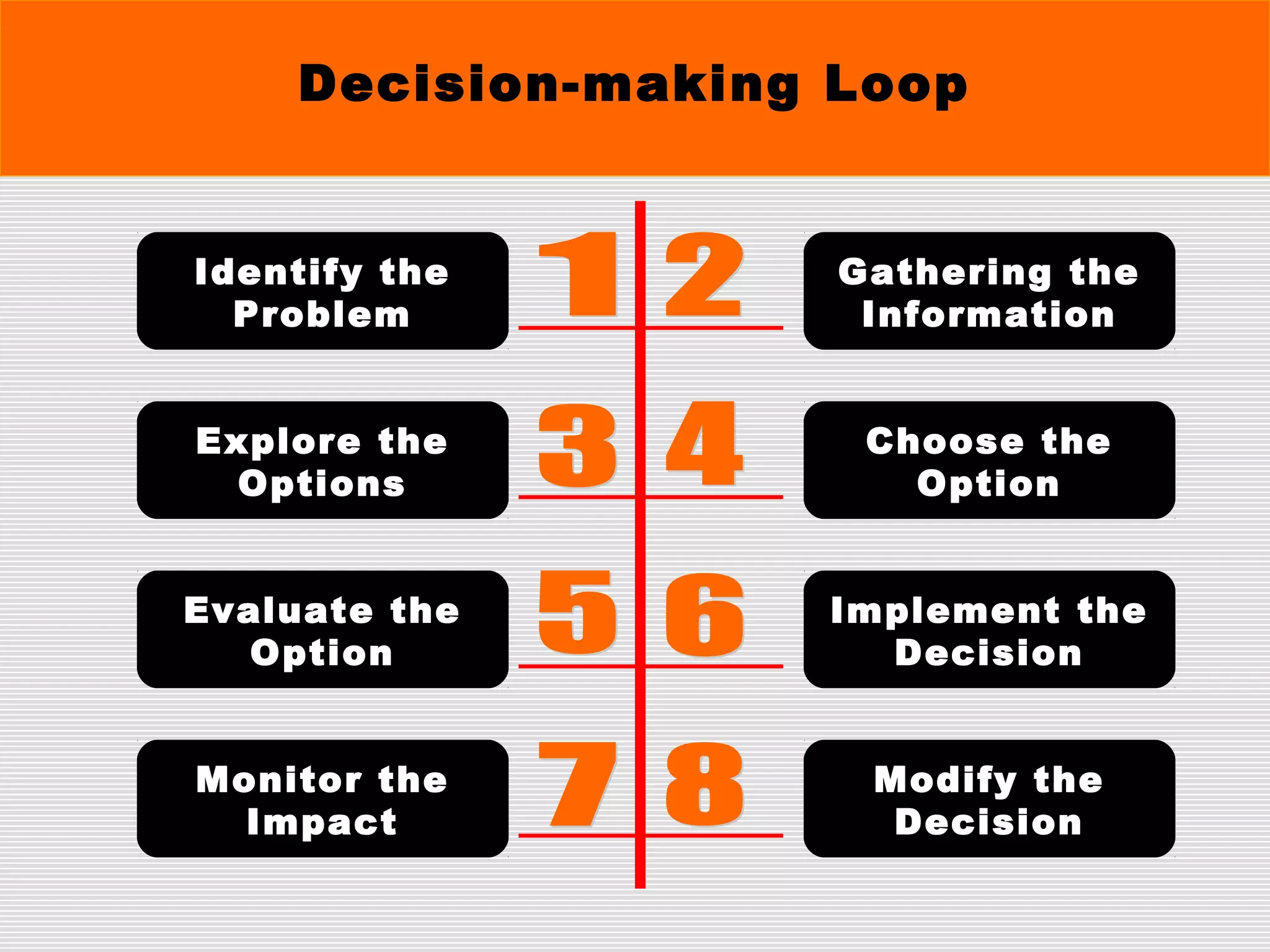
This Decision-making Model is in Eight
Steps, which I called it “Decision-
making Loop” Its Show You a Logical
Structured Methodology for Making a
Decision.
“It does not matter which side of the
fence you get off on sometimes. What
matters most is getting off. You cannot
make progress without making decisions.”
- Jim Rohn
Decision-making Loop
Identify the
Problem
Gathering the
Information
Explore the
Options
Evaluate the
Option
Monitor the
Impact
Choose the
Option
Implement the
Decision
Modify the
Decision
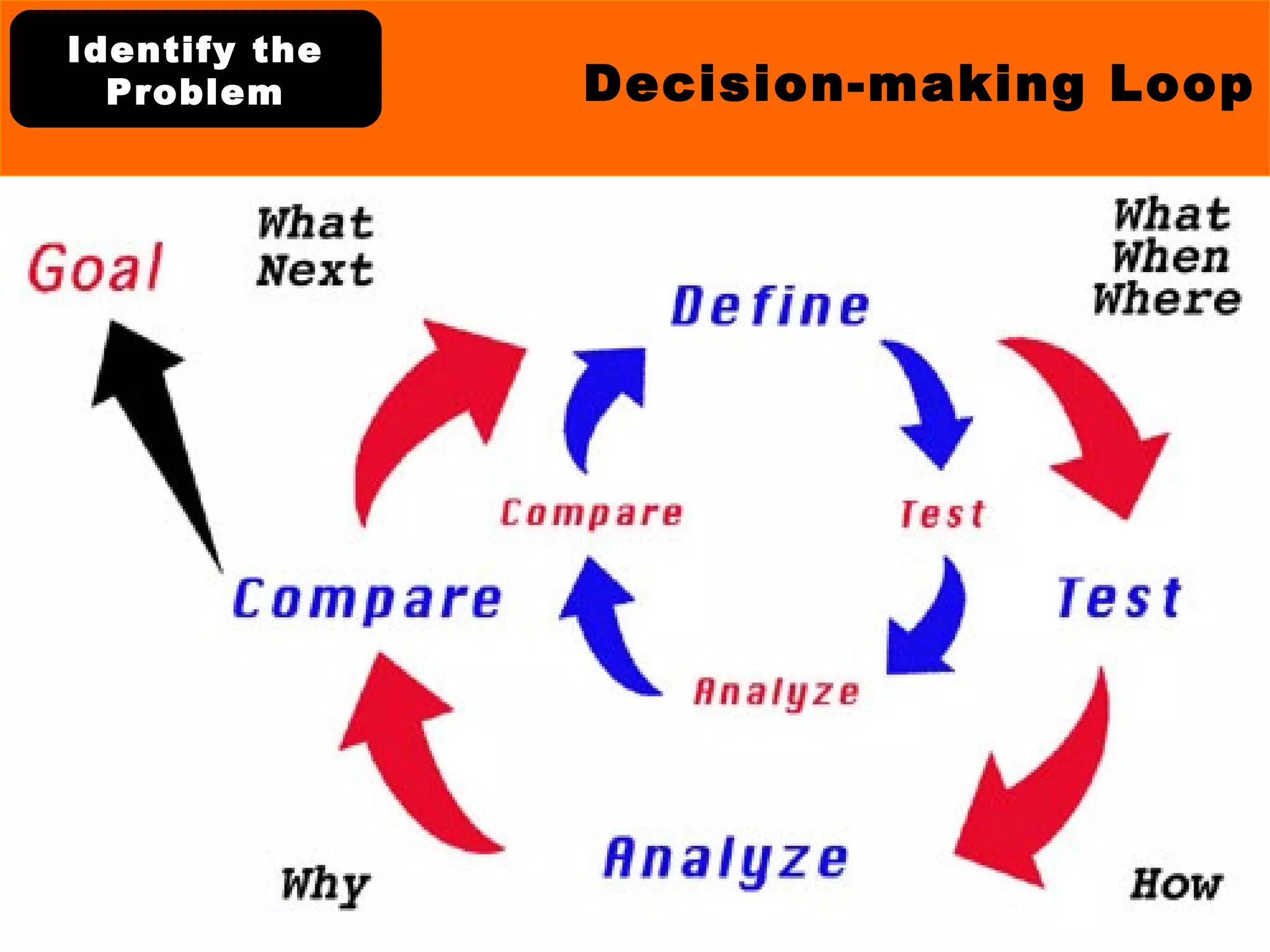
The First Step towards a decision making
process is to identify the problem.
This Essential to Understand What to Decide
about.
Until you have a clear understanding of the
problem or decision to be made, it is
meaningless to proceed.
If the problem is stated incorrectly or unclearly
then your decisions will be wrong.
Decision-making Loop
Identify the
Problem
Decision-making Loop
Identify the
Problem
All necessary available facts, opinion, data
have to be collected.
This is important because sometimes
solutions can come out from these out-of-
the-box ideas.
You would also have to do adequate
research to come up with the necessary
facts that would aid in solving the problem.
Decision-making Loop
Gathering the
Information
Ask the 5 W's: What, Who, When,
Where, and Why.
 What is the situation?
 Who are the people involved?
 When did this happen?
 Where is this leading?
 Why are you in this situation?
These are just some of the possible
questions to ask to know more about
your situation. This is important.
Oftentimes, the reason for indecision
is the lack of information about a
situation.
Decision-making Loop
Gathering the
Information
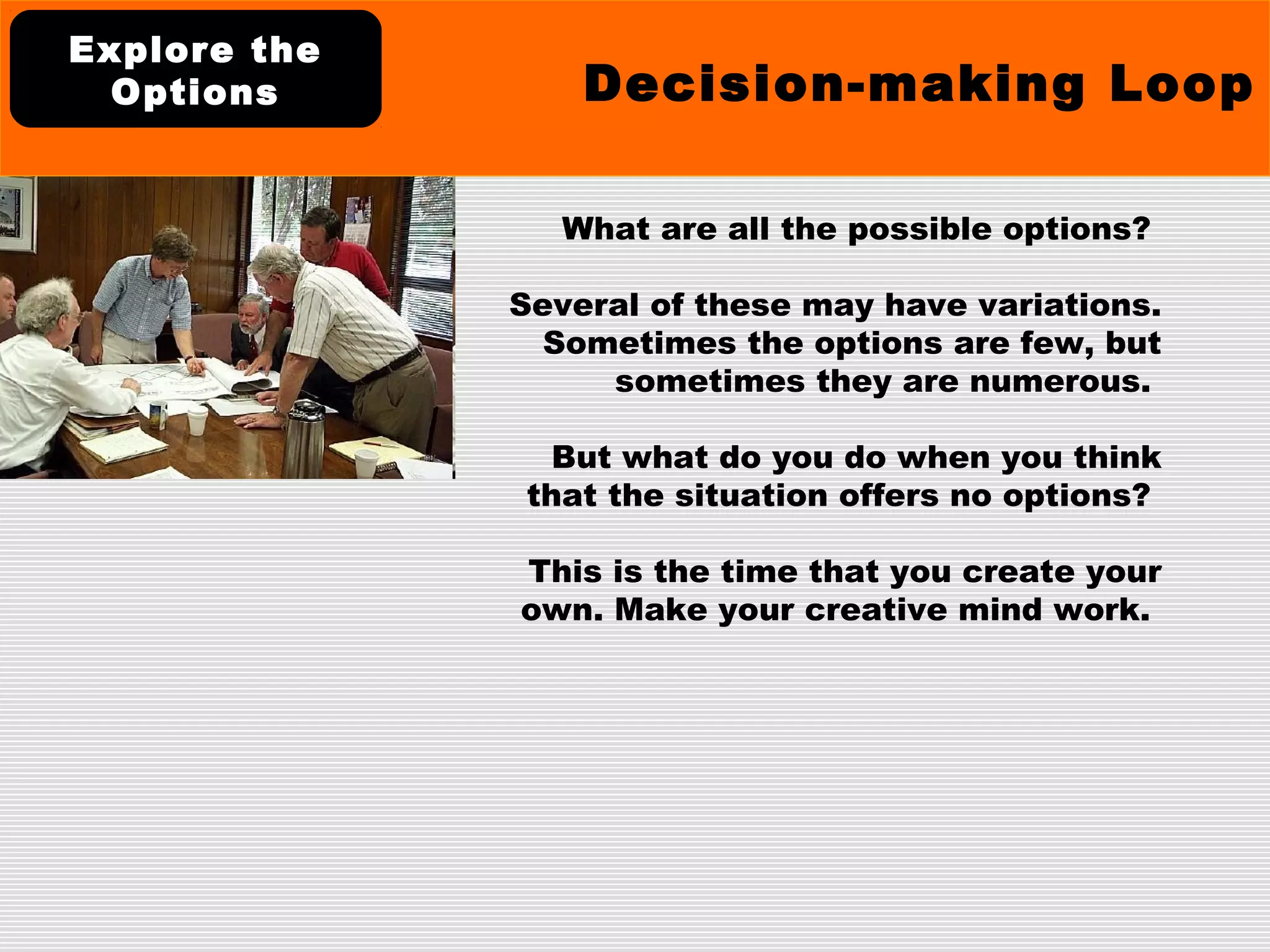
What are all the possible options?
Several of these may have variations.
Sometimes the options are few, but
sometimes they are numerous.
But what do you do when you think
that the situation offers no options?
This is the time that you create your
own. Make your creative mind work.
Decision-making Loop
Explore the
Options
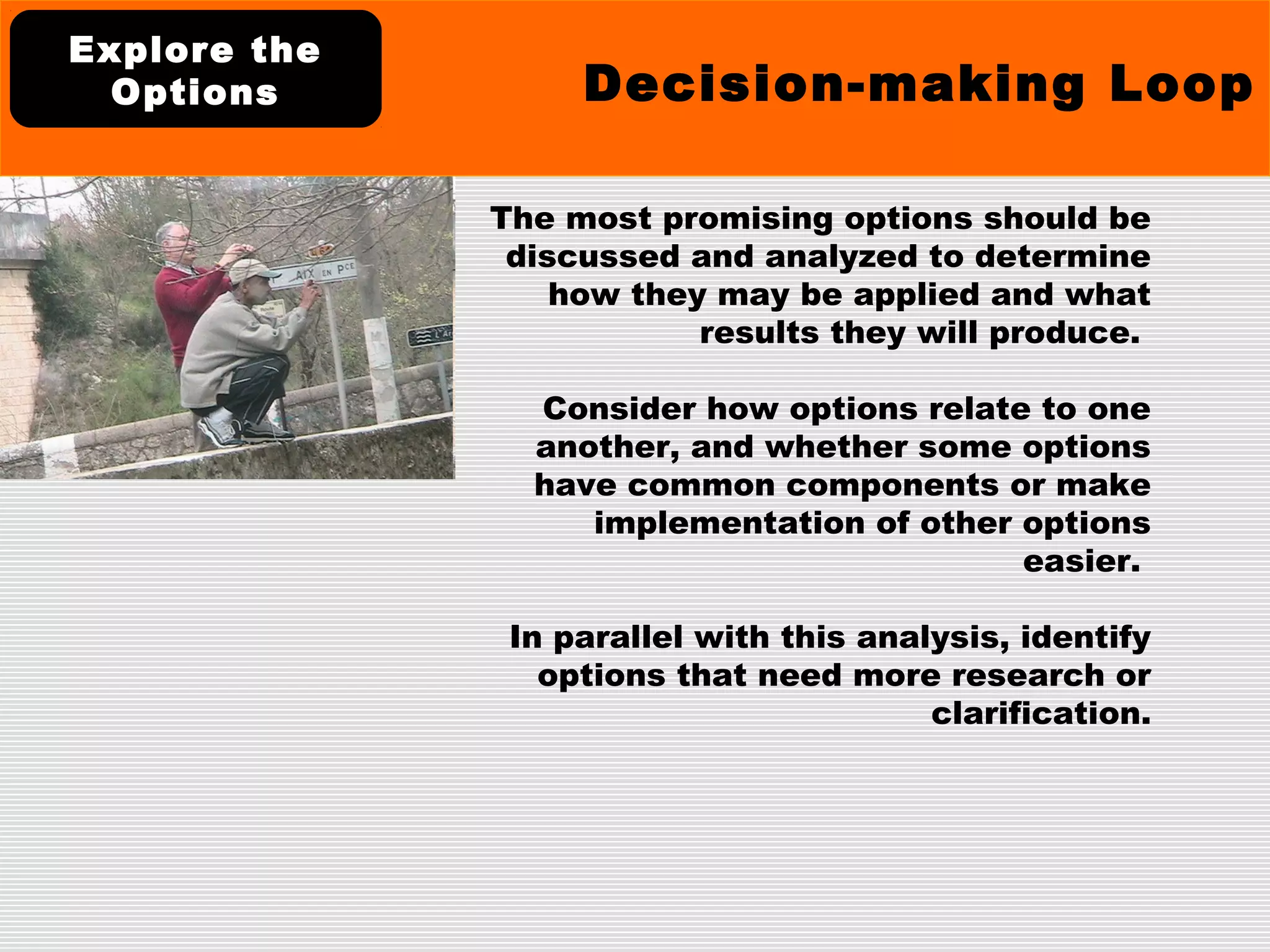
The most promising options should be
discussed and analyzed to determine
how they may be applied and what
results they will produce.
Consider how options relate to one
another, and whether some options
have common components or make
implementation of other options
easier.
In parallel with this analysis, identify
options that need more research or
clarification.
Decision-making Loop
Explore the
Options
After carefully considering each
option, select the one that seems
most appropriate based on each of
these factors: your own values, the
positive and negative consequences,
your present and future goals, and the
effect on others.
Now choose the best one option
among those which are explore.
Remember that there are no
guarantees and wrong decisions are
always at hindsight. So choose to
decide and believe that you are
choosing the best option at this point
in time.
Decision-making Loop
Choose the
Option
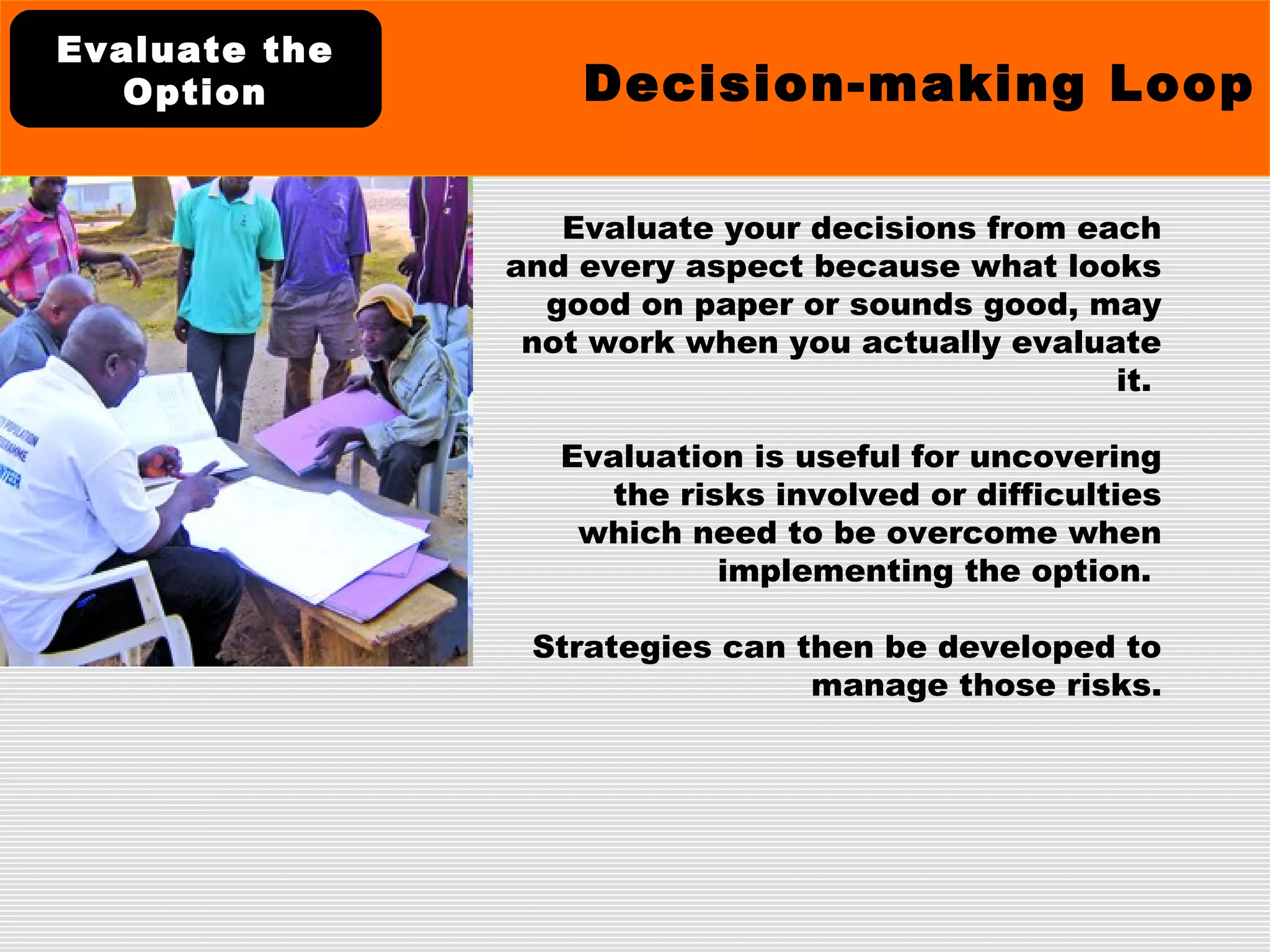
Evaluate your decisions from each
and every aspect because what looks
good on paper or sounds good, may
not work when you actually evaluate
it.
Evaluation is useful for uncovering
the risks involved or difficulties
which need to be overcome when
implementing the option.
Strategies can then be developed to
manage those risks.
Decision-making Loop
Evaluate the
Option
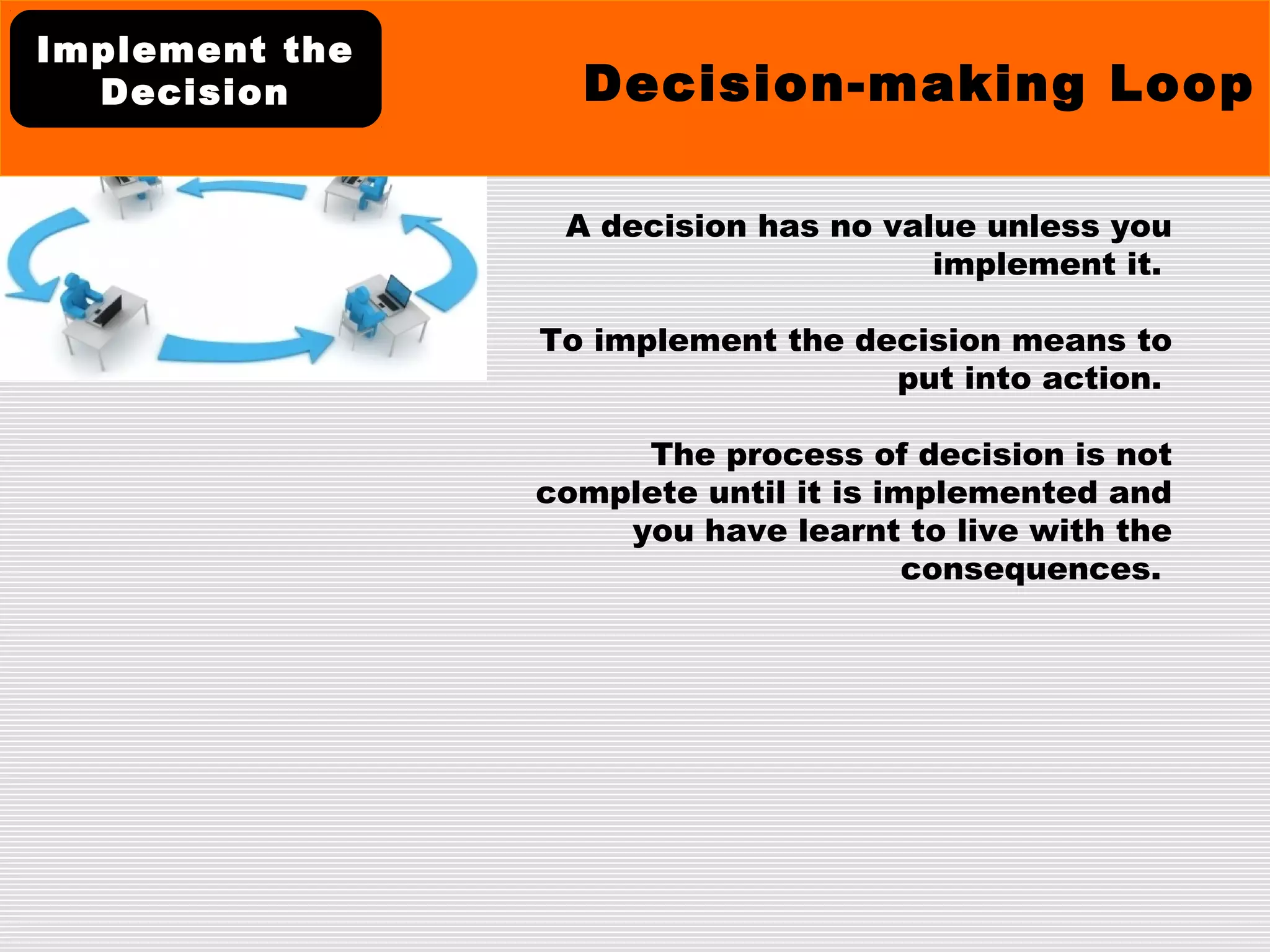
A decision has no value unless you
implement it.
To implement the decision means to
put into action.
The process of decision is not
complete until it is implemented and
you have learnt to live with the
consequences.
Decision-making Loop
Implement the
Decision
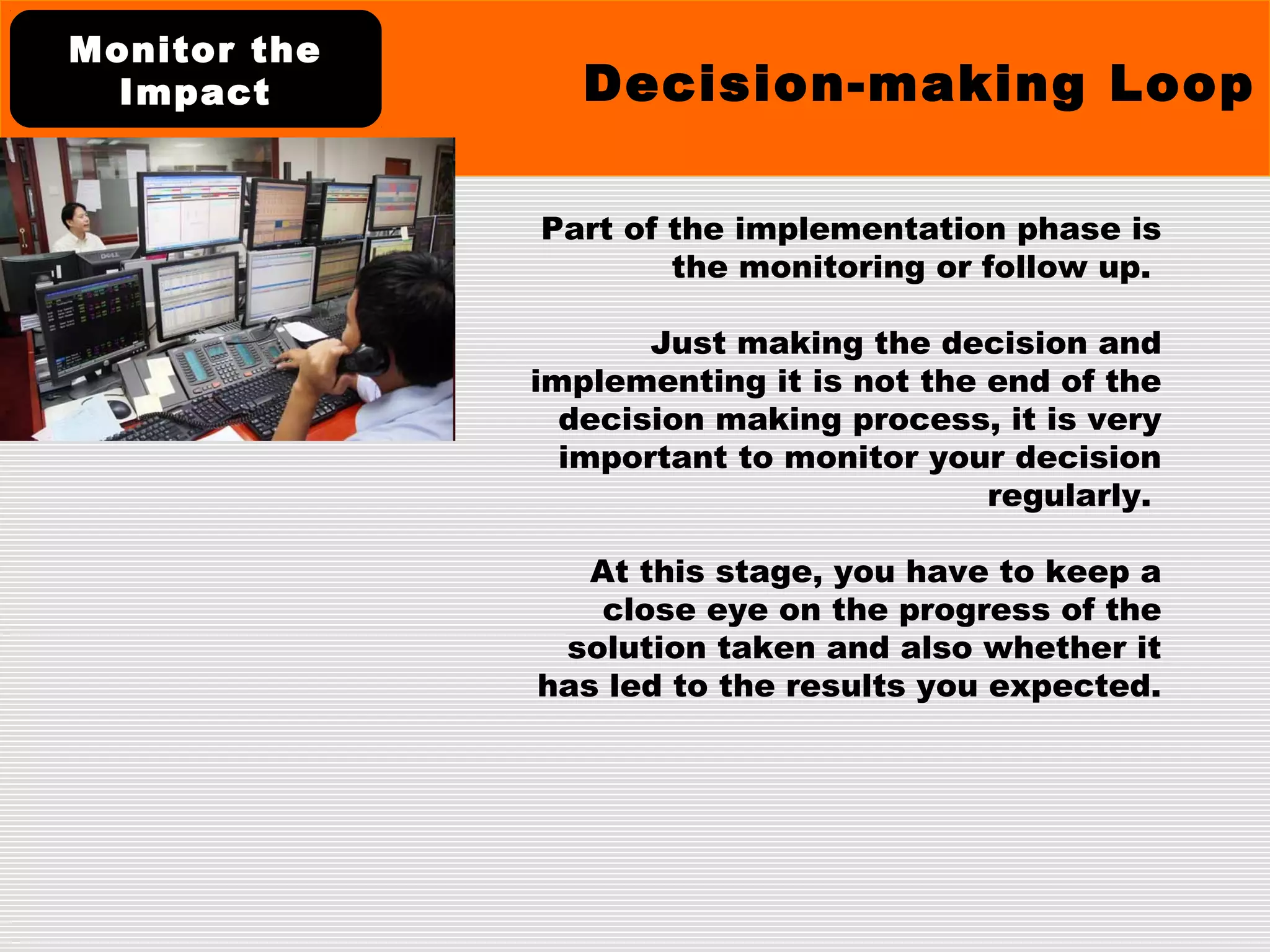
Part of the implementation phase is
the monitoring or follow up.
Just making the decision and
implementing it is not the end of the
decision making process, it is very
important to monitor your decision
regularly.
At this stage, you have to keep a
close eye on the progress of the
solution taken and also whether it
has led to the results you expected.
Decision-making Loop
Monitor the
Impact
Whether it is the Right Decision or
Not, only time can tell. But Do Not
Regret it whatever the outcome.
Instead, Learn from it and Remember
that You always have the chance to
make better Decisions in the Future.
Decision-making Loop
Monitor the
Impact
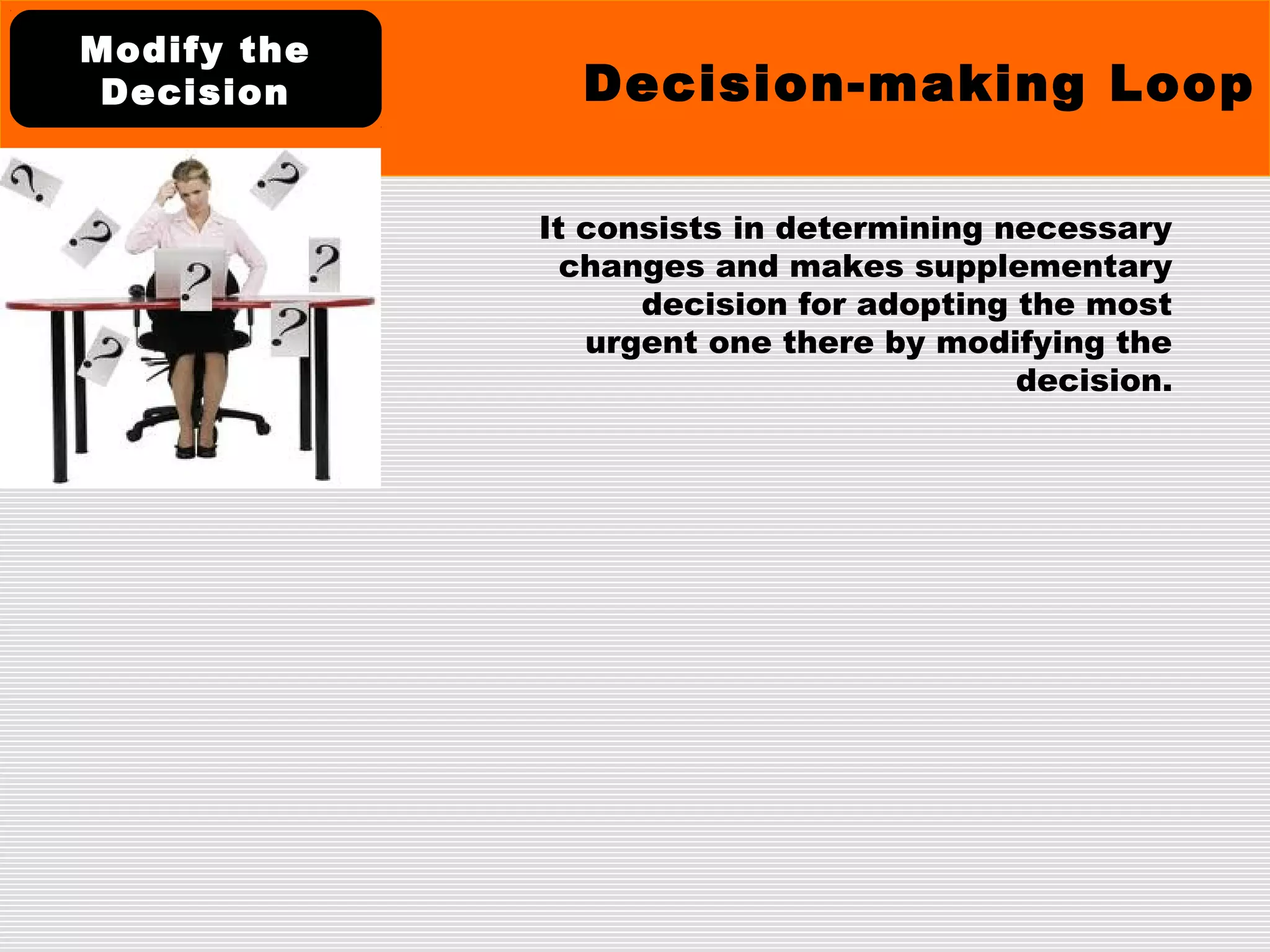
It consists in determining necessary
changes and makes supplementary
decision for adopting the most
urgent one there by modifying the
decision.
Decision-making Loop
Modify the
Decision
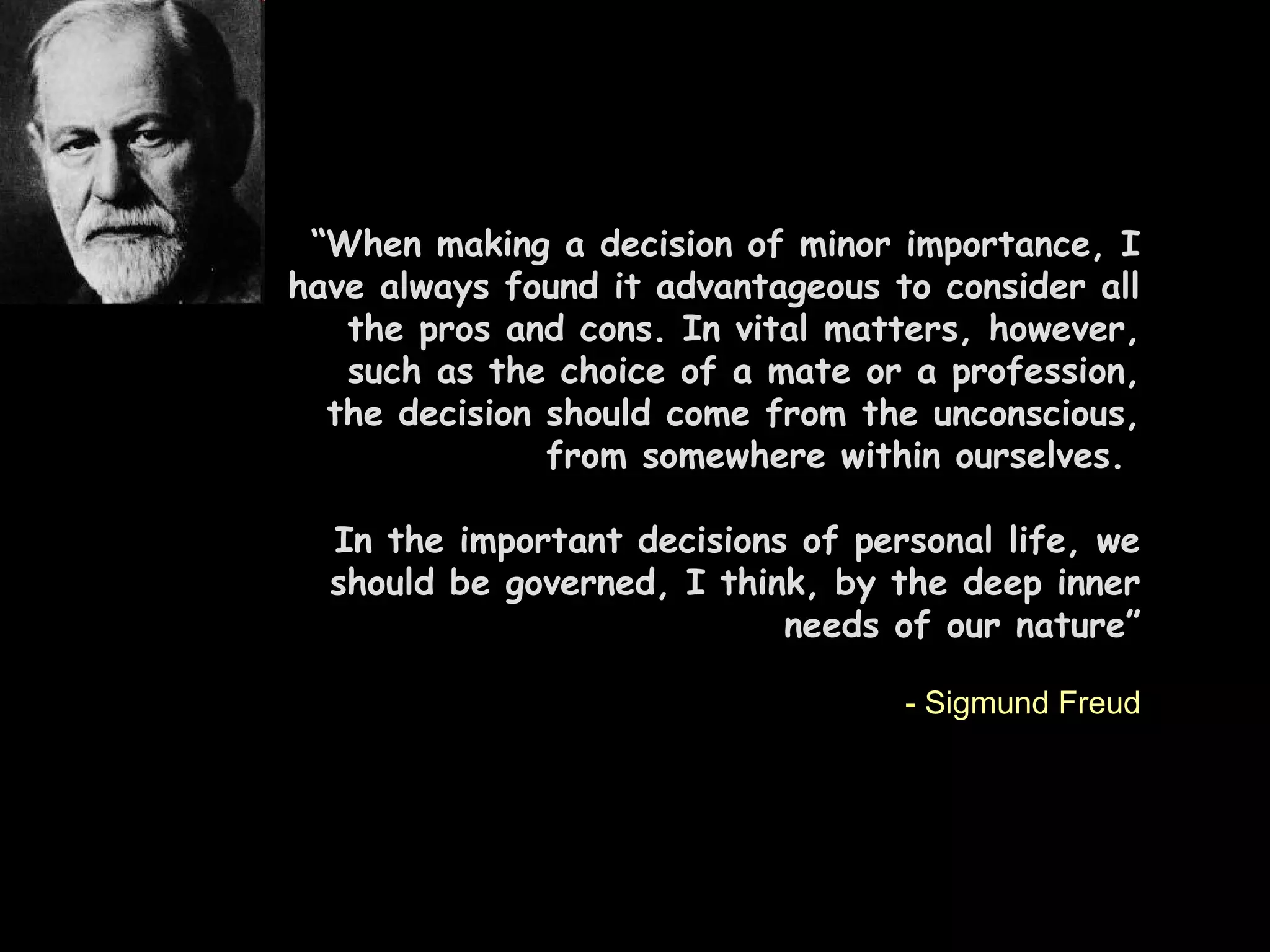
“When making a decision of minor importance, I
have always found it advantageous to consider all
the pros and cons. In vital matters, however,
such as the choice of a mate or a profession,
the decision should come from the unconscious,
from somewhere within ourselves.
In the important decisions of personal life, we
should be governed, I think, by the deep inner
needs of our nature”
- Sigmund Freud
So! The next time you have to take a decision, try
to use this ‘Decision-making Loop’
This Presentation Prepared
from the Book
Let’s LEARN
Again

Decision making skills

  • 2.
    Good Decision- making isan Essential Skill for Effective Leadership
  • 3.
    You do notreally know where a road will lead you until you take it. There are no guarantees. This is one of the most important things you need to realize about life.
  • 4.
    Making Decisions isa Difficult Process that Consists of Identifying and Selecting Alternatives, Criteria and Possible Outcomes, to Improve a Situation. Whether Decisions are Straightforward or Complex a Methodical and Systematic Approach will Lead to Success.
  • 5.
    Decision making issomething you do morning, noon and night. Making decisions is a part of your life whether you like it or not. You make decisions all the time. You can become quite adept and get plenty of practice in developing the necessary skills to help you in making the right decisions.
  • 7.
    Have YOU Alwayshad Problems to Make Difficult Decisions? Here is some advice to show you how to take the pain out of making difficult decisions, to make your best choices and get it over and done with. This Decision-making Model is in Eight Steps, which I called it “Decision- making Loop” Its Show You a Logical Structured Methodology for Making a Decision.
  • 8.
    “It does notmatter which side of the fence you get off on sometimes. What matters most is getting off. You cannot make progress without making decisions.” - Jim Rohn
  • 9.
    Decision-making Loop Identify the Problem Gatheringthe Information Explore the Options Evaluate the Option Monitor the Impact Choose the Option Implement the Decision Modify the Decision
  • 10.
    The First Steptowards a decision making process is to identify the problem. This Essential to Understand What to Decide about. Until you have a clear understanding of the problem or decision to be made, it is meaningless to proceed. If the problem is stated incorrectly or unclearly then your decisions will be wrong. Decision-making Loop Identify the Problem
  • 11.
  • 12.
    All necessary availablefacts, opinion, data have to be collected. This is important because sometimes solutions can come out from these out-of- the-box ideas. You would also have to do adequate research to come up with the necessary facts that would aid in solving the problem. Decision-making Loop Gathering the Information
  • 13.
    Ask the 5W's: What, Who, When, Where, and Why.  What is the situation?  Who are the people involved?  When did this happen?  Where is this leading?  Why are you in this situation? These are just some of the possible questions to ask to know more about your situation. This is important. Oftentimes, the reason for indecision is the lack of information about a situation. Decision-making Loop Gathering the Information
  • 14.
    What are allthe possible options? Several of these may have variations. Sometimes the options are few, but sometimes they are numerous. But what do you do when you think that the situation offers no options? This is the time that you create your own. Make your creative mind work. Decision-making Loop Explore the Options
  • 15.
    The most promisingoptions should be discussed and analyzed to determine how they may be applied and what results they will produce. Consider how options relate to one another, and whether some options have common components or make implementation of other options easier. In parallel with this analysis, identify options that need more research or clarification. Decision-making Loop Explore the Options
  • 16.
    After carefully consideringeach option, select the one that seems most appropriate based on each of these factors: your own values, the positive and negative consequences, your present and future goals, and the effect on others. Now choose the best one option among those which are explore. Remember that there are no guarantees and wrong decisions are always at hindsight. So choose to decide and believe that you are choosing the best option at this point in time. Decision-making Loop Choose the Option
  • 17.
    Evaluate your decisionsfrom each and every aspect because what looks good on paper or sounds good, may not work when you actually evaluate it. Evaluation is useful for uncovering the risks involved or difficulties which need to be overcome when implementing the option. Strategies can then be developed to manage those risks. Decision-making Loop Evaluate the Option
  • 18.
    A decision hasno value unless you implement it. To implement the decision means to put into action. The process of decision is not complete until it is implemented and you have learnt to live with the consequences. Decision-making Loop Implement the Decision
  • 19.
    Part of theimplementation phase is the monitoring or follow up. Just making the decision and implementing it is not the end of the decision making process, it is very important to monitor your decision regularly. At this stage, you have to keep a close eye on the progress of the solution taken and also whether it has led to the results you expected. Decision-making Loop Monitor the Impact
  • 20.
    Whether it isthe Right Decision or Not, only time can tell. But Do Not Regret it whatever the outcome. Instead, Learn from it and Remember that You always have the chance to make better Decisions in the Future. Decision-making Loop Monitor the Impact
  • 21.
    It consists indetermining necessary changes and makes supplementary decision for adopting the most urgent one there by modifying the decision. Decision-making Loop Modify the Decision
  • 22.
    “When making adecision of minor importance, I have always found it advantageous to consider all the pros and cons. In vital matters, however, such as the choice of a mate or a profession, the decision should come from the unconscious, from somewhere within ourselves. In the important decisions of personal life, we should be governed, I think, by the deep inner needs of our nature” - Sigmund Freud
  • 23.
    So! The nexttime you have to take a decision, try to use this ‘Decision-making Loop’
  • 24.
    This Presentation Prepared fromthe Book Let’s LEARN Again