


Diethylcarbamazine(DEC)
provocation test
AJAY SUBEDI
Janamaitri foundation institute of health
sciences,Balaju,Kathmandu
Diagnosis of LYMPHATIC FILARISIS
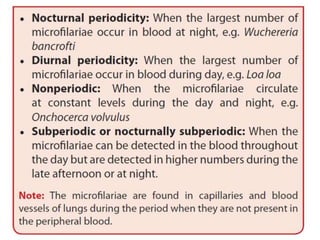
Periodicity
• The biological property of microfilariae to be
present in the peripheral blood circulation
during a particular period in the day or night.
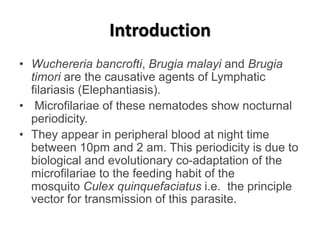
Introduction
• Wuchereria bancrofti, Brugia malayi and Brugia
timori are the causative agents of Lymphatic
filariasis (Elephantiasis).
• Microfilariae of these nematodes show nocturnal
periodicity.
• They appear in peripheral blood at night time
between 10pm and 2 am. This periodicity is due to
biological and evolutionary co-adaptation of the
microfilariae to the feeding habit of the
mosquito Culex quinquefaciatus i.e. the principle
vector for transmission of this parasite.
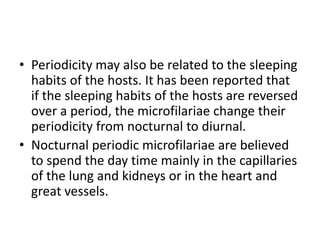
• Periodicity may also be related to the sleeping
habits of the hosts. It has been reported that
if the sleeping habits of the hosts are reversed
over a period, the microfilariae change their
periodicity from nocturnal to diurnal.
• Nocturnal periodic microfilariae are believed
to spend the day time mainly in the capillaries
of the lung and kidneys or in the heart and
great vessels.
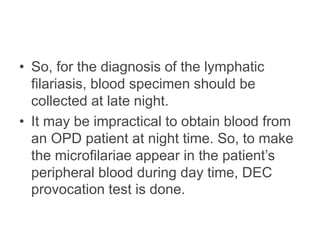
• So, for the diagnosis of the lymphatic
filariasis, blood specimen should be
collected at late night.
• It may be impractical to obtain blood from
an OPD patient at night time. So, to make
the microfilariae appear in the patient’s
peripheral blood during day time, DEC
provocation test is done.
• Microfilariae are not found in the peripheral
blood in:
During early allergic manifestations .
In Occult filariasis .
Case of Elephantiasis – due to lymphatic
obstruction
After an attack of lymphangitis, due to death
of adult worm.
DEC provocation test
• Also known as HETRAZAN PROVOCATIVE TEST.
procedure
• The patient is given with a tablet of
DEC orally (2mg/kg).
(the nocturnal microfilariae are stimulated and
come to peripheral blood within 30-45 minutes).
• After 30min, the capillary blood is collected
by finger prick for demonstration of
microfilariae by direct wet mount or staining
the blood smear.
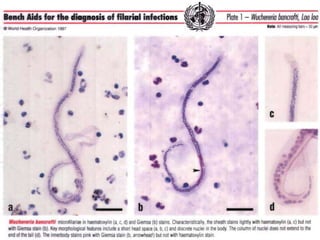
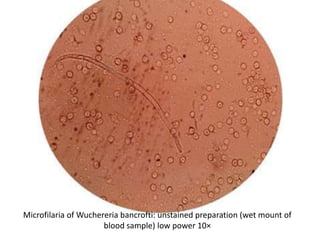
Microfilaria of Wuchereria bancrofti: unstained preparation (wet mount of
blood sample) low power 10×
• Microfilariae begin to decrease 2 hours later.
sensitivity
• It has a sensitivity that is almost comparable
to that of night blood surveys .
Contraindication
• This test is contraindicated in the areas where
Loa loa or Onchocerca volvulus infections are
also found because of Mazzotti reaction &
blindness in onchocerciasis.(cause
Subcutaneous filariasis)
• consisting of pruritus,
rash, lymphadenopathy,
fever, hypotension.
Thank You

Dec provocation test (lymphatic filiarisis)

  • 1.
    Diethylcarbamazine(DEC) provocation test AJAY SUBEDI Janamaitrifoundation institute of health sciences,Balaju,Kathmandu Diagnosis of LYMPHATIC FILARISIS
  • 2.
    Periodicity • The biologicalproperty of microfilariae to be present in the peripheral blood circulation during a particular period in the day or night.
  • 4.
    Introduction • Wuchereria bancrofti,Brugia malayi and Brugia timori are the causative agents of Lymphatic filariasis (Elephantiasis). • Microfilariae of these nematodes show nocturnal periodicity. • They appear in peripheral blood at night time between 10pm and 2 am. This periodicity is due to biological and evolutionary co-adaptation of the microfilariae to the feeding habit of the mosquito Culex quinquefaciatus i.e. the principle vector for transmission of this parasite.
  • 5.
    • Periodicity mayalso be related to the sleeping habits of the hosts. It has been reported that if the sleeping habits of the hosts are reversed over a period, the microfilariae change their periodicity from nocturnal to diurnal. • Nocturnal periodic microfilariae are believed to spend the day time mainly in the capillaries of the lung and kidneys or in the heart and great vessels.
  • 6.
    • So, forthe diagnosis of the lymphatic filariasis, blood specimen should be collected at late night. • It may be impractical to obtain blood from an OPD patient at night time. So, to make the microfilariae appear in the patient’s peripheral blood during day time, DEC provocation test is done.
  • 7.
    • Microfilariae arenot found in the peripheral blood in: During early allergic manifestations . In Occult filariasis . Case of Elephantiasis – due to lymphatic obstruction After an attack of lymphangitis, due to death of adult worm.
  • 8.
    DEC provocation test •Also known as HETRAZAN PROVOCATIVE TEST.
  • 9.
    procedure • The patientis given with a tablet of DEC orally (2mg/kg). (the nocturnal microfilariae are stimulated and come to peripheral blood within 30-45 minutes). • After 30min, the capillary blood is collected by finger prick for demonstration of microfilariae by direct wet mount or staining the blood smear.
  • 11.
    Microfilaria of Wuchereriabancrofti: unstained preparation (wet mount of blood sample) low power 10×
  • 12.
    • Microfilariae beginto decrease 2 hours later.
  • 13.
    sensitivity • It hasa sensitivity that is almost comparable to that of night blood surveys .
  • 14.
    Contraindication • This testis contraindicated in the areas where Loa loa or Onchocerca volvulus infections are also found because of Mazzotti reaction & blindness in onchocerciasis.(cause Subcutaneous filariasis) • consisting of pruritus, rash, lymphadenopathy, fever, hypotension.
  • 15.