The Quality Improvement hub
supporting you to develop skills
and understanding of QI.
Why are you here?
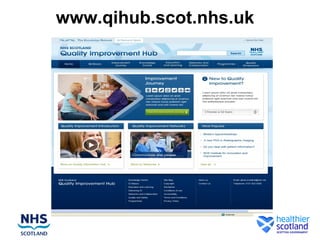
www.qihub.scot.nhs.uk
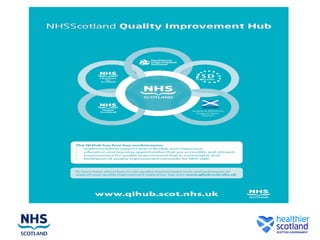
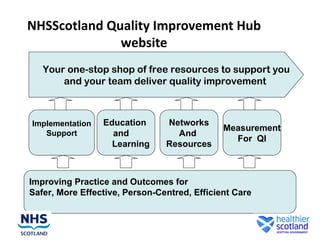
NHSScotland Quality Improvement Hub
              website
   Your one-stop shop of free resources to support you
       and your team deliver quality improvement


Implementation   Education      Networks
                                              Measurement
   Support         and            And
                                                For QI
                   Learning     Resources


Improving Practice and Outcomes for
Safer, More Effective, Person-Centred, Efficient Care
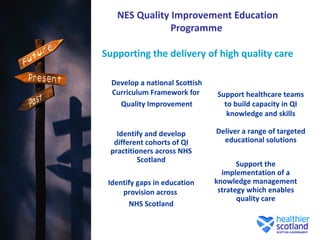
NES Quality Improvement Education
               Programme

Supporting the delivery of high quality care

  Develop a national Scottish
  Curriculum Framework for      Support healthcare teams
    Quality Improvement           to build capacity in QI
                                   knowledge and skills

   Identify and develop         Deliver a range of targeted
  different cohorts of QI         educational solutions
 practitioners across NHS
          Scotland
                                       Support the
                                  implementation of a
 Identify gaps in education     knowledge management
     provision across            strategy which enables
                                       quality care
       NHS Scotland
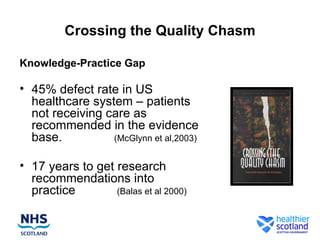
Crossing the Quality Chasm

Knowledge-Practice Gap

• 45% defect rate in US
  healthcare system – patients
  not receiving care as
  recommended in the evidence
  base.          (McGlynn et al,2003)


• 17 years to get research
  recommendations into
  practice        (Balas et al 2000)
Aims of Knowledge into Action

Define a new knowledge management approach
 which builds on local and international best
 practice to:

   - Help practitioners to apply knowledge to
     practice
   - Integrate better use of knowledge in quality
     improvement work
   - Support practitioners to translate knowledge
     to deliver safe, effective, person-centred care
Emerging vision
An integrated network of knowledge brokers working in close
  partnership with improvement teams and clinicians to
  translate knowledge into action through services for :
   – enquiry and problem definition
   – expert search and synthesis of evidence from
     research and experience
   – delivering knowledge in actionable formats, e.g.
     decision support.
   – exchange and dissemination of knowledge
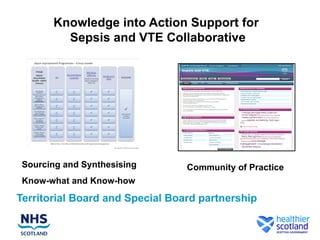
Knowledge into Action Support for
         Sepsis and VTE Collaborative


 Sourcing and Synthesising       Community of Practice
 Know-what and Know-how

Territorial Board and Special Board partnership
Latest evidence

• Involving Clinical Librarians at the Point of Care:
  Results of a Controlled Intervention        Academic
  Medicine 86(12), December 2011, pp 1508-1512

  “….30 of 34 medical residents (88%) reported having
  changed a treatment plan based on skills taught by
  the clinical librarian,
  and 27 of 34 (79%) changed a treatment plan based
  on the librarian's mediated search support. “
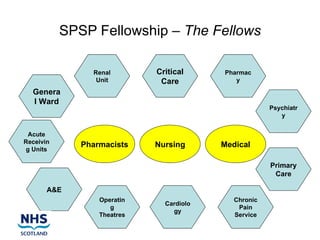
SPSP Fellowship – The Fellows

                Renal        Critical     Pharmac
                 Unit         Care           y
  Genera
  l Ward
                                                       Psychiatr
                                                          y


 Acute
Receivin
              Pharmacists    Nursing      Medical
g Units

                                                       Primary
                                                        Care

       A&E
                  Operatin                   Chronic
                               Cardiolo
                     g                        Pain
                                 gy
                  Theatres                   Service
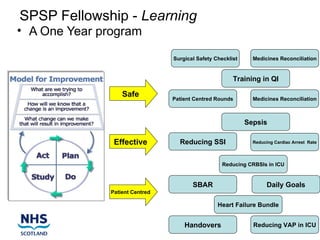
SPSP Fellowship - Learning
• A One Year program

                                 Surgical Safety Checklist     Medicines Reconciliation


                                                        Training in QI

                   Safe          Patient Centred Rounds        Medicines Reconciliation


                                                             Sepsis

                Effective          Reducing SSI                Reducing Cardiac Arrest Rate


                                                    Reducing CRBSIs in ICU


                                        SBAR                         Daily Goals
               Patient Centred

                                                  Heart Failure Bundle


                                     Handovers                 Reducing VAP in ICU
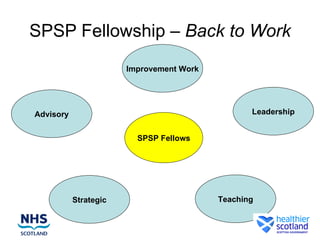
SPSP Fellowship – Back to Work
                       Improvement Work


Advisory                                         Leadership


                         SPSP Fellows


           Strategic                      Teaching
Improvement Advisor
Professional Development Programme

Hear about a journey
which started like
this……..
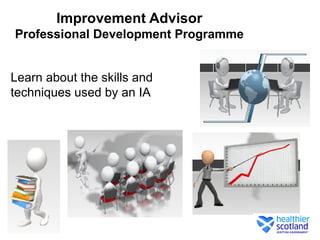
Improvement Advisor
Professional Development Programme


Learn about the skills and
techniques used by an IA
Improvement Advisor
Professional Development Programme


                        Discuss how you can
                        get involved in quality
                        improvement….

                            ‘Ten Top Tips’
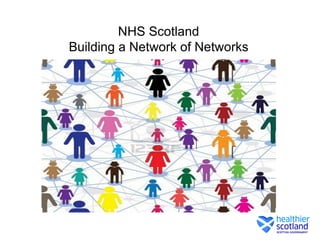
NHS Scotland
Building a Network of Networks
Building a network of networks
Purpose :
• Increase pace and momentum of networks to support NHS
  Scotland to deliver sustainable quality and achieve 2020
  vision
• Provide coherent linkages between a range of existing clinical
  and non-clinical networks and communities
• Increase capacity and capability in QI knowledge and skills an
  leadership for QI
• Inform and support spread, delivery of NHS Scotland
  leadership and workforce strategies through spread of best
  practice in clinical engagement, leadership and QI
  development
• Maximise value through collaboration with other networks and
  resources
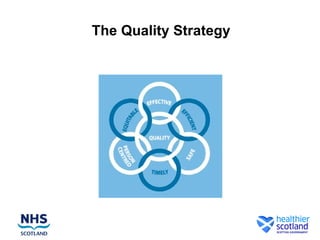
The Quality Strategy
Courtesy of Dr I
Roberts
Format
• Zone 1 Hub          • Rotate every 10
• Zone 2 Knowledge      minutes (whistle will
  into Action           blow for you to move on
• Zone 3 SPSP Fellows    – Explore Questions that
                           Matter
• Zone 4 Improvement     – Encourage Everyone’s
  Advisor’s                Contribution
                          – Listen for Insights and
                            Share Discoveries
                       • 15 minutes for
                         Questions at the end

Parallel Session 3.9 The Quality Improvement Hub: Supporting You to Develop Skills and Understanding of Quality Improvement

  • 1.
    The Quality Improvementhub supporting you to develop skills and understanding of QI.
  • 2.
  • 4.
  • 5.
    NHSScotland Quality ImprovementHub website Your one-stop shop of free resources to support you and your team deliver quality improvement Implementation Education Networks Measurement Support and And For QI Learning Resources Improving Practice and Outcomes for Safer, More Effective, Person-Centred, Efficient Care
  • 6.
    NES Quality ImprovementEducation Programme Supporting the delivery of high quality care Develop a national Scottish Curriculum Framework for Support healthcare teams Quality Improvement to build capacity in QI knowledge and skills Identify and develop Deliver a range of targeted different cohorts of QI educational solutions practitioners across NHS Scotland Support the implementation of a Identify gaps in education knowledge management provision across strategy which enables quality care NHS Scotland
  • 7.
    Crossing the QualityChasm Knowledge-Practice Gap • 45% defect rate in US healthcare system – patients not receiving care as recommended in the evidence base. (McGlynn et al,2003) • 17 years to get research recommendations into practice (Balas et al 2000)
  • 8.
    Aims of Knowledgeinto Action Define a new knowledge management approach which builds on local and international best practice to: - Help practitioners to apply knowledge to practice - Integrate better use of knowledge in quality improvement work - Support practitioners to translate knowledge to deliver safe, effective, person-centred care
  • 9.
    Emerging vision An integratednetwork of knowledge brokers working in close partnership with improvement teams and clinicians to translate knowledge into action through services for : – enquiry and problem definition – expert search and synthesis of evidence from research and experience – delivering knowledge in actionable formats, e.g. decision support. – exchange and dissemination of knowledge
  • 10.
    Knowledge into ActionSupport for Sepsis and VTE Collaborative Sourcing and Synthesising Community of Practice Know-what and Know-how Territorial Board and Special Board partnership
  • 11.
    Latest evidence • InvolvingClinical Librarians at the Point of Care: Results of a Controlled Intervention Academic Medicine 86(12), December 2011, pp 1508-1512 “….30 of 34 medical residents (88%) reported having changed a treatment plan based on skills taught by the clinical librarian, and 27 of 34 (79%) changed a treatment plan based on the librarian's mediated search support. “
  • 12.
    SPSP Fellowship –The Fellows Renal Critical Pharmac Unit Care y Genera l Ward Psychiatr y Acute Receivin Pharmacists Nursing Medical g Units Primary Care A&E Operatin Chronic Cardiolo g Pain gy Theatres Service
  • 13.
    SPSP Fellowship -Learning • A One Year program Surgical Safety Checklist Medicines Reconciliation Training in QI Safe Patient Centred Rounds Medicines Reconciliation Sepsis Effective Reducing SSI Reducing Cardiac Arrest Rate Reducing CRBSIs in ICU SBAR Daily Goals Patient Centred Heart Failure Bundle Handovers Reducing VAP in ICU
  • 14.
    SPSP Fellowship –Back to Work Improvement Work Advisory Leadership SPSP Fellows Strategic Teaching
  • 15.
    Improvement Advisor Professional DevelopmentProgramme Hear about a journey which started like this……..
  • 16.
    Improvement Advisor Professional DevelopmentProgramme Learn about the skills and techniques used by an IA
  • 17.
    Improvement Advisor Professional DevelopmentProgramme Discuss how you can get involved in quality improvement…. ‘Ten Top Tips’
  • 18.
    NHS Scotland Building aNetwork of Networks
  • 19.
    Building a networkof networks Purpose : • Increase pace and momentum of networks to support NHS Scotland to deliver sustainable quality and achieve 2020 vision • Provide coherent linkages between a range of existing clinical and non-clinical networks and communities • Increase capacity and capability in QI knowledge and skills an leadership for QI • Inform and support spread, delivery of NHS Scotland leadership and workforce strategies through spread of best practice in clinical engagement, leadership and QI development • Maximise value through collaboration with other networks and resources
  • 20.
  • 21.
    Courtesy of DrI Roberts
  • 23.
    Format • Zone 1Hub • Rotate every 10 • Zone 2 Knowledge minutes (whistle will into Action blow for you to move on • Zone 3 SPSP Fellows – Explore Questions that Matter • Zone 4 Improvement – Encourage Everyone’s Advisor’s Contribution – Listen for Insights and Share Discoveries • 15 minutes for Questions at the end

Editor's Notes

  • #6 The Hub is committed to building quality improvement capacity and capability throughout NHSScotland in a sustainable way, rather than creating dependency.  In order to improve quality of patient care it is important that we are able to measure the impact of changes to the way we deliver care. A key aim of the Quality Improvement Hub is to bring improvement science into the everyday work of NHS staff and to spread and sustain quality improvement at the local level.  This aim is supported by the development of quality improvement networks which are open and accessible to all staff. The Hub has a philosophy of 'skill sharing' and 'community building'. This section of the Quality Hub Website (formerly the Evidence into Practice Portal) provides clinicians and service improvement managers with both " know-what" -e.g. validated evidence and guidelines to support safe and effective care -  and "know-how" -e.g. tools, measures and examples support for implementation.
  • #7 Overview of NHS Education Quality Improvement Education Programme
  • #12 At McMaster teaching hospitals it was common practice for patients’ notes to include a key research paper relevant to their care & for this to be discussed at ward rounds. Sacketts team at John Radcliffe used an Evidence Cart on rounds. They asked & answered 2 questions for every 3 patients with the searches changing 1/3 rd of clinical decisions. An EBM training course of 7 1hr sessions & provisions of EBM resources significantly improved evidence based practice patterns namely therapies proven to be beneficial in RCTs & more likely to be based on high quality RCT’s. Clinical informaticist or librarian case related medical search influenced patient management & diagnostic thinking in 20% of cases. Cost equivalent to labs
  • #13 The Fellowship was created to train front line clinicians in improvement methodology to support the SPSP The Fellows came from a variety of clinical areas and professional groups.
  • #14 The Fellows undertook a one year program which aimed to teach the use of the MFI Supported by their employers with a release of time and local sponsorship. The Boards were recompensed by HIS. They received a number of lectures and tutorials at residential sessions, but predominantly learned theory through self directed reading and experience They undertook a project based in their workplace and used this to learn to use the MFI Projects have ranged over many patient groups and clinical areas and produced meaningful improvements in patient care A number have been published. Fellows also got the opportunity to visit high performing organisations to learn from the best, and to meet many working in the field of QI
  • #15 The Fellows return to the day job where their improvement work continues. They undertake many projects, while continuing in their clinical role. Skills and knowledge continue to develop through experience of new improvement work well after the formal teaching is over. This has been helped by the continued involvement of HIS and the development of a network of Improvement Practitioners. Boards are keen to use Fellows’ skills to drive local goals although a common experience is that there is no ‘natural’ role for a Fellow. How best do we use them? New roles have developed often through the work of the Fellows themselves, both locally and nationally, in driving the work of the SPSP and aims of the Quality Strategy. Cohort 5 is due to commence their course this autumn. It is hard to know what overall impact the Fellowship has had on overall NHS performance, or what may be expected from around 50 people. It is fair to say that the Fellows continue to drive improvement and the full impact may not be felt for some time.
  • #16 They joined with varying levels of knowledge and skill in Improvement Science and commenced a fascinating journey of learning
  • #17 Through the Institute for Healthcare Improvement, the IA Professional Development Programme was taught by world recognised leaders in improvement science and this first cohort of IAs in Scotland have benefitted from 9 months of learning new skills to help build the knowledge of healthcare staff across NHS Scotland
  • #18 They will tell you about their experience and show you how you too can become involved in improvement activity in your healthcare system.
  • #21 Person-Centred - Mutually beneficial partnerships between patients, their families, and those delivering healthcare services which respect individual needs and values, and which demonstrate compassion, continuity, clear communication, and shared decision making. Clinically Effective - The most appropriate treatments, interventions, support, and services will be provided at the right time to everyone who will benefit, and wasteful or harmful variation will be eradicated. Safe - There will be no avoidable injury or harm to patients from healthcare they receive, and an appropriate clean and safe environment will be provided for the delivery of healthcare services at all times.