R2C Optimization of TAVR programs
Atiq Rehman MD
Director Minimally Invasive Cardiac & Transcatheter Valve Surgery
Director for Performance & Quality Improvement
Lourdes Medical Center, NJ
Disclosures:
Edwards Life Sciences Proctor/Consultant for
Transcatheter Aortic Valve Therapy
Trinity CV Board Member @ HealthTrust Grp
Alain Cribier
“This is the stupidest idea I have ever heard!”
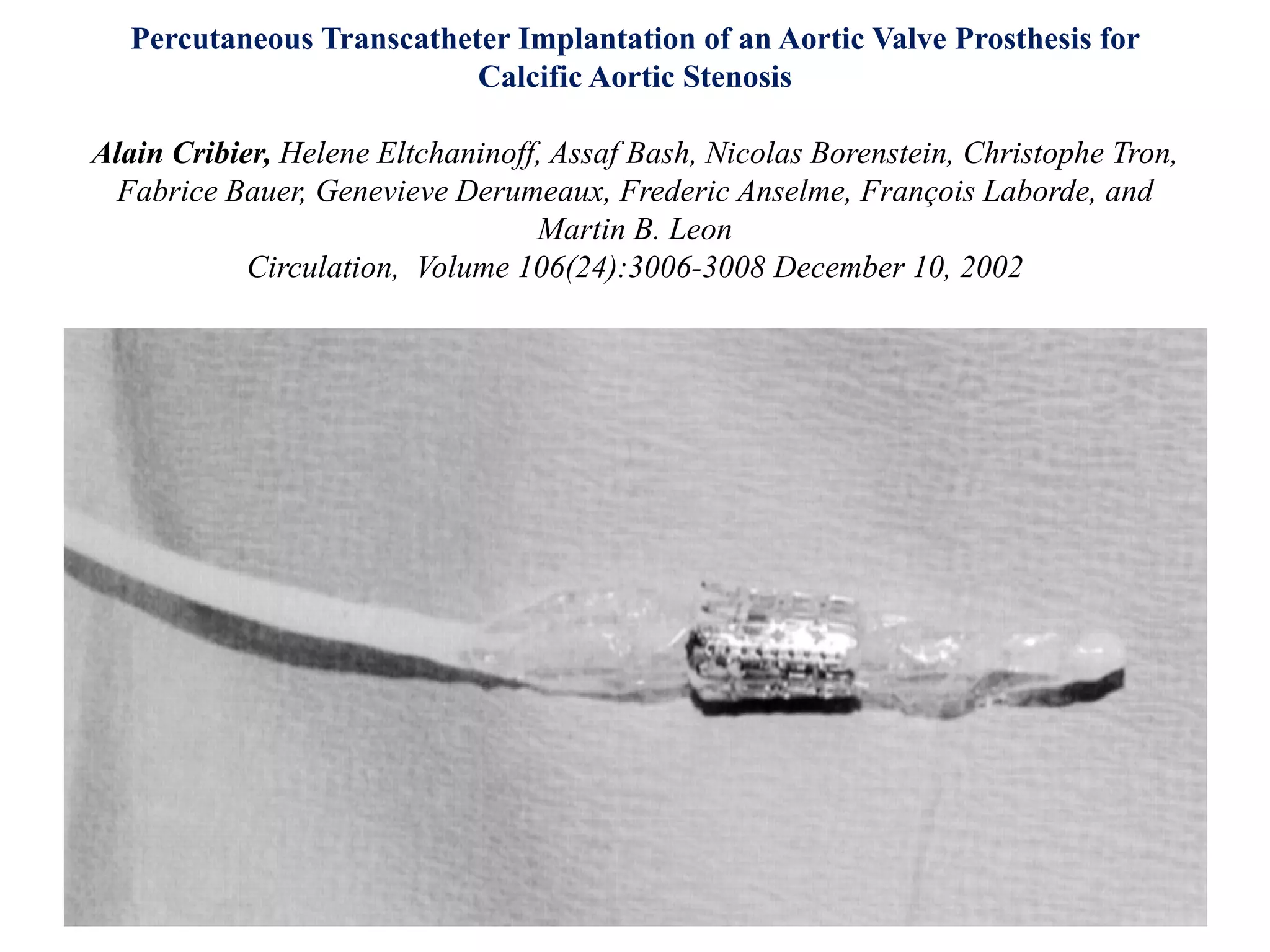
Percutaneous Transcatheter Implantation of an Aortic Valve Prosthesis for
Calcific Aortic Stenosis
Alain Cribier, Helene Eltchaninoff, Assaf Bash, Nicolas Borenstein, Christophe Tron,
Fabrice Bauer, Genevieve Derumeaux, Frederic Anselme, François Laborde, and
Martin B. Leon
Circulation, Volume 106(24):3006-3008 December 10, 2002
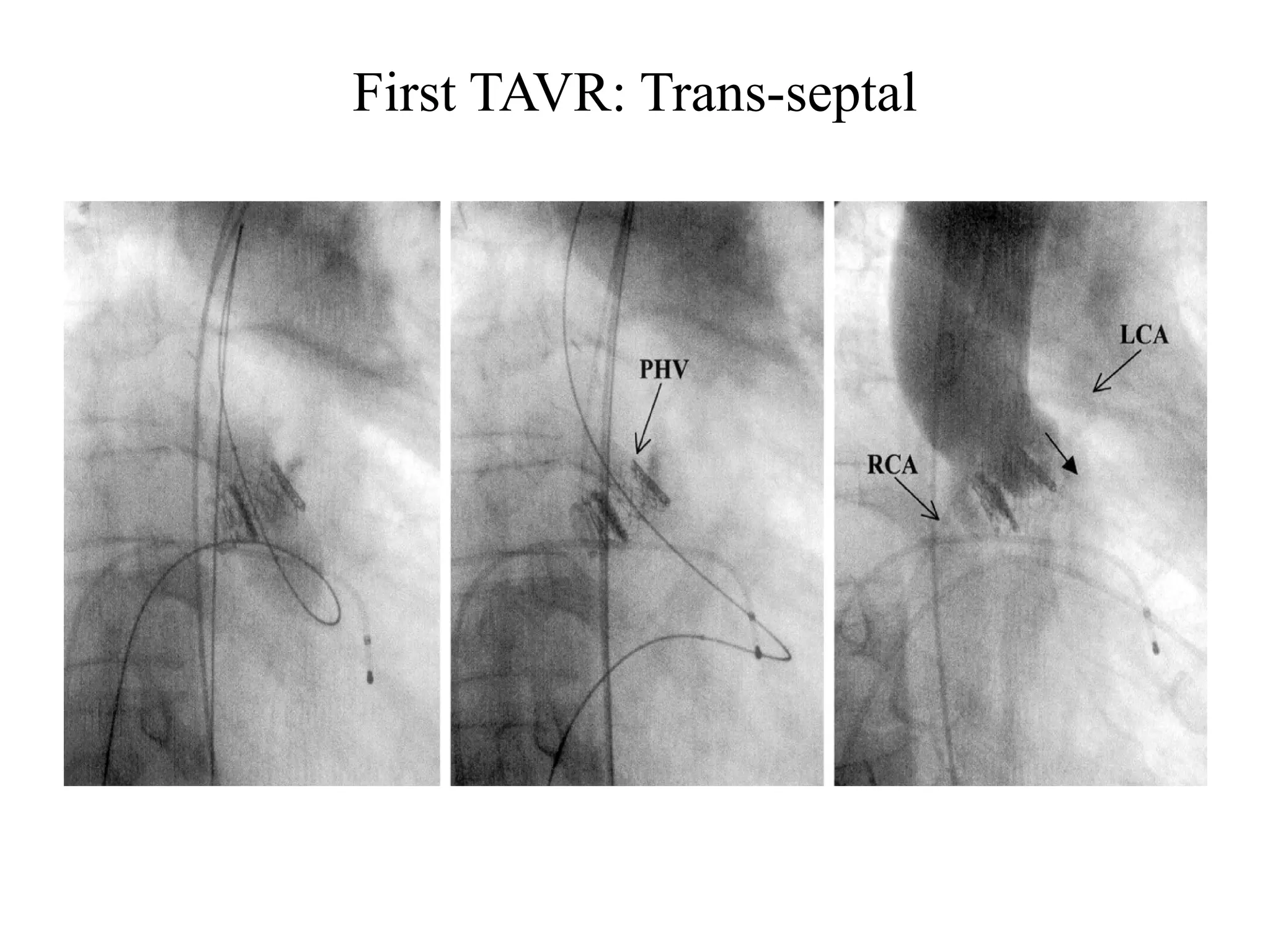
First TAVR: Trans-septal
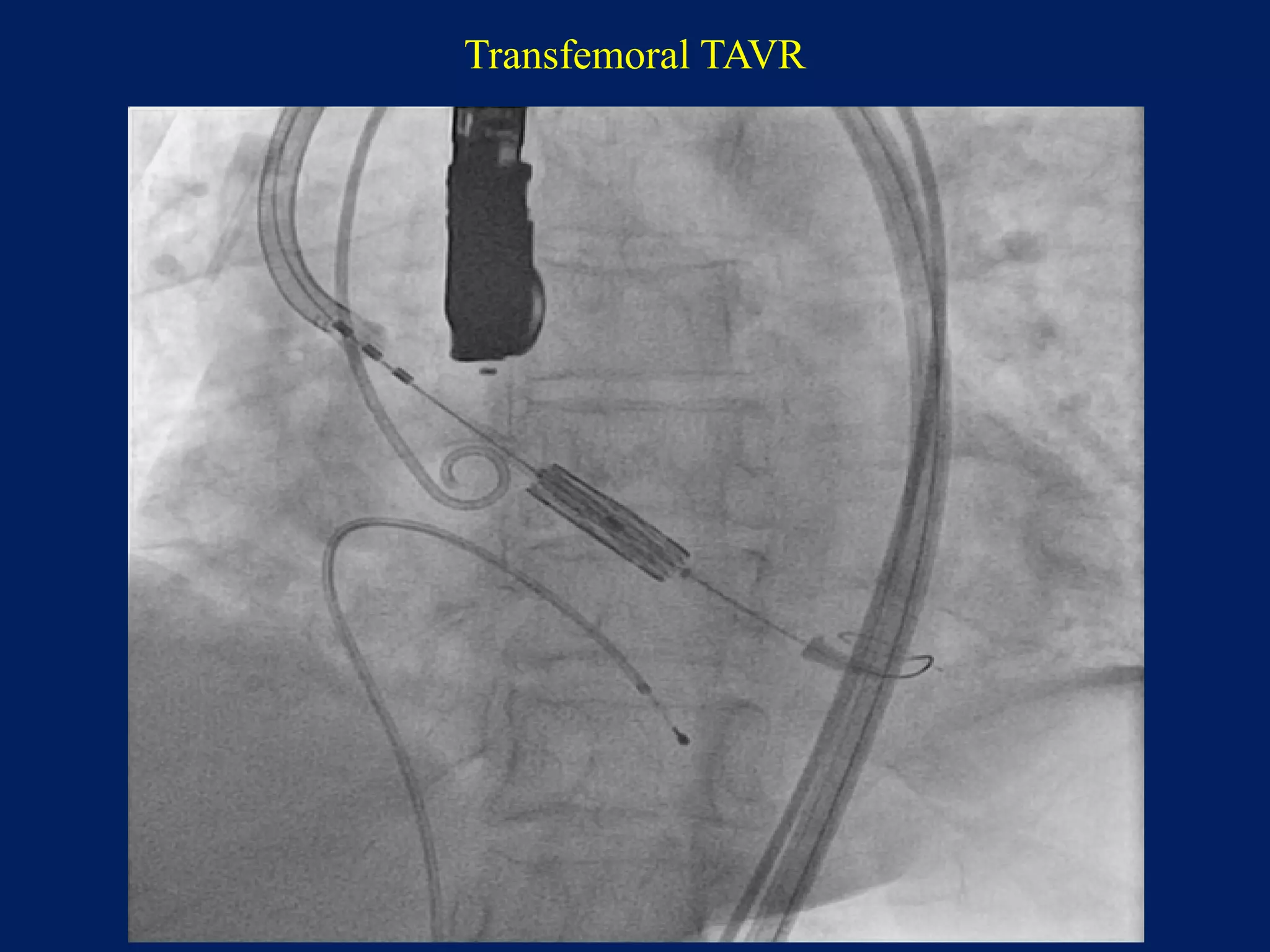
Transfemoral TAVR
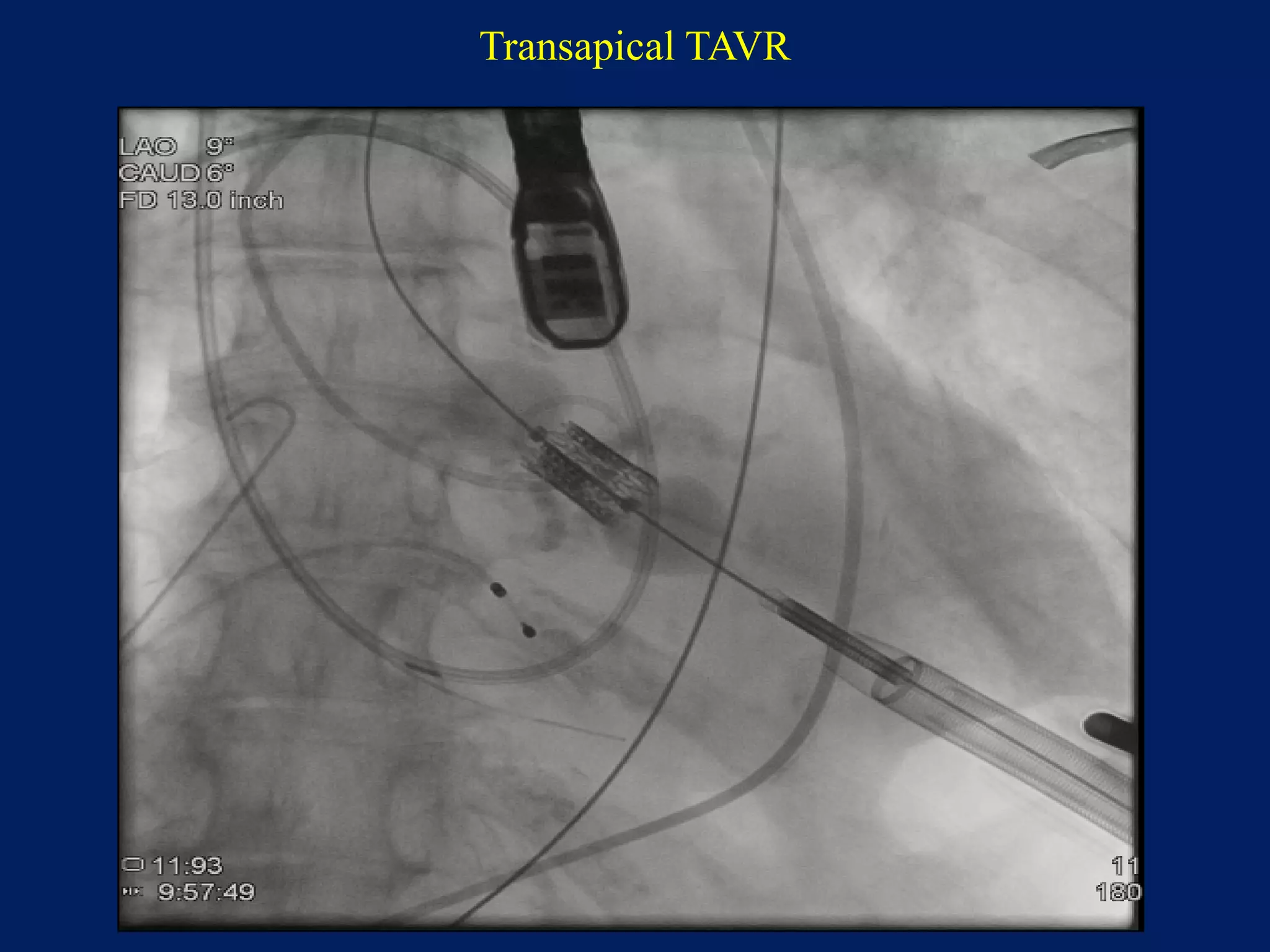
Transapical TAVR
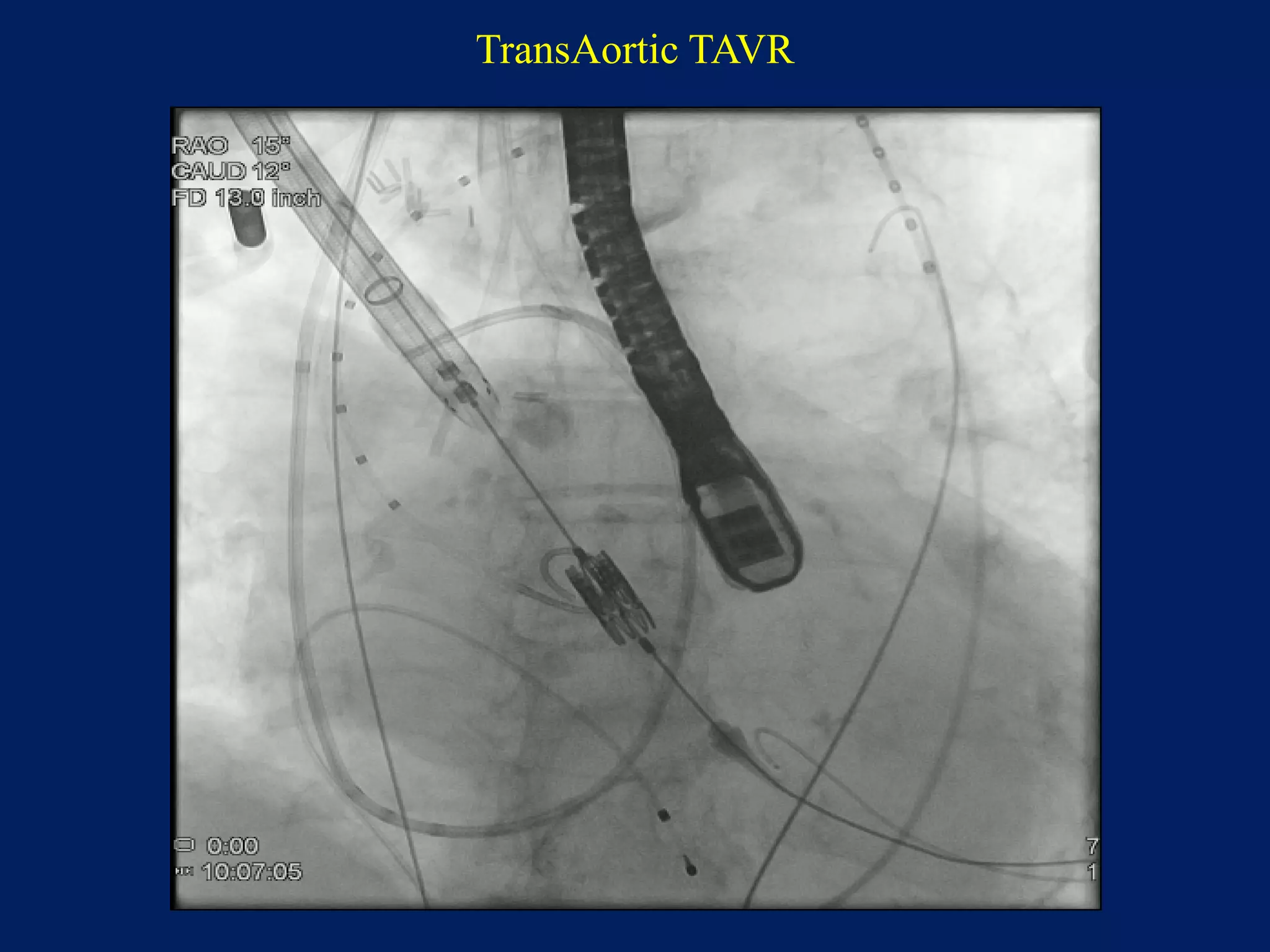
TransAortic TAVR
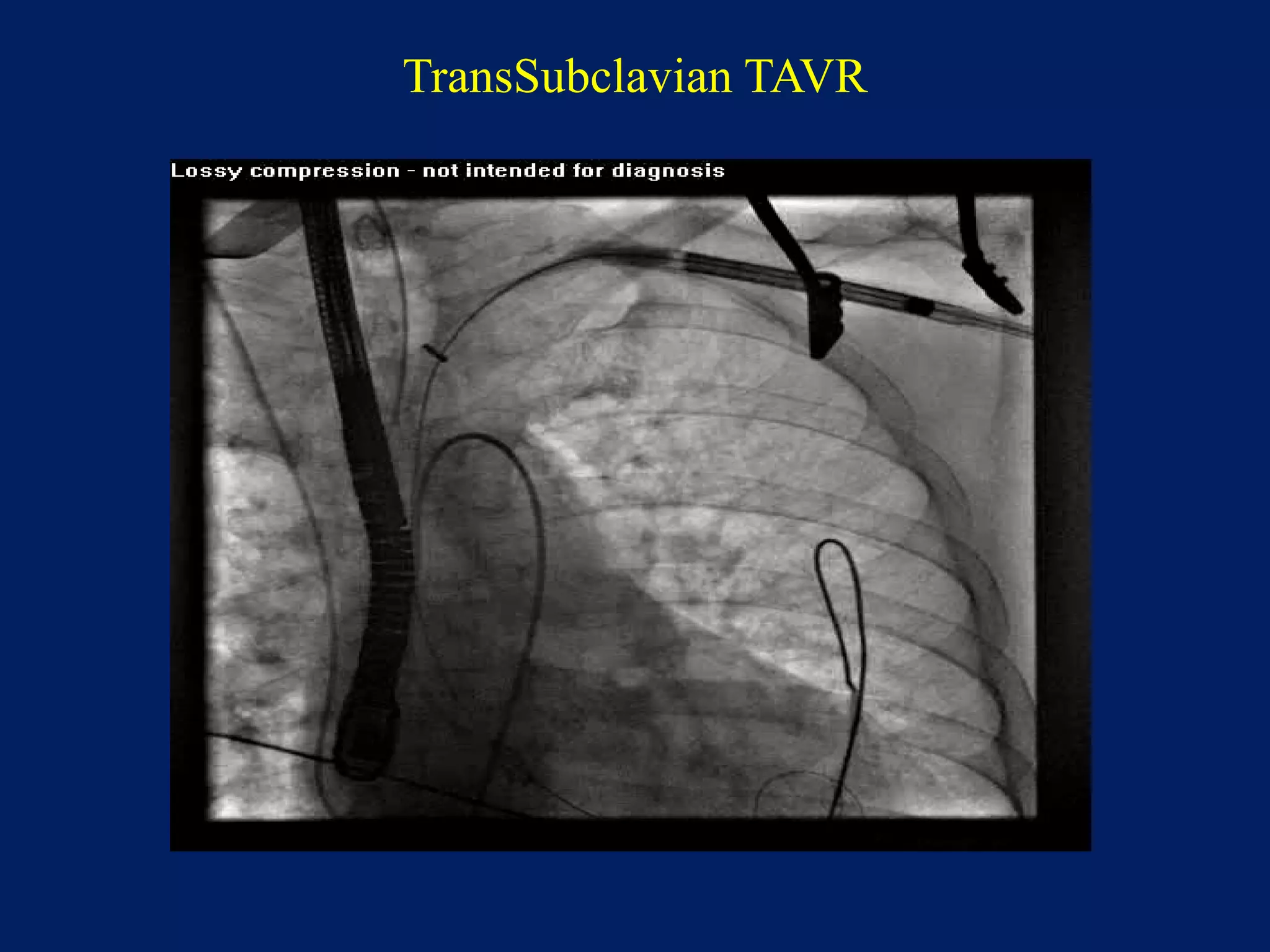
TransSubclavian TAVR
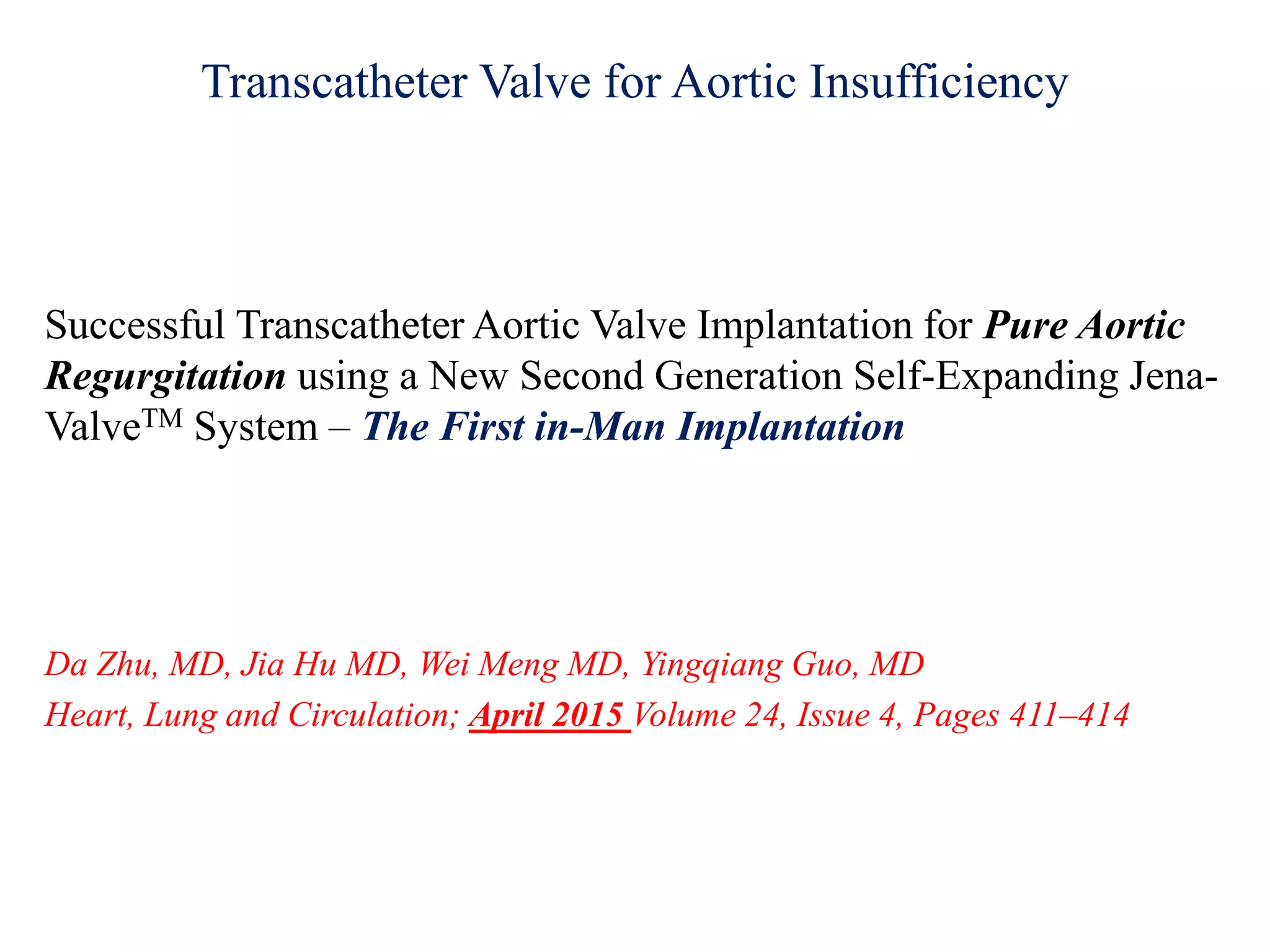
Transcatheter Valve for Aortic Insufficiency
Successful Transcatheter Aortic Valve Implantation for Pure Aortic
Regurgitation using a New Second Generation Self-Expanding Jena-
ValveTM System – The First in-Man Implantation
Da Zhu, MD, Jia Hu MD, Wei Meng MD, Yingqiang Guo, MD
Heart, Lung and Circulation; April 2015 Volume 24, Issue 4, Pages 411–414
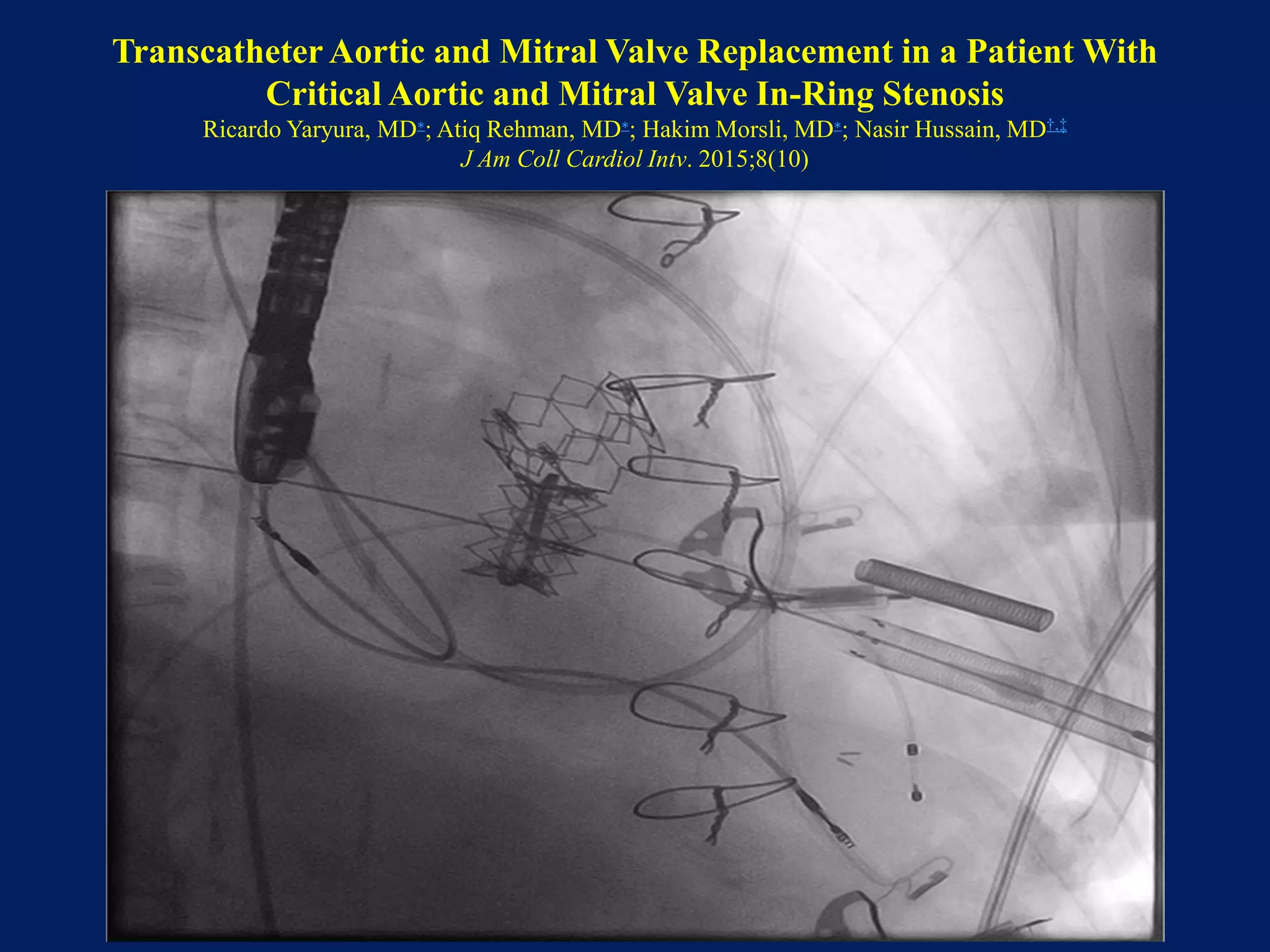
Transcatheter Aortic and Mitral Valve Replacement in a Patient With
Critical Aortic and Mitral Valve In-Ring Stenosis
Ricardo Yaryura, MD∗; Atiq Rehman, MD∗; Hakim Morsli, MD∗; Nasir Hussain, MD†,‡
J Am Coll Cardiol Intv. 2015;8(10)
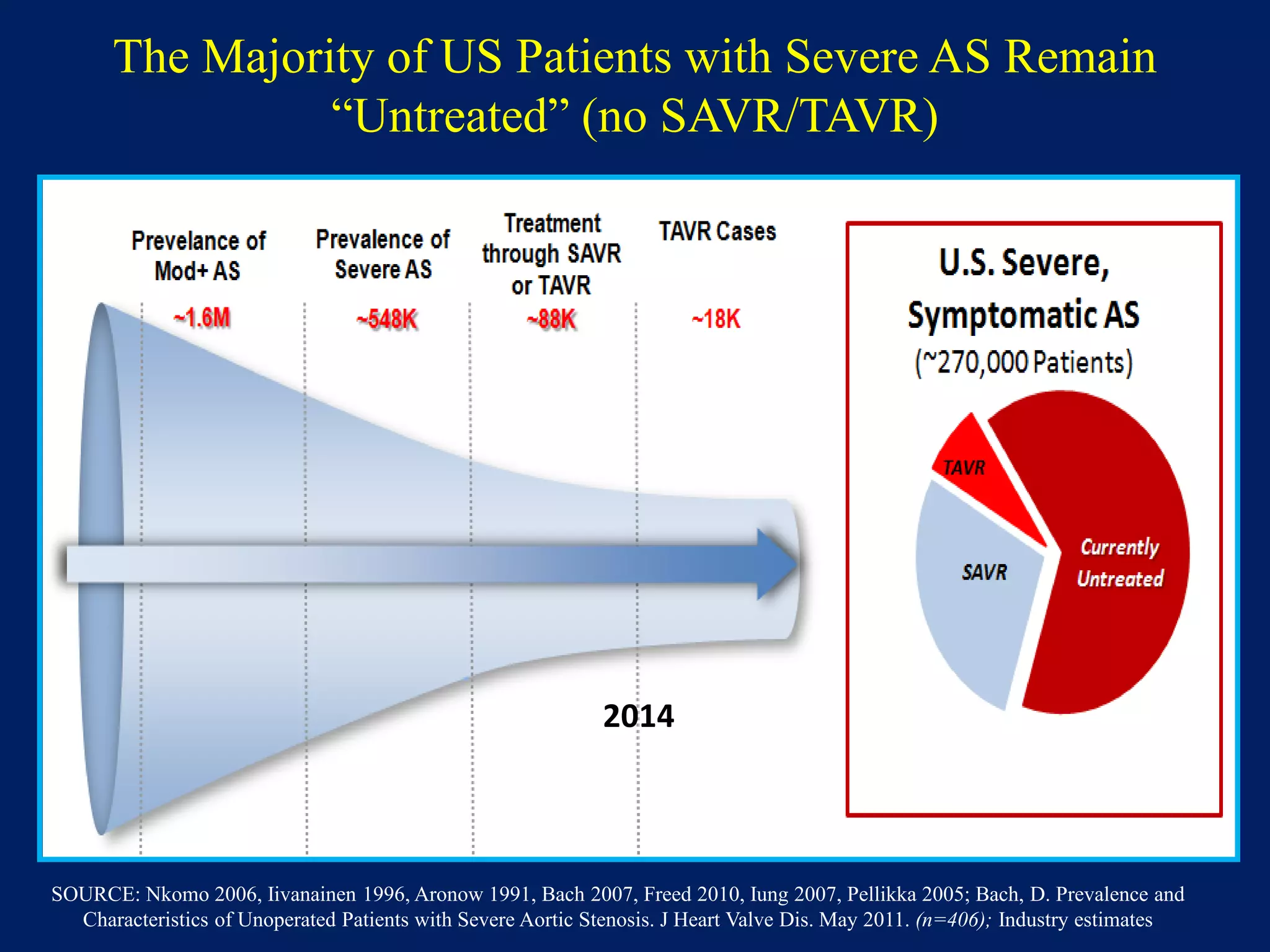
The Majority of US Patients with Severe AS Remain
“Untreated” (no SAVR/TAVR)
SOURCE: Nkomo 2006, Iivanainen 1996, Aronow 1991, Bach 2007, Freed 2010, Iung 2007, Pellikka 2005; Bach, D. Prevalence and
Characteristics of Unoperated Patients with Severe Aortic Stenosis. J Heart Valve Dis. May 2011. (n=406); Industry estimates
2014
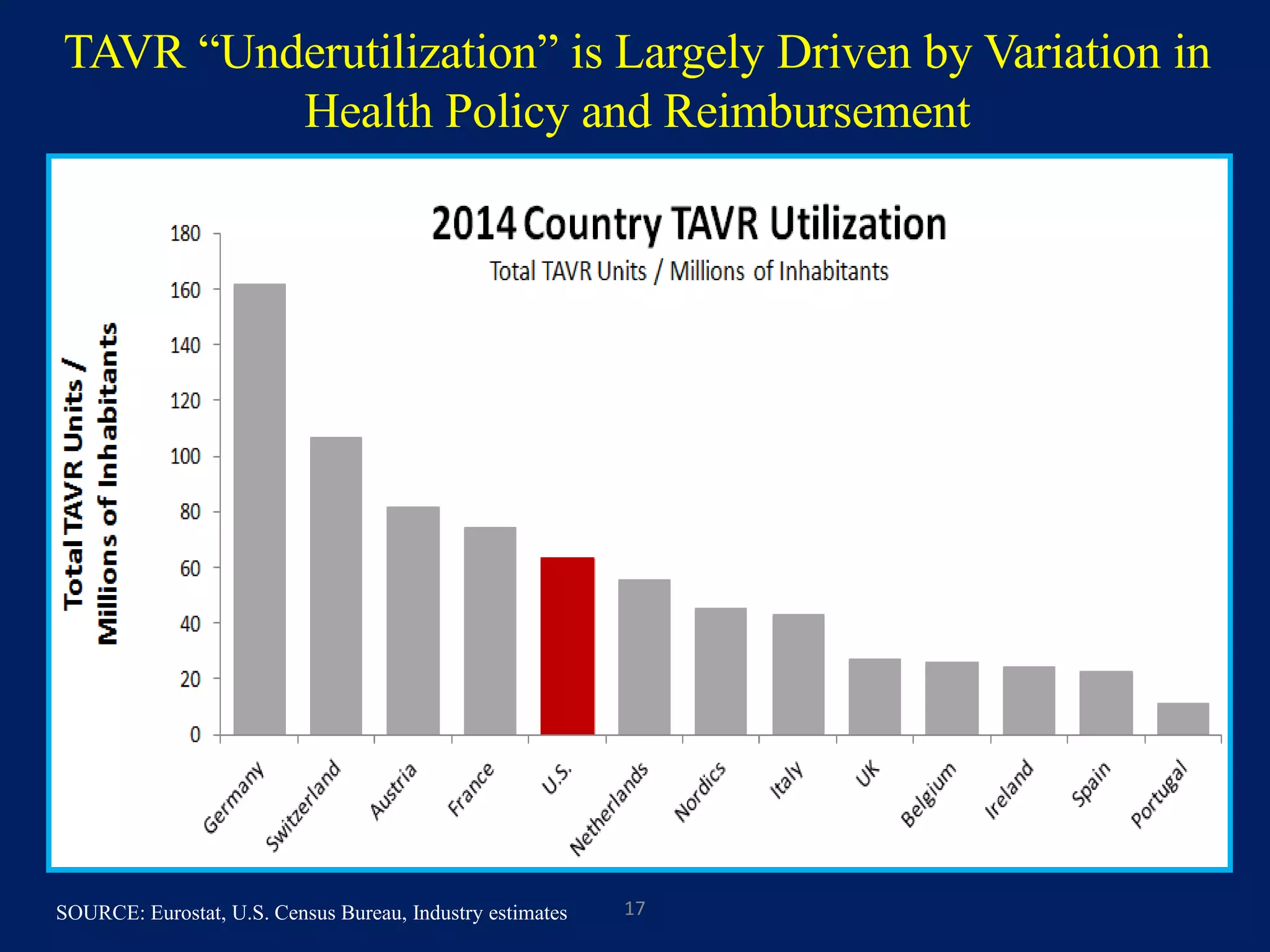
TAVR “Underutilization” is Largely Driven by Variation in
Health Policy and Reimbursement
17SOURCE: Eurostat, U.S. Census Bureau, Industry estimates
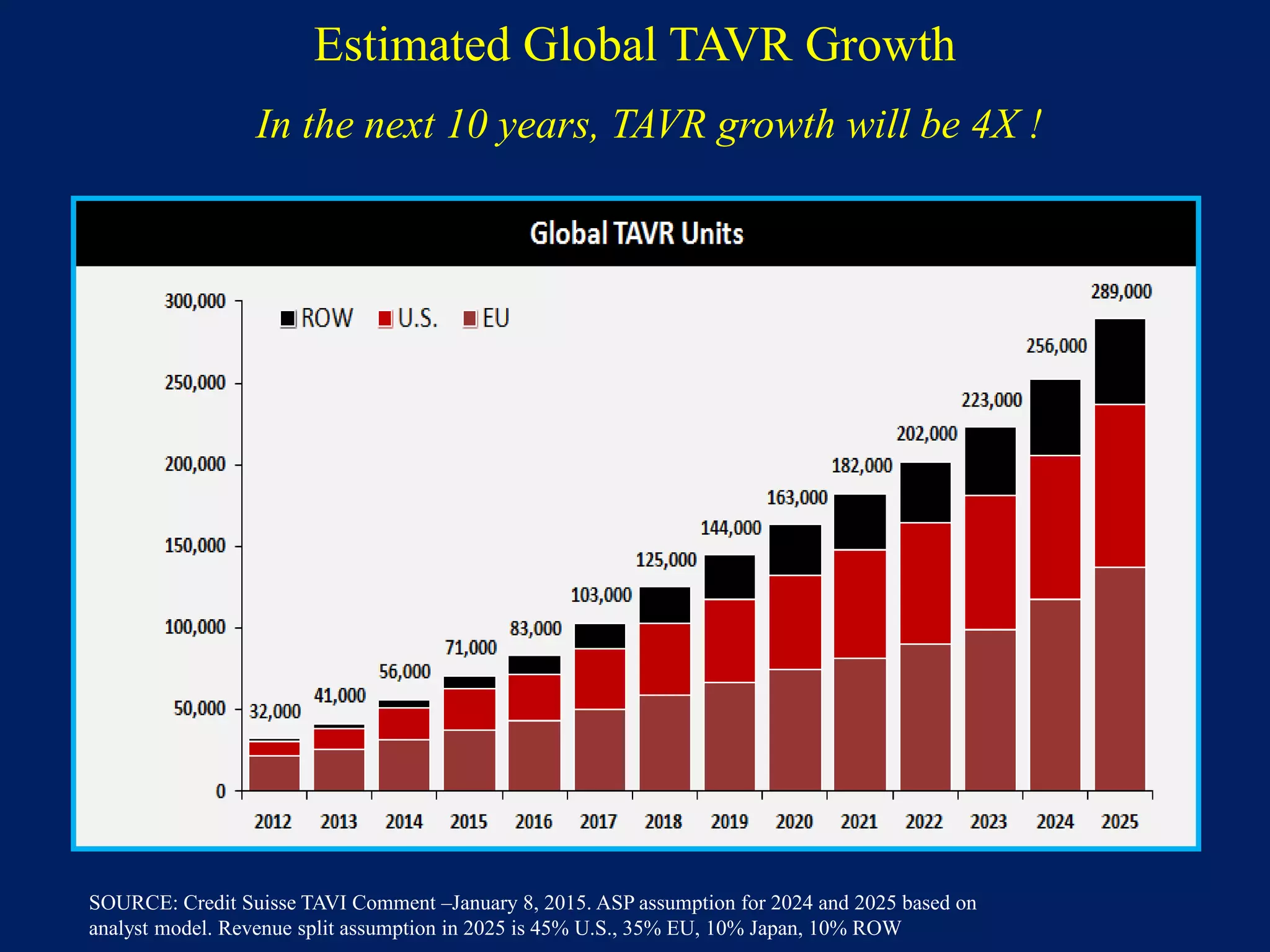
Estimated Global TAVR Growth
SOURCE: Credit Suisse TAVI Comment –January 8, 2015. ASP assumption for 2024 and 2025 based on
analyst model. Revenue split assumption in 2025 is 45% U.S., 35% EU, 10% Japan, 10% ROW
In the next 10 years, TAVR growth will be 4X !
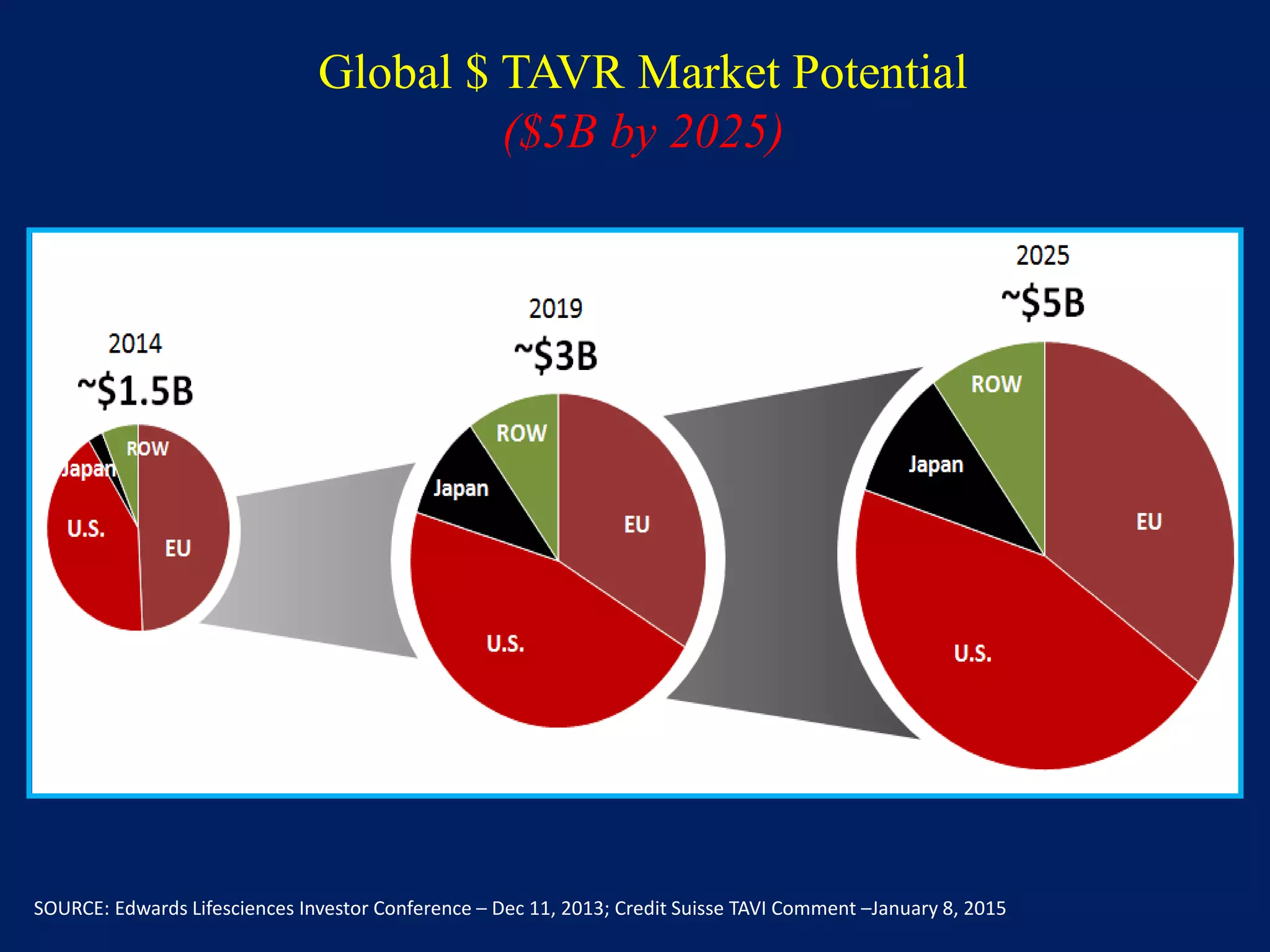
Global $ TAVR Market Potential
($5B by 2025)
SOURCE: Edwards Lifesciences Investor Conference – Dec 11, 2013; Credit Suisse TAVI Comment –January 8, 2015
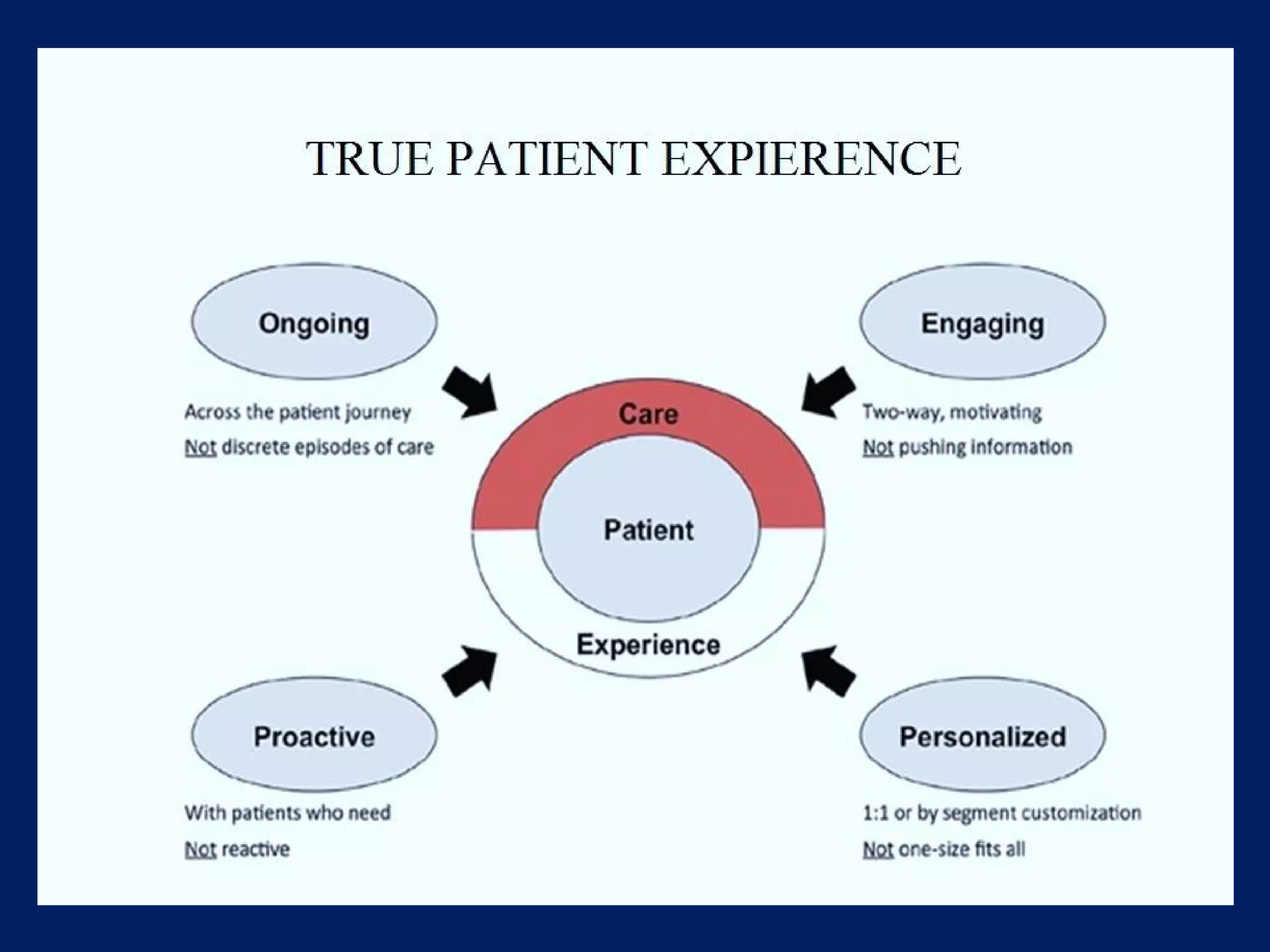
What is an enriching patient experience?
Does a better patient/customer
experience identifies your organization
as a leader in your field?
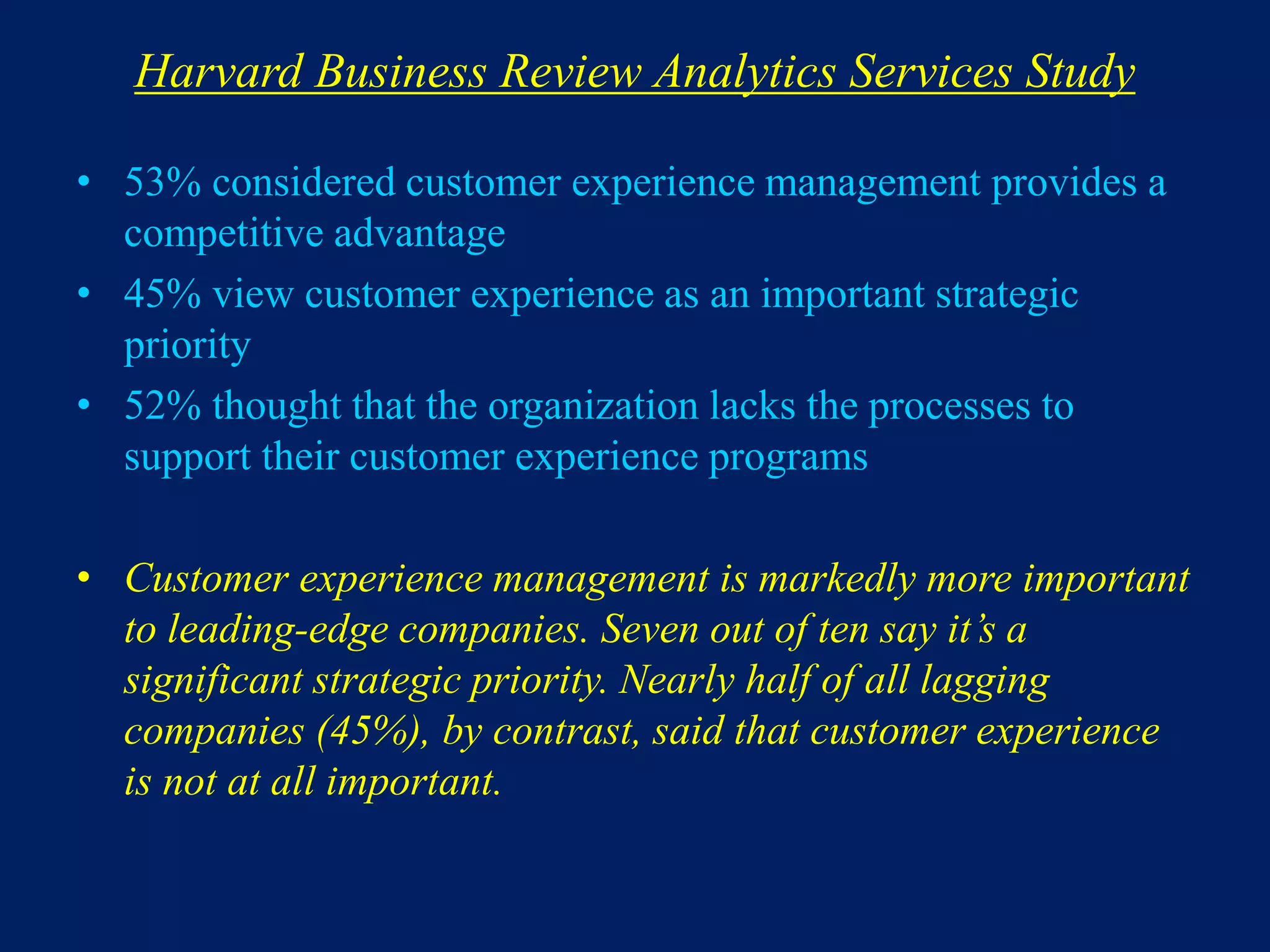
Harvard Business Review Analytics Services Study
• 53% considered customer experience management provides a
competitive advantage
• 45% view customer experience as an important strategic
priority
• 52% thought that the organization lacks the processes to
support their customer experience programs
• Customer experience management is markedly more important
to leading-edge companies. Seven out of ten say it’s a
significant strategic priority. Nearly half of all lagging
companies (45%), by contrast, said that customer experience
is not at all important.
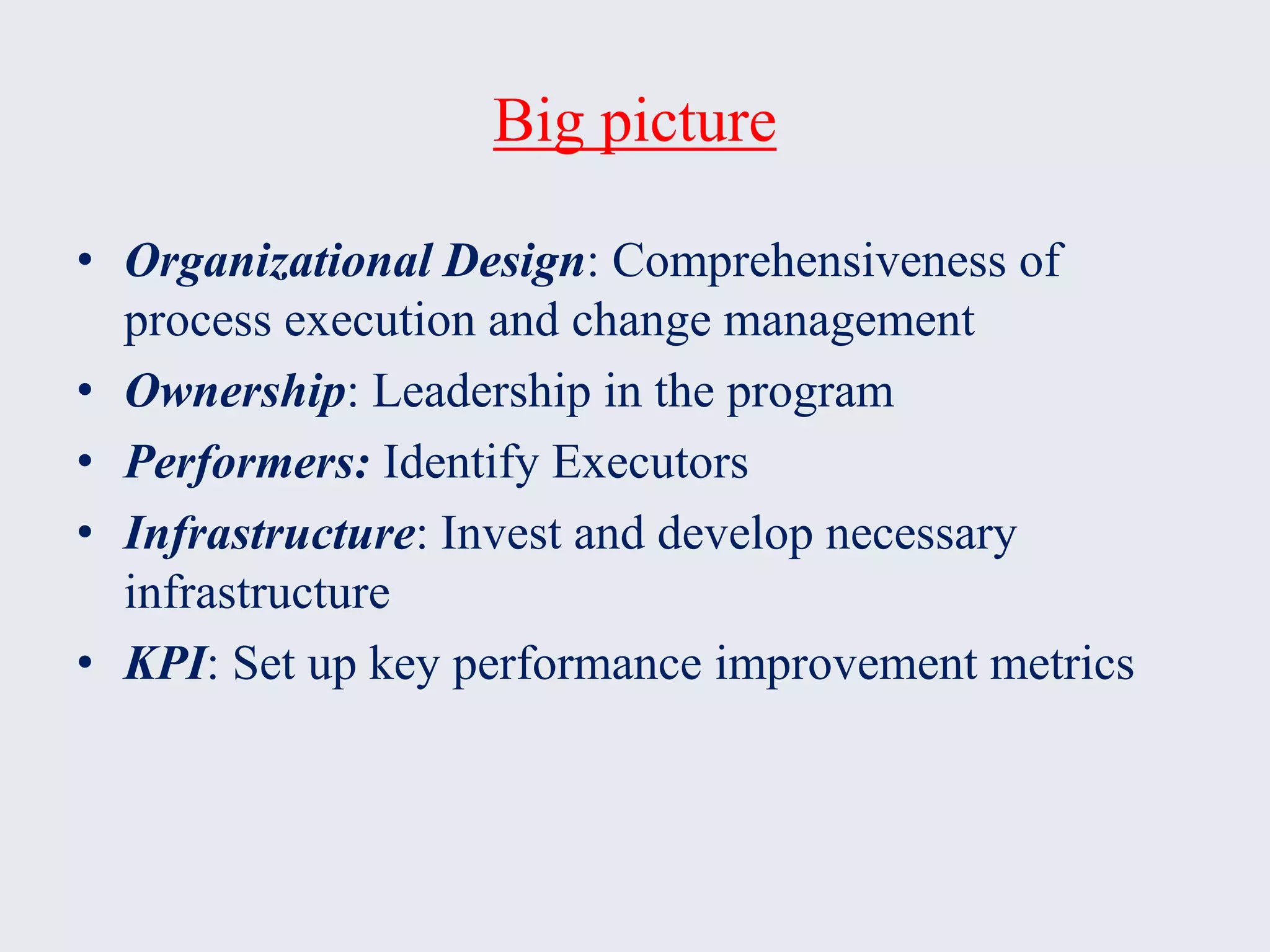
Big picture
• Organizational Design: Comprehensiveness of
process execution and change management
• Ownership: Leadership in the program
• Performers: Identify Executors
• Infrastructure: Invest and develop necessary
infrastructure
• KPI: Set up key performance improvement metrics
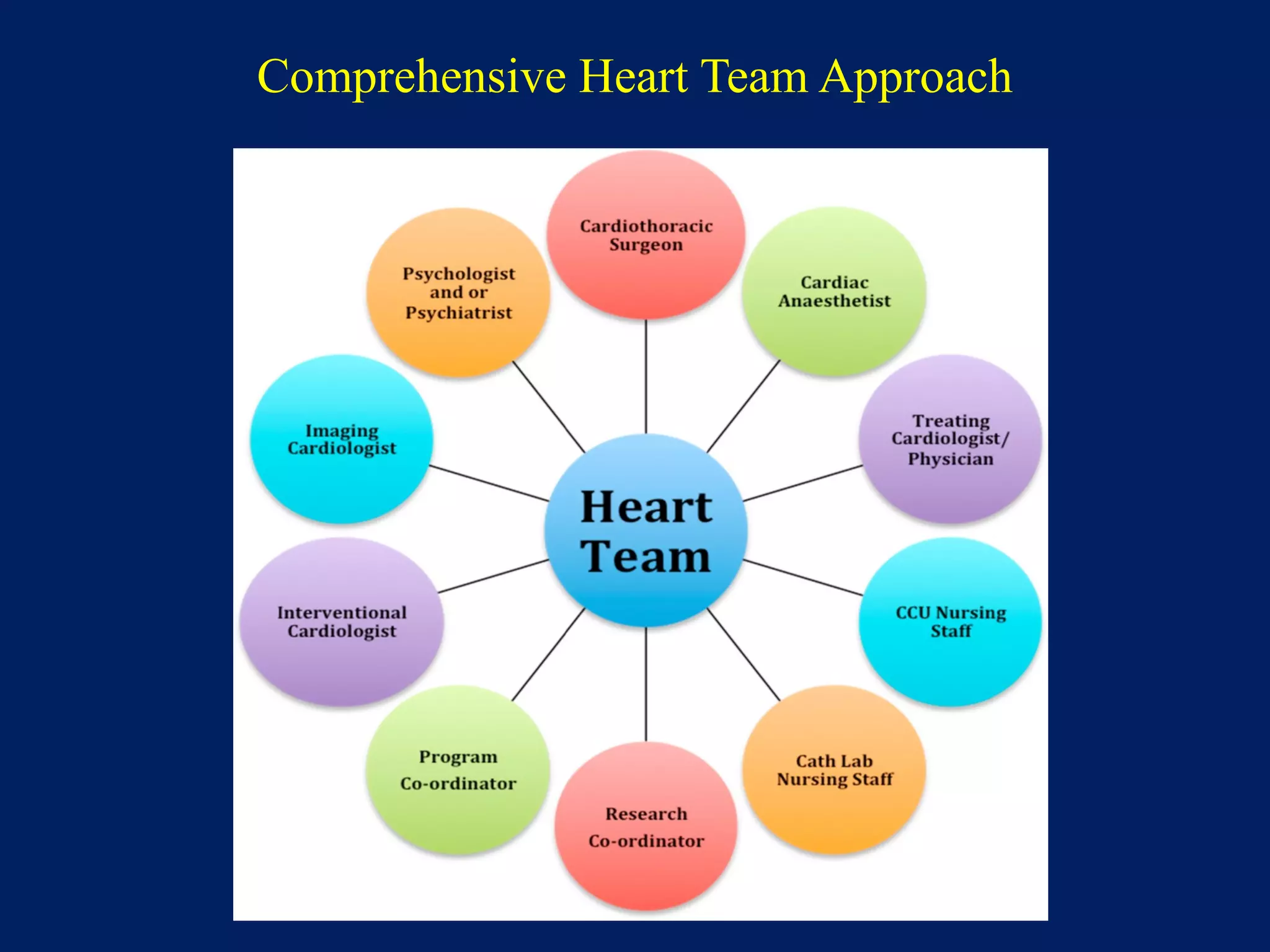
Comprehensive Heart Team Approach
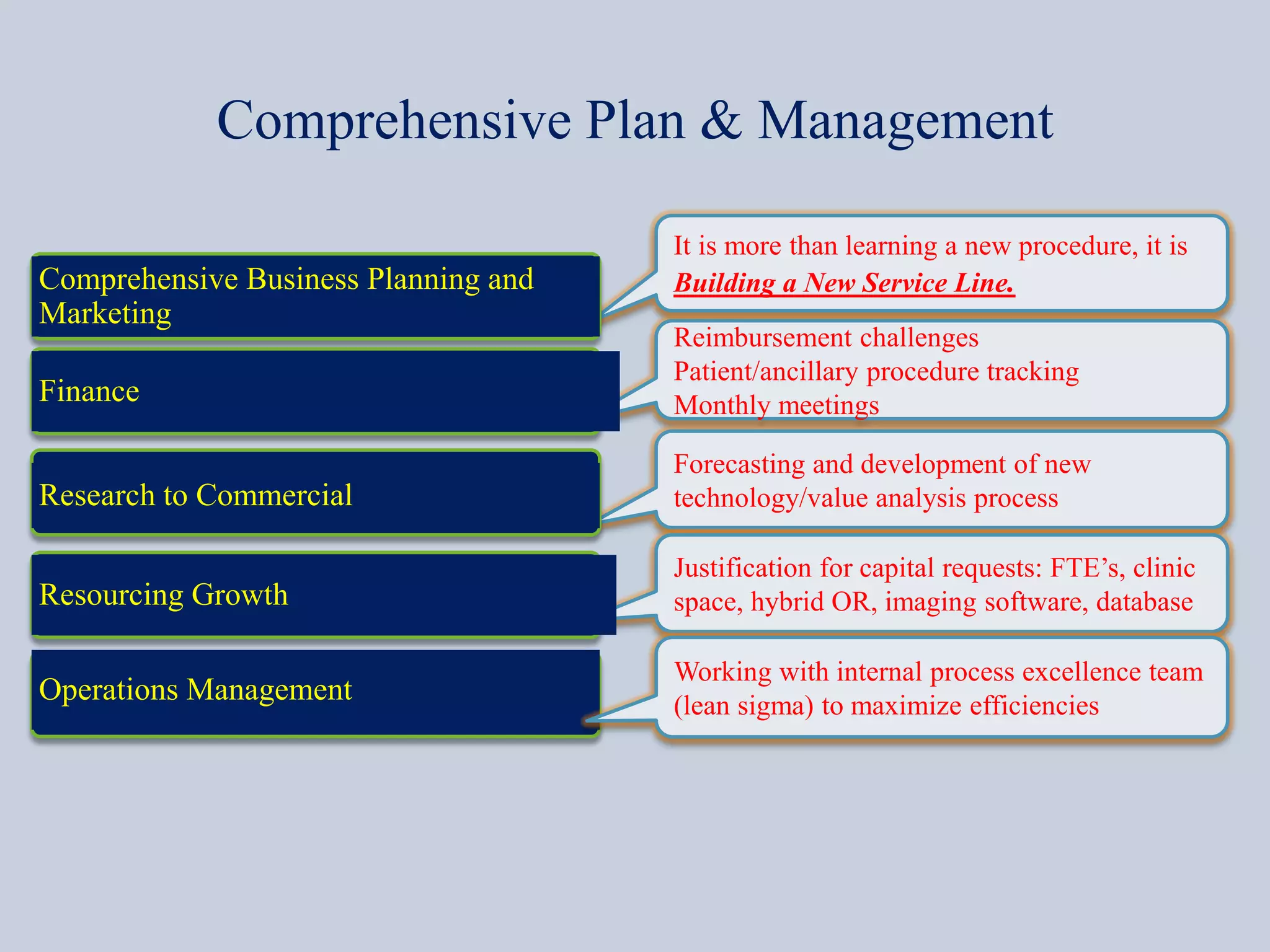
Comprehensive Plan & Management
It is more than learning a new procedure, it is
Building a New Service Line.
Reimbursement challenges
Patient/ancillary procedure tracking
Monthly meetings
Forecasting and development of new
technology/value analysis process
Justification for capital requests: FTE’s, clinic
space, hybrid OR, imaging software, database
Comprehensive Business Planning and
Marketing
Finance
Research to Commercial
Resourcing Growth
Operations Management
Working with internal process excellence team
(lean sigma) to maximize efficiencies
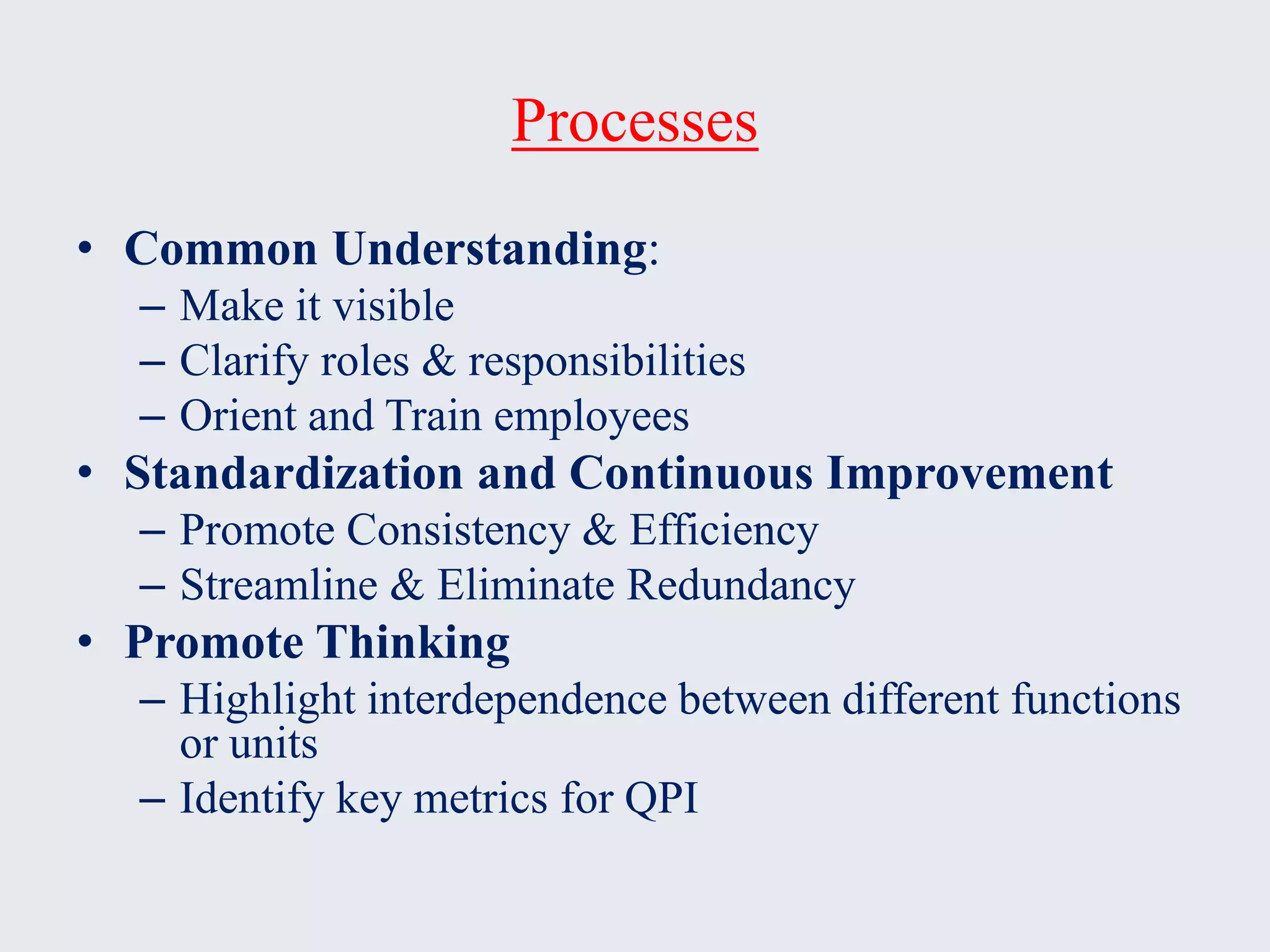
Processes
• Common Understanding:
– Make it visible
– Clarify roles & responsibilities
– Orient and Train employees
• Standardization and Continuous Improvement
– Promote Consistency & Efficiency
– Streamline & Eliminate Redundancy
• Promote Thinking
– Highlight interdependence between different functions
or units
– Identify key metrics for QPI
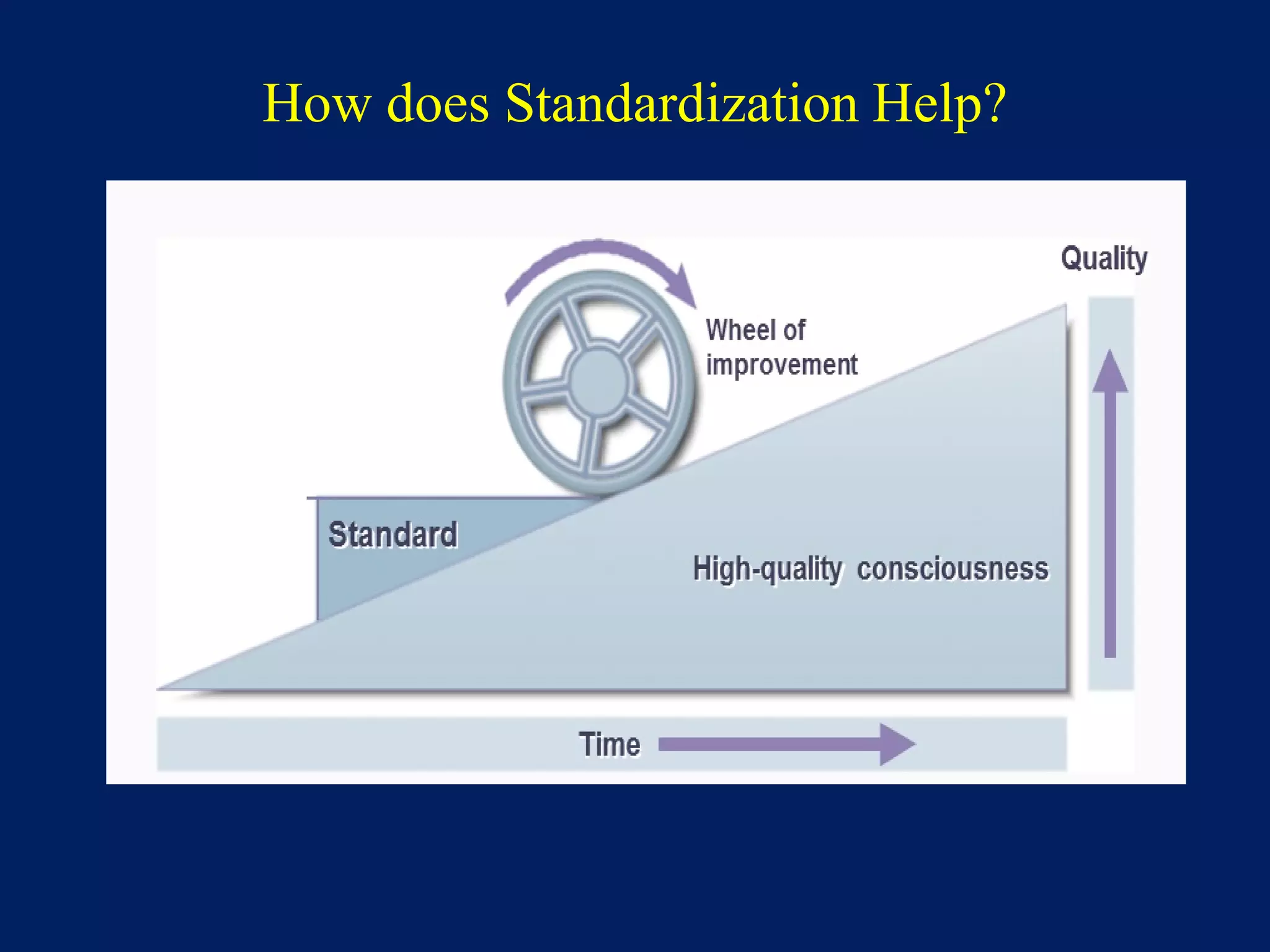
How does Standardization Help?
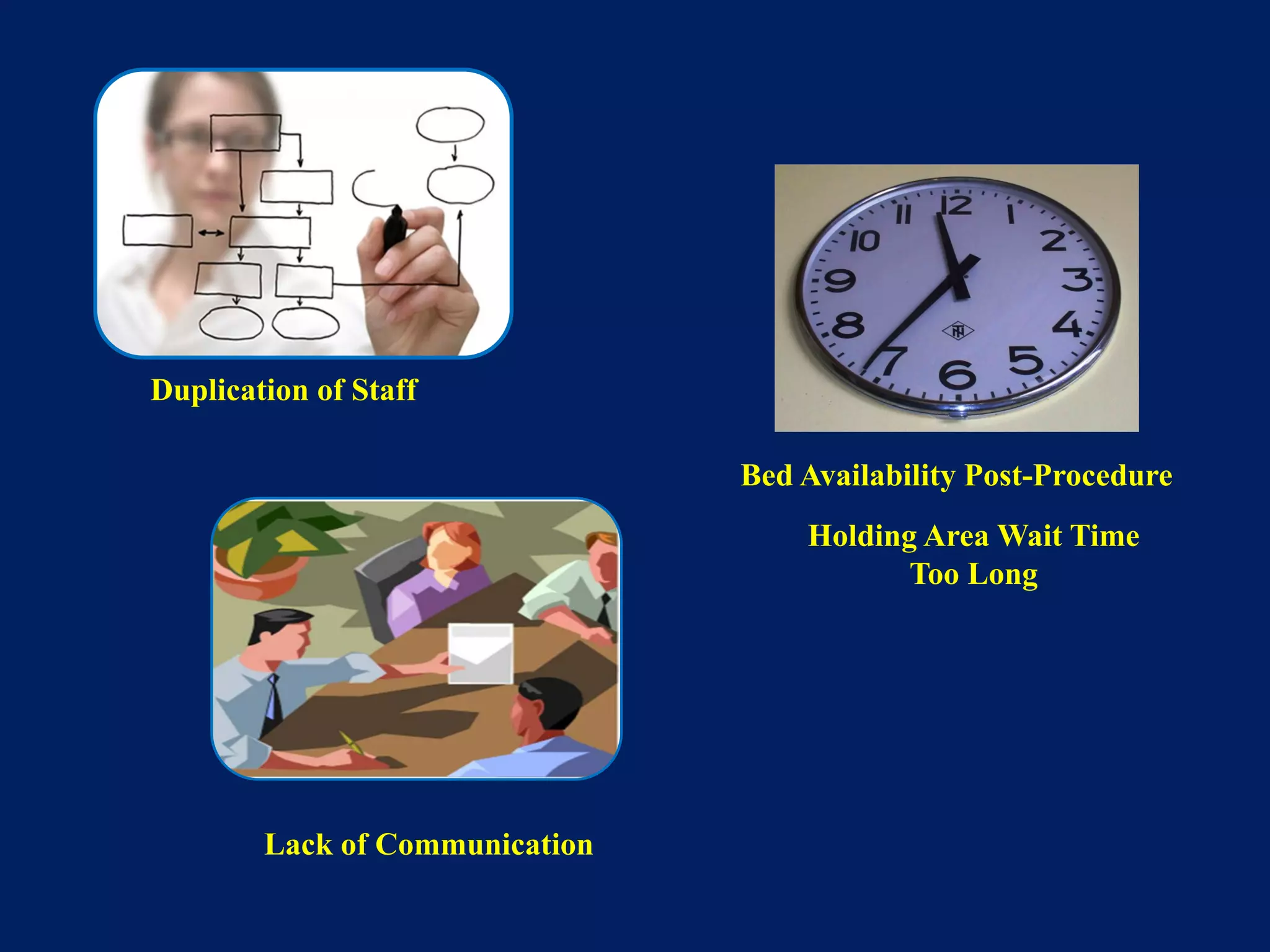
Duplication of Staff
Lack of Communication
Holding Area Wait Time
Too Long
Bed Availability Post-Procedure
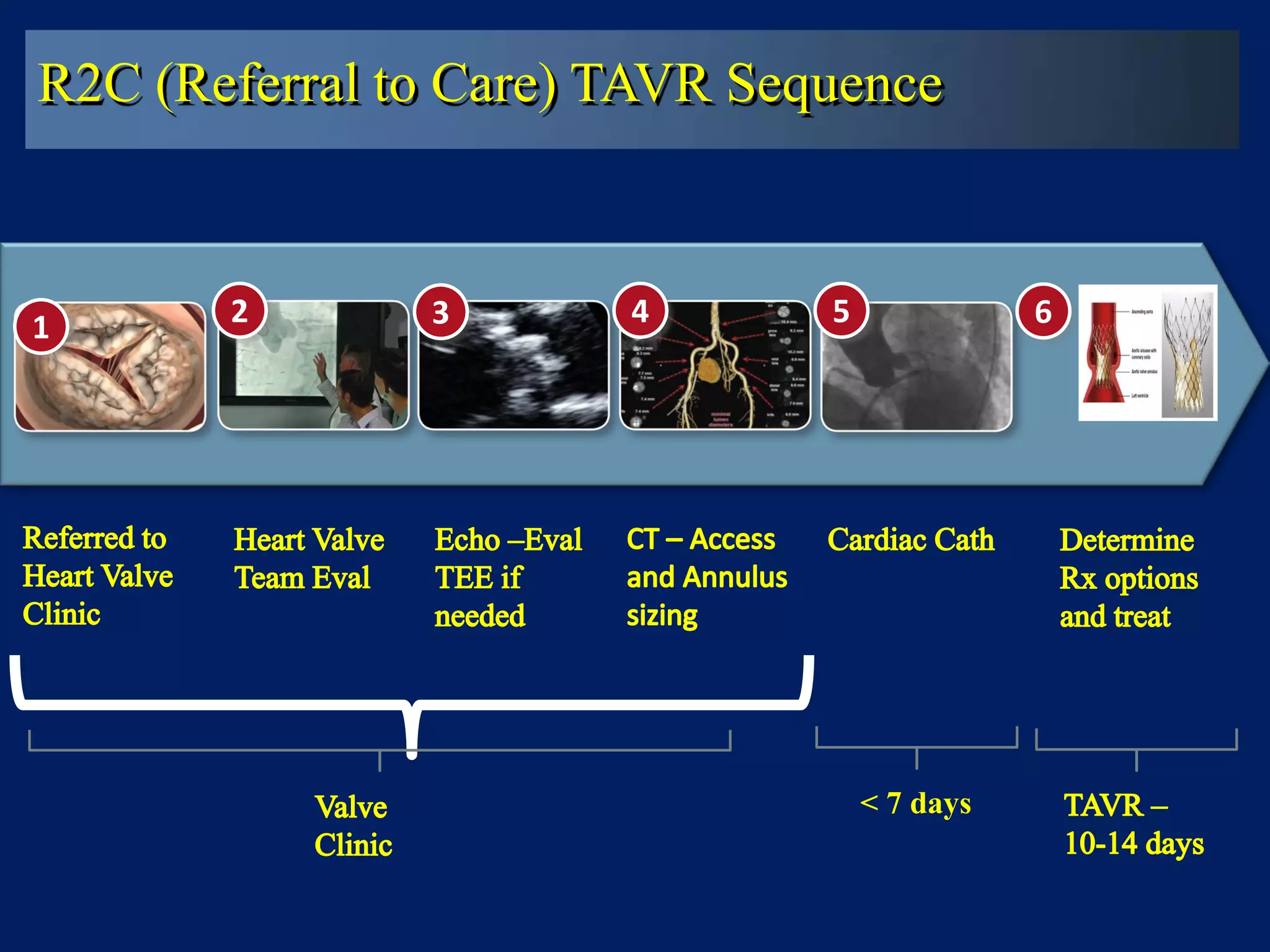
4 531 2 6
< 7 days
R2C (Referral to Care) TAVR Sequence
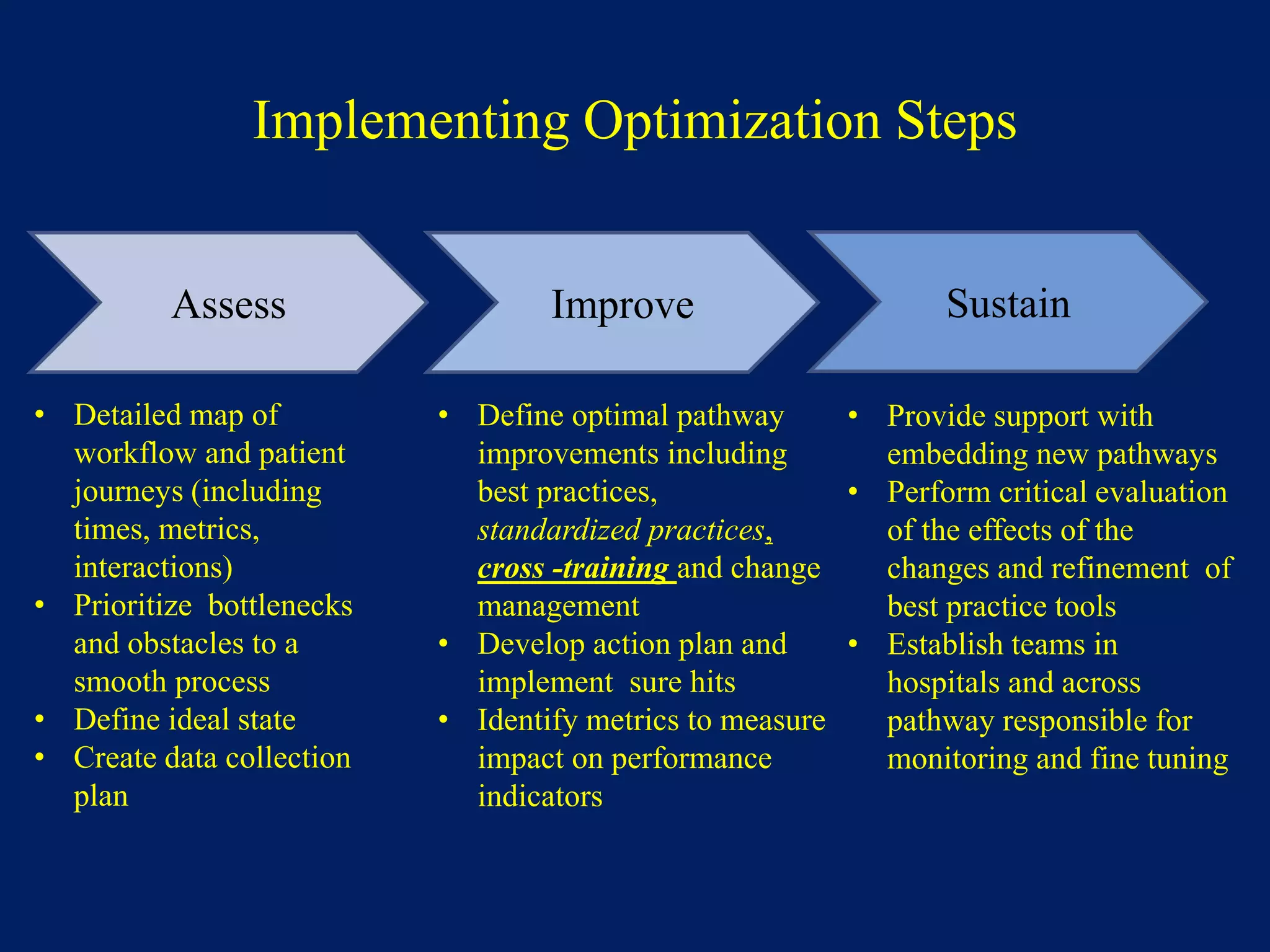
Implementing Optimization Steps
Assess Improve Sustain
• Detailed map of
workflow and patient
journeys (including
times, metrics,
interactions)
• Prioritize bottlenecks
and obstacles to a
smooth process
• Define ideal state
• Create data collection
plan
• Define optimal pathway
improvements including
best practices,
standardized practices,
cross -training and change
management
• Develop action plan and
implement sure hits
• Identify metrics to measure
impact on performance
indicators
• Provide support with
embedding new pathways
• Perform critical evaluation
of the effects of the
changes and refinement of
best practice tools
• Establish teams in
hospitals and across
pathway responsible for
monitoring and fine tuning
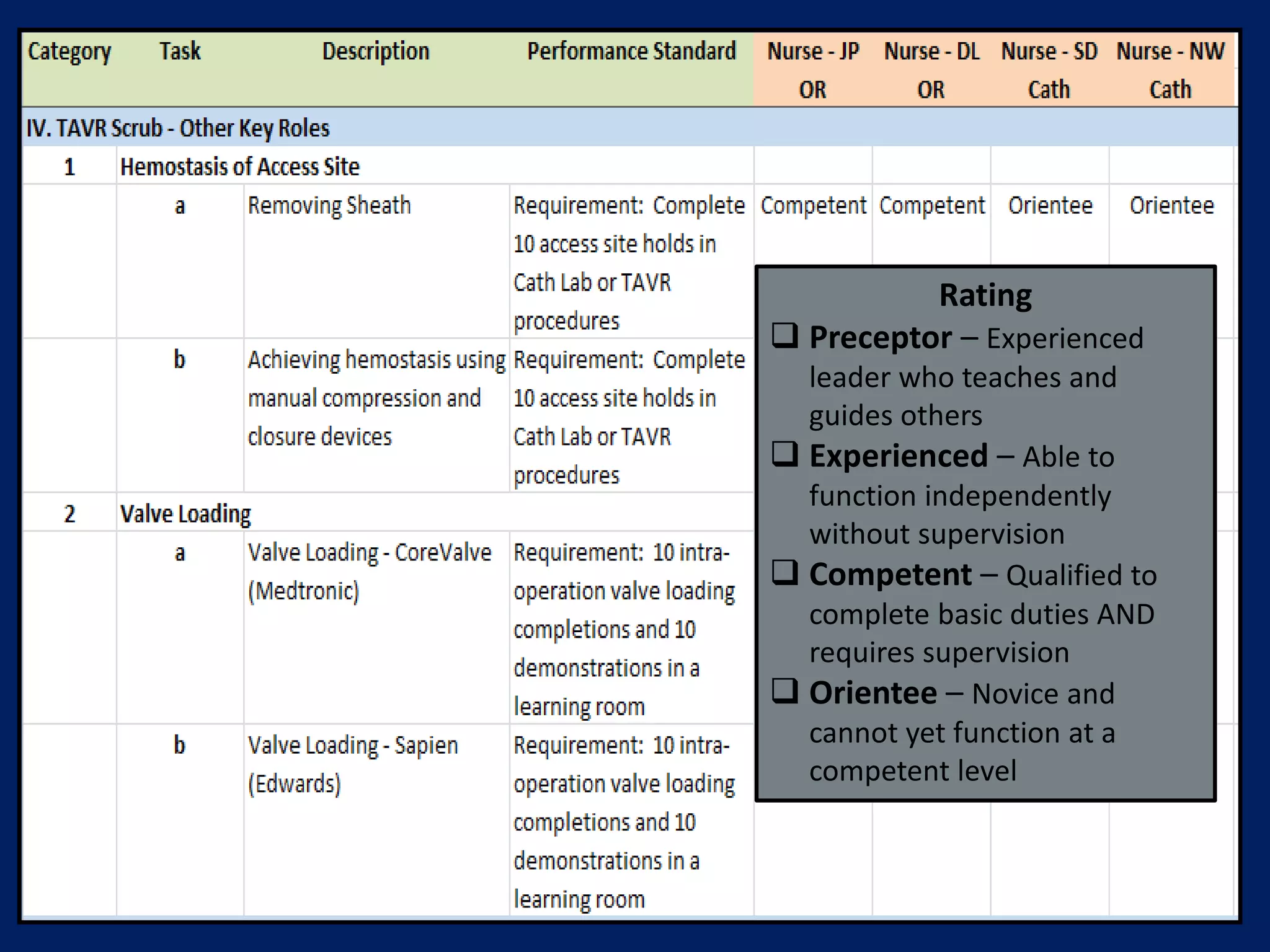
Rating
 Preceptor – Experienced
leader who teaches and
guides others
 Experienced – Able to
function independently
without supervision
 Competent – Qualified to
complete basic duties AND
requires supervision
 Orientee – Novice and
cannot yet function at a
competent level
New Program Launch
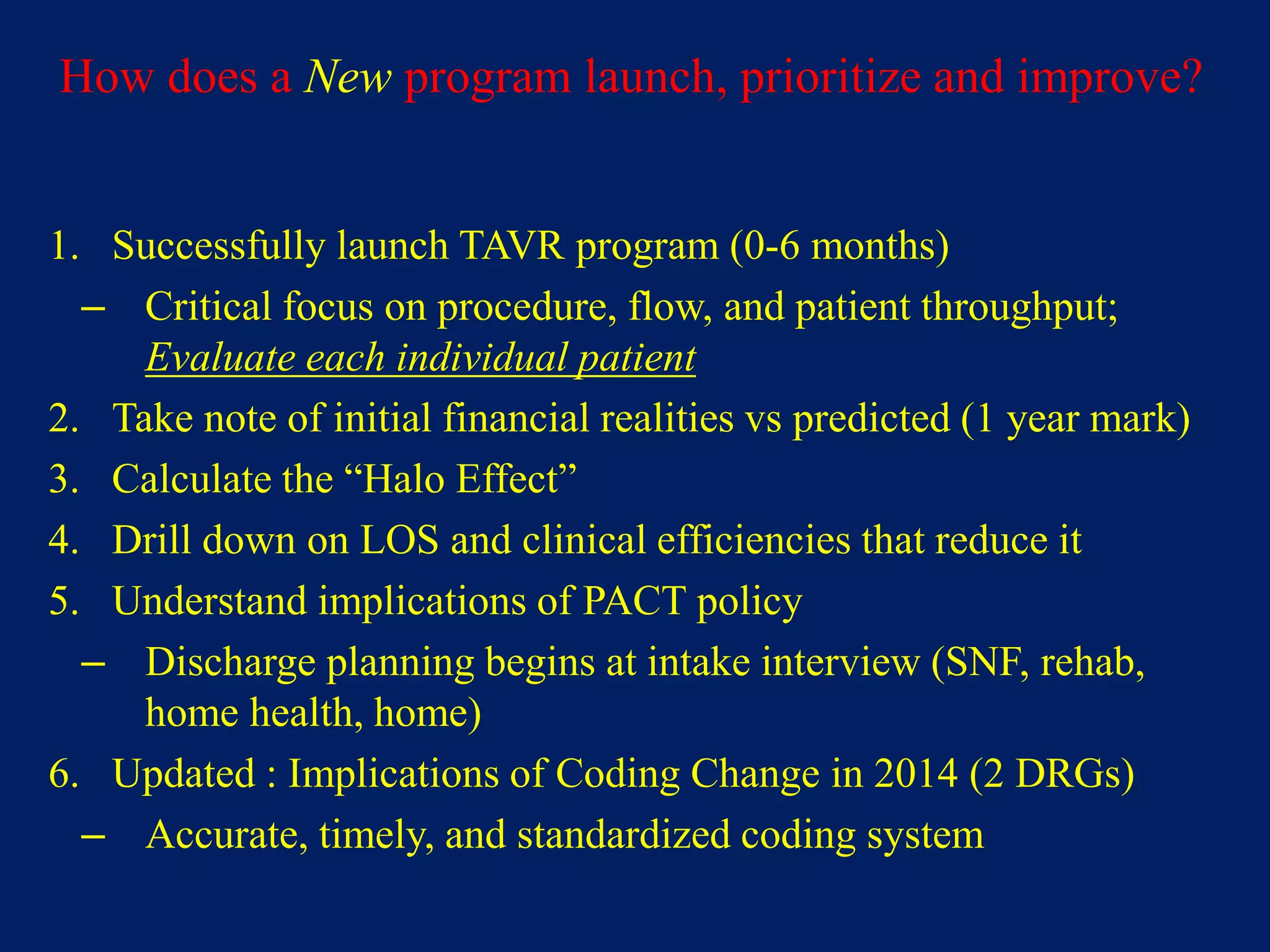
How does a New program launch, prioritize and improve?
1. Successfully launch TAVR program (0-6 months)
– Critical focus on procedure, flow, and patient throughput;
Evaluate each individual patient
2. Take note of initial financial realities vs predicted (1 year mark)
3. Calculate the “Halo Effect”
4. Drill down on LOS and clinical efficiencies that reduce it
5. Understand implications of PACT policy
– Discharge planning begins at intake interview (SNF, rehab,
home health, home)
6. Updated : Implications of Coding Change in 2014 (2 DRGs)
– Accurate, timely, and standardized coding system
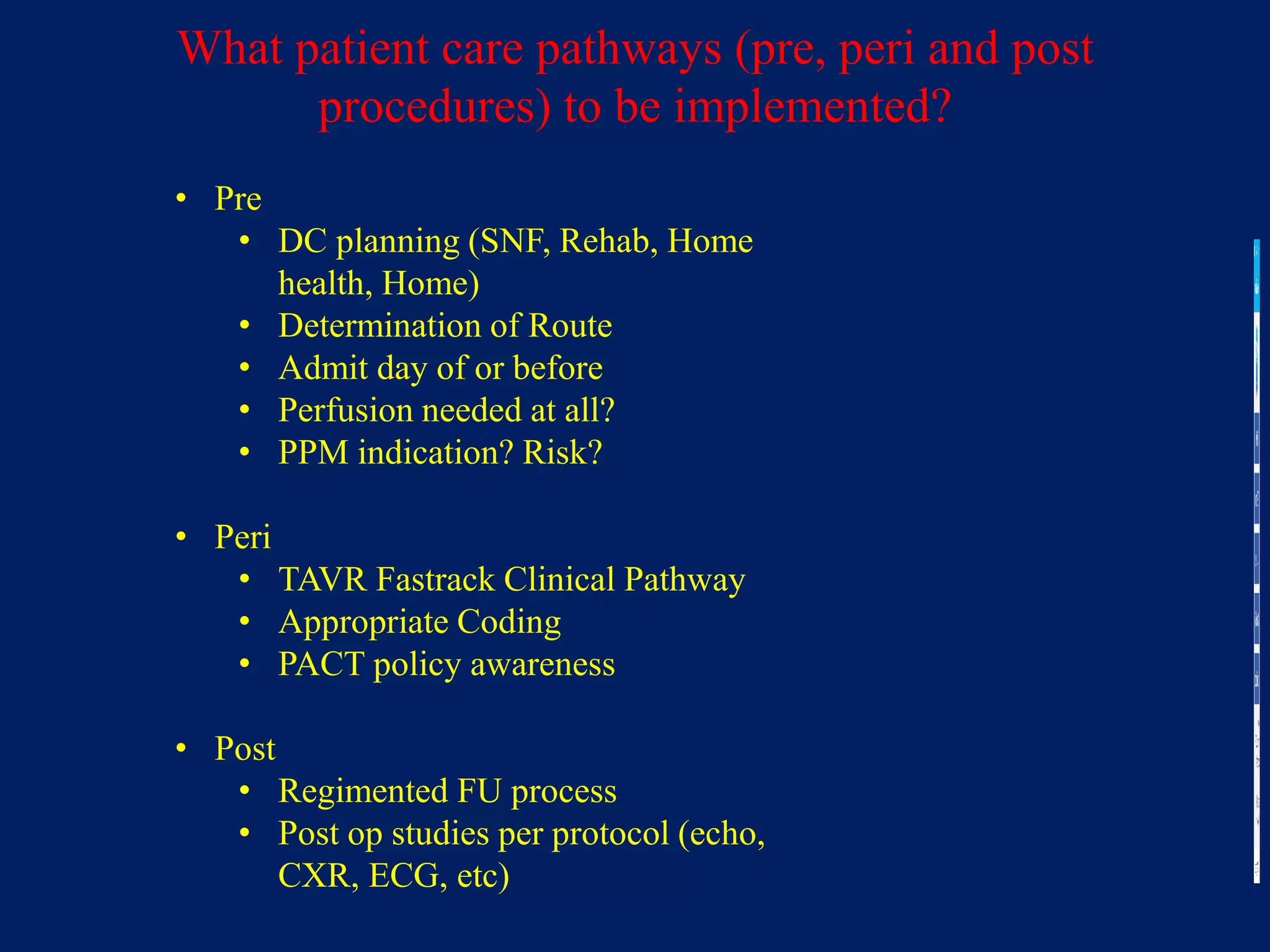
What patient care pathways (pre, peri and post
procedures) to be implemented?
• Pre
• DC planning (SNF, Rehab, Home
health, Home)
• Determination of Route
• Admit day of or before
• Perfusion needed at all?
• PPM indication? Risk?
• Peri
• TAVR Fastrack Clinical Pathway
• Appropriate Coding
• PACT policy awareness
• Post
• Regimented FU process
• Post op studies per protocol (echo,
CXR, ECG, etc)
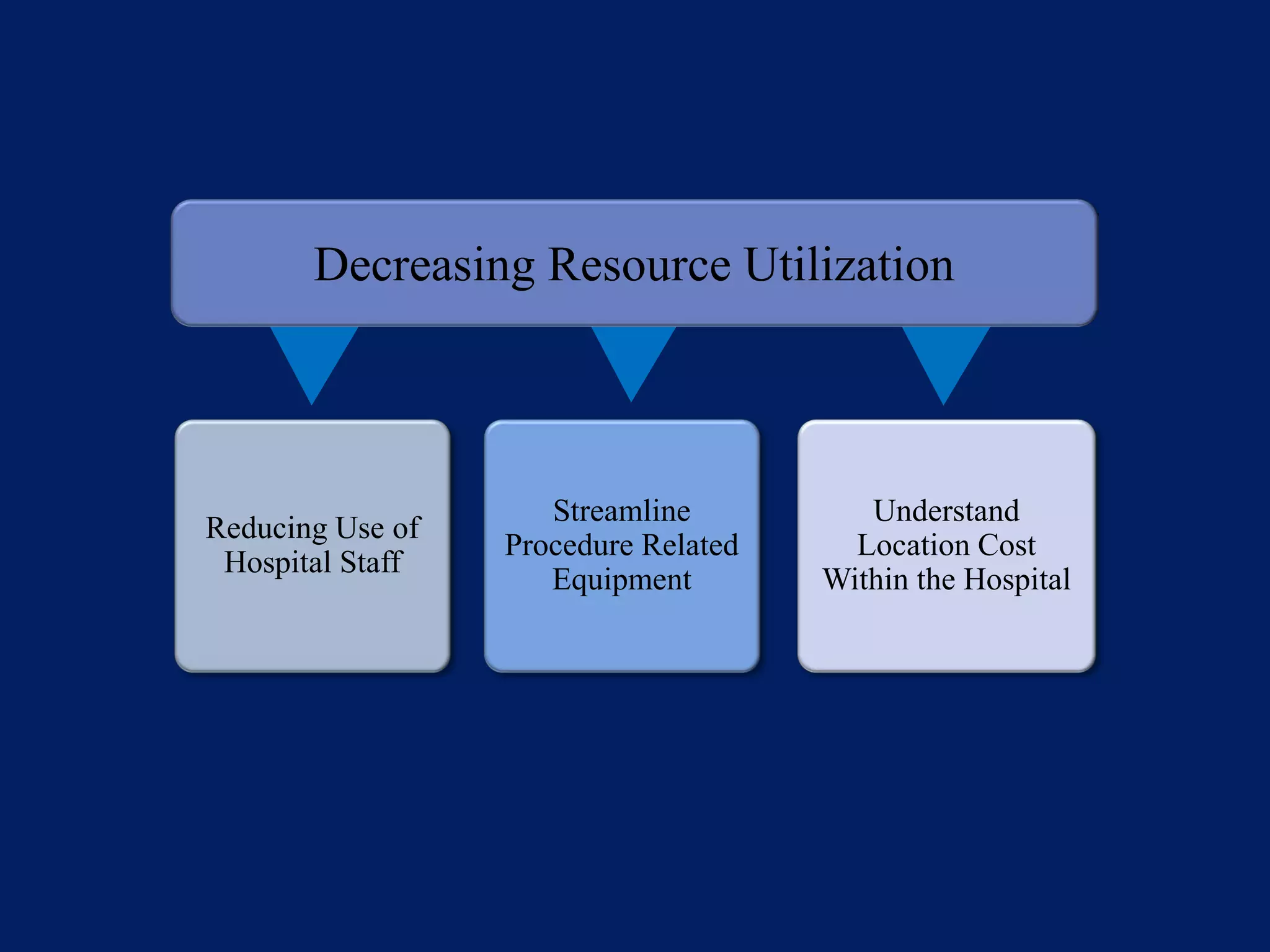
Decreasing Resource Utilization
Reducing Use of
Hospital Staff
Streamline
Procedure Related
Equipment
Understand
Location Cost
Within the Hospital
Financial implications for hospitals
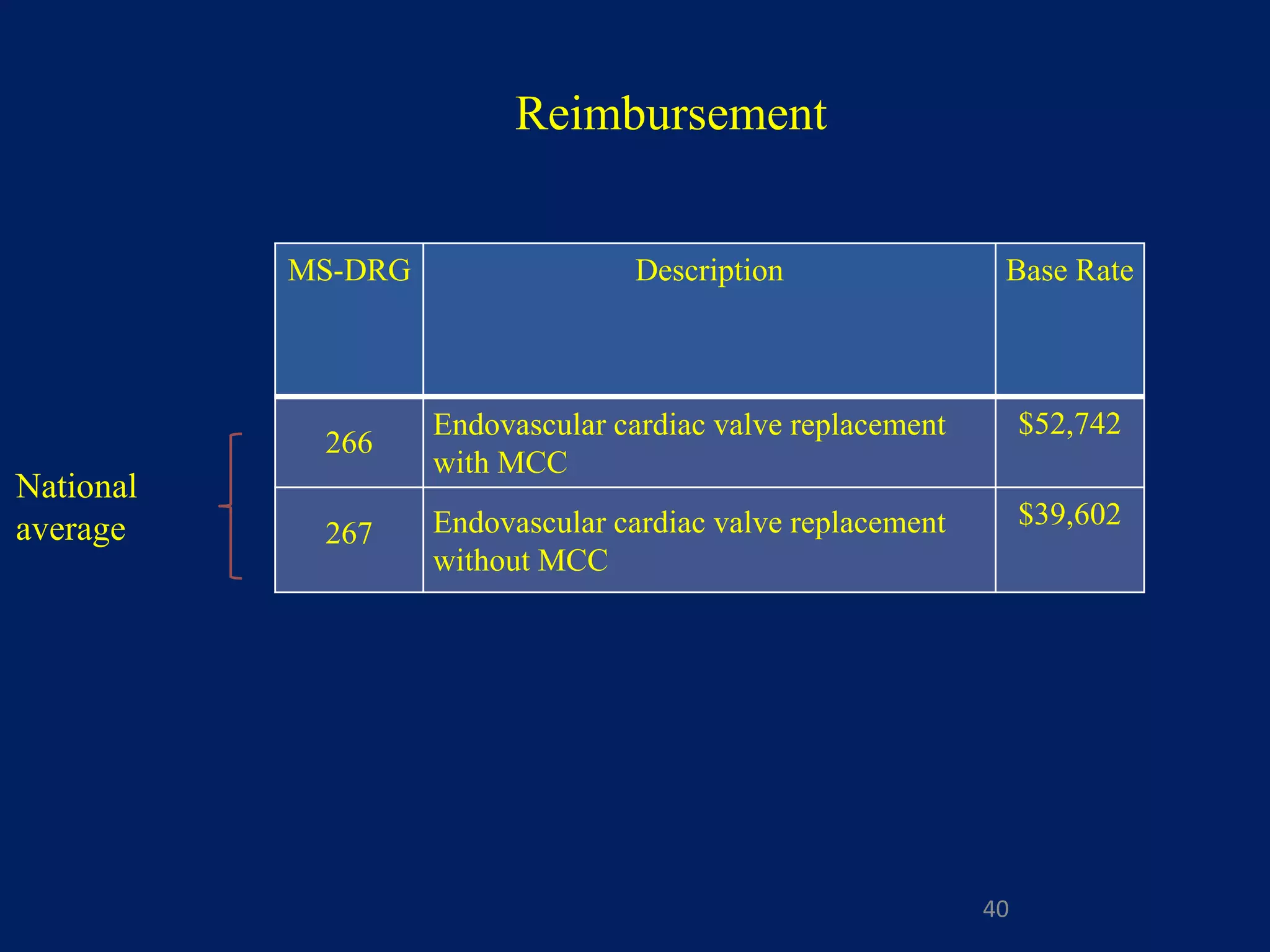
MS-DRG Description Base Rate
266
Endovascular cardiac valve replacement
with MCC
$52,742
267 Endovascular cardiac valve replacement
without MCC
$39,602
40
National
average
Reimbursement
Fast Track TAVR pts
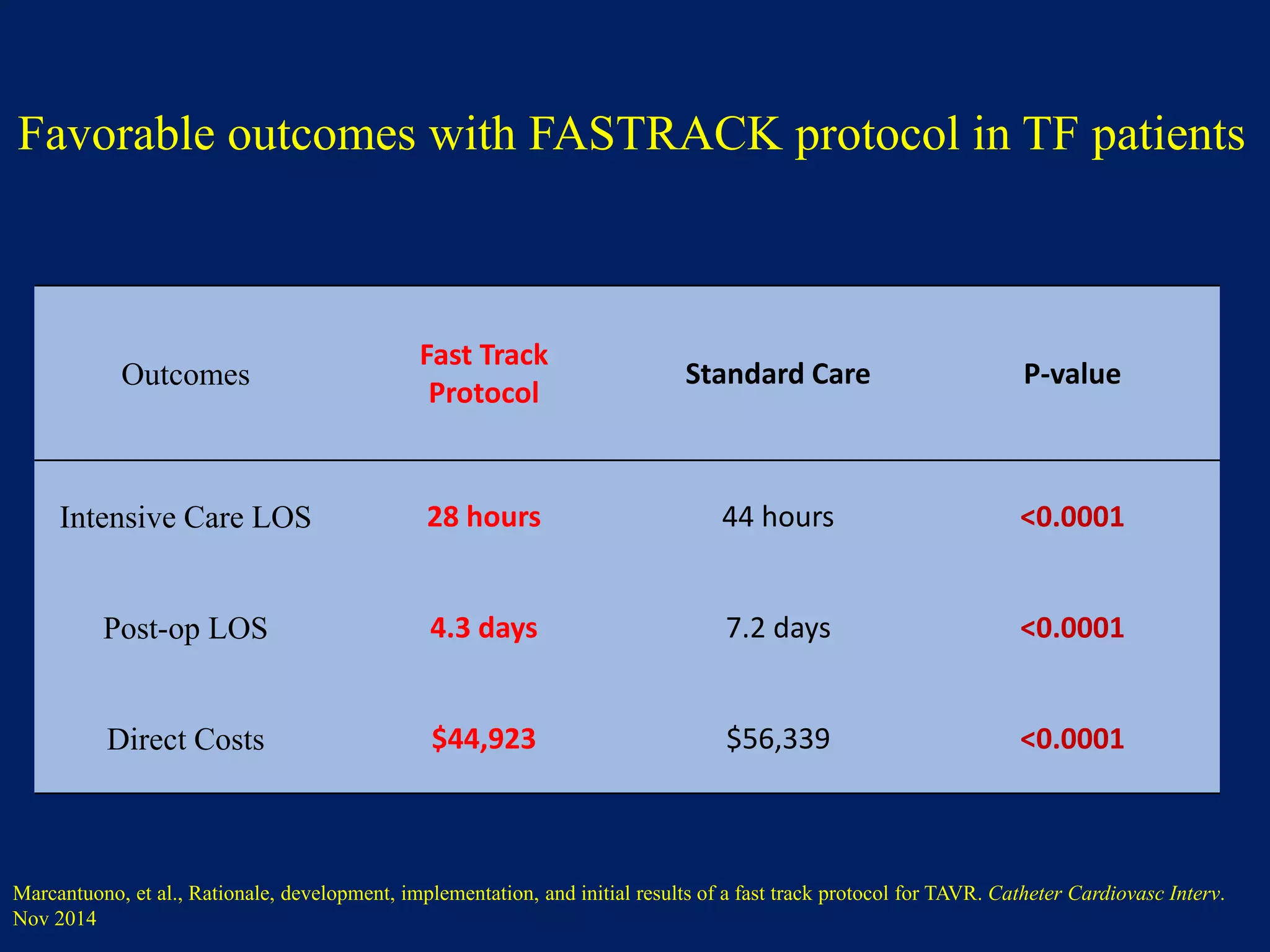
Favorable outcomes with FASTRACK protocol in TF patients
Outcomes
Fast Track
Protocol
Standard Care P-value
Intensive Care LOS 28 hours 44 hours <0.0001
Post-op LOS 4.3 days 7.2 days <0.0001
Direct Costs $44,923 $56,339 <0.0001
Marcantuono, et al., Rationale, development, implementation, and initial results of a fast track protocol for TAVR. Catheter Cardiovasc Interv.
Nov 2014
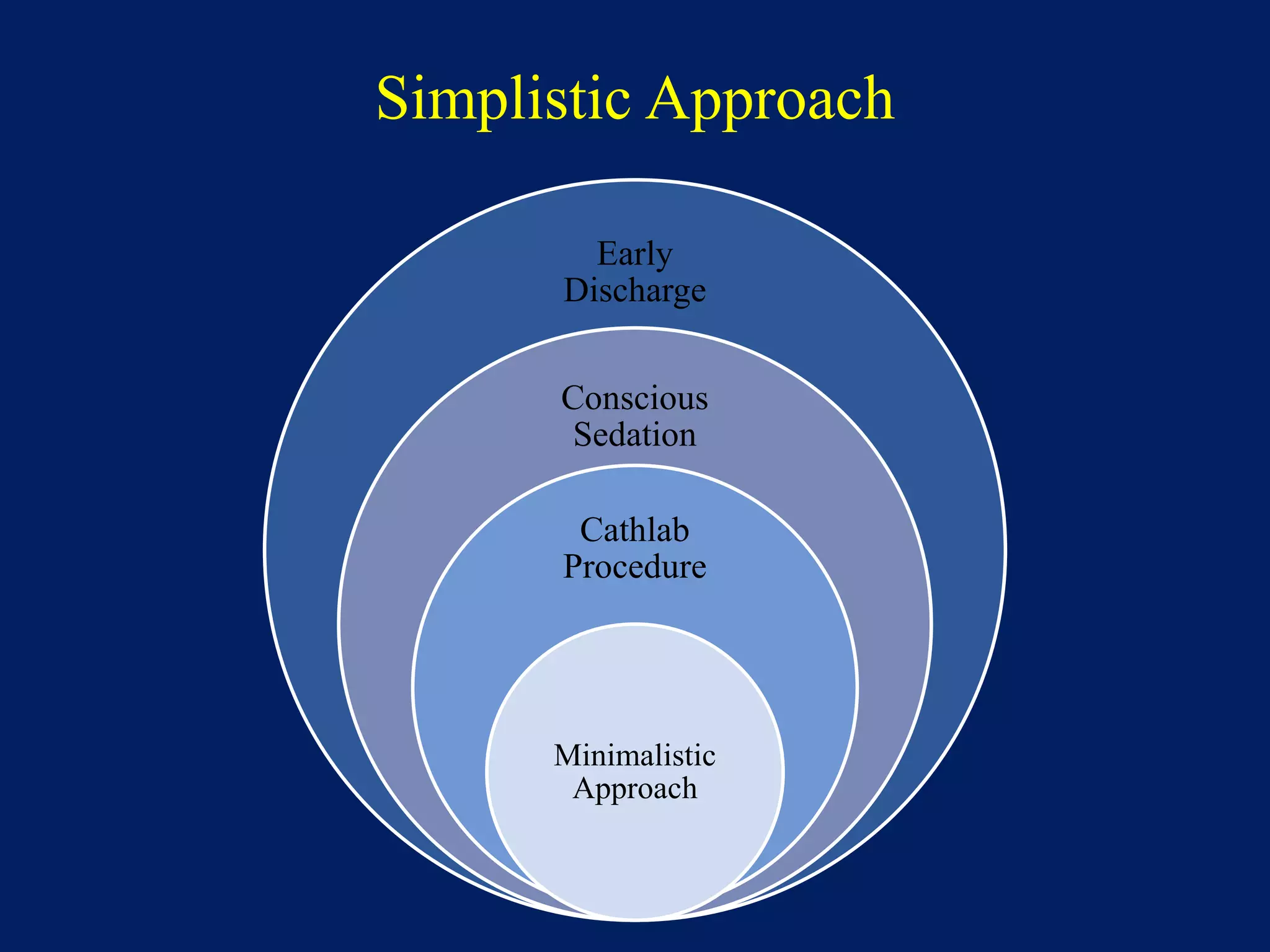
Simplistic Approach
Simplistic Approach
Early
Discharge
Conscious
Sedation
Cathlab
Procedure
Minimalistic
Approach
SOURCE: Babaliaros, V et al. “Comparison of Transfemoral Transcatheter Aortic Valve Replacement Performed in the
Catheterization Laboratory (Minimalist Approach) Versus Hybrid Operating Room (Standard Approach)”. JACC 2014.
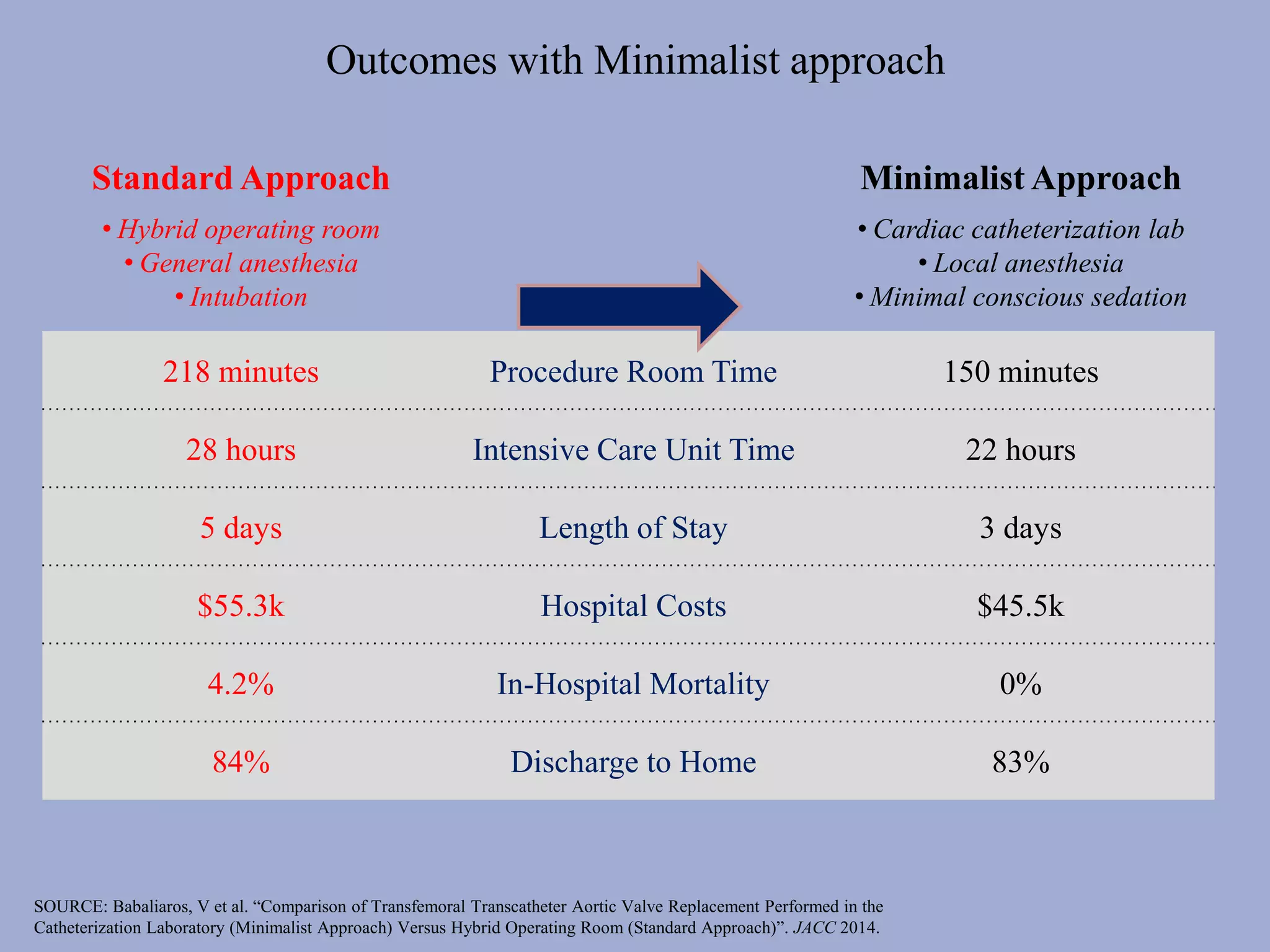
Standard Approach Minimalist Approach
• Hybrid operating room
• General anesthesia
• Intubation
• Cardiac catheterization lab
• Local anesthesia
• Minimal conscious sedation
218 minutes Procedure Room Time 150 minutes
28 hours Intensive Care Unit Time 22 hours
5 days Length of Stay 3 days
$55.3k Hospital Costs $45.5k
4.2% In-Hospital Mortality 0%
84% Discharge to Home 83%
Outcomes with Minimalist approach
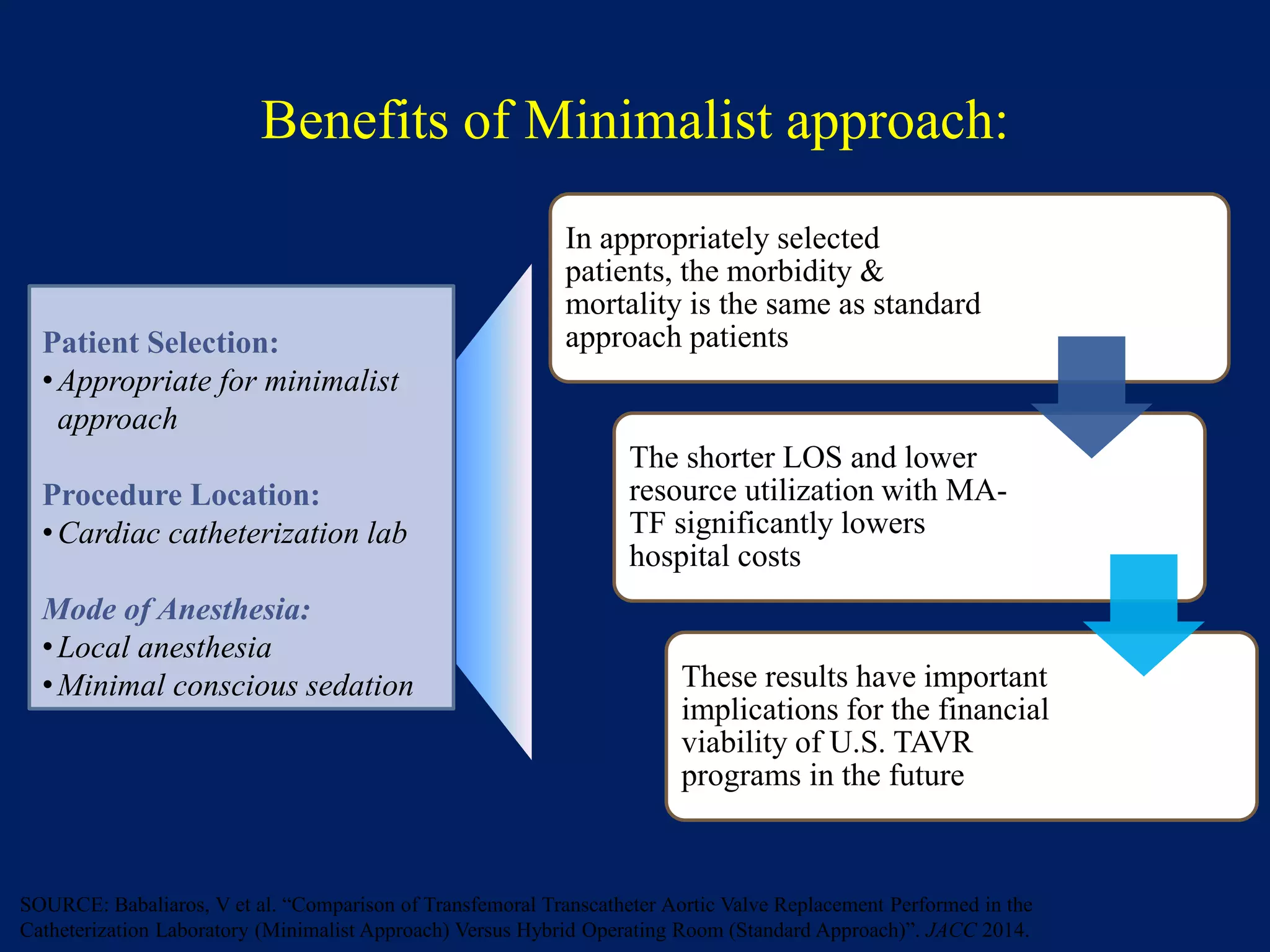
Benefits of Minimalist approach:
In appropriately selected
patients, the morbidity &
mortality is the same as standard
approach patients
The shorter LOS and lower
resource utilization with MA-
TF significantly lowers
hospital costs
These results have important
implications for the financial
viability of U.S. TAVR
programs in the future
Patient Selection:
•Appropriate for minimalist
approach
Procedure Location:
•Cardiac catheterization lab
Mode of Anesthesia:
•Local anesthesia
•Minimal conscious sedation
SOURCE: Babaliaros, V et al. “Comparison of Transfemoral Transcatheter Aortic Valve Replacement Performed in the
Catheterization Laboratory (Minimalist Approach) Versus Hybrid Operating Room (Standard Approach)”. JACC 2014.
Length of Stay & Readmissions
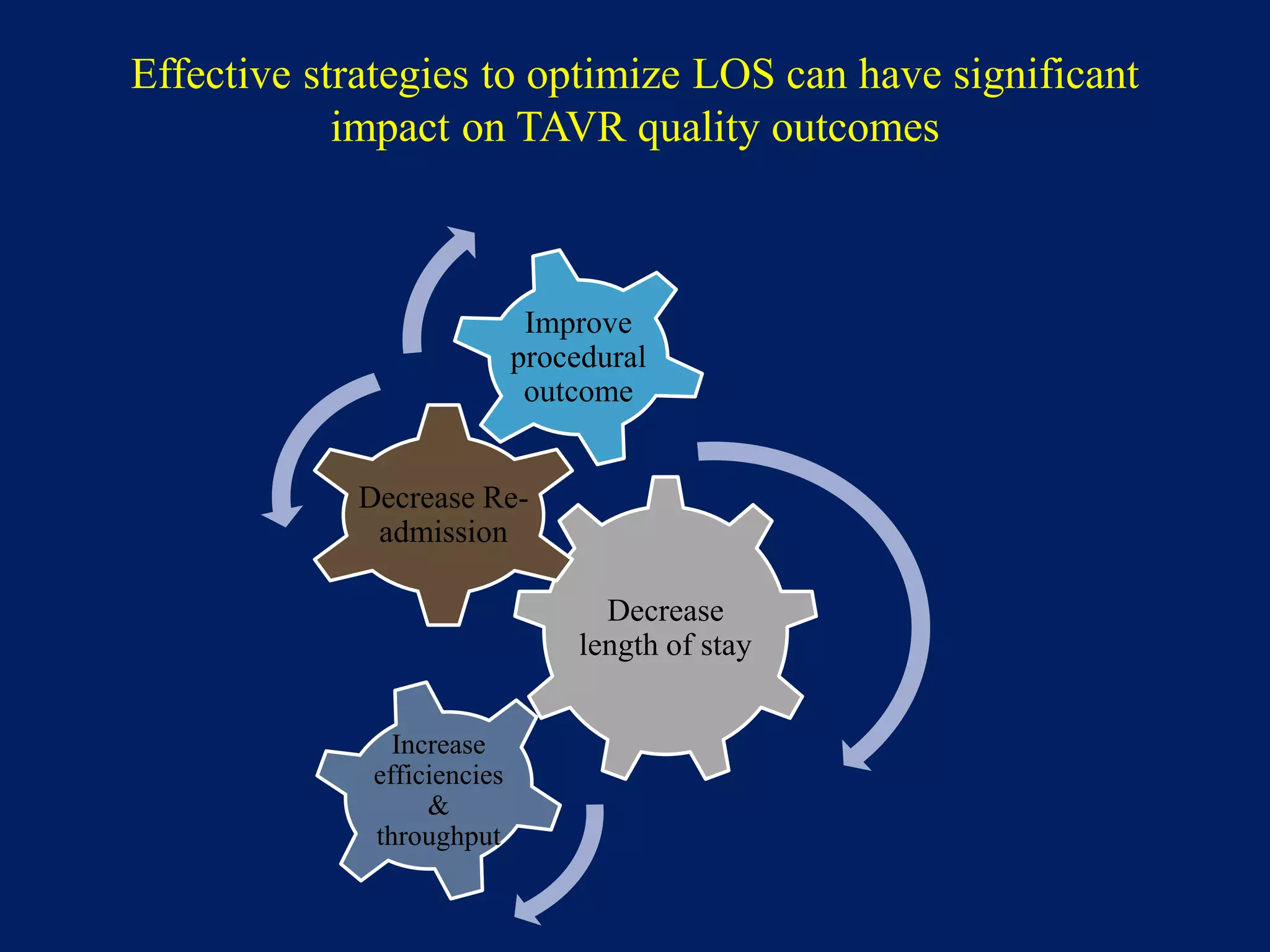
Effective strategies to optimize LOS can have significant
impact on TAVR quality outcomes
Decrease
length of stay
Decrease Re-
admission
Improve
procedural
outcome
Increase
efficiencies
&
throughput
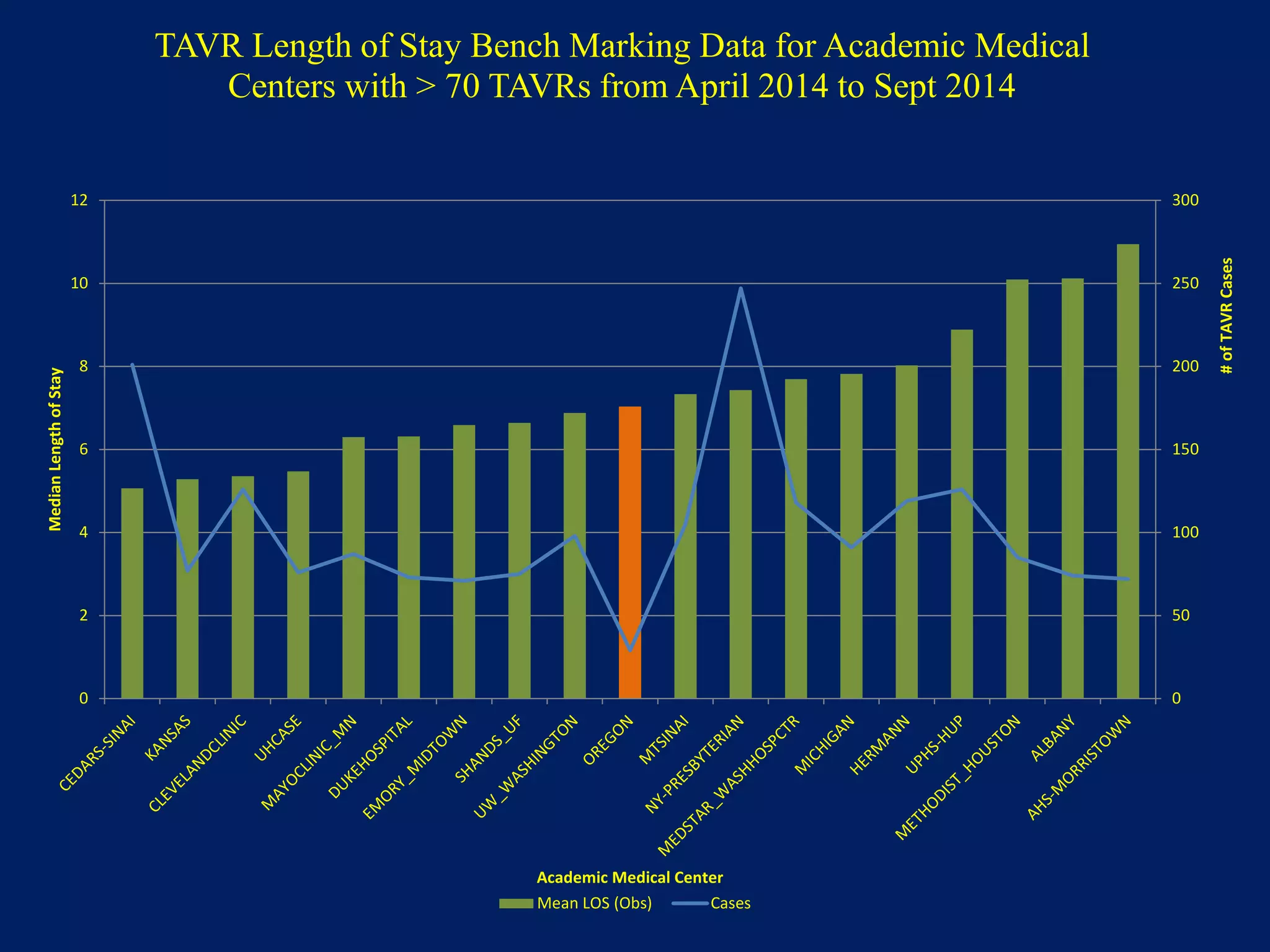
0
50
100
150
200
250
300
0
2
4
6
8
10
12
#ofTAVRCases
MedianLengthofStay
Academic Medical Center
TAVR Length of Stay Bench Marking Data for Academic Medical
Centers with > 70 TAVRs from April 2014 to Sept 2014
Mean LOS (Obs) Cases
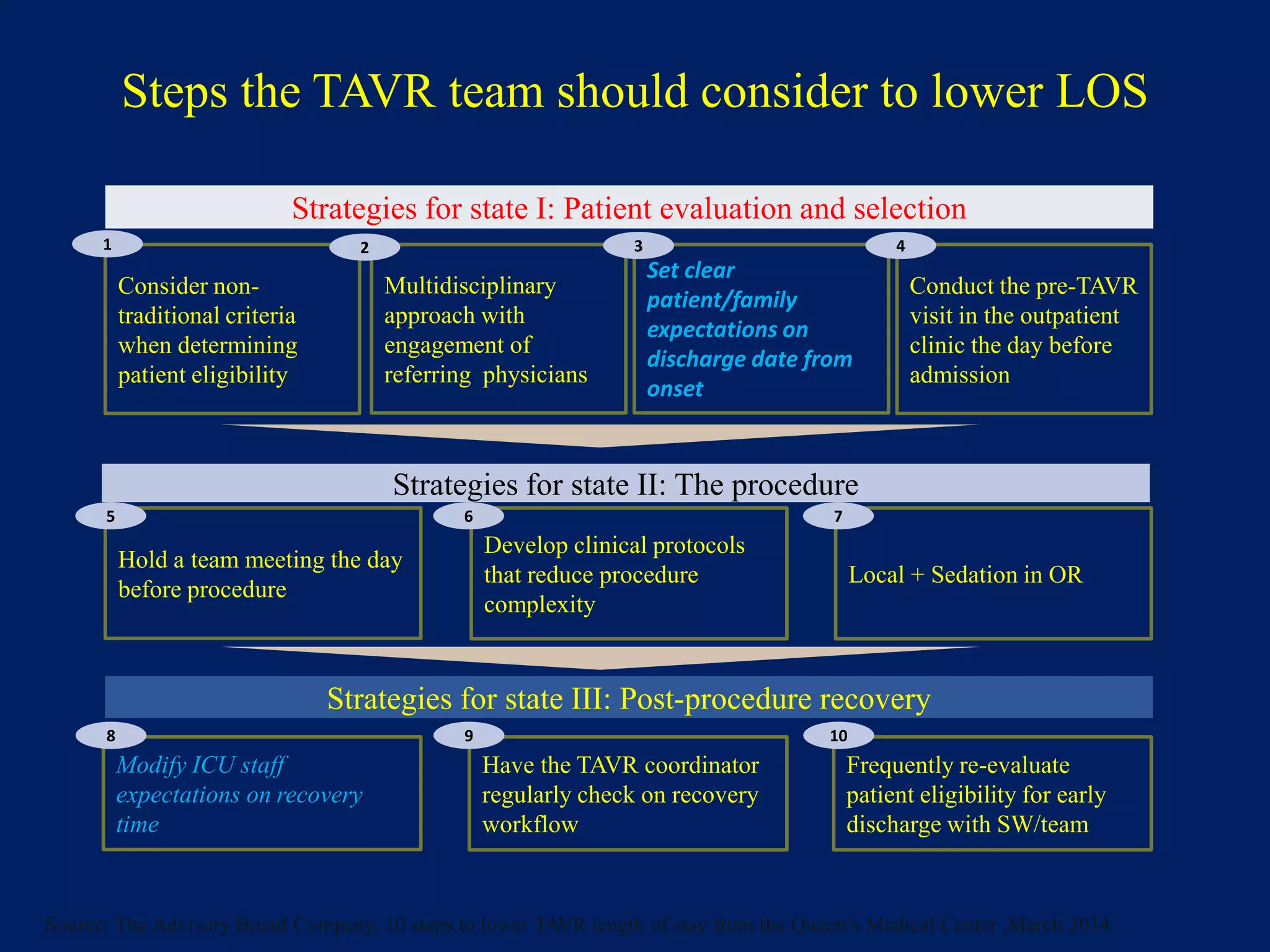
Steps the TAVR team should consider to lower LOS
Strategies for state I: Patient evaluation and selection
Consider non-
traditional criteria
when determining
patient eligibility
Multidisciplinary
approach with
engagement of
referring physicians
Set clear
patient/family
expectations on
discharge date from
onset
Conduct the pre-TAVR
visit in the outpatient
clinic the day before
admission
Strategies for state II: The procedure
Hold a team meeting the day
before procedure
Develop clinical protocols
that reduce procedure
complexity
Local + Sedation in OR
Strategies for state III: Post-procedure recovery
Modify ICU staff
expectations on recovery
time
Have the TAVR coordinator
regularly check on recovery
workflow
Frequently re-evaluate
patient eligibility for early
discharge with SW/team
1098
765
321 4
Source: The Advisory Board Company, 10 steps to lower TAVR length of stay from the Queen’s Medical Center ,March 2014
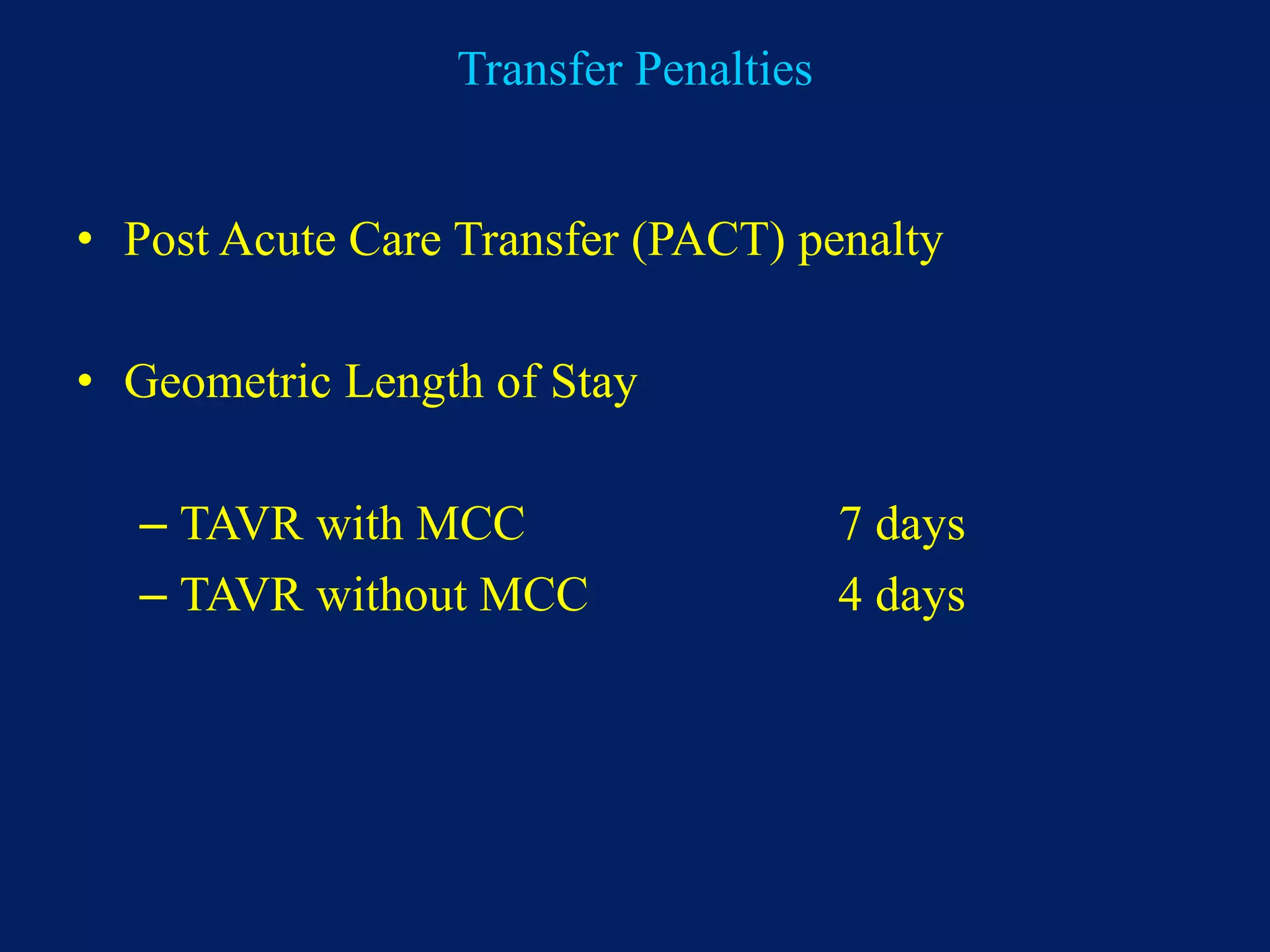
Transfer Penalties
• Post Acute Care Transfer (PACT) penalty
• Geometric Length of Stay
– TAVR with MCC 7 days
– TAVR without MCC 4 days
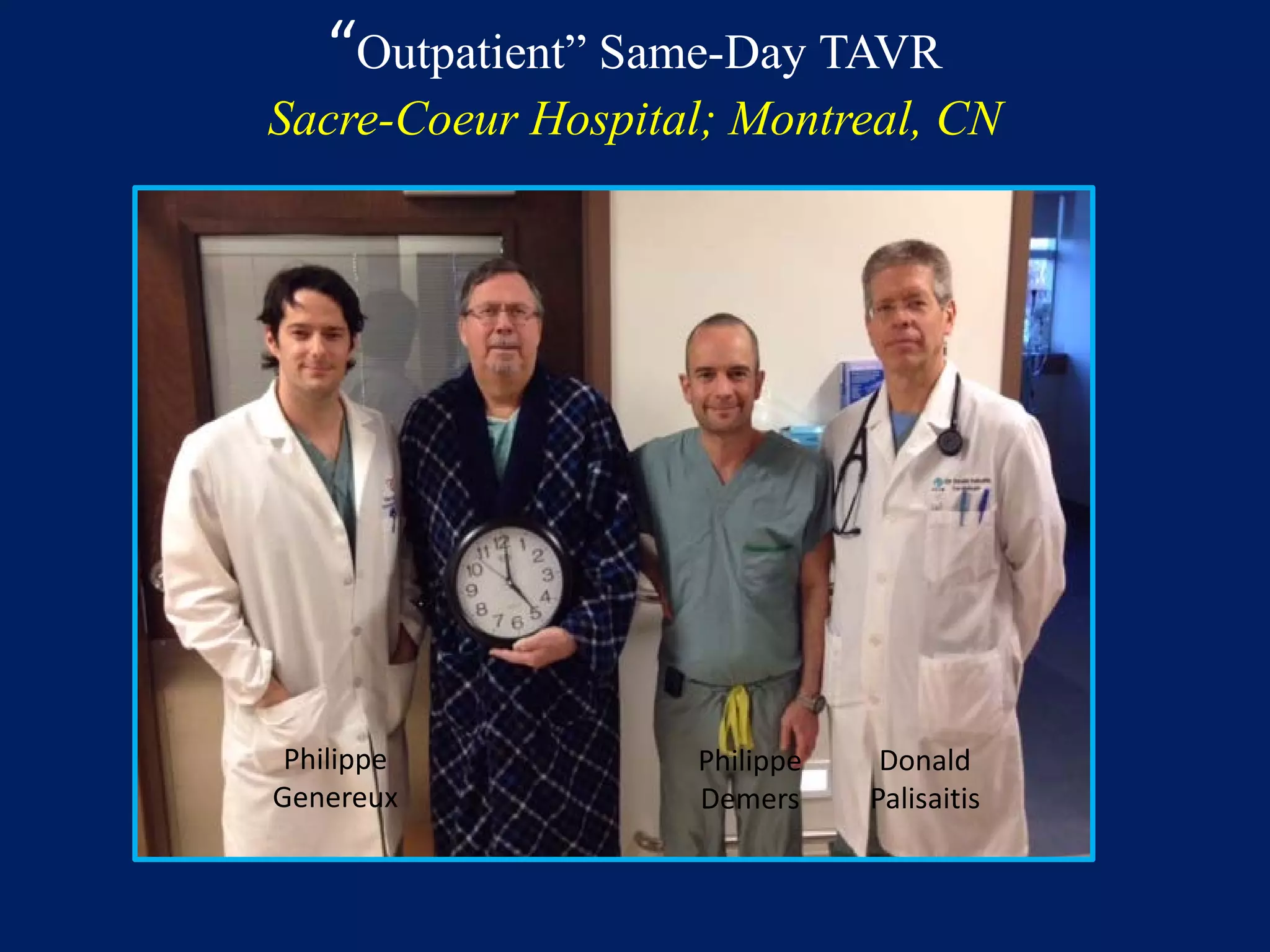
“Outpatient” Same-Day TAVR
Sacre-Coeur Hospital; Montreal, CN
Philippe
Genereux
Philippe
Demers
Donald
Palisaitis
Change …before you have to!
Jack Welch

R2 c optimization

  • 1.
    R2C Optimization ofTAVR programs Atiq Rehman MD Director Minimally Invasive Cardiac & Transcatheter Valve Surgery Director for Performance & Quality Improvement Lourdes Medical Center, NJ
  • 2.
    Disclosures: Edwards Life SciencesProctor/Consultant for Transcatheter Aortic Valve Therapy Trinity CV Board Member @ HealthTrust Grp
  • 4.
    Alain Cribier “This isthe stupidest idea I have ever heard!”
  • 5.
    Percutaneous Transcatheter Implantationof an Aortic Valve Prosthesis for Calcific Aortic Stenosis Alain Cribier, Helene Eltchaninoff, Assaf Bash, Nicolas Borenstein, Christophe Tron, Fabrice Bauer, Genevieve Derumeaux, Frederic Anselme, François Laborde, and Martin B. Leon Circulation, Volume 106(24):3006-3008 December 10, 2002
  • 6.
  • 7.
  • 8.
  • 9.
  • 10.
  • 14.
    Transcatheter Valve forAortic Insufficiency Successful Transcatheter Aortic Valve Implantation for Pure Aortic Regurgitation using a New Second Generation Self-Expanding Jena- ValveTM System – The First in-Man Implantation Da Zhu, MD, Jia Hu MD, Wei Meng MD, Yingqiang Guo, MD Heart, Lung and Circulation; April 2015 Volume 24, Issue 4, Pages 411–414
  • 15.
    Transcatheter Aortic andMitral Valve Replacement in a Patient With Critical Aortic and Mitral Valve In-Ring Stenosis Ricardo Yaryura, MD∗; Atiq Rehman, MD∗; Hakim Morsli, MD∗; Nasir Hussain, MD†,‡ J Am Coll Cardiol Intv. 2015;8(10)
  • 16.
    The Majority ofUS Patients with Severe AS Remain “Untreated” (no SAVR/TAVR) SOURCE: Nkomo 2006, Iivanainen 1996, Aronow 1991, Bach 2007, Freed 2010, Iung 2007, Pellikka 2005; Bach, D. Prevalence and Characteristics of Unoperated Patients with Severe Aortic Stenosis. J Heart Valve Dis. May 2011. (n=406); Industry estimates 2014
  • 17.
    TAVR “Underutilization” isLargely Driven by Variation in Health Policy and Reimbursement 17SOURCE: Eurostat, U.S. Census Bureau, Industry estimates
  • 18.
    Estimated Global TAVRGrowth SOURCE: Credit Suisse TAVI Comment –January 8, 2015. ASP assumption for 2024 and 2025 based on analyst model. Revenue split assumption in 2025 is 45% U.S., 35% EU, 10% Japan, 10% ROW In the next 10 years, TAVR growth will be 4X !
  • 19.
    Global $ TAVRMarket Potential ($5B by 2025) SOURCE: Edwards Lifesciences Investor Conference – Dec 11, 2013; Credit Suisse TAVI Comment –January 8, 2015
  • 21.
    What is anenriching patient experience?
  • 23.
    Does a betterpatient/customer experience identifies your organization as a leader in your field?
  • 24.
    Harvard Business ReviewAnalytics Services Study • 53% considered customer experience management provides a competitive advantage • 45% view customer experience as an important strategic priority • 52% thought that the organization lacks the processes to support their customer experience programs • Customer experience management is markedly more important to leading-edge companies. Seven out of ten say it’s a significant strategic priority. Nearly half of all lagging companies (45%), by contrast, said that customer experience is not at all important.
  • 26.
    Big picture • OrganizationalDesign: Comprehensiveness of process execution and change management • Ownership: Leadership in the program • Performers: Identify Executors • Infrastructure: Invest and develop necessary infrastructure • KPI: Set up key performance improvement metrics
  • 27.
  • 28.
    Comprehensive Plan &Management It is more than learning a new procedure, it is Building a New Service Line. Reimbursement challenges Patient/ancillary procedure tracking Monthly meetings Forecasting and development of new technology/value analysis process Justification for capital requests: FTE’s, clinic space, hybrid OR, imaging software, database Comprehensive Business Planning and Marketing Finance Research to Commercial Resourcing Growth Operations Management Working with internal process excellence team (lean sigma) to maximize efficiencies
  • 29.
    Processes • Common Understanding: –Make it visible – Clarify roles & responsibilities – Orient and Train employees • Standardization and Continuous Improvement – Promote Consistency & Efficiency – Streamline & Eliminate Redundancy • Promote Thinking – Highlight interdependence between different functions or units – Identify key metrics for QPI
  • 30.
  • 31.
    Duplication of Staff Lackof Communication Holding Area Wait Time Too Long Bed Availability Post-Procedure
  • 32.
    4 531 26 < 7 days R2C (Referral to Care) TAVR Sequence
  • 33.
    Implementing Optimization Steps AssessImprove Sustain • Detailed map of workflow and patient journeys (including times, metrics, interactions) • Prioritize bottlenecks and obstacles to a smooth process • Define ideal state • Create data collection plan • Define optimal pathway improvements including best practices, standardized practices, cross -training and change management • Develop action plan and implement sure hits • Identify metrics to measure impact on performance indicators • Provide support with embedding new pathways • Perform critical evaluation of the effects of the changes and refinement of best practice tools • Establish teams in hospitals and across pathway responsible for monitoring and fine tuning
  • 34.
    Rating  Preceptor –Experienced leader who teaches and guides others  Experienced – Able to function independently without supervision  Competent – Qualified to complete basic duties AND requires supervision  Orientee – Novice and cannot yet function at a competent level
  • 35.
  • 36.
    How does aNew program launch, prioritize and improve? 1. Successfully launch TAVR program (0-6 months) – Critical focus on procedure, flow, and patient throughput; Evaluate each individual patient 2. Take note of initial financial realities vs predicted (1 year mark) 3. Calculate the “Halo Effect” 4. Drill down on LOS and clinical efficiencies that reduce it 5. Understand implications of PACT policy – Discharge planning begins at intake interview (SNF, rehab, home health, home) 6. Updated : Implications of Coding Change in 2014 (2 DRGs) – Accurate, timely, and standardized coding system
  • 37.
    What patient carepathways (pre, peri and post procedures) to be implemented? • Pre • DC planning (SNF, Rehab, Home health, Home) • Determination of Route • Admit day of or before • Perfusion needed at all? • PPM indication? Risk? • Peri • TAVR Fastrack Clinical Pathway • Appropriate Coding • PACT policy awareness • Post • Regimented FU process • Post op studies per protocol (echo, CXR, ECG, etc)
  • 38.
    Decreasing Resource Utilization ReducingUse of Hospital Staff Streamline Procedure Related Equipment Understand Location Cost Within the Hospital
  • 39.
  • 40.
    MS-DRG Description BaseRate 266 Endovascular cardiac valve replacement with MCC $52,742 267 Endovascular cardiac valve replacement without MCC $39,602 40 National average Reimbursement
  • 41.
  • 42.
    Favorable outcomes withFASTRACK protocol in TF patients Outcomes Fast Track Protocol Standard Care P-value Intensive Care LOS 28 hours 44 hours <0.0001 Post-op LOS 4.3 days 7.2 days <0.0001 Direct Costs $44,923 $56,339 <0.0001 Marcantuono, et al., Rationale, development, implementation, and initial results of a fast track protocol for TAVR. Catheter Cardiovasc Interv. Nov 2014
  • 43.
  • 44.
  • 45.
    SOURCE: Babaliaros, Vet al. “Comparison of Transfemoral Transcatheter Aortic Valve Replacement Performed in the Catheterization Laboratory (Minimalist Approach) Versus Hybrid Operating Room (Standard Approach)”. JACC 2014. Standard Approach Minimalist Approach • Hybrid operating room • General anesthesia • Intubation • Cardiac catheterization lab • Local anesthesia • Minimal conscious sedation 218 minutes Procedure Room Time 150 minutes 28 hours Intensive Care Unit Time 22 hours 5 days Length of Stay 3 days $55.3k Hospital Costs $45.5k 4.2% In-Hospital Mortality 0% 84% Discharge to Home 83% Outcomes with Minimalist approach
  • 46.
    Benefits of Minimalistapproach: In appropriately selected patients, the morbidity & mortality is the same as standard approach patients The shorter LOS and lower resource utilization with MA- TF significantly lowers hospital costs These results have important implications for the financial viability of U.S. TAVR programs in the future Patient Selection: •Appropriate for minimalist approach Procedure Location: •Cardiac catheterization lab Mode of Anesthesia: •Local anesthesia •Minimal conscious sedation SOURCE: Babaliaros, V et al. “Comparison of Transfemoral Transcatheter Aortic Valve Replacement Performed in the Catheterization Laboratory (Minimalist Approach) Versus Hybrid Operating Room (Standard Approach)”. JACC 2014.
  • 47.
    Length of Stay& Readmissions
  • 48.
    Effective strategies tooptimize LOS can have significant impact on TAVR quality outcomes Decrease length of stay Decrease Re- admission Improve procedural outcome Increase efficiencies & throughput
  • 49.
    0 50 100 150 200 250 300 0 2 4 6 8 10 12 #ofTAVRCases MedianLengthofStay Academic Medical Center TAVRLength of Stay Bench Marking Data for Academic Medical Centers with > 70 TAVRs from April 2014 to Sept 2014 Mean LOS (Obs) Cases
  • 50.
    Steps the TAVRteam should consider to lower LOS Strategies for state I: Patient evaluation and selection Consider non- traditional criteria when determining patient eligibility Multidisciplinary approach with engagement of referring physicians Set clear patient/family expectations on discharge date from onset Conduct the pre-TAVR visit in the outpatient clinic the day before admission Strategies for state II: The procedure Hold a team meeting the day before procedure Develop clinical protocols that reduce procedure complexity Local + Sedation in OR Strategies for state III: Post-procedure recovery Modify ICU staff expectations on recovery time Have the TAVR coordinator regularly check on recovery workflow Frequently re-evaluate patient eligibility for early discharge with SW/team 1098 765 321 4 Source: The Advisory Board Company, 10 steps to lower TAVR length of stay from the Queen’s Medical Center ,March 2014
  • 51.
    Transfer Penalties • PostAcute Care Transfer (PACT) penalty • Geometric Length of Stay – TAVR with MCC 7 days – TAVR without MCC 4 days
  • 52.
    “Outpatient” Same-Day TAVR Sacre-CoeurHospital; Montreal, CN Philippe Genereux Philippe Demers Donald Palisaitis
  • 54.
    Change …before youhave to! Jack Welch