Congressional Lawmaking Day 11 TCI ch12 July 8, 2008
Notes - Day 11 (TCI Ch12) Essential Question: How do laws  really  get made? (do notes in sections with phases?)
Notes part 1 - Convening a New Congress before a new Congress convenes, lawmakers from each party meet to choose Congressional leadership
Committee Assignments leaders of each party decide number of seats each party gets on committees majority party ensures control of each committee some comtes more desired/important new members get less desired comtes
First Day of New Congress first day begins with series of ceremonies House votes for Speaker, gets oath of office, swears in all House members VP swears in Senate members
Notes part 2 - Working in Committee Cmtes choose chairpersons - often by seniority member of majority party
Assigning Bills to Comte bills must be introduced by a member of Congress - no matter who thought of it Congressperson who introduces bill is the Sponsor Speaker of House or presiding officer of Senate assigns bill to committee
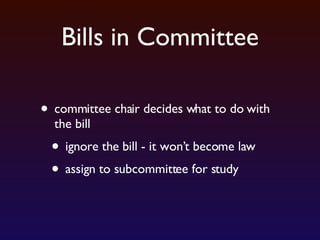
Bills in Committee committee chair decides what to do with the bill ignore the bill - it won’t become law assign to subcommittee for study
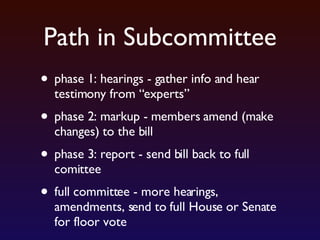
Path in Subcommittee phase 1: hearings - gather info and hear testimony from “experts” phase 2: markup - members amend (make changes) to the bill phase 3: report - send bill back to full comittee full committee - more hearings, amendments, send to full House or Senate for floor vote
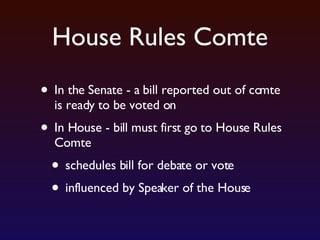
House Rules Comte In the Senate - a bill reported out of comte is ready to be voted on In House - bill must first go to House Rules Comte schedules bill for debate or vote influenced by Speaker of the House
Notes part 3 - Debating and Voting on House and Senate Floor
Majority Party Controls Debate Speaker of the House and Senate Majority Leader determine which bills will be debated and for how long
House Debate House Rules Comte has to limit floor debate - 435 members can take too much time usually 30 min for each party bill sponsor or main opponent usually determines who speaks
Senate Debate Senate allows unlimited debate (usually) filibuster - prolonged debate to prevent passing a bill (no vote taken) cloture - 2/3 of Senate can vote to cut off debate
Amendments amendments to bills should be related riders - amendment to bill with no relation to subject easy way to get pet projects passed
Voting on a Bill voice vote - aye or no - presiding officer decides who was louder standing vote - supporters/opponents stand to be counted roll-call vote - each members vote is recorded Senate - clerk calls name records vote House - electronic voting system
Influences on Legislators interest groups - try to get legislators to vote certain way party leaders - try to get legislators to vote certain way colleagues - “logrolling” - members vote for each other’s stuff
Notes - last part Final Steps in the Legislative Process
Congress Speaks as One a bill passed in the House must be passed in the Senate and vice versa must work out differences so bills are identical - joint conference comte up-or-down vote - bill gets voted on again, no more chances for changes
President Takes Action President has 10 days to: sign the bill into law veto the bill take no action - becomes law anyway at end of 10 days if not 10 days remaining - pocket veto
Override Veto Congress can override veto with 2/3 vote of House and Senate difficult to do

Day 11 notes

  • 1.
    Congressional Lawmaking Day11 TCI ch12 July 8, 2008
  • 2.
    Notes - Day11 (TCI Ch12) Essential Question: How do laws really get made? (do notes in sections with phases?)
  • 3.
    Notes part 1- Convening a New Congress before a new Congress convenes, lawmakers from each party meet to choose Congressional leadership
  • 4.
    Committee Assignments leadersof each party decide number of seats each party gets on committees majority party ensures control of each committee some comtes more desired/important new members get less desired comtes
  • 5.
    First Day ofNew Congress first day begins with series of ceremonies House votes for Speaker, gets oath of office, swears in all House members VP swears in Senate members
  • 6.
    Notes part 2- Working in Committee Cmtes choose chairpersons - often by seniority member of majority party
  • 7.
    Assigning Bills toComte bills must be introduced by a member of Congress - no matter who thought of it Congressperson who introduces bill is the Sponsor Speaker of House or presiding officer of Senate assigns bill to committee
  • 8.
    Bills in Committeecommittee chair decides what to do with the bill ignore the bill - it won’t become law assign to subcommittee for study
  • 9.
    Path in Subcommitteephase 1: hearings - gather info and hear testimony from “experts” phase 2: markup - members amend (make changes) to the bill phase 3: report - send bill back to full comittee full committee - more hearings, amendments, send to full House or Senate for floor vote
  • 10.
    House Rules ComteIn the Senate - a bill reported out of comte is ready to be voted on In House - bill must first go to House Rules Comte schedules bill for debate or vote influenced by Speaker of the House
  • 11.
    Notes part 3- Debating and Voting on House and Senate Floor
  • 12.
    Majority Party ControlsDebate Speaker of the House and Senate Majority Leader determine which bills will be debated and for how long
  • 13.
    House Debate HouseRules Comte has to limit floor debate - 435 members can take too much time usually 30 min for each party bill sponsor or main opponent usually determines who speaks
  • 14.
    Senate Debate Senateallows unlimited debate (usually) filibuster - prolonged debate to prevent passing a bill (no vote taken) cloture - 2/3 of Senate can vote to cut off debate
  • 15.
    Amendments amendments tobills should be related riders - amendment to bill with no relation to subject easy way to get pet projects passed
  • 16.
    Voting on aBill voice vote - aye or no - presiding officer decides who was louder standing vote - supporters/opponents stand to be counted roll-call vote - each members vote is recorded Senate - clerk calls name records vote House - electronic voting system
  • 17.
    Influences on Legislatorsinterest groups - try to get legislators to vote certain way party leaders - try to get legislators to vote certain way colleagues - “logrolling” - members vote for each other’s stuff
  • 18.
    Notes - lastpart Final Steps in the Legislative Process
  • 19.
    Congress Speaks asOne a bill passed in the House must be passed in the Senate and vice versa must work out differences so bills are identical - joint conference comte up-or-down vote - bill gets voted on again, no more chances for changes
  • 20.
    President Takes ActionPresident has 10 days to: sign the bill into law veto the bill take no action - becomes law anyway at end of 10 days if not 10 days remaining - pocket veto
  • 21.
    Override Veto Congresscan override veto with 2/3 vote of House and Senate difficult to do