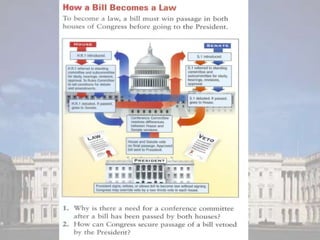
Thousands of bills are introduced
 every year but only few hundreds are
 passed into law.
The following is a summary of how
 the bill makes its way from draft to
 being signed into law by the
 president.
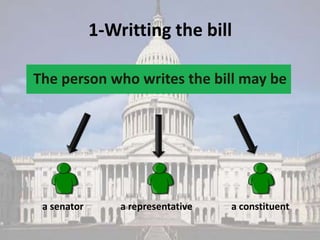
1-Writting the bill

The person who writes the bill may be


 a senator       a representative   a constituent
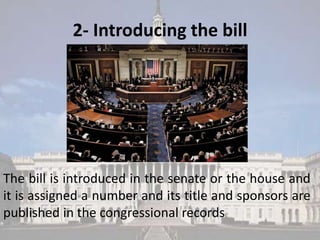
2- Introducing the bill


The bill is introduced in the senate or the house and
it is assigned a number and its title and sponsors are
published in the congressional records
3- Committees and Subcommittees
• The parliamentarians of the house and the
  senate assigns the bill to the committee with
  appropriate jurisdiction.


     Bill
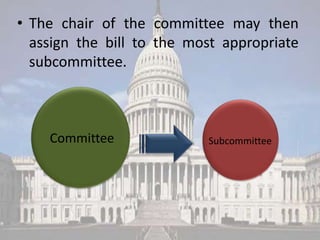
• The chair of the committee may then
  assign the bill to the most appropriate
  subcommittee.


    Committee              Subcommittee
4- Subcommittee Hearings
The subcommittee hold hearings on the bill
and invite testimony from public and private
                 witnesses


Witnesses may be executive branch officials,
experts, interest groups, or individuals.
5- Mark-up The Bill

Once the hearings are completed, The subcommittee
may need to mark up the bill (the process of
proposing and considering amendments to the bill).

It then votes on whether to report the bill favourably
to the full committee. If not favourably reported, the
bill dies.
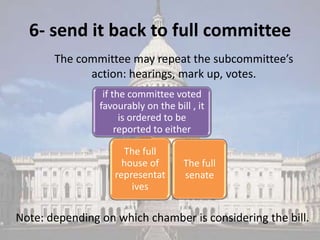
6- send it back to full committee
       The committee may repeat the subcommittee’s
             action: hearings, mark up, votes.
                 if the committee voted
                favourably on the bill , it
                      is ordered to be
                     reported to either

                     The full
                     house of        The full
                   representat       senate
                       ives

Note: depending on which chamber is considering the bill.
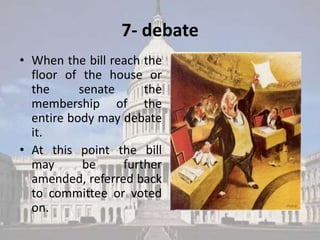
7- debate
• When the bill reach the
  floor of the house or
  the      senate     the
  membership of the
  entire body may debate
  it.
• At this point the bill
  may       be    further
  amended, referred back
  to committee or voted
  on.
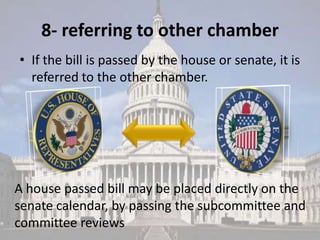
8- referring to other chamber
• If the bill is passed by the house or senate, it is
  referred to the other chamber.


A house passed bill may be placed directly on the
senate calendar, by passing the subcommittee and
committee reviews
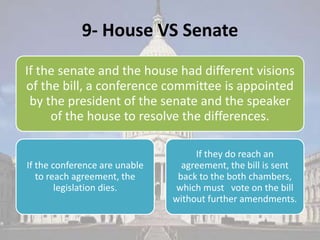
9- House VS Senate
If the senate and the house had different visions
of the bill, a conference committee is appointed
 by the president of the senate and the speaker
     of the house to resolve the differences.

                                    If they do reach an
If the conference are unable     agreement, the bill is sent
   to reach agreement, the      back to the both chambers,
        legislation dies.      which must vote on the bill
                               without further amendments.
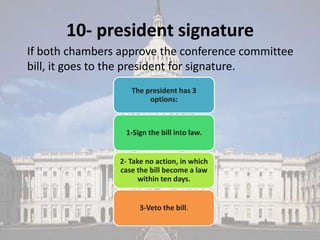
10- president signature
If both chambers approve the conference committee
bill, it goes to the president for signature.
                    The president has 3
                         options:


                  1-Sign the bill into law.


                 2- Take no action, in which
                 case the bill become a law
                       within ten days.


                       3-Veto the bill.
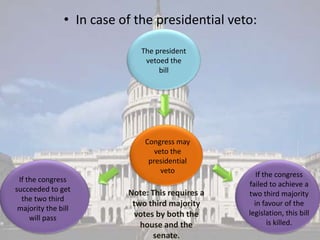
• In case of the presidential veto:

                             The president
                              vetoed the
                                  bill


                              Congress may
                                 veto the
                               presidential
                                   veto              If the congress
 If the congress
                                                  failed to achieve a
succeeded to get          Note: This requires a   two third majority
  the two third
                           two third majority       in favour of the
 majority the bill
                           votes by both the      legislation, this bill
     will pass
                             house and the               is killed.
                                 senate.
How to make a bill
How to make a bill

How to make a bill

  • 2.
    Thousands of billsare introduced every year but only few hundreds are passed into law. The following is a summary of how the bill makes its way from draft to being signed into law by the president.
  • 3.
    1-Writting the bill Theperson who writes the bill may be a senator a representative a constituent
  • 4.
    2- Introducing thebill The bill is introduced in the senate or the house and it is assigned a number and its title and sponsors are published in the congressional records
  • 5.
    3- Committees andSubcommittees • The parliamentarians of the house and the senate assigns the bill to the committee with appropriate jurisdiction. Bill
  • 6.
    • The chairof the committee may then assign the bill to the most appropriate subcommittee. Committee Subcommittee
  • 7.
    4- Subcommittee Hearings Thesubcommittee hold hearings on the bill and invite testimony from public and private witnesses Witnesses may be executive branch officials, experts, interest groups, or individuals.
  • 8.
    5- Mark-up TheBill Once the hearings are completed, The subcommittee may need to mark up the bill (the process of proposing and considering amendments to the bill). It then votes on whether to report the bill favourably to the full committee. If not favourably reported, the bill dies.
  • 9.
    6- send itback to full committee The committee may repeat the subcommittee’s action: hearings, mark up, votes. if the committee voted favourably on the bill , it is ordered to be reported to either The full house of The full representat senate ives Note: depending on which chamber is considering the bill.
  • 10.
    7- debate • Whenthe bill reach the floor of the house or the senate the membership of the entire body may debate it. • At this point the bill may be further amended, referred back to committee or voted on.
  • 11.
    8- referring toother chamber • If the bill is passed by the house or senate, it is referred to the other chamber. A house passed bill may be placed directly on the senate calendar, by passing the subcommittee and committee reviews
  • 12.
    9- House VSSenate If the senate and the house had different visions of the bill, a conference committee is appointed by the president of the senate and the speaker of the house to resolve the differences. If they do reach an If the conference are unable agreement, the bill is sent to reach agreement, the back to the both chambers, legislation dies. which must vote on the bill without further amendments.
  • 13.
    10- president signature Ifboth chambers approve the conference committee bill, it goes to the president for signature. The president has 3 options: 1-Sign the bill into law. 2- Take no action, in which case the bill become a law within ten days. 3-Veto the bill.
  • 14.
    • In caseof the presidential veto: The president vetoed the bill Congress may veto the presidential veto If the congress If the congress failed to achieve a succeeded to get Note: This requires a two third majority the two third two third majority in favour of the majority the bill votes by both the legislation, this bill will pass house and the is killed. senate.