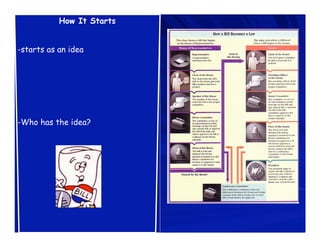
How It Starts


-starts as an idea


-Who has the idea?
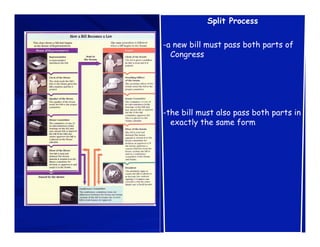
Split Process

-a new bill must pass both parts of
  Congress


-the bill must also pass both parts in
  exactly the same form
Becoming a Bill

-must be sponsored by a member of
  Congress


-put in a draft form


-introduced into Congress
Committee
-bill is assigned to a committee


-committee has 3 options


  -send bill to next stage


  -kill the bill


  -pigeonhole the bill-- Action that
  places a bill to the side without a
  vote
Sub-Committee


-studies the bill in-depth


-public hearings-- Meetings held by
  legislative committees in order to
  allow public comments and
  information to be given to
  legislative committees


-same 3 options
Committee

-back to full committee


-committee votes to send bill to full
  House or Senate
House or Senate

-Bill is read to the Full House or
  Senate for the first time


-Party Leaders try to schedule
  debate time for bill


-Members research the merits of
  the bill


-Riders may be attached
  -additional measures which are not
  related to the original bill
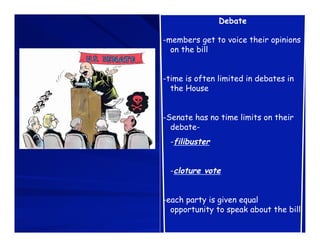
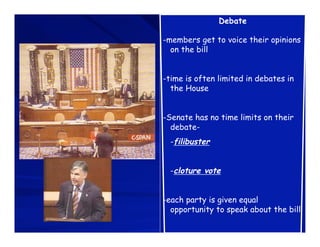
Debate

-members get to voice their opinions
  on the bill


-time is often limited in debates in
  the House


-Senate has no time limits on their
  debate-
  -filibuster


  -cloture vote


-each party is given equal
  opportunity to speak about the bill
Debate

-members get to voice their opinions
  on the bill


-time is often limited in debates in
  the House


-Senate has no time limits on their
  debate-
  -filibuster


  -cloture vote


-each party is given equal
  opportunity to speak about the bill
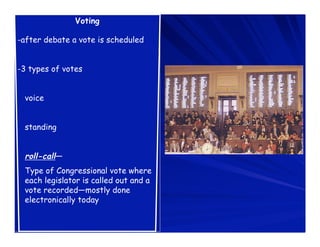
Voting

-after debate a vote is scheduled


-3 types of votes


 voice


 standing


 roll-call—
 Type of Congressional vote where
 each legislator is called out and a
 vote recorded—mostly done
 electronically today
Same Bill Must Pass

-both parts of Congress must pass
  the same bill


-if bill is not the same a conference
  committee will meet


  -Special committee made up of
  legislators from the House and
  Senate who try to work out
  differences in bill that passed
  both houses in different forms


-bill must be voted on in new form
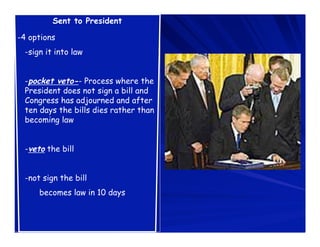
Sent to President

-4 options
 -sign it into law


 -pocket veto-- Process where the
 President does not sign a bill and
 Congress has adjourned and after
 ten days the bills dies rather than
 becoming law


 -veto the bill


 -not sign the bill
     becomes law in 10 days
Over-Riding a Veto

-if vetoed Congress can override the
  veto


-2/3 vote required in each house to
  override


-very difficult to achieve

24 how a bill becomes law

  • 1.
    How It Starts -startsas an idea -Who has the idea?
  • 2.
    Split Process -a newbill must pass both parts of Congress -the bill must also pass both parts in exactly the same form
  • 3.
    Becoming a Bill -mustbe sponsored by a member of Congress -put in a draft form -introduced into Congress
  • 4.
    Committee -bill is assignedto a committee -committee has 3 options -send bill to next stage -kill the bill -pigeonhole the bill-- Action that places a bill to the side without a vote
  • 5.
    Sub-Committee -studies the billin-depth -public hearings-- Meetings held by legislative committees in order to allow public comments and information to be given to legislative committees -same 3 options
  • 6.
    Committee -back to fullcommittee -committee votes to send bill to full House or Senate
  • 7.
    House or Senate -Billis read to the Full House or Senate for the first time -Party Leaders try to schedule debate time for bill -Members research the merits of the bill -Riders may be attached -additional measures which are not related to the original bill
  • 8.
    Debate -members get tovoice their opinions on the bill -time is often limited in debates in the House -Senate has no time limits on their debate- -filibuster -cloture vote -each party is given equal opportunity to speak about the bill
  • 9.
    Debate -members get tovoice their opinions on the bill -time is often limited in debates in the House -Senate has no time limits on their debate- -filibuster -cloture vote -each party is given equal opportunity to speak about the bill
  • 10.
    Voting -after debate avote is scheduled -3 types of votes voice standing roll-call— Type of Congressional vote where each legislator is called out and a vote recorded—mostly done electronically today
  • 11.
    Same Bill MustPass -both parts of Congress must pass the same bill -if bill is not the same a conference committee will meet -Special committee made up of legislators from the House and Senate who try to work out differences in bill that passed both houses in different forms -bill must be voted on in new form
  • 12.
    Sent to President -4options -sign it into law -pocket veto-- Process where the President does not sign a bill and Congress has adjourned and after ten days the bills dies rather than becoming law -veto the bill -not sign the bill becomes law in 10 days
  • 13.
    Over-Riding a Veto -ifvetoed Congress can override the veto -2/3 vote required in each house to override -very difficult to achieve