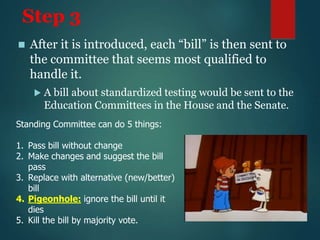
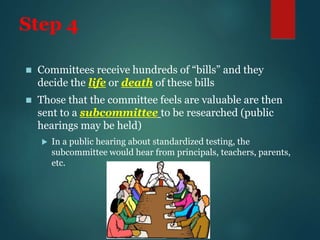
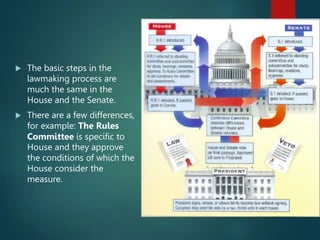
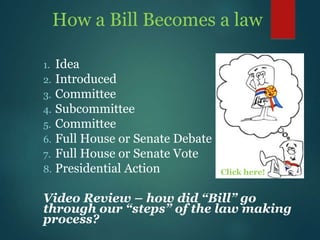
The document outlines the 8 steps for how a bill becomes a law, including being introduced in Congress, reviewed by committees and subcommittees, debated and voted on in both the House and Senate, and finally requiring presidential action through signing, vetoing, or taking no action within 10 days of receipt. Bills can address either private matters concerning specific individuals or places or public matters applying to the entire nation. Committees play a key role in deciding whether bills advance, are amended, or are killed in the legislative process.