Database Management System
(DBMS)
What is DBMS?
 Database Management System is a
software that is meant for storing
records in computers.
 This software allows accessing of data
such as delete, store, retrieve etc that
are available in a database.
History
 During early days, for storing data a file
system is used.
 In a file system, it is difficult to access
data, data inconsistency, integrity and
security problems etc.
 So database management system was
first developed on 1960 by Charles
Bachman.
 Database Management System
provides many solutions for problems
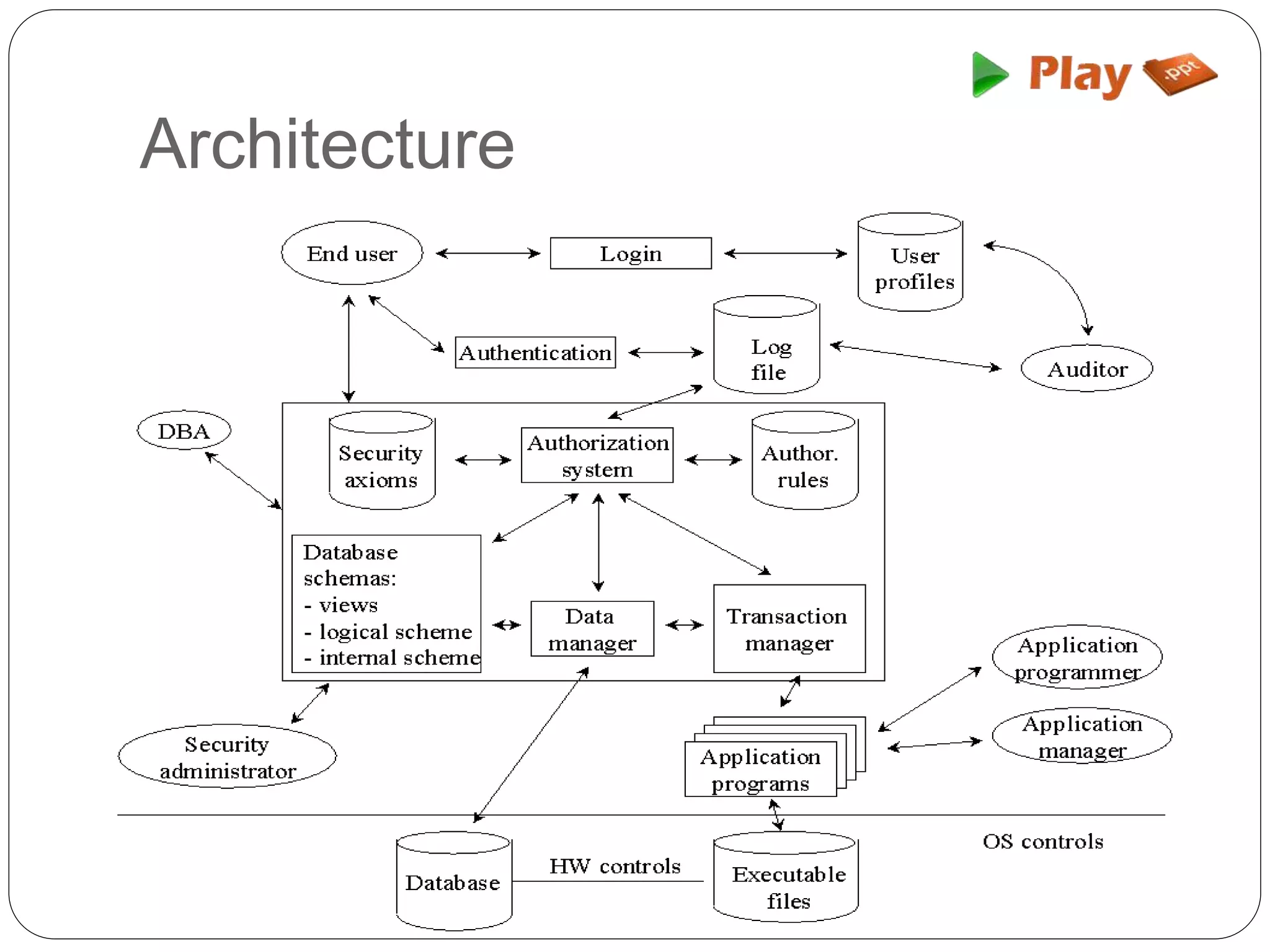
Architecture
Types of DBMS
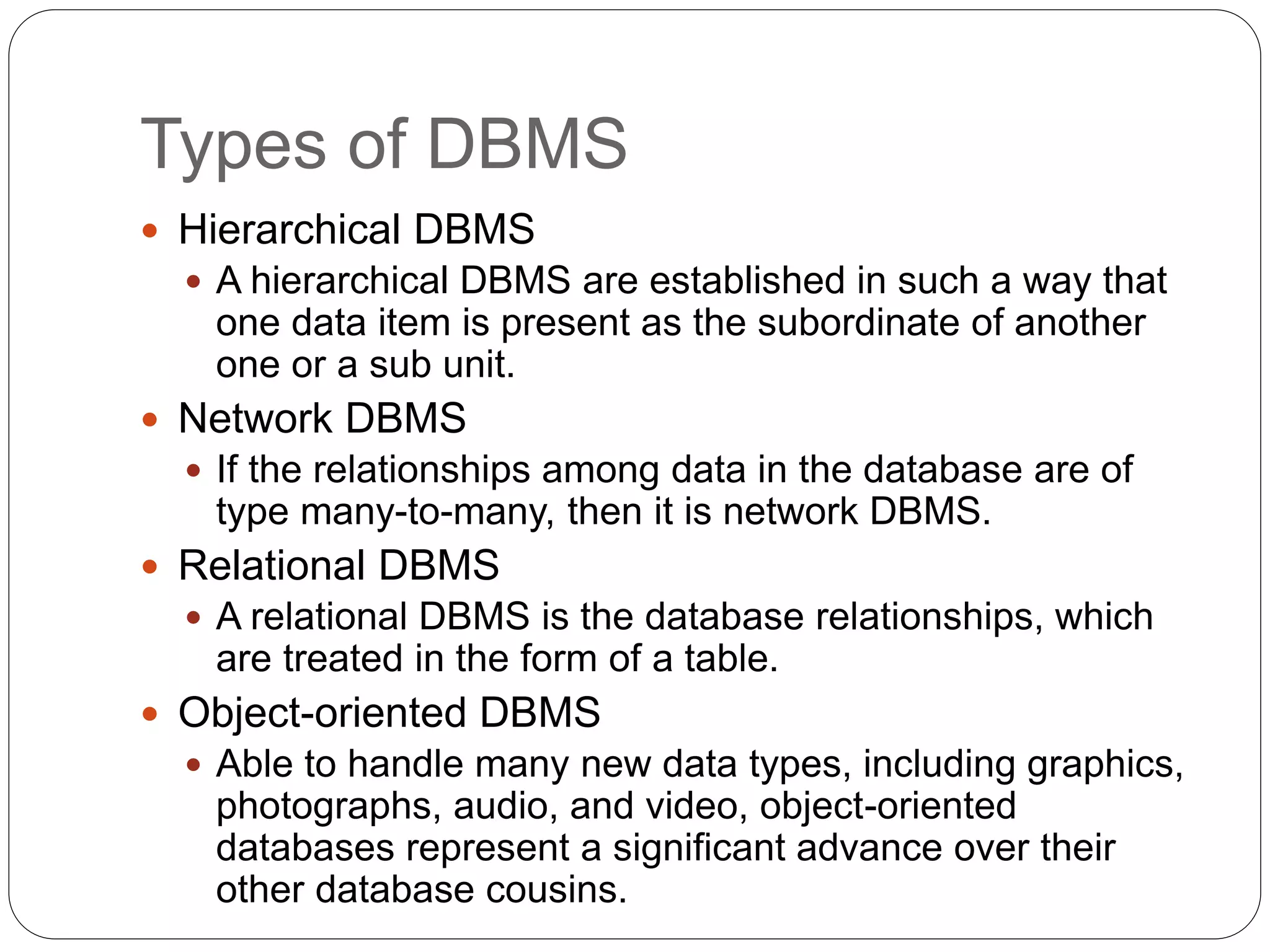
 Hierarchical DBMS
 A hierarchical DBMS are established in such a way that
one data item is present as the subordinate of another
one or a sub unit.
 Network DBMS
 If the relationships among data in the database are of
type many-to-many, then it is network DBMS.
 Relational DBMS
 A relational DBMS is the database relationships, which
are treated in the form of a table.
 Object-oriented DBMS
 Able to handle many new data types, including graphics,
photographs, audio, and video, object-oriented
databases represent a significant advance over their
other database cousins.
Areas of DBMS
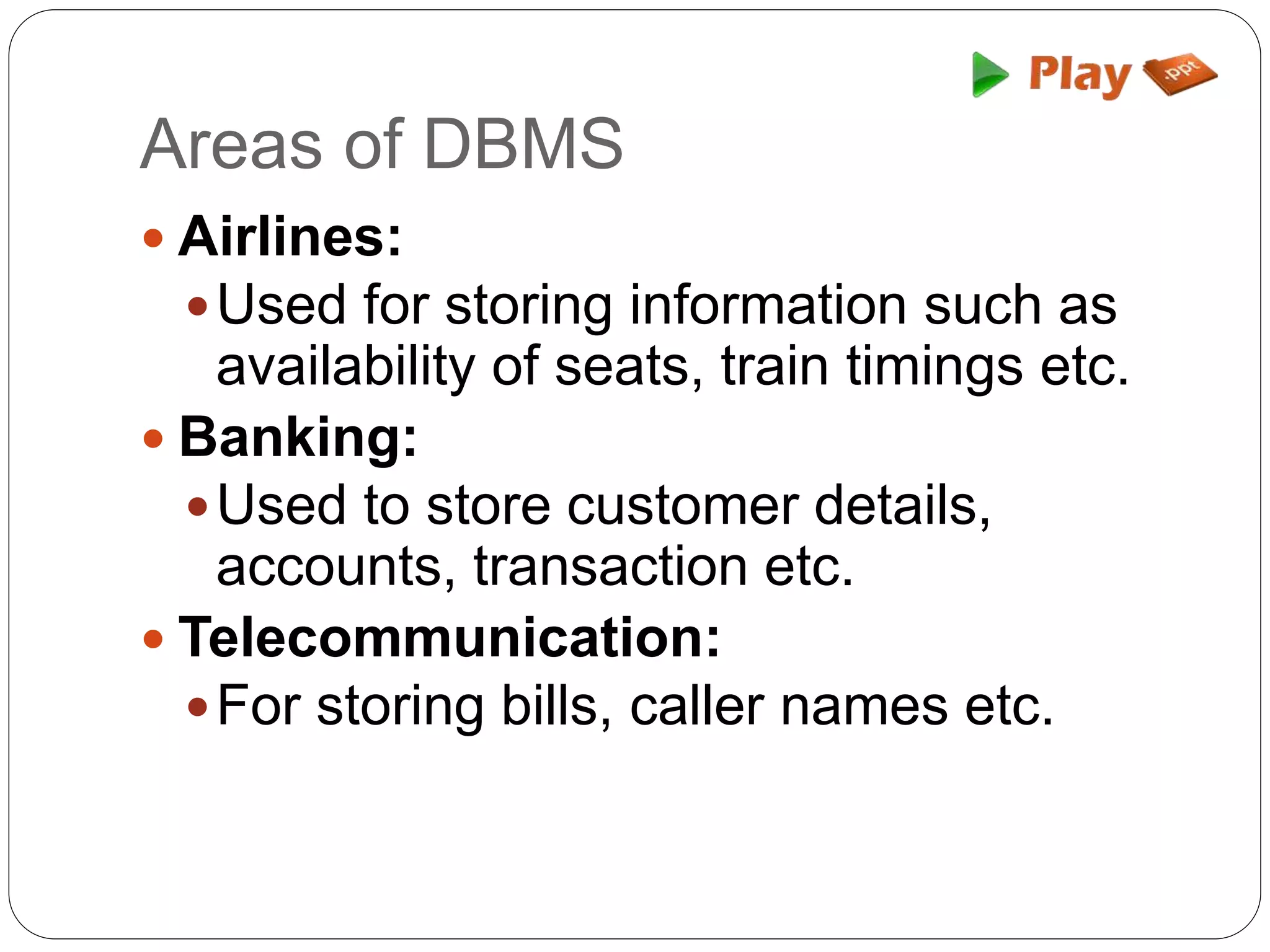
 Airlines:
Used for storing information such as
availability of seats, train timings etc.
 Banking:
Used to store customer details,
accounts, transaction etc.
 Telecommunication:
For storing bills, caller names etc.
Areas of DBMS
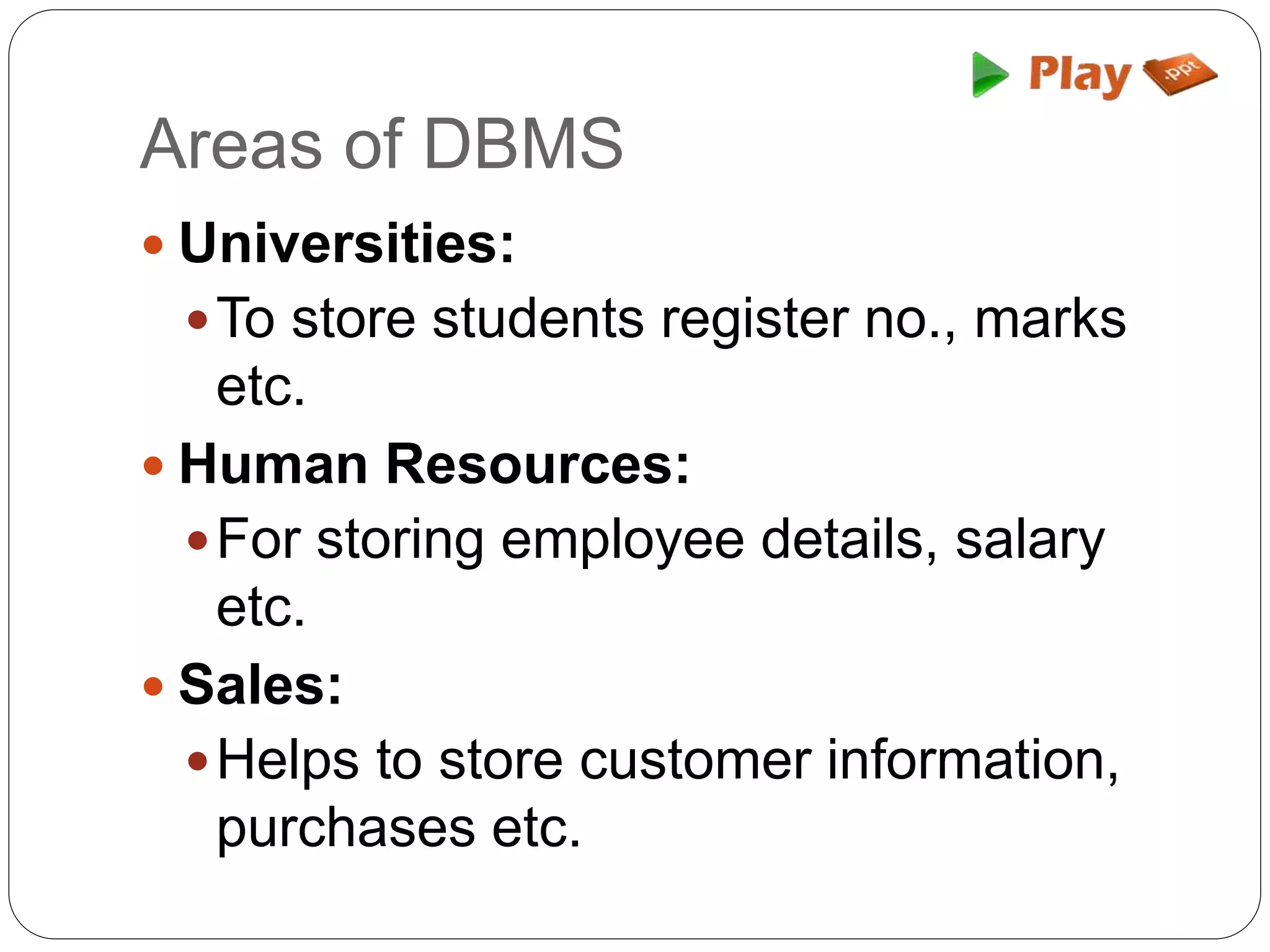
 Universities:
To store students register no., marks
etc.
 Human Resources:
For storing employee details, salary
etc.
 Sales:
Helps to store customer information,
purchases etc.
Advantages
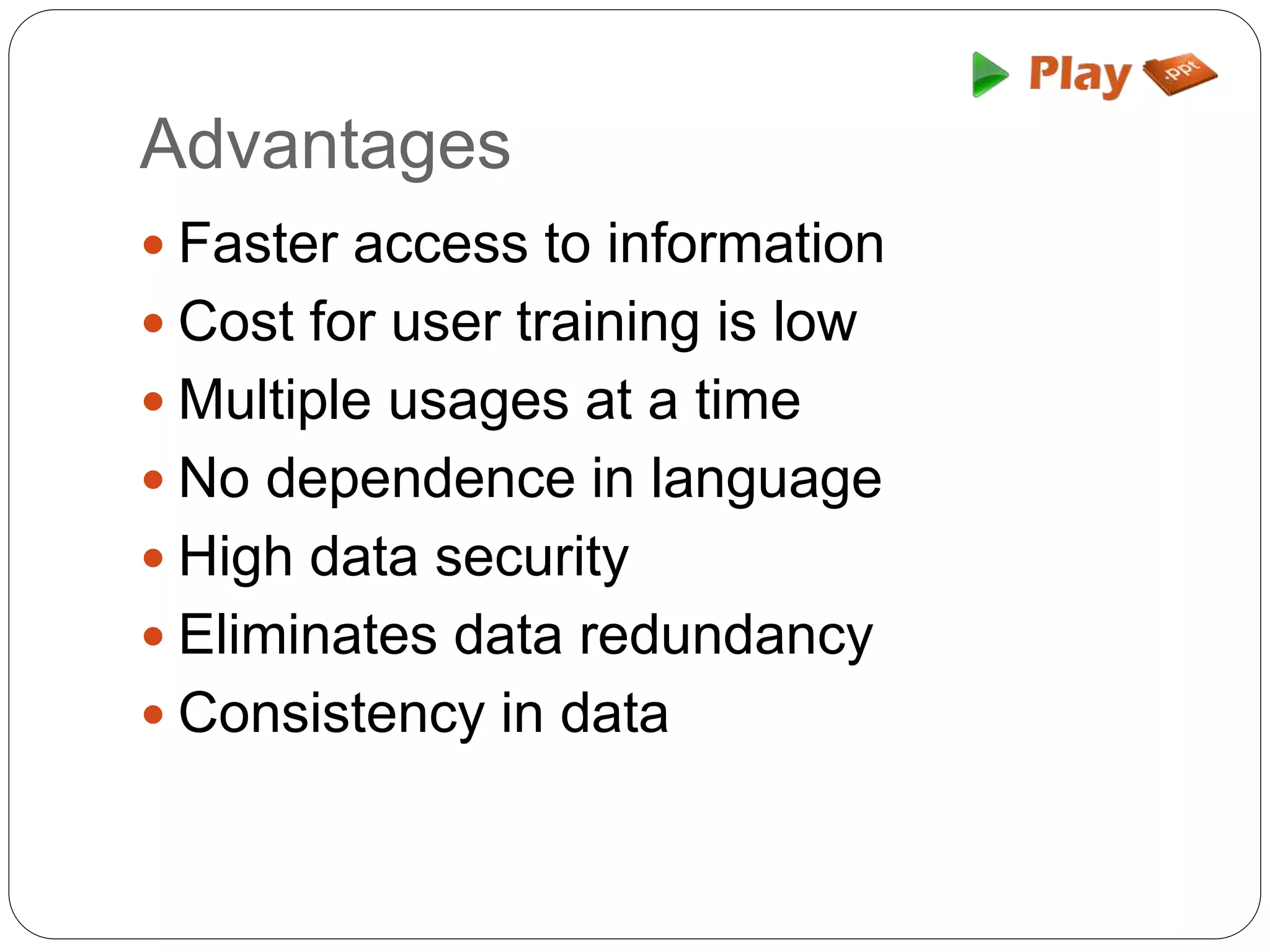
 Faster access to information
 Cost for user training is low
 Multiple usages at a time
 No dependence in language
 High data security
 Eliminates data redundancy
 Consistency in data
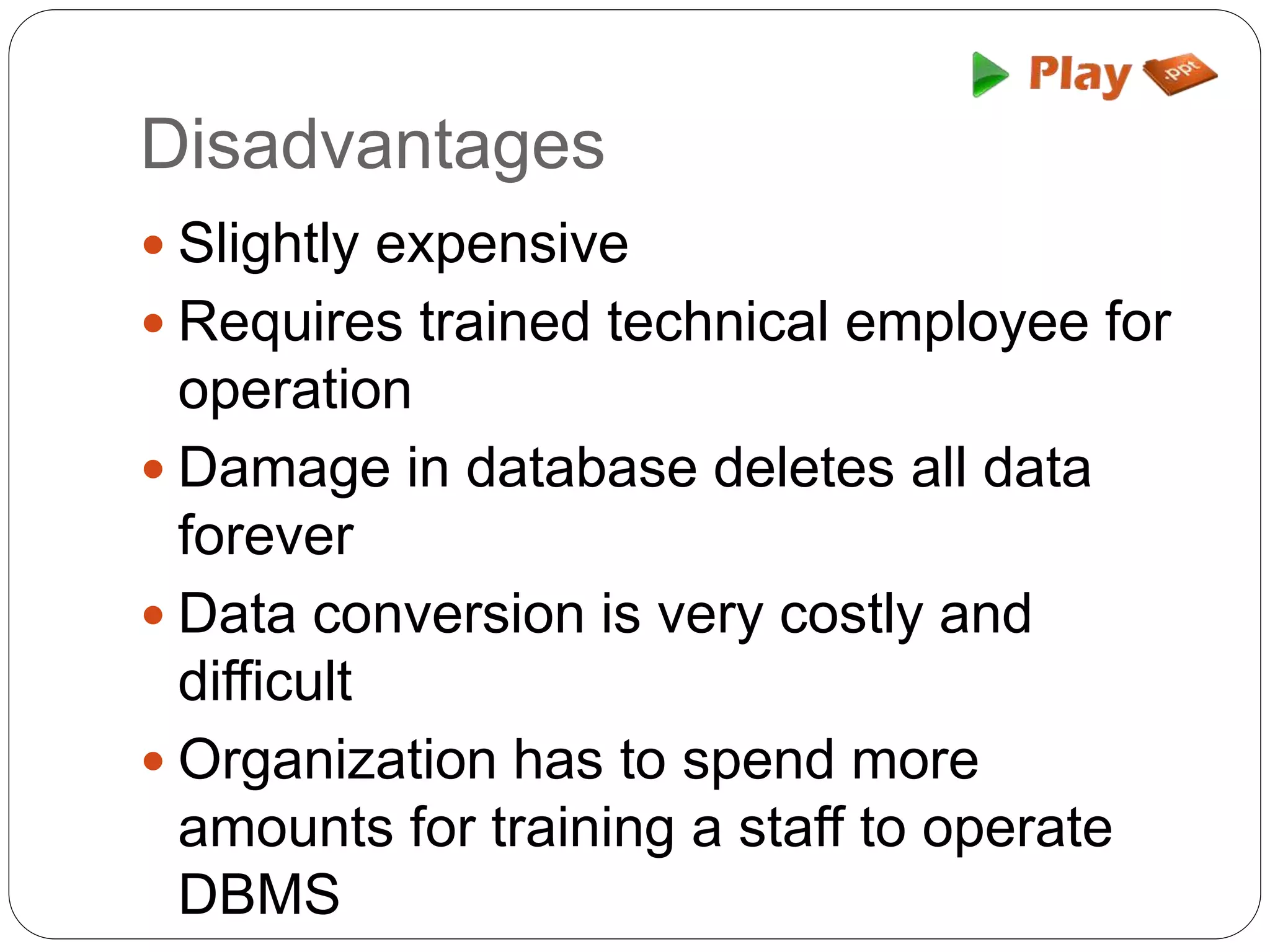
Disadvantages
 Slightly expensive
 Requires trained technical employee for
operation
 Damage in database deletes all data
forever
 Data conversion is very costly and
difficult
 Organization has to spend more
amounts for training a staff to operate
DBMS
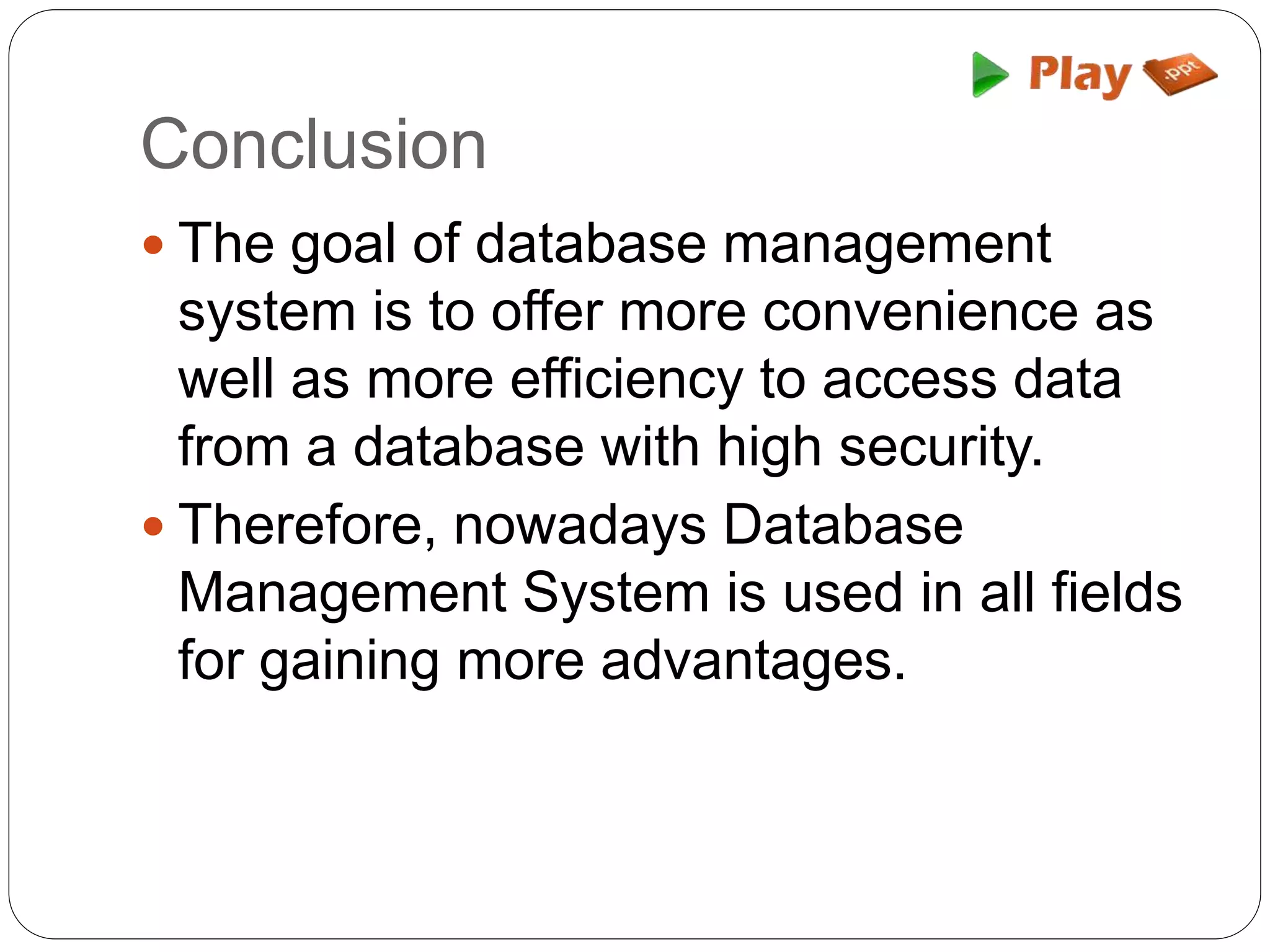
Conclusion
 The goal of database management
system is to offer more convenience as
well as more efficiency to access data
from a database with high security.
 Therefore, nowadays Database
Management System is used in all fields
for gaining more advantages.
Thank You!!!
www.playppt.com

Database-Management-System-PPT.pptx

  • 1.
  • 2.
    What is DBMS? Database Management System is a software that is meant for storing records in computers.  This software allows accessing of data such as delete, store, retrieve etc that are available in a database.
  • 3.
    History  During earlydays, for storing data a file system is used.  In a file system, it is difficult to access data, data inconsistency, integrity and security problems etc.  So database management system was first developed on 1960 by Charles Bachman.  Database Management System provides many solutions for problems
  • 4.
  • 5.
    Types of DBMS Hierarchical DBMS  A hierarchical DBMS are established in such a way that one data item is present as the subordinate of another one or a sub unit.  Network DBMS  If the relationships among data in the database are of type many-to-many, then it is network DBMS.  Relational DBMS  A relational DBMS is the database relationships, which are treated in the form of a table.  Object-oriented DBMS  Able to handle many new data types, including graphics, photographs, audio, and video, object-oriented databases represent a significant advance over their other database cousins.
  • 6.
    Areas of DBMS Airlines: Used for storing information such as availability of seats, train timings etc.  Banking: Used to store customer details, accounts, transaction etc.  Telecommunication: For storing bills, caller names etc.
  • 7.
    Areas of DBMS Universities: To store students register no., marks etc.  Human Resources: For storing employee details, salary etc.  Sales: Helps to store customer information, purchases etc.
  • 8.
    Advantages  Faster accessto information  Cost for user training is low  Multiple usages at a time  No dependence in language  High data security  Eliminates data redundancy  Consistency in data
  • 9.
    Disadvantages  Slightly expensive Requires trained technical employee for operation  Damage in database deletes all data forever  Data conversion is very costly and difficult  Organization has to spend more amounts for training a staff to operate DBMS
  • 10.
    Conclusion  The goalof database management system is to offer more convenience as well as more efficiency to access data from a database with high security.  Therefore, nowadays Database Management System is used in all fields for gaining more advantages.
  • 11.