Data Representation refers to the methods used 
internally to represent information stored in a 
computer. Computers store lots of different types 
of information: 
Numbers 
Text 
Graphics of many varieties (stills,video, 
animation) 
Sound
All types of information stored in a computer 
are stored internally in the same simple 
format: a sequence of 0's and 1's. 
Computers use numeric codes to represent all 
the information they store.
Memory consists of bits (0 or 1) 
› a single bit can represent two pieces of 
information 
bytes (=8 bits) 
› a single byte can represent 256 = 
2x2x2x2x2x2x2x2 = 28 pieces of information 
words (=2,4, or 8 bytes) 
› a 2 byte word can represent 2562 pieces of 
information (approximately 65 thousand). 
Byte addressable - each byte has its own address.
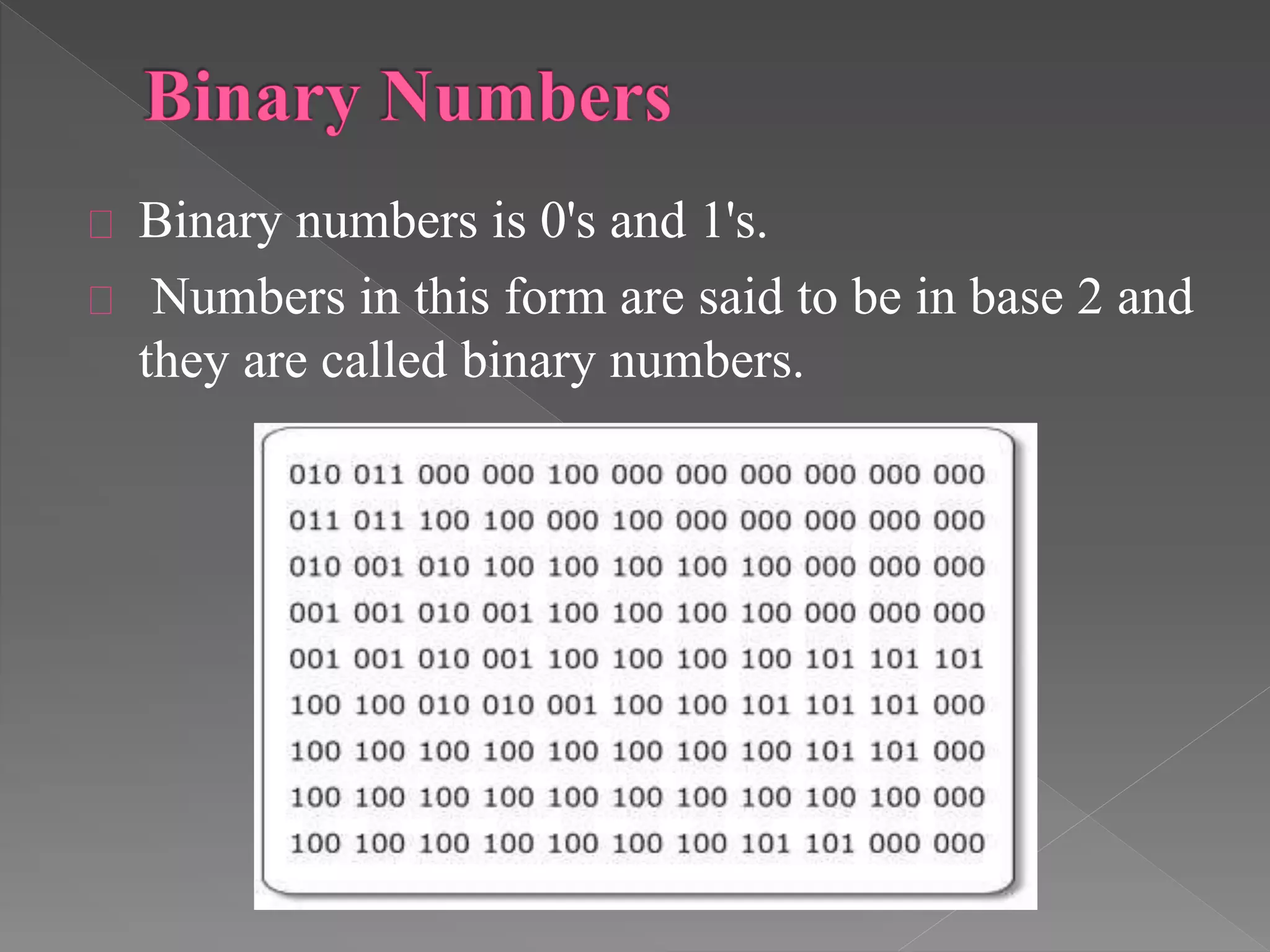
Binary numbers is 0's and 1's. 
Numbers in this form are said to be in base 2 and 
they are called binary numbers.
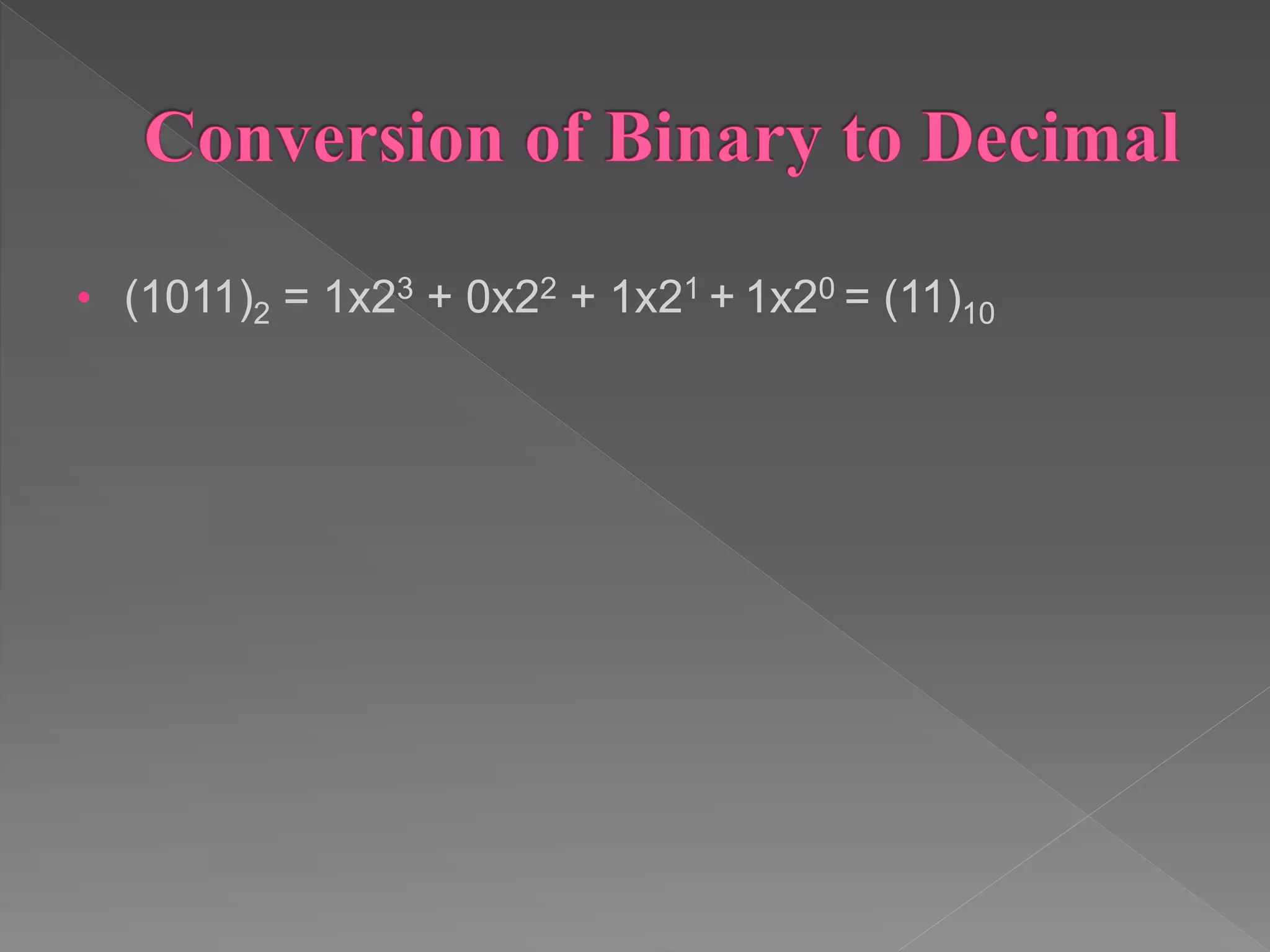
• (1011)2 = 1x23 + 0x22 + 1x21 + 1x20 = (11)10
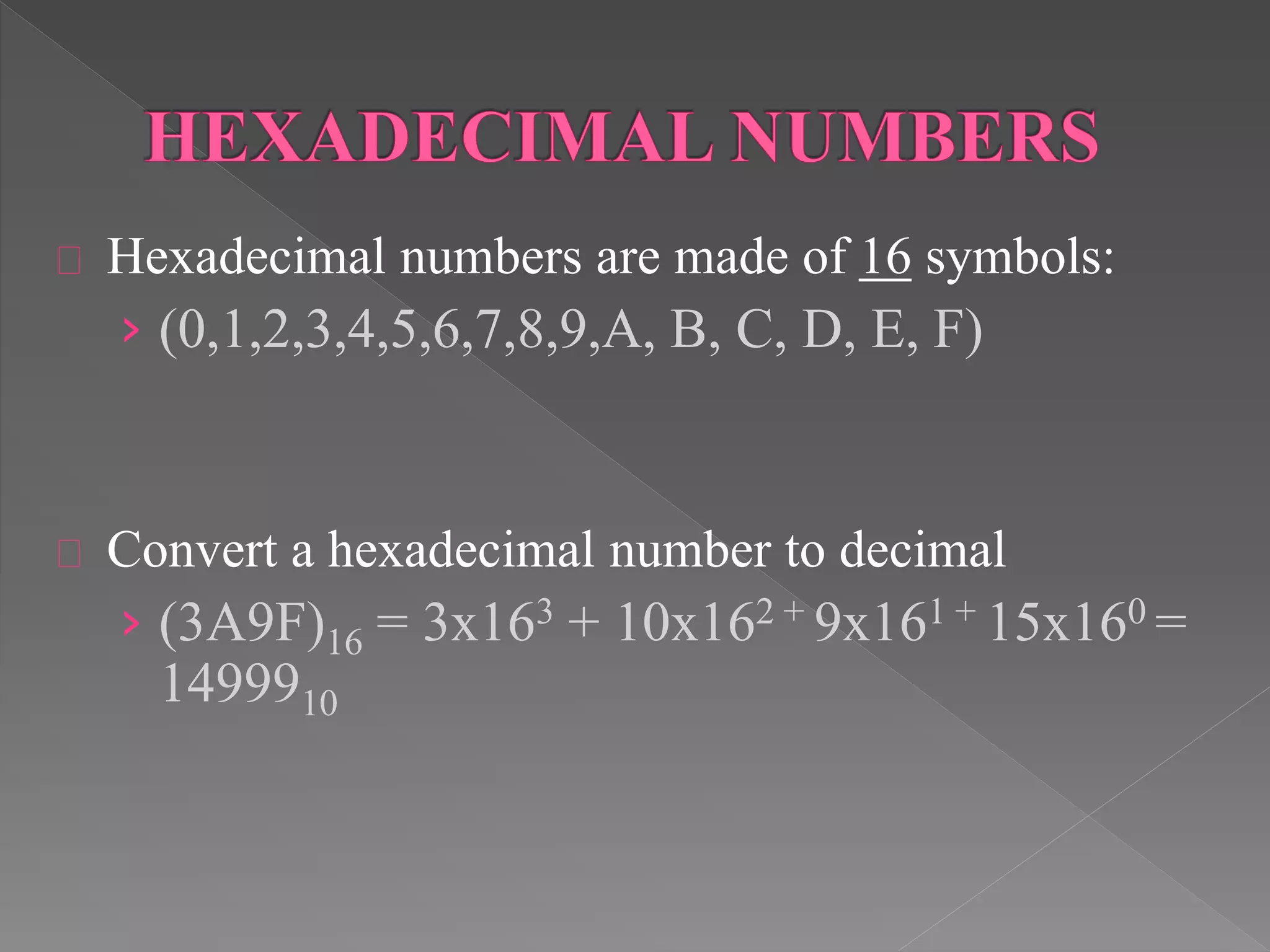
Hexadecimal numbers are made of 16 symbols: 
› (0,1,2,3,4,5,6,7,8,9,A, B, C, D, E, F) 
Convert a hexadecimal number to decimal 
› (3A9F)16 = 3x163 + 10x162 + 9x161 + 15x160 = 
1499910
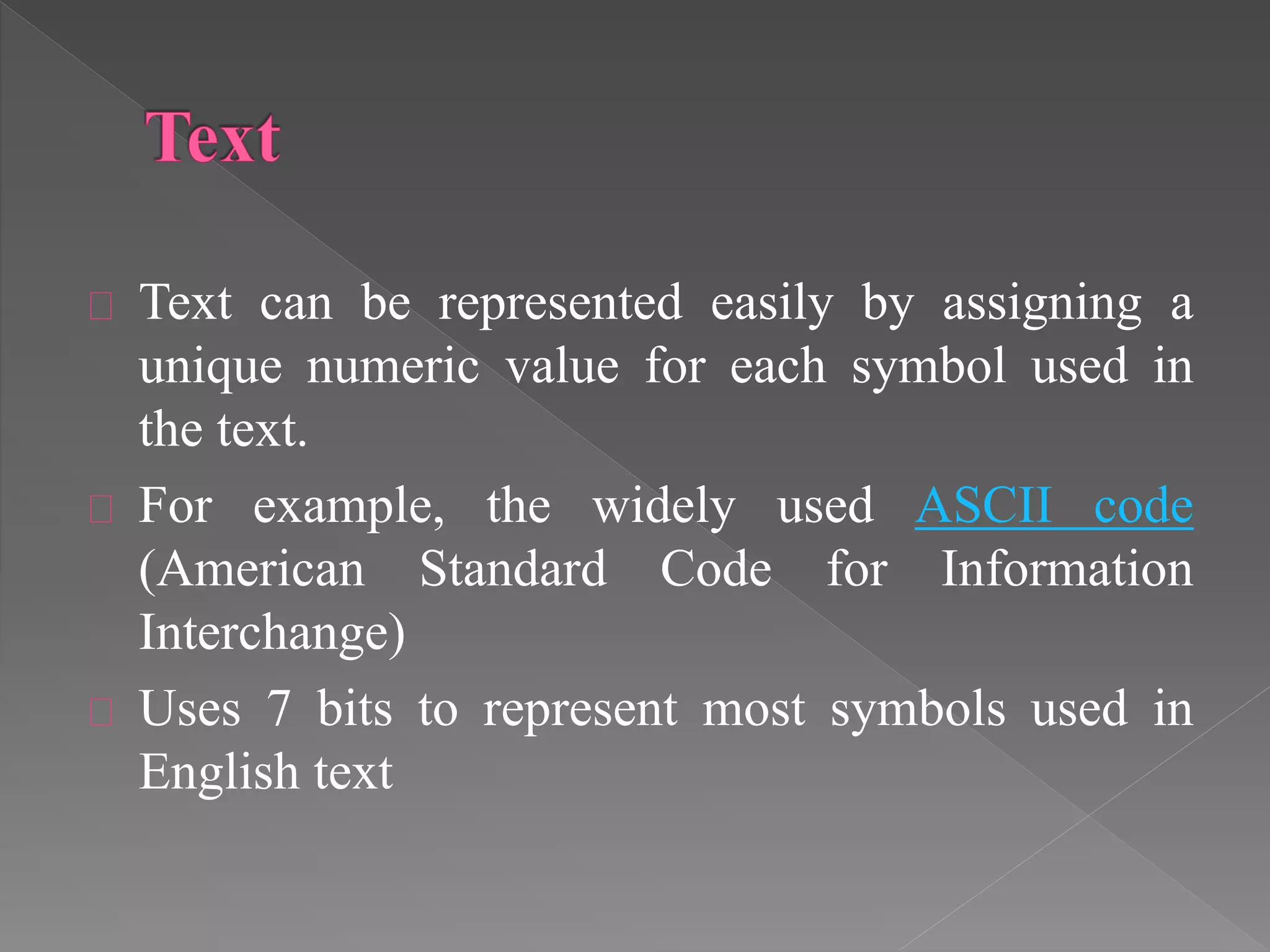
Text can be represented easily by assigning a 
unique numeric value for each symbol used in 
the text. 
For example, the widely used ASCII code 
(American Standard Code for Information 
Interchange) 
Uses 7 bits to represent most symbols used in 
English text
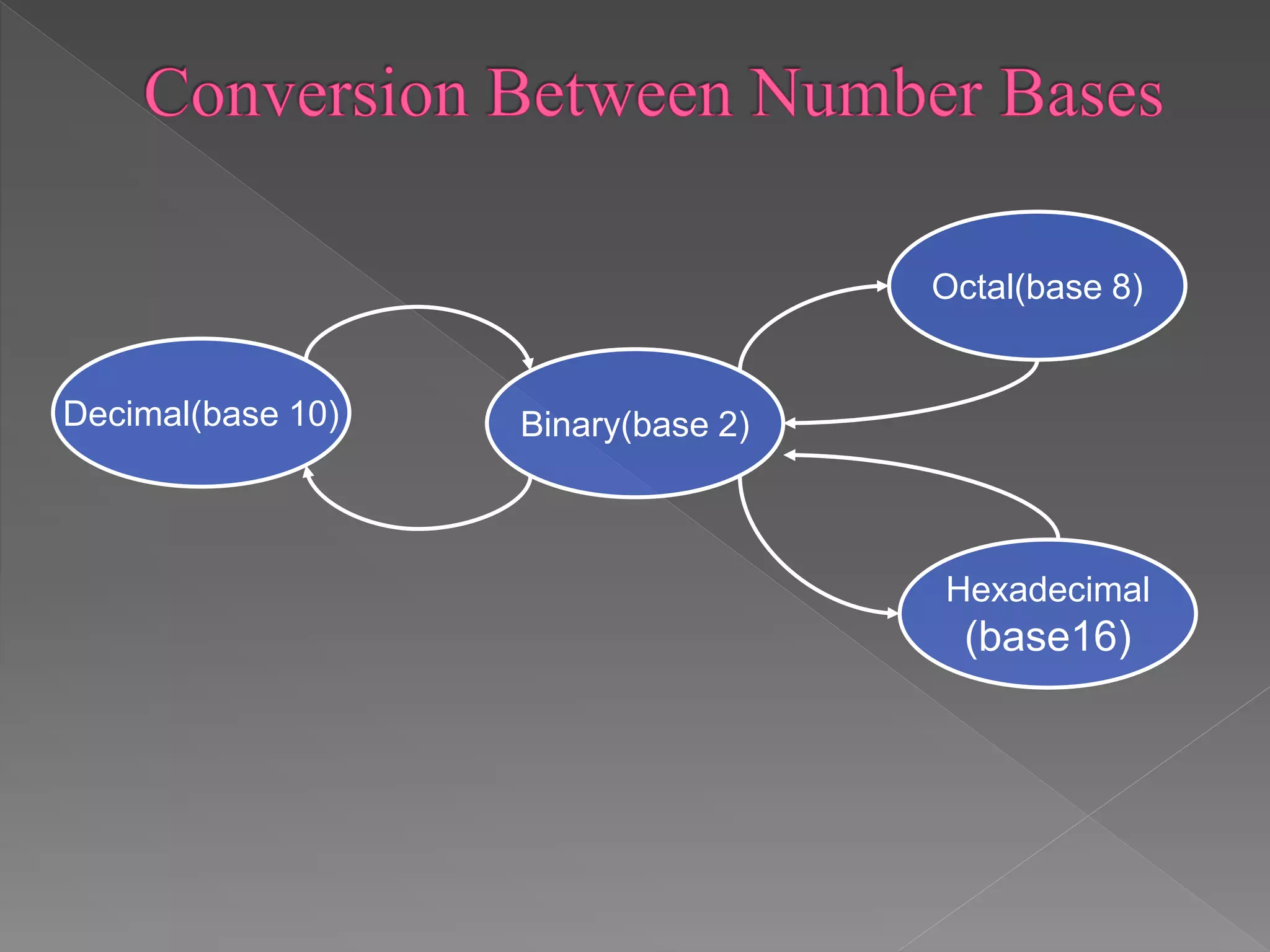
Decimal(base 10) 
Octal(base 8) 
Binary(base 2) 
Hexadecimal 
(base16)
Graphics that are displayed on a computer screen 
consist of pixels: the tiny "dots" of color that 
collectively "paint" a graphic image on a 
computer screen. The pixels are organized into 
many rows on the screen.
Data representation

Data representation

  • 2.
    Data Representation refersto the methods used internally to represent information stored in a computer. Computers store lots of different types of information: Numbers Text Graphics of many varieties (stills,video, animation) Sound
  • 3.
    All types ofinformation stored in a computer are stored internally in the same simple format: a sequence of 0's and 1's. Computers use numeric codes to represent all the information they store.
  • 4.
    Memory consists ofbits (0 or 1) › a single bit can represent two pieces of information bytes (=8 bits) › a single byte can represent 256 = 2x2x2x2x2x2x2x2 = 28 pieces of information words (=2,4, or 8 bytes) › a 2 byte word can represent 2562 pieces of information (approximately 65 thousand). Byte addressable - each byte has its own address.
  • 5.
    Binary numbers is0's and 1's. Numbers in this form are said to be in base 2 and they are called binary numbers.
  • 6.
    • (1011)2 =1x23 + 0x22 + 1x21 + 1x20 = (11)10
  • 7.
    Hexadecimal numbers aremade of 16 symbols: › (0,1,2,3,4,5,6,7,8,9,A, B, C, D, E, F) Convert a hexadecimal number to decimal › (3A9F)16 = 3x163 + 10x162 + 9x161 + 15x160 = 1499910
  • 8.
    Text can berepresented easily by assigning a unique numeric value for each symbol used in the text. For example, the widely used ASCII code (American Standard Code for Information Interchange) Uses 7 bits to represent most symbols used in English text
  • 9.
    Decimal(base 10) Octal(base8) Binary(base 2) Hexadecimal (base16)
  • 10.
    Graphics that aredisplayed on a computer screen consist of pixels: the tiny "dots" of color that collectively "paint" a graphic image on a computer screen. The pixels are organized into many rows on the screen.