Downloaded 63 times
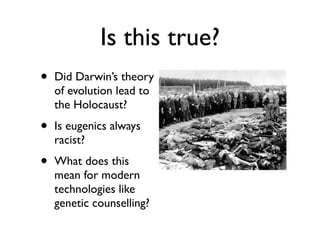
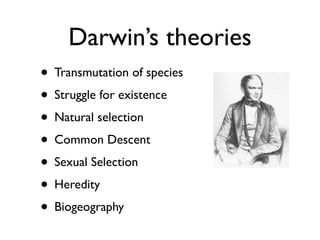



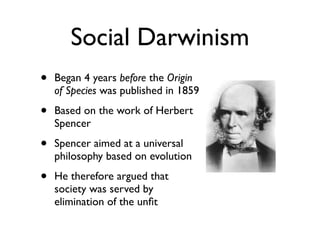
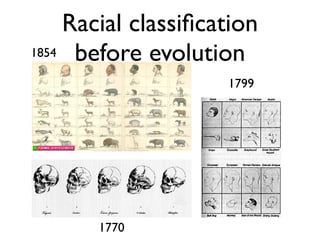

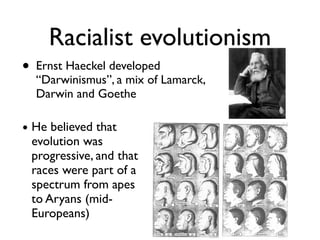
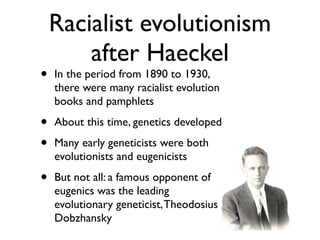



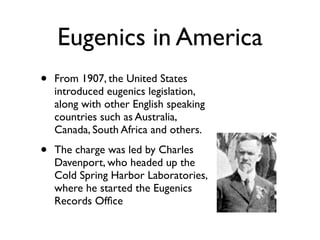


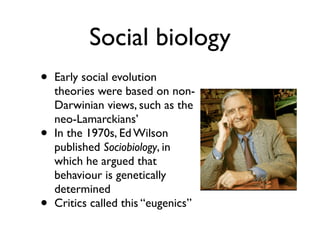


While Darwin's theory of evolution by natural selection was developed independently of ideas about eugenics and social policy, some later interpreted his work as supporting eugenics programs. Eugenics emerged in the late 19th century with the goal of improving human hereditary traits through policies like encouraging reproduction among the "fit" and discouraging it among the "unfit." Eugenics programs were implemented in several Western countries in the early 20th century, most notoriously by the Nazis in Germany. However, Darwin's theory does not inherently imply any social or political program, and many evolutionary biologists opposed eugenics. The relationship between scientific theories of heredity and evolution and their social interpretations is complex.


