Service Recovery
Customers recovery expectations
When customers take the time and effort to complain,
generally they have high expectations.
They not only expect a responce;
 They expect the firm to be accountable
 To be helped quickly
 To be treated nicely in the process
 To be compensated for their grief and for the hassle of
being inconvenienced.
Customers recovery
expectations
Understanding and Accountability
Eight most common «remedies» that customers seek
when they experience a serious problem;
Three of this remedies are;
 To have the product repaired or service fixed
 Be reimbursed for the hassle of having experienced a
problem
 Receive a free product or service in the future
Customers recovery
expectations
Understanding and Accountability
The Other five remedies ;
 Including an explanation by the firm
 Assurance that the problem will not be repeated
 Thank you for the customers’ business
 An apology from the firm
 An opportunity for the customer to vent his/her
frustrations

These five nonmonetary remedies providing employees the
opportunity to communicate with customers.
Customers recovery
expectations
Fair Treatment

Service recovery experts Steve Brown and Stave Tax have
documented three spesific types of justice that consumers
are looking for following their complaints ;




Outcome fairness
Procedural fairness
Interactional fairness
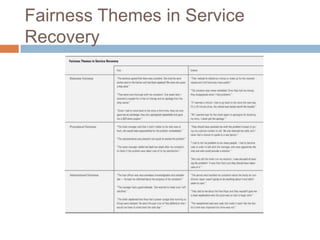
Fairness Themes in Service
Recovery
Fair Treatment


Outcome Fairness

Customers expect equity in the exchange ,
They want to feel that the company has paid for its
mistakes in a manner at least equal to what customer has
suffered.
The company’s punishment should fit the crime .


Interactional Fairness

Customers expect to be treated politely, with care and
honesty.
Fair Treatment


Prosedural Fairness

Customers expect fairness in terms of policies, rules and
timeliness of the complaint process.
- They want easy access to the complaint process and
things to be handled quickly, preferably by the first person
they contact.
- Fair procedures are characterized by clarity, speed and
absence of hassles.
- Customers feel unfair if they have to proof their case.
Switching versus staying following
service recovery
•

•

•



Researchers found that customers who were not
satisfied with the service recovery were much likely to
switch to a different provider.
The magnitude and criticality of the failure will clearly be
a factor in the future repurchase decisions;
If the failure more serious, customer is to switch no
matter what the recovery effort.
To remian loyal to the service provider or to switch to
another provider.
Switching versus staying following
service recovery
Types of customers’ relationship with the firm also influence
whether the customers stays or switches providers.
If customers have a true relationships with service providers are
more forgiving of service failures and less likely to switch than
are those who have a pseudo-relationship or a first time
encounter.
True relationship : customer has had repeated contact over
time with the same service provider.
First time encounter : customer has had only one contact.
Pseudo relationship : customer has interacted many times
with the same company, but with different service providers
each time.
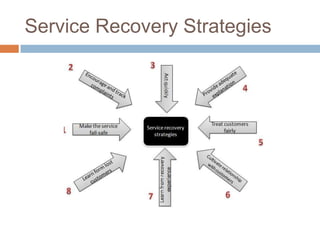
Service Recovery Strategies




Make the service fail-safe
- to do it right the first time
Encourage and Track complaints:
- Satisfaction surveys
- Critical incidents studies
- Lost customer research
Service Recovery Strategies
Act quickly
Complaining customers want quick responses. Half of
all customers who have problems resolved immediately or
with in 24 hours are completely satisfied.


Many companies require customers contact lots of
employees to solve a complaint.Research suggest that
if a problem can be handled by the first contact
customer satisfied with the firms response
%46, however once three or more contacts are needed
the percentage drops to %21.
Service Recovery Strategies
Provide Adequate Explanations
Explanations can help diffuse negative reactions and
convey respect for the customer.
Firm’s ability to provide adequate outcome is not
successful, further dissatisfaction can be reduced if an
adequate explanation provided to the customer.


Content of the explanation must be appropriate and style
of the delivery of the explanation also reduce customer
dissatisfaction.
Service Recovery Strategies
Treat Customers Fairly
Customers expect to be treated fairly.


Cultivate Relationships with customers
Research suggests that strong customer-firm relationships can
help shield the firm from negative effects of failures on customer
satisfaction.


Learn from recovery experiences
Problem – resolution situations are opportunuties to fix flawed
services and strengthen ties with customers.


Learn from lost customers
Another key of an effective service recovery strategy is to learn
from the customers who defect or decide to leave.

Service Guarantees
A guarantee is a particular type of recovery tool.
With a tangible product,the customer is quaranteed that it
will perform as promised and if not it can be returned.
With services , it is generally not possible to take returns or
to undo what has been performed.
Companies find they can guarantee their services and that
are benefits for doing so.
Service Guarantees
Service Guarantees
Characteristics of Effective Guarantees






Unconditional
Meaningful
Easy to Understand
Easy to Invoke
Benefits of Service Guarantees












A good guarantee forces the company to focus on its
customers
An effective quarantee sets clear standards for the
organization
A good guarantee generates immediate and relevant
feedback from customers
When the quarantee is invoked there is an instant
opportunity to recover
Information generated through the quarantee can be
tracked and intagrated in to continuous improvement
efforts
For customers , the quarantee reduces their sence of
risk and builds confidence in the organization.
Customers recovery expectations

Customers recovery expectations

  • 1.
    Service Recovery Customers recoveryexpectations When customers take the time and effort to complain, generally they have high expectations. They not only expect a responce;  They expect the firm to be accountable  To be helped quickly  To be treated nicely in the process  To be compensated for their grief and for the hassle of being inconvenienced.
  • 2.
    Customers recovery expectations Understanding andAccountability Eight most common «remedies» that customers seek when they experience a serious problem; Three of this remedies are;  To have the product repaired or service fixed  Be reimbursed for the hassle of having experienced a problem  Receive a free product or service in the future
  • 3.
    Customers recovery expectations Understanding andAccountability The Other five remedies ;  Including an explanation by the firm  Assurance that the problem will not be repeated  Thank you for the customers’ business  An apology from the firm  An opportunity for the customer to vent his/her frustrations These five nonmonetary remedies providing employees the opportunity to communicate with customers.
  • 4.
    Customers recovery expectations Fair Treatment Servicerecovery experts Steve Brown and Stave Tax have documented three spesific types of justice that consumers are looking for following their complaints ;    Outcome fairness Procedural fairness Interactional fairness
  • 5.
    Fairness Themes inService Recovery
  • 6.
    Fair Treatment  Outcome Fairness Customersexpect equity in the exchange , They want to feel that the company has paid for its mistakes in a manner at least equal to what customer has suffered. The company’s punishment should fit the crime .  Interactional Fairness Customers expect to be treated politely, with care and honesty.
  • 7.
    Fair Treatment  Prosedural Fairness Customersexpect fairness in terms of policies, rules and timeliness of the complaint process. - They want easy access to the complaint process and things to be handled quickly, preferably by the first person they contact. - Fair procedures are characterized by clarity, speed and absence of hassles. - Customers feel unfair if they have to proof their case.
  • 8.
    Switching versus stayingfollowing service recovery • • •  Researchers found that customers who were not satisfied with the service recovery were much likely to switch to a different provider. The magnitude and criticality of the failure will clearly be a factor in the future repurchase decisions; If the failure more serious, customer is to switch no matter what the recovery effort. To remian loyal to the service provider or to switch to another provider.
  • 9.
    Switching versus stayingfollowing service recovery Types of customers’ relationship with the firm also influence whether the customers stays or switches providers. If customers have a true relationships with service providers are more forgiving of service failures and less likely to switch than are those who have a pseudo-relationship or a first time encounter. True relationship : customer has had repeated contact over time with the same service provider. First time encounter : customer has had only one contact. Pseudo relationship : customer has interacted many times with the same company, but with different service providers each time.
  • 10.
  • 11.
    Service Recovery Strategies   Makethe service fail-safe - to do it right the first time Encourage and Track complaints: - Satisfaction surveys - Critical incidents studies - Lost customer research
  • 12.
    Service Recovery Strategies Actquickly Complaining customers want quick responses. Half of all customers who have problems resolved immediately or with in 24 hours are completely satisfied.  Many companies require customers contact lots of employees to solve a complaint.Research suggest that if a problem can be handled by the first contact customer satisfied with the firms response %46, however once three or more contacts are needed the percentage drops to %21.
  • 13.
    Service Recovery Strategies ProvideAdequate Explanations Explanations can help diffuse negative reactions and convey respect for the customer. Firm’s ability to provide adequate outcome is not successful, further dissatisfaction can be reduced if an adequate explanation provided to the customer.  Content of the explanation must be appropriate and style of the delivery of the explanation also reduce customer dissatisfaction.
  • 14.
    Service Recovery Strategies TreatCustomers Fairly Customers expect to be treated fairly.  Cultivate Relationships with customers Research suggests that strong customer-firm relationships can help shield the firm from negative effects of failures on customer satisfaction.  Learn from recovery experiences Problem – resolution situations are opportunuties to fix flawed services and strengthen ties with customers.  Learn from lost customers Another key of an effective service recovery strategy is to learn from the customers who defect or decide to leave. 
  • 15.
    Service Guarantees A guaranteeis a particular type of recovery tool. With a tangible product,the customer is quaranteed that it will perform as promised and if not it can be returned. With services , it is generally not possible to take returns or to undo what has been performed. Companies find they can guarantee their services and that are benefits for doing so.
  • 16.
  • 17.
    Service Guarantees Characteristics ofEffective Guarantees     Unconditional Meaningful Easy to Understand Easy to Invoke
  • 18.
    Benefits of ServiceGuarantees       A good guarantee forces the company to focus on its customers An effective quarantee sets clear standards for the organization A good guarantee generates immediate and relevant feedback from customers When the quarantee is invoked there is an instant opportunity to recover Information generated through the quarantee can be tracked and intagrated in to continuous improvement efforts For customers , the quarantee reduces their sence of risk and builds confidence in the organization.